Tag: Easter

  • The bulletin insert for May 7, 2023

    The bulletin insert for May 7, 2023

    This is the weekly bulletin insert from Sermons That Work.

    Reflections on the Resurrection

    Scan to subscribe to the Sermons That Work podcast.

    During the Easter season, Sermons That Work is pleased to present reflections from some of the newest bishops of The Episcopal Church on the resurrection of our Lord. Check back each week for a brief exploration of how Jesus Christ’s rising from the grave changes everything. To listen to this reflection, scan the QR code on this page and subscribe to the Sermons That Work podcast.

    Week 5

    “Don’t Panic” is written in large, friendly letters on the cover of the book, The Hitchhiker’s Guide to the Galaxy, a fictional, electronic encyclopedia that is the centerpiece object in a novel of the same name written by Douglas Adams. The angel at the tomb in Matthew’s Gospel says essentially the same phrase in their greeting: “Don’t be afraid.” Immediately after this in Matthew’s Gospel, Jesus also begins his resurrection encounter with Mary and Mary saying, “Do not be afraid.” As Douglas Adams employs “Don’t Panic” to invite his reader into wonder and anticipation in the story of his novel, so we are invited deeper into our own story, to wonder what threats confront our resurrection witnesses when both the angel and the returned Jesus begin with “Don’t be afraid.”

    What had Mary and Mary to fear? Was it the bright, otherworldly appearance of a heavenly messenger? Angels have been known to startle mortals. Was it that the teacher they loved and had seen murdered on a cross was now miraculously alive? This would have been enough. Ghosts and zombies still arise in human fears, particularly if it’s the appearance of a beloved. But the angel and Jesus know the deeper fears Mary and Mary have and the future fears they will face.

    “Don’t be afraid” addresses their deeper fear that this encounter could turn out to be just a fragile dream – that after such joyous news, the proverbial rug could be pulled out from under them, leaving them worse off than before. This phrase addresses their fears that after sharing the Good News of New Life, they will most likely be laughed at and humiliated, rejected by those to whom they speak their exuberant joy.

    Of course, none of these fears are mutually exclusive. “Don’t be afraid” addresses all of Mary and Mary’s fears, all at once. Such resurrection encounters remind us that Grief and Revelation are cumulative. We humans experience our fears, our griefs, our hopes, and our new discoveries in an ever-expanding continuum.

    In Christ’s resurrection encounter, we are offered the pain and joy of experiencing a multiverse of realities, all at the same time. Because ours is not a fictional novel but rather a story grounded in the original witnesses who heard him, “Don’t be afraid” is spoken directly to us, inviting us to trust the one who stands before us saying these words. This invitation on holy lips comes to us through the cumulative continuum now two millennia on, still speaking directly to our multi-layered, multi-generational fears, right now, in our time and in our space.

    The resurrected Christ meets us in a welcome that addresses all our fears. His greeting does not ignore but includes all the crucifixions we have endured and all the resurrections we have known, including his. With Mary and Mary, we run on with layered feelings in us, both fear and great joy. And we run, ever trusting in the one who leads us, always, from panic to peace.

    This reflection, “Don’t Panic,” was written by the Rt. Rev. Matthew Cowden, Bishop of West Virginia. Cowden previously served as rector of Saint Michael’s Episcopal Church in South Bend, Indiana. His joy is in raising up the next generation of priests as potent pastors and powerful preachers.

    Weekly bulletin inserts

    This weekly bulletin insert provides information about the history, music, liturgy, mission, and ministry of The Episcopal Church. For more information, please contact us at stw@episcopalchurch.org.

    Sermons That Work from the Episcopal Church

    Sermons That Work

    For more than 20 years, Sermons That Work, a ministry of The Episcopal Church’s Office of Communication, has provided free sermons, Bible studies, bulletin inserts, and other resources that speak to congregations across the Church. Our writers and readers come from numerous and varied backgrounds, and the resources we provide are used in small house churches, sprawling cathedrals, and everything between.
    The Episcopal Church of the Redeemer: Worshiping God, living in community, reaching out to the world.

    Church of the Redeemer

    Church of the Redeemer: Worshiping God, living in community, and reaching out to the world around us. We are an Episcopal Church serving north King County and south Snohomish County, Washington. As you travel your road, go with friends walking the way of Jesus at Redeemer.

    Church of the Redeemer is at 6220 Northeast 181st Street in Kenmore, Washington. The campus is a short distance north of Bothell Way, near the Burke-Gilman Trail. The entrance looks like a gravel driveway. The campus is larger on the inside than it is on the outside. And we managed to hide a large building on the side of a hill that is not easily seen from the street.

    The Episcopal Church welcomes you.

  • The bulletin insert for April 30, 2023

    The bulletin insert for April 30, 2023

    This is the weekly bulletin insert from Sermons That Work.

    Reflections on the Resurrection

    Scan to subscribe to the Sermons That Work podcast.

    During the Easter season, Sermons That Work is pleased to present reflections from some of the newest bishops of The Episcopal Church on the resurrection of our Lord. Check back each week for a brief exploration of how Jesus Christ’s rising from the grave changes everything. To listen to this reflection, scan the QR code on this page and subscribe to the Sermons That Work podcast.

    Week 4

    Mary Magdalene, Joanna, Mary the mother of James, and the other women who were with them; these women are not only the first evangelists, but they are also the saints we need for our day. 

    They do not yet know what it will look like or what it will mean that Jesus is risen from the dead. They do not know, at this point in the story, how it will be that Jesus will reveal himself to them, in what form he will appear, how they will know, or what it will look like. They do not yet know where new life is, only where old life is no longer.

    But they do not wait. They do not need to know what comes next in order to proclaim what currently is. These women stand in the midst of an empty tomb and see it filled with the potential that Jesus is very much alive; not as he had been, but as he will be. These women do not hold back from proclaiming their truth to those who would disbelieve. They did not care that it would not make sense, that others could not yet see what they had seen.

    This is a critical moment for these women and the rest of Jesus’ followers. The scenes that follow — the post-resurrection appearances of Jesus — are dependent on them knowing the possibility that Jesus might just appear. If they could not consider the angels’ words, if they could not hold out hope that the tomb could not contain the love of God, they could never have known resurrection when it appeared. Jesus could not be on the beach, grilling fish, if he were back in the tomb. He could not be walking with them on the road to Emmaus, if his body were someplace else unknown.

    In order for them to see the fullness of God’s Love in the world around them, they needed to see the emptiness of the tomb. They needed to stop looking for the living among the dead and instead seek the living Christ in the life of the world. These women are our evangelists, proclaiming to us the Good News that Jesus Christ is risen.

    These women are our saints – our inspiration and our example of how it is God asks us to stop seeking the living among the dead. To stop seeking life at the empty tombs of our lives. To allow for the potential that new life is around every corner, a possibility that exists only when we stop insisting it can only be found where it once was.

    We do not need to know where it is that the Risen Life of Christ will meet us on the roads of our lives. We need only know that the empty tomb we are in is not, in fact, empty, but full. It is full of possibilities. It is full of hope. It is full of love. It is full of life.

    Why do you seek the living among the dead? 

    Alleluia! Christ is risen!

    The Lord is risen indeed! Alleluia!

    The Rt. Rev. Jeffrey W. Mello is the sixteenth Bishop Diocesan for the Episcopal Church in Connecticut. Bishop Mello was consecrated in October 2022.

    Weekly bulletin inserts

    This weekly bulletin insert provides information about the history, music, liturgy, mission, and ministry of The Episcopal Church. For more information, please contact us at stw@episcopalchurch.org.

    Sermons That Work from the Episcopal Church

    Sermons That Work

    For more than 20 years, Sermons That Work, a ministry of The Episcopal Church’s Office of Communication, has provided free sermons, Bible studies, bulletin inserts, and other resources that speak to congregations across the Church. Our writers and readers come from numerous and varied backgrounds, and the resources we provide are used in small house churches, sprawling cathedrals, and everything between.

    The Episcopal Church of the Redeemer: Worshiping God, living in community, reaching out to the world.

    Church of the Redeemer

    Church of the Redeemer: Worshiping God, living in community, and reaching out to the world around us. We are an Episcopal Church serving north King County and south Snohomish County, Washington. As you travel your road, go with friends walking the way of Jesus at Redeemer.

    Church of the Redeemer is at 6220 Northeast 181st Street in Kenmore, Washington. The campus is a short distance north of Bothell Way, near the Burke-Gilman Trail. The entrance looks like a gravel driveway. The campus is larger on the inside than it is on the outside. And we managed to hide a large building on the side of a hill that is not easily seen from the street.

    The Episcopal Church welcomes you.
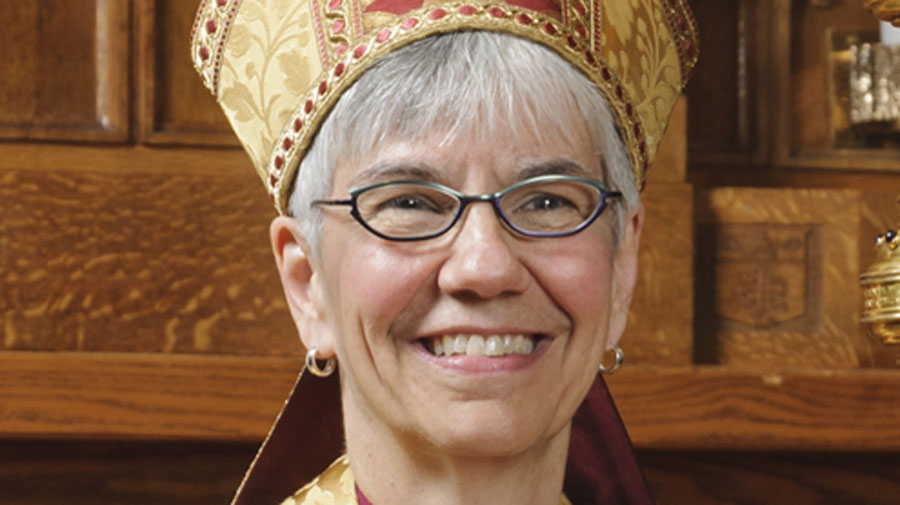
  • Easter 2023: A Message from Bishop Skelton

    Easter 2023: A Message from Bishop Skelton

    “…look for the resurrected Christ here in this place. Look for him now in this time. Look for him in the mud, the cold, the clouds, and the rain.” Bishop Skelton shares her reflections as we celebrate the resurrected Christ this Easter.

    Bishop Skelton’s Easter message

    Greetings people of the Diocese of Olympia. I speak to you today from the traditional and hereditary lands of the Duwamish people.

    I don’t know if you’ve noticed it or not, but the visuals that Greg Hester here on the staff has been coming up with for the different moments of the liturgical year are different than they’ve been in the past. This has been at my request, and I thank Greg for accommodating me on this, for you see, I want visuals that reflect our particular Pacific Northwest context. And so for Easter, Greg and I had to say no to a visual of an empty cross rising up against what was clearly not for me, a Pacific Northwest sky. Likewise, we had to reject a visual of a large bunch of white hothouse lilies that did not reflect vegetation in this part of the world.

    What we finally settled on was a tulip field, the kind you would see in the Skagit Valley in April, purple tulips, royal tulips, bursting out of dark mounds of earth next to the rain-filled troughs. All of this, of course, not under pink candy-colored heavens, but under a cloudy, probably cold Pacific Northwest sky. And so Easter and the new life it brings come to us not looking like hothouse lilies. No, instead, it comes to us in a preposterous burst of life from something seemingly inert under the real cloudy cold sky that we all know so well.

    In Matthew’s Gospel of the Resurrection, after the women are told that Jesus has risen, Jesus appears to them himself and tells them to go tell the disciples that he will go ahead of them to Galilee. I take this to mean that he will go ahead of them and meet them in the real joys and challenges, and places of their lives.

    And so people of the Diocese of Olympia, look for the resurrected Christ here in this place. Look for him now in this time. Look for him in the mud, the cold, the clouds, and the rain. Look for him in the astonishing beauty of sun and in the ice cold ocean lake and river waters. Look for him in majestic mountains, which are in fact volcanoes. Look for him in this place where many areas and towns have First Nations names. Look for him in Pacific Northwest reticence, and in Pacific Northwest ambivalence about church itself, and look for him in the reality of your lives. All the beauty, and joy, and boredom, and terror of it.

    For the resurrected Christ goes before us, the resurrected Christ goes before us and meets us in the real world and in the real times we live in.

    My very best wishes to you for a blessed and glorious Easter.

    —The Most Rev. Mellissa Skelton

    The Most Reverend Mellissa Skelton

    The Most Reverend Melissa Skelton

    The Most Reverend Melissa Skelton is the Bishop Provisional in the Episcopal Diocese of Olympia. The diocese voted to place itself under the authority of Bishop Skelton at the Diocese of Olympia’s 2022 Diocesan Convention.

    Bishop Skelton has deep ties to the Diocese of Olympia, previously serving as the rector of St. Paul’s Episcopal Church in Seattle and as the Canon for Congregational Development and Leadership for the Diocese of Olympia. During this time, she developed and launched the College for Congregational Development, which continues to this day and is currently hosted by eight dioceses across the Episcopal Church.

    In 2013, Bishop Skelton was elected 9th Bishop of the Diocese of New Westminster [Vancouver], The Anglican Church of Canada. In 2018, she was elected Metropolitan of the Ecclesiastical Province of British Columbia and Yukon, making her the first woman in the Anglican Church of Canada to hold the position of Archbishop.

    Before her time in the Diocese of Olympia, Bishop Skelton served as rector of Trinity Episcopal Church in Castine, Maine, while also serving as the Executive Director of a land trust. Prior to this, she was Vice President for Consumer Products and Community Engagement at Tom’s of Maine, Vice President for Administration at The General Theological Seminary, and Brand Manager at The Proctor & Gamble Company. While at General Seminary, she served as the Director of the College for Bishops.

    Bishop Skelton holds a Master of Arts in English from the University of South Carolina, a Masters of Business Administration from the University of Chicago, and a Master if Divinity from Virginia Theological Seminary. Additionally, she completed a certificate in Organization Development at the NTL Institute for Applied Behavioral Science. After retiring from the Anglican Church of Canada, Bishop Skelton returned to the Diocese of Olympia to serve as a Bishop Assisting. She is married to the Rev. Eric Stroo, a mental health counselor and a deacon in the Episcopal Church. Between them they have three children and five grandchildren.

    The Episcopal Church of the Redeemer: Worshiping God, living in community, reaching out to the world.

    Church of the Redeemer

    Church of the Redeemer: Worshiping God, living in community, and reaching out to the world around us. We are an Episcopal Church serving north King County and south Snohomish County. We welcome you be with us as we walk the way of Jesus.

    Church of the Redeemer is at 6220 Northeast 181st Street in Kenmore, Washington. We are a short distance north of Bothell Way, near the Burke-Gilman Trail. The entrance looks like a gravel driveway. The campus is larger on the inside than it is on the outside. And we managed to hide a large building on the side of a hill that is not easily seen from the street.

    The Episcopal Church welcomes you.
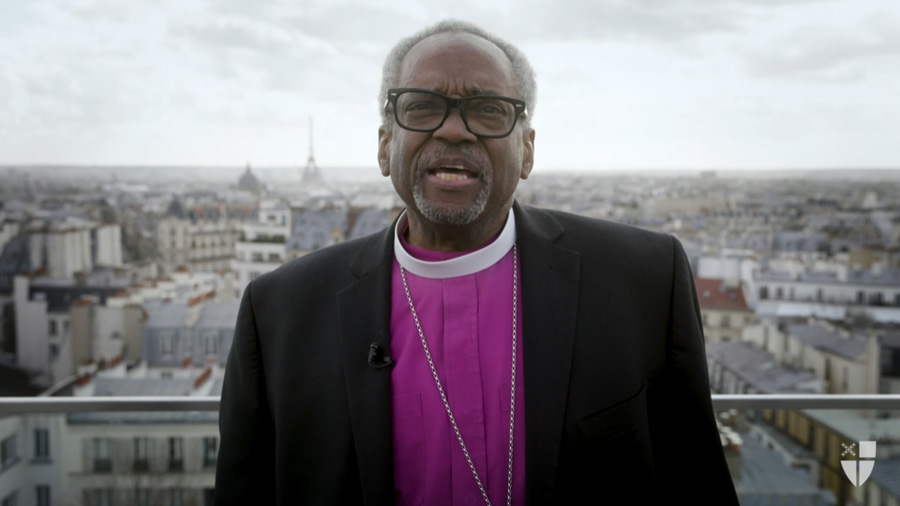
  • Presiding Bishop Michael Curry: Easter 2023 Message

    Presiding Bishop Michael Curry: Easter 2023 Message

    “We are here in a world struggling to find its soul, but the light shines in the darkness, and the darkness has not, cannot, and will not overcome it,” Episcopal Church Presiding Bishop and Primate Michael B. Curry said in his Easter 2023 message. “Jesus lives. He has been raised from the dead. That is the message of Easter, and that is the good news of great tidings.”

    The festive day of Easter is Sunday, April 9, 2023.

    The following is the full text of the presiding bishop’s Easter 2023 message, lightly edited for clarity:

    This is a different Easter message. I’ve shared Easter messages from Jerusalem some years ago, and I have shared Easter and Christmas messages from a variety of locations. Last year for Christmas, we were in San Diego. Today I’m in Paris, part of the Convocation of Episcopal Churches in Europe. We just finished a revival—over 50 young people and some 300-400 people from all over Europe who came for this revival service. It was a remarkable thing to behold and be part of.

    The Convocation here in Europe is engaged in incredible ministries, with some joining together with Episcopal Relief & Development to make it possible for resettlement of those who are refugees from war and famine, particularly those who are refugees from Ukraine.

    Thinking about it—I realize not only with this view—but with the reality of Easter looming on our horizon, John’s Gospel opens: “In the beginning was the Word, and the Word was with God, and the Word was God.” Then there is a point in which it says, of Christ coming into the world, “The light shines in the darkness and the darkness cannot overcome it.”

    On that early Easter morning, John says in his 20th chapter, that early in the morning while it was still dark, Mary Magdalene and some of the other women went to the tomb. They went to the tomb after the crucifixion and burial of Jesus. They went to the tomb of their world having fallen apart. They went to the tomb of all their hopes and dreams having collapsed.

    But they got up and they went anyway. They went to perform the rites of burial, to do for a loved one what you would want to do for them. They went, following the liturgies of their religion and their tradition, and, lo and behold, when they went, they discovered that, even in the darkness, the light of God’s love, the light of Jesus Christ—the light of Christ, as we say in the Great Vigil—in fact, was shining in the darkness, and the darkness did not overcome it.

    Jesus had been raised from the dead. He was alive, and darkness and evil and selfishness could not stop him. Love—as the old song says—love lifted him up.

    We are here in Paris, this wonderful city. While there are protests going on in the city—garbage has not been collected, and it’s all over the city—we are here in Paris, in Europe, with refugees streaming into this continent from all over the world, impacted by changes in weather pattern, impacted by war and famine. We are here in a world struggling to find its soul, but the light shines in the darkness, and the darkness has not, cannot, and will not overcome it. Jesus lives. He has been raised from the dead. That is the message of Easter, and that is the good news of great tidings. From Paris, I’m Michael Curry. God love you. God bless you, and the light shines in the darkness, wherever there is darkness. This little light of mine, I’m going to let it shine. Let it shine, let it shine, let it shine. Amen.

    Presiding Bishop Michael Curry

    Being a Christian is not essentially about joining a church or being a nice person, but about following in the footsteps of Jesus, taking his teachings seriously, letting his Spirit take the lead in our lives, and in so doing helping to change the world from our nightmare into God’s dream. ―Michael Curry, Crazy Christians: A Call to Follow Jesus

    The Most Rev. Michael Bruce Curry is Presiding Bishop and Primate of The Episcopal Church. He is the Chief Pastor and serves as President and Chief Executive Officer, and as Chair of the Executive Council of the Episcopal Church.

    Presiding Bishop Curry was installed as the 27th Presiding Bishop and Primate of The Episcopal Church on November 1, 2015. He was elected to a nine-year term and confirmed at the 78th General Convention of The Episcopal Church in Salt Lake City, Utah, on June 27, 2015.

    Read Presiding Bishop Curry’s biography and find out about the Jesus Movement.

    The Episcopal Church of the Redeemer: Worshiping God, living in community, reaching out to the world.

    Church of the Redeemer

    Church of the Redeemer: Worshiping God, living in community, and reaching out to the world around us.

    We are an Episcopal Church serving north King County and south Snohomish County, Washington. As you travel your road, go with friends walking the way of Jesus at Redeemer.

    Church of the Redeemer is at 6220 Northeast 181st Street in Kenmore, Washington. The campus is a short distance north of Bothell Way, near the Burke-Gilman Trail. The entrance looks like a gravel driveway. The campus is larger on the inside than it is on the outside. And we managed to hide a large building on the side of a hill that is not easily seen from the street.

    The Episcopal Church welcomes you.

  • Read the weekly bulletin insert for May 22, 2022

    Read the weekly bulletin insert for May 22, 2022

    During the Easter season, Sermons That Work is pleased to present a weekly bulletin insert each week of reflections from bishops of The Episcopal Church on the resurrection of our Lord. Check back each week for a brief exploration of how Jesus Christ’s rising from the grave changes everything. To listen to this reflection, open and subscribe to the Sermons That Work podcast.

    Week 5: Reflections on the Resurrection

    Fairy tales, fables, and Bible stories offer us narratives to live by. While the stories are deep and transforming, we often tend toward the soundbites of wisdom that may have stemmed from the Bible or other literary treasure.

    “Honesty is the best policy.”
    “Don’t bite the hand that feeds you.”
    “Where there is a will there is a way.”

    As a child, I went to church and Sunday school. Content was delivered in simple terms. Matters of faith stayed on the level of repetition of familiar stories and pithy wisdom. As most children are, I was drawn to the liturgy. In “big” church there were symbols and rituals to explore. There was an intriguing story unfolding each Sunday – and in myself. The liturgy carried us to the table where the feast of bread and wine, body and blood, was to be found. There our personal narrative merged with that of Jesus. The death and resurrection we know in the Christian story was our story too.

    “Jesus died and rose again.”
    “Jesus died so we might live.”

    These can be pithy phrases as well. They could easily appear on a billboard. When we are baptized into the death and resurrection of Jesus Christ, we bravely step into the rhythm of dying and rising as we move through the ups and downs of life. It is the physical process of death and resurrection in nature that generates new life, and it is the spiritual equivalent that brings forth new life within us. We see the posture in Jesus’ body; arms outstretched, suffering, and yet, bearing an open and accepting heart. Welcome death. Both physical and spiritual deaths take us to a darkness we cannot imagine. Resurrection always comes and delivers us to a light that in its grace and beauty is unspeakable. Life is not the same but new life has emerged.

    I have found in my own life that while I may not understand intellectually what is happening as life’s circumstances invite me to welcome the process of death and resurrection, my Christian journey has formed me to trust this spiritual process. After all, it is the heart of our Christian faith. Knowing it is true one can hold fast to deep peace despite the worst that life offers. In the darkness we can wait until light and new life comes again.

    This season, may you dwell deeply in the Easter story, dying and rising with the living God we know in Jesus Christ. May your trust in the process of death and resurrection increase, and may new life make you a beautiful witness to the glory of God!

     +Mary Gray-Reeves
    Easter 2022

    Bulletin inserts from the Episcopal Church

    Bulletin inserts

    This text, entitled “Death and Resurrection Isn’t Just for Jesus,” was written by the Rt. Rev. Mary Gray-Reeves, who served as Bishop Diocesan of El Camino Real from 2007 until 2020. She now serves as the Managing Director of The College for Bishops of The Episcopal Church, supporting the education and formation of all bishops in The Episcopal Church. She makes her home in Charlotte, North Carolina.

    Published by the Office of Formation of The Episcopal Church, 815 Second Avenue, New York, N.Y. 10017

    © 2022 The Domestic and Foreign Missionary Society of the Protestant Episcopal Church in the United States of America. All rights reserved.

    These weekly bulletin inserts provide information about the history, music, liturgy, mission, and ministry of The Episcopal Church. For more information, please contact us at stw@episcopalchurch.org.

    Sermons That Work from the Episcopal Church

    Sermons That Work

    For more than 20 years, Sermons That Work, a ministry of The Episcopal Church’s Office of Communication, has provided free sermons, Bible studies, bulletin inserts, and other resources that speak to congregations across the Church. Our writers and readers come from numerous and varied backgrounds, and the resources we provide are used in small house churches, sprawling cathedrals, and everything between.

    Church of the Redeemer

    Church of the Redeemer: Worshiping God, living in community, and reaching out to the world around us. We are an Episcopal Church serving north King County and south Snohomish County, Washington. As you travel your road, go with friends walking the way of Jesus at Redeemer.

    Church of the Redeemer is at 6220 Northeast 181st Street in Kenmore, Washington. The campus is a short distance north of Bothell Way, near the Burke-Gilman Trail. The entrance looks like a gravel driveway. The campus is larger on the inside than it is on the outside. And we managed to hide a large building on the side of a hill that is not easily seen from the street.

    The Episcopal Church welcomes you.

  • Read the weekly bulletin insert for May 15, 2022

    Read the weekly bulletin insert for May 15, 2022

    During the Easter season, Sermons That Work is pleased to present a weekly bulletin insert each week of reflections from bishops of The Episcopal Church on the resurrection of our Lord. Check back each week for a brief exploration of how Jesus Christ’s rising from the grave changes everything. To listen to this reflection, open and subscribe to the Sermons That Work podcast.

    Week 4: Reflections on the Resurrection

    In John’s version of Easter, Mary lingers at the empty tomb after Peter and John run quickly away. When the risen Jesus appears in front of her, she mistakes him for the gardener. It’s an understandable miss. In the grip of all the trauma and grief from the events of Good Friday, she certainly wouldn’t be expecting the one for whom she grieves to be suddenly standing in front of her. It’s easy to overlook that moment as an unimportant detail.

    However, as I return to this story year after year, I’ve come to think it’s not a mistake at all, that Mary gets it exactly right, and that this detail helps us understand why the Resurrection really matters.

    The orginal vocation to which God calls humanity is tilling and keeping the world God has made. We initially failed in that calling, choosing ourselves and our own way over God and God’s way of love. The whole arc of scripture is essentially the story of God’s project to reforest a world that has become desolate with suffering, violence, and death as a result of our rejection of God. Of course, Jesus is the gardener! His resurrection is the unmistakable assurance of God’s intention to restore the desert we have made of the world to the original garden God intended, lush with the fruits of love, life, justice, and peace.

    Jesus died a real death. The same death each of us fears, and that we have seen take so many we love. For the Resurrection to mean anything, it must be every bit as real as that death. Jesus the gardener reminds us that, as an Easter people, the point of our faith and our lives is not to escape from the world and its pain, but rather to join Jesus in renewing the world, planting seeds of hope, watering the parched places of pain, tilling the soil toward justice, working the land to nurture the feast of love God intended. We don’t find the Beloved Community by retreating to somewhere else, we find it by following Jesus to where the pain is, and by digging, by tilling, by keeping.

    Plant a tree in these days of Easter. Grow a garden. Make it a sign and sacrament of how we are called in every moment to bear witness to the great good news that death is not what it appears to be. Even now, the green shoots of faith and hope are bringing about God’s perfect reign of love, joy, and life that knows no end. Alleluia!

    Bulletin inserts from the Episcopal Church

    Bulletin inserts

    This reflection was written by the Rt. Rev. Craig Loya. Bishop Loya was consecrated the X Bishop of the Episcopal Church in Minnesota on June 6, 2020. He served as Dean of Trinity Cathedral in Omaha, Nebraska from 2013-2020, and was the Canon to the Ordinary in the Episcopal Diocese of Kansas from 2009-2013. He received his Master of Divinity from Yale University and a Diploma in Anglican Studies from Berkeley Divinity School at Yale in 2002.

    Published by the Office of Formation of The Episcopal Church, 815 Second Avenue, New York, N.Y. 10017

    © 2022 The Domestic and Foreign Missionary Society of the Protestant Episcopal Church in the United States of America. All rights reserved.

    These weekly bulletin inserts provide information about the history, music, liturgy, mission, and ministry of The Episcopal Church. For more information, please contact us at stw@episcopalchurch.org.

    Sermons That Work from the Episcopal Church

    Sermons That Work

    For more than 20 years, Sermons That Work, a ministry of The Episcopal Church’s Office of Communication, has provided free sermons, Bible studies, bulletin inserts, and other resources that speak to congregations across the Church. Our writers and readers come from numerous and varied backgrounds, and the resources we provide are used in small house churches, sprawling cathedrals, and everything between.

    Church of the Redeemer

    Church of the Redeemer: Worshiping God, living in community, and reaching out to the world around us. We are an Episcopal Church serving north King County and south Snohomish County, Washington. As you travel your road, go with friends walking the way of Jesus at Redeemer.

    Church of the Redeemer is at 6220 Northeast 181st Street in Kenmore, Washington. The campus is a short distance north of Bothell Way, near the Burke-Gilman Trail. The entrance looks like a gravel driveway. The campus is larger on the inside than it is on the outside. And we managed to hide a large building on the side of a hill that is not easily seen from the street.

    The Episcopal Church welcomes you.

  • Read the weekly bulletin insert for May 8, 2022

    Read the weekly bulletin insert for May 8, 2022

    During the Easter season, Sermons That Work is pleased to present a weekly bulletin insert each week of reflections from bishops of The Episcopal Church on the resurrection of our Lord. Check back each week for a brief exploration of how Jesus Christ’s rising from the grave changes everything. To listen to this reflection, open and subscribe to the Sermons That Work podcast.

    Week 3: Reflections on the Resurrection

    Jesus said to Thomas, “Put your finger here and see my hands. Reach out your hand and put it in my side. Do not doubt but believe” (John 20:27).

    Jesus’ hands, feet, and side remain wounded as he appears to his first followers after his resurrection. He has risen from the dead yet remains wounded. What is the Holy Trinity telling us with this not insignificant detail? This is Jesus, after all, who made lepers clean, gave hearing to a man born deaf, and sight to one born blind. Jesus fed the multitudes, walked on water, calmed the storm, and raised the dead. Jesus healed the centurion’s servant without even stepping foot in his yard. Jesus, who in so many ways showed that his power was unlimited, does not heal himself.

    Jesus comes back still bearing humanity’s marks on his flesh. If Jesus rose healed over, nice and neat, we could be tempted to see the cross as less signficant. We could decide that suffering, particularly suffering and sacrifice for others, holds no meaning for us. Instead, we see how far the compassion of the Holy Trinity extends. Compassion means “suffering with.” Jesus had compassion for Thomas whose doubts had overtaken his faith. Jesus offers Thomas the proof the disciple needs to understand that, though Jesus died, he has truly risen from the grave.

    For me, the most astounding part of these wounds is that it reveals Jesus as vulnerable. The literal meaning of vulnerable is “able to be wounded.” God the Son was fully human as well as fully divine, and so able to be wounded. He was wounded by humans for the sake of humanity. This matters to our day-to-day lives, as we are called to live our bodily, daily existence, transformed by the Christ who is present with us in our suffering and loss. Jesus, who felt the pain of what humans did to him, knows suffering. Jesus, who experienced abandonment on the cross, knows that pain – and yet will never abandon you.

    To love is to make oneself vulnerable. Jesus’ vulnerability shows the depths of God’s love for all humanity. The Holy Trinity could have remained outside of creation as a righteous judge. Instead, God entered the creation in the person of Jesus of Nazareth. A necessary part of being one of us is emotional and physical vulnerability. People could and did reject him and put him to death. Yet Jesus did not give up on loving us, even when the cost of that love was death on a cross.

    Whatever you are facing, you have alongside and within you a loving God who understands fully. Ask Jesus to touch your wounded life with his hands that still bear the marks of what we humans did and yet remain open, reaching out with love and healing.

    Bulletin inserts from the Episcopal Church

    Bulletin inserts

    This reflection, titled “Touch My Hands and Side”, was written by the Rt. Rev. Frank Logue. Logue is the bishop of the Diocese of Georgia. He previously served as the church planter for King of Peace Episcopal Church in Kingsland, Georgia, and as canon to the ordinary of the diocese he now serves as bishop.

    Published by the Office of Formation of The Episcopal Church, 815 Second Avenue, New York, N.Y. 10017

    © 2022 The Domestic and Foreign Missionary Society of the Protestant Episcopal Church in the United States of America. All rights reserved.

    These weekly bulletin inserts provide information about the history, music, liturgy, mission, and ministry of The Episcopal Church. For more information, please contact us at stw@episcopalchurch.org.

    Sermons That Work from the Episcopal Church

    Sermons That Work

    For more than 20 years, Sermons That Work, a ministry of The Episcopal Church’s Office of Communication, has provided free sermons, Bible studies, bulletin inserts, and other resources that speak to congregations across the Church. Our writers and readers come from numerous and varied backgrounds, and the resources we provide are used in small house churches, sprawling cathedrals, and everything between.

    Church of the Redeemer

    Church of the Redeemer: Worshiping God, living in community, and reaching out to the world around us. We are an Episcopal Church serving north King County and south Snohomish County, Washington. As you travel your road, go with friends walking the way of Jesus at Redeemer.

    Church of the Redeemer is at 6220 Northeast 181st Street in Kenmore, Washington. The campus is a short distance north of Bothell Way, near the Burke-Gilman Trail. The entrance looks like a gravel driveway. The campus is larger on the inside than it is on the outside. And we managed to hide a large building on the side of a hill that is not easily seen from the street.

    The Episcopal Church welcomes you.

  • Read the weekly bulletin insert for May 1, 2022

    Read the weekly bulletin insert for May 1, 2022

    During the Easter season, Sermons That Work is pleased to present a weekly bulletin insert each week of reflections from bishops of The Episcopal Church on the resurrection of our Lord. Check back each week for a brief exploration of how Jesus Christ’s rising from the grave changes everything. To listen to this reflection, open and subscribe to the Sermons That Work podcast.

    Week 2: Reflections on the Resurrection

    In the Gospel of Mark, the women in the resurrection narrative find an empty tomb, but no signs of Jesus. How would you respond if all you encountered was an empty tomb? Would you believe Jesus was alive?

    On the one hand, we have the benefit of 2,000 years of Easter celebrations. We know how the story ends. However, the events of the past few years have placed many of us in the posture of the women from Mark’s Gospel. We’ve lived through multiple pandemics: COVID-19, dramatic weather patterns indicating an environmental crisis, a political system which seems broken almost beyond repair, and the acknowledgement of systemic racism embedded in all aspects of American life. At times, it has felt like the empty tomb on Easter morning as we searched for signs of God’s presence in the midst of so much pain and despair. Do we believe Jesus is alive?

    The women’s response to the empty tomb can help us navigate our current circumstances. In order for the women to experience the risen Lord, they had to return to Galilee. Returning to Galilee entails going to the margins, far from the bright lights of the city. Galilee was the place where Jesus healed the sick and fed the hungry, where he drove out demons and preached words of hope, where he restored people to community. In Galilee, we look beyond our own needs and respond compassionately to others. And that’s where we’ll find God, among the least, the lost and the lonely.

    Intractable problems aren’t easily resolved but we can make a difference when we collaborate with others as partners in God’s vineyard. The question is whether we are willing to journey to Galilee and commit ourselves to the ministry of repentance, reconciliation and restoration. The resurrection isn’t a one time event which occurred 2,000 years ago – it has implications for how we structure our lives today. We participate in the resurrection when we work to make the kingdom of God manifest on earth.

    Beloved, resurrected life is available this side of the grave. There’s an assignment with your name written on it and it’s waiting for you in Galilee. In this season of Easter, may we courageously share the love of God with our fellow companions and everyone we encounter along the way. The Good News of Jesus Christ is too amazing to keep to ourselves. So let’s journey together to Galilee. Amen.

    Bulletin inserts from the Episcopal Church

    Bulletin inserts

    This reflection was written by the Rt. Rev. Phoebe Roaf. Bishop Roaf grew up in Pine Bluff, Arkansas. Following her work as a public policy analyst and an attorney, she was ordained as a priest in the Diocese of Louisiana. She served congregations in New Orleans and Richmond, Va., prior to her ordination and consecration as the 4th Bishop of the Diocese of West Tennessee on May 4, 2019.

    Published by the Office of Formation of The Episcopal Church, 815 Second Avenue, New York, N.Y. 10017

    © 2022 The Domestic and Foreign Missionary Society of the Protestant Episcopal Church in the United States of America. All rights reserved.

    These weekly bulletin inserts provide information about the history, music, liturgy, mission, and ministry of The Episcopal Church. For more information, please contact us at stw@episcopalchurch.org.

    Sermons That Work from the Episcopal Church

    Sermons That Work

    For more than 20 years, Sermons That Work, a ministry of The Episcopal Church’s Office of Communication, has provided free sermons, Bible studies, bulletin inserts, and other resources that speak to congregations across the Church. Our writers and readers come from numerous and varied backgrounds, and the resources we provide are used in small house churches, sprawling cathedrals, and everything between.

    Church of the Redeemer

    Church of the Redeemer: Worshiping God, living in community, and reaching out to the world around us. We are an Episcopal Church serving north King County and south Snohomish County, Washington. As you travel your road, go with friends walking the way of Jesus at Redeemer.

    Church of the Redeemer is at 6220 Northeast 181st Street in Kenmore, Washington. The campus is a short distance north of Bothell Way, near the Burke-Gilman Trail. The entrance looks like a gravel driveway. The campus is larger on the inside than it is on the outside. And we managed to hide a large building on the side of a hill that is not easily seen from the street.

    The Episcopal Church welcomes you.

  • Watch worship for 2022 Triduum and Easter

    Watch worship for 2022 Triduum and Easter

    Take a moment to watch these worship services:

    • Maundy Thursday, April 14, 2022
    • Good Friday, April 15, 2022
    • The Great Vigil of Easter, April 16, 2022
    • The 10:00 service on the Sunday of the Resurrection, or Easter day, on April 17, 2022

    From early times Christians have observed the week before Easter as a time of special devotion. As the pilgrim Egeria recorded in the late fourth century, Jerusalem contained many sacred places that were sites for devotion and liturgy. Numerous pilgrims to the holy city followed the path of Jesus in his last days. They formed processions, worshipped where Christ suffered and died, and venerated relics.

    From this beginning evolved the rites we observe today on Palm Sunday, Maundy Thursday, Good Friday, and Holy Saturday. These services provide a liturgical experience of the last days of Jesus’ earthly life, as well as the time and events leading up to his resurrection.  

    Read more about Holy Week.

    Worship for Maundy Thursday

    The name “Maundy” comes from the Latin mandatum novum, “new commandment,” from John 13:34. The ceremony of washing feet was also referred to as “the Maundy.” Maundy Thursday celebrations also commemorate the institution of the Eucharist by Jesus “on the night he was betrayed.”

    Egeria, a fourth-century pilgrim to Jerusalem, describes elaborate celebrations and observances in that city on Maundy Thursday. The Council of Hippo attested to the special celebration of the institution of the Eucharist on Maundy Thursday.

    Read more about Maundy Thursday.

    Please accept YouTube cookies to play this video. By accepting you will be accessing content from YouTube, a service provided by an external third party.

    YouTube’s privacy policy

    If you accept this notice, your choice will be saved and the page will refresh.

    Worship for Good Friday

    Good Friday is the Friday before Easter Day, on which the church commemorates the crucifixion of Jesus. It is a day of fasting and special acts of discipline and self-denial. 

    In the early church candidates for baptism, joined by others, fasted for a day or two before the Paschal feast. In the West, the first of those days eventually acquired the character of historical reenactment of the passion and death of Christ.

    Read more about Good Friday.

    Please accept YouTube cookies to play this video. By accepting you will be accessing content from YouTube, a service provided by an external third party.

    YouTube’s privacy policy

    If you accept this notice, your choice will be saved and the page will refresh.

    The Great Vigil of Easter

    The Easter Vigil is the liturgy intended as the first and, arguably, the primary celebration of Easter in the Episcopal Book of Common Prayer. It is also known as the Great Vigil.

    The service begins in darkness and consists of four parts:

    • The Service of Light. This starts the service with the kindling of new fire and the lighting the Paschal candle.
    • The Service of Lessons. This has readings from the Hebrew Scriptures interspersed with psalms, canticles, and prayers.
    • Christian Initiation. This is the sacrament of Holy Baptism and/or the Renewal of Baptismal Vows by all present.
    • The Eucharist. The sacrament of Christ’s body and blood, and the principal act of Christian worship. The term Eucharist is from the Greek, “thanksgiving.” Christ’s body and blood are really present in the sacrament of the Eucharist and received by faith. Christ’s presence is also known in the gathered eucharistic community.

    This liturgy recovers an ancient practice of keeping the Easter feast. Believers would gather in the hours of darkness ending at dawn on Easter to hear scripture and offer prayer. This night-long service of prayerful watching anticipated the baptisms that would come at first light and the Easter Eucharist.

    Read more about the Easter Vigil.

    Please accept YouTube cookies to play this video. By accepting you will be accessing content from YouTube, a service provided by an external third party.

    YouTube’s privacy policy

    If you accept this notice, your choice will be saved and the page will refresh.

    Worship for the Sunday of the Resurrection, or Easter Day

    Easter Day is the annual feast of the resurrection, the Pascha or Christian Passover, and the eighth day of cosmic creation. Faith in Jesus’ resurrection on the Sunday, or third day following his crucifixion, is at the heart of Christian belief. 

    Easter Day starts the Easter Season, the Great 50 Days. It lasts until the Feast of Pentecost, celebrating the coming of the Holy Spirit. During the Easter season there is no fasting. 

    Read more about Easter.

    This was the 10:00 am worship service.

    Please accept YouTube cookies to play this video. By accepting you will be accessing content from YouTube, a service provided by an external third party.

    YouTube’s privacy policy

    If you accept this notice, your choice will be saved and the page will refresh.

    Church of the Redeemer

    Welcome to Church of the Redeemer: Worshiping God, living in community, and reaching out to the world. We are an Episcopal Church serving north King County and south Snohomish County, Washington. As you travel your road, go with friends walking the way of Jesus at Redeemer.

    Church of the Redeemer is at 6220 Northeast 181st Street in Kenmore, Washington. We are a short distance north of Bothell Way, near the Burke-Gilman Trail. The entrance looks like a gravel driveway. The campus is larger on the inside than it is on the outside. And we managed to hide a large building on the side of a hill that is not easily seen from the street.

    The Episcopal Church welcomes you.

  • Read the weekly bulletin insert for April 24, 2022

    Read the weekly bulletin insert for April 24, 2022

    During the Easter season, Sermons That Work is pleased to present a weekly bulletin insert each week of reflections from bishops of The Episcopal Church on the resurrection of our Lord. Check back each week for a brief exploration of how Jesus Christ’s rising from the grave changes everything. To listen to this reflection, open and subscribe to the Sermons That Work podcast.

    Week 1: Reflections on the Resurrection

    The Gospel for the Sunday after Easter tells us of Thomas who, famously, in his doubt, requires the certainty of touching His Lord’s hands and side before he will believe. The Lord does not rebuke him, though He does bless the later followers ready to believe without this evidence. But at the hearing of His Lord’s voice, Thomas, without touching, responds in faith: “My Lord and my God.” This is a reflection on these themes.

    In chapter 15 of his first letter to the Church in Corinth, Paul tells us that if there is no resurrection of the dead, then “we are of all people most to be pitied” (v. 19). Apparently Eastertide is joyful, but also risky! God Himself is clearly not risk averse: witness how He enlists Adam, Abraham, Mary, etc. in risky missions with varied results. Likewise the risen Jesus Christ calls us His people to a risky following. In this vein, great modern philosophers have compared the life of faith to a gamble (Pascal) or a leap (Kiekegaard).

    On the other hand, we who are “wearied by the changes and chances” of this life (Book of Common Prayer) quite reasonably come to church to rest in something that can be counted on, that is certain. Isn’t this what Jesus encourages us to do when he tells us to build our homes on rock and not sand (Matthew 7:24)? How do we balance the reality of risk and the longing for something certain? How can we conceive of this certainty that does not close off our minds and hearts?

    In the thirteen century, Thomas Aquinas poses for himself this very question: is hope certain (Summa II/II, 18.4)? He answered “yes and no,” which may seem the kind of answer that gave scholastics a bad name! But it is what he means by “yes and no” which is helpful to us. Do we have a certain hope in Christ? Thomas replies that, insofar as we are doing the hoping, it is most uncertain, like everything about us. But insofar as it is Christ in whom we hope, it is utterly certain. By “certain,” he does not mean something that can be proved with a theorem, but rather he means that the One in whom we hope is trustworthy. “Certainty,” like faith, has a “fiduciary” dimension.

    At the heart of the Christian life is being summoned anew by the news of the resurrection of Jesus. It does not depend on us, as if faith were some problem solved in our heads (though God does call us to faithful thinking), nor an exertion of our will (though He would have us love Him with all our wills). Rather we are continually turned away from our untrustworthy selves to our trustworthy Lord. As a result, I am given the gift of an uncertain certainty, by which, on the disciples’ path, beset by doubts, I am enabled to say, “My Lord and my God.”

    Bulletin inserts from the Episcopal Church

    Bulletin inserts

    This reflection, titled “Certain”, was written by the Rt. Rev. Dr. George Sumner, Bishop of Dallas. He has served, among other places, in central Tanganyika, Navajoland in The Episcopal Church, and as principal of Wycliffe College, Toronto. He has written a book on the relation of Christianity to other religions, a book on the theology of ordination, and a commentary on Daniel from a missiological perspective.

    © 2022 The Domestic and Foreign Missionary Society of the Protestant Episcopal Church in the United States of America. All rights reserved.

    These weekly bulletin inserts provide information about the history, music, liturgy, mission, and ministry of The Episcopal Church. For more information, please contact us at stw@episcopalchurch.org.

    Sermons That Work from the Episcopal Church

    Sermons That Work

    For more than 20 years, Sermons That Work, a ministry of The Episcopal Church’s Office of Communication, has provided free sermons, Bible studies, bulletin inserts, and other resources that speak to congregations across the Church. Our writers and readers come from numerous and varied backgrounds, and the resources we provide are used in small house churches, sprawling cathedrals, and everything between.

    Church of the Redeemer

    Church of the Redeemer: Worshiping God, living in community, and reaching out to the world around us. We are an Episcopal Church serving north King County and south Snohomish County, Washington. As you travel your road, go with friends walking the way of Jesus at Redeemer.

    Church of the Redeemer is at 6220 Northeast 181st Street in Kenmore, Washington. The campus is a short distance north of Bothell Way, near the Burke-Gilman Trail. The entrance looks like a gravel driveway. The campus is larger on the inside than it is on the outside. And we managed to hide a large building on the side of a hill that is not easily seen from the street.

    The Episcopal Church welcomes you.

The 13th Sunday after Pentecost, August 23, 2026. Services at 8:00 am (no music) and 10:30 (music).

Episcopal Church of the Redeemer
Privacy Overview

Cookie information is stored in your browser and performs functions such as recognizing you when you return to our website and helping our team to understand which pages of the website are visited. We aren't using cookies to determine your web browsing habits, but others can.