The primary inspiration for Lesbia Scott to write “I sing a song of the saints of God” was to teach her own children about the meaning of Christian faith and sainthood in an accessible and relatable way. She was a mother of three and the wife of an Anglican priest, and she wrote various hymns for her children at their request for different occasions, such as a “foggy day” or a “picnic”.
Specifically for this hymn, as the Feast of All Saints approached one year, she wanted a song that would do the following:
- Explain the concept of saints to children in simple terms.
- Emphasize that saints are ordinary people from diverse walks of life, not just distant, historical, or “high church” figures. The lyrics stress that you can find saints “in school, or in lanes, or at sea, in church, or in trains, or in shops, or at tea”.
- Encourage her children to see themselves as potential saints-in-the-making by living lives of patience, bravery, and truth.
Scott never intended the hymn for widespread publication, viewing her compositions as humble, domestic expressions of family faith, and was reportedly “a little disconcerted by its popularity” later on.
The audio for this video came from the All Saints service in 2024.
Saints in the video
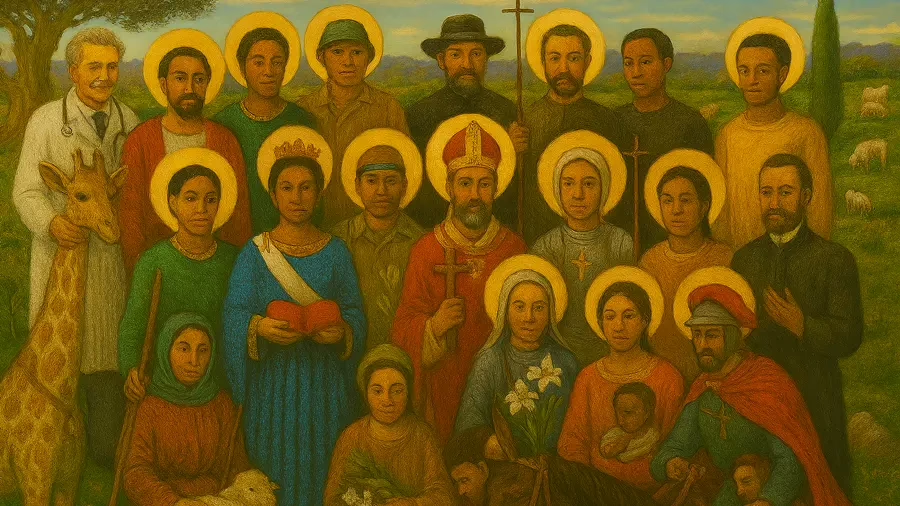
Here are the saints of God in the video. (The saints that Lesbia Scott had in mind are below.)
Doctor
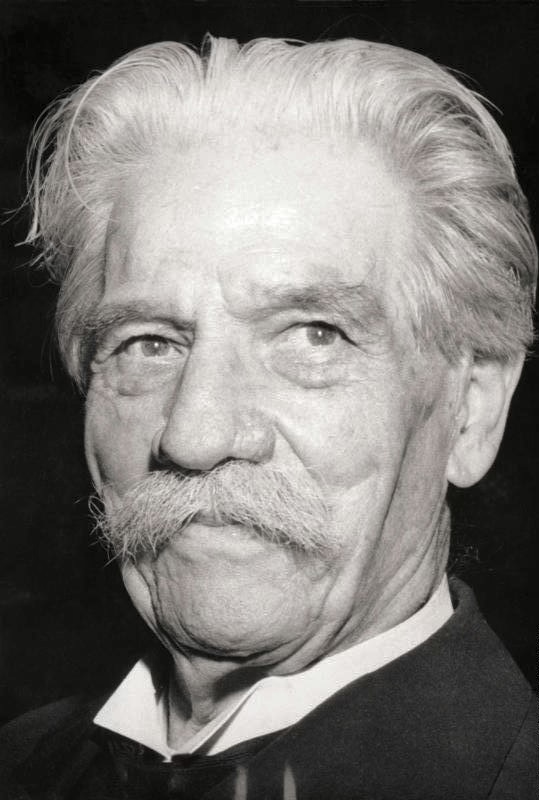
Albert Schweitzer
Albert Schweitzer, a Lutheran theologian, physician, and philosopher, dedicated his life to serving humanity through his medical missionary work. After a pact he made with God, he founded a hospital in Lambaréné, Gabon. He provided care for thousands of patients for over 50 years. His life followed his philosophy of “Reverence for Life.” He also received the 1952 Nobel Peace Prize for his humanitarian efforts.
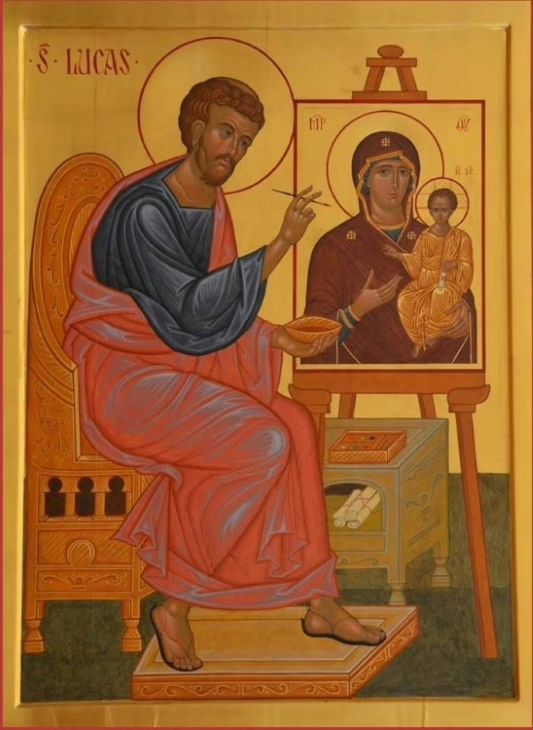
Luke the Physician
Luke made significant contributions to early Christianity as a writer and companion to Saint Paul. The New Testament mentions him as a physician. He traditionally receives credit with writing the Gospel of Luke and the Acts of the Apostles. Together, these make up a substantial portion of the New Testament. He is also the patron saint of physicians, artists, and others.
Queen
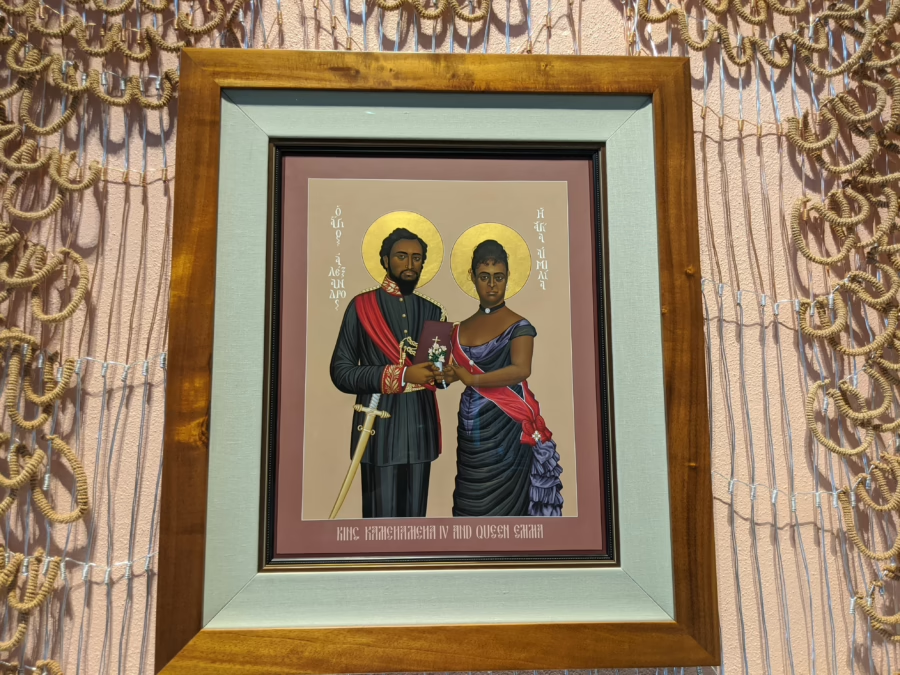
Emma of Hawaiʻi
The Episcopal Church venerates Queen Emma of Hawaiʻi for her devout faith and charitable works. Along with her husband, King Kamehameha IV, she championed the Anglican (Episcopal) church in Hawaiʻi and founded St. Andrew’s Cathedral. After her husband’s death, she committed her life to establishing schools and churches, and helping the those of limited means and sick. The icon is in a chapel in St. Andrewʻs Cathedral dedicated to their memory.
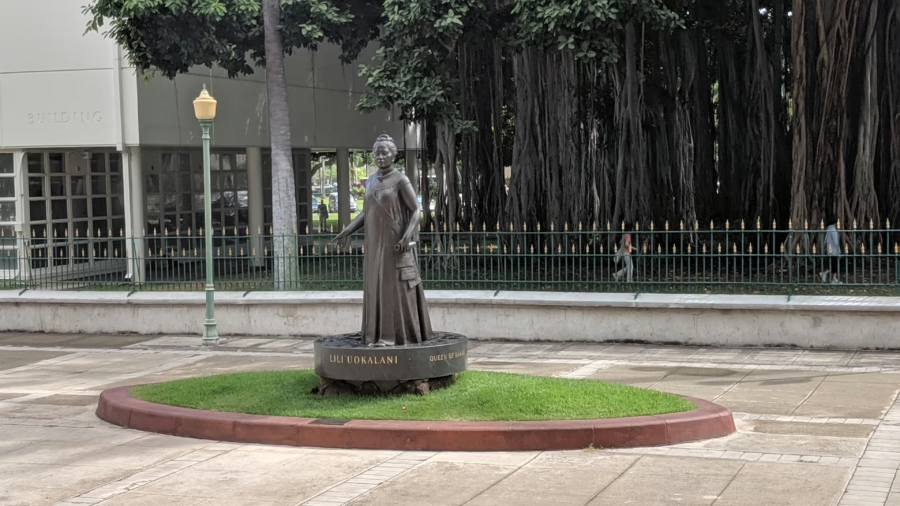
Liliʻuokalani of Hawaiʻi
Liliʻuokalani is a saint of the Episcopal Church. She had unwavering faith, especially during her imprisonment after the overthrow of the Hawaiian monarchy. A devout Christian and a prolific composer, her well-known “Queen’s Prayer” reflects her faith and forgiveness. She also welcomed different Christian faiths and other religions to the islands.
Shepherdess
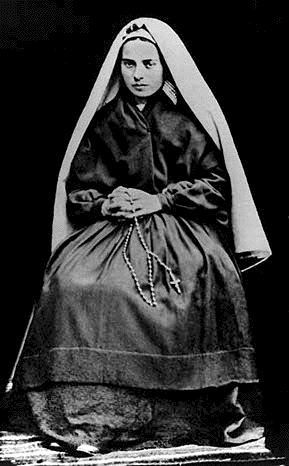
Bernadette Soubirous
Bernadette Soubirous is a Catholic saint who had visions of the Virgin Mary experienced at Lourdes, France, in 1858. The “lady” she saw instructed her to uncover a spring whose waters have been associated with miraculous healings. Bernadette remained steadfast in her accounts despite skepticism and questioning. Her life of faith and humility led to Lourdes becoming a major pilgrimage site.
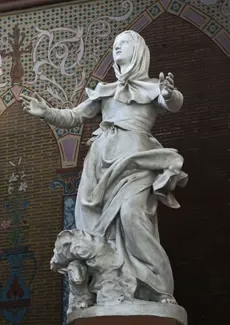
Germaine Cousin
Sainte Germaine Cousin had deep piety, humility, and charity despite a life of suffering and mistreatment in 16th-century France. Neglected by her family and suffering from a withered hand and illness, she was a shepherdess who daily attended Mass and shared her meager food with the less fortunate. Her body was found incorrupt after her death, and miracles were attributed to her intercession.
Soldier
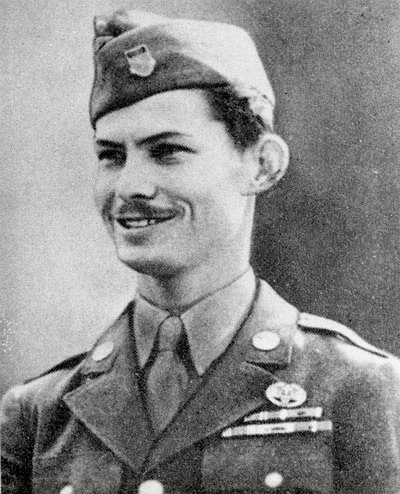
Desmond Thomas Doss
The memory of Desmond Doss, a Seventh-day Adventist, is for his Christian pacifist beliefs and his heroic actions as a combat medic during World War II. As a conscientious objector, he refused to carry a weapon. Because of this he faced harassment from his fellow soldiers but remained committed to saving lives. He famously rescued approximately 75 wounded men under enemy fire during the Battle of Hacksaw Ridge. For this he earned the Medal of Honor.
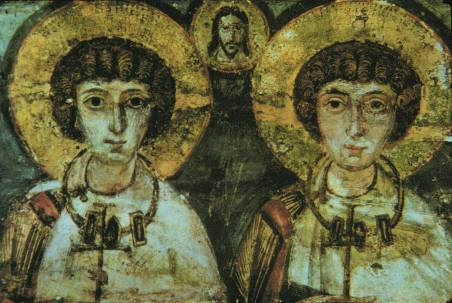
Sergius and Bacchus
Sergius and Bacchus were Roman military officers. They were martyred in the 4th century for their Christian faith. After discovering their conversion, they were publicly humiliated and tortured for refusing to participate in pagan sacrifices to Roman gods. Bacchus was beaten to death. Sergius was later beheaded. Their veneration is as military saints, especially in Eastern Christianity. The oldest story of their martyrdom calls them erastai, which could mean they were more than close friends.
Priest
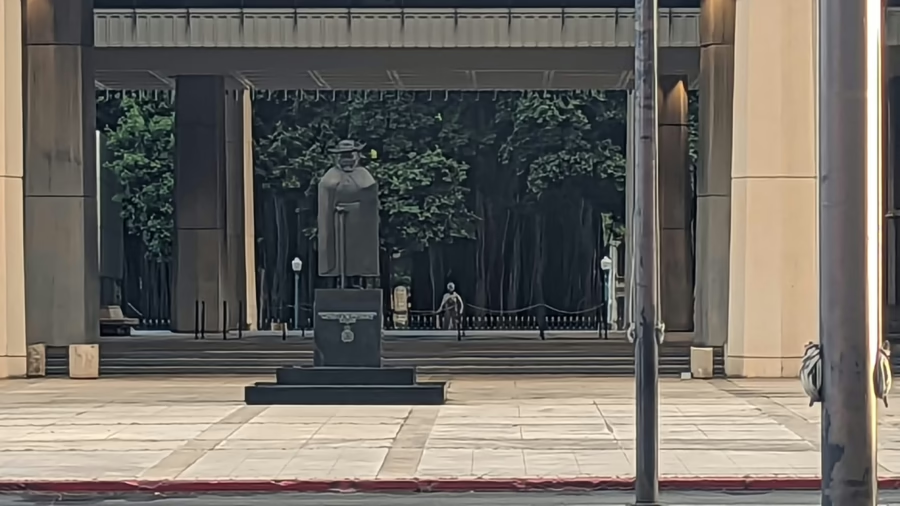
Damien of Molokai
Hawaiians remembers Damien for his heroic sacrifice and ministry to the people with Hansen’s disease (leprosy) on the island of Molokai, Hawaiʻi. In 1873, he volunteered to live and serve in the quarantined colony, providing spiritual and physical care. He ultimately contracted the disease himself and died in 1889. This led him to become known as a “martyr of charity” for his selfless service. It is a statue of Damien that welcomes you to the state capitol building in Honolulu.
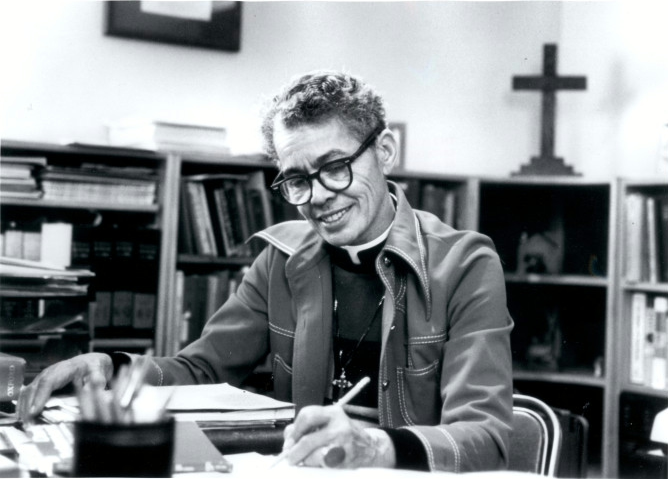
Pauli Murray
Pauli Murray is an Episcopal saint remembered for their work as a priest and activist who fought for civil rights, women’s rights, and LGBTQ+ rights. They were a lawyer, author, and poet who challenged both racial and gender discrimination. In 1977, Murray became the first African American woman ordained to the Episcopal priesthood.
Killed by a fierce wild beast
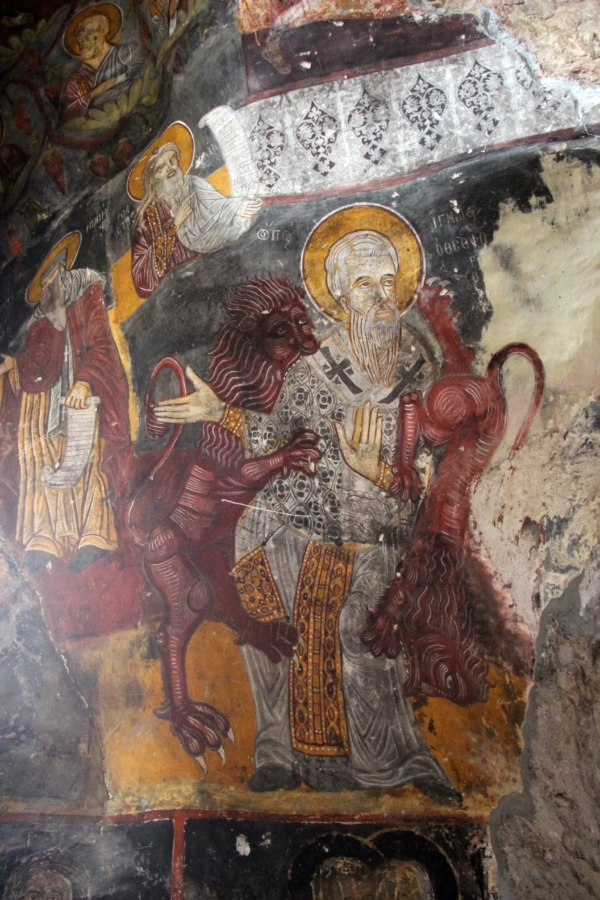
Ignatius of Antioch
Ignatius of Antioch is an Apostolic Father of the Church, remembered for his martyrdom around 107 AD. As the bishop of Antioch, Emperor Trajan had him arrested for his faith and transported to Rome for execution. During his journey, he wrote seven letters that are a key source of early Christian theology. He welcomed his death, famously writing that he would become “God’s wheat” to be ground by wild beasts.
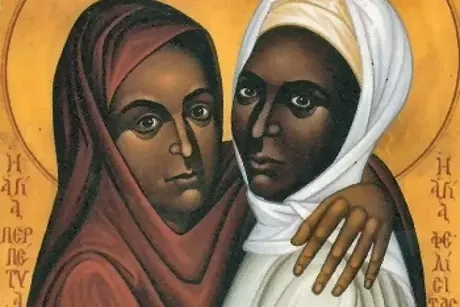
Perpetua and Felicity
Saints Perpetua and Felicity were early Christian martyrs killed in the Roman arena in 203 AD. Perpetua, a noblewoman, and Felicity, her slave, were arrested for their faith along with their companions. Perpetua partially wrote the account of their imprisonment and death. This made it one of the earliest known first-person narratives by a Christian woman. We remember them for their steadfast faith in the face of suffering.
Saints referenced by Lesbia Scott
Lesbia Scott had these saints in mind when writing the hymn in 1929. There will be some repeats with the above group of saints.
Doctor: Luke the Evangelist
We remember Luke for his significant contributions to the early Church as a writer and companion to the Apostle Paul. A physician by profession, he traditionally receives credit with authoring the Gospel of Luke and the Acts of the Apostles. Those two books constitute a crucial two-part narrative of Jesus’s life and the early Christian movement. His detailed accounts emphasize Christ’s compassion and salvation for all people. He is the patron saint of physicians, surgeons, artists, and more. His honor comes from his meticulous recording of Christian history and theology.
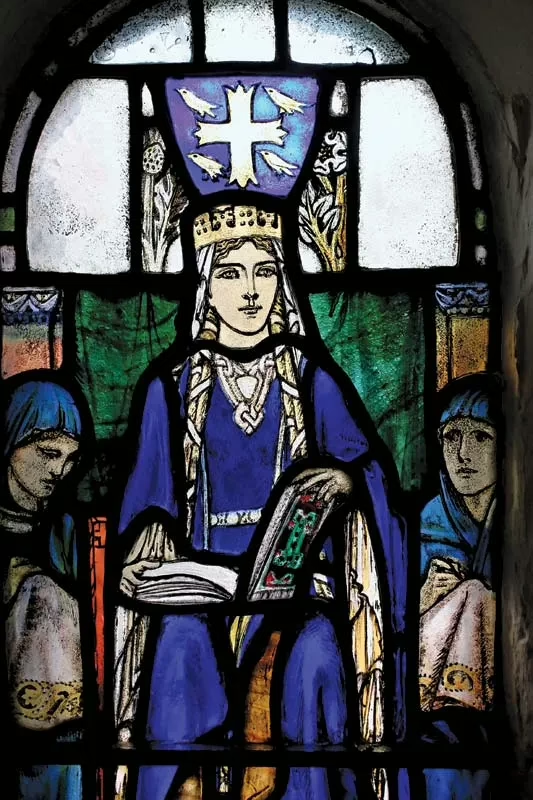
Queen: Margaret of Scotland
We remember Margaret of Scotland (c. 1045–1093) as a pious and benevolent queen who profoundly influenced the religious and cultural life of her adopted country. Married to King Malcolm III, she had deep personal piety, a commitment to prayer, and extensive charitable works. She established churches, supported monastic reforms, and worked to align the Scottish Church with wider European Christian practices. Her life exemplified humble service and devotion, earning her a lasting legacy as a compassionate and devout ruler.
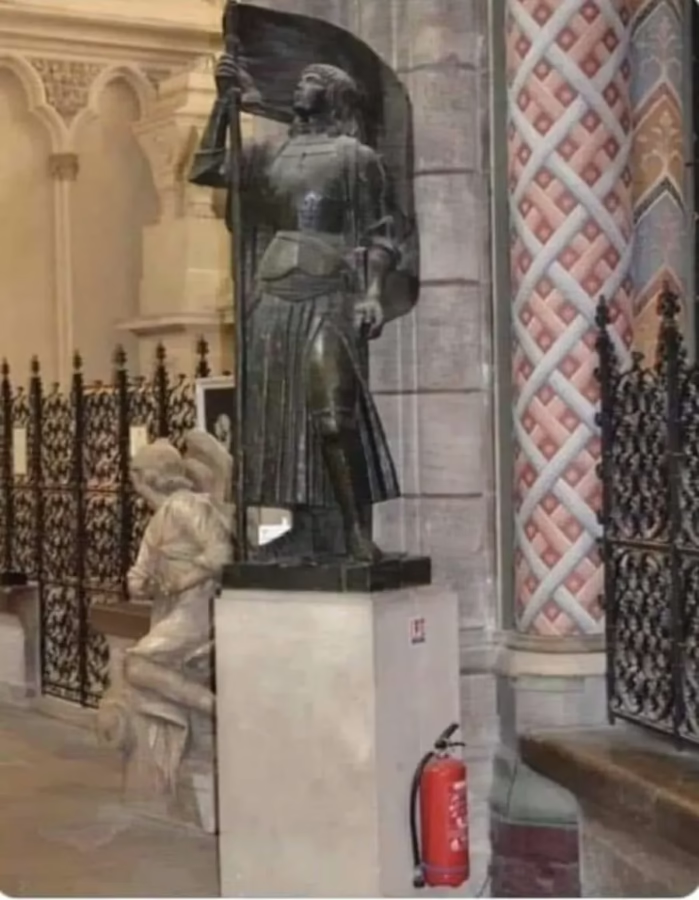
Shepherdess on the green: Joan of Arc
Joan of Arc is a national heroine of France. We remember her divine mission during the Hundred Years’ War. Believing the voices of saints guided her, she led the French army to several important victories at just seventeen years old. Despite being a simple peasant girl, her courage and conviction inspired a nation. She was captured and burned at the stake for heresy. Her innocence was proclaimed years later. People revere Joan for her extraordinary faith, courage, and leadership.
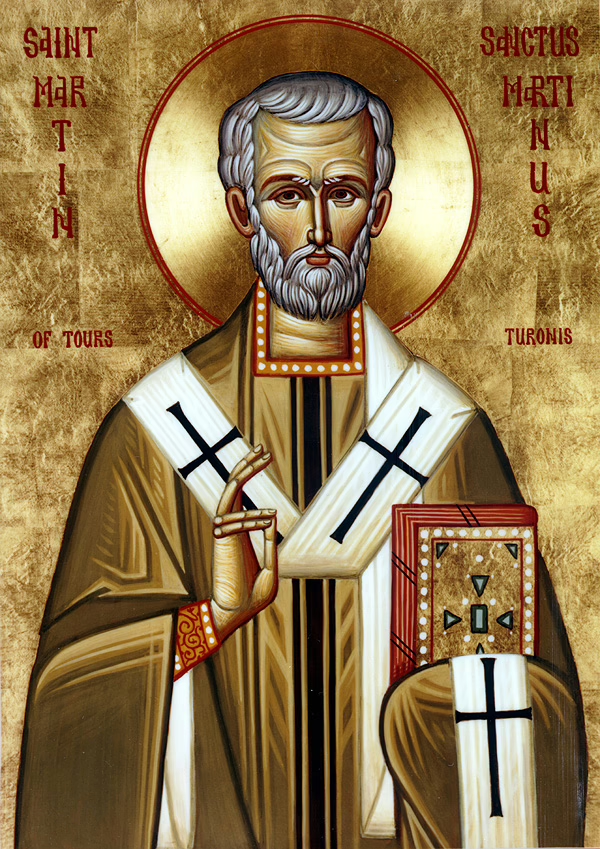
Soldier: Martin of Tours
We remember Martin of Tours as a Roman soldier who became a revered bishop and a model of Christian charity. The most famous story of his life involves a cold winter day. He cut his military cloak in half to share with a shivering beggar. That night, he had a vision of Christ wearing the shared garment. This event led him to leave the military, become a disciple of Saint Hilary of Poitiers, and eventually serve as the Bishop of Tours. His monasticism, evangelism, and humble piety is why we know him today.

Priest: John Donne
We remember John Donne as a prominent English poet and an Anglican priest (Dean of St. Paul’s Cathedral). His work explored complex themes of love, death, and faith. Initially Donneʻs fame was for his secular poetry. Later, he underwent a spiritual conversion and became one of the most influential religious figures of his time. The renown for his powerful sermons and Holy Sonnets come from their intellectual depth and passionate expression of his spiritual struggles and profound devotion, making him a celebrated figure in both literature and the Church.
Slain by a fierce wild beast: Ignatius of Antioch
Ignatius of Antioch is an Apostolic Father of the Church, remembered for his martyrdom around 107 AD. As the bishop of Antioch, Emperor Trajan had him arrested for his faith and transported to Rome for execution. During his journey, he wrote seven letters that are a key source of early Christian theology. He welcomed his death, famously writing that he would become “God’s wheat” to be ground by wild beasts.
Church of the Redeemer
Church of the Redeemer: Worshiping God, living in community, and reaching out to the world around us. We are an Episcopal Church serving north King County and south Snohomish County, Washington. As you travel your road, go with friends walking the way of Jesus at Redeemer.
Church of the Redeemer is at 6220 Northeast 181st Street in Kenmore, Washington. The campus is a short distance north of Bothell Way, near the Burke-Gilman Trail. The entrance looks like a gravel driveway. The campus is larger on the inside than it is on the outside. And we managed to hide a large building on the side of a hill that is not easily seen from the street.
The Episcopal Church welcomes you.