Tag: Charles Holt

  • Diocese of Florida is denied churchwide consents needed to ordain Charlie Holt as bishop

    Diocese of Florida is denied churchwide consents needed to ordain Charlie Holt as bishop

    [Episcopal News Service] The Diocese of Florida was blocked from ordaining the Rev. Charlie Holt as its bishop coadjutor after a churchwide majority of bishops and standing committees withheld their consent over concerns raised about Florida’s election and Holt’s fitness to serve, the diocese announced on July 21, 2023.

    The announcement came a day after the end of the canonically mandated 120-day consent period. During that period the Florida Standing Committee and other Florida Episcopalians had pleaded with churchwide leaders to honor the result of their November 2022 election. Holt was to succeed retiring Bishop John Howard. Those pleas couldn’t overcome calls from some within the diocese and across the church to deny consent over procedural concerns and Holt’s past statements on racial and LGBTQ+ issues.

    Presiding Bishop Michael Curry issued a statement July 21 marking the end of the consent period as the Jacksonville-based Diocese of Florida considers its next steps.

    “A bishop election is a process that involves the whole church, and we acknowledge that many have been and will continue to be affected by the process. Please hold the whole church in prayer as we move forward,” Curry said. “Also, please continue to pray for the people, clergy, and other leadership of the Diocese of Florida – and for the Rev. Charlie Holt and his family – as they discern their ways forward.”

    Standing Committee response of the Diocese of Florida

    The Florida Standing Committee, in its statement on the result, acknowledged that Holt’s election was now “null and void.” When Howard steps down later this year after reaching the church’s mandatory retirement age, the standing committee will assume ecclesiastical authority in the diocese. Howard turns 72 on September 8, 2023. He nd is required by church canons to retire within three months of that date.

    “We know this news will evoke many responses, especially among the delegates who voted for Charlie Holt, those who have worked hard to obtain consent to the election and those who objected to it,” the standing committee said. “Certainly, this is a crucial moment in our life together as a diocese, and yet we are assured every week as we gather at the Lord’s Table that we are living members of the Body of Jesus Christ. We are then sent out into the world to love God and love each other.

    “In keeping with these beliefs, we are asking that you please join us in praying for our diocese and for one another. We also ask that you pray for the Holt family as they find a way forward that looks very different from the one they had planned.”

    https://www.facebook.com/EpiscopalDioceseOfFlorida/posts/pfbid0hcrLy1EiEPnKo7KvAnkTVvRtKpxCQgciis16Q3qEyiL9fm4q55smqn1CbrCn3SW4l?__cft__[0]=AZWHt1Z9AmNQ_jFukcKfP-QCG0PNibeqwTahF0S2nuixNZAgaSQWpFz0w6ODuTIBjo4Lq9-mZDiIieCxvqAsgdNhu32oCxyfSCv33kNFcTrt1fg_WwwY85oR2FDi9j541ZsBChUyihsEd-GCtkSR3lZp&__tn__=%2CO%2CP-R
    Facebook post from the Diocese of Florida.

    Response from the Rev. Charles Holt

    The standing committee also shared a letter from Holt, who thanked the diocese for electing him and for welcoming him and his family to the diocese. He previously served as associate rector of teaching and formation at the Church of St. John the Divine in Houston, Texas. The Diocese of Florida hired him as a diocesan staff member while the first of its two bishop elections was under review.

    “The love and kindness you have shared with me and my family over the past year have been a tremendous blessing. We will always remember the gifts you have given us, no matter what else,” Holt said. “Please join me as I pray in hope for the future of the Diocese of Florida. Our hope is that these current struggles will not lead you to abandon it.”

    He added that he and his wife plan to remain in the Diocese of Florida “if you will have us, as there is much work to do, and this is our home.”

    Read past ENS coverage of Florida’s bishop election

    Consent process for ordaining a bishop

    Granting consent to bishop ordinations typically is a routine process that nearly always ends in the ordination of the bishop. The last time a diocese failed to receive the necessary consents was in January 2019, when bishops and standing committees blocked the Diocese of Haiti from ordaining and consecrating its chosen bishop coadjutor over doubts about the fairness of the election.

    The Diocese of Florida, one of five Episcopal dioceses in the state, has long been known as a conservative stronghold in a denomination that is increasingly progressive – particularly on issues of LGBTQ+ inclusion. Howard was one of the last holdout Episcopal bishops to allow same-sex couples to marry in his diocese.

    Holt’s election as bishop coadjutor

    Concerns about the person

    The diocese first elected Holt to succeed Howard in May 2022. After he was declared the winner, some Episcopalians from across the church raised concerns on social media about past statements by Holt that they interpreted as insulting to Black and LGBTQ+ people.

    In interviews and Q&A sessions with bishop candidates before the election, Holt had said he holds the view the marriage is intended for a man and a woman, a view shared by Howard and a handful of other conservative Episcopal bishops. Holt later affirmed he would allow same-sex couples to marry in the diocese, as required by General Convention. Critics also objected to how he described The Episcopal Church’s efforts to welcome LGBTQ+ people.

    And in response to another question about diversity, Holt had told a story about when he had previously served in the diocese and was the only white minister at a rally in Sanford, Florida, protesting the 2012 killing of Trayvon Martin. He described his surprise at being invited to speak in a Black church, a contrast to white Episcopal churches, which may not be as open to welcoming Black pastors to the pulpit.

    Holt apologized for what he described as poor word choices but defended his record as a priest who worked to bridge cultural divides.
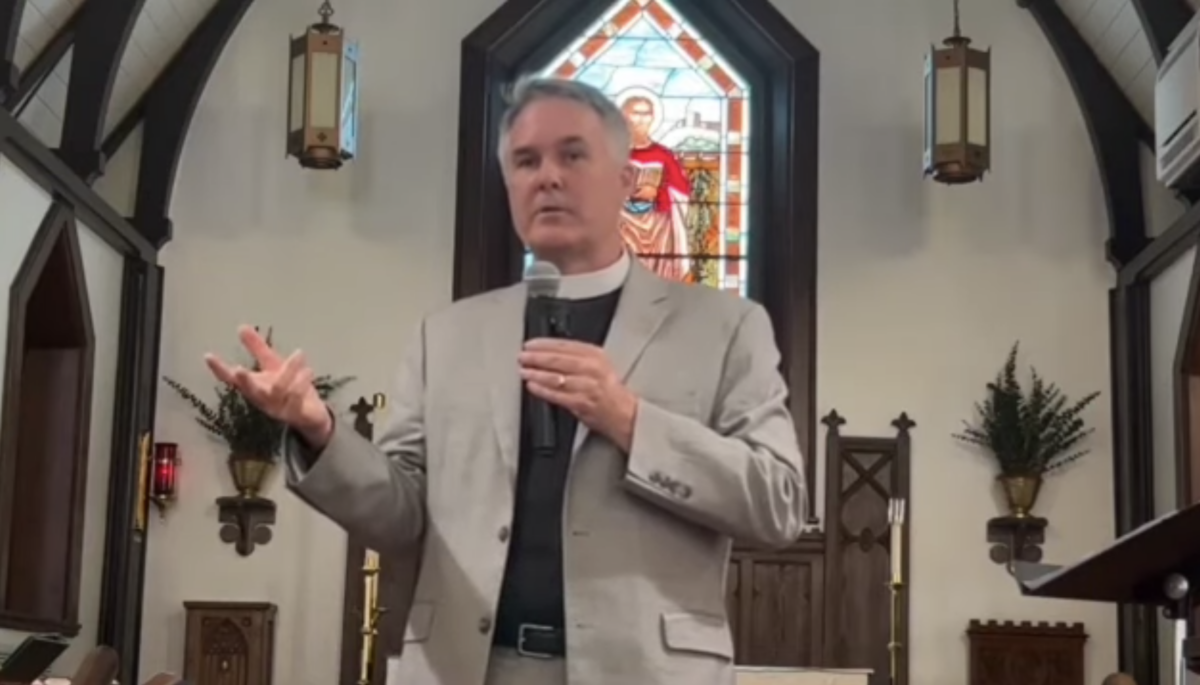
    The Rev. Charlie Holt answers a question during a Diocese of Florida bishop candidate forum at St Mark’s Episcopal Church in Palatka, Florida
    The Rev. Charlie Holt answers a question during a Diocese of Florida bishop candidate forum at St Mark’s Episcopal Church in Palatka, Florida.

    .

    Concerns about the process

    The election, however, also faced formal objections over procedural issues, which prompted an investigation by a churchwide Court of Review and ultimately led the standing committee to schedule a second election in November 2022. Holt was again declared the winner, elected on the first ballot.

    Clergy and lay delegates in the diocese raised new objections to the second election, including allegations that a pattern of anti-LGBQ+ discrimination during Howard’s two decades as bishop had skewed the pool of vote-eligible delegates, potentially affecting election outcome. Again, a churchwide Court of Review investigated and, in issuing its findings in February, partly sided with the objectors.

    The Court of Review’s actions were not binding, though the Florida Standing Committee was required to include the court’s report with its requests for consent from other standing committees and from bishops, along with diocesan documents defending the election and endorsing Holt as bishop-elect. That package of materials was distributed March 22, starting the 120-day clock.

    Response to the consent process for Holt

    Most bishops and standing committees refrained from saying publicly how they have voted. One notable exception was the Diocese of Ohio Standing Committee, which issued a statement on May 10 explaining why it voted against consenting to Holt’s ordination. Another was Texas Bishop Andrew Doyle, Holt’s former bishop, who issued a forceful defense of Holt in a May 12, 2023, online essay that also scrutinized claims that Florida’s process for granting clergy members voice and vote in the election was uniquely unfair.

    Other groups from across the church weighed in with their own opinions. The Deputies of Color and a group of LGBTQ+ Episcopal leaders issued separate statements in February urging bishops and standing committees to vote no. The Union of Black Episcopalians said in an April message that it wished to address “the cries emanating from the Diocese of Florida” and “the agony of those who are distressed” over the election process. It did not take a stance on Holt’s ordination.

    While bishops and standing committees were deliberating, various groups of Episcopalians in the Diocese of Florida launched efforts to support Holt in the consent process. In May, for example, members of the Latino Hispanic Ministries of the Diocese of Florida released a video appeal to Episcopal bishops and standing committees, asking them to vote yes. Another group, calling itself “Laity for Rev. Charlie Holt” produced a petition with hundreds of signatories urging churchwide leaders to honor the result of the diocese’s election.

    Such appeals, however, never appeared to gain much traction among the 106 bishops and 110 standing committees that would decide Holt’s fate. Only one, the Diocese of Spokane Standing Committee, was reported to have changed its “no” vote to “yes.”

    What happens next

    The Florida Standing Committee, in its July 21 message, said that it will invite outside bishops to assist with confirmations, ordinations and other pastoral roles after Howard retires. Longer-term options, including seeking an assisting bishop, launching a new search for a diocesan bishop or electing a bishop provisional to serve for a limited time as a transitional leader.

    “Beloved, although our path forward is not yet clear, our hope is in knowing who holds our future. While our current circumstances are difficult and uncertain, we can rest this day knowing God is with us and will not desert us,” the standing committee said. “Because Jesus Christ is Lord, we have a hope that can and will see us through these challenging times. In this hope, we continue to pray for each of you, for our diocese, and for the one Church.”

    —David Paulsen is a senior reporter and editor for Episcopal News Service. He can be reached at dpaulsen@episcopalchurch.org.

    Episcopal News Service

    Episcopal News Service

    Episcopal News Service (ENS) offers in-depth reporting of local, regional, national and international news for Episcopalians and others interested in the church’s mission and ministry. Episcopal News Service is the official news source of the Episcopal Church.
    The Episcopal Church of the Redeemer: Worshiping God, living in community, reaching out to the world.

    Church of the Redeemer

    Church of the Redeemer: Worshiping God, living in community, and reaching out to the world around us. We are an Episcopal Church serving north King County and south Snohomish County, Washington. As you travel your road, go with friends walking the way of Jesus at Redeemer.

    Church of the Redeemer is at 6220 Northeast 181st Street in Kenmore, Washington. The campus is a short distance north of Bothell Way, near the Burke-Gilman Trail. The entrance looks like a gravel driveway. The campus is larger on the inside than it is on the outside. And we managed to hide a large building on the side of a hill that is not easily seen from the street.

    The Episcopal Church welcomes you.
  • Holt withdraws bishop coadjutor election acceptance 

    Holt withdraws bishop coadjutor election acceptance 

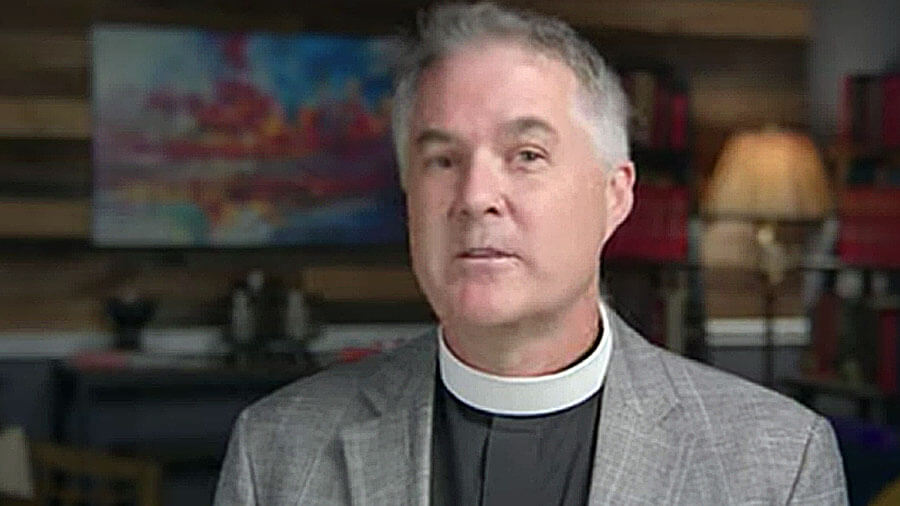
    [Episcopal News Service] The Rev. Charlie Holt, whose election as bishop coadjutor in the Diocese of Florida was called into question amid objections to the election process, has withdrawn his acceptance of the result, presumably paving the way for the diocese to pursue a new vote.

    Holt’s decision was announced August 19, 2022, by the Florida Standing Committee. “We have been in contact with Bishop [John] Howard and have also engaged in discussions with the Office of the Presiding Bishop to determine the best path forward,” the Standing Committee said. It did not commit yet to holding a new election but said it would “find a path that brings the broadest confidence to our diocese and church.”

    Election process cure wanted by Holt

    Holt, in his letter, reaffirmed that “it is my hope and desire to be your next bishop.”

    “If so confirmed and consecrated in good order, I will serve you with love, faithfulness, and wholeheartedness in the Holy Spirit,” he said. Withdrawing his acceptance of the election, however, was his “moral responsibility,” he said, after The Episcopal Church’s Court of Review issued a report this month concluding that the election had not been conducted appropriately. “The election process must be cured for the good of the Diocese of Florida,” Holt said.

    A central concern prompting the review was whether the diocese met the required quorum of resident clergy, given that rules were changed two days before the May 14 election to allow clergy to participate remotely while lay delegates had to appear in person. Some of the delegates filed a formal objection asserting that diocesan canons do not allow for remote voting and therefore those who did vote remotely did not count toward a quorum.

    Process for election review

    The diocese referred the formal objection to Presiding Bishop Michael Curry, following a process outlined in Episcopal Church Canons. Curry forwarded it to the churchwide Court of Review, which essentially sided with the objectors. It concluded “a clergy quorum was not reached” in accordance with the diocese’s official election process. Furthermore, “the irregularities in the convention process itself cast a shadow over the legitimacy of the election,” the Court of Review said, and “the action of the diocese in changing its manner of voting two days prior to the election was fundamentally unfair to the delegates of the convention and the candidates.”

    The Court of Review cannot order any action by the diocese, though its findings would be included with the request for consent to the election that is sent to all diocesan standing committees and bishops with jurisdiction. A majority of each must issue consent before a bishop-elect can be consecrated, and the Court of Review’s findings cast doubt on whether Holt’s election could receive the required consents, a step that typically is a formality.

    “I humbly ask that the Standing Committee take whatever steps it may deem appropriate to cure any irregularities in my election,” Holt said in his letter. “I understand that this may include termination or suspension of the current consent process and that the bishop may choose to convene another convention to elect a bishop coadjutor for the Diocese of Florida.”

    Holt was scheduled to replace current bishop in 2023

    Howard had called for the election of a bishop coadjutor because of his plans to retire by fall 2023. He will reach the church’s mandatory retirement age of 72 next year. The bishop coadjutor would then be installed as the next diocesan bishop.

    Holt previously served as associate rector for teaching and formation at the Episcopal Church of St. John the Divine in Houston, Texas.

    While his election was under review, the Diocese of Florida welcomed Holt to the diocesan staff as a priest on August 1, 2022, according to an email to members of the diocese. The diocese said Holt’s role primarily will focus on enhancing and expanding the diocese’s prison ministry; supporting local Episcopal schools; helping to plan the future of the diocese’s camp and conference center; and supporting other programs.

    Other concerns expressed about Holt

    In addition to the objections to the election process, some Episcopalians on social media have voiced concerns about Holt, citing his views on same-sex marriage and statements that they view as intolerant or insulting to LGBTQ+ people and Black people. Holt responded to those concerns in a June 16 video message to members of the diocese and The Episcopal Church.

    Church of the Redeemer logo

    Church of the Redeemer

    Welcome to Church of the Redeemer: Worshiping God, living in community, and reaching out to the world. We are an Episcopal Church serving north King County and south Snohomish County, Washington. As you travel your road, go with friends walking the way of Jesus at Redeemer.

    Church of the Redeemer is at 6220 Northeast 181st Street in Kenmore, Washington. We are a short distance north of Bothell Way, near the Burke-Gilman Trail. The entrance looks like a gravel driveway. The campus is larger on the inside than it is on the outside. And we managed to hide a large building on the side of a hill that is not easily seen from the street.

    The Episcopal Church welcomes you.

  • The Rev. Charlie Holt election challenged

    The Rev. Charlie Holt election challenged

    There are concerns about the election of the Rev. Charlie Holt as bishop coadjutor of the Diocese of Florida. These concerns range from procedural matters to fitness for office. Following is an article from the Episcopal News Service and a resolution adopted by the Vestry of the Church of the Redeemer at its May 24, 2022, meeting.

    Florida bishop coadjutor election challenged with formal objection, effort to deny consent

    [Episcopal News Service] The Diocese of Florida announced May 25 that a formal objection to the May 14, 2022, election of the Rev. Charlie Holt as bishop coadjutor has been filed with the diocese.

    The objection, signed by 37 clergy and lay deputies to the diocese’s special election convention, claims that last-minute changes to the voting process violated diocesan canons and that technical problems disrupted the vote, rendering the election invalid.

    In an email to members of the diocese acknowledging receipt of the objection, its Standing Committee and chancellor responded to the points of contention and denied any procedural errors or misconduct. No objections were raised during the election itself, they said, and the election was observed and confirmed by independent auditors.

    “We want to assure you – with the highest degree of confidence – that we believe in the election’s validity from every perspective,” the committee members and chancellor wrote. “We value the input and consciences of our few friends who have objected, and we will do everything we can to follow the proper channels so that their questions and concerns may be answered.”

    The Standing Committee and chancellor did not include the text of the objection itself along with their response, and diocesan staff would not provide a copy to Episcopal News Service, citing a desire to follow the canonical process and inform the presiding bishop’s office first. ENS obtained a copy of the six-page objection letter and verified with one of the signers that it is the document that was filed with the diocese.

    The May 14 election was held to choose a successor to the diocese’s current bishop, the Rt. Rev. Samuel Johnson Howard, who intends to retire in late 2023. Upon Howard’s retirement, the bishop coadjutor would become the ninth diocesan bishop. Holt, currently associate rector of teaching and formation at The Church of St. John the Divine in Houston, Texas, was one of five candidates.

    Disputed election practices

    In their objection letter, dated May 23, 2024, the 37 delegates claimed that the required clergy quorum for the election was not met, the agenda was not followed and there were “procedural and technical flaws” that interfered with remote voting.

    According to the objection, the diocese in April invited delegates to register for an in-person election at St. John’s Cathedral in Jacksonville, writing: “…the integrity of the election at this Special Convention will require that we pay very close attention to who is present. Therefore, if you do not register by the deadline, you will not be allowed to attend. There will be no exceptions.” However, the objection says, only 89 clergy delegates had registered by the May 9 deadline, below the two-thirds quorum of canonically resident clergy required by diocesan canons. The objection says the required clergy quorum was 116, “as stated by the election officials,” being two-thirds of 174 canonically resident clergy in the diocese.

    On May 12 (two days before the election), the diocese said there were not enough clergy registrants for a quorum and announced that clergy who had not yet registered could register to participate by Zoom, but that lay delegates could still only vote in person. Standing Committee President the Rev. Joe Gibbes told ENS that this change “permitted clergy impeded by factors such as COVID-19 risk, travel and emergencies to attend and vote digitally. This option was not offered to laity because unlike clergy delegates, lay delegates have alternates who can attend and act in their stead – where we had strong participation and there was never a question of reaching a quorum [among the laity].”

    The objection says that the diocese’s governing documents do not allow for remote voting. Gibbes told ENS that the Diocesan Council and chancellor “ensured that our bylaws permit online attendance and voting, according to Florida law.” He added that an “independent, non-Episcopal audit team” – the Forde Firm of Jacksonville (CPAs) – “was present on the Zoom [election] to ensure voting procedure was in accordance with all relevant laws.”


    The objection then says that on the morning of the election, the Diocesan Council changed the rules of order, which the delegates approved during the election. The objecting delegates’ letter says this violated The Episcopal Church’s Canon III.11.1(a), which requires the “adoption of rules and procedure for [such an] election … at a regular or special Diocesan Convention with sufficient time preceding the election … .”

    At the beginning of the livestreamed election, the credentials chairman said that 89 clergy delegates were present in person and 29 were attending remotely for a total of 118, “which is more than the two-thirds requirement for a quorum,” but he did not specify the exact number necessary to satisfy the quorum requirement.

    There were 138 lay delegates present out of 145, he said.

    After the third ballot, Howard announced that Holt received 64 votes from clergy and 80 from the laity. Howard then asked the auditors to confirm the results; one rose to the podium and said the election “had no irregularities in any of the votes or counts.”

    The number of voters in the final ballot was 125 clergy and 141 lay, according to the numbers provided by the diocese to ENS. The total number of voters in the final ballot cited in the objection is off by one; it counts one additional lay voter.

    According to the objecting delegates, the Zoom voting process did not go smoothly.

    “For clergy who were attempting to be present on remote voting, there was no orientation of how to vote, no testing of communications systems, no ‘trial vote’ to test whether all could vote, and in fact, at least two clergy could not see or hear the proceedings,” the objection letter reads. “When voting was taken, in at least one instance, the votes were not registered. Also, in-person delegates could not see nor could they hear the Zoom clergy.”

    Objection process

    The objection invokes a canonical process that has only been used twice before: in the 2018 bishop coadjutor election in the Diocese of Haiti and in the 2021 diocesan bishop election in the Diocese of Ecuador Central. Under Title III.11.8 in the Canons of The Episcopal Church, an objection may be filed within 10 days of a bishop election by a group of at least 10% of the voting delegates. The objection must be filed with the secretary of the diocesan convention, “setting forth in detail all alleged irregularities.” The canons do not specify what constitutes an “irregularity.”

    The objection is then forwarded to the presiding bishop, “who shall request the Court of Review of the Province in which the Diocese is located to investigate the complaint,” according to the current canons. However, General Convention amended the canons in 2018 to replace provincial courts of review (which had primarily handled appeals in clergy disciplinary cases) with a single churchwide Court of Review. That 2018 resolution changed all canonical references to courts of review in Title IV, but not in Title III. The Rt. Rev. Todd Ousley, bishop for the churchwide Office of Pastoral Development, told ENS that the remaining reference to a provincial court of review was an oversight and that objections would be referred to the churchwide Court of Review. A resolution to correct the error has been proposed for this summer’s General Convention. The Court of Review has 30 days to investigate and release a report of its findings.

    In an interview with ENS on May 25, Ousley said he had not received the letter of objection from the Diocese of Florida. The diocese’s secretary of convention must submit the letter to Presiding Bishop Michael Curry’s office within 10 days of receiving it.

    “When the presiding bishop receives notification of an objection to an episcopal election, it is a top priority of his and his staff to review and make arrangements to transmit to the Court of Review,” Ousley said.

    The Court of Review’s mandate is not necessarily to issue rulings on the canonical validity of election procedures, Ousley explained, but to write a report that is then sent to all diocesan standing committees and bishops with jurisdiction. A majority of each group must consent before a bishop-elect can be consecrated.

    Update, May 27, 2022. Read Statement from Bishop Todd Ousley on Diocese of Florida bishop election.

    Comments on race and sexuality

    In almost all cases, the consent process is a formality, but besides the objection filed by the 37 convention delegates, Holt’s election is facing additional challenges. Some Episcopalians have voiced objections to Holt’s election on social media, citing Holt’s views on same-sex marriage and statements that they view as intolerant or insulting to LGBTQ+ people and Black people. Some have said they are writing to their bishops and standing committees to encourage them not to consent to the election.

    In interviews and Q&A sessions with bishop candidates before the election, Holt has said he holds the view of marriage expressed in the 1979 Book of Common Prayer – that marriage is between a man and a woman. Since 2018, as a result of General Convention Resolution B012, same-sex marriage liturgies must be made available to all Episcopalians in countries where same-sex marriage is legal. The compromise resolution also allows bishops who disagree with same-sex marriage to delegate any required oversight of such marriages to another bishop. In a letter to the diocese after the election, Holt said B012 “will be followed and upheld to pastorally support both our progressive and conservative parishes.”

    “I will seek a harmonious relationship with the diocese, granting authority for marriages to parish rectors in keeping with the letter and spirit of Resolution B012-2018 and the canons of General Convention,” Holt told ENS in a May 24 email. Holt declined to comment on the alleged voting irregularities, adding, “I do not have anything to offer to that part of the story as I was a candidate and not responsible for the election.”

    In the days after the election, Episcopalians from the Diocese of Florida and beyond took to Twitter and posted statements Holt made during the Q&A sessions. An anonymous YouTube account uploaded edited clips of two of Holt’s answers during those sessions, as well as a compilation of his other answers. The description of the account, “Episcopal Bishop Election Info,” reads: “Information for Standing Committees and Bishops to review as they consider whether to give consent to Episcopal elections throughout the church.”

    In an answer to one of multiple questions about how he would lead a diocese with diverse views on sexuality, Holt noted a heightened focus on LGBTQ+ issues in America and in The Episcopal church, “and by singularly focusing on one thing, we actually are a little off. And so it’s not to say that those are not important, or those people that are represented by the letters are not important. They are super important. They are children of God who need to be welcomed into the life of our church. We have something to give to them and they have things and gifts to give to us. Don’t hear me wrong. But if that is the only thing that we ever talk about all the time – which, sometimes it feels like it is – then we’re a little sick. Because you can’t talk about sex all the time. That’s not healthy. It’s not healthy for the LGBTQIA people for us to focus on them all the time.”

    Holt then appeared to indirectly draw a comparison with his own life and suggested that LGBTQ+ people might “give up” something to follow Jesus, as he did.

    “It’s not a commitment that says, ‘I can come in the doors and you have to receive me and accept me just the way I am. And I’m never going to change,’” he said. “I had to give up a lot of things when I became a Christian. I was a frat boy at the University of Florida. And I was not living a godly lifestyle. … Over time, God dealt with the various things in my life that needed to be changed.”

    In response to a question about diversity, Holt told a story about when he had previously served in the diocese and was the only white minister at a rally in Sanford, Florida, protesting the 2012 killing of Trayvon Martin. He said he was initially reluctant to speak and that he did not want to be seen in front of signs saying “Trayvon Martin: A modern-day lynching.” After encouragement from a Black pastor, Holt recalled, he did speak, even though the signs “didn’t quite represent my perspective.”

    Campaign to withhold consent

    Episcopalians including author Diana Butler Bass objected to Holt’s Q&A responses on Twitter and suggested that they were grounds for withholding consent to his election.

    https://twitter.com/dianabutlerbass/status/1526948003042443267

    One Connecticut priest – the Rev. Melissa Rohrbach – has created an online petition for other clergy in her diocese to urge their standing committee to withhold consent. A clergy Facebook group is keeping a running tally of standing committees they have contacted in a Google Doc.

    In his letter to the diocese responding to the concerns over his comments on race and sexuality, Holt said his “commitment is to be a faithful pastor to all. I am committed to embracing the diversity that the people of the Diocese of Florida represent.”

    Reiterating his commitment to uphold Resolution B012, Holt wrote, “I highly respect those who hold a different view than my own. I have always learned the most from dialogue with those who disagree with me. This is why my first mission as bishop-elect will be to listen, from one end of the Diocese of Florida, geographically and theologically, to the other. I am respectful of the lives, experiences, and opinions of all others, and I hope for the same from others.”

    Referring to Trayvon Martin’s killing, Holt wrote, “God used that moment to work change in my life which has served my ministry of reconciliation to this day,” adding that he and a Black pastor started an interracial group called Sanford Pastors Connecting dedicated to racial reconciliation after Trayvon Martin’s killing. One of their ministries was to be “pastoral observers” at the trial of George Zimmerman, who killed Trayvon Martin.

    “It will be my priority as Bishop to lead our diocese in the work of racial reconciliation. This begins with honoring our historic Black congregations,” Holt wrote. “I will encourage all of our congregations to build strong Christian ties with their nearest Black congregation neighbors in other Christian denominations. This is at the heart of what it means to be the Beloved Community.”

    On May 25, the leadership of the LGBTQ+ Caucus in the House of Deputies sent a memo to its members and the General Convention Office expressing “grave concern” about Holt’s election. Linking to the YouTube videos of Holt’s Q&A responses – including one in which he described learning about racial injustice in a conversation with a Black pastor that included both Trayvon Martin’s killing and the unsolved killings of other Black men – the caucus leaders wrote, “We decry Fr. Holt’s comments regarding race and racism, which were deeply offensive and objectionable.”

    The deputies also wrote that Holt’s promise to uphold B012 “does nothing to ensure even a base level of acceptable treatment for most LGBTQ+ Episcopalians and our allies. Would a Bishop Holt stymie the clergy of his diocese who were in favor of officiating same-sex weddings? Would he prohibit congregations from hiring an LGBTQ+ clergy or layperson?”

    “We urge every bishop with jurisdiction and every Standing Committee to sincerely consider these concerns and if necessary request further clarification from Fr. Holt and the Diocese of Florida before discerning whether to offer consent to his election,” the memo concluded.

    Once the presiding bishop receives the objection to Holt’s election, it will alter the timeline of the consent process, according to Ousley. It is up to the presiding bishop to determine when to refer the objection to the Court of Review, starting their 30-day investigative period. The normal 120-day period for bishops and standing committees to decide whether they will consent to the election does not start until the objection process has been completed and the Court of Review has submitted its report.

    According to the diocese, Holt is scheduled to be consecrated bishop coadjutor in October.

    “I welcome the opportunity to speak with any bishop and members of any standing committee if they have questions about my views,” Holt told ENS. “My goal is to bring unity and love to this wonderful Diocese and its people.”

    – Egan Millard is an assistant editor and reporter for Episcopal News Service. He can be reached at emillard@episcopalchurch.org.

    Response by the bishop-elect

    The Rev. Charlie Holt, whose election as bishop coadjutor in the Diocese of Florida has been challenged on procedural and ideological grounds, responded to concerns raised by some Episcopalians about his positions on race, sexuality and church polity in a June 16 video message to members of the diocese and The Episcopal Church. Holt apologized for what he described as poor word choices and defended his record on engaging across cultures as a priest in the video, which comes after General Convention deputies filed a proposed resolution expressing concern about his election. Read the response by the Rev. Charlie Holt.

    The resolution approved by the Vestry at Church of the Redeemer

    At its meeting on May 24, 2022, the Vestry of the Church of the Redeemer passed this resolution:

    Resolved, that the Vestry of the Church of the Redeemer wishes to convey to the Standing Committee of the Diocese of Olympia our grave reservation about the fitness of the Rev. Charles Holt, the bishop-elect of the Diocese of Florida, to carry out the ministry to which he has been elected based on his stances in regards both race and LGBTQIA+ equality and equity in the church, in contravention to the doctrine, discipline, and worship of the Episcopal Church, and of the teachings of Jesus Christ.

    In this minute clip, Fr. Holt says that he wouldn’t invite an unknown Black pastor to speak in his church. He had been given this privilege when visiting in primarily Black churches. “Who knows what he would say, right?”


    You may watch the entire video of 3 minutes. It includes where Fr. Holt said he was afraid to speak in front of signs saying “Trevon Martin, modern day lynching.”

    In this 40 second clip, Fr. Holt says that LBGTQIA+ persons should expect to change as he changed from being a college frat boy. This was in answering a question about leading a diocese of diverse opinions in regard to ordination and marriage of people in the LBGTQIA+ community.


    You may watch the entire 4:45 minute video.

    Black lives are sacred at Church of the Redeemer

    Church of the Redeemer

    Welcome to Church of the Redeemer: Worshiping God, living in community, and reaching out to the world. We are an Episcopal Church serving north King County and south Snohomish County, Washington. As you travel your road, go with friends walking the way of Jesus at Redeemer.

    Church of the Redeemer is at 6220 Northeast 181st Street in Kenmore, Washington. We are a short distance north of Bothell Way, near the Burke-Gilman Trail. The entrance looks like a gravel driveway. The campus is larger on the inside than it is on the outside. And we managed to hide a large building on the side of a hill that is not easily seen from the street.

    The Episcopal Church welcomes you.
Participants in the pageant on Sunday, January 4, 2025, should be present by 9:30 am. 

2nd Sunday in Lent (Year A), March 1, 2026. Services at 8:00 am (no music) and 10:30 (music). Christian education for children and adults at 9:15 am. 

Episcopal Church of the Redeemer
Privacy Overview

Cookie information is stored in your browser and performs functions such as recognizing you when you return to our website and helping our team to understand which pages of the website are visited. We aren't using cookies to determine your web browsing habits, but others can.