Episcopal Church of the Redeemer

Worshiping God, living in community, reaching out to the world.

Tag: gc80

  • After LGBTQ+ resolutions smoothly moved through #GC80, Anglicanism’s human sexuality debate returns ahead of Lambeth Conference

    After LGBTQ+ resolutions smoothly moved through #GC80, Anglicanism’s human sexuality debate returns ahead of Lambeth Conference

    [Episcopal News Service] The 80th General Convention passed 14 resolutions, with little or no debate, speaking to the full inclusion and protection of LGBTQ+ persons in the life of The Episcopal Church and the larger society. Those actions represent a remarkable change from previous conventions, including the same-sex marriage access compromise in 2018, when such measures occupied large swaths of the gatherings’ time and emotional energy.

    “Our church is on record—both officially and in practice—with our commitment to the full inclusion of all who seek to follow Jesus and his way of love,” Presiding Bishop Michael Curry said on July 22, 2022.  “As we head to the Lambeth Conference, the same dedication leading us to the full welcome, embrace, and inclusion of LGBTQ+ children of God likewise commits us to communion with one another across our differences. We will be true to who we are while upholding our relationships and engaging in real and open conversation.”

    The Episcopal Church and LGBTI+ inclusion

    The Episcopal Church was set on the path of full inclusion 46 years ago when the 65th General Convention passed resolutions saying “homosexual persons are children of God who have a full and equal claim with all other persons upon the love, acceptance, and pastoral concern and care of the Church” and that they “are entitled to equal protection of the laws with all other citizens.”

    Earlier this month, the majority of LGBTQ+ related resolutions passed mostly via the 80th General Convention’s massive consent calendars, in what the Rev. Susan Russell described as “extraordinary.”

    “And that was a sign of the health of the church that we are at a place where we want to focus on what we can do together, not argue about what we disagree about,” Russell, a Diocese of Los Angeles deputy and longtime advocate for LGBTQ+ Episcopalians, told Episcopal News Service.

    She attended the last 11 General Conventions including two as a deputy, and said the July 8-11 gathering in Baltimore, Maryland, was “a watermark convention” for “those of us who continue to advocate for the church to continue in its movement to make the full and equal claim for LGBTQ people that was promised in 1976 not just a resolution but a reality.”

    LGBTI+ resolutions at the 80th General Convention

    Resolutions passed by the 80th General Convention include:

    • Direct the Domestic and Foreign Missionary Society to establish a staff position of director of LBGTQI and women’s ministries (A063).
    • Direct the presiding bishop and the president of the House of Deputies to appoint a task force on LGBTQ+ inclusion (D026).
    • Affirm that non-binary, as well as binary identified transgender and cisgender people, are included in the phrase “gender identity and expression” and that the canonical provisions of The Episcopal Church apply equally to people of all genders (D029).
    • Direct the Church Center to develop multilingual, multicultural churchwide resources for “living into our commitments to welcome and support people and communities of diverse genders, including transgender and non-binary” (D030).
    • Express convention’s full support of the United Nations High Commissioner for Refugees and the International Organization for Migration in their mission to protect LGBTQ+ persons forced to seek refugee or asylee status because they fear being persecuted based on their sexual orientation, gender identity, gender expression and/or sex characteristics (D045).
    • Call for support for LGBTQ+ persons facing additional discrimination during the COVID-19 pandemic (D060).
    • Call for The Episcopal Church to advocate for access to gender-affirming care in all forms (social, medical, or any other) and at all ages as part of the baptismal call to “respect the dignity of every human being” (D066).
    • Address “the urgent need for gender and sexuality training in our church on all levels” (D072).

    Convention also passed three resolutions about evangelism (C060), revitalization of congregational ministries (A096) and planting new faith communities (A095) that all specifically include people who are gay, lesbian, bisexual or transgender (LGBTQI+), gender non-conforming people.” And deputies passed a courtesy resolution (D059) giving thanks for “the extraordinary ministry of Louie Crew Clay,” an LGBTQ+ activist who died in 2020.

    “We understand this as a living out of our commitment to holy baptism, which is profoundly articulated by St. Paul in Galatians 3:27-28: ‘As many of you as were baptized into Christ have clothed yourselves with Christ. There is no longer Jew or Greek; there is no longer slave or free; there is no longer male and female, for all of you are one in Christ Jesus,’” the presiding bishop said. “For me, personally, this is a living out of what the old slaves used to sing: ‘There’s plenty good room for all God’s children.’”

    Advocacy predates Stonewall in 1969

    The Episcopal Church’s advocacy for LGBTQ+ people pre-dates the 1969 Stonewall Uprising, although its early efforts were slow and halting, and echoed the era’s perceptions about human sexuality. That work, at times, has prompted some conservative Episcopalians to leave the church in protest, in some cases setting up decades-long legal disputes. More recently, following the 2003 historic election of the Rt. Rev. Gene Robinson, the now-retired bishop of New Hampshire, four dioceses have elected openly gay partnered priests to be their bishops.

    Meanwhile, at the upcoming Lambeth Conference

    Until earlier this week, tensions over LGBTQ+ bishops’ attendance at the upcoming Lambeth Conference of Anglican bishops had focused on Archbishop of Canterbury Justin Welby’s decision to invite those bishops – a new precedent – but not their spouses.

    The Episcopal Church’s bishops and deputies passed a resolution in Baltimore expressing to Welby the General Convention’s dismay at his decision to exclude same-sex spouses of LGBTQ+ bishops (D092) from the gathering.

    The Conference, set for July 26-August 8, 2022, is a typically once-a-decade gathering of Anglican bishops from across the 85 million-member worldwide Anglican Communion. It brings together bishops and spouses for prayer, Bible study, worship and fellowship, in addition to joint consultation by the bishops on internal Anglican matters, relations with other churches and religions, and theological, social and international questions. The gatherings help shape the life of the Anglican Communion for the next decade.

    Calls versus resolutions

    In advance of the 2022 Lambeth Conference, Welby said he hoped to unite the Anglican Communion under common expressions of faith and social engagement, rather than focusing on debates over human sexuality that have divided bishops at past conferences.

    He plans for the bishops to vote on “Lambeth Calls” meant to replace the previous gatherings’ resolutions to acknowledge that the conference does not have any legislative or policy-setting power over the 42 autonomous churches and five extra-provincial churches that make up the Anglican Communion.

    “The move from resolutions to calls is simply a recognition of the reality that the Lambeth Conference is not a synod. It can’t resolve things in the sense that they’re then resolved. They can call on provinces to consider for themselves, and that’s why we call them a call, because they’re a call; they are not a resolution,” Welby said in a June 22 press conference.

    On July 18, the Lambeth Conference released to the public and emailed to bishops a 58-page study guide including draft versions of 10 Lambeth Calls covering such topics of Anglican identity, science and faith, discipleship, reconciliation and human dignity.

    The study guide asks bishops to consider whether they can envision the calls “put into practice” or not in their provinces or dioceses. Calls with be discussed as a group beginning on the conference’s fourth day, and bishops will be asked to vote “to adopt” or “adapt” a call. By adopting a bishop acknowledges the call speaks to them, adds their voice and commits to taking the action to implement it; and by adapt, a bishop acknowledges the call requires further discernment and commits their voice to the ongoing process.

    Human Dignity call

    The Human Dignity Call, scheduled for the seventh day, August 2, 2022, includes, on pages 31 and 32, provisions that call on the bishops to reaffirm the 1998 Lambeth gathering’s stance against same-sex marriage (in Resolution 1.10) by stating that “it is the mind of the Anglican Communion as a whole that same-gender marriage is not permissible.”

    Archbishop Justin Badi, primate of the Episcopal Church of South Sudan and leader of the Global South Fellowship of Anglican Churches, recently said that the group’s members would seek to have the conference reaffirm Resolution 1.10 as the “‘official teaching’ of the Anglican Church on marriage and sexuality.” This, they said, would “directly challenge” bishops from The Episcopal Church of America, Canada, New Zealand, Scotland and Wales who favor marriage equality.

    Some Episcopalians have reacted strongly against the effort to reaffirm the call’s opposition to same-sex marriage.

    Los Angeles Bishop John Taylor wrote in a widely shared July 20 Facebook post that “moderate and progressive Anglicans and Episcopalians” had been led to believe that such dividing issues were going to be avoided through the Calls process. Instead, he wrote, they will arrive in Canterbury “as credulous props for what is likely to be a majority vote against marriage equity.”

    https://www.facebook.com/photo.php?fbid=10159697753103046&set=a.35257148045&type=3

    If the Lambeth Call on Human Dignity passes in its current form, Taylor said, “The Episcopal Church will again have to work hard to remind people that we don’t read the Bible literally, divorced from its historic rootedness — that slowly but surely, across generations, we have moved away from arguing that the word of God countenances slavery, misogyny, homophobia, and transphobia.”

    The call would also reaffirm Resolution 1.10’s admonition that “all baptized, believing and faithful persons, regardless of sexual orientation are full members of the Body of Christ” and should be “welcomed, cared for, and treated with respect.”

    Convocation of Episcopal Churches in Europe Bishop Mark Edington on July 22 criticized what he called a tragic juxtaposition of the reaffirmation of Resolution 1.10 in the same Lambeth Call that would have bishops acknowledge “the existence and ongoing impact of an imperialist Anglicanism involved in dehumanizing practices predicated upon cultural and racial supremacy,” as the call text puts it.

    Thus, Edington said, what he called “a lot of good stuff” in the calls could get lost in the possible debate about whether Resolution 1.10 truly does express the mind of the entire communion.

    “The whole reason that you asked some of the spouses to stay home was that at least in their part of the Anglican Communion they are regarded unapologetically as legit children of God,” Edington wrote.

    “But the play here is pretty obvious, right?” he continued. “Who wants to be seen voting against a great statement acknowledging our colonial past and condemning our unequal present?”

    Same-sex marriage controversies

    The status of same-sex marriage has, at times, roiled The Episcopal Church as well as the Anglican Communion. The 78th General Convention in 2015 changed the church’s canons to eliminate language defining marriage as between a man and a woman (via Resolution A036). That convention also authorized trial use of two new marriage rites with language allowing them to be used by same-sex or opposite-sex couples (via Resolution A054).

    After eight diocesan bishops would not permit the use of the rites in their dioceses and required couples wanting to use them to be married outside their diocese and away from their home church, the next meeting of convention in 2018 passed Resolution B012 to ensure all Episcopalians unfettered access to those rites in jurisdictions where same-sex marriage is legal.

    Taylor added that he felt bad for the more-conservative Episcopal bishops who, at the General Convention in 2018, agreed to what he called “an historic compromise on marriage equity,” which Russell, the Los Angeles deputy, helped lead. “Without denying their belief in traditional marriage, these bishops generously acknowledged a pastoral responsibility to make sure that all people in their dioceses, irrespective of orientation, had access to the marriage rite in the parishes they love,” Taylor wrote. “As a result, we have achieved considerable unity in spite of substantial diversity of opinion. Now these bishops are being dragged back into the same old wearying binary argument.”

    Welby states the purpose of the calls

    As the calls have already provoked conversation even before many of them have left their diocese for England, Welby on July 22 sent a message to bishops attending the Lambeth Conference.

    “I know that many of you are reading and praying about the draft Lambeth Calls that have been published this week – and they are naturally the subject of debate ahead of the conference. Indeed, these Calls have grown out of a process of discussion and encounter with one another. They are informed by the insights and themes of the online video conversations between bishops across the world over the past year. They have been drafted by a diverse group of Anglicans – male and female, lay and ordained, from different generations and from every part of the Communion,” the archbishop wrote.

    “They are one part of a process that began before this part of the Conference, and will continue long after it formally finishes, as every Province discerns its own response to the Calls in their own contexts.”

    Meanwhile, the LGBTQ+ staff of the University of Kent, where the bulk of the conference will take place, is planning two parallel events on July 27 “to stand up for quality & inclusion.”

    https://twitter.com/KentLGBTStaff/status/1547265710216417280

    —The Rev. Mary Frances Schjonberg retired in July 2019 as senior editor and reporter for Episcopal News Service.
    The Episcopal Church of the Redeemer: Worshiping God, living in community, reaching out to the world.

    Church of the Redeemer

    Welcome to Church of the Redeemer: Worshiping God, living in community, and reaching out to the world. We are an Episcopal Church serving north King County and south Snohomish County, Washington. As you travel your road, go with friends walking the way of Jesus at Redeemer.

    Church of the Redeemer is at 6220 Northeast 181st Street in Kenmore, Washington. The campus is a short distance north of Bothell Way, near the Burke-Gilman Trail. The entrance looks like a gravel driveway. The campus is larger on the inside than it is on the outside. And we managed to hide a large building on the side of a hill that is not easily seen from the street.

    The Episcopal Church welcomes you.

  • General Convention deferred few items

    General Convention deferred few items

    [Episcopal News Service] The 80th General Convention left some unfinished business when it adjourned last week. That was partly by design.

    Part of the presiding officers’ plan to streamline this meeting of The Episcopal Church’s bicameral governing body in Baltimore, Maryland, was to allow committees the option of deferring some less timely resolutions to 2024, when the 81st General Convention is scheduled to convene in Louisville, Kentucky. Bishops and deputies spent July 8-11, 2022, in Baltimore considering critical governance matters, such as elections and the churchwide budget, and other resolutions deemed urgent, so eight days of business could be reduced to four.

    That plan succeeded in beating the clock. Both the House of Bishops and House of Deputies adjourned before lunch on July 11, the fourth and last day of General Convention, with no final afternoon legislative sessions. The efficiency of the scaled-down meeting prompted some church leaders to speculate whether the post-pandemic church would need to resume holding triennial General Conventions that last up to two weeks.

    https://twitter.com/juniperjag/status/1546524892799057921
    https://twitter.com/FondduLacBish8/status/1546526892940992515

    The result of deferred resolutions

    The deferred resolutions could factor into those discussions: Will the unfinished business in Baltimore mean a lot more work for bishops and deputies in Louisville?

    The short answer is, probably not. The reason is that there wasn’t much unfinished business after all. Most of the resolutions proposed to the 80th General Convention, including some that would have generated lively floor debates at past meetings, were not brought to the floor and instead were adopted in single-vote batches using what is known as the consent calendar. And with legislative committees holding meetings and hearings online in advance of General Convention for the first time, few of the committees opted to defer their resolutions.

    Out of more than 400 total resolutions proposed, only 17 were deferred until 2024, as listed on the Virtual Binder calendars for the House of Deputies and the House of Bishops.

    “The Holy Spirit always surprises us, and I think it went extremely well,” Pennsylvania Bishop Daniel Gutiérrez, chair of the Social Justice and International Policy Committee, told Episcopal News Service. “I just have to commend the presiding officers and the convention committees for making it work.”

    Some deferred resolutions overlapped with resolutions passed

    Some of the 17 deferred resolutions overlap with other resolutions that were passed by General Convention in Baltimore, so it is unclear what about those matters will be left for bishops and deputies to discuss in two years. Resolution D096, for example, calls for the creation of a new position of director of LGBTQI and women’s ministries. Although the status of that resolution is listed on the Virtual Binder as deferred, General Convention adopted another resolution, A063, to achieve the same goal.

    Other deferred resolutions had proposed creating various task forces and conducting studies on a range of topics, such as pacifism, aging and the funding of clergy and lay benefits.

    Resolutions about Israel and the Middle East

    Gutiérrez’s committee and a parallel committee of deputies opted to defer three resolutions until 2024, each of them labeling Israel an “apartheid” state. The use of the word “apartheid” is a frequent sticking point and dividing line in the church’s perennial debate on the Israeli-Palestinian conflict. General Convention rejected a resolution in 2018 that sought to label Israel’s unequal policies toward Jewish Israelis and Arab Israelis as evidence of an apartheid state, similar to the South African government’s former policy of racial separation.

    A discussion of those resolutions by General Convention’s two houses could have taken up a significant amount of time in Baltimore, Gutiérrez said. But he clarified that resolutions weren’t deferred because the bishops’ and deputies’ committees wanted to avoid the issue. Rather, they preferred to wait until General Convention had more time for a full debate.

    “We wanted to give it the importance that it deserves and needs,” Gutiérrez said. He is hopeful that will happen in Louisville.

    Even so, the 80th General Convention wasn’t silent on the Israeli-Palestinian conflict. Bishops and deputies adopted another resolution, C039, to “recognize the right of the State of Israel to exist and condemn the continued occupation, segregation and oppression of the Palestinian people; recognizing that for Israel to continue as a democracy it must allow for equality of all its peoples.” And they passed Resolution C013, affirming the right of individuals and organizations to participate in boycotts over human rights violations.

    General Convention handled some matters differently

    At the same time, the 80th General Convention chose to take action on other matters by referring some resolutions to interim bodies.

    General Convention adopted five resolutions proposed by the House of Deputies’ Committee on the State of the Church to help The Episcopal Church adapt to changes in society and find new ways of supporting the church’s mission and ministry. A sixth resolution, however, that related to the church’s capacity to collect and study data on its adaptive efforts was referred to an interim body, which will study it and bring it back for consideration in 2024.

    And when bishops and deputies meet again in two years, they are expected to reconsider this year’s proposals to add a feast day for the late Bishop Barbara Harris to Lesser Feasts and Fasts, the church’s calendar of saints. The resolutions proposed by 16 dioceses weren’t deferred outright, though the matter was referred to Standing Commission on Liturgy and Music, allowing additional time for research and consideration after Harris’ death in March 2020.

    General Convention traditionally does not add people until they have been dead at least 50 years. In Baltimore, it compromised by updating the church calendar to mark Feb. 11, the date of Harris’ historic consecration in 1989 as the first female bishop in The Episcopal Church and the Anglican Communion.

    ENS’ full coverage of the 80th General Convention is here.

    —David Paulsen is an editor and reporter for Episcopal News Service. He can be reached at dpaulsen@episcopalchurch.org.

    General Convention of the Episcopal Church

    What happens at General Convention?

    The legislative process of General Convention is an expression of The Episcopal Church’s belief that, under God, the Church is ordered and governed by its people: laity, deacons, priests, and bishops.

    The General Convention is the Church’s highest temporal authority. As such, it has the following power:

    • Amend the Constitution and Canons of the Episcopal Church
    • Amend the Book of Common Prayer and to authorize other liturgical texts
    • Adopt the budget for the Church
    • Create covenants and official relationships with other branches of the Church
    • Determine requirements for its clergy and other leaders
    • Elect its officers, members of the Executive Council, and certain other groups
    • Delegate responsibilities to the Interim Bodies of The Episcopal Church
    • Carry out various other responsibilities and authority
    The Episcopal Church of the Redeemer: Worshiping God, living in community, reaching out to the world.

    Church of the Redeemer

    Church of the Redeemer: Worshiping God, living in community, and reaching out to the world around us. We are an Episcopal Church serving north King County and south Snohomish County. We welcome you be with us as we walk the way of Jesus.

    Church of the Redeemer is at 6220 Northeast 181st Street in Kenmore, Washington. We are a short distance north of Bothell Way, near the Burke-Gilman Trail. The entrance looks like a gravel driveway. The campus is larger on the inside than it is on the outside. And we managed to hide a large building on the side of a hill that is not easily seen from the street.

    The Episcopal Church welcomes you.
  • Listen to each General Convention 80 sermon

    Listen to each General Convention 80 sermon

    There were four sermons during the 80th General Convention of the Episcopal Church. Because of COVID-19 concerns, each sermon was prerecorded and played to each House separately during worship.

    Julia Ayala Harris, President-elect of the House of Deputies

    President-elect Julia Ayala Harris of the House of Deputies preached this sermon on Monday, July 11, 2022. When Convention ended, she became the President of the House of Deputies. This term ends in 2024, when she can run for reelection.


    The Rt. Rev. Eugene Sutton, Bishop of Maryland

    The Rt. Rev. Eugene Sutton, Bishop of Maryland preached this sermon on Sunday, July 10, 2022.


    The Rev. Gay Clark Jennings, President of the House of Deputies

    The Rev. Gay Clark Jennings, President of the House of Deputies, preached this sermon on Saturday, July 9, 2022. Her third and final term as President ended as Convention ended.


    The Most Rev. Michael Curry, Presiding Bishop and Primate of the Episcopal Church 

    The Most Rev. Michael Curry, Presiding Bishop and Primate of the Episcopal Church, preached this sermon on Friday, July 8, 2022, to open the Convention. His term ends at the end of the next General Convention in 2024.

     
    General Convention of the Episcopal Church

    What happens at General Convention?

    The legislative process of General Convention is an expression of The Episcopal Church’s belief that, under God, the Church is ordered and governed by its people: laity, deacons, priests, and bishops.

    The General Convention is the Church’s highest temporal authority. As such, it has the following power:

    • Amend the Constitution and Canons of the Episcopal Church
    • Amend the Book of Common Prayer and to authorize other liturgical texts
    • Adopt the budget for the Church
    • Create covenants and official relationships with other branches of the Church
    • Determine requirements for its clergy and other leaders
    • Elect its officers, members of the Executive Council, and certain other groups
    • Delegate responsibilities to the Interim Bodies of The Episcopal Church
    • Carry out various other responsibilities and authority
    The Episcopal Church of the Redeemer: Worshiping God, living in community, reaching out to the world.

    Church of the Redeemer

    Church of the Redeemer: Worshiping God, living in community, and reaching out to the world around us. We are an Episcopal Church serving north King County and south Snohomish County. We welcome you be with us as we walk the way of Jesus.

    Church of the Redeemer is at 6220 Northeast 181st Street in Kenmore, Washington. We are a short distance north of Bothell Way, near the Burke-Gilman Trail. The entrance looks like a gravel driveway. The campus is larger on the inside than it is on the outside. And we managed to hide a large building on the side of a hill that is not easily seen from the street.

    The Episcopal Church welcomes you.
  • Read the 80th General Convention wrap-up

    Read the 80th General Convention wrap-up

    [Episcopal News Service – Baltimore, Maryland] The 80th General Convention of The Episcopal Church is one for the history books, and not just for the decisions made but also for how the COVID-19 pandemic changed the way the church conducted its business.

    The July 8-11, 2022, gathering – postponed a year because of COVID-19 and shortened from eight days – conducted what Presiding Bishop Michael Curry had referred to during the planning process as “matters essential for the governance and good order of the church.” Still, 412 resolutions were filed for consideration.

    Legislative committees acted online most of the resolutions before gathering in Baltimore. That cleared the way for the House of Bishops and House of Deputies to devote the in-person gathering only to legislative floor sessions. They passed most of the resolutions in batches through consent calendars. Bishops and deputies had floor debates only on more controversial measures or on actions that they wanted to raise to greater prominence.

    The streamlined convention had been scheduled to run until 5 p.m. EDT but both houses finished their work before 1 p.m. on July 11.

    https://twitter.com/scottagunn/status/1546563422460022784

    Actions at General Convention

    Among those essential actions the bishops and deputies did were the following:

    • Passed a $100.5 million budget for the next biennium. The 81st General Convention is scheduled for the summer of 2024.
    • Approved the first reading of a constitutional change to clearly define the Book of Common Prayer.
    • Continued the church’s commitment to reckoning with it history of racism.
    • Elected Julia Ayala Harris to succeed the Rev. Gay Clark Jennings as House of Deputies president and the Rev. Rachel Taber-Hamilton as vice president.
    • Agreed to the reunification of two dioceses in Texas.

    COVID-19

    COVID-19 hovered over the gathering. About 1,200 attended; typically, as many as 10,000 people participate. They had to provide proof of vaccination and conduct rapid tests in their hotel rooms each morning. Attendees and volunteers also were asked to report positive tests to Dr. Rodney Coldren. All participants received five test kits the day they registered at the Baltimore Convention Center. They had to wear masks indoors. There was no exhibit hall, a space typically filled with displays from vendors and Episcopal-related ministries. No visitors were allowed.

    https://twitter.com/indybrendan/status/1546135365026717696

    There were 32 reported COVID-19 infections at General Convention through the afternoon of July 12, according to Dr. Rodney Coldren.

    Twenty-five deputies (including one the morning of July 12), two bishops, two spouses, two staff and one volunteer reported positive self-tests, Coldren told Episcopal News Service on July 12

    Twelve of those cases were new between Coldren’s reports to the House of Deputies on July 10 and 11.

    “COVID-19 is doing exactly what it does: it multiplies,” he told the House of Deputies the morning of July 11. “We’ve gone from an average of five a day to seven to 12. This is exactly what it does.” He added that he expected more convention participants to test positive on July 12.

    Coldren said his July 11 briefing that using a conservative model, he would have expected 76 cases, or about 10 percent, in their house had convention not been shortened to four days and had protective measures such as masking and daily self-testing not been taken. His modeling assumed no major outbreaks within any deputation but, rather, one-to-one transmission every other day, he said.

    “Know that what you have done really has protected your fellow deputies,” he said.

    Coldren warned participants to be vigilant up to five days from the end of convention. He urged them to be masked when in public during that time.

    $100.5 million churchwide budget adopted, future budget process revised

    The convention adopted a balanced $100.5 million churchwide budget. Much of the new spending in the budget is tied to resolutions proposed by the Presiding Officers’ Working Group on Truth-Telling, Reckoning and Healing. Central among them is Resolution A125, for which the budget includes $400,000 in start-up funds for a new Episcopal Coalition for Racial Equity and Justice.

    The budget plan, as proposed by the Joint Standing Committee on Program, Budget and Finance, includes spending $225,000 on research to confront The Episcopal Church’s historic ties to the federal system of Indigenous boarding schools, as outlined in Resolution A127.

    Convention changed the budget process itself. Resolution A048 eliminates Program, Budget and Finance and instead empowers Executive Council to present its budget proposal directly to General Convention through a standing budget committee.

    The reforms are meant to streamline the process, ending the expectation that Executive Council spend two-and-a-half years producing a budget draft only to hand it over to Program, Budget and Finance to get up to speed and finalize a budget to propose to convention.

    The change also should make it easier to accommodate the funding requests of General Convention resolutions. “The new budget committee will meet again [after General Convention], and they will look at every resolution that’s passed by this body and try to figure how to fund them as best is possible,” the Rev. Mike Ehmer, Northwest Texas deputy and Program, Budget and Finance chair told the convention.

    View the narrative version of the budget.

    View the line-item budget.

    Full ENS coverage of the budget process is available here.

    Defining the Book of Common Prayer — it might not be just a physical book anymore

    Convention approved the first reading of a constitutional change to define the Book of Common Prayer. Resolution A059 calls for amending Article X of the Constitution of The Episcopal Church, which lays out how the Book of Common Prayer can be revised but has never specifically provided for authorized liturgies that are not proposed revisions to the existing book.

    If the change passes a second reading at the 81st General Convention in 2024, Article X would, for the first time, define the Book of Common Prayer as “those liturgical forms and other texts authorized by the General Convention.” In other words, liturgies that are not in the current prayer book – such as same-sex marriage rites and gender-expansive liturgies – could be elevated to “prayer book status,” whether they are replacing parts of the prayer book or standing on their own.

    Over a dozen liturgical texts have been “authorized” – for trial use, experimental use, or simply “made available” – by General Convention over the years. However, Article X currently only addresses convention’s ability to revise all or some of the existing Book of Common Prayer. It says nothing about the authorization of other liturgies not directly related to the existing prayer book, a category that encompasses many of the other rites.

    All authorized Episcopal liturgies are compiled at episcopalcommonprayer.org, which was created by the Task Force on Liturgical and Prayer Book Revision. Resolution A058 designated the site as the official liturgical website of The Episcopal Church.

    Read Convention passes measure broadening definition of Book of Common Prayer.

    Full ENS coverage of prayer book and liturgical revision is available at Prayer Book Revision.

    Reckoning with church’s systemic racism and involvement in Indigenous boarding schools

    Perhaps some of the most moving debate during the convention came as bishops and deputies considered Resolution A125 to establish a voluntary Episcopal Coalition for Racial Equity and Justice among dioceses and congregations, and Resolution A127 to pledge more than $2.5 million over the next biennium to further The Episcopal Church’s commitment to investigating its role in Indigenous boarding schools.

    House of Deputies President the Rev. Gay Clark Jennings called it “holy listening.”

    Read the ENS coverage of the deputies’ consideration of both resolutions and the bishops’ actions.

    Convention passed two other resolutions related to racism. Resolution A086 would allocate money toward making a priority the development and support of programs that respond to eco-justice concerns, address environmental racism, and work to alleviate environmental burdens on Indigenous communities, and to provide training and financial aid and other resources for the work. Resolution A052 clarifies the mandate of the Executive Council Committee on Anti-Racism and ReconciliationResolution C058 requires the Executive Council to respond to the church’s racial audit of leadership.

    Bishop Eugene Sutton of the hosting Diocese of Maryland preached about The Episcopal Church’s legacy of racism during his sermon on July 10.

    The Rev. Gay Clark Jennings prepares to hand over the House of Deputies gravel to the new president, Julia Ayala Harris. Photo: Scott Gunn.

    Historic election for House of Deputies leaders

    Two women will lead the House of Deputies for the first time in history. Oklahoma lay Deputy Julie Ayala Harris, elected July 9 on the third ballot, succeeds the Rev. Gay Clark Jennings, who finished her third and canonically required final term at the end of convention.

    Ayala Harris is the first Latina and the youngest person elected to lead the house.

    Deputies elected the Rev. Rachel Taber-Hamilton as vice president the following day. Taber-Hamilton, who is Shackan First Nation, is the first Indigenous and first ordained woman to serve as vice president.

    Ayala Harris and Taber-Hamilton are the first people of color serving together as leaders of the House of Deputies.

    Full ENS coverage is at Self-proclaimed ‘church geek’ Julia Ayala Harris elected House of Deputies president and House of Deputies elects Rachel Taber-Hamilton vice president.

    Reunion of two Texas dioceses

    The Episcopal Church in North Texas now has a new identity as part of the Diocese of Texas.

    Resolution D050 reunified the Fort Worth-based Diocese of North Texas with the Diocese of Texas.

    The North Texas diocese, with 14 congregations and fewer than 4,000 members, was greatly diminished in membership by a 2008 schism, in which a majority of clergy and lay leaders in the Episcopal Diocese of Fort Worth voted to leave The Episcopal Church over disagreements about the ordination of women and LGBTQ+ people.

    The merger followed a process known as reunion since both dioceses have roots in the historic Diocese of Texas. Convention’s vote follows actions in June by the diocesan conventions of each of the two dioceses to approve the merger.

    Read full ENS coverage at General Convention approves North Texas, Texas reunion as one of its final actions in Baltimore.

    Social justice actions

    While some Episcopalians worried ahead of time that the shortened convention would limit action on social justice issues, bishops and deputies took stands on several such issues.

    Reproductive rights, including abortion access

    Convention passed Resolution D083 “affirming that all Episcopalians should be able to access abortion services and birth control with no restriction on movement, autonomy, type, or timing.” After impassioned debate, deputies rejected Resolution D054, which asked church leaders to consider relocating the 81st General Convention from Louisville, Kentucky, and all future meetings of convention to venues where women and others able to conceive, bear and birth children have full access to reproductive health care. That rejection meant the resolution did not go to bishops.

    Bishop and deputies amended Resolution A001, setting the five finalists for the 82nd General Convention in 2027, requiring church leaders to “consider the physical and emotional well-being and safety” of attendees when picking a site.

    Read full ENS coverage, including the five location finalists, at States’ anti-abortion laws fuel impassioned debate by deputies over future General Convention sites.

    Family leave polices

    Convention adopted resolutions to offer paid family leave and health insurance to lay and clergy church employees through the Denominational Health PlanResolution A003 urges but does not require, dioceses to adopt uniform paid family leave policies for all employees. Resolution D034 created a new task force to provide advice about the Denominational Health Plan, which is provided through Church Pension Group and which churches and dioceses are required to provide to clergy and some lay employees. The task force will provide the 81st General Convention in 2024 with options to reduce health insurance costs across The Episcopal Church.

    Read full ENS coverage at Bishops concur with deputies encouraging adoption of paid family leave, health insurance for lay and clergy church employees.

    Gun violence epidemic 

    Convention spoke out against gun violence, passing resolutions B003 on ghost guns, B006 urging advocacy for state legislation against gun violence and B007 commending investment in community violence intervention to prevent gun violence.

    Participants rallied in prayer when gun violence struck close to the Baltimore Convention Center the afternoon before convention began.

    Convention rose in unanimous, silent affirmation of Resolution A226, to recognize, honor and lament the three members of St. Stephen’s Episcopal Church in Vestavia Hills, Alabama, who were murdered June 16 by a man who was attending a potluck supper at the church. The resolution also recognized the surviving 18 church members and friends who were there that night. ENS coverage is at General Convention honors victims, recognizes survivors of the Alabama church shooting.

    On the lighter side

    Will the last deputy …

    Prior to convention, Coldren, the public health expert hired to advise Jennings with $50,000 approved by Executive Council, suggested during a briefing for deputies that deputations designate one member to not participate in group activities, such as dining together, to preserve their diocese’s vote should all deputation members be infected with COVID.

    Of course, GC80 Designated Survivor immediately began tweeting.

    The term quickly gained traction. Jennings adopted it as the title for the deputy appointed at every convention to preside over the house if both the president and vice president cannot. The Very Rev. Sam Candler, chair of the Atlanta deputation, held that title for the 80th General Convention but did not have to serve.

    Please refresh your device

    The 80th General Convention was often stymied by lack of dependable and continuing WiFi access. Systems failed in both the House of Bishops and House of Deputies on the opening day, preventing participants from accessing the internet on their church-provided iPads, and forcing the bishops and deputies to temporarily postpone votes that required digital tallies. WiFi trouble continued off and on in the House of Deputies up until the final gavel, especially during elections. The difficulties prompted widespread tweeting.

    The text of all resolutions and their final status are in the General Convention Office’s Virtual Binder at vbinder.net.

    Read the full ENS coverage of the historic convention and events leading to it.

    The next stop for the General Convention is Louisville, Kentucky, in the summer of 2024. Photo: Scott Gunn.

    Onward to Kentucky

    The next stop for the General Convention is Louisville, Kentucky, in the summer of 2024.

    —The Rev. Mary Frances Schjonberg retired in July 2019 as senior editor and reporter for Episcopal News Service.

    General Convention of the Episcopal Church

    What happens at General Convention?

    The legislative process of General Convention is an expression of The Episcopal Church’s belief that, under God, the Church is ordered and governed by its people: laity, deacons, priests, and bishops.

    The General Convention is the Church’s highest temporal authority. As such, it has the following power:

    • Amend the Constitution and Canons of the Episcopal Church
    • Amend the Book of Common Prayer and to authorize other liturgical texts
    • Adopt the budget for the Church
    • Create covenants and official relationships with other branches of the Church
    • Determine requirements for its clergy and other leaders
    • Elect its officers, members of the Executive Council, and certain other groups
    • Delegate responsibilities to the Interim Bodies of The Episcopal Church
    • Carry out various other responsibilities and authority
    The Episcopal Church of the Redeemer: Worshiping God, living in community, reaching out to the world.

    Church of the Redeemer

    Church of the Redeemer: Worshiping God, living in community, and reaching out to the world around us. We are an Episcopal Church serving north King County and south Snohomish County. We welcome you be with us as we walk the way of Jesus.

    Church of the Redeemer is at 6220 Northeast 181st Street in Kenmore, Washington. We are a short distance north of Bothell Way, near the Burke-Gilman Trail. The entrance looks like a gravel driveway. The campus is larger on the inside than it is on the outside. And we managed to hide a large building on the side of a hill that is not easily seen from the street.

    The Episcopal Church welcomes you.

  • House of Deputies President bids farewell

    House of Deputies President bids farewell

    [Episcopal News Service — Baltimore, Maryland] In the final moments of her service as president of the House of Deputies on July 11, 2022, the Rev. Gay Clark Jennings described her journey to leadership in The Episcopal Church and urged deputies to embrace the generational change that is taking place and to stay committed to working for structural change to make the church more inclusive.

    Jennings preached her final sermon as president during Morning Prayer on July 9.

    She was elected president of the House of Deputies at the 77th General Convention in 2012 and was unopposed for reelection in 2015 and 2018. She is the third woman, and the first ordained woman, to hold the position since General Convention was created in 1785.

    Giving thanks for what has happened

    In her remarks, she gave a special thanks to her husband, Albert, for his support of her ministry of leadership, and to their son, Sam. She said her beloved daughter, Lee, died 12 years ago, “I know how proud she would be.”

    You will be in a House of Deputies that the founders of this church quite literally could not have imagined.

    The Rev. Gay Clark Jennings

    Jennings told deputies that she has sought to empower new leadership throughout her presidency, just as former House of Deputies President Pamela Chinnis did in 1994 in asking Jennings, then a second-term deputy, to serve as a press briefing officer and later as chair of the Committee on Canons. It was in that role, Jennings said, “I discovered I like to be called Madame Chair.”

    The House of Deputies is an engine for renewal and reform

    Jennings said she shared her story not only to reminisce but to remind those assembled of “the way that the House of Deputies, General Convention after General Convention, serves as an engine of renewal and reform and resurgence for our church.”

    She noted that she was handing the president’s gavel to a new president, Julia Ayala Harris, and the House of Deputies then would be led by two women of color.  Ayala Harris is Latina, and newly elected vice president the Rev. Rachel Taber-Hamilton is Shackan First Nation. “You will be in a House of Deputies that the founders of this church quite literally could not have imagined,” she said.

    Jennings added, “This kind of change, this seismic, generational-shifting, paradigm-straddling change, is a cause for enormous celebration.” However, she warned, “It is not enough simply to appoint and elect young people and people of color to lead you. You must also support them, encourage them and work with them to change the structures and the systems that perpetuate racism and misogyny that is still endemic in our church.”

    She noted especially passage by this General Convention of Resolution A125, which creates the Episcopal Coalition for Racial Equity and Justice. This action, Jennings said, “provides the opportunity to change the structures of the church to be more committed to racial justice and equity, to root out as the systemic racism that too often prevails.”

    President Jennings honored for her work

    A resolution honoring Jennings’ service to the House of Deputies was passed earlier in the session by standing ovation. The resolution then was sent to the House of Bishops for final approval, where it also was passed with sustained applause.

    —Melodie Woerman is a member of the ENS General Convention news team and is the former director of communications for the Diocese of Kansas.

    General Convention of the Episcopal Church

    What happens at General Convention?

    The legislative process of General Convention is an expression of The Episcopal Church’s belief that, under God, the Church is ordered and governed by its people: laity, deacons, priests, and bishops.

    The General Convention is the Church’s highest temporal authority. As such, it has the following power:

    • Amend the Constitution and Canons of the Episcopal Church
    • Amend the Book of Common Prayer and to authorize other liturgical texts
    • Adopt the budget for the Church
    • Create covenants and official relationships with other branches of the Church
    • Determine requirements for its clergy and other leaders
    • Elect its officers, members of the Executive Council, and certain other groups
    • Delegate responsibilities to the Interim Bodies of The Episcopal Church
    • Carry out various other responsibilities and authority
    The Episcopal Church of the Redeemer: Worshiping God, living in community, reaching out to the world.

    Church of the Redeemer

    Church of the Redeemer: Worshiping God, living in community, and reaching out to the world around us. We are an Episcopal Church serving north King County and south Snohomish County. We welcome you be with us as we walk the way of Jesus.

    Church of the Redeemer is at 6220 Northeast 181st Street in Kenmore, Washington. We are a short distance north of Bothell Way, near the Burke-Gilman Trail. The entrance looks like a gravel driveway. The campus is larger on the inside than it is on the outside. And we managed to hide a large building on the side of a hill that is not easily seen from the street.

    The Episcopal Church welcomes you.
  • Director of LBGTQI and Women’s Ministries

    Director of LBGTQI and Women’s Ministries

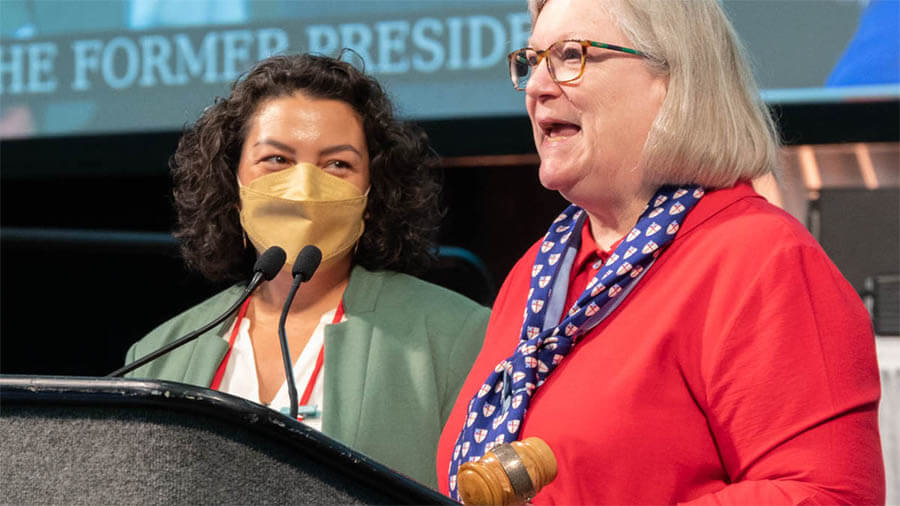
    [Episcopal News Service – Baltimore, Maryland] Through its consent calendar, the House of Deputies on July 11, 2022, approved Resolution A063, finalizing the creation of a new staff position of director of LBGTQI and Women’s Ministries.

    The resolution, which was approved by the House of Deputies on July 9, was amended by the House of Bishops on July 10, which required deputies to concur with those changes in order for it to pass.

    Bishops modified the resolution’s language to include LGBTQI persons and a position description before it was sent back to the House of Deputies. The resolution also urges $300,000 in funding, which was included in the 2022-24 budget adopted by General Convention.

    The resolution directs the proposed new director to expand on the work done in the past quadrennium by the Task Force to Study Sexism in The Episcopal Church and Develop Anti-Sexism Training, through supervising anti-sexism training, collecting resources and data, and creating networks.

    —Melodie Woerman is a member of the ENS General Convention news team and is the former director of communications for the Diocese of Kansas.

    General Convention of the Episcopal Church

    What happens at General Convention?

    The legislative process of General Convention is an expression of The Episcopal Church’s belief that, under God, the Church is ordered and governed by its people: laity, deacons, priests, and bishops.

    The General Convention is the Church’s highest temporal authority. As such, it has the following power:

    • Amend the Constitution and Canons of the Episcopal Church
    • Amend the Book of Common Prayer and to authorize other liturgical texts
    • Adopt the budget for the Church
    • Create covenants and official relationships with other branches of the Church
    • Determine requirements for its clergy and other leaders
    • Elect its officers, members of the Executive Council, and certain other groups
    • Delegate responsibilities to the Interim Bodies of The Episcopal Church
    • Carry out various other responsibilities and authority
    The Episcopal Church of the Redeemer: Worshiping God, living in community, reaching out to the world.

    Church of the Redeemer

    Church of the Redeemer: Worshiping God, living in community, and reaching out to the world around us. We are an Episcopal Church serving north King County and south Snohomish County. We welcome you be with us as we walk the way of Jesus.

    Church of the Redeemer is at 6220 Northeast 181st Street in Kenmore, Washington. We are a short distance north of Bothell Way, near the Burke-Gilman Trail. The entrance looks like a gravel driveway. The campus is larger on the inside than it is on the outside. And we managed to hide a large building on the side of a hill that is not easily seen from the street.

    The Episcopal Church welcomes you.
  • Full communion agreements approved

    Full communion agreements approved

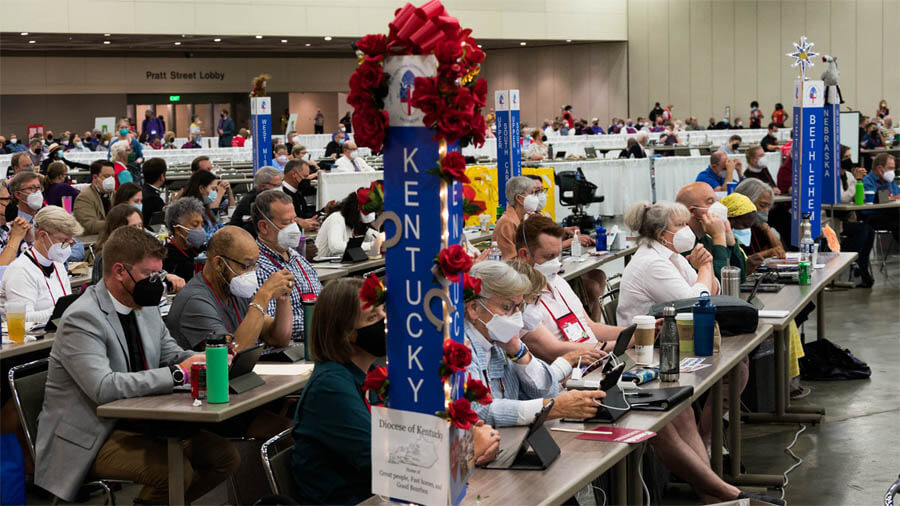
    [Episcopal News Service — Baltimore, Maryland] Adoption of resolutions by the House of Bishops and the House of Deputies has finalized full communion agreements between The Episcopal Church and two other churches – the Evangelical Lutheran Church in Canada and the Church of Sweden. “Full communion” means clergy of one church are eligible to serve congregations of the other. In addition, bishops of both churches are to be invited to participate in each other’s services of ordination and consecration.

    Churches Beyond Borders

    Resolution A092, “Churches Beyond Borders,” amends Canon I.20.1 to include the Evangelical Lutheran Church in Canada as one of the churches with which The Episcopal Church is in full communion.

    “Churches Beyond Borders” is a four-way joint agreement between The Episcopal Church, The Anglican Church of Canada, the Evangelical Lutheran Church in America and the Evangelical Lutheran Church in Canada. The Episcopal Church already is in full communion with all other Anglican Communion provinces, including Canada, and in 2001 it entered into full communion with the Evangelical Lutheran Church in America through “Called to Common Mission.”

    Resolution A137 places full communion with the Church of Sweden in the canons.

    In 2018 the 79th General Convention acknowledged and affirmed the existence of a full communion relationship with the Church of Sweden and called on the 80th General Convention to present a memorandum of understanding setting forth the terms and procedures of that full-communion relationship. That memorandum was finalized by both churches on January 15, 2022.

    General Convention of the Episcopal Church

    What happens at General Convention?

    The legislative process of General Convention is an expression of The Episcopal Church’s belief that, under God, the Church is ordered and governed by its people: laity, deacons, priests, and bishops.

    The General Convention is the Church’s highest temporal authority. As such, it has the following power:

    • Amend the Constitution and Canons of the Episcopal Church
    • Amend the Book of Common Prayer and to authorize other liturgical texts
    • Adopt the budget for the Church
    • Create covenants and official relationships with other branches of the Church
    • Determine requirements for its clergy and other leaders
    • Elect its officers, members of the Executive Council, and certain other groups
    • Delegate responsibilities to the Interim Bodies of The Episcopal Church
    • Carry out various other responsibilities and authority
    The Episcopal Church of the Redeemer: Worshiping God, living in community, reaching out to the world.

    Church of the Redeemer

    Church of the Redeemer: Worshiping God, living in community, and reaching out to the world around us. We are an Episcopal Church serving north King County and south Snohomish County. We welcome you be with us as we walk the way of Jesus.

    Church of the Redeemer is at 6220 Northeast 181st Street in Kenmore, Washington. We are a short distance north of Bothell Way, near the Burke-Gilman Trail. The entrance looks like a gravel driveway. The campus is larger on the inside than it is on the outside. And we managed to hide a large building on the side of a hill that is not easily seen from the street.

    The Episcopal Church welcomes you.

  • Climate emergency statement issued by Bishops

    Climate emergency statement issued by Bishops

    [Episcopal News Service – Baltimore, Maryland] The House of Bishops issued a statement during the final day of the 80th General Convention (July 11, 2022) naming the climate crisis as the overarching issue that affects all the other issues of social justice that convention has considered.

    The “Mind of the House” statement – which is not a resolution and carries no legislative weight – puts humanity’s failure to avert environmental catastrophes in stark theological terms. Its full text is included at the end of this article.

    “Climate change and environmental degradation are manifestations of our turning away from God,” the statement reads. “The effects of this willful separation from God resonate across our collective lives: All areas of justice are either worsened or made better depending on the health of the planet.”

    The statement, crafted by a group of about two dozen bishops and deputies, names environmental stewardship as “our first vocation, made explicit in the first chapter of the first book of the Bible,” and selfish abuse of creation as the first sin.

    “It is no surprise that once Adam and Eve surrendered to temptation and sought to grasp divine knowledge, to idolize and center the self over all else, that the whole creation began to suffer, and humanity along with it. Sin flowed forth in estrangement, exile, and eventually violence and death,” the statement reads.

    “This ancient pattern of separation and sin is ours today. We crave and hoard what we do not need. We take and grasp what does not belong to us. We burden and dominate what was meant to be free. As a result, the planet and our most vulnerable neighbors suffer. This flows from our failure as human beings to live as the people made in image of God, bearing the sacred responsibility entrusted to us.”

    The statement grew out of a shorter one proposed by California Bishop Marc Andrus on the evening of July 9. He told the house that there wouldn’t be time to get a resolution through both houses, but that the urgency of the crisis demanded a timely message.

    “You may well wish to wait till 2024 to take this up, but I feel that the planet cannot wait and the life of the planet cannot wait,” he said.

    Drawing connections between climate change and coinciding crises of mass displacement, war and famine, Andrus told the House, “Everything that this body is so deeply concerned about is made worse or better depending on the health of the planet in which we live. We’ve never said that as a body.”

    The reading of the earlier statement itself prompted a brief but intense discussion about its theological content – or lack thereof. Like the final statement, it put all other social justice issues in the context of the climate crisis and referred only briefly to the baptismal covenant and not to Scripture. That drew an objection from Upper South Carolina Bishop Daniel Richards, who expressed agreement with the statement’s goal but not its execution.

    “I love y’all, but half my people are not going to hear this,” he said. “No Scripture, very little theology and a brief call to our baptismal covenant is not enough for this statement to hold weight with Christian brothers and sisters who do not agree with us. … Without the weight [of Scripture] behind it, it will just be another shout and another political division line within our national politic.”

    San Joaquin Bishop David Rice sharply admonished Richards, saying that was not a reason to delay such an urgent message. The Rt. Rev. Anne Hodges-Copple, suffragan bishop of North Carolina, responded to both, offering Genesis 1 as a scriptural basis, and proposing a group revision.

    “I totally believe a group of us could sit down tonight and come back with something tomorrow, if that’s possible, that would speak without reducing Marc’s beautiful words, to express the urgency as well as strengthening it with our deepest fiber that the foundation of this is from Genesis 1. The first job we were given was to care for the Earth. The first people to go into exile were the two people who said, ‘It’s all about me.’ So we got this.”

    Andrus, Richards, Hodges-Copple, Rice and other bishops and deputies worked together on the revised statement introduced on July 11. Richards thanked Andrus and the other members of the group for “taking my ranty complaint and turning it into a gracious opportunity to broaden the statement of the house.”

    Colombia Bishop Francisco Duque Gómez asked for the statement to be distributed at the upcoming Lambeth Conference of Anglican bishops from around the world, taking place in Canterbury, England, from July 27 to August 8, 2022. Andrus said he and Duque would work to include the statement on the agenda for the day dedicated to addressing the climate crisis.

    Read a summary of General Convention actions affirming environmental and creation care measures.

    Expressing the Mind of the House on Climate and Our Vocation in Christ

    God is the source of all creation, and we, humankind – made in God’s image – have been given the gift of life and responsibility to care for creation. We depend on God’s creation to sustain our life together, and, by serving as good stewards of creation, we reflect God’s tender love for all that has been made. In caring for our earth, we return our love to God. This is our first vocation, made explicit in the first chapter of the first book of the Bible: together with God, together with one another, we care for God’s world.

    We are only fully human and fully alive when we are in right relationship with the whole created order. Apart from each other and nature, we are not our whole selves. It is no surprise that once Adam and Eve surrendered to temptation and sought to grasp divine knowledge, to idolize and center the self over all else, that the whole creation began to suffer, and humanity along with it. Sin flowed forth in estrangement, exile, and eventually violence and death.

    This ancient pattern of separation and sin is ours today. We crave and hoard what we do not need. We take and grasp what does not belong to us. We burden and dominate what was meant to be free. As a result, the planet and our most vulnerable neighbors suffer. This flows from our failure as human beings to live as the people made in image of God, bearing the sacred responsibility entrusted to us.

    Climate change and environmental degradation are manifestations of our turning away from God. The effects of this willful separation from God resonate across our collective lives: All areas of justice are either worsened or made better depending on the health of the planet. A changing climate and degraded environment worsen conflict, forces human migration, and causes food insecurity. These related crises increase the rate of violence, cause more natural disasters and humanitarian crises, and deepen the wounds of those already suffering from racism. People living in poverty are plunged further into poverty by the deteriorating condition of the planet.

    As people of faith, we are not without hope, but the sustainability of God’s creation demands our action. Confronting climate change and environmental degradation has never been more urgent. As members of The Episcopal Church, we are committed in baptism to resist evil, seek God’s will, treat all people with dignity, and strive for justice and peace. Living into these promises, we must face the climate crisis for the sake of love of God and neighbor:

    If we hope to treat all human beings with dignity, we must address climate change so droughts, floods, and extreme weather patterns don’t force people into exile and desperate, life-threatening migration.

    If we hope to build peace, we must address climate change so that competition for scarce resources does not drive further violence.

    If we hope to ensure that every child of God has enough to eat, we must address climate change so that our bountiful earth can continue to support and sustain food systems that nourish people and the soil.

    We are a people of hope. Where do we find the hope that sustains, that dispels fear, that gives us the courage to love and to persevere? We find hope in the power and reality of the Resurrection. After Jesus had been buried, in the dark before dawn, Mary was in despair and utterly without hope. But as she was drawn from the tomb to the garden, she met the living Christ. Mary’s mourning turned to brilliant resurrection hope. From the garden, she ran to proclaim good news to Jesus’ confused and terrified followers.

    And so it is for many of us today. We, God’s faithful, are called to share the hope that will empower change. Many of God’s people – especially our children – are in despair as they observe the frightening shifts in our environmental narrative. The risen Christ continues to send us out to proclaim the Gospel to the whole of Creation (Mark 16:15). Like Mary, we go out to all proclaiming God’s love in deed and word. It is our work to lead the way for change, to model good stewardship, and to move forward with courage and purpose.

    We are already at work spreading hope and effecting change: We are creating “Good News Gardens”; installing solar panels on church properties; hosting transition programs for coal miners who need help adapting to a changing economy; cleaning up toxic hot spots, like the Salton Sea in southern California; helping to eliminate the terror of food insecurity; setting aside land for the restoration of damaged ecosystems; planting trees, mangrove stands, and prairie grasses; advocating for policy change; fundamentally transforming our way of life from one centered on self to one centered on the flourishing of the whole creation – in these ways and so many more, we can follow Jesus’ call to “preach good news to the creation.” (Mark 16: 15) In these ways and so many more, we embrace the original vocation God gave us, to care together for the world God made.

    Dear God, Creator of the earth, this sacred home we share;
    Give us new eyes to see the beauty all around and to protect the wonders of creation.
    Give us new arms to embrace the strangers among us and to know them as family.
    Give us new ears to hear and understand those who live off the land and sea, and to hear and understand those who extract its resources.
    Give us new hearts to recognize the brokenness in our communities and to heal the wounds we have inflicted.
    Give us new hands to serve the earth and its people and to shape beloved community.
    For you are the One who seeks the lost, binds our wounds and sets us free,
    And it is in the name of Jesus the Christ we pray. Amen.

    Prayer from the 2019 meeting of the House of Bishops, Fairbanks, Alaska

    —Egan Millard is an assistant editor and reporter for Episcopal News Service. He can be reached at emillard@episcopalchurch.org.

    General Convention of the Episcopal Church

    What happens at General Convention?

    The legislative process of General Convention is an expression of The Episcopal Church’s belief that, under God, the Church is ordered and governed by its people: laity, deacons, priests, and bishops.

    The General Convention is the Church’s highest temporal authority. As such, it has the following power:

    • Amend the Constitution and Canons of the Episcopal Church
    • Amend the Book of Common Prayer and to authorize other liturgical texts
    • Adopt the budget for the Church
    • Create covenants and official relationships with other branches of the Church
    • Determine requirements for its clergy and other leaders
    • Elect its officers, members of the Executive Council, and certain other groups
    • Delegate responsibilities to the Interim Bodies of The Episcopal Church
    • Carry out various other responsibilities and authority
    The Episcopal Church of the Redeemer: Worshiping God, living in community, reaching out to the world.

    Church of the Redeemer

    Church of the Redeemer: Worshiping God, living in community, and reaching out to the world around us. We are an Episcopal Church serving north King County and south Snohomish County. We welcome you be with us as we walk the way of Jesus.

    Church of the Redeemer is at 6220 Northeast 181st Street in Kenmore, Washington. We are a short distance north of Bothell Way, near the Burke-Gilman Trail. The entrance looks like a gravel driveway. The campus is larger on the inside than it is on the outside. And we managed to hide a large building on the side of a hill that is not easily seen from the street.

    The Episcopal Church welcomes you.
  • Book of Common Prayer definition broadened

    Book of Common Prayer definition broadened

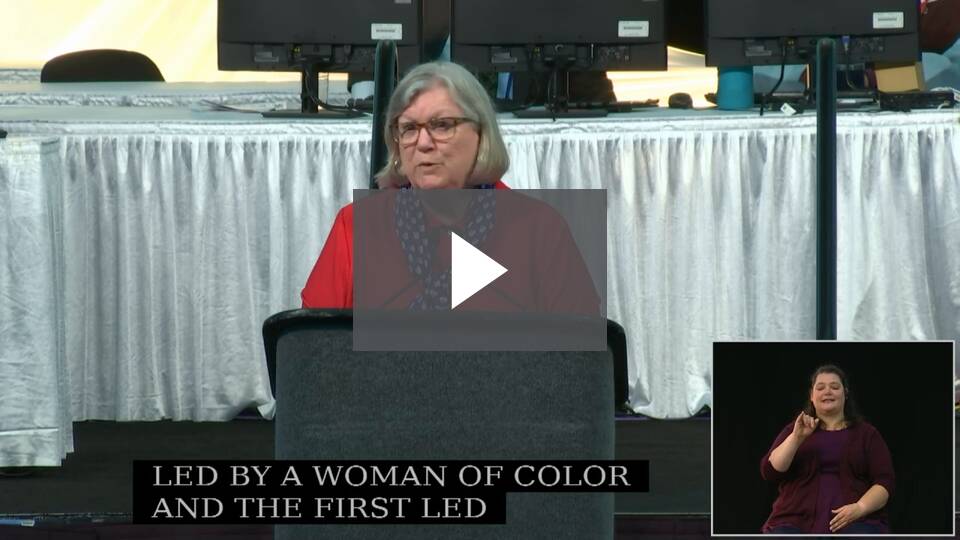
    [Episcopal News Service – Baltimore, Maryland] The House of Bishops moved forward with a plan to expand and clarify what exactly the Book of Common Prayer is, ending hours of discussion with an unanimously adopted resolution on July 9. The House of Deputies concurred the following evening with a minor amendment, sending it back to the bishops for a final vote.

    A larger issue that we’re trying to deal with … is we have all kinds of authorizations and all kinds of trial usages, and it’s kind of a mess.

    Bishop Jeffrey Lee

    The resolution – an amended version of A059, which had garnered increasing attention in the weeks leading up to General Convention – would amend Article X of the Constitution of The Episcopal Church, which lays out how the Book of Common Prayer can be revised but has never specifically provided for authorized liturgies that are not proposed revisions to the existing book.

    Purpose of A059

    A059, concurred on by the House of Deputies, for the first time, defines the Book of Common Prayer as “those liturgical forms and other texts authorized by the General Convention.” In other words, liturgies that are not in the current prayer book – such as same-sex marriage rites and gender-expansive liturgies – could be elevated to “prayer book status,” whether they are replacing parts of the prayer book or standing on their own.

    “What A059 is about, really, is acknowledging that common prayer is evolving,” said the Rt. Rev. Jeffrey Lee, bishop provisional of Milwaukee, chair of the House of Bishops’ Committee on Prayer Book, Liturgy & Music and one of the architects of A059. “And it creates a framework for that evolution to happen, including the inclusion of a number of different rites in a curated collection.”

    The discussions in the House of Bishops on July 8 and 9 – as well as in legislative committee meetings leading up to convention – mostly focused on parsing out the mechanics of what A059 would and would not do. In its current form, A059 would not change the status of the 1979 prayer book or of the various liturgies authorized by General Convention that are not in it. It would, however, set the canonical framework for future evaluation and reorganization of those liturgies.

    The debate, though, went beyond that to touch on more philosophical questions like the meaning of the word “book” in the 21st century, and the concept of “common prayer” itself. Discussion on July 8 veered into the theological and political origins of the Book of Common Prayer, from Thomas Cranmer and Queen Elizabeth I through the formation of The Episcopal Church after the American Revolution.

    “The cat is already out of the bag,” Lee said. “The idea of the prayer book [evolving from] a book bound and physically present in a pew to a curated collection of texts that lives online – that’s already the case, perhaps with different understandings of authorization. But we decided to do that when we first decided that you could cut and paste a PDF.”

    Factors in the development of A059

    Primary factors in the development of A059 included a desire for official liturgies with an expansive understanding of gender and sexuality, preparation for future prayer book revision and concern about the proliferation of other liturgies in various states of authorization. Over a dozen liturgical texts have been “authorized” – for trial use, experimental use, or simply “made available” – by General Convention over the years. However, Article X currently only addresses convention’s ability to revise all or some of the existing Book of Common Prayer. It says nothing about authorization of other liturgies not directly related to the existing prayer book, a category that encompasses many of these other texts, like “Enriching Our Worship.”

    “A larger issue that we’re trying to deal with … is we have all kinds of authorizations and all kinds of trial usages, and it’s kind of a mess,” Lee said.

    All authorized Episcopal liturgies have been compiled together at episcopalcommonprayer.org, which was created by the Task Force on Liturgical and Prayer Book Revision. Resolution A058, which was passed by both houses, designates the site as “the official liturgical website of The Episcopal Church.”

    The original version of A059, Lee said, was “an attempt to clarify what authorization has the weight of the Book of Common Prayer and what other rites might not have that. … What’s being proposed in A059 is not the creation of a wiki-prayer book.”

    The effort originated at the 2018 General Convention, where A068 created the liturgical revision task force, with the intention that it would not necessarily lead to an entirely new edition of the prayer book but propose revised liturgies with inclusive and expansive language. Existing liturgies, some deputies and bishops had argued, use gendered language that is exclusive and unnecessary.

    At this convention, A059 – which was proposed by the Task Force on Liturgical & Prayer Book Revision – was introduced by Lee’s prayer book committee in a version that proposed a process by which new liturgies could achieve prayer book status. That version was ultimately replaced with a substitute developed by a group of bishops including Lee, Texas Bishop Andrew Doyle and Ohio Bishop Mark Hollingsworth.

    The substitute left the specific process of authorizing new texts open to future canonical definition, focusing just on the constitutional change that would enable such work. It leaves in place the requirement that any prayer book changes must be approved by two successive General Conventions, and specifies that any changes must be authorized for trial use first.

    In response to concerns that the resolution might be interpreted as demoting or restricting the 1979 prayer book, the substitute includes additional clarifying language.

    “The Book of Common Prayer in this Church is intended to be communal and devotional prayer enriched by our church’s cultural, geographical, and linguistic contexts. The Book of Common Prayer shall contain both public worship and private devotion,” it reads.

    “The Book of Common Prayer, as now established or hereafter amended by the General Convention, shall be in use in all the Dioceses of this Church.”

    Constitutional change, not canonical

    Since A059 is a constitutional and not a canonical change, it would not alter the status of any existing authorized liturgies. The amended version passed by the house would create a working group to propose canonical changes that would clarify or alter the status of the rites that have been authorized for trial or experimental use over the last few decades. That working group would present those recommendations to the 81st General Convention. Resolution A059, if it passes the House of Deputies, would not take effect until then because it needs two successive readings.

    Lee, Doyle and Hollingsworth had encouraged the house not to delay acting on A059 or referring it back to another body because of the timing requirements for constitutional and canonical requirements, which Bishop Sean Rowe, the House of Bishops’ parliamentarian, explained.

    “Let’s say we do pass it in 2022 and in 2024, [new] canons are ready to go,” he said, describing the ideal scenario. “If we [don’t pass] it here, we can’t do anything with it until 2027. So, it’s the difference between doing something in two years or waiting six years.”

    New York Assistant Bishop Mary Glasspool speaks during discussion on A059 on July 8, 2022 at the 80th General Convention in Baltimore, Maryland. Source: General Convention Office

    Consensus and approval

    As discussion moved into the evening on July 9, consensus around the amended resolution emerged and bishops rose to thank the team of 12 bishops who crafted it.

    “I think this resolution is brilliant,” said New York Assistant Bishop Mary Glasspool. “I’m amazed – we’re in this four-day General Convention and somehow squeezing into that intensity has driven us deep. This is the best conversation that I’ve been a part of in the 11 years that I’ve been bishop and coming to these meetings.”

    The resolution passed on a voice vote that was unanimous, Presiding Bishop Michael Curry confirmed for the record.

    On the evening of July 10, the House of Deputies considered a lightly amended version of A059, which specified that the working group would have nine members and a budget of $30,000, in addition to making a procedural wording fix. After 20 minutes of discussion — with testimony split between supporting and opposing — the amended A059 was concurred, sending it back to the House of Bishops, which passed the final version on July 11.

    —Egan Millard is an assistant editor and reporter for Episcopal News Service. He can be reached at emillard@episcopalchurch.org.

    General Convention of the Episcopal Church

    What happens at General Convention?

    The legislative process of General Convention is an expression of The Episcopal Church’s belief that, under God, the Church is ordered and governed by its people: laity, deacons, priests, and bishops.

    The General Convention is the Church’s highest temporal authority. As such, it has the following power:

    • Amend the Constitution and Canons of the Episcopal Church
    • Amend the Book of Common Prayer and to authorize other liturgical texts
    • Adopt the budget for the Church
    • Create covenants and official relationships with other branches of the Church
    • Determine requirements for its clergy and other leaders
    • Elect its officers, members of the Executive Council, and certain other groups
    • Delegate responsibilities to the Interim Bodies of The Episcopal Church
    • Carry out various other responsibilities and authority
    The Episcopal Church of the Redeemer: Worshiping God, living in community, reaching out to the world.

    Church of the Redeemer

    Church of the Redeemer: Worshiping God, living in community, and reaching out to the world around us. We are an Episcopal Church serving north King County and south Snohomish County. We welcome you be with us as we walk the way of Jesus.

    Church of the Redeemer is at 6220 Northeast 181st Street in Kenmore, Washington. We are a short distance north of Bothell Way, near the Burke-Gilman Trail. The entrance looks like a gravel driveway. The campus is larger on the inside than it is on the outside. And we managed to hide a large building on the side of a hill that is not easily seen from the street.

    The Episcopal Church welcomes you.

  • Rachel Taber-Hamilton elected VP of HOD

    Rachel Taber-Hamilton elected VP of HOD

    [Episcopal News Service – Baltimore, Maryland] The House of Deputies on July 10, 2022, elected the Rev. Rachel Taber-Hamilton, Rector of Trinity in Everett, Washington, as its vice president. She is the first ordained woman, and only the third woman, to serve in this capacity since the role of deputies’ vice president was created in 1964.

    I’m looking forward with such joy and such humble gratitude to being able to be in a position to support the work of the House of Deputies, to care for all of you, and assure that every voice may be brought to bear.

    The Rev. Rachel Taber-Hamilton

    Taber-Hamilton, who is Shackan First Nation, joins President-Elect Julie Ayala Harris, a Latina lay woman from the Diocese of Oklahoma, to be the first people of color serving together as leaders of the House of Deputies. Their elections mark the first time two women will lead the house.

    Taber-Hamilton is an Indigenous priest in the Diocese of Olympia, and she succeeds the Hon. Byron Rushing, who has served since 2012. She The other candidate was the Rev. Edwin Johnson of Massachusetts.

    After her election, Taber-Hamilton was joined on the platform by other Olympia deputies as she was greeted by the house with a standing ovation. [Our rector, the Rev. Jed Fox, is third from the right in the picture.]

    She said, “I’m looking forward with such joy and such humble gratitude to being able to be in a position to support the work of the House of Deputies, to care for all of you, and assure that every voice may be brought to bear. I also have such a deep commitment to supporting our [newly-elected] President Julia [Ayala] Harris, and the continued development of our lay ministers in the church, who I believe will be a significant aspect of our adaptive future.”

    — Melodie Woerman

    The Rev. Rachel Taber-Hamilton

    Raised in a multi-cultural and mixed-race heritage of First Nations (Shackan, British Columbia), Pennsylvania Dutch and Scots-Irish, Rachel Taber-Hamilton has had a life-long passion for cross-cultural communication, preservation of traditional life ways and folk traditions, social diversity and ethnic ministries. She has over 25 years of experience in working with the needs of diverse communities, providing leadership and consultation in recovery processes related to community and organizational trauma.

    The Rev. Rachel Taber-Hamilton

    Rachel holds a BA in Theater Arts from SUNY Geneseo, an MA in Cultural Anthropology from the University of Alaska Fairbanks, an MDiv from Loyola University in Chicago. Her post-graduate work at Indiana University was in the area of Folklore Studies, specializing in the role of symbol systems and folk heroes within processes of transformational cultural change and adaptive community identity.

    The Rev. Rachel Taber-Hamilton at the altar of Trinity Episcopal Church in Everett, Washington.

    Ordained as a priest in 2004, Rachel has served throughout her tenure in the Diocese of Olympia on various diocesan councils and committees of the General Convention of The Episcopal Church. She is a committed advocate for social justice concerns and restorative justice in civic policy development. Rachel is currently Rector of Trinity Episcopal Church in Everett, WA, which serves as a hub congregation supporting advocacy work for refugees and immigrants in the Episcopal Diocese of Western Washington.

    The Rev. Rachel Taber-Hamilton participating in a march.

    Text and pictures below the headline from the website of Trinity Episcopal Church in Everett, Washington.

    General Convention of the Episcopal Church

    What happens at General Convention?

    The legislative process of General Convention is an expression of The Episcopal Church’s belief that, under God, the Church is ordered and governed by its people: laity, deacons, priests, and bishops.

    The General Convention is the Church’s highest temporal authority. As such, it has the following power:

    • Amend the Constitution and Canons of the Episcopal Church
    • Amend the Book of Common Prayer and to authorize other liturgical texts
    • Adopt the budget for the Church
    • Create covenants and official relationships with other branches of the Church
    • Determine requirements for its clergy and other leaders
    • Elect its officers, members of the Executive Council, and certain other groups
    • Delegate responsibilities to the Interim Bodies of The Episcopal Church
    • Carry out various other responsibilities and authority
    The Episcopal Church of the Redeemer: Worshiping God, living in community, reaching out to the world.

    Church of the Redeemer

    Church of the Redeemer: Worshiping God, living in community, and reaching out to the world around us. We are an Episcopal Church serving north King County and south Snohomish County. We welcome you be with us as we walk the way of Jesus.

    Church of the Redeemer is at 6220 Northeast 181st Street in Kenmore, Washington. We are a short distance north of Bothell Way, near the Burke-Gilman Trail. The entrance looks like a gravel driveway. The campus is larger on the inside than it is on the outside. And we managed to hide a large building on the side of a hill that is not easily seen from the street.

    The Episcopal Church welcomes you.
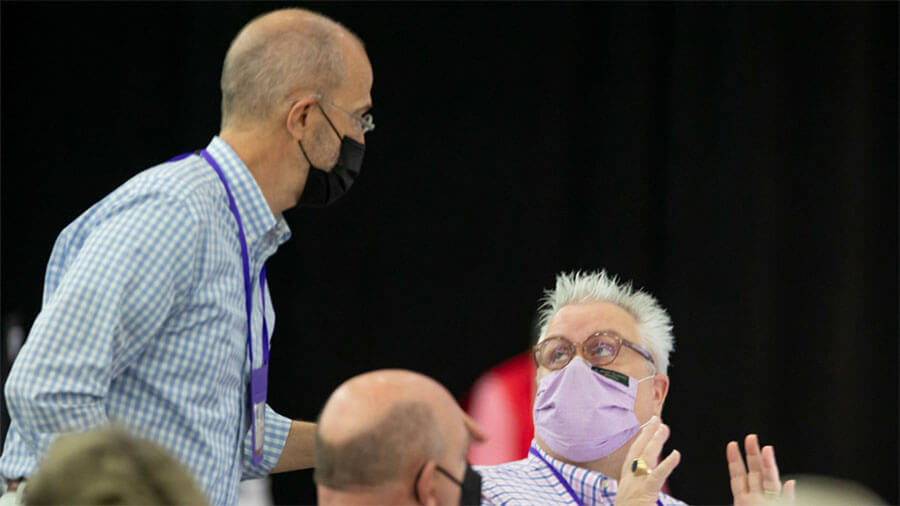
Third Sunday in Advent (Year A), December 14, 2025. Services at 8:00 am and 10:30 am. Christian education for children and adults at 9:15 am. Be patient, beloved, until the coming of the Lord.

Episcopal Church of the Redeemer
Privacy Overview

Cookie information is stored in your browser and performs functions such as recognizing you when you return to our website and helping our team to understand which pages of the website are visited. We aren't using cookies to determine your web browsing habits, but others can.