Tag: Michael Curry

  • Nuevo Amanecer kicks off

    Nuevo Amanecer kicks off

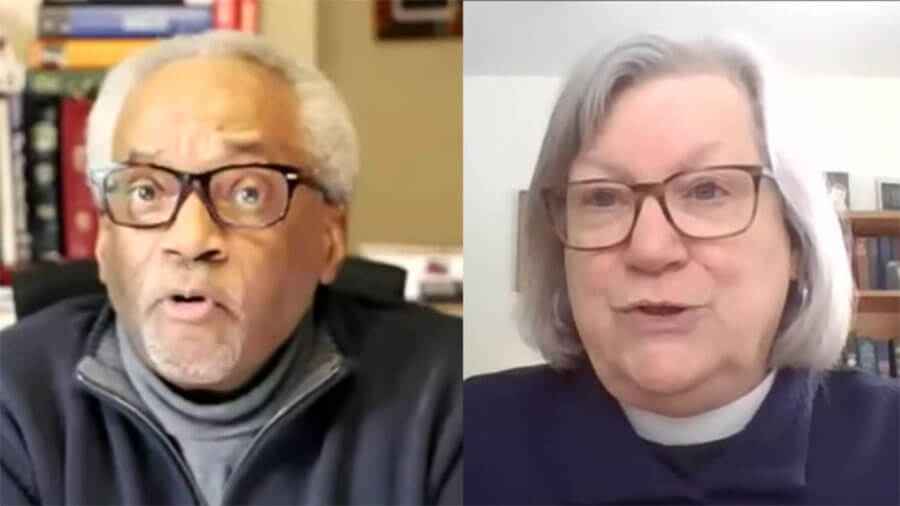
    [Episcopal News Service — Hendersonville, North Carolina] “If it’s not about love,” Presiding Bishop Michael Curry said, “it’s not about God.”

    “Live your life so that when children see you, they see something about the love of God,” Curry preached during the June 3, 2024, opening worship service of Nuevo Amanecer, a churchwide conference that celebrates and supports Latino ministries in The Episcopal Church.

    Three hundred Latino Episcopalians are gathering June 3-6 at Kanuga Conference and Retreat Center here, for the popular conference that’s been hosted biennially by The Episcopal Church’s Latino/Hispanic Ministries since 2008. This year’s theme is “Sembrando Amor y Esperanza,” or “Sowing Love and Hope,” which Curry reflected on in his sermon.

    “Love God; love your neighbor; love yourself,” Curry said, as Samuel Borbón, international and voluntary relationship manager at Church Pension Group, interpreted his words in Spanish.

    Making connections

    “For me, worship is the most important part of Nuevo Amanecer because it’s where all the people make connections and share their love of Christ and the things they have in common,” Nolman Bonilla, who heads up hospitality at the conference and who is a young adult vestry member at Cathedral Church of the Nativity in Bethlehem, Pennsylvania, told Episcopal News Service. “I loved Bishop Curry’s message about loving our neighbors as we love God.”

    Nuevo Amanecer, meaning “new dawn” in Spanish, includes training for church leadership and formation, as well as information about Latino ministries in The Episcopal Church and special activities for young adults and children. All programming is bilingual. The conference is also a networking and discipleship opportunity for Latinos, who make up about 2% of the church.

    “The church is only authentically the church when it’s truly catholic, and by truly catholic, I mean universal. We are not truly catholic unless all of us are represented,” Curry told ENS in an interview. “Whether it’s Latino ministries, Black ministries, Asiamerican ministries or Indigenous ministries, those aren’t add-ons. They’re the church seeking to be itself, a universal community of people who’ve committed to following and continuing the faith of the apostles.”

    Each day at Nuevo Amancecer

    First Day

    On June 4, the conference’s first full day began with a plenary hosted by House of Deputies President Julia Ayala-Harris. Participants then broke up into smaller groups for various workshops and plenaries addressing topics ranging from bilingual church music to church planting. The itinerary includes some time for participants to enjoy the many indoor and outdoor activities offered at Kanuga, such as swimming, kayaking and fitness classes. The day will conclude with a liturgy of healing and forgiveness.

    Nuevo Amanecer 2024 is taking place June 3-6 at Kanuga Conference and Retreat Center in Hendersonville, North Carolina. Photo: Shireen Korkzan
    Nuevo Amanecer 2024 is taking place June 3-6 at Kanuga Conference and Retreat Center in Hendersonville, North Carolina. Photo: Shireen Korkzan

    Nuevo Amanecer 2024 is taking place June 3-6 at Kanuga Conference and Retreat Center in Hendersonville, North Carolina. Photo: Shireen Korkzan

    “Nuevo Amanecer is important because it creates a sense of belonging for Latino ministry. It’s so beautiful when we get together here to connect and share our spirituality, to see that we are growing in The Episcopal Church,” Guadalupe Moriel-Guillén told ENS. Her husband, the Rev. Anthony Guillén, is the church’s Latino/Hispanic Ministries’ missioner.

    Second Day

    On June 5, the Very Rev. Miguelina Howell, dean of Christ Church Cathedral in Hartford, Connecticut, will host a listening session addressing the future of the Episcopal Coalition for Racial Equity & Justice. Church Pension Group staff will also give a presentation. The day will conclude with a festival embracing Latino cultures. Nuevo Amanecer will end the following day with more workshops and closing remarks.

    Changing demographics reflected in Nuevo Amanecer

    Nuevo Amanecer’s programming shows that “there is so much more to Latino ministries than just having bilingual services,” said the Rev. Fabian Villalobos, a priest at Christ Episcopal Church in Dallas, Texas, and a member of Nuevo Amanecer’s programming team. “When we embrace all cultures, together we make The Episcopal Church so much richer and more welcoming.”

    Curry and Moriel-Guillén both said that even though The Episcopal Church’s membership is shrinking on paper, the numbers don’t tell the full story. Instead, they said, the church’s demographics are changing, as reflected in Nuevo Amanecer’s popularity. When the conference switched to a virtual format in 2020 in response to the COVID-19 pandemic, attendance nearly doubled to about 700 people worldwide.

    “Every Nuevo Amanecer feels like a family reunion, but a lot of new people also join every time,” Moriel-Guillén said. “It is important to make the new people feel at home and make them a part of our extended family.”

    Curry told ENS that all aspects of the church’s changing demographics should be embraced, including the cultural traditions Latinos bring with them, such as the Spanish language and Marian devotion, particularly Our Lady of Guadalupe, the patron saint of Mexico.

    “I may not be bilingual, but I can overcome it because when spirit touches spirit, language doesn’t matter. When spirit touches spirit, there’s a connection,” he said. “We sometimes forget that veneration and love of the Blessed Virgin Mary is very much a part of the Anglo-Catholic tradition. Anglicanism has a variety of strains, and that kind of liturgical and sacramental diversity reflects different ways that people can come into a relationship with the living God. The Holy Spirit doesn’t have just one pathway.”

    Latino/Hispanic Ministries will livestream online worship and keynote presentations through its Facebook page.


    Shireen Korkzan is a reporter and assistant editor for Episcopal News Service based in northern Indiana. She can be reached at skorkzan@episcopalchurch.org.

    Latino Ministries: Ministerios Latinos

    Ministerios latinos

    The Office of Latino/Hispanic Ministries guides The Episcopal Church in forming hospitable communities of faith that nourish, strengthen, and develop disciples of Christ in the Anglican tradition within Spanish-speaking communities.

    Vision

    Latino/Hispanic Ministries yearns for a church that embodies the multiethnic, multilingual, and multicultural context we live in today. Our vision is to make The Episcopal Church known to Latino/Hispanic communities so that they may experience our church and embrace it as their spiritual home.

    Mission

    Latino/Hispanic Ministries of The Episcopal Church actively participates in the Jesus Movement. We support dioceses and congregations by doing the following:

    • Producing resources
    • Developing networks
    • Providing opportunities for formation of lay and ordained leaders
    The Episcopal Church of the Redeemer: Worshiping God, living in community, reaching out to the world.

    Church of the Redeemer

    Church of the Redeemer: Worshiping God, living in community, and reaching out to the world around us. We are an Episcopal Church serving north King County and south Snohomish County, Washington. As you travel your road, go with friends walking the way of Jesus at Redeemer.

    Church of the Redeemer is at 6220 Northeast 181st Street in Kenmore, Washington. The campus is a short distance north of Bothell Way, near the Burke-Gilman Trail. The entrance looks like a gravel driveway. The campus is larger on the inside than it is on the outside. And we managed to hide a large building on the side of a hill that is not easily seen from the street.

    The Episcopal Church welcomes you.

  • Executive Council meets in advance of General Convention

    Executive Council meets in advance of General Convention

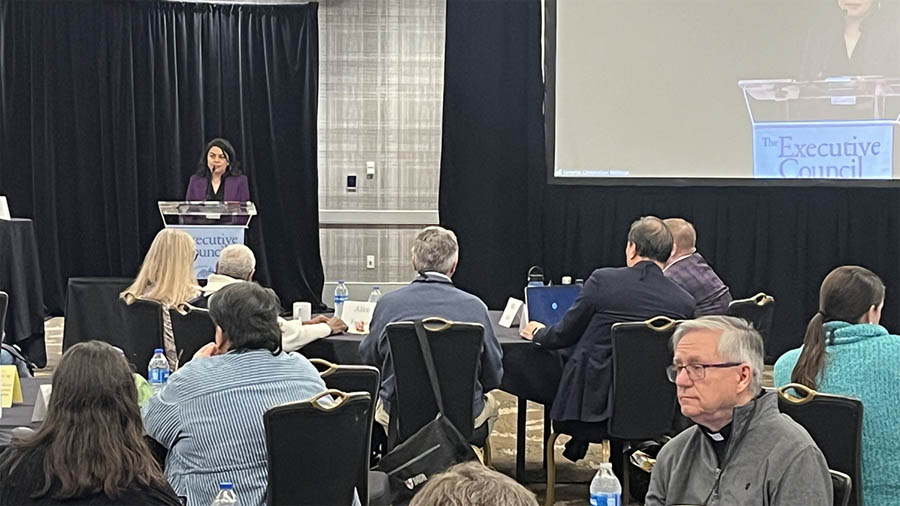
    [Episcopal News Service – Louisville, Kentucky] The Episcopal Church Executive Council is meeting in the host city for the upcoming 81st General Convention. It expects to focus much of its four days here on discussion and approval of a 2025-27 churchwide budget plan. This setts up final adoption of the $143 million plan in June at General Convention.

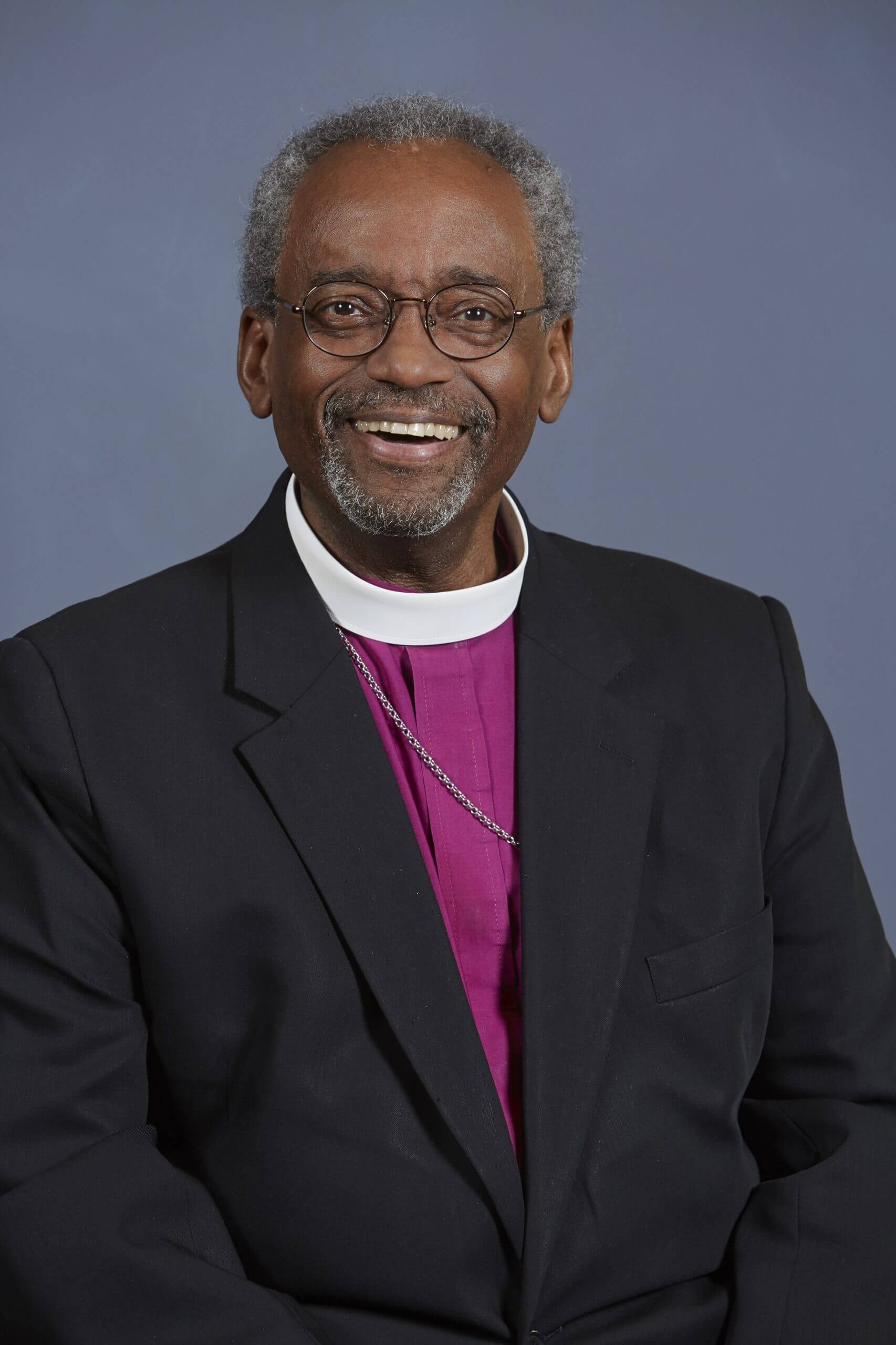
    Presiding Bishop Michael Curry

    With Presiding Bishop Michael Curry recovering at home in Raleigh, North Carolina. He had a medical procedure to address a recurring subdural hematoma, or brain bleed, House of Deputies President Julia Ayala Harris is chairing the January 26-29, 2024, meeting of Executive Council.

    “His spirit and leadership remain ever present with us and in our church,” Ayala Harris said in her opening remarks January 26. She shared words of gratitude from Curry himself for all the prayers for his health.

    “Fervid prayer and competent medicine are a powerful partnership,” Curry said in his message to Executive Council, as relayed by Ayala Harris. “Thank you to all of you who have been praying for my family, the medical teams and for me.”

    Pilgrimage to Tanzania

    Ayala Harris devoted part of her opening speech to describing a “profoundly moving” pilgrimage to Tanzania. She joined this month with two other members of Executive Council, the Rev. Charles Graves and Alice Freeman. They were guests of Episcopal Relief & Development.

    “We were there to witness firsthand the partnership between Episcopal Relief & Development and the Anglican dioceses in Tanzania,” she said. “Together they are working to further our collective witness of the love of Jesus Christ.”

    The Episcopal pilgrims visited sites in the Diocese of Central Tanganyika. They learned about some of the ministries supported by the relief agency. This included a savings and lending program devoted to financial empowerment of local residents, especially women.

    “The women who run these groups demonstrate for us incredible leadership traits: clarity of role, accountably to one another, desire to give and share one’s gifts together, the building of deep bonds of trust and relationship,” Ayala Harris said.

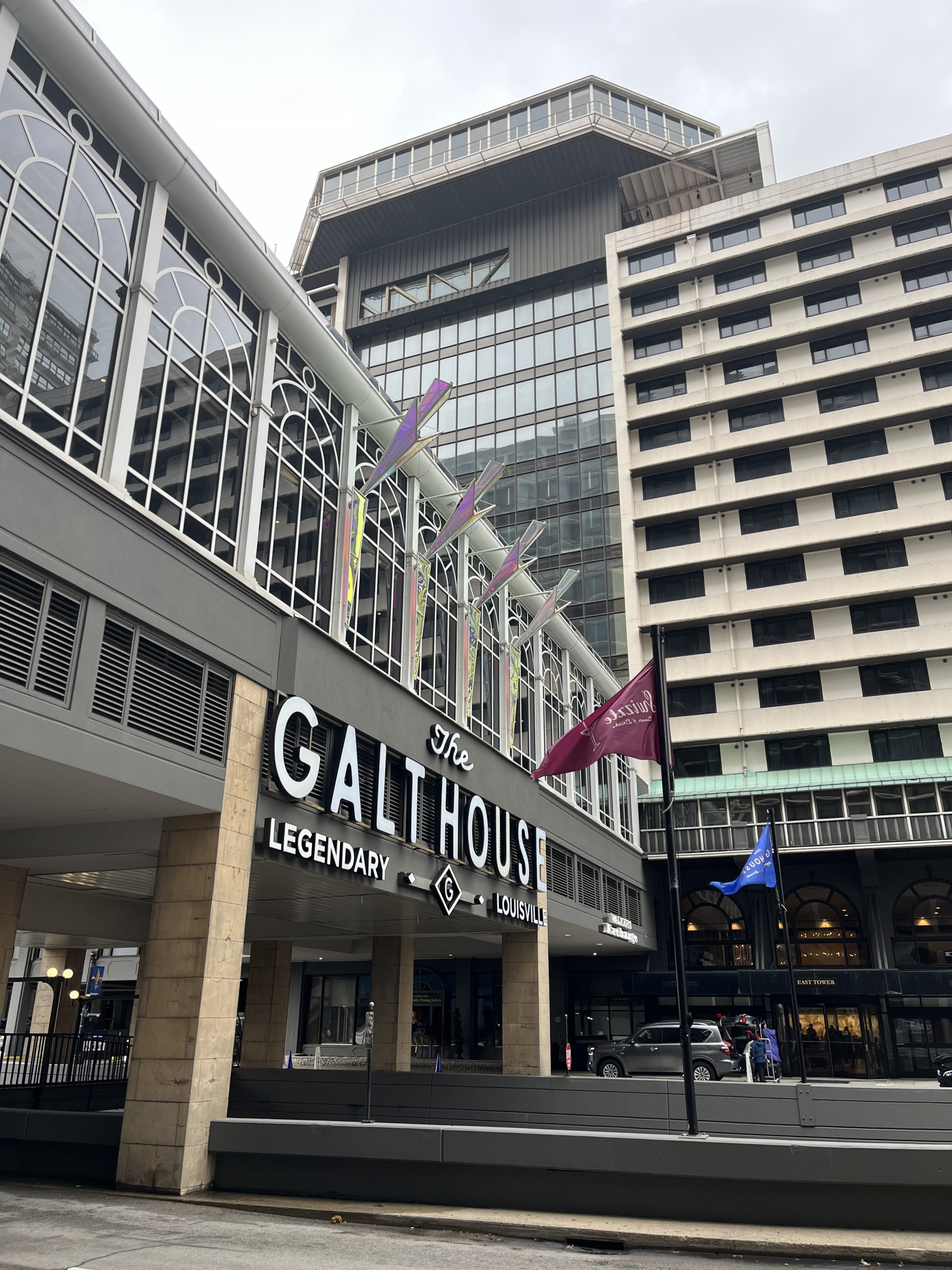
    Graves and Freeman are expected to share more details about the pilgrimage during committee discussions at this meeting of Executive Council. These discussions are taking place at the Galt House, a historic hotel and conference center overlooking the Ohio River in downtown Louisville.

    The Executive Council

    Executive Council is meeting January 26-29, 2024, at the Galt House, a hotel and conference center in downtown Louisville, Kentucky. It is about a block north of the convention center where the 81st General Convention will be held. Photo: David Paulsen/Episcopal News Service
    Executive Council is meeting January 26-29, 2024, at the Galt House, a hotel and conference center in downtown Louisville, Kentucky. It is about a block north of the convention center where the 81st General Convention will be held. Photo: David Paulsen/Episcopal News Service.

    Galt House is about a block north of the Kentucky International Convention Center, where the 81st General Convention is scheduled to convene June 23-29. One of the Executive Council’s central actions will be adoption of a triennial churchwide budget plan. This plan is based on recommendations of Executive Council, which is the church’s governing body between meetings of General Convention.

    The presiding bishop and House of Deputies president serve as chair and vice chair of Executive Council, respectively. Its other 38 voting members are a mix of bishops, other clergy and lay leaders. General Convention elects 20 to staggered six-year terms – or 10 new members every three years. The Episcopal Church’s nine provinces elect the other 18 to six-year terms, also staggered. Executive Council typically holds meetings three times a year. The next is scheduled for April 2024 in Raleigh.

    Executive Council considers draft budget for 2025-2027

    In the afternoon January 26, Executive Council’s Joint Budget Committee presented its $143 million draft plan for 2025-27. The Budget Committee finalized the plan earlier this month at an in-person meeting. The committee chair is the Rev. Patty Downing, an Executive Council member from the Diocese of Delaware. The rest of the committee includes both Executive Council members and other clergy and lay leaders who are familiar with church finances.

    Executive Council is to vote on the draft budget plan Jan. 28, after which it will advance for presentation and floor debate at the 81st General Convention in June.

    The Joint Budget Committee is recommending that the church maintain its current 15% assessment rate on diocesan income. The assessments are the largest revenue source, 64%, of the churchwide budget. Some dioceses are expected to ask General Convention to cut the rate to as low as 10%. The committee estimates a 10% assessment would create a $30 million shortfall in the three-year budget.

    After table discussions, members of Executive Council rose to offer feedback on the draft plan.

    • Some said they agreed that the church should not change its assessment rate.
    • They spoke in favor of a separate decision not to ask Episcopal Relief & Development to begin contributing to the churchwide budget in exchange for the services it receives from church departments.
    • Others suggested the draft budget plan doesn’t fully fund some of the church’s priorities. This includes creation care, youth, and young adult ministries.

    Are we a church that is more focused on the size of our endowment, or are we a church focused on doing actual mission work?”

    Joe McDaniel, from the Diocese of the Central Gulf Coast

    Investment portfolio draw proposal

    One sharp point of contention was the Joint Budget Committee’s decision not to increase the amount of money the church draws annually from the returns on its $167 million unrestricted investment portfolio. Joe McDaniel, an Executive Council member from the Diocese of the Central Gulf Coast who is not a member of the Joint Budget Committee, has proposed raising the investment draw to provide more money in the budget to support the church’s mission and ministry priorities.

    McDaniel’s resolution is due for an evening discussion on January 26 by Executive Council’s Finance Committee. During a break earlier in the day, he specified to Episcopal News Service that he proposes increasing the draw to 5.42%. He said this would add $3 million over three years to the budget. This would be “a prudent course of action” to do the following:

    • Increase funding to The Office of African Descent Ministries.
    • Set aside money for General Convention resolutions.
    • Support ministries favored by the next presiding bishop, who will be elected in June and installed in November.

    McDaniel read a statement further detailing his proposal during Executive Council’s afternoon budget discussion. “Are we a church that is more focused on the size of our endowment,” he said, “or are we a church focused on doing actual mission work?”

    It isn’t clear whether McDaniel’s proposal can garner the support of a majority of Executive Council. Some members have expressed skepticism. Diane Pollard, a member from the Diocese of New York, spoke during the morning plenary of “the wisdom of being careful” by maintaining the church’s more conservative approach to its investments. “I think that what we do today affects people many, many years after.”

    Historic investment portfolio draw

    The church in recent budgetary cycles has settled on a 5% draw from its investments. This is applied to a rolling five-year average of investment returns. Chief Financial Officer Kurt Barnes, who also serves as the church’s treasurer, said January 26 in his report to Executive Council that the church is likely to end 2023 with a strong 16% return on its investments, though he cautioned members to look beyond single-year figures.

    “Past performance is not indicative of future returns. That’s always the warning,” Barnes said, citing the common truism in financial planning. The church’s five-year average of annual net returns is closer to 8.5%, he said. With inflation and other costs, this typically leaves about 5% to support the churchwide budget through the investment draw.

    Church Pension Group

    Executive Council’s first day also featured a presentation by leaders of the Church Pension Group. They have been meeting with members of Executive Council and other church leaders to discuss renewal of a memorandum of understanding. Church Pension Group’s incorporation is separate from the church. It manages a wide range of clergy and lay benefits for its employees.

    General Convention elects 24 trustees of Church Pension Group’s board. Twelve of those seats are up for election this June in Louisville. The other 24 trustees elect the 25th trustee, the president. Kathryn McCormick, the board’s chair, asked for Executive Council to help encourage a diverse slate of candidates who have the financial expertise the board needs to be effective.

    Mary Kate Wold, Church Pension Group’s chief executive officer and president, provided a brief history of the agency. Founded in 1917, she underscored its continued commitment to ensuring support for church employees, both now and in retirement.

    “We are very intent that we can honor the promises made over decades,” Wold said. In some cases, that means planning for pension payments more than 70 years in the future. “That’s a long, long span of responsibility, and we take that very seriously.”

    —David Paulsen is a senior reporter and editor for Episcopal News Service. You can reach Paulsen at dpaulsen@episcopalchurch.org.

    The Episcopal Church of the Redeemer: Worshiping God, living in community, reaching out to the world.

    Church of the Redeemer

    Church of the Redeemer: Worshiping God, living in community, and reaching out to the world around us. We are an Episcopal Church serving north King County and south Snohomish County, Washington. As you travel your road, go with friends walking the way of Jesus at Redeemer.

    Church of the Redeemer is at 6220 Northeast 181st Street in Kenmore, Washington. The campus is a short distance north of Bothell Way, near the Burke-Gilman Trail. The entrance looks like a gravel driveway. The campus is larger on the inside than it is on the outside. And we managed to hide a large building on the side of a hill that is not easily seen from the street.

    The Episcopal Church welcomes you.

  • The bulletin insert for December 24, 2023

    The bulletin insert for December 24, 2023

    This is the weekly bulletin insert from Sermons That Work. It is the Christmas message from the Most Reverend Michael Curry, Presiding Bishop of the Episcopal Church.

    The Presiding Bishop’s Christmas Message

    Hello to my family of faith in The Episcopal Church, and to all of our ecumenical and interfaith friends, and to all people of love and goodwill. I want to first thank you all for your prayers and well wishes this year as I have weathered some health issues. Please know that I’m doing well, following the doctor’s orders.

    I’m also ever more aware of the power of the messages of Advent to watch, to wait, and to listen to the pregnant voice of silence, as one version of the Bible says. And out of that watching, waiting, and listening, following the way of Jesus of Nazareth and his way of love, the Spirit of God being our helper.

    So please allow me to offer a reading from the Gospel according to Luke. You know it well. The deep truth embedded in it, simple story of the birth of a baby. That deep truth has long given me strength for these 70 years, strength that I often did not have on my own. For some, it may seem fanciful, but in its own way, it points to what the Bible calls hope beyond hope. It reads:

    While Mary and Joseph were in Bethlehem, the time came for her to deliver her child. She gave birth to her firstborn son, wrapped him in bands of cloth and laid him in a manger because there was no place for them in the guest room. Now in that same region, there were shepherds living in the fields, keeping watch over their flock by night. Then an angel of the Lord stood before them, and the glory of the Lord shone around them, and they were terrified. The angel said to them, “Do not be afraid, for see, I am bringing you good news of great joy for all people: To you is born this day in the city of David, a savior, who is the Messiah, the Lord. And this will be a sign for you: You will find a child wrapped in bands of cloth and lying in a manger.” And suddenly there was with the angel a multitude of the heavenly host, praising God and saying, “Glory to God in the highest, and on earth peace among those whom he favors!”

    The message of the angel is as scandalous and striking now as it was then. For in it is embedded God’s message in the death and resurrection of Jesus: to trust and believe in the invincibility of the good in spite of the titanic reality of evil, because God is good all the time. To trust and believe in the enduring power of love, of truth, of the good, and of justice when the reality of the opposite seems so prodigious.

    To trust and believe in the enduring power of love, justice, kindness, and compassion, all because God is love and the author of all that is true, noble, and just. “Do not be afraid,” the Scripture says, “for see, I am bringing you good news of great joy for all the people: To you is born this day in the city of David, a savior, who is the Messiah, the Lord. And this will be a sign for you: You will find a child wrapped in bands of cloth and lying in a manger.”

    Lord, we pray, give us this sign anew. Give us the lowly, the tired, those of high estate and low, and those of no estate. Church folk, those who haven’t stepped through the red doors for years or ever, give us all a sign. Give us the working, the watching, the weeping. Give us that sign anew; as you did in the first century, so now in the 21st. Give us the expected, the faithful, the passionate, the undeserving; give us a sign.

    “The angel said to them, ‘Do not be afraid, for see, I am bringing you good news of great joy for all people: To you is born this day in the city of David, a savior, who is the Messiah, the Lord.’”

    On behalf of the entire Episcopal Church, we wish you and yours a Merry Christmas and a joyous new year. God love you. God bless you. May God hold us all in those almighty hands of love. Merry Christmas.

    The Most Rev. Michael B. Curry, Presiding Bishop and PrimateThe Episcopal Church


    Published by the Office of Formation of The Episcopal Church, 815 Second Avenue, New York, N.Y. 10017

    © 2023 The Domestic and Foreign Missionary Society of the Protestant Episcopal Church in the United States of America. All rights reserved.

    Weekly bulletin inserts

    This weekly bulletin insert provides information about the history, music, liturgy, mission, and ministry of The Episcopal Church. For more information, please contact us at stw@episcopalchurch.org.

    Sermons That Work from the Episcopal Church

    Sermons That Work

    For more than 20 years, Sermons That Work, a ministry of The Episcopal Church’s Office of Communication, has provided free sermons, Bible studies, bulletin inserts, and other resources that speak to congregations across the Church. Our writers and readers come from numerous and varied backgrounds, and the resources we provide are used in small house churches, sprawling cathedrals, and everything between.

    The Episcopal Church of the Redeemer: Worshiping God, living in community, reaching out to the world.

    Church of the Redeemer

    Church of the Redeemer: Worshiping God, living in community, and reaching out to the world around us. We are an Episcopal Church serving north King County and south Snohomish County, Washington. As you travel your road, go with friends walking the way of Jesus at Redeemer.

    Church of the Redeemer is at 6220 Northeast 181st Street in Kenmore, Washington. The campus is a short distance north of Bothell Way, near the Burke-Gilman Trail. The entrance looks like a gravel driveway. The campus is larger on the inside than it is on the outside. And we managed to hide a large building on the side of a hill that is not easily seen from the street.

    The Episcopal Church welcomes you.

  • Registration open for ‘It’s All About Love’

    Registration open for ‘It’s All About Love’

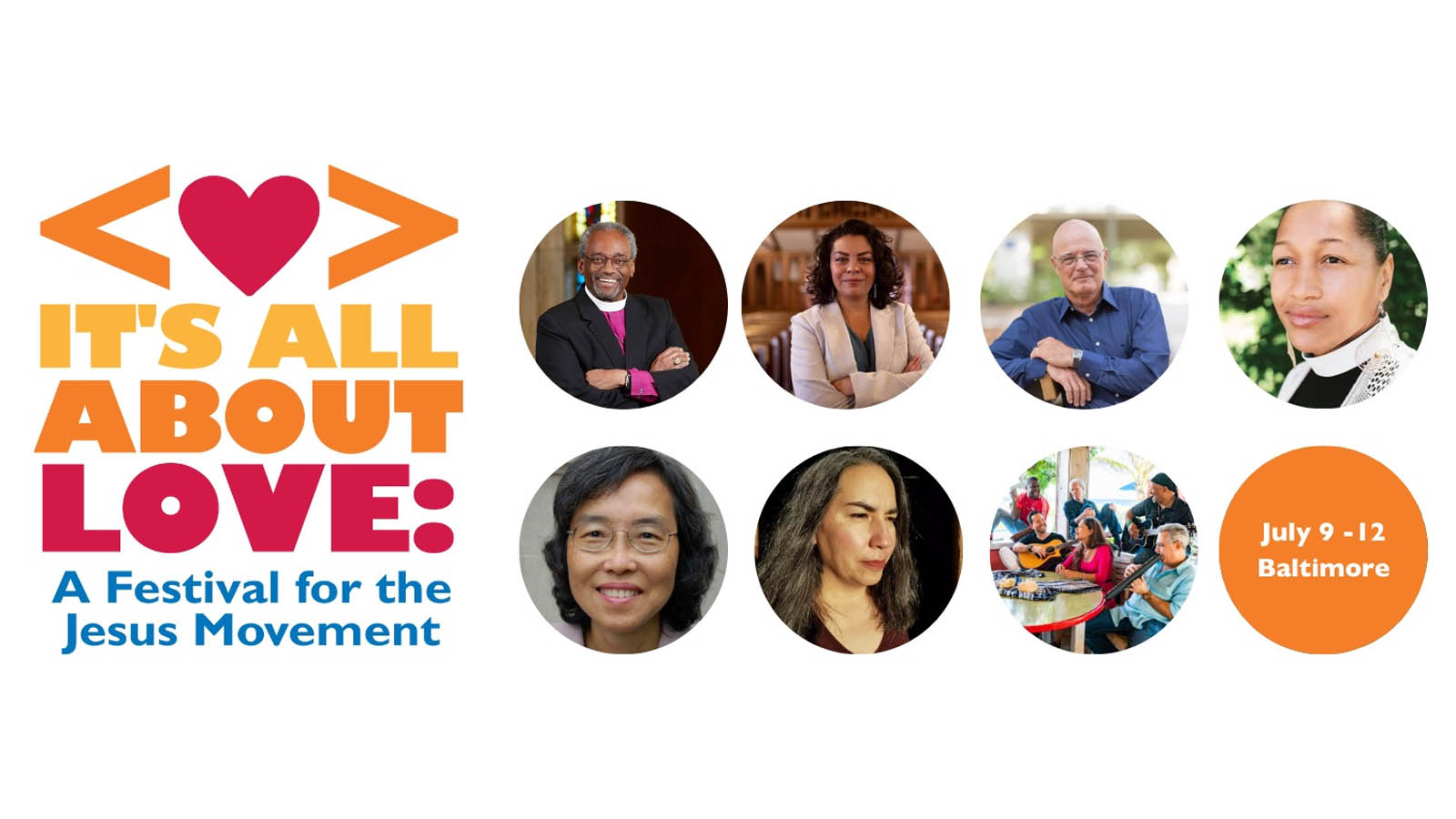
    Episcopalians everywhere are invited to register to join a churchwide festival of worship, learning, community, and action July 9-12, 2023, at the Baltimore (Maryland) Convention Center called ‘It’s All About Love.’

    It’s All About Love: A Festival for the Jesus Movement” will open at 7:00 pm Sunday, July 9, 2023, with a revival worship service featuring Episcopal Church Presiding Bishop Michael Curry. It closes at noon on Wednesday, July 12, following a festival Eucharist preached by House of Deputies President Julia Ayala Harris. The Rev. Mariama White-Hammond will preach on July 10.

    Kwok Pui Lan, dean’s professor of systematic theology at Candler School of Theology, will speak during the July 10 morning plenary on racial reconciliation; Sarah Augustine, co-founder and director of the Coalition to Dismantle the Doctrine of Discovery, will speak July 11 on racial reconciliation and becoming Beloved Community. Author and speaker Brian McLaren will join Curry for a morning plenary July 12 on the future of evangelism. View the schedule online.

    Worship will be led by Live Hymnal and friends from across The Episcopal Church, and a special prayer space will be curated by Lilly Lewin of Free-Range Worship.

    “It’s All About Love” will feature three “tents”—evangelism, creation care, and racial justice—that will host evening revival worship services, as well as daytime workshops, panels, practice opportunities, and other ways to engage. Workshop proposals are being accepted through April 15.

    “As we emerge from COVID, we need more of God’s love, guidance and power in order to keep becoming a church that truly looks, lives and loves like Jesus,” said the Rev. Stephanie Spellers, the presiding bishop’s canon for evangelism, reconciliation ,and creation care. “In other words, we need a revival of relationships and love. That’s what this festival is all about.”

    Registration is open online. Through May 8, 2023, the cost is $185; after May 8, the cost is $225. Registration for students and seminarians is half-off. Discounted room blocks have been reserved at the Hilton Baltimore Inner Harbor, Marriott Baltimore Inner Harbor, and Renaissance Baltimore Harborplace.

    Those interested in sponsorship opportunities or reserving an exhibit table can learn more hereView sponsors online.

    Follow festival updates online and on Facebook.

    Additional questions? Email evangelism@episcopalchurch.org.

    The Episcopal Church of the Redeemer: Worshiping God, living in community, reaching out to the world.

    Church of the Redeemer

    Church of the Redeemer: Worshiping God, living in community, and reaching out to the world around us. We are an Episcopal Church serving north King County and south Snohomish County. We welcome you be with us as we walk the way of Jesus.

    Church of the Redeemer is at 6220 Northeast 181st Street in Kenmore, Washington. We are a short distance north of Bothell Way, near the Burke-Gilman Trail. The entrance looks like a gravel driveway. The campus is larger on the inside than it is on the outside. And we managed to hide a large building on the side of a hill that is not easily seen from the street.

    The Episcopal Church welcomes you.

  • House of Bishops elects Armed Forces and Federal Ministries bishop suffragan and Navajoland provisional bishop, reaffirms trans rights

    House of Bishops elects Armed Forces and Federal Ministries bishop suffragan and Navajoland provisional bishop, reaffirms trans rights

    At The Episcopal Church’s House of Bishops spring gathering, 122 bishops gathered March 8-13, 2023, at Camp McDowell in Nauvoo, Alabama, for a time of retreat.

    Presiding Bishop’s opening sermon

    In his opening sermon, Presiding Bishop Michael Curry challenged the group by asking how they live into the fact that they are bishops of a church that is both “Good Friday and Easter,” where there is death and new life all at the same time.

    “Not one of us has ever been a bishop in this moment of the church’s life before; there are no experts; there’s nobody who knows how to do it,” Curry said, “but last time I checked my Bible, Jesus said, ‘Wherever two or three gather in my name, I’m going to show up.’”

    He added: “You and I have been called to be bishops, as Mordecai said to Esther, ‘for such a time as this,’ when Good Friday and Easter are indistinguishable. And this Jesus has the truth of eternal life.”

    Read full transcript of Curry’s sermon.

    Scheduled events during the spring gathering

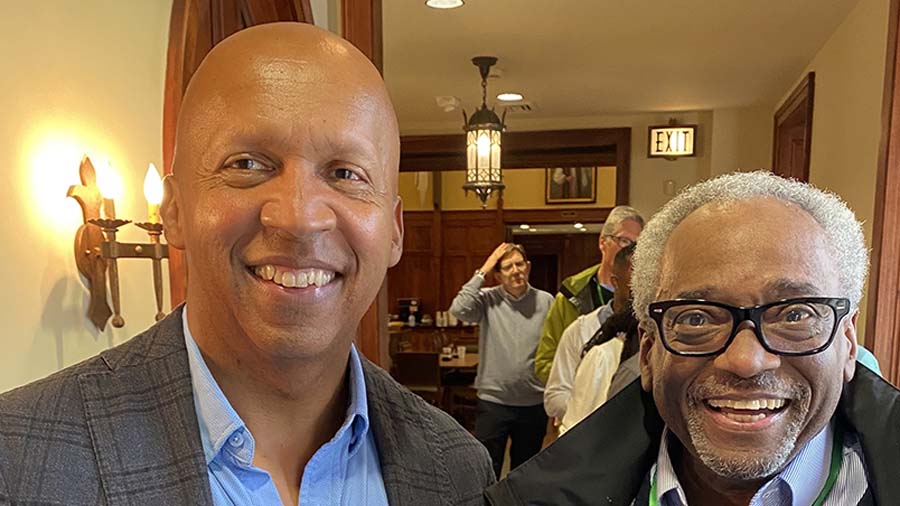
    Scheduled events included a day pilgrimage to Montgomery, Alabama, with visits to the Legacy Museum, the National Memorial for Peace and Justice, and conversation with Bryan Stevenson of the Equal Justice Initiative at St. John’s Episcopal Church.

     “We went to Montgomery not as tourists to consume, but as pilgrims to pray,” Curry said, reflecting on the visit. “We went on pilgrimage to holy places to remember those enslaved and abused in the institution of chattel slavery—and the martyrs and witnesses who labored for a society in which there is ‘liberty and justice for all.’ … We went as pilgrims following Jesus and his way of love.”

    The Very Rev. Miguelina Howell, chaplain to the House of Bishops and dean of Christ Church Cathedral in Connecticut, delivered a homily for Sunday Eucharist. She invited those present to reconsider traditional interpretations of the story in the Gospel of John of the Samaritan woman at the well.

    “Change begins from within at the personal and institutional levels,” Howell said. “The Samaritan woman was courageous, and her bravery did not translate into arrogance. She allowed herself to be vulnerable. She felt seen by Jesus. Jesus spoke to her soul. Jesus spoke to her story. She made the most of the encounter at the well.”

    Read full transcript of Howell’s sermon.

    Business meeting

    Bishop Suffragan for the Armed Forces and Federal Ministries

    In its March 12 business meeting, the House of Bishops elected the Rev. Ann Ritonia, former Marine Corps major, to the position of bishop suffragan for the Armed Forces and Federal Ministries. While the initial election was declared null and void due to a single ineligibly cast vote, Ritonia was then elected on the first ballot of the second election.

    Most recently, Ritonia served as rector of St. John’s Episcopal Church and Parish Day School in the Episcopal Diocese of Maryland. She is the recipient of the Navy Commendation Medal, the Navy Achievement Medal, the National Defense Service Medal, Meritorious Unit Commendations, and the Recruit Honor Graduate Award. Ritonia also served as a member of the Chaplain Selection Committee for Armed Forces and Federal Ministries for seven years.

    “I so look forward to working with the Rev. Ritonia,” said Curry. “We are very fortunate to have her coming on board, and I wish her every blessing in this crucial ministry.”

    Ritonia’s consecration date, pending consents, is set for September 30, 2023, at St. John’s Church, Lafayette Square.

    The bishop suffragan for Armed Forces and Federal Ministries is a Department of Defense-appointed Ecclesiastical Endorser with responsibility for Episcopal chaplains and congregations in the departments of Defense and Veterans Affairs, and the Federal Bureau of Prisons. The Office of Armed Forces and Federal Ministries supports federal chaplains who provide spiritual and day-to-day support for those in the military, Veterans Affairs hospitals, and prisons.

    Bishop Provisional of the Navajoland area mission

    Also in the business meeting, the House of Bishops confirmed the recommendation of the people of the Navajoland area mission to appoint the Rt. Rev. Barry Beisner as their bishop provisional. Beisner served previously as bishop of the Episcopal Diocese of Northern California, and, since 2019, has served as assisting bishop in Navajoland with a focus on the formation of new clergy—in collaboration with his wife, the Rev. Ann Hallisey.

    The Rt. Rev. Todd Ousley, bishop for pastoral development, referenced Resolution D080 from the 80th General Convention, which calls for the empowerment of The Episcopal Church in Navajoland to call its own leadership, including any necessary amendments to church canons at the 81st General Convention.

    Transgender support

    Recalling its March 2022 statement of love and continued support for transgender people and their families, the House of Bishops reaffirmed its commitment in a resolution responding to current legislative actions in 41 states targeting trans people. “We urge all in our church, in all the countries in which The Episcopal Church is found, to create safe spaces and shield all people from harassment based on gender identity, and to join in advocacy to protect them from discriminatory laws,” the resolution states.

    Honoring life and ministry of the Most Rev. Frank Griswold

    The bishops also passed a resolution honoring the life and ministry of the Most Rev. Frank T. Griswold III, the 25th presiding bishop of The Episcopal Church, who died on March 5. The resolution remembers Griswold for being a leader “who, rooted in the fullness of the human experience, encouraged us, in tracking down the Holy Ghost and in gathering up the fragments, to pray all our days, that we might grow more deeply into the love of and longing for God, and so might become prayer itself.”

    Read full transcript of Curry’s closing sermon.

    Article from the Episcopal Church Office of Public Affairs.

    A message from Lent from the Most Reverend Melissa Skelton, Bishop Provisional of the Diocese of Olympia to the people of the diocese.

    Church of the Redeemer

    Church of the Redeemer: Worshiping God, living in community, and reaching out to the world around us. We are an Episcopal Church serving north King County and south Snohomish County, Washington. As you travel your road, go with friends walking the way of Jesus at Redeemer.

    Church of the Redeemer is at 6220 Northeast 181st Street in Kenmore, Washington. The campus is a short distance north of Bothell Way, near the Burke-Gilman Trail. The entrance looks like a gravel driveway. The campus is larger on the inside than it is on the outside. And we managed to hide a large building on the side of a hill that is not easily seen from the street.

    The Episcopal Church welcomes you.

  • Church leaders lament deaths in Buffalo

    Church leaders lament deaths in Buffalo

    First is a news release from Episcopal News Service about the mass deaths in Buffalo, New York. It has reactions from church leaders at the national a locally from Buffalo, New York.

    This is followed by a pastoral statement by Bishop Greg Rickel of the Diocese of Olympia.

    Episcopal leaders join outcry and lament over racist rampage in Buffalo that left 10 dead

    [Episcopal News Service] Episcopal leaders are condemning a deadly, racist rampage at a Buffalo, New York, supermarket and joining in prayers for the victims and their families as hate-crime charges loom for the 18-year-old suspect in the shooting.

    Payton S. Gendron, who lives 200 miles from Buffalo near the central New York city of Binghamton, is accused of opening fire at a Tops store in a largely Black neighborhood of Buffalo, killing 10 and injuring three people, all but two of them Black. Law enforcement officials have called it “straight up, a racially motivated hate crime,” and a 180-page manifesto attributed to Gendron alludes to the false, racist conspiracy theory that a coordinated “replacement” of white Americans by people of color is underway.

    Bishop Sean Rowe, Bishop Provisional of Western New York

    “While we wait to learn more about this unthinkable situation, I ask you to join me in praying for those who have died, for those who are injured and suffering, and for the families and loved ones whose lives will never be the same,” Bishop Sean Rowe said in a written statement after the massacre. ”Please pray, too, for the man who committed this horrific act, and for everyone whose mind and soul is twisted toward the evil of gun violence by racism.”

    Rowe, the bishop diocesan of Northwestern Pennsylvania, also serves as bishop provisional of the Buffalo-based Diocese of Western New York through a partnership between the two dioceses. “Racial hatred has no place in our churches or our communities,” Rowe said. “Here in the dioceses of Northwestern Pennsylvania and Western New York, we are committed to dismantling white supremacy and systemic racism, and we stand in solidarity with the Black community, which today has once again paid an unthinkable price for the twin evils of racism and gun violence.

    Please accept YouTube cookies to play this video. By accepting you will be accessing content from YouTube, a service provided by an external third party.

    YouTube’s privacy policy

    If you accept this notice, your choice will be saved and the page will refresh.


    Presiding Bishop Michael Curry

    Presiding Bishop Michael Curry, who grew up in Buffalo and whose father was rector of St. Philip’s Episcopal Church, a historically black congregation in the city, released a statement May 16 saying his “heart is heavy” at the news of the attack near where he and his childhood friends once rode their bikes. He offered prayers for the victims’ families and gratitude for the police officers who stopped further carnage.

    Read: Presiding Bishop Michael Curry’s full statement.

    “The loss of any human life is tragic, but there was deep racial hatred driving this shooting, and we have got to turn from the deadly path our nation has walked for much too long,” Curry said. “Bigotry-based violence — any bigotry at all — against our siblings who are people of color, Jewish, Sikh, Asian, trans, or any other group, is fundamentally wrong. As baptized followers of Jesus of Nazareth, we are called to uphold and protect the dignity of every human child of God, and to actively uproot the white supremacy and racism deep in the heart of our shared life.

    Parish and diocesan response

    On May 15, Rowe led a short prayer service with Denise Clarke-Merriweather, a member of St. Philip’s. The prayer service, livestreamed on Zoom and Facebook, incorporated the Litany in the Wake of a Mass Shooting, which was developed by Bishops United Against Gun Violence after six people were killed at a Sikh temple in Wisconsin in 2012. It is updated regularly with additional prayers for the victims of new mass shootings in the United States.

    On May 16, the two partner dioceses’ Commission to Dismantle Racism and Discrimination issued a statement lamenting the Buffalo attack, calling it “another reminder of the forces of evil that plague our country requiring the acknowledgement of ongoing traumatization due to racism and discrimination.”

    “While we extend our deepest condolences, we know that a commitment to faith-based action is needed now, more than ever,” the commission said. “Please join us in the concerted effort to promote justice, peace, and love within every aspect of our lives in dedication to our deceased and injured neighbors, as well as all individuals who have been victimized as a result of racial discrimination.”

    https://www.facebook.com/stphilipsbuffalo/photos/a.361482310546382/5747762885251604/

    The person charged with the crime

    Gendron has been charged locally with first-degree murder, and the FBI is investigating the attack as a possible hate crime. Gendron, dressed in tactical gear and carrying an assault weapon, is accused of arriving at the Buffalo supermarket midafternoon May 14 and shooting four people in the parking lot before continuing into the store and firing on shoppers and employees. A security guard who returned fire was among those shot and killed.

    Officials said Gendron livestreamed the attack on the website Twitch before Buffalo police responded and persuaded Gendron to surrender.

    The attack, by a gunman reportedly driven by white supremacist ideology, has drawn comparisons to other racially and ethnically motivated massacres, including the 2015 shooting at Mother Emanuel African Episcopal Church in Charleston, South Carolina, that killed nine Black church members; the 2018 shooting at Tree of Life Synagogue in Pittsburgh, Pennsylvania, that killed 11 worshipers, and the 2019 shooting at a Walmart in El Paso, Texas, that killed 23 people, most of them Latino.

    https://twitter.com/EmmaHendersonTV/status/1526233666380304385

    About the victims

    One of the 10 fatal victims in Buffalo, 86-year-old Ruth Whitfield, had stopped at Tops for groceries while on her way home from visiting her husband, who lives in a nursing home. “That day was like any other day for my mom,” son Garnell Whitfield said at a family news conference May 16. “She encountered this evil, hateful – she didn’t deserve that. She didn’t deserve that. Nobody deserves that.”

    Whitfield, a former Buffalo police commissioner, issued an emotional, impassioned plea for solutions to the continued threat of racist violence like the attack that killed his mother. “What are we going to do to change it?” he said. “This is our mother; this is our lives! We need help. We’re asking you to help us. Help us change this. This can’t keep happening.”

    https://www.facebook.com/watch/?v=2188636457954369

    The Rev. Steve Lane, priest-in-charge at St. Philip’s, serves as a chaplain for Buffalo police officers and responded to the shooting site later in the day May 14. About half of the department was on the scene by then, but the victims’ families had left, Lane told Episcopal News Service. He praised the officers for their ability to “provide a calm presence in the middle of a crazy crisis.”

    Lane also acknowledged his unusual role as a white priest of a historically Black congregation. Since the attack, he has reached out to members of St. Philip’s. “I have some parishioners who shop there, and we have parishioners who knew people who were shot there,” Lane said, but no one from the congregation was at Tops when the shooting happened.

    Lane said the reaction of many St. Philip’s parishioners, in addition to grief for the victims, has been a solemn weariness at yet another case of racist violence targeting Black victims. “This has happened before, and it has happened again,” he said.

    —David Paulsen is an editor and reporter for Episcopal News Service. He can be reached at dpaulsen@episcopalchurch.org.

    Bishop Rickel’s Statement on the Shootings in Buffalo, NY

    Like you, I was horrified to learn of the racist act of terror and violence that claimed the lives of 10 innocent people on Saturday in Buffalo, NY, injuring three more. White supremacy—in all its forms—continues to perpetuate violence and trauma in Black communities, and we must continually work to dismantle racism in our communities, in our churches, and in our own lives.

    I grieve with those families who have lost someone this weekend, and I ask you to join me in prayer for the victims and their families. I also urge you to consider visiting Bishops United Against Gun Violence for resources to help you take action in advocating for sensible gun reform.

    Finally, I leave you with the words of our Presiding Bishop as he reflects on this act of violence in a neighborhood he knows so well: Pastoral statement on mass shooting in Buffalo from Episcopal Church Presiding Bishop Michael Curry.

    [The Rt. Rev. Gregory Rickel is Bishop Diocesan of the Diocese of Olympia in western Washington State.]

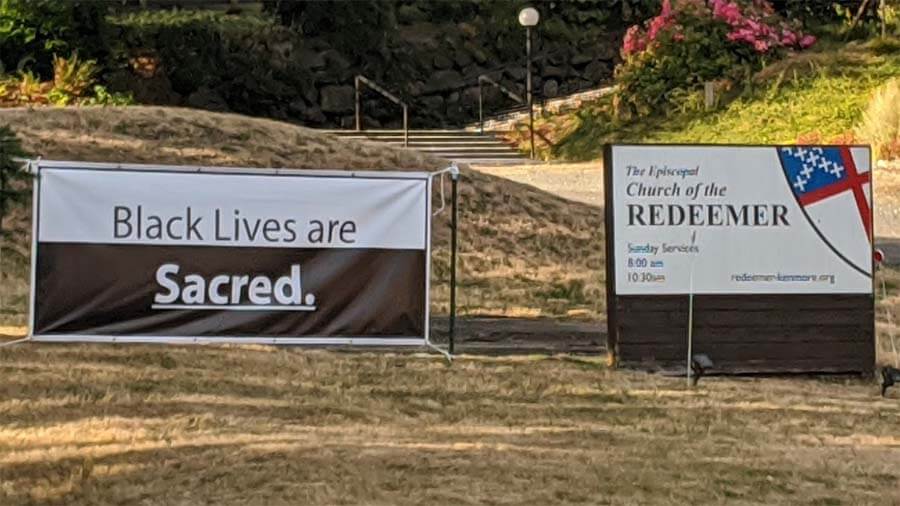
    Black lives are sacred. Church of the Redeemer.

    Church of the Redeemer

    Welcome to Church of the Redeemer: Worshiping God, living in community, and reaching out to the world. We are an Episcopal Church serving north King County and south Snohomish County, Washington. As you travel your road, go with friends walking the way of Jesus at Redeemer.

    Church of the Redeemer is at 6220 Northeast 181st Street in Kenmore, Washington. We are a short distance north of Bothell Way, near the Burke-Gilman Trail. The entrance looks like a gravel driveway. The campus is larger on the inside than it is on the outside. And we managed to hide a large building on the side of a hill that is not easily seen from the street.

    The Episcopal Church welcomes you.

  • Read the weekly bulletin insert for Easter Day

    Read the weekly bulletin insert for Easter Day

    An abridged version of the Presiding Bishop’s Easter Message 2022 is reprinted here for the weekly bulletin insert. Watch and read the entire message by visiting Presiding Bishop Curry: Easter 2022 Message.

    The Presiding Bishop’s Easter Message

    In Matthew’s gospel, the resurrection of Jesus is introduced this way: “After the Sabbath, as the first day of the week was dawning, Mary Magdalene and the other Mary went to see the tomb. And suddenly there was a great earthquake, for an angel of the Lord had descended from heaven, came and rolled back the stone before the tomb until it was open.”

    A number of years ago, when I was serving as the bishop of North Carolina, one of our clergy, the Rev. James Melnyk, offered a workshop on the Saturday before Palm Sunday on how to design, and color, and make Easter eggs.

    I attended the workshop with a number of other people from around the Raleigh area and did my best to make an Easter egg. But Jim was a master at doing so. You see, Jim’s family hailed from Ukraine, and he had been making those Easter eggs from childhood, and spoke of his grandmother and the family tradition that hailed from Ukraine, the making of those Easter eggs. I knew the significance of the Easter egg and Easter. I knew the stories and the truth and the teachings about the coming of new life into the world, and the connection of life emerging from an egg, and Jesus rising from the dead, bringing new life and hope into our world.

    But it became clear to me, in the last month or so, in this time when the people of the Ukraine are struggling for their freedom, struggling to be what God intends for all people to be, free people, that, that egg, which is deeply embedded in the life and the consciousness of the people of Ukraine, that those Easter eggs are not just mere symbols, but reminders of the reality of the resurrection of Jesus. Think back. On Palm Sunday, Jesus entered Jerusalem, as we know, riding on a donkey. That was a deliberate act on his part.

    He entered Jerusalem at about same time that Pontius Pilate, the governor of Rome, would’ve been entering the city from the other side, from the other gate. Pilate would’ve been riding a war horse, accompanied by a cavalry and infantry. He would’ve been riding in the streets of Jerusalem at this, the dawn of the Passover, which was a celebration of Jewish freedom. Harking back to the days of Moses and the Exodus, Pilate knew that the people would remember that God decreed freedom for all people, and that the Roman empire, which held Judea as a colony, would need to put down, by brute force, any attempt to strike a blow for their freedom.

    So, Pilate entered Jerusalem on a war horse, and Jesus entered Jerusalem on a donkey. The way of humility, the way of the love that we know from the God who is love, the way of truth, the way of compassion, the way of justice, the way of God, the way of love. That way faced the way of the world, brute force, totalitarian power, injustice, bigotry, violence, embodied in Pontius Pilate, governor of Rome. And the rest of the week was a conflict between the way of the empire and the way of the kingdom or the reign of God’s love….

    Sermons That Work from the Episcopal Church

    Sermons That Work

    For more than 20 years, Sermons That Work, a ministry of The Episcopal Church’s Office of Communication, has provided free sermons, Bible studies, bulletin inserts, and other resources that speak to congregations across the Church. Our writers and readers come from numerous and varied backgrounds, and the resources we provide are used in small house churches, sprawling cathedrals, and everything between.

    Church of the Redeemer

    Church of the Redeemer: Worshiping God, living in community, and reaching out to the world around us. We are an Episcopal Church serving north King County and south Snohomish County, Washington. As you travel your road, go with friends walking the way of Jesus at Redeemer.

    Church of the Redeemer is at 6220 Northeast 181st Street in Kenmore, Washington. The campus is a short distance north of Bothell Way, near the Burke-Gilman Trail. The entrance looks like a gravel driveway. The campus is larger on the inside than it is on the outside. And we managed to hide a large building on the side of a hill that is not easily seen from the street.

    The Episcopal Church welcomes you.

  • Executive Council opening remarks, January 2022

    Executive Council opening remarks, January 2022

    Presiding Bishop Michael Curry portrait

    Opening remarks by the Presiding Bishop to the Executive Council

    The following is a transcript of the opening remarks of Presiding Bishop Michael Curry at the Executive Council of The Episcopal Church, meeting virtually through Jan. 27. These remarks have been lightly edited for clarity. The text is from the Public Affairs Office of the Episcopal Church.

    Desire to meet together

    It is good to be together, I wish we were in Cleveland right now, I wish we were all together, but we will be together very soon.

    Part I: Weeping at the reading, interpreting, application of God’s Word

    Recently I was talking to a good friend who suggested that I needed to take a look at the reading from Nehemiah appointed for last Sunday (Nehemiah 8:1-10).

    In the text, Ezra the priest reads the law of God to the people. And the text says that when he reads it and interprets it and applies it to their lives, the people wept when they heard it. Why did they weep? My friend was right. That’s simply extraordinary! God’s word was read, interpreted, and applied to their lives, and the people wept! Why in God’s name did they weep?

    They had been through a long period of dislocation, disorientation, and disequilibrium. Worse than a pandemic, but related. Their world had actually fallen apart when the Babylonian armies razed the Judea countryside, breached the walls of Jerusalem, desecrated the Temple King Solomon had built, and virtually destroyed Jerusalem.

    Many of the people were then carted off to Babylon, to virtual servitude, a long, long way from home. As the exile went on, they forgot what home was like. The temple of Jerusalem became a distant memory.

    In time many probably forgot the faith that gave them birth. Holy days sometimes went unobserved. Teachings unlearned. Traditions left unkept. They did what they could to survive on what they had. The deep spiritual and emotional pain of this is captured in one of the psalms that they have left us, Psalm 137, which says:

    By the waters of Babylon—
    we sat down and wept
    and we remembered thee, O Zion,
    when we remembered home.
    On the willows
    we hung up our harps.
    For it was there that our captors
    required of us a song,
    tormenting us with the words,
    ‘Sing us one of the songs of Zion!’
    But how, how shall we sing the LORD’s song
    in a strange land?” (paraphrased)

    And soon the very song was forgotten.

    And then on that day years later in Jerusalem, Ezra read the Torah, God’s law for life; he interpreted it and applied it to them. And they remembered!

    • They remembered their high calling.
    • They remembered life that is more than mere survival.
    • They remembered who they were and whose they were.

    The congruence of their lives with their calling, their highest and noblest aspirations, ideals gave them something exile had taken away—a deep sense of a divine purpose for living.

    In God‘s law they discovered who they were. And when you know that you can face anything, you can endure anything, you can bear any burden, with a sense of direction no matter how hard life can be.

    Another way to say it is they found their soul, their core, the essence, their heart. And when that happens the word of Ezra in the rest of the text becomes true –

    “Go your way,” he said to them, “eat the fat and drink sweet wine and send portions of them to those for whom nothing is prepared, for this day is holy to our LORD; and do not be grieved, for the joy of the LORD is your strength.”

    Part II: Restoration of Christianity

    In 2005 Huston Smith, who was himself a Christian, grown up the son of Methodist missionaries in Asia but who was a scholar of world religions, wrote one of his last books. In it he spoke of the renewal of genuine Christianity in our time in a process similar to that described when Ezra read the law. Part of what he said in that book was that Christianity would be revived, renewed, and restored as it rediscovers and reclaims its soul, its origin, its essence, found in the teachings, and the life and the spirit of Jesus of Nazareth.  He called his book The Soul of Christianity: Restoring the Great Tradition.

    The wisdom here is one of the reasons I believe passionately that we in our time must reclaim the teachings, and the example, and the spirit of Jesus of Nazareth and his way of love as our way of life.

    Some years later, after Huston Smith had published his book, historian Jon Meacham followed a similar trajectory to Huston Smith and to Ezra—now for American democracy and society, to reclaim the high calling and noble ideals, in a book titled, interestingly enough, The Soul of America: The Battle for Our Better Angels.

    To find our way as a nation that is more than a collection of individual self-interest, it will be necessary for us to claim the high calling of the ideals and principles at the core, the soul of the American experiment in representational democracy.

    Part III: Imago Deo

    Those ideals are found in such texts as the Declaration of Independence, Lincoln’s Gettysburg Address, King’s “Letter from a Birmingham Jail.” They are found, though imperfect it may be, in the Constitution of the United States, the Bill of Rights and subsequent amendments. But listen again to the words of the Preamble:

    We the People of the United States, in Order to form a more perfect Union, establish Justice, insure domestic Tranquility, provide for the common defense, promote the general Welfare, and secure the Blessings of Liberty to ourselves and our Posterity, do ordain and establish this Constitution for the United States of America.

    The ideal of democracy, while not perfectly lived out to be sure, offers the best hope yet devised for government that fosters human freedom, equal justice under law, the dignity and equality of every human being made as the Bible says in the image and likeness of God.

    A cornerstone of that democratic ideal is and remains the right to vote. The right to vote is a fundamental human right grounded in the dignity and equality of human beings. I am thankful that this Executive Council previously has gone on record supporting, or advocating for the John R. Lewis Voting Rights Advancement Act, the Freedom to Vote Act, and/or other similar legislation that enhances and furthers the provisions and intention of the Voting Rights Acts of 1965.

    But as you know from the news, this is not going to happen overnight, and it’s not going to happen easily. But we and other people of good will must work, we must persist, and we must labor on against the odds until the right to vote is fully protected and unencumbered by partisan self interest.

    Like the story of the persistent widow that Jesus told, who would not let the judge get away with ignoring her, we must persist until justice rolls down like a mighty stream and righteousness like an ever-flowing brook.

    But we must do something else. We must both advocate for these legislative remedies and also roll up our sleeves to do the hard and laborious work of nonpartisan—and please hear me when I say this; don’t anybody send me emails saying this is partisan since this is not a partisan rant—we must do the hard and laborious work of nonpartisan voter education, registration, and facilitation. And it’s hard work. And you wonder why is he saying this now? It’s January—the midterms aren’t till November. We can’t wait until November to start that work! We must start now.

    The Office of Government Relations has begun an effort to do just that. It’s called Episcopal ActivatorsThis is a practical effort to help people to vote in spite of encumbrances that may currently stand in the way for many in many of our states. We must help folks be able to cast an unencumbered ballot. We must do so in a nonpartisan way, but we must do it.

    The right to vote is not merely a secular ideal. It is a fundamental human right grounded in the innate dignity and equality of every human being created, as the Bible says, in the image and likeness of God.

    For this reason the passage of the foundational Voting Rights Bill of 1965 only occurred after long, protracted nonviolent struggle and protest.

    It is salutary to remember that countless people were beaten and hospitalized on the successive marches in Selma. It is important to remember that on that March “Bloody Sunday,” 17 marchers were hospitalized by beatings from law enforcement. Several dozen were treated in hospitals and released.

    And maybe it is most important to remember that in the Selma struggle for voting rights, four nonviolent protesters and children of God involved in voter registration were killed:

    • Jimmie Lee Jackson, a local Baptist deacon
    • The Rev. James Reeb, a Unitarian minister
    • Viola Liuzzo, a housewife who volunteered from Detroit
    • Jonathan Myrick Daniels, an Episcopal seminarian

    They gave their lives for the right to vote. But they were martyrs who gave their lives for the cause of our God-given human right and dignity. “We hold these truths to be self-evident, that all men are created equal. That they are endowed—not by a parliament, not by a government—endowed by their Creator with certain unalienable rights.” That is not simply a secular ideal, that is an ideal born of the God who made all human beings equally imago dei, in the image of God. And we who are followers of Jesus Christ, we who are citizens of this country, we who are people of good will and human decency of any stripe or type, must not, cannot, and we will not allow their sacrifice to be in vain.

    Amen.

    The Rev. Gay Clark Jennings

    Opening remarks by the President of the House of Deputies to the Executive Council

    The following are the opening remarks of President of the House of Deputies Gay Clark Jennings at the Executive Council of The Episcopal Church, meeting virtually through January 27, 2022. The text is from the Public Affairs Office of the Episcopal Church.

    Welcome to the Executive Council meeting

    Welcome to this virtual meeting of Executive Council, which was originally supposed to be an in-person meeting in Cleveland, near where I live. I was looking forward to having you all here, but now I confess to some relief that you are all home and, I hope, safe on Zoom.

    In addition to the omicron surge, which is still contributing to a shortage of healthcare capacity here in the Cleveland area, we are in the midst of the snowiest January in several years, with some parts of town having received more than 25 inches so far. Plus, the temperature tomorrow isn’t going to get out of the teens. While I know that those of you from Erie and Buffalo and Minneapolis scoff at those numbers, those of us who live here are very glad that we didn’t spend Sunday afternoon at the airport trying to retrieve you from your delayed flights. We have lovely weather here in Cleveland for a couple of weeks in June and a couple of weeks in October, and we warmly invite you to visit us then.

    Brant Lee to speak to the Executive Council

    Even though you weren’t able to travel to Northeast Ohio in person for this meeting, I am proud to say that we’re still bringing some of the best of our region to you via Zoom. Tomorrow afternoon we will hear from Professor Brant Lee, assistant dean of diversity and social justice initiatives at the University of Akron Law School, faithful lifelong Episcopalian, Wordle master, a member of the Task Force on Theology of Social Justice Advocacy that served during this never-ending triennium, and a member of the Presiding Officers’ Advisory Group on Beloved Community Implementation.

    Brant’s scholarly focus is on race and complex systems, and before joining the law school faculty, he served as counsel to the U.S. Senate Judiciary Committee and in the White House as acting deputy staff secretary and special assistant to the president. Brant holds a bachelor’s degree in philosophy from the University of California, Berkeley, a law degree from Harvard University, and a master’s degree in public policy from Harvard, and is much in demand as a teacher, speaker, and anti-racism trainer.

    If it sounds like I’m bragging about him, I am. We are a fiercely proud people here in Northeast Ohio—it is what we do to pass the time while it is snowing—and I am delighted that Brant will be with us tomorrow to talk with us about dismantling racism.

    Work to dismantle racism

    At our October meeting, the focus of our work to dismantle racism involved hearing from the Indigenous Boarding Schools Ad Hoc Committee, which is working to investigate and address our church’s complicity with the schools that decimated so many Native American families and communities.

    Earlier this month, the presiding bishop and I both had the amazing opportunity to continue our listening by attending Winter Talk, a yearly gathering that highlights the ministry of Indigenous people in our church. During Winter Talk, we heard heartbreaking stories from leaders who have helped bring home the remains of children who died at boarding schools in the late 19th and early 20th centuries. These stories, which you will never forget once you hear them, underscore the need for us to face the truth of our church’s historic complicity in the boarding school system.

    Winter Talk was held online this year due to COVID-19, and as a result, you can visit the Episcopal Church’s YouTube channel to watch recordings of this powerful event. I commend that to you. I am grateful to Brad Hauff, missioner for Indigenous Ministries, and all of the leaders who made Winter Talk possible despite pandemic restrictions, and I am grateful to the Joint Standing Committee on Mission Within the Episcopal Church for its ongoing work to deliver to our April meeting a comprehensive proposal for how we can address the legacy of Indigenous schools at General Convention and beyond.

    LGBTQI+ issues

    Several times during this triennium, which we should perhaps now be calling an Olympiad, we have also reckoned with the church’s historic and ongoing complicity with homophobia, transphobia, and other discrimination and abuse against our LGBTQI+ siblings. With thanks to Julia Ayala Harris and the Mission Within Committee, we will have a chance at this meeting to listen deeply to several LGBTQI+ leaders and allies in our church who can help us better understand the ways in which we can continue the journey toward full inclusion, mindful that distorted forms of Christianity are, even today, too often toxic, and even lethal, to LGBTQI+ people.

    I look forward to welcoming Deputy Cameron Partridge, Rowan Larson, Gwen Fry, Lauren Kay, Kit Wang, Shaneequa Brokenleg, Deputy Sarah Lawton, and Iain Stanford to our meeting this afternoon to help educate us about gender identity and talk with us about the experiences of transgender and non-binary children of God.

    Upcoming General Convention

    As we peer at one another through our Zoom screens, surely you are wondering about our plans for General Convention, which is scheduled for just under six months from now. While the presiding bishop and I have every hope that it will be possible to hold General Convention in Baltimore from July 7-14, we have recently formed a scenario planning group made up of leaders in both the House of Bishops and House of Deputies and key staff people.

    This group, which Canon Michael Barlowe has agreed to convene, will keep a close watch on public health data and guidance and provide the presiding bishop and me with various options for holding the 80th General Convention in a way that safeguards all of us who will participate and all those who will host us in airports, hotels, restaurants, and convention facilities.

    We will provide you and the members of both houses of General Convention with updates once we have had the opportunity to consider the scenarios presented to us and consult with the Joint Standing Committee on Planning and Arrangements.

    Work in uncertain times

    Friends, these are hard and uncertain times. During this meeting, I pray that we can be generous and patient with one another, remembering that our call is not to make the church the most comfortable place it can be for ourselves, but to bring The Episcopal Church ever closer to the Beloved Community we are called to be. As the gospel reading for last Sunday reminded us, our job is “to bring good news to the poor… to proclaim release to the captives and recovery of sight to the blind, to let the oppressed go free, to proclaim the year of the Lord’s favor.” Let us follow Jesus in that holy work this week and always.

    Episcopal Church Shield

    Executive Council of the Episcopal Church

    The Executive Council of the General Convention, an elected body representing the whole church, carries out the programs and policies adopted by General Convention. Its job is to oversee the ministry and mission of The Episcopal Church. This includes oversight responsibility for the work done by the Domestic and Foreign Missionary Society as well as the disposition of funds and other property in accordance with the canons of The Episcopal Church and the resolutions, orders, and budgets adopted or approved by the General Convention. Also included is oversight responsibility for the work of the Office of General Convention.

    The Executive Council is composed of 20 members elected by General Convention (four bishops, four priests or deacons, and 12 laypersons) and 18 members elected by province (one clergy, one lay person per province).

    The presiding bishop and the president of the House of Deputies are the chair and vice chair. The other officers of the Executive Council are ex-officio with seat and voice but no vote.

    View the roster of members.

    Church of the Redeemer

    Welcome to Church of the Redeemer: Worshiping God, living in community, and reaching out to the world. We are an Episcopal Church serving north King County and south Snohomish County, Washington. As you travel your road, go with friends walking the way of Jesus at Redeemer.

    Church of the Redeemer is at 6220 Northeast 181st Street in Kenmore, Washington. We are a short distance north of Bothell Way, near the Burke-Gilman Trail. The entrance looks like a gravel driveway. The campus is larger on the inside than it is on the outside. And we managed to hide a large building on the side of a hill that is not easily seen from the street.

    The Episcopal Church welcomes you.

  • Statement on Indigenous boarding schools

    Statement on Indigenous boarding schools

    This is a statement from the Episcopal Church on Indigenous boarding schools by Presiding Bishop Michael Curry and President of the House of Deputies Gay Clark Jennings.


    In Genesis, God conferred dignity on all people by creating them in God’s own image–a belief that is shared by all Abrahamic faiths. We are grieved by recent discoveries of mass graves of Indigenous children on the grounds of former boarding schools, where Indigenous children experienced forced removal from their homes, assimilation and abuse. These acts of cultural genocide sought to erase these children’s identities as God’s beloved children.

    We condemn these practices and we mourn the intergenerational trauma that cascades from them. We have heard with sorrow stories of how this history has harmed the families of many Indigenous Episcopalians.

    While complete records are unavailable, we know that The Episcopal Church was associated with Indigenous schools during the 19th and 20th centuries. We must come to a full understanding of the legacies of these schools.

    As chair and vice-chair of Executive Council, and in consultation with our church’s Indigenous leaders, we pledge to make right relationships with our Indigenous siblings an important focus of the work of Executive Council and the 80th General Convention.

    To that end, we commit to the work of truth and reconciliation with Indigenous communities in our church. We pledge to spend time with our Indigenous siblings, listening to their stories and history, and seeking their wisdom about how we can together come to terms with this part of our history. We call upon Executive Council to deliver a comprehensive proposal for addressing the legacy of Indigenous schools at the 80th General Convention, including earmarking resources for independent research in the archives of The Episcopal Church, options for developing culturally appropriate liturgical materials and plans for educating Episcopalians across the church about this history, among other initiatives.

    We also commend Department of the Interior Secretary Deb Haaland on her establishment of the Federal Indian Boarding School Initiative and the effort to “shed light on the traumas of the past.” The Episcopal Church is also working to support legislation that will establish a truth and healing commission on Indian boarding school policy, which would complement the Department of the Interior’s new initiative.

    As followers of Jesus, we must pursue truth and reconciliation in every corner of our lives, embracing God’s call to recognition of wrongdoing, genuine lamentation, authentic apology, true repentance, amendment of life and the nurture of right relationships. This is the Gospel path to becoming beloved community.

    (Statement from the Episcopal Church website. The cover photo comes from this Episcopal News Service article.)

    The Most Rev. Michael Curry

    The Most Rev. Michael Bruce Curry is Presiding Bishop and Primate of The Episcopal Church.  He is the Chief Pastor and serves as President and Chief Executive Officer, and as Chair of the Executive Council of The Episcopal Church.

    Presiding Bishop Curry was installed as the 27th Presiding Bishop and Primate of The Episcopal Church on November 1, 2015.  He was elected to a nine-year term and confirmed at the 78th General Convention of The Episcopal Church in Salt Lake City, UT, on June 27, 2015.

    Read more about the Presiding Bishop.

    The Rev. Gay Clark Jennings

    The Rev. Gay Clark Jennings was elected president of the House of Deputies by her peers at the 77th General Convention of the Episcopal Church in 2012, and at the 78th General Convention in 2015, she was reelected by acclamation. She is the first ordained woman to hold the position.

    As president, Gay is committed to fostering a new generation of leaders in the Episcopal Church and encouraging the church’s work for justice through the actions of General Convention and the work of Episcopalians throughout the church. She works closely with the elected and appointed leaders who serve the church between conventions, with more than 850 members of the House of Deputies, and with the presiding bishop and other church leaders.

    Read more about the President of the House of Deputies.

    Church of the Redeemer

    Welcome to Church of the Redeemer: Worshiping God, living in community, and reaching out to the world. We are an Episcopal Church serving north King County and south Snohomish County, Washington. As you travel your road, go with friends walking the way of Jesus at Redeemer.

    Church of the Redeemer is at 6220 Northeast 181st Street in Kenmore, Washington. We are a short distance north of Bothell Way, near the Burke-Gilman Trail. The entrance looks like a gravel driveway. The campus is larger on the inside than it is on the outside. And we managed to hide a large building on the side of a hill that is not easily seen from the street.

    Click for COVID-19 updates.

    The Episcopal Church welcomes you.

  • Presiding Bishop Michael Curry’s opening remarks for Executive Council, June 25, 2021

    Presiding Bishop Michael Curry’s opening remarks for Executive Council, June 25, 2021

    The following is a transcript of the opening remarks of Presiding Bishop Michael Curry at the Executive Council of The Episcopal Church, which met virtually June 25 through June 28, 2021. These remarks have been lightly edited for clarity. They were provided by Office of Public Affairs of the Episcopal Church.

    Toward Truth and Reconciliation

    Let me start with a scripture that you know well; it comes from Galatians, Paul, who wrote and I quote:

    As many of you as were baptized into Christ have clothed yourselves with Christ. There is no longer Jew or Greek, there is no longer slave or free, there is no longer male and female; for all of you are one in Christ Jesus. (Galatians 3:27-28)

    At our last meeting I shared with you some preliminary thoughts about expanding and deepening our ongoing work of racial justice and reconciliation, now through a churchwide effort of truth and reconciliation.

    Many dioceses, congregations, schools, seminaries and other institutions of our church have engaged this work under a variety of names. Many throughout our church for years have participated in anti-racism training, Becoming Beloved Community, and many other important efforts and ways of engaging racism. This is not to replace any of that work, but rather to build on it.

    I am convinced that we have an opportunity to encourage the work of truth and reconciliation throughout our church, and to do at the same time what, to my knowledge, we have never done as a churchwide community before — that is to engage in a process of truth and reconciliation for us, not only as dioceses – many dioceses have already done this – not only as congregations – many congregations and schools and seminaries have done this. Not all, but many have. But now to do this work of truth and reconciliation on the level of the churchwide community and organization of us as The Episcopal Church, in all the countries where we are located. To my knowledge this has not been done before on the churchwide level.

    This is an invitation and an opportunity to do the hard and holy work of love. This is an opportunity to do and to model, I think, for our societies, the societies in which we live, what we must do to save our souls from the evils of racism, the evils of supremacy of anybody over anybody else, and the evils of the ways we hurt and harm each other in spite of the fact that we are all children of God, created equally in God’s image, and therefore brothers, sisters, siblings, the human family of God.

    Allow me to locate this work of truth and reconciliation intentionally in a biblical and theological context. When I was a freshman in college, almost 50 years ago now, the late William Stringfellow came to lecture on campus. Stringfellow, as some of you know, was an Episcopalian and a lawyer who gave up opportunities for a successful and lucrative legal practice, and instead, seeking to follow Jesus, gave much of his life providing legal services for the poor. In time he became an advocate in the biblical sense of that word, and I believe he was one of our greatest theologians. I don’t remember the actual occasion of his coming to campus, or what his subject was. But I do remember his response to one of the questions from the floor.

    Someone asked him, “What is the deepest and most significant way that we can engage all of the manifestations of racism and bigotry? Personal, social, institutional. What is the best way to engage it?” And he answered, “Baptism.”

    Now I have to admit … What was I? 17 or 18. At the time, I remember thinking, “Baptism?” I grew up in St. Phillips, Buffalo. I had seen plenty of babies baptized, but it never occurred to me that those babies being baptized was an answer to racism. I remember in my grandma’s Baptist church that folk got immersed in the waters of the baptismal pool all the time. And while that was a bit more dramatic than baptism was in our Episcopal church, it never occurred to me there either that baptism was the answer to deep engagement with racism. But Stringfellow was right. The key to all of this for us as followers of Jesus Christ is baptism.

    Jesus commanded us, in Matthew 28, “Go therefore make disciples of all nations.” How do you do that? Baptize them, in the name of the Father, Son and Holy Spirit, in the reality of the triune God. And then Jesus says, “Teach them everything I’ve taught you to do.”

    The sacrament of baptism is a lifelong commitment immersed in the reality of the triune God and daring to live the teachings and the ways of Jesus of Nazareth. It is a commitment to renounce, reject, and actively oppose in our lives and in our world anything that rebels against the God who the Bible says is love. It is a commitment to renounce anything that attempts to separate us from the love of God and from each other. It is a commitment to renounce anything that hurts or harms any human child of God or this creation.

    You don’t have to believe Michael Curry, but this is what the prayer book says. These are the first three promises of baptism in the Book of Common Prayer:

    • Do you renounce Satan and all the spiritual forces of wickedness that rebel against God?
    • Do you renounce all sinful desires that draw you from the love of God?
    • Do you renounce [Listen to this one.] … Do you renounce the evil powers of this world, which corrupt and destroy the creatures of God, that hurt or harm any child of God, or God’s grand and glorious creation?

    If these renunciations were check-off boxes, which they’re not, but if they were, and we had to check off items that engage racism, Satan and spiritual forces of wickedness that rebel against God, is that about racism? Check off. Simple desires that draw you from the love of God? Smell like racism? Check it off. Evil powers which corrupt and destroy the creatures of God? Oh, I think that’s a triple check-off.

    Stringfellow was right. Baptism’s the answer.

    Baptism is not only about renunciation and standing against. It’s also about standing for someone and something. It’s about a committed life of ongoing repentance and revival in the best sense of those words. You know that the word repent means metanoia. It means to turn. To repent, to live a life, a constantly repenting life, is to turn away from that which is unloving. To turn away from that which brings darkness into the world instead of light. To turn away from that which hurts or harms, and to turn to Jesus Christ, and his way of love as our way of life.

    Again, hear the prayer book:

    • Do you turn to Jesus Christ and accept him as your savior?
    • Do you put your whole trust in his grace and love?
    • Do you promise to follow and obey him as your Lord?

    This work of being a baptized follower and disciple of Jesus Christ, this is the holy and hard work of love. The holy and hard work of baptism. And when and where that holy and hard work is done by a community, the beloved community becomes a possibility. In some sense, God’s kingdom really does come on earth as it is in heaven.

    And that realization … I know I’m not supposed to be preaching here. These are opening remarks, but that’s OK. In some sense, that realization, I can actually see Paul getting excited, and the Pauline tradition getting excited. It’s like Paul realized this and said, “Oh, my God, a baptism. This is not just about joining the church. This is about a transformed humanity and creation.” And in his excitement, in Ephesians, one of his followers writes, “In Christ Jesus, you who were once far off, are now brought near. This Jesus has broken down the dividing wall of the hostility that separated us, that he might make out of all of our divisions and differences, a new humanity.” I can see Paul. He goes wild in 2 Corinthians: “So if anyone is in Christ, there is a new creation. The old has passed away. Behold the new has come. All this is from God who in Christ was reconciling the world to himself, and who has now given to us ministry of reconciliation.”

    And last but not least, as many of you as have been baptized, you have put on Christ. Whether you were immersed under the water or whether a little dab would do you. If it was in the name of the triune God, you have put on Christ. For those who have put on Christ, there is no more male or female, no more slave or free, no more Jew or Gentile, no more Republican or Democrat, no more black, white, brown. No more divisions, no more segregation, no more separations, for all are one in Christ.

    Oh, my brothers and sisters, that’s what baptism is about. Following in the way of Jesus of Nazareth, his way of love, and that is a new way of life. Our work of truth and reconciliation is about that.

    Like baptism, it is about facing truths of our past. Maybe even especially painful truths. But not to impose or wallow in guilt. Not for anybody to point fingers at anybody, but for us all together … I want to say that again. For us all together, and I say that as a descendant of African slaves. I’m sitting right here in Raleigh, North Carolina, less than  100 miles from the plantations where my momma’s ancestors worked for nothing. But this is an opportunity for all of us, no matter who we are, no matter who we descend from, to face the pain of the past, to confess it, and above all, to learn from it. To tell the truth in love, as the Bible says, so that we can learn love’s more excellent way.

    And having learned to turn, to repent, to turn in a new direction, in a new way, and to do that by righting old wrongs as best we can. To do that by repairing any breaches, as we are able, to help and to heal and to join hands together to make God’s beloved community real.

    So what are the next steps to help to make this reality? House of Deputies President Gay Clark Jennings and I have been working on this and in conversation about ways and how to do this. Secretary Michael Barlowe has joined us in helping to figure out a way forward that can really invite and enable us as a church to this work, together as The Episcopal Church, across all of our differences.

    Toward that end, as the presiding officers of the General Convention, President Jennings and I are in the process of forming a presiding officers working group on truth and reconciliation for the churchwide organization and community of The Episcopal Church.

    We plan to appoint a working group composed of bishops and deputies. There will be some bishops and deputies who currently serve on the Episcopal committee on anti-racism, some bishops and deputies from the existing presiding officers advisory council on beloved community implementation, as well as bishops’ and deputies’ representatives from the Executive Council.

    The working group of bishops and deputies is charged to develop proposals for the 80th General Convention that will foster and facilitate the convention’s adoption of a plan and pathway for a process of truth and reconciliation in The Episcopal Church.

    The proposals will include ways to:

    1. Tell the truth about our collective racial and ethnic history and present realities.
    2. Reckon with our church’s historic and current complicity with racial injustice.
    3. Make commitments to right old wrongs and repair breaches.
    4. Discern a vision for healing and reconciliation that fosters God’s dream of the Beloved Community and advances the reign of God’s love, “on earth as it is in heaven.”

    To carry out this charge, the presiding officers working group will:

    1. Review the history and current state of truth and reconciliation processes, or their equivalents, in The Episcopal Church, the provinces of the Anglican Communion, and in the countries of The Episcopal Church and Anglican Communion to learn from work that’s already been done already. What can we learn from South Africa? What can we learn from Rwanda? What can we learn from New Zealand?
    2. Propose to General Convention a process for congregations, dioceses, schools, church-affiliated organizations, agencies and boards, and the DFMS (Domestic and Foreign Missionary Society) itself to participate at both grassroots and grass-tops levels, in a churchwide truth and reconciliation process.
    3. Propose to General Convention a plan and process for the curation, organization and dissemination of practical resources, support, assistance, training, and networks for Episcopal entities, whether congregations, dioceses, schools, seminaries, that are seeking to participate in the work of truth and reconciliation.
    4. Propose to General Convention a budget for this work.

    The working group will convene in September 2021 and submit its work in the form of General Convention resolutions, and if it elects, a memorial, to General Convention by March the first 2022.

    We genuinely have an opportunity not just for the church, but for the sake of the world, that God so loved that he gave his only son. We have an opportunity to be a witness in a society, here in the United States, but also in a world profoundly divided and dangerously polarized. We have an opportunity to witness how we can overcome our divisions and heal our hurts and find a balm in Gilead.

    Maybe James Weldon Johnson captured his hope and dream and this commitment in the refrain of his hymn Lift Every Voice and Sing, where he wrote:

    Sing a song full of the faith that the dark past has taught us.
    Sing a song full of the hope that present has brought us.
    Facing the rising sun, of a new day begun
    Let us march on, till victory is won.

    Amen.

    Source for this text.

    Read the opening remarks of the President of the House of Deputies Gay Clark Jennings for the same meeting.

    Crest of the Presiding Bishop of the Episcopal Church

    Presiding Bishop Michael Curry

    “Being a Christian is not essentially about joining a church or being a nice person, but about following in the footsteps of Jesus, taking his teachings seriously, letting his Spirit take the lead in our lives, and in so doing helping to change the world from our nightmare into God’s dream.” ―Michael Curry, Crazy Christians: A Call to Follow Jesus

    The Most Rev. Michael Bruce Curry is Presiding Bishop and Primate of The Episcopal Church. He is the Chief Pastor and serves as President and Chief Executive Officer, and as Chair of the Executive Council of the Episcopal Church.

    Presiding Bishop Curry was installed as the 27th Presiding Bishop and Primate of The Episcopal Church on November 1, 2015. He was elected to a nine-year term and confirmed at the 78th General Convention of The Episcopal Church in Salt Lake City, Utah, on June 27, 2015.

    Read Presiding Bishop Curry’s biography and find out about the Jesus Movement.

    Church of the Redeemer

    Church of the Redeemer: Worshiping God, living in community, and reaching out to the world around us. We are an Episcopal Church serving north King County and south Snohomish County, Washington. As you travel your road, go with friends walking the way of Jesus at Redeemer.

    Church of the Redeemer is at 6220 Northeast 181st Street in Kenmore, Washington. The campus is a short distance north of Bothell Way, near the Burke-Gilman Trail. The entrance looks like a gravel driveway. The campus is larger on the inside than it is on the outside. And we managed to hide a large building on the side of a hill that is not easily seen from the street.

    Click for COVID-19 updates.

    The Episcopal Church welcomes you.
Maundy Thursday, April 2, 2026. Services at 12:00 noon and 7:00 pm. Gethsemane Watch Vigil from about 8:30 pm to 9:30 pm.

Good Friday, April 3, 2026: Services at 12:00 noon and 7:00 pm.

Holy Saturday worship at 9:30 am.

The Great Vigil of Easter, Saturday, April 4, 2025. Service at 8:00 pm. This is the night....

The Sunday of the Resurrection, or Easter Day (Year A), April 5, 2026. Services at 8:00 am (no music) and 10:30 (music). 

Episcopal Church of the Redeemer
Privacy Overview

Cookie information is stored in your browser and performs functions such as recognizing you when you return to our website and helping our team to understand which pages of the website are visited. We aren't using cookies to determine your web browsing habits, but others can.