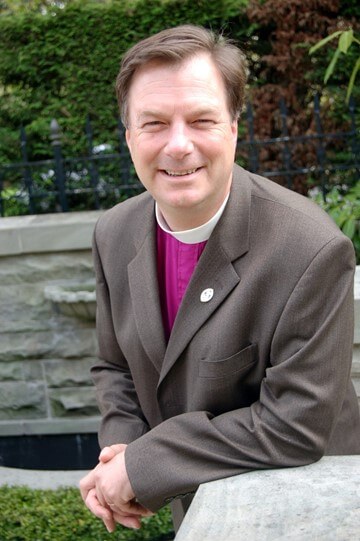
Bishop Rickel delivered the following address on October 30, 2021, at the 111th Convention of the Episcopal Diocese of Olympia.
Please accept YouTube cookies to play this video. By accepting you will be accessing content from YouTube, a service provided by an external third party.
If you accept this notice, your choice will be saved and the page will refresh.
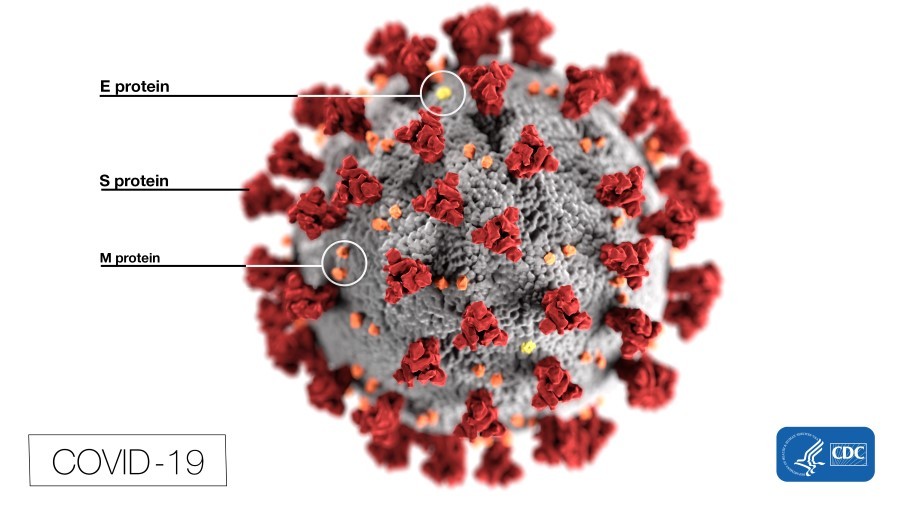
John Prine, former Chicago Postal worker and singer/songwriter, is one of my favorite musicians. He sang songs such as “Your Flag Decal Won’t Get You Into Heaven Anymore” and “Big Old Goofy World,” among many others. On April 7, 2020, John Prine, became one of the nearly 3/4 of a million people in this country to die due to complications of COVID. Another song he sings that I love is, “God Only Knows.” It starts with this line:
“God only knows the price that you pay
For the ones you hurt along the way”
In our Gospel, Matthew 5:23-24 specifically, we read:
So when you are offering your gift at the altar, if you remember that your brother or sister has something against you, leave your gift there before the altar and go; first be reconciled to your brother or sister, and then come and offer your gift.
In the Yom Kippur Confessional, Jewish people recite the following:
Before a person is healed, he must acknowledge his illness. Before a person finds light, she must know her own darkness. And before a people is forgiven, it must confess its sins. We confess our sins and those of our fellows for we are responsible, one for another. Heal us Adonai, and lead us through darkness to light.”
These convention addresses are always tricky. How does one sum up a year in half an hour? And especially a year such as we have had together? So, I always seem to start with apologies, and so I will, and this year this address shall end with some too.
The apology on the front end is my apologies for missing the mention of anything that you think I should have mentioned. If I do that, which I am quite certain I will, let me know afterward. I am quite sure you will.
Today, in this address, I want to center my remarks around those three quotes I began with, by starting off with a review of our lives together as the world continued to grapple with the pandemics of COVID and Race. Then moving to us together as the Church, and then by sharing personally. My hope, in this address, will be to offer a framework to continue the work begun at our last convention and, in reality, from many years before, and then finally to share personally my work, regrets, reflection, and hope for our days ahead.
As a planet we do seem to be in disarray. The angst of the world is so evident, our divisions so raw and apparent. There is so much more of an edge to everything and everybody. The pandemics have revealed the great disparities in our world. The virus especially has put front and center the reality that, whether we like it or not, we are one human family on this little flying object, hurtling through space, called Earth, and while it is our human tendency to erect walls, and borders, and boundaries, a virus reminds us that it has no respect for any of those.
I have to say the absurdity of states thinking the virus would follow their intention for it within their borders, and not affect the next state over, or the world for that matter, shined a light on how self-absorbed we can really be.
Countries have thought and done the same. The truth is the virus cares not—not about race, not about country, not about party, not about beliefs—none of it. If there was ever, truly, a “we are all in this together” moment in my lifetime, this has been it. To say the least, it has been less than an overwhelmingly united response or one that gives me a whole lot of comfort.
Of course, as a church, some of those same disparities have been highlighted yet again, by the virus, and by the martyrdom of Mr. George Floyd. As I said last year, we, as a church, we as individual Christians, who remain human, are not exempt from this. We have just as much to atone for and to repair if that is possible. What our faith does, what my faith does, is give me the hope and assurance that it is possible. I can’t give up on that.
Last year, at this convention, thanks to the courageous witness, and vulnerability of our Circles of Color, you overwhelmingly assented to a host of resolutions to help us, as a Church, begin to make that turn. That too was courageous and yet long overdue, and as I said then, several times, and attempted to say as we brought that convention to a close, we just finished the easiest part.
The truth is the Church often gets as far as we did last year at this convention, signing on to resolutions that say all the right things, or most of them, and points us and even calls us to enact them. But, too often, that is where the breakdown occurs. That’s where the work stops.
This past year has been a test in many ways, but certainly one of those has been whether we, as the Diocese of Olympia, could take the next step and not fall into the usual patterns.
Let me first simply list some things that, even in the face of all of this, we did accomplish this last year. Before I get into specifics, I want to simply say this, to all of you, and please carry this back to your people locally, thank you, thank you, thank you for the incredible way you adapted together, worked together, learned together, grew together, and in many cases, exercised tremendous patience and grace together as we all pivoted to this new reality.
Clergy and lay leaders had to turn on a dime and really begin doing church two ways. This was the year we had hoped this would be over, come to an end, and yet, again, I would say through our divisions, we still struggle to bring this pandemic era to a close.
Two years ago, could we have ever imagined, just how many of us now, know exactly what it means when you say, “you’re still muted!”
Two years ago, I couldn’t set up my own Zoom meeting. I could be the CEO of the company today, as could most of you!
As we slowly emerge from the pandemic, the most arduous days may be ahead as we don’t just offer virtual worship, but both virtual and face-to-face, and doing that now as very changed people. None of us are the same after this.
Clergy and Lay leaders are exhausted. Simply living through this has been exhausting. And yet, at the same time, it has been truly inspirational to watch you, and us, adapt.
Here are some things I believe we did well in response to this new reality.
- As a diocese we became aware of and focused on clergy wellness. We did this through a wellness survey, retreats, and other offerings virtually or otherwise. We will continue that focus into this next year as well.
- We used the new virtual connecting points to serve lay leaders and clergy both in ways we haven’t been able to before – the clergy wellness for lay leaders webinar, the vestry/BC training day, making videos for transitions, etc., Project Resource for stewardship development. These, and many like them, are new and newly effective offerings that are helping us to standardize leadership practices and expectations across our diocese.
- We piloted a hybrid College for Congregational Development, which went really well and may improve and change how CCD is delivered across our diocese and denomination. During this pandemic CCD has continued to grow and expand across the Episcopal Church.
- We worked together with Circles of Color for the One Service for Turtle Island and began important conversations around how to appreciate worship practices from Indigenous and other ethnic cultures without appropriating.
- I have witnessed all of us learning new skills at virtual connection, and that became ever more apparent in how the preparation for this convention felt, versus last one. I had a lot less anxiety and concern about simply pulling it off this year. I hope you do too.
You all should be very proud of yourselves. You adapted, we adapted.
I simply want to say thank you, thank you, thank you, to all of you, lay, clergy, young and old, rural and urban, small and large, everywhere in this diocese. I thank you for the creativity, the innovation, the persistence, the hopefulness, the ability to see positive opportunity in some of the roughest and most traumatic times to be church in recent memory.
God only knows the price that you pay
For the ones you hurt along the way —“God Only Knows,” John Prine
So when you are offering your gift at the altar, if you remember that your brother or sister has something against you, leave your gift there before the altar and go; first be reconciled to your brother or sister, and then come and offer your gift. —Matthew 5:23-24
Before a person is healed, he must acknowledge his illness. Before a person finds light, she must know her own darkness. And before a people is forgiven, it must confess its sins. —The Yom Kippur Confessional
I want to acknowledge and restate today that our main goal as the Office of the Bishop is to serve you and equip you and convene you as the Body of Christ in the world, and that is why we do all that we do – including the uncomfortable work around racism that is center stage at this moment. Church is the exact right place for us to learn to be uncomfortable, to learn to love across difference, and to learn how to repent in ways that make real impact. I constantly think and say, if we, the Church, the Body of Christ, can’t pull this off, I am not sure who can. And who are we really, if we can’t do that? If we can’t model this, our bread and butter quite frankly, then I do feel as a whole, we are doomed. This has to be a moment in history where we speak, live, and act on the words we proclaim as Truth.
As a staff and as the Office of Bishop, I would want to say that the work of dismantling racism in the diocese, in the Church, and in the world, had been a desire, a hope, a stated goal for quite a long time before last convention, but as it did for so much of the planet, the martyrdom of Mr. George Floyd rocked our world, rocked the church, and our past response or lack thereof, and opened our eyes, and when I say ours, our staff, mine, to the very real fact that our work is incomplete, and even more importantly, that there are many people in many corners of this diocese who are hurt not only by racism in the world, but also in our church structures, and by me personally, as bishop.
In short, our BIPOC beloved who had been hurt by institutional racism in the Diocese of Olympia did not trust the leadership of the diocese to faithfully execute this work because of the complicity we in leadership had in making decisions that hurt BIPOC members of our Body.
You will hear this said a few times today in my remarks, that was not our intent, I believe that, but it has been the impact, and we have to believe that too, acknowledge it, and begin to atone for it.
And if there is one theme today that might be it, or at least a huge part of it. We have to stop getting stuck in the comfort of our intentions and open our eyes to the blindness of our impact. Intent, in the end, is never enough, and is only the framework, the wish, the hope, the goal. In a sense you might say this diocese offered a rather full-throated intent at our last convention. The impact remains to be seen. That is a work in progress, and so much more, far more, than has been done on that, remains.
We might look back in history and say we have done that, specifically put the words down, over and over again, and yet, we don’t move past that, and we hardly ever risk going to the real issue, the impact of our decisions, our actions, and most often, our inactions or inattentions.
One of the most compelling protest signs, to me, in this past year, was the one that I saw that said:
George Floyd was not a wake-up call, the phone has been ringing since 1619, you all just keep hitting the snooze button.
To me, this sums it up. The “you all” on that sign is white people, dominant culture, me. The snooze button is intent, is platitudes, is hollow rhetoric, words, and even actions we take to push it back down. We have to move on to impact. We have to stop trying to end the spotlight and truth of this past, and instead deal with it, acknowledge it, interrogate it, and even perhaps apologize for it.
We have to let the wake-up call ring, and then wake up to courageously look at the impact, and resist the urge to hit the snooze button.
For our part, after last convention, and looking ahead to this year, our Office of Bishop staff agreed to the following:
- To prioritize the ending of harm and pastoral care of people impacted by the church’s racism.
- To model a culture of:
- admitting our faults,
- apologizing when we offend, misappropriate, fail, or stumble, and
- communicate what new or changed behavior or policy or procedure we will enact instead. In essence not just apologizing, but also putting forth the plan to stop it from happening again.
- To provide a variety of learning opportunities and resources in the areas of
- intercultural competency,
- racism, anti-racism, and resisting racism,
- ethnic and multicultural ministries.
Last year, this convention was presented with five key resolutions to address this topic. You passed them overwhelmingly, and during this past year our staff, working with the Circles and others in leadership across this diocese, have kept these front and center, I said some of this, but even more, the members of the Circles addressed this, both in terms of what has been done, and what remains to be done, in the video we saw yesterday. These were, in many ways, this convention’s intent, and now we begin to look at and plan carefully for impact, and of course, we are hoping for positive impact, instead of blind, and negative impact.
The Circles, in perhaps the most moving time I have ever experienced at a convention, courageously and graciously shared some of the harm they have experienced at the hands of this church, at the hands of the dominant persons they share this Church with, at the hands of our staff, at the hands of my office, and of me. Those are still posted on our website I believe, and I urge you all to go back, after this convention, and hear those again, listen to them again.
In this past year my office began a discussion with the Circles about the possibility of hiring a staff position to work with this area. The Circles generated a position description of Canon for Multicultural Ministries and Community Transformation and Program Assistant.
The proposed budget, that thankfully you approved yesterday, is bold, and larger, because of this need and, and I would call it, needed investment that we believe must be made now, and so it includes an 8% increase over 2021’s budget and includes a full time Canon and Program Assistant position. That Canon will be a co-laborer with the Circles and be an executive member of the Bishop’s Staff. Currently a search committee recommended by the Circles and appointed by me is working on filling this Canon position.
As your Canon to the Ordinary Arienne Davison is very fond of saying, and when she does she speaks such truth, “this work moves at the speed of trust.”
God only knows the price that you pay
For the ones you hurt along the way. —“God Only Knows,” John Prine
So when you are offering your gift at the altar, if you remember that your brother or sister has something against you, leave your gift there before the altar and go; first be reconciled to your brother or sister, and then come and offer your gift. —Matthew 5:23-24
Before a person is healed, he must acknowledge his illness. Before a person finds light, she must know her own darkness. And before a people is forgiven, it must confess its sins. —The Yom Kippur Confessional
Finally, on this day, I want to talk about my personal work over this past year. Several of us on staff were blessed this year to receive coaching on intersectional feminist approaches to non-coercive leadership. While I entered into it with some trepidation, and by the way, you will have some of those feelings, and should, if you are really going to do this work, and also having some hesitancy wondering if my studying feminism would have much to do with this, I can truthfully say it was one of the most life-giving and revealing experiences of my life. As you are challenged to do any such work, please remember, if you are not a bit frightened, concerned, unsure, off balance, then you might just not be doing the depth of work you need to do, and I had to own that this year too.
Our coach Kimberley George was amazing and I want you to know that through this study, and coaching, and reading, especially Black Womenist theology and writing, and the challenges put forth toward me, I was awakened to something that will probably make at least half of you listening to me roll your eyes, or look to heaven and say, how long oh Lord? Or perhaps, if you are generous, think with a smile, it is about time! And I get that, but the revelation was this.
Because of my power, in this position, because of my whiteness, because of my maleness, because of my privilege, because I am part of the dominant culture in this country, and world, because of all of that, anyone, any person, who deals with me, has much more emotional labor they must do in order to be in that relationship. What came to me in these nine months of coaching was just how much emotional labor I cause, and at times capitalize on. Was it intended? Well, definitely not always, but if I am honest, of course I know I can use that, even though I didn’t really have the name for it, and I did, and have, and not always well, and not always rightly, and not always befitting my role and position.
For all the ways I think I personally see clearly, my blindness came to me far more. The emotional labor I have caused for so many is something I have to deal with, atone for, and hopefully repair and mend in myself for the future.
In the course of this last year, I was invited into a face-to-face conversation with the Rev. Rachel Taber-Hamilton and Canon Jerry Shigaki, to begin the hard, and long work of attempting to rebuild trust. They both were extremely courageous and gracious in that discussion, and I want to publicly thank them both for it. In the course of that discussion, I learned my impact on them, what my actions of the past, my words, my inaction, and in some cases my inattention have been. I am sure I have not learned it all, much more remains. But especially from Canon Shigaki, who bravely shared his experience of me in the earlier days of my episcopate. While I did not intend harm, it was the impact. I know that now and acknowledge it. While it might be very difficult for Canon Shigaki to ever believe this, though we differed on the way forward, I never doubted his dedication, his commitment, his discipleship in Christ, and most of all his honor. That is exactly why I named him an honorary Canon. He is the superlative example of such an honor.
And yet, in Canon Shigaki’s own words, he described my treatment of him and others around him as cruel and abusive. That was hard to hear. As I said, that was not my intent, but I now know that was the impact. So, today, before you all, I want to publicly apologize to Canon Shigaki for that suffering he experienced at my hands.
With this apology I do not expect forgiveness, or that the past will not still need to be more deeply examined and interrogated.
I suspect I have many more apologies to make, much repair to be done. I suspect some will never be fully repaired.
I owe apologies to the Rev. Rachel Taber-Hamilton as well, and she has graciously begun the work of sharing with me my impact on her, the emotional labor I caused her. That work continues.
This is my work, and I think it is your work too, and as much as a novice as I am to it, still yet I am going to challenge you to it as well. Because that Yom Kippur confessional is so right.
Before a person is healed, he must acknowledge his illness. Before a person finds light, she must know her own darkness.
This has not been easy. What lies ahead won’t be either, but I am convinced it is the only way if we wish to realize the vision of beloved community. It pains me to have to say this to you, but I am ultimately very resolved and settled in this path, as difficult as it is going to be, but for this to work in our Church, we are all going to have to be about this work. And it may be work I can do with you, alongside you, and it may be work we will find better done with me out of the picture. All of that is still on the table. Regardless of any of that, we cannot miss this momentum, this moment, this opportunity to not hit the snooze button.
One of the things about becoming bishop in the church is that there is no real training manual. I remember coming here and having the feeling of having fallen into a rushing river, where I was gasping for breath, trying to keep my head above water, trying just to survive, and in my leadership arrogance ridiculously trying to look wonderfully secure and together in doing so.
The metaphor falls apart because being in a rushing river and barely being able to keep your head above water, is not a place to look calm, cool, and collected. It is a charade, and I can be good at that. It is necessary sometimes, for a good leader, to be non-anxious, together, seemingly calm in a rough situation, but that same skill can be used, wittingly or not, for good and ill. I have done both.
I am not the same person, nor the same bishop, who answered your call over 14 years ago but I own all those 14 years and I know I made many mistakes during them. Being human, I am certain I will make many more.
I am not sure I will ever discover a way to stop making them, but what I do believe is that we can learn how to mitigate them, how to own them, how to atone for them, and how to work to make that struggle just a little easier and less emotionally laborious for whomever we encounter, and I do vow to work on that, here with you, or with anyone I walk with in the future.
I say none of this as an excuse or in hopes of getting a pass. I don’t deserve either. I say it here to be honest and to share with you a bit of the personal work, and challenge, that is before me in my fervent hope that you will take it up too.
Last year, at this convention, as we passed some serious resolutions regarding this work, I reminded you, and I have to say I was preaching to myself as most preachers do, that this was the easy part. Passing the resolutions, saying the words, laying out a plan and a goal and even a vision of beloved community, but the hard part is still before us, the hardest parts, we have yet to touch.
That work blessedly has started, but we have a long, long way to go, and I stand before you today to admit I have a long, long way to go.
So, this year, it is time to take our hopes, our visions, our longing for beloved community and begin the hard work of rebuilding the trust that will be vitally necessary to make that a reality. Will we be able to get there? I honestly don’t know. So many things need to fall in place, so much still needs to be rectified, acknowledged, forgiven. What I do know and believe is that this work has to begin, in earnest, locally, in your setting, and then ultimately, inside you, each of you.
Last year we resisted, together, the urge to hit the snooze button. The wake-up call is still ringing. The longer it does, the more tempting it will be, the harder it becomes to bear it, the more tempting it will be, to hit it, snooze, to go back to sleep, and wait for another terrible moment, which will get us this far yet again, but no farther.
Let’s resist. Let’s let it ring. Let’s not hit snooze.
In the discussion that will follow this address today that is exactly why we are doing it as we are, asking you, locally, with your delegation to engage this topic. You might take up these questions.
In the hopes of moving closer toward reconciliation and becoming the beloved community of Jesus:
- What will you do together as a congregation to interrogate and confess the sins of the past and reduce mistrust and suspicion?
- What are you going to do personally in your spiritual life and practice to reflect on your own sins and rebuild relationships?
- How will you help your congregation resist the urge to hit the snooze button?
- What will you together, locally, in your context, do to begin the work of interrogating the past, confessing the sins of the past, to ring out as much as possible of the mistrust and suspicion, so that you can move closer to reconciliation and beloved community?
- And, what are you going to do personally, inside your own soul, to do the same?
God only knows the price that you pay
For the ones you hurt along the way. —“God Only Knows,” John Prine
So when you are offering your gift at the altar, if you remember that your brother or sister has something against you, leave your gift there before the altar and go; first be reconciled to your brother or sister, and then come and offer your gift. —Matthew 5:23-24
Before a person is healed, he must acknowledge his illness. Before a person finds light, she must know her own darkness. And before a people is forgiven, it must confess its sins. We confess our sins and those of our fellows for we are responsible, one for another. Heal us Adonai, and lead us through darkness to light. —The Yom Kippur Confessional
Amen.

Bishop Greg Rickel
The Rt. Rev. Gregory H. Rickel was elected bishop on May 12, 2007, and became the eighth Bishop of Olympia in September 2007. He embraces radical hospitality that welcomes all, no matter where they find themselves on their journey of faith. He envisions a church that is a safe and authentic community in which to explore God’s infinite goodness and grace as revealed in the life and continuing revelation of Jesus Christ.

The Episcopal Diocese of Olympia
The Episcopal Diocese of Olympia traces its history to the establishment of the Missionary Jurisdiction of the Oregon and Washington Territories in 1853. We are also known as the Episcopal Church in Western Washington.
Admitted by General Convention in 1910, the Diocese of Olympia is made up of more than 26,000 Episcopalians in more than 100 worshiping communities through Western Washington. Our geographic area stretches south from Canada to Oregon and west from the foothills of the Cascade Mountains to the Pacific Ocean.
Who we are
Through worship we do the following:
- Affirm our faith
- Pray together
- Reconcile together
- Share peace and thanksgiving together
- Gain strength and renewal through Eucharist
- Prepare ourselves to minister to the world
We share hope in God’s incredibly extensive grace to forgive all repentant people.
Our congregations cover a whole range of sizes and stages of development. Several affiliated institutions and numerous outreach and social justice ministries as well as a number of multicultural ministries are supported by the whole diocese.
Church of the Redeemer
Welcome to Church of the Redeemer: Worshiping God, living in community, and reaching out to the world. We are an Episcopal Church serving north King County and south Snohomish County, Washington. As you travel your road, go with friends walking the way of Jesus at Redeemer.
Church of the Redeemer is at 6220 Northeast 181st Street in Kenmore, Washington. We are a short distance north of Bothell Way, near the Burke-Gilman Trail. The entrance looks like a gravel driveway. The campus is larger on the inside than it is on the outside. And we managed to hide a large building on the side of a hill that is not easily seen from the street.
The Episcopal Church welcomes you.