Episcopal Church of the Redeemer

Worshiping God, living in community, reaching out to the world.

Category: Julia Ayala Harris

  • ‘It’s All About Love’ festival: Closing sermon from House of Deputies President Julia Ayala Harris

    ‘It’s All About Love’ festival: Closing sermon from House of Deputies President Julia Ayala Harris

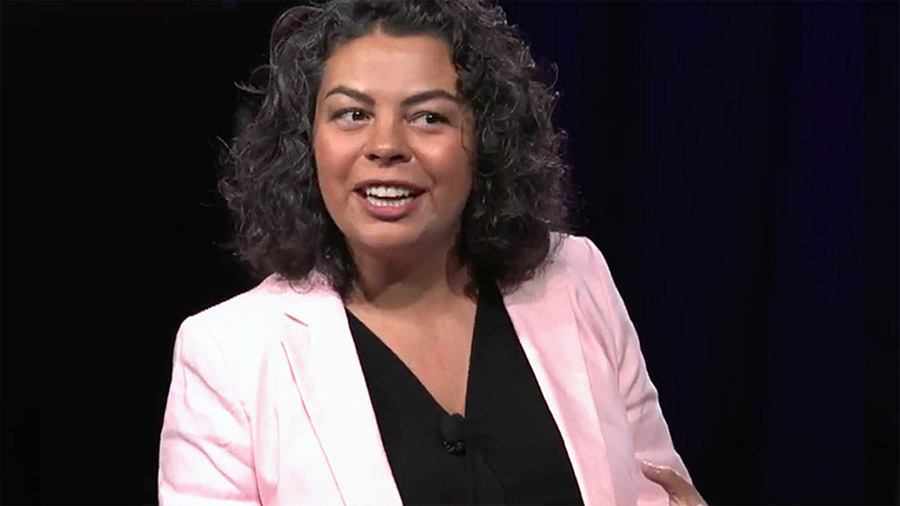
    President of the House of Deputies Julia Ayala Harris delivered the sermon during the closing Eucharist service July 12, 2023, at “It’s All About Love: A Festival for the Jesus Movement.” The four-day churchwide gathering in Baltimore, Maryland, featured revival worship; special speakers and presenters; and numerous workshops focused on creation care, evangelism, and racial reconciliation.

    Below is a video of Ayala Harris’s message and a lightly edited transcript of her remarks.

    Transcript of the sermon

    May the words of my mouth and meditation of our hearts reflect your truth and love, our Guide and our Redeemer.

    Please be seated. Good morning, church. How is your soul this morning? Is your cup feeling filled? Is it feeling overfilled? Can you feel that the Spirit—she is here with us this morning. You feel her? She’s moving. She’s tickling our souls, and what a blessing it is to be here with you all.

    Before I get started, more gratitude: I want to thank all those who organized this event, who made this possible, who told us revival in The Episcopal Church is a thing that we can do. I’ll start with Canon Stephanie Spellers and Jerusalem Greer and the teams of reconciliation, evangelism and creation care. Our fantastic interpreters that have been with us this whole time. The development office who also made this possible. Our communications department behind all the cameras and gadgets, the Diocese of Maryland. We’re back again. Good to be here. All those of you who presented workshops, who shared your knowledge; and, of course, our brother in Christ, our Presiding Bishop Michael Curry.

    Thank you all again. It is so good to be here. I can’t tell you. To share stories of mission and ministry, of our identities in Christ; to discuss our passions and hopes and dreams for the future. I’ve been walking around, and I’m hearing and meeting so many of you and hearing stories about you and your ministry, personal stories about your life in the church. I’ve also heard a whole lot of stories from our teenagers over at the Episcopal Youth Event, EYE. But I’ll talk about that later. This morning, I want us to take a moment to reflect on the importance of story-making.

    Because story-making is really meaning-making, and we are designed for story.

    So, I was an adult before I figured out how important stories were to humanity, to our human nature, to our God-given image as human beings. And it happened—I know the moment it happened; I was in South Sudan—it was Southern Sudan at the time—and I was living there working alongside the Sudan Council of Churches. And I was visiting a program site in Shilluk Kingdom. And we were doing the things that you normally do during the day.

    So, we were checking on the building of a hospital. We were doing workshops with women inside local churches. And then at night we would feast on meat stews and rice. And when the sun went down—thank God the sun would go down; it’s hot in South Sudan, y’all—we would come together, and we would gather around the fire.

    And this was in Shilluk Kingdom. So, Shilluk Kingdom is in an area that was way outside of anything anyone would call a town, very rural, no electricity, South Sudan. And we’re gathered around the fire next to a tributary of the River Nile. So, between the River Nile and the forest. And of course, every night there were no clouds, so the stars were magnificent. So here we are, God’s creation. It’s nighttime. The heat of the sun is no longer beating on us, and we are sitting around the fire. So, what do we do? We start to tell stories. And it starts off with stories about where we’re from. You know, we’re from all over the world, and what our parents were like, and that sort of thing.

    And then as the night wears on, it turns into legendary stories. I mean truly legendary stories, right? The fish starts off this big, and then it’s this big, and then it’s this big. And then what happens? Well, fill in the blank, right? And I’m a lay leader so I want to keep this short, but sometime I’ll preach on the stories, I think. I’ve got some good ones for you.

    So it was in that moment when we’re sitting around the fire, and I’m listening to this unbelievably legendary big fish tale. And it occurs to me as I look up at the stars, that we as humans, as God image-bearers, have been doing this for millennia, telling stories with each other around the fire, under the stars next to the water and the forest. And we communicate with each other. We are designed for story. Because stories, it occurred to me in that moment, are not just about facts, they’re not just about relaying information. They are how we are designed to take in education and formation. And they convey truths.

    They also tell us who we are, where our identities are. Stories define us as families, as communities, as individuals, and as a church. These narratives, and we can think about this on our own; we don’t all have to go to South Sudan and you know, sit around fire. When we think about, and I think about the stories my grandmother tells our family and how that defines our family, how that defines my aunts and uncles and cousins and myself. I think about when my grandfather taught me how to spit-shine my shoes. And he told me that he learned that during his time in the Army. And then he told me about his time in the Army. That defines me.

    These stories help shape our identities, and some can be comforting and teach us values. Like maybe you had a parent who taught you a family recipe and while you’re making it, you learn about the traditions of the old country. Or an aunt or an uncle who takes you back to the old neighborhood and shows you where you’re from and who your people are. And some stories are hurtful, like that coach or that teacher or maybe even a priest who told you that you are not enough.

    We as Episcopalians, we have a story both communally and individually. So what is the story that we carry as Episcopalians, and how does that story affect how we do racial reckoning? How we think about climate justice, how we go about evangelism? Because these stories also give meaning to our lives and define how we go about the world and doing the business of church.

    So we’ve come here to share our stories, to learn new stories. We’ve come here to give meaning to old narratives. And I believe, I hope, that we’ve come here to reframe old narratives, to transform what has been oppressive and unjust into new stories of hope and blessing and healing and wholeness.

    Because what we know from our personal lives is that when we reframe a traumatic event, it gives our life meaning. We all have experiences of those hurtful times from childhood. When something that we have transformed and reframed in our personal lives, it allows us to learn from, take courage from, and draw new identities in new ways from those transformed experiences. In this moment, our church is being called to transform its story.

    We are being called to transform stories and narratives about whose voices, whose literal bodies matter. Black and Brown bodies, Indigenous bodies, women’s bodies, children’s bodies, trans and non-binary bodies and differently abled bodies. And at the same time, because the Spirit doesn’t give us a break, we are being called to transform narratives about our church’s relationship with power and empire, with Indigenous boarding schools, with our history, with the trans-Atlantic slave trade and forced labor.

    Do you feel the Spirit, church? Because she is calling us and God is calling us to transform these narratives; because she is calling us into a new identity. You feel it, right? Because we’re being called into a new identity focused on justice, courage, freedom, and love. Storytelling is an act of love. How do I know this to be true?

    Because Jesus used storytelling as an act of love. Jesus used storytelling to teach, to heal, to empower. And in turn his disciples used stories about Jesus to bring Good News to the world.

    So I have a new story for you all I’d like to share. Last week, just a few days ago, down the road in College Park, I was at Episcopal Youth Event, EYE, where there were over 800 teenagers and their adults, many of them young adults who were chaperones. And my friends, you want to talk about revival? That place was on fire for Jesus. We had two revivals in The Episcopal Church this week—two. Those kids were so on fire with the Spirit that at one point they actually demanded of the organizers to hold off on the programming because they wanted more songs of praise and more worship and more time in prayer.

    I and others there can testify to it. That place was hot, and it was bumping; there was sweating everywhere. It was amazing. That was the Holy Spirit. That was a teenage revival. And you know what else? On the first night they had a healing service. OK, I’m getting a little off script now. Well, I already have been. But they had this healing service—I’ve been hanging around Michael Curry too much, so you know—and they’re, starting to explain to everyone, OK, well we’re going to have these prayer stations and there’s healing oil.

    And now we haven’t had an Episcopal youth event in six years, right? These are young kids. So the moment they said, “Now you may go to a station if you feel so led,” more than three-quarters of those teenagers all stood up at once and fanned out instantly. They did not need an explanation about what a healing service was about. They didn’t need to be told.

    And I think it’s because our teenagers have just come out of this unprecedented pandemic in which they watched racial and social injustice on their screens, on their social media. They watched the decline of democracy before their eyes. They saw their friends be victims of transphobia and racism. They witnessed the climate crisis and war. No one needs to explain to them what a healing service is.

    And in the midst of all of this, they are learning about the story of Esther. Esther, who believed Mordecai when he told her, “Esther, perhaps you were made for such a time as this.” And when Esther took up with all the courage she had and said, “I will try to save my people, and if I perish, I perish,” I am here to tell you because I bore witness to it, that those teenagers, our teenagers, in our Episcopal church were made for such a time as this.

    They are the heroes of our faith right now. They are writing their stories, and yet they are writing our story right now. Make no mistake about it, those teenagers at EYE are writing the story of the Episcopal church right now.

    So, I have a treat. Who better to hear from than one of the teenagers? So I’m going to introduce you all—and it’s on video form—to Ellie, whom I got to know. And guys, she is—I use “guys” in the gender-neutral term; I’m from Chicago. I’m trying to get used to “y’all” because I’ve been living in Oklahoma long enough. But I’ll get there. So Ellie is one of, after hearing her story and you’ll see her in just a minute here on the video, one of the bravest, most amazing human beings I have ever met. And I just can’t wait for you to see this short 90-second snippet. But go on the EYE videos; watch these kids—you won’t believe it. But for now, here’s a little snippet from Ellie:

    The challenges that we all face are so diverse. Yet every person in this room must face challenge in the same way. Courage. How do we find that gift within ourselves? Esther shows us clearly that courage in whatever form comes from leaning on God. For the humanity of her community, she takes a chance to stand in the face of oppression and beg for justice, even if she may fail. She strives for this holy justice not knowing exactly how to find it but doing so anyways. Leaning on God’s love in human form, Jesus, taking his example and turning it into real change.

    Jesus stood for something greater than the status quo. He stood for a just society, a society of love. Even in the darkness we know this to be true because Jesus himself lived and died through these ideals. Christ shows us the gift of compassionate courage is innate because the love of God will never fail us.

    If I perish, I perish. Esther’s actions and words in the face of fear show an extraordinary confidence brought to her through her commitment, through Christ’s love. For if she failed, it would not be due to her wrongdoings, but rather through her actions of love.

    And through that love, friends, the love of God, we will never fail. We must show up in order to do the work. This ancient text tells us explicitly that all we have to do is show up. The greatest news of all is that showing up is enough to be the change. Esther came from an ordinary family, was an ordinary woman, lived an ordinary life, but she was a beloved child of God.

    You don’t have to exceed society’s expectations of what extraordinary is to be a changemaker. You don’t have to go to the moon; you don’t have to cure disease; you don’t have to have a 4.0. You don’t have to go to an Ivy League, and you don’t have to win first place every time. You don’t have to fill the shoes that were made for you by the rest of the world. You just have to walk in the soles that God gave you. Just show up. …

    That’s Ellie, y’all. That’s just 90 seconds of Ellie reflecting on Esther—preaching, right? Saying some of the same things we are telling ourselves here as adults. We are reminding ourselves of who we really are at this revival, and they are living who they are because the world hasn’t told them who they’re not yet.

    So Ellie is just one of over 800 youth that were at EYE. And our church needs to be about telling Ellie’s story and lifting up all of those youth as we come off this mountaintop that we are experiencing as adults. We need to hold and carry those youth along with their mountaintop experience, too, and support them after their revival. Let’s not forget about them when we go home to our churches and our dioceses, because I heard so much from our teenagers last week. I heard about their concerns about racial injustice in the world, but even more so in their churches back home. They’re honest. Their anxieties about the climate crisis are real, folks. Like what we heard in the plenary. Are we ready? Are we ready to use our healing to help with anxieties around the climate crisis?

    And I heard one young person bravely say, request, demand, that The Episcopal Church is perfectly positioned to have programs for religious healing, especially on those who identify as LGBTQIA2S+. That’s a call to action. And they spoke honestly about their struggles with mental health and wellness, especially coming out of this pandemic.

    Those teenagers are looking for ways to bring the Good News to people who need to hear it, to a new generation and to a hurting world.

    And so, my friends. You want revival? You want revival in yourselves? In your parishes? In your dioceses? In our communities?

    But what narratives have to be retold in our parishes, in our families, in our communities?

    Whose stories have not been told? And whose stories have yet to be told, like these teenagers’?

    What stories need to be reframed? Because it is through stories that we develop our identities, that we create meaning, and that we forge our future. Because, my friends, Episcopalians, church, Spirit is calling us to live into the fires of Pentecost; to bear witness to the love of Jesus Christ; and to bring Good News to our families, our churches, and our communities, to a hurting world that so desperately needs it.

    So be consumed by the fires of Pentecost when you leave here. Let it guide you, and let us begin, as we do always, with prayer.

    Creator God,
    We come before You, our divine Author, with hearts filled with gratitude and reverence.
    We acknowledge that You are the embodiment of courage, justice, and love.

    Grant us the courage to stand firm in our convictions, to face the challenges that come our way in unwavering faith. In moments of fear and doubt, infuse us with the boldness to step forward (if I perish, I perish), knowing that You are with us and that Your perfect love casts out all fear.

    We pray for Your divine justice to prevail in our lives and in the world around us. May we seek justice for the oppressed, the marginalized, the voiceless, and the breathless. Help us to stand up against injustice and be advocates for righteousness and truth.

    Fill our hearts with Your boundless love, the love that knows no borders and transcends all barriers. Help us to love our neighbors as ourselves, to extend kindness and compassion to all those we encounter. May our love be a reflection of Your love, shining brightly in a world that desperately needs it.

    As we continue on our journey, writing the pages of our story, we place our trust in You, knowing that You are the source of true courage, justice, and love. Guide us, empower us, and fill us with Your Holy Spirit that we may live out our story in a way that brings glory to You, our loving, liberating, and life-giving God.

    All of this we ask in Your name. Amen.

    The Shield of the General Convention of the Episcopal Church

    President Julia Ayala Harris

    Julia Ayala Harris was elected president of the House of Deputies by her peers at the 80th General Convention of the Episcopal Church in 2022. She is the first Latina to hold the position.

    She is a first-generation Mexican American, the daughter of an undocumented immigrant, from a large working-class family in the Chicago area. She came to the Episcopal Church 21 years ago, when she was 20 years old, after a crisis of faith in the Roman Catholic church of her childhood and the evangelical church of her teens. In the Episcopal Church, she has continually found healing, blessing, and wholeness in God’s unconditional love. Throughout her lay ministry, she has worked to bring about a church that can share that blessing with all of God’s people.

    From her professional, familial, and personal experiences, she is passionate about a multitude of issues such as immigration, LGBTQIA2S+ inclusion, empowerment of women and girls, criminal justice reform, race and ethnicity, disability inclusion and access, sexual harassment and exploitation, as well as justice and peace initiatives.

    Read more on the House of Deputies website.

    The Episcopal Church of the Redeemer: Worshiping God, living in community, reaching out to the world.

    Church of the Redeemer

    Church of the Redeemer: Worshiping God, living in community, and reaching out to the world around us. We are an Episcopal Church serving north King County and south Snohomish County, Washington. As you travel your road, go with friends walking the way of Jesus at Redeemer.

    Church of the Redeemer is at 6220 Northeast 181st Street in Kenmore, Washington. The campus is a short distance north of Bothell Way, near the Burke-Gilman Trail. The entrance looks like a gravel driveway. The campus is larger on the inside than it is on the outside. And we managed to hide a large building on the side of a hill that is not easily seen from the street.

    The Episcopal Church welcomes you.

  • Episcopal Church Executive Council opening remarks

    Episcopal Church Executive Council opening remarks

    The following are the opening remarks of President of the House of Deputies Julia Ayala Harris on June 13, 2023. This is at the Executive Council of The Episcopal Church, meeting in Providence, Rhode Island, through June 15, 2023.

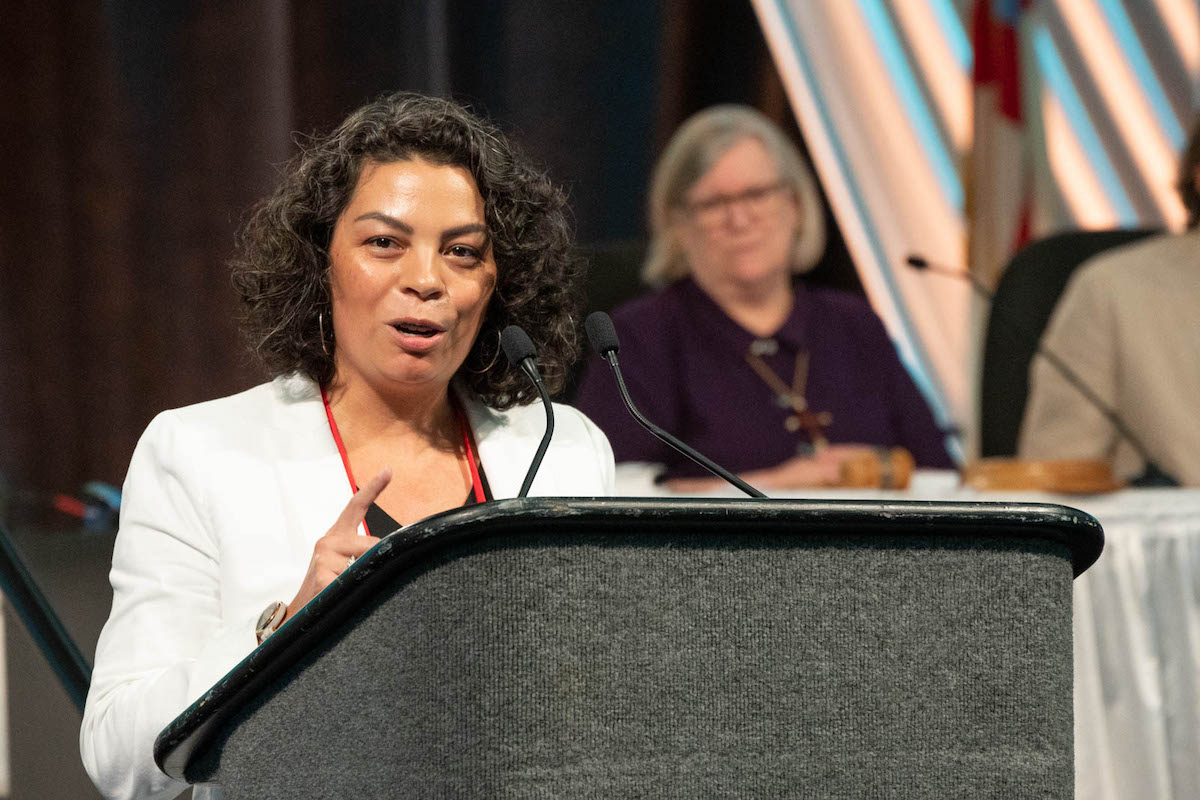
    Julia Ayala Harris, president of the House of Deputies. Photo source, Julia Ayala Harris.

    Good morning, Executive Council, churchwide staff, and our distinguished guests. 

    About the Presiding Bishop

    Before I begin my opening remarks, I need to acknowledge that this morning is different. 

    I’ve joked in the past that it’s always hard to follow the presiding bishop at these meetings, and yet today I so wish that he were here with us in person. I miss his prayerful and catalyzing presence among us.

    This distance has reminded me that our church–our common life together–is only as strong as our relationships with one another. It is our greatest asset in ministry and mission of our church. Our presiding bishop is my colleague, my partner in ministry and sometimes my partner in crime, and my brother in Christ. 

    Let us pray together for our leader and our brother. 

    Prayer for the Presiding Bishop

    The Lord be with you,

    Creator God,

    As we come to together this morning, we thank you for the presence and guidance of the Holy Spirit throughout our time together. We ask that you bless us with your wisdom and grace as we go about our work.

    We pray for our presiding bishop, asking for your healing touch upon our brother, Michael. We know that you are the great physician, and we trust in your power to heal and restore.

    We pray for all the leaders of our church, that they may be filled with your spirit and inspired to lead with compassion and courage. May they always seek your will and follow your path.

    We pray for all those who serve in our church, that they may be strengthened in their faith and empowered to share their love with others. May they be a lamp on a hill and a source of hope for those in need.

    We pray for our communities, that they may be filled with your peace and justice. May we work together to build a world that reflects the love and compassion of Jesus.

    And finally, we pray for ourselves, that we may be open to your guidance and willing to follow wherever you lead. May we be filled with your love and grace, and may we always seek to serve you in all that we do.

    We ask all of this in your holy name. Amen.

    Thank you, everyone. Please continue to hold the presiding bishop in your prayers as we conduct the work of the church this week and travel to our many places in the field. 

    There is nothing ordinary that happens during this season

    We already have done this, but I want to do it again, I want to welcome the Rev. Lester Mackenzie to his first Executive Council meeting. Thank you, Lester, for saying yes to serving as our chaplain. You are already an answer to prayer. 

    As we approach the work of this particular council meeting, we come freshly rooted in the post-Pentecostal season. Personally, I’m not a fan of calling it “Ordinary Time.” Because there is nothing ordinary that happens during this season. 

    This time of year, we hear in Scripture about the early formation of our church—how Christ, died and rose again, commissioned his followers and sent the Holy Spirit to be their guide. 

    In this season, ignited by the fire of the Spirit, we see how early believers gathered from all over, all in beloved community, to figure out what had just taken place, what Jesus had intended for them, and what all of this could mean in a post-resurrection world. 

    The church was being born, and it was discerning who it would be. What our identities would be as followers of Jesus Christ and the Way of Love.

    Commissioned to the ministry of embodying love and action

    And at the churchwide level, we sometimes talk a little too much about numbers, numbers of people in the pews, and not enough about the fruit of our ministries. 

    We worry about the dreaded “D” word—decline—as though finishing the work that Jesus left for us to do on Earth was measured in Average Sunday Attendance or by the available funds in the parish bank account. Now don’t get me wrong—these things are important, of course, and we need to talk about them, especially in a place like Executive Council. But, just as the disciples were commissioned in the early days of the church, we are commissioned now—we are called by Jesus into the crucial ministry of embodying love and action in our communities. 

    And today we will take a look at what the data says about our beloved church. We will take a look at the challenges facing our local congregations on the ground, what defines a healthy congregation, and how will we go about discerning our identity as a church today. This work matters. It matters a lot!

    And I do not want us to lose sight of the big picture. Because our role on Executive Council is to keep that wide-angle lens on our beloved denomination. 

    Significant marker of health in congregations

    And so later today, we will hear from Molly James, Meghan Froehlich, and Matthew Price about survey data surrounding congregational health. One of the major themes that has emerged from the data that is a significant marker of health is literally the feeling of pride in congregational identity. Pride in what we accomplish together, not the size of the congregation. Pride in belonging to a common family, not the size of the endowment.

    Healthy congregations, a healthy church body, are marked by feelings of intentional community, hospitality and care for one another, and diversity—a wealth of voices—amongst its members. These signposts, along with a clear mission and purpose, reveal a congregation that is alive with optimism and relentless hope—empowering and fueling ministries that truly change people’s lives both within the parish and in the wider community that it serves. 

    So what would our church look like if we took time to define our identities, to figure out who we are and what transformational ministries we can offer the world? What if we did all of this with the true and unwavering belief in the abundant love of Jesus who provides for all of our needs? 

    Embrace the abundant blessings given to us

    My friends, we, The Episcopal Church, we are being called to live into the fires of Pentecost—and not ordinary time. The Spirit is alive, and she’s here with us now, calling us deeper! 

    Let us start by believing what we know to be true: that we are being called to let go of our scarcity mindset and embrace the abundant blessings that the Holy Spirit has given us. That we already have exactly what we need to seek the Kingdom together.

    We are being called to take an honest look at ourselves and define who we are:

    • What our identities will be.
    • What we value.
    • What our mission is, together.

    Because this identity and mission reveal a path that Christ is calling us to follow right now, in this season of the  church. And we cannot follow this path if we are consumed by, or distracted by, or we focus on scarcity and not abundance, if we focus on what we do not have. We lose sight of the path where Jesus is calling us to go, to travel lightly with our companions by our side. 

    Scouts survey the Promised Land

    You all remember Numbers 13 and 14, you remember Numbers 13 and 14, you know where I’m going, right? And I don’t mean the numbers like 13 and 14. I’m taking about the Hebrew Bible, right, Numbers 13 and 14.

    So, in Numbers 13 and 14, Moses and Aaron are with the Israelites in the desert at the very end of their journey, they think, right? They’ve been living on manna, which is a gift that they’re grateful for. And then Moses, in his amazing managerial style that he has, decides to send out 12 princes, or spies. I prefer to call them scouts. So if you will allow a laywoman, without any training, to call them scouts today, I appreciate it. We have consent on that, right? OK.

    Prepare TPS reports

    So the 12 scouts go out, and they go to Canaan. And they look at the land. They have been told by Moses, again, a great manager, “Go, see what the land is like. Is there fruit? What does it look like? Is the land good? Can you have cattle on it? What are the people like? Are they strong, or are they weak? Can we take them? And come back with your TPS reports”—Gen Xers know what I’m talking about, right? “Come back with those.”

    And Moses hints that he only wants to hear good news. It’s kind of fascinating. So the 12 scouts go out, they go to the land of Canaan; they’re gone 40 days or so, you know, biblical numbers. They come back, and what happens? Right? Of the 12 scouts, 10 come back saying, “Yeah, the land’s pretty good, you know; there’s a bunch of grapes—isn’t that awesome, we can make wine,” Right? “However, the people are too strong. It’s bad, this is not the Promised Land, we can’t go there. This is not for us.”

    Groan around the campfires

    And so what happens? The Israelites start groaning around the campfires. “No, but we thought this would be our Promised Land. We’re tired of manna. We are tired of this. We want to get out of here. Let’s just go back to Egypt. Egypt was so much better than where we are right now.”

    So then what happens? So Caleb and Joshua stand up all bravely and they offer a dissenting report. “The land is good.” I don’t like the whole “we can take the people” that’s fine – it’s there in the Bible. There’s a lot in the Bible we don’t like. “We can conquer the people. We have proof, we have milk and honey, which means it can grow crops, and we can have livestock. This is the Promised Land. God is calling us to be here.”

    And what do the Israelites do? They moan and they groan and they fret and they tear their clothes. I mean, they don’t even have robes, why are they tearing them? … There’s no, like, shopping mall to buy a new robe.

    So what’s happening here? Why are the Israelites whining and crying and fretting? And not listening to the two reports from Caleb and Joshua? Because the Israelites have a mindset of scarcity and not abundance. Because of their disbelief and fretting, the Israelites, except for Caleb and Joshua, had to wait for another generation before they could see the Promised Land. My friends, let us not spin our wheels fretting only to lose a generation of Episcopalians by letting this opportunity pass us by. 

    Do not lose a generation of church leaders

    Let us not lose a generation of church leaders because we clung too dearly to our addiction to scarcity rather than the full embrace of God’s abundance. 

    As we reinvent ourselves, we become more authentic and honest versions of ourselves. We become more authentic when we truly understand our common mission together. We become more honest when we examine our origins and intentionally seek to do better on behalf of the one who sent us. 

    Matters for this Executive Council meeting

    At this meeting of Executive Council we will discern, debate, and vote on a number of resolutions that will bring us closer to our more authentic and honest versions of ourselves as we focus on accessibility, inclusivity, and safety.

    Governance and Operations

    The Joint Standing Committee on Governance and Operations will be presenting us a resolution to modify the language found in two trusts that date back to the 1800s. These trusts detail restrictions that exclusively benefit individuals based on their race and perpetuate systems of white supremacy. Such limitations contradict our dedication to dismantling racism and fostering real racial justice, reconciliation, and healing within the church. By changing the language in these trusts, we undertake holy truth-telling, reckoning with our past while striving to make our future and present more just and inclusive. 

    Finance

    The presiding bishop and I are thrilled that the Joint Standing Committee on Finance will be considering a proposal from the Task Force to Advise the Church on Denominational Health Plans. They have worked to discern an equitable way forward to provide for the health and wellness of our clergy and lay leaders across the United States. This issue is fundamentally about the care and keeping of our people, our church workers, and the communities that we serve.

    We need good health and wellness for our employees as a matter of justice, and we need to provide them with accessible benefits. We must also be honest about the financial impact that our current methods of providing health benefits to our clergy and lay leaders is having on our congregations—an impact that has prevented many congregations from being able to contemplate the idea of employing full-time clergy or lay ministers. 

    This impact on the availability of professional lay and clergy leaders impacts our mission and our witness in the church. These are among the many reasons why the presiding bishop and I both support the plan coming from this task force.

    LGBTQ+

    Finally, we are gathered here in June, Pride Month. In this season where we are experiencing a barrage of attacks and efforts against our LGBTQ+ siblings, so it is especially important that while we celebrate we also take action.

    We must continue to intentionally extend our arms of inclusion and safety so that we are  truly a welcoming community for everyone. For decades our General Convention resolutions have called us to uphold the principles of safety and human dignity for all individuals, regardless of their sexual orientation or gender identity. We draw inspiration from these General Convention resolutions that have consistently emphasized the importance of affirming, reaffirming, and respecting the LGBTQ+ community and those who identify as members of it. These resolutions reflect our commitment to stand in solidarity with marginalized individuals and advocating for their rights.

    This week, the Joint Standing Committee on Mission Beyond The Episcopal Church will be considering a resolution that speaks to our fellow Anglican Communion members in Uganda where we have seen our fellow Anglican leaders offering praise for deadly anti-LGBTQ+ legislation. 

    It is crucial to recognize that every person, every person, regardless of their sexual orientation or gender identity, deserves to live a life free of discrimination, violence, and persecution; a life in which they can live authentically, in the fullness of who God created them to be. The proposed anti-LGBTQ+ legislation in Uganda threatens the fundamental human rights and the dignity of all of our LGBTQ+ siblings and undermines our Gospel-driven God-given image in all of us. Thank you, Mission Beyond, for taking up this holy work. 

    Sacred opportunity for the Executive Council

    Friends, in this spirit of Pentecost, we have a sacred opportunity to unite in our shared mission of advancing the Gospel, fostering inclusivity, and advancing justice in the communities we serve throughout the world. As stewards of The Episcopal Church, we are entrusted with the responsibility to discern a way forward, to address the common challenges that we face, and to embrace the abundant opportunities that are before us. 

    During our time together, let us strive to embody an environment of open dialogue, respect, and collaboration. Each of us brings unique perspectives, diverse experiences, and deep, holy gifts to this gathering. It is through the collective wisdom of this council that we will discern together the path that aligns with God’s vision for our beloved church. 

    May our discussions be marked by empathy, understanding, and a genuine desire to listen and learn from one another. Let us approach our deliberations with a spirit of thoughtful and open discernment, seeking guidance from the Holy Spirit as we do the work we have been elected to do, recognizing that we are bound together in love as members of the body of Christ. 

    Thank you for being here; thank you for serving God in this way. I am honored to serve this church with you. 

    Executive Council 

    The Executive Council of The Episcopal Church is an elected body of bishops, priests, deacons, and lay leaders. In the three years between General Conventions, the group meets quarterly. Executive Council is tasked with carrying out programs and policies adopted by General Convention and overseeing the ministry and mission of The Episcopal Church.  

    The Episcopal Church of the Redeemer: Worshiping God, living in community, reaching out to the world.

    Church of the Redeemer

    Church of the Redeemer: Worshiping God, living in community, and reaching out to the world around us. We are an Episcopal Church serving north King County and south Snohomish County, Washington. As you travel your road, go with friends walking the way of Jesus at Redeemer.

    Church of the Redeemer is at 6220 Northeast 181st Street in Kenmore, Washington. The campus is a short distance north of Bothell Way, near the Burke-Gilman Trail. The entrance looks like a gravel driveway. The campus is larger on the inside than it is on the outside. And we managed to hide a large building on the side of a hill that is not easily seen from the street.

    The Episcopal Church welcomes you.
  • Q&A with President Julia Ayala Harris

    Q&A with President Julia Ayala Harris

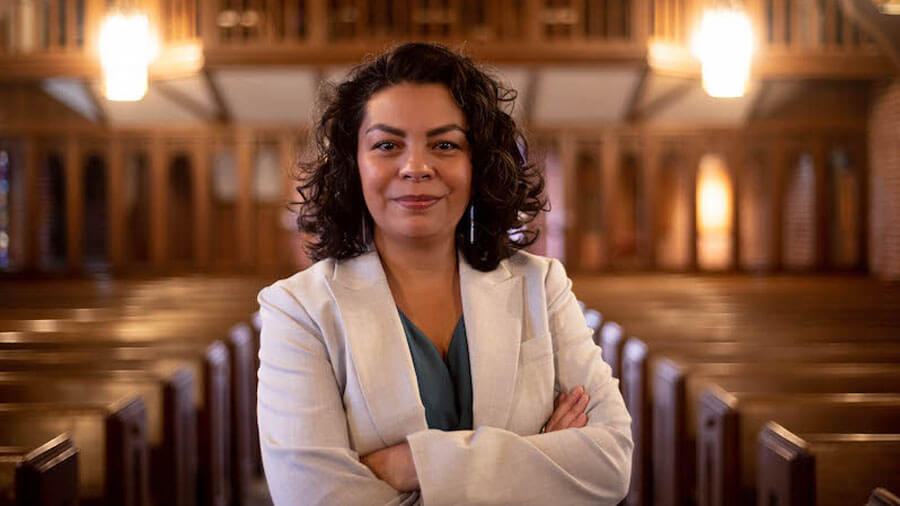
    [Episcopal News Service] Julia Ayala Harris’ election as president of the House of Deputies at the 80th General Convention in July 2022 was imbued with the energy of historic change. She is the first woman of color — the first Latina — and at age 41, the youngest president in recent memory, elected from the youngest and most diverse slate of candidates ever. A former Roman Catholic, Ayala Harris brings the perspective of a convert who discovered The Episcopal Church as an adult.

    Ayala Harris’ path to one of the highest-ranking positions in The Episcopal Church has been a personal and spiritual journey going back two decades. In her 21 years as an Episcopalian, the self-described “church geek” ascended through the church’s leadership, giving her an extensive résumé. She has served twice as a deputy from the Diocese of Oklahoma, a six-year term on Executive Council and over a dozen other leadership positions within The Episcopal Church and her diocese. She has also represented the Anglican Communion at the 2016 United Nations Commission on the Status of Women and is currently representing The Episcopal Church at the World Council of Churches 11th Assembly in Germany.

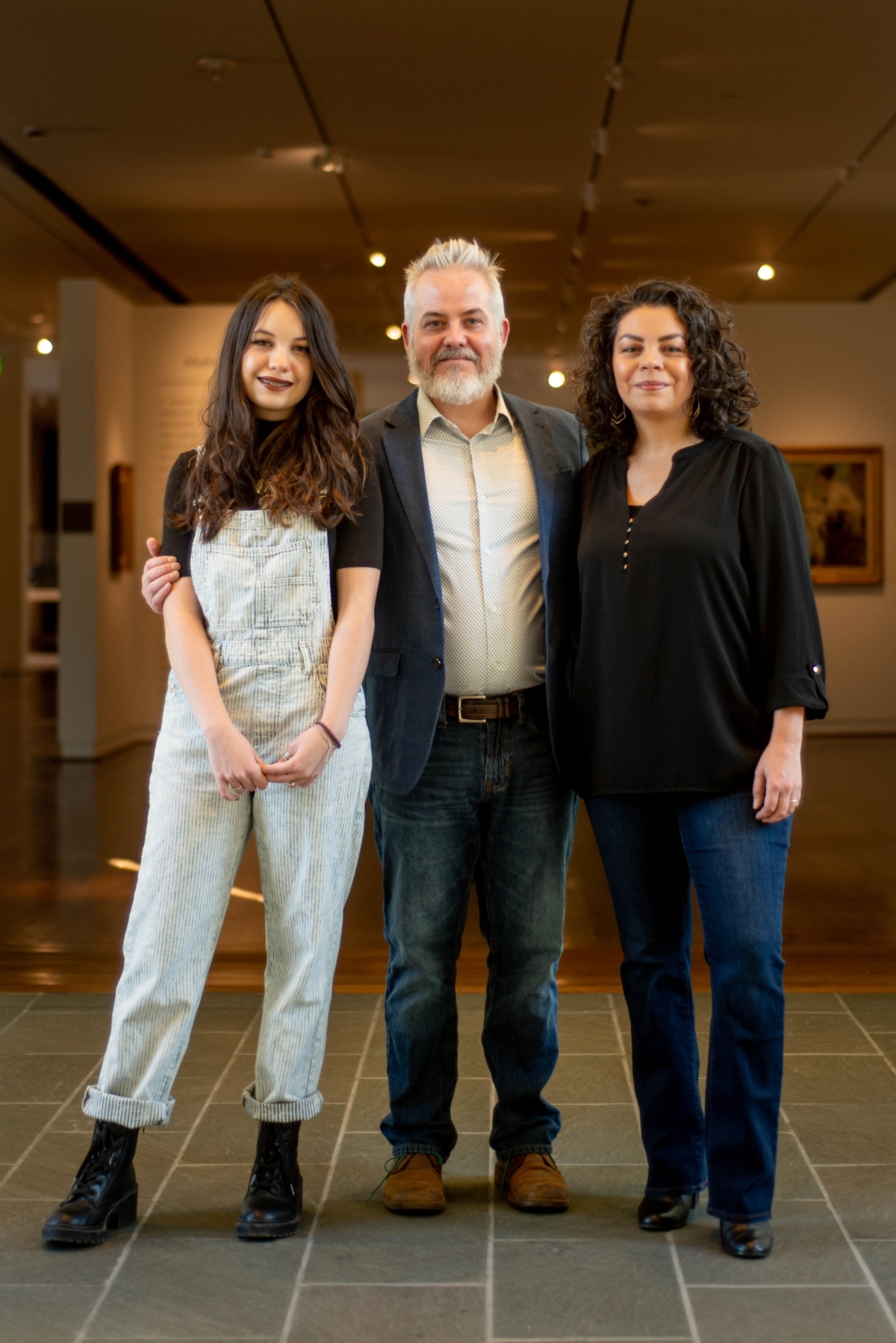
    Julia Ayala Harris with her husband and daughter in March 2022 in Norman, Oklahoma. Photo source: Julia Ayala Harris
    Julia Ayala Harris with her husband and daughter in March 2022 in Norman, Oklahoma. Photo source: Julia Ayala Harris

    Biography of Ayala Harris

    Ayala Harris, a first-generation Mexican American whose father was an undocumented immigrant, has managed nonprofit organizations around the U.S. and beyond. Among them are programs that provide transitional housing for homeless women and children, permanent supportive housing for people with disabilities, access to the arts, alternatives to incarceration for pregnant women and mothers. From 2005 to 2008, she was an international aid worker in Kenya and South Sudan with Church Ecumenical Action, supporting South Sudanese faith-based nonprofits and dioceses in grant writing, financial management and program design.

    She is currently working on a doctorate focusing on faith-based nonprofit leadership – especially public perceptions of nonprofit leaders based on their race, gender or ethnicity – at the University of Oklahoma, where her husband, John, teaches regional and urban planning. They live with their teenage daughter, Izzy, in Norman, Oklahoma, where they enjoy spending time in nature, puzzles and board games, and above all, anything “Star Trek”-related.

    This interview has been edited and condensed for clarity and length.

    Questions and answers with Ayala Harris

    ENS: What’s your spiritual background? How did you come to The Episcopal Church?

    Ayala Harris: I grew up in the Catholic Church, in the Diocese of Chicago, in the ‘80s. I adored going to church. I was an acolyte, and my first job, when I was 13, was to work in the parish office to answer phones and sort the mail and that sort of thing.

    Julia Ayala Harris, age 13, at her confirmation in the Roman Catholic Archdiocese of Chicago in 1994. Photo source: Julia Ayala Harris
    Julia Ayala Harris, age 13, at her confirmation in the Roman Catholic Archdiocese of Chicago in 1994. Photo source: Julia Ayala Harris

    When I was a teenager, I had a big crisis of faith. And that had everything to do with giving birth to a baby boy that I placed for adoption. I was going to just tell you it was a spiritual awakening, but it’s both a crisis of faith and a spiritual awakening at the same time. And when I came back to my Catholic church after that, there wasn’t a place for me. There was hardly a place for teenagers at all, let alone a teenager who had been through this very adult experience.

    So I found myself going to an evangelical youth group and was able to go find pathways to leadership and be spiritually nourished, and that’s where I got to learn a lot more about the Bible and pick up on biblical literacy. And then I went to an evangelical college and realized that I was still searching, that I hadn’t found a church home. I was still a square peg looking for a square hole but kept finding round ones and I didn’t feel like I belonged.

    I had a classmate and a professor who both were Episcopalian. And there was something about their worldview and the way they talked about things that I appreciated, and I walked into an Episcopal church and received Communion from a woman priest. And I was completely blown away by women being allowed to be priests and pastors, and the deeper I went into The Episcopal Church, the more I realized that I was at home and I think that I’ve been Episcopalian my entire life. I just absolutely fell in love.

    ENS: You worked your way up into the leadership of the church quickly. Are you naturally inclined toward leadership roles, or was that a journey of self-discovery too?

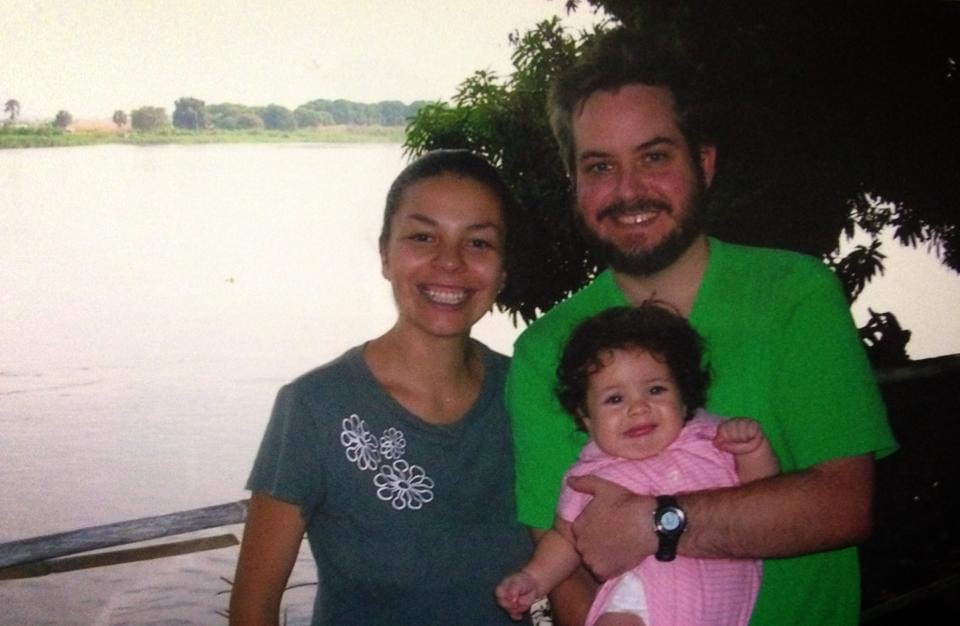
    Julia Ayala Harris with her husband and daughter at a United Nations compound on the Nile River in Juba, South Sudan (then southern Sudan), in 2007. Photo source: Julia Ayala Harris
    Julia Ayala Harris with her husband and daughter at a United Nations compound on the Nile River in Juba, South Sudan (then southern Sudan), in 2007. Photo source: Julia Ayala Harris

    Ayala Harris: Oh, interesting. I’m not sure. I think I am inclined toward leadership roles, because I’ve been an executive director of different nonprofits. But in The Episcopal Church, when I start doing work – whether it’s committee work or an interim body or putting together a ministry program – there’s something in that that I think I feel called to and I’m passionate about, and I just lose track of time. I just love it so much. I think that I am a leader generally, and that I’m called to leadership roles in the wider context, but that perhaps my vocation is really in Episcopal leadership. I just do really enjoy it and I could just keep doing it. It’s not something that has felt like a chore to me.

    ENS: You’ve talked about the significance of being the first woman of color and the first Latina president of the House of Deputies. How do you think that’s going to impact how you lead?

    Ayala Harris: There’s so much that comes with embodied representation. I embody the representation that we hope to see in leadership in the church that [former] President [Gay Clark] Jennings has worked so hard to promote.

    One of the priorities that I have for my leadership is to continue to expand who is in leadership in the church. Mostly that’s done through making appointments [to church leadership bodies], but also by providing an example of the types of goals we already have in leadership. I think it is interesting when people see just how diverse Executive Council is, because they’re seeing the top leaders of the church and we’re reflective of the diversity of the church, or even more so.

    Julia Ayala Harris addresses the House of Deputies after her election at the 80th General Convention in Baltimore, Maryland, as the Rev. Gay Clark Jennings, the outgoing president, listens. Photo: Scott Gunn
    Julia Ayala Harris addresses the House of Deputies after her election at the 80th General Convention in Baltimore, Maryland, as the Rev. Gay Clark Jennings, the outgoing president, listens. Photo: Scott Gunn

    ENS: What are your other priorities?

    Ayala Harris: The themes that I’ve kept coming back to are accessibility, inclusivity and safety. Examples would be making our governance structures – like General Convention and other pieces of the churchwide structure that the president of the House of Deputies has oversight over – to be more accessible to more people. That can include the nature, structure, scope and length of General Convention, but also things like wheelchair accessibility and sign language and captioning as well as child care and children’s programming.

    A lot of that overlaps with the inclusivity piece, because if you’re able to have better access, you’re going to be a little bit more inclusive. Inclusivity means that once you get people there, you want to have them feel the sense of belonging, they belong in those spaces. So not only have you welcomed them and made it more accessible, but you’re including them and they feel that belonging.

    Safety is related to my work as deputy chair of [the General Convention Committee on] Sexual Harassment, Sexual Exploitation and Safeguarding. If we’re going to be making our church structures more accessible and more inclusive, then we also have to ensure that we’re bringing them into safe spaces and that we’re taking care of them. I’m also working on how I can implement these themes in both structural changes but also in cultural changes that need to be made in The Episcopal Church.

    ENS: What’s your understanding of the role of president of the House of Deputies? There are constitutional duties, of course, but beyond that, what does this job mean to you?

    Ayala Harris: That one’s like an essay question on a final exam! Beyond presiding over the House of Deputies during General Convention and being vice chair of executive council and being vice president of the Domestic and Foreign Missionary Society, the president of the House of Deputies has this tremendous ability to make appointments, which is an amazing opportunity to expand who is in leadership. … I don’t want to overstate this too much, but being someone who represents the voices of clergy and laity in the church is very important and a huge honor.

    It’s one thing to have watched President Jennings do this role for the last seven years so closely, and it’s a whole other thing to be doing it. I’m new in the skin of the president and it’s thrilling and scary all at the same time. But with a lot of help and everyone’s prayers, I hope to be able to live into it.

    – Egan Millard is an assistant editor and reporter for Episcopal News Service. He can be reached at emillard@episcopalchurch.org.

    The Shield of the General Convention of the Episcopal Church

    President Julia Ayala Harris

    Julia Ayala Harris was elected president of the House of Deputies by her peers at the 80th General Convention of the Episcopal Church in 2022. She is the first Latina to hold the position.

    She is a first-generation Mexican American, the daughter of an undocumented immigrant, from a large working-class family in the Chicago area. She came to the Episcopal Church 21 years ago, when she was 20 years old, after a crisis of faith in the Roman Catholic church of her childhood and the evangelical church of her teens. In the Episcopal Church, she has continually found healing, blessing, and wholeness in God’s unconditional love. Throughout her lay ministry, she has worked to bring about a church that can share that blessing with all of God’s people.

    From her professional, familial, and personal experiences, she is passionate about a multitude of issues such as immigration, LGBTQIA2S+ inclusion, empowerment of women and girls, criminal justice reform, race and ethnicity, disability inclusion and access, sexual harassment and exploitation, as well as justice and peace initiatives.

    Read more on the House of Deputies website.

    The Episcopal Church of the Redeemer: Worshiping God, living in community, reaching out to the world.

    Church of the Redeemer

    Church of the Redeemer: Worshiping God, living in community, and reaching out to the world around us. We are an Episcopal Church serving north King County and south Snohomish County, Washington. As you travel your road, go with friends walking the way of Jesus at Redeemer.

    Church of the Redeemer is at 6220 Northeast 181st Street in Kenmore, Washington. The campus is a short distance north of Bothell Way, near the Burke-Gilman Trail. The entrance looks like a gravel driveway. The campus is larger on the inside than it is on the outside. And we managed to hide a large building on the side of a hill that is not easily seen from the street.

    The Episcopal Church welcomes you.
Participants in the pageant on Sunday, January 4, 2025, should be present by 9:30 am. 

2nd Sunday after the Epiphany (Year A), January 18, 2026. One service only at 9:30 am. Visitation by the Rt. Rev. Philip LaBelle, Bishop of Olympia.

Episcopal Church of the Redeemer
Privacy Overview

Cookie information is stored in your browser and performs functions such as recognizing you when you return to our website and helping our team to understand which pages of the website are visited. We aren't using cookies to determine your web browsing habits, but others can.