Here in the United States, we awoke this morning with alarm to the news that the United States and Israel have launched a large military strike on Iran. This violent attack comes despite weeks of negotiations that many of us had hoped would prevent armed conflict in this fragile region, which is home to so many religious traditions and faithful people.
Bishop Jeffrey Mello of Connecticut and a group of pilgrims from that diocese are in the Holy Land now, and when we spoke this morning, he let me know that they are safe at St. George’s College in Jerusalem. I ask you to pray fervently for them and their safe return.
Pray, too, for all the people of the Holy Land, and especially for the Episcopal Church in Jerusalem and the Middle East and its leader, Archbishop Hosam Naoum. I had planned to be with Hosam today and tomorrow when he made a long-planned visit to our church. Many Episcopalians who had hoped to see him and assure him of our support will feel his absence keenly in the coming days. I commend to you the letter that he has sent to the people of his diocese this morning.
As news reports tell us of fear and panic in Iran, I ask you to pray especially for the people of the Diocese of Iran and for all of the Iranian people. In recent weeks, we have mourned as the regime in Iran has killed peaceful protesters, and watched with alarm at both its increasing repression of the Iranian people and the escalating response of the U.S. government. As Christians who follow a Prince of Peace, we mourn that today’s attacks will surely mean further hardship for the most vulnerable Iranians and, as retaliation inevitably follows, suffering that will spread across the entire region.
Eternal God, in whose perfect kingdom no sword is drawn but the sword of righteousness, no strength known but the strength of love: So mightily spread abroad your Spirit, that all peoples may be gathered under the banner of the Prince of Peace, as children of one Father; to whom be dominion and glory, now and for ever. Amen.
The Most Rev. Sean Rowe Presiding Bishop of The Episcopal Church
The Most Rev. Sean W. Rowe
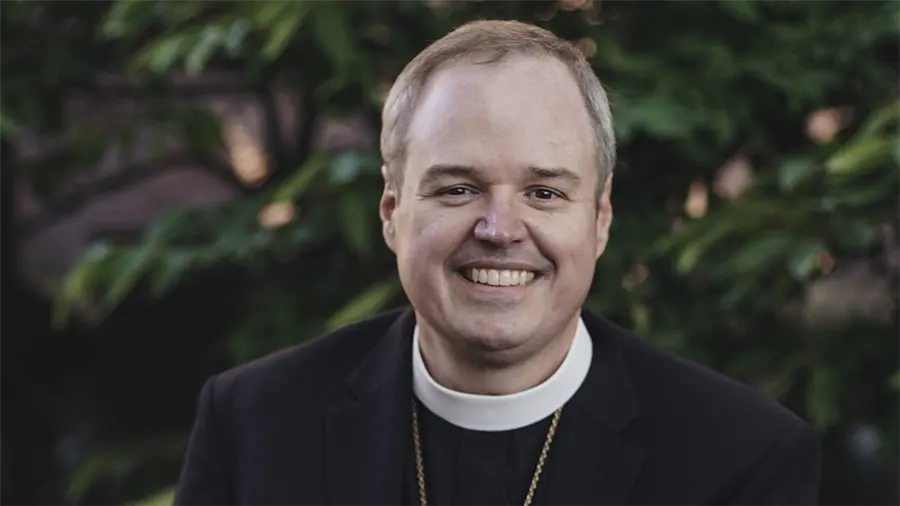
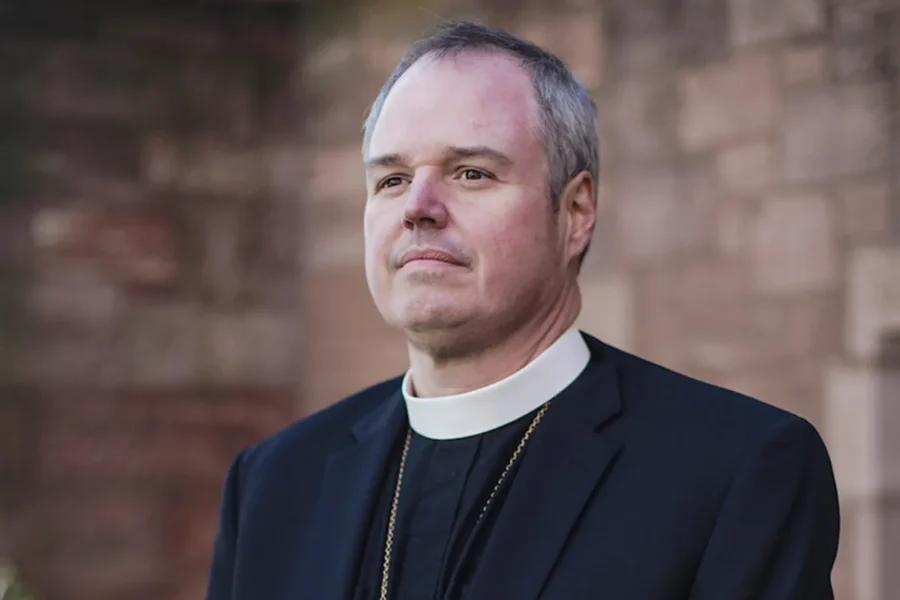
The Most Rev. Sean W. Rowe was elected presiding bishop and primate of The Episcopal Church in June 2024 and took office on November 1 of that year for a nine-year term. In this role, he serves as the church’s chief pastor and CEO. Known for his expertise in organizational learning and adaptive change, Rowe is committed to strengthening support for local ministry and mission.
He was ordained bishop of the Episcopal Diocese of Northwestern Pennsylvania in 2007 after serving as rector of St. John’s in Franklin, Pennsylvania, for seven years. From 2014 to 2018, he served as bishop provisional of the Episcopal Diocese of Bethlehem, and from 2019 to 2024, he led a partnership between the Episcopal Dioceses of Northwestern Pennsylvania and Western New York.
Rowe holds a bachelor’s degree in history from Grove City College, a Master of Divinity degree from Virginia Theological Seminary, and a doctorate in organizational learning and leadership from Gannon University. He has served as a leader of many civic and churchwide organizations and governance bodies, and as parliamentarian for the House of Bishops.
Church of the Redeemer
Church of the Redeemer: Worshiping God, living in community, and reaching out to the world around us. We are an Episcopal Church serving north King County and south Snohomish County, Washington. As you travel your road, go with friends walking the way of Jesus at Redeemer.
Church of the Redeemer is at 6220 Northeast 181st Street in Kenmore, Washington. The campus is a short distance north of Bothell Way, near the Burke-Gilman Trail. The entrance looks like a gravel driveway. The campus is larger on the inside than it is on the outside. And we managed to hide a large building on the side of a hill that is not easily seen from the street.
When God told Moses to lead the ancient Israelites out of slavery in the land of Egypt, Pharaoh stood in his way. Pharaoh wanted power and control over God’s people, and Exodus tells us that the more serious the situation got, the more hardened his heart became. Despite locusts and frogs and all manner of chaos in the land of Egypt, Pharaoh remained trapped by his view of the world, which had himself and his power at the center. He could not see that God’s imagination was far bigger and more expansive than his. He could not imagine liberation for God’s people—or for himself.
Today, in the opening collect of our Ash Wednesday service, we ask God to “create and make in us new and contrite hearts.” I think of Pharaoh’s hard heart, and sometimes my own, when I say that prayer, and never more so than this year.
These days, it can seem as if we are living in a wasteland of Pharaoh’s imagination. We see the principalities and powers promulgating violence, dehumanization, and injustice on our streets, and it seems nearly impossible not to react along the lines of the divisions and polarization that our political leaders have championed. It is easy to have a hardened heart. It is tempting to get angry and be governed by outrage, or to grow cold and indifferent.
If we turn from Pharoah’s imagination toward God’s imagination, however, we find a different path. Jesus tells us to love our neighbor as ourselves. With that great commandment, he is teaching us that we are all one, all part of God’s chosen people, and when we hate and revile each other, we are actually destroying ourselves. Theologian Howard Thurman, whose thinking helped shape the Civil Rights movement, put it like this in “Jesus and the Disinherited”: “The logic of the development of hatred is death to the spirit and disintegration of ethical and moral values.”
It is not easy to leave behind Pharoah’s imagination and its toxic drip of polarization that hardens our hearts and minds. The liberation we seek requires the conversion—the turning—of our hearts. We can begin that process anytime, but Lent gives us an opportunity to undertake the work together.
In the old 1928 Book of Common Prayer Ash Wednesday service, we called on the book of Lamentations: “Turn thou us unto thee, O Lord, and we shall be turned.” I believe that as we Episcopalians turn, as we fast and pray for the conversion of our hearts, we can make a great witness to a world that has been brought to its knees by the power of hatred and division.
On Monday of Holy Week, a number of my bishop colleagues will hold public liturgies or prayer services to lament the violence and hatred that has come to define our common life and to witness to our conviction that Christians must come together across our unholy divisions. I hope that if you can attend a service nearby, you will.
I will also host a service on Zoom on Palm Sunday, March 29, at 8 p.m. Eastern so that we can pray together for God’s blessing on our witness. Look for more information coming soon.
Like the apostle Paul, the conversion of the heart that we must undertake may start with a blinding light, but the ongoing change it requires is the work of a lifetime, and may require everything we have. This Lent, I pray that God might create and make in us new and contrite hearts that will sustain us as we make our witness to the world.
Faithfully,
The Most Rev. Sean W. Rowe Presiding Bishop
The Most Rev. Sean W. Rowe
The Most Rev. Sean W. Rowe was elected presiding bishop and primate of The Episcopal Church in June 2024 and took office on Nov. 1 for a nine-year term. In this role, he serves as the church’s chief pastor and CEO. Known for his expertise in organizational learning and adaptive change, Rowe is committed to strengthening support for local ministry and mission.
He was ordained bishop of the Episcopal Diocese of Northwestern Pennsylvania in 2007 after serving as rector of St. John’s in Franklin, Pennsylvania, for seven years. From 2014 to 2018, he served as bishop provisional of the Episcopal Diocese of Bethlehem, and from 2019 to 2024, he led a partnership between the Episcopal Dioceses of Northwestern Pennsylvania and Western New York.
Rowe holds a bachelor’s degree in history from Grove City College, a Master of Divinity degree from Virginia Theological Seminary, and a doctorate in organizational learning and leadership from Gannon University. He has served as a leader of many civic and churchwide organizations and governance bodies, and as parliamentarian for the House of Bishops.
Church of the Redeemer
Church of the Redeemer: Worshiping God, living in community, and reaching out to the world around us. We are an Episcopal Church serving north King County and south Snohomish County, Washington. As you travel your road, go with friends walking the way of Jesus at Redeemer.
Church of the Redeemer is at 6220 Northeast 181st Street in Kenmore, Washington. The campus is a short distance north of Bothell Way, near the Burke-Gilman Trail. The entrance looks like a gravel driveway. The campus is larger on the inside than it is on the outside. And we managed to hide a large building on the side of a hill that is not easily seen from the street.
[Episcopal News Service] In an opinion piece originally published July 3, 2025, in Religion News Service, Presiding Bishop Sean Rowe reflected on The Episcopal Church’s history as it has emerged as an institutional leader in resistance to the Trump Administration’s “overreach and recklessness” since President Donald Trump took office in January.
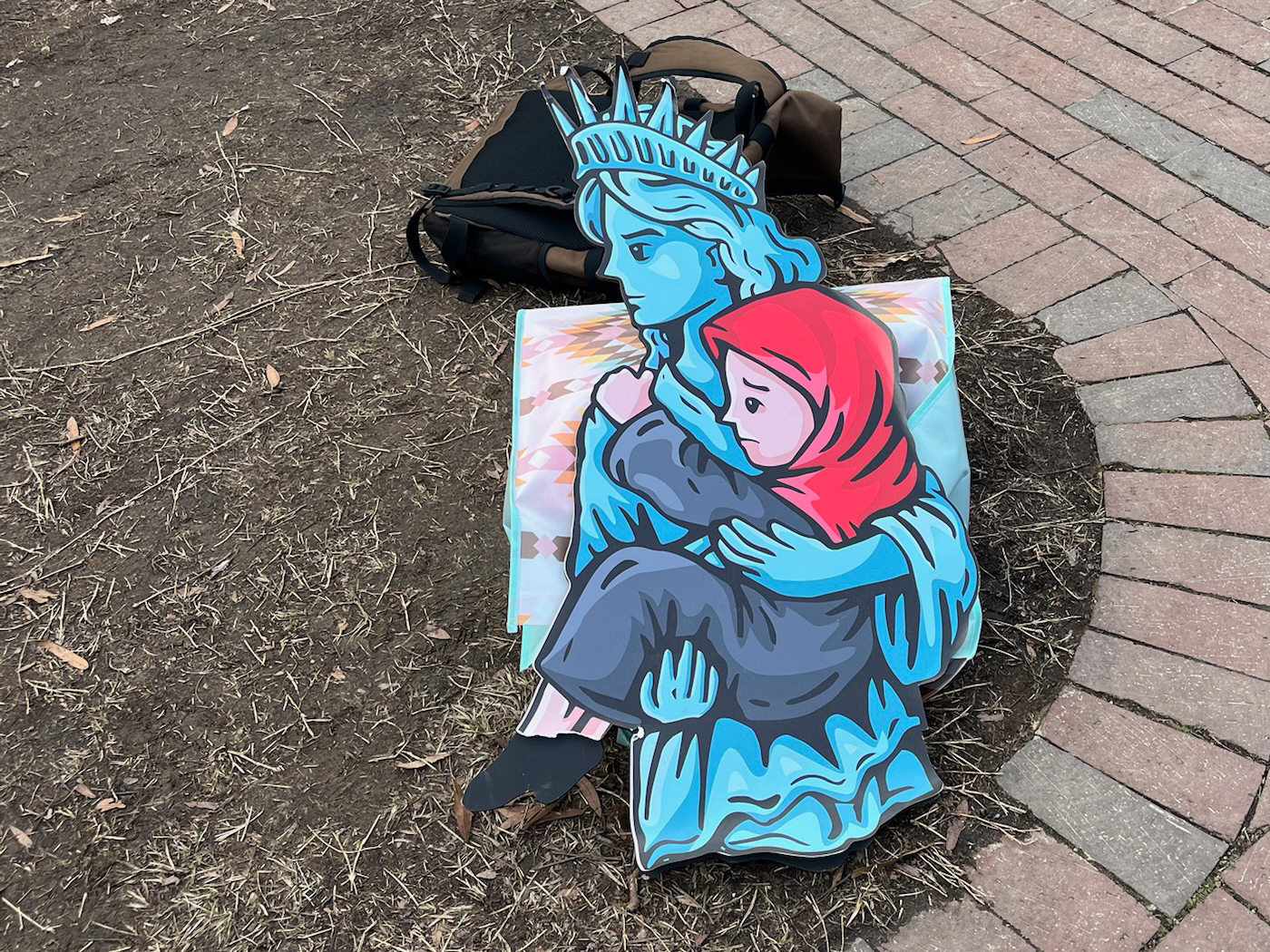
A depiction of a refugee being held by Lady Liberty during a protest in Washington, D.C., Feb. 4, 2025. (RNS photo/Aleja Hertzler-McCain)
Resistance to the rising tide of authoritarianism and Christian nationalism
It is shaping up to be a complicated Independence Day for The Episcopal Church. We were once the church of the Founding Fathers and presidents—34 of the 56 signers of the Declaration of Independence were members of what became our church after the Revolution, and 11 presidents, including George Washington, have professed our faith. Today, however, we are known less for the powerful people in our pews than for our resistance to the rising tide of authoritarianism and Christian nationalism emanating from Washington, D.C.
When religious institutions like ours enjoy easy coexistence with earthly power, our traditions and inherited systems can become useless for interpreting what is happening around us. But our recent reckoning with the federal government has allowed us to see clearly the ease with which the Protestant tradition of patriotism can lead Christians to regard our faith more as a tool of dominion than a promise of liberation.
The reckoning, if we are honest, is long overdue.
The Most Reverend Sean Rowe
We have had an eventful few months. In February, we joined a coalition of interfaith partners to sue the federal government on the grounds that the threat of U.S. Immigration and Customs Enforcement raids in houses of worship is a violation of our religious freedom. In May, we ended our four-decade participation in the federal refugee resettlement program over the current administration’s demand that we resettle white Afrikaners designated as refugees. We are now assessing how to respond to the travel ban, which prevents us from gathering and worshipping freely with the people of our churches in Venezuela, Haiti and Cuba, and may limit entry for our members in several other of the 22 countries and territories where The Episcopal Church is found. These challenges to our ability to practice our faith have strained the comfortable intermingling of church and state that our institution has enjoyed for nearly 250 years.
The reckoning, if we are honest, is long overdue. Every July 4, our prayer book reminds us of our failure to stand against the enslavement of Black Americans with a prayer for Independence Day claiming that “the founders of this country won liberty for themselves and for us.” But not all of us. The Episcopal Church did not make a moral stand against slavery, and some of our eminent leaders were pillars of the transatlantic slave trade. Our church ran residential schools for Indigenous children at which they were denied their culture and God-given humanity. And in the mid-20th century, our foreign missions aligned with U.S. foreign policy in Asia and the Pacific, and in Central America and the Caribbean.
The history of the church in Nazi Germany is a cautionary tale about how Christians can falter in perilous times. Some Christians in that time and place sided with the Reich based on their theological tradition of nationalism and loyalty to the state. Others, who came to be called the Confessing Church, became determined that they needed to oppose the government’s interference in religion. They resisted the Nazi regime — some, like Lutheran theologian and pastor Dietrich Bonhoeffer, to the death.
But the Confessing Church’s resistance was not primarily based in resistance to the Nazis’ deadly and dehumanizing antisemitism, but rather in its belief in the autonomy of the institutional church and its resulting desire to block state interference in church affairs. The last six months has heightened my understanding of that impulse, and I do not intend to diminish the witness of the Confessing Church — especially that of Bonhoeffer, who was brutally executed by the Nazi regime less than a month before the end of the war in Europe. Its history, however, teaches us that when we are awash in propaganda, even our resistance can be bound by its definitions and incline us to see the world in the same categories — foreigner and neighbor, cisgender and transgender, white and people of color, Christian and Muslim — that we seek to transcend.
These historical lessons are urgent. Churches like ours, protected by the First Amendment and practiced in galvanizing people of goodwill, may be some of the last institutions capable of resisting this administration’s overreach and recklessness. To do so faithfully, we must see beyond the limitations of our tradition and respond not in partisan terms, but as Christians who seek to practice our faith fully in a free and fair democracy.
We did not seek this predicament, but God calls us to place the most vulnerable and marginalized at the center of our common life, and we must follow that command regardless of the dictates of any political party or earthly power. We are now being faced with a series of choices between the demands of the federal government and the teachings of Jesus, and that is no choice at all.
This is not the same kind of patriotism that has guided our church since its founding in 1785, but this July Fourth, it may be the most faithful service we can render — both to the country we love and the God we serve.
– The Most Rev. Sean W. Rowe is presiding bishop of The Episcopal Church. The views expressed in this commentary do not necessarily reflect those of Religion News Service.
The Most Rev. Sean W. Rowe
The Most Rev. Sean W. Rowe was elected presiding bishop and primate of The Episcopal Church in June 2024 and took office on Nov. 1 for a nine-year term. In this role, he serves as the church’s chief pastor and CEO. Known for his expertise in organizational learning and adaptive change, Rowe is committed to strengthening support for local ministry and mission.
He was ordained bishop of the Episcopal Diocese of Northwestern Pennsylvania in 2007 after serving as rector of St. John’s in Franklin, Pennsylvania, for seven years. From 2014 to 2018, he served as bishop provisional of the Episcopal Diocese of Bethlehem, and from 2019 to 2024, he led a partnership between the Episcopal Dioceses of Northwestern Pennsylvania and Western New York.
Rowe holds a bachelor’s degree in history from Grove City College, a Master of Divinity degree from Virginia Theological Seminary, and a doctorate in organizational learning and leadership from Gannon University. He has served as a leader of many civic and churchwide organizations and governance bodies, and as parliamentarian for the House of Bishops.
Church of the Redeemer
Church of the Redeemer: Worshiping God, living in community, and reaching out to the world around us. We are an Episcopal Church serving north King County and south Snohomish County, Washington. As you travel your road, go with friends walking the way of Jesus at Redeemer.
Church of the Redeemer is at 6220 Northeast 181st Street in Kenmore, Washington. The campus is a short distance north of Bothell Way, near the Burke-Gilman Trail. The entrance looks like a gravel driveway. The campus is larger on the inside than it is on the outside. And we managed to hide a large building on the side of a hill that is not easily seen from the street.
[Episcopal News Service] Presiding Bishop Sean Rowe released a letter to The Episcopal Church on June 11, 2025. The letter responds to a series of Trump administration policies on migration and immigration. This includes the use of the military for crowd control at protests.
Rowe’s letter is titled “Acting Faithfully in Troubling Times.” It calls such military deployments “a dangerous turn” in President Donald Trump’s attacks on his political opponents and his administration’s ongoing immigration crackdown. Rowe also amplified a statement issued June 10 by the bishops of California’s six Episcopal dioceses.
Trump also has faced criticism for a separate policy, restricting travel to the United States from 19 countries. Rowe, in his letter, said he had written to Anglican leaders in those countries expressing his concern about Trump’s new travel ban.
“At its best, our church is capable of moral clarity and resolute commitment to justice. I believe we can bring those strengths to bear on this gathering storm,” said Presiding Bishop Rowe.
Presiding Bishop Rowe’s letter, “Acting Faithfully in Troubling Times”
Dear people of God in The Episcopal Church:
I am writing to you from Geneva, where I am meeting with global partners at the World Council of Churches and the United Nations Refugee Agency. As we have discussed how our institutions might act faithfully and boldly in these turbulent times, I have been reflecting on how we Episcopalians can respond to what is unfolding around us as followers of the Risen Christ whose first allegiance is to the kingdom of God, not to any nation or political party.
The events of the last several days lend urgency to this spiritual challenge. Earlier this week, President Trump’s executive order banning or restricting travel from 19 countries went into effect. This order impacts countries that are home to dioceses of The Episcopal Church and many of our Anglican Communion partners, and I have written to the bishops and primates in those countries to express our concern.
The unwarranted deployment of the National Guard and U.S. Marine Corps on the streets of Los Angeles also signals a dangerous turn. As the bishops of California have written, these military deployments risk escalating the confrontations unnecessarily and set a dangerous precedent for future deployments that heighten tensions rather than resolve them. As Christians committed to strive for justice and peace among all people, we know that there is a better way.
What we are witnessing is the kind of distortion that arises when institutions like the military and the State Department are turned on the people they were meant to protect. These mainstays of the federal government, designed to safeguard civil society and promote peace and stability, are now being weaponized for political advantage.
The violence on television is not our only risk. We are also seeing federal budget proposals that would shift resources from the poor to the wealthy; due process being denied to immigrants; and the defunding of essential public health, social service, and foreign aid programs that have long fulfilled the Gospel mandate to care for the vulnerable, children, and those who are hungry and sick.
With all of this in mind, we are finding ways to respond as Christians to what we see happening around us. We are exploring options to support litigation challenging the travel ban on the ground of religious freedom; advocating for federal spending that safeguards the welfare of the most vulnerable; caring for immigrants and refugees in our congregations and communities; and standing in solidarity with other faith groups. In short, we are practicing institutional resistance rooted not in partisan allegiance, but in Christian conviction.
At its best, our church is capable of moral clarity and resolute commitment to justice. I believe we can bring those strengths to bear on this gathering storm. Churches like ours, protected by the First Amendment and practiced in galvanizing people of goodwill, may be some of the last institutions capable of resisting the injustice now being promulgated. That is not a role we sought—but it is one we are called to.
In Geneva, I have been reminded that we are part of a global communion of hope in the Risen Christ. We do not stand alone as we live by our baptismal promises: to persevere in resisting evil, to strive for justice and peace among all people, and to respect the dignity of every human being. In these troubling times, may we find courage and resilience in our identity as members of the Body of Christ.
Yours in Christ,
The Most Rev. Sean Rowe Presiding Bishop The Episcopal Church
Church of the Redeemer
Church of the Redeemer: Worshiping God, living in community, and reaching out to the world around us. We are an Episcopal Church serving north King County and south Snohomish County, Washington. As you travel your road, go with friends walking the way of Jesus at Redeemer.
Church of the Redeemer is at 6220 Northeast 181st Street in Kenmore, Washington. The campus is a short distance north of Bothell Way, near the Burke-Gilman Trail. The entrance looks like a gravel driveway. The campus is larger on the inside than it is on the outside. And we managed to hide a large building on the side of a hill that is not easily seen from the street.
My heart is heavy at the death of our brother in Christ, Pope Francis. Throughout his life and ministry, he has been a witness for the Gospel and a champion for the poor and marginalized. Especially in this season, I give thanks for his powerful advocacy on behalf of migrants and refugees. Pope Francis, who was the first Latin American pope, understood these siblings in Christ are never at the edges, fearful and alone. As he once wrote, “In the faces of the hungry, the thirsty, the naked, the sick, strangers and prisoners, we are called to see the face of Christ who pleads with us to help.”
In 12 years as the Roman Catholic pontiff, Pope Francis transformed our theology of the environment and recognized the need for LGBTQ+ people to feel heard, seen, and included in their church. We are likewise grateful for his emphasis on reconciliation and ecumenical dialogue, in which our church has participated through the Anglican-Roman Catholic Theological Consultation in the United States of America.
I thank God for the life of Pope Francis, and ask you to pray for him, for all who loved him, and for our Roman Catholic siblings in Christ. May he rest in peace and rise in glory.
The Most Rev. Sean W. Rowe was elected presiding bishop and primate of The Episcopal Church in June 2024 and took office on Nov. 1 for a nine-year term. In this role, he serves as the church’s chief pastor and CEO. Known for his expertise in organizational learning and adaptive change, Rowe is committed to strengthening support for local ministry and mission.
He was ordained bishop of the Episcopal Diocese of Northwestern Pennsylvania in 2007 after serving as rector of St. John’s in Franklin, Pennsylvania, for seven years. From 2014 to 2018, he served as bishop provisional of the Episcopal Diocese of Bethlehem, and from 2019 to 2024, he led a partnership between the Episcopal Dioceses of Northwestern Pennsylvania and Western New York.
Rowe holds a bachelor’s degree in history from Grove City College, a Master of Divinity degree from Virginia Theological Seminary, and a doctorate in organizational learning and leadership from Gannon University. He has served as a leader of many civic and churchwide organizations and governance bodies, and as parliamentarian for the House of Bishops.
Church of the Redeemer
Church of the Redeemer: Worshiping God, living in community, and reaching out to the world around us. We are an Episcopal Church serving north King County and south Snohomish County, Washington. As you travel your road, go with friends walking the way of Jesus at Redeemer.
Church of the Redeemer is at 6220 Northeast 181st Street in Kenmore, Washington. The campus is a short distance north of Bothell Way, near the Burke-Gilman Trail. The entrance looks like a gravel driveway. The campus is larger on the inside than it is on the outside. And we managed to hide a large building on the side of a hill that is not easily seen from the street.
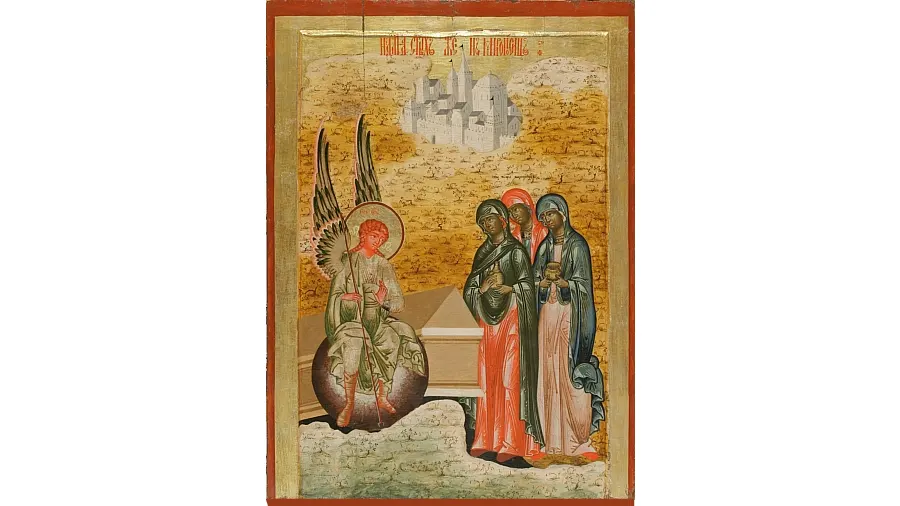
Luke’s Gospel tells us that on the first day of the week, Mary Magdalene, Mary the mother of James, and Joanna went to the tomb to anoint the body of Jesus. When they got there, the stone had been rolled away, and they heard the message that transformed their world—and ours: “He is not here. He is risen.”
On that Easter morning, the women who had been the last protectors and pastors at the cross on Good Friday became the first to witness and proclaim the resurrection. Scripture tells us, however, that their good news was not met with joy. The news that Jesus had risen from the dead was received as an idle tale, as nonsense—in one dynamic translation, as nothing more than women’s trinkets. In the fraught and divided world in which these first evangelists lived, they were on the margins, and their word counted for nothing.
How quickly the apostles forgot what Jesus had modeled days before on Palm Sunday and at the Last Supper. The long-awaited Messiah fashioned himself not as a political conqueror but as a peacemaker. Our Savior upended notions of worldly power by taking on the role of a servant and washing the feet of his followers. For Jesus, the vulnerable and the marginalized are in focus, and his ears are attuned to their voices.
As we proclaim the resurrection in our own time and place, let us always remember that the kingdom of God is revealed to us most clearly by those who are dispossessed by the powers and principalities of this world. Let us celebrate the joy of Easter by seeking and serving the resurrected Christ in the lives and the witness of those who have been silenced, persecuted, and marginalized.
May God bless you and all those you love this Easter.
The Most Rev. Sean W. Rowe
Church of the Redeemer
Church of the Redeemer: Worshiping God, living in community, and reaching out to the world around us. We are an Episcopal Church serving north King County and south Snohomish County, Washington. As you travel your road, go with friends walking the way of Jesus at Redeemer.
Church of the Redeemer is at 6220 Northeast 181st Street in Kenmore, Washington. The campus is a short distance north of Bothell Way, near the Burke-Gilman Trail. The entrance looks like a gravel driveway. The campus is larger on the inside than it is on the outside. And we managed to hide a large building on the side of a hill that is not easily seen from the street.
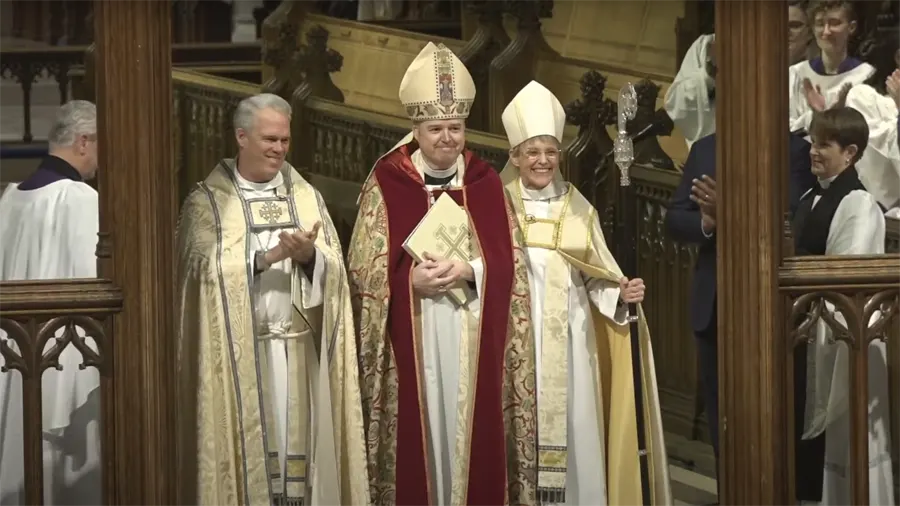
Episcopal Church Presiding Bishop Sean Rowe preached the sermon during a February 2, 2025, Eucharist at Washington National Cathedral celebrating the Feast of the Presentation of the Lord. The service also included Bishop Rowe’s ceremonial seating, a liturgy in the Book of Occasional Services. A lightly edited transcript of the sermon—based on Luke 2:22-40—is below.
The seating liturgy begins at around 19 minutes. The sermon starts at around 54 minutes.
Please accept YouTube cookies to play this video. By accepting you will be accessing content from YouTube, a service provided by an external third party.
If you accept this notice, your choice will be saved and the page will refresh.
The sermon by the Most Rev. Sean Rowe
This child is destined for the falling and rising of many. Amen.
So here we are on this feast day of the presentation. You might imagine this scene with me, a first-century temple which was chaotic, a marketplace with vendors and livestock and money changers—remember the money changers?—and all sorts and conditions of people hanging out in that place worshiping God.
Enter Mary and Joseph, devout Jews from Nazareth. They’ve come for the purification rite and for the presentation of their child. The purification of Mary—that’s a whole other story. That’s another sermon for another day. One worthy of being preached. But in this case, we are reminded today that Jesus is born into the people of Israel, to whom Simeon’s prophecy is addressed this morning.
It’s a noisy, unpredictable scene. They’re bringing a child into church like many who do and many of us who have experienced that. We know what that can be like. This child was coming to this place and at this time, and he was like a child like any other and like none other. Also, there were birds to be managed, and that can’t have made the situation easier, at least from my perspective.
So into this scene, Simeon and Anna appear. We all know Simeon and Anna because Simeon and Anna are part of our lives, probably in the congregations that we attend or the places that are important to us. They’re always there. These are the people that have given their lives faithfully to the church or whatever it is. These are the people that have been around. They’re always around, they’re always there, and they’ve been old your whole life. On this day, they come to tell the stories because these are the people that tell the stories even when no one wants to hear them.
But on this day, Simeon and Anna turned Mary and Joseph’s world upside down, and they give us a glimpse of a world very different from the one that we have been living in or the one that we are expecting. Simeon tells these two peasants from Galilee, these two faithful Jews who have come to their obligations of faith, that he can die now because he has seen the Messiah. He has seen the Savior. These words that he gives us, “Lord, you now have set your servant free to go in peace as you have promised. These eyes of mine have seen the Savior”—these are words we take and will carry us to our graves and to heaven.
Simeon proclaims that this child is the savior of all peoples, a revelation to the world and that the division between Gentiles and Jews so powerful in the politics, in the economy of the day, have fallen away in an instant. Simeon gives them a vision of another way.
The Scripture tells us that this mother and father were amazed at his words. Now I’m always perplexed by that. I mean, I’m sure it’s a big thing to be told your child is the savior of the world, but you think they would’ve been catching on by now, after the magi and Egypt.
But then Simeon doesn’t stop there. He doubles down. You can’t really blame him. He’s just told God he’s ready to return to greater glory, so what does he have to lose? He says this child is destined for the falling and the rising of many in Israel—and to be a sign that will be opposed so that the inner thoughts of many will be revealed. I don’t know about you, the whole inner thoughts being revealed thing is not comforting. But this child is destined for the falling, and the rising—not the rising and the falling; the falling and the rising—of many.
And then just in case we didn’t believe Simeon, Anna turns up, a foretaste of the women at the tomb who will be the first to proclaim that Christ has risen. She is the only woman in the New Testament to be named as a prophet, and everyone she can find in the temple that day, she’s telling that this child is the redemption of Israel.
These two elders laid out the whole story. This child is destined for the falling and rising. Luke is writing this Gospel after the fall of the temple, this place about which is being spoken, which has been destroyed. They are under a tyranny, in conflict. Imperial rule has deepened the oppression and the inequality of the time. And even people in the new church that has been formed aren’t getting along with each other. Surprise.
The Messiah has not returned, the liberation and justice, it might’ve seemed a long way off. Luke is writing to people who have already experienced the falling, and he tells them that this child, this one who has come and making the offering of the poor—two turtledoves—this one, this poor child born in a backwater to peasant parents, this one will be the redemption.
Jesus reverses everything that the readers of the Gospel of Luke have known. From now on, the cross comes before resurrection. Dying comes before the rising. The last will be first. This tiny child presented in the temple causes the falling and the rising of many.
Today, God is still calling us to live in this upside-down world order; and like the sometimes clueless disciples who we’ll get to travel with later in the Gospels, we struggle with how to make sense of what that all means because we are beset by the powers and principalities of the world that don’t see it the way that Jesus does.
We’re told by the kings and the rulers of the day that the rich shall be first. That somehow compassion is weakness. That fealty to political parties—and here I mean either one, or all of them—is somehow paramount. That differences of race, class, gender identity, human sexuality are all divisions that must somehow separate us, and that we should regard migrants and strangers and those among us whom we don’t understand, with fear and contempt.
But those divisions are not of God. Those are not the divisions of a kingdom about which Jesus speaks, of a kind of reversal, the one that Simeon and Anna foretell. In that kingdom of God, the meek shall inherit the earth. The last will be first. The merciful shall receive mercy, and the captives go free.
In this world order, falling comes before rising. In God’s kingdom, immigrants and refugees, transgender people, the poor and the marginalized are not at the edges fearful and alone. They are at the center of the Gospel story. So the boundaries are not just extended, the story just isn’t extended to include all people. Those who have been considered at the margins are at the center. They are the bearers of the salvation of the world. Their struggles reveal to us the kingdom of God.
This kingdom about which Jesus speaks is upside down. It’s reverse. It’s inverted. It’s countercultural. It’s another way of being and living in a world.
In this new kingdom, the power of God is manifest in parents making a modest offering for their tiny child. In the woman at the well. In the leper who comes to be healed. In the women at the tomb. These are the very people Jesus points to as icons of the holy.
Friends, we live in a world in which the enemy is bound and determined to sow division among us, to make us forget who we are and to what kingdom we belong. God did not come among us as a strongman. God came among us first as a child.
We too easily turn on one another, succumbing to our need to regard people as other. We’re seduced by a world that tells us our worth and our value has to come at the expense of someone else. We forget that we were once strangers in a foreign land, and we fail to love our siblings who were created by God.
But because of this tendency to forget, we need the place to which we gather to be remembered and to remember. We need our Christian community, week in and week out. To remember whose we are, we need to hear the story of the elders like Simeon and Anna. We need to greet with a sign of peace those who voted for the candidate we couldn’t stand. And to be in the communion line alongside people who don’t live like us or look like us or even love like us. We find the face of Christ in the most vulnerable in our communities.
The point of this institution—this magnificent cathedral of ours; our modest country churches back home; the famous Episcopal Church A-frame with the blond furniture; our office in midtown Manhattan, which I call mid-century mediocre architecture—we need these places to remind us that we are first citizens of the kingdom of God. The point of the community, particularly in these fractious times, is to turn away from the evil we have done and the evil done on our behalf. And back toward the one Jesus brought from the margins to the center, back to one another, back to the risen Christ.
This is the kingdom of God, which Jesus proclaims. This is the one that is reversed. This is the one where the people on the edge are at the center and where we find Christ in all people.
There’s an old preaching parable about a monastery, a very famous place, very far, remote, a place that many people used to come to for miracles and signs and wonders and healing, and most of all, for the peace of God, which passes all understanding. But it fell on hard times. People began to argue with one another, as we are wont to do, and people stopped coming after a while. They stopped getting new vocations in that place. It was no longer the vibrant place.
And the abbot of the monastery began to worry what would happen, began to despair about the way it would be. And he decided that he had no other choice but to leave that place for a time and to go find a rabbi who used to pray as a solitary, not far from the monastery. And he went out to see the rabbi, and he sat down, and he wept. And he said, “I don’t know what to do.”
And the rabbi just held his hands and said, “We’ll pray.” And the rabbi prayed, and he said, “I’m sorry. I have no advice to give you, but I do have this word from God for you to take back to your people. Take back to your community.” He said, “Tell your people, one of you is the Messiah. Christ is among you.”
The abbott gets up and walks away and thinks, “OK, surely not me. And it’s not Bob.” Part of the problem. He gets back to the monastery, gathers the monks together and says to them, “I have a word from you, from the rabbi.” He said, “I could share this with you once, and we’re then to go on about our business. One of us is the Messiah. Christ is among us.”
And they began to look at each other differently. Their frame of reference changed. What if we saw Christ in each other? What if we understood what it meant for real? That Christ is among us, one of us, all of us together in this kingdom inverted, turned upside down and made for the healing and wholeness of the world.
Amen.
Presiding Bishop Sean W. Rowe
The Most Rev. Sean W. Rowe was elected presiding bishop and primate of The Episcopal Church in June 2024 and took office on Nov. 1 for a nine-year term. In this role, he serves as the church’s chief pastor and CEO. Known for his expertise in organizational learning and adaptive change, Rowe is committed to strengthening support for local ministry and mission.
He was ordained bishop of the Episcopal Diocese of Northwestern Pennsylvania in 2007 after serving as rector of St. John’s in Franklin, Pennsylvania, for seven years. From 2014 to 2018, he served as bishop provisional of the Episcopal Diocese of Bethlehem, and from 2019 to 2024, he led a partnership between the Episcopal Dioceses of Northwestern Pennsylvania and Western New York.
Rowe holds a bachelor’s degree in history from Grove City College, a Master of Divinity degree from Virginia Theological Seminary, and a doctorate in organizational learning and leadership from Gannon University. He has served as a leader of many civic and churchwide organizations and governance bodies, and as parliamentarian for the House of Bishops.
Church of the Redeemer: Worshiping God, living in community, and reaching out to the world around us. We are an Episcopal Church serving north King County and south Snohomish County. We welcome you be with us as we walk the way of Jesus.
Church of the Redeemer is at 6220 Northeast 181st Street in Kenmore, Washington. We are a short distance north of Bothell Way, near the Burke-Gilman Trail. The entrance looks like a gravel driveway. The campus is larger on the inside than it is on the outside. And we managed to hide a large building on the side of a hill that is not easily seen from the street.
I give thanks for the life and witness of President Jimmy Carter, who has died at the age of 100. He was a devoted peacemaker and steadfast public servant whose faithful labor for his country, his church, and the cause of global democracy and human rights has long been an inspiration to Christians across the world.
As a politician and humanitarian leader, President Carter met adversity with resilience and never relented when he saw an opportunity to serve. Whether seeking peace in the Middle East, leading the international campaign to eradicate Guinea worm disease, or building houses with Habitat for Humanity, he eschewed wealth and celebrity in favor of service to God and his fellow humans.
In 2002, he was awarded the Nobel Peace Prize “for his decades of untiring effort to find peaceful solutions to international conflicts, to advance democracy and human rights, and to promote economic and social development.” His legacy will live on through The Carter Center, which he founded with his beloved wife, Rosalynn, and which continues the selfless work they did throughout their lives.
When Jimmy Carter took the oath of office to become the 39th president of the United States in 1977, he did so on a family Bible laid open to Micah 6:8. The nation was hurting and divided in the wake of scandal, and to set forth a new vision, he read the words of the prophet: “He hath showed thee, O man, what is good; and what doth the Lord require of thee, but to do justly, and to love mercy, and to walk humbly with thy God.”
May we follow his example of Christian service, and may his soul and the souls of all the departed, through the mercy of God, rest in peace.
The Most Rev. Sean W. Rowe Presiding Bishop The Episcopal Church
Church of the Redeemer
Church of the Redeemer: Worshiping God, living in community, and reaching out to the world around us. We are an Episcopal Church serving north King County and south Snohomish County, Washington. As you travel your road, go with friends walking the way of Jesus at Redeemer.
Church of the Redeemer is at 6220 Northeast 181st Street in Kenmore, Washington. The campus is a short distance north of Bothell Way, near the Burke-Gilman Trail. The entrance looks like a gravel driveway. The campus is larger on the inside than it is on the outside. And we managed to hide a large building on the side of a hill that is not easily seen from the street.