The Feast of the Baptism of Our Lord is celebrated each year on the Sunday following the Feast of the Epiphany on January 6. The event of Christ’s baptism is recorded in all four gospel accounts:
Detail from 13th-century fresco above baptismal font, Zica monastery, near Kraljevo, Serbia.
Mark 1:9-11
In those days Jesus came from Nazareth of Galilee and was baptized by John in the Jordan. And just as he was coming up out of the water, he saw the heavens torn apart and the Spirit descending like a dove on him. And a voice came from heaven, “You are my Son, the Beloved; with you I am well pleased.”
Luke 3:21-22
Now when all the people were baptized, and when Jesus also had been baptized and was praying, the heaven was opened, and the Holy Spirit descended upon him in bodily form like a dove. And a voice came from heaven, “You are my Son, the Beloved; with you I am well pleased.”
John 1:29-34
The next day he saw Jesus coming towards him and declared, “Here is the Lamb of God who takes away the sin of the world! This is he of whom I said, ‘After me comes a man who ranks ahead of me because he was before me.’ I myself did not know him; but I came baptizing with water for this reason, that he might be revealed to Israel.” And John testified, “I saw the Spirit descending from heaven like a dove, and it remained on him. I myself did not know him, but the one who sent me to baptize with water said to me, ‘He on whom you see the Spirit descend and remain is the one who baptizes with the Holy Spirit.’ And I myself have seen and have testified that this is the Son of God.”
Matthew 3:13-17
Then Jesus came from Galilee to John at the Jordan, to be baptized by him. John would have prevented him, saying, “I need to be baptized by you, and do you come to me?” But Jesus answered him, “Let it be so now; for it is proper for us in this way to fulfill all righteousness.” Then he consented. And when Jesus had been baptized, just as he came up from the water, suddenly the heavens were opened to him and he saw the Spirit of God descending like a dove and alighting on him. And a voice from heaven said, “This is my Son, the Beloved, with whom I am well pleased.”
Published by the Office of Formation of The Episcopal Church, 815 Second Avenue, New York, N.Y. 10017
This weekly bulletin insert provides information about the history, music, liturgy, mission, and ministry of The Episcopal Church. For more information, please contact us at stw@episcopalchurch.org.
Sermons That Work
For more than 20 years, Sermons That Work, a ministry of The Episcopal Church’s Office of Communication, has provided free sermons, Bible studies, bulletin inserts, and other resources that speak to congregations across the Church. Our writers and readers come from numerous and varied backgrounds, and the resources we provide are used in small house churches, sprawling cathedrals, and everything between.
Church of the Redeemer
Church of the Redeemer: Worshiping God, living in community, and reaching out to the world around us. We are an Episcopal Church serving north King County and south Snohomish County, Washington. As you travel your road, go with friends walking the way of Jesus at Redeemer.
Church of the Redeemer is at 6220 Northeast 181st Street in Kenmore, Washington. The campus is a short distance north of Bothell Way, near the Burke-Gilman Trail. The entrance looks like a gravel driveway. The campus is larger on the inside than it is on the outside. And we managed to hide a large building on the side of a hill that is not easily seen from the street.
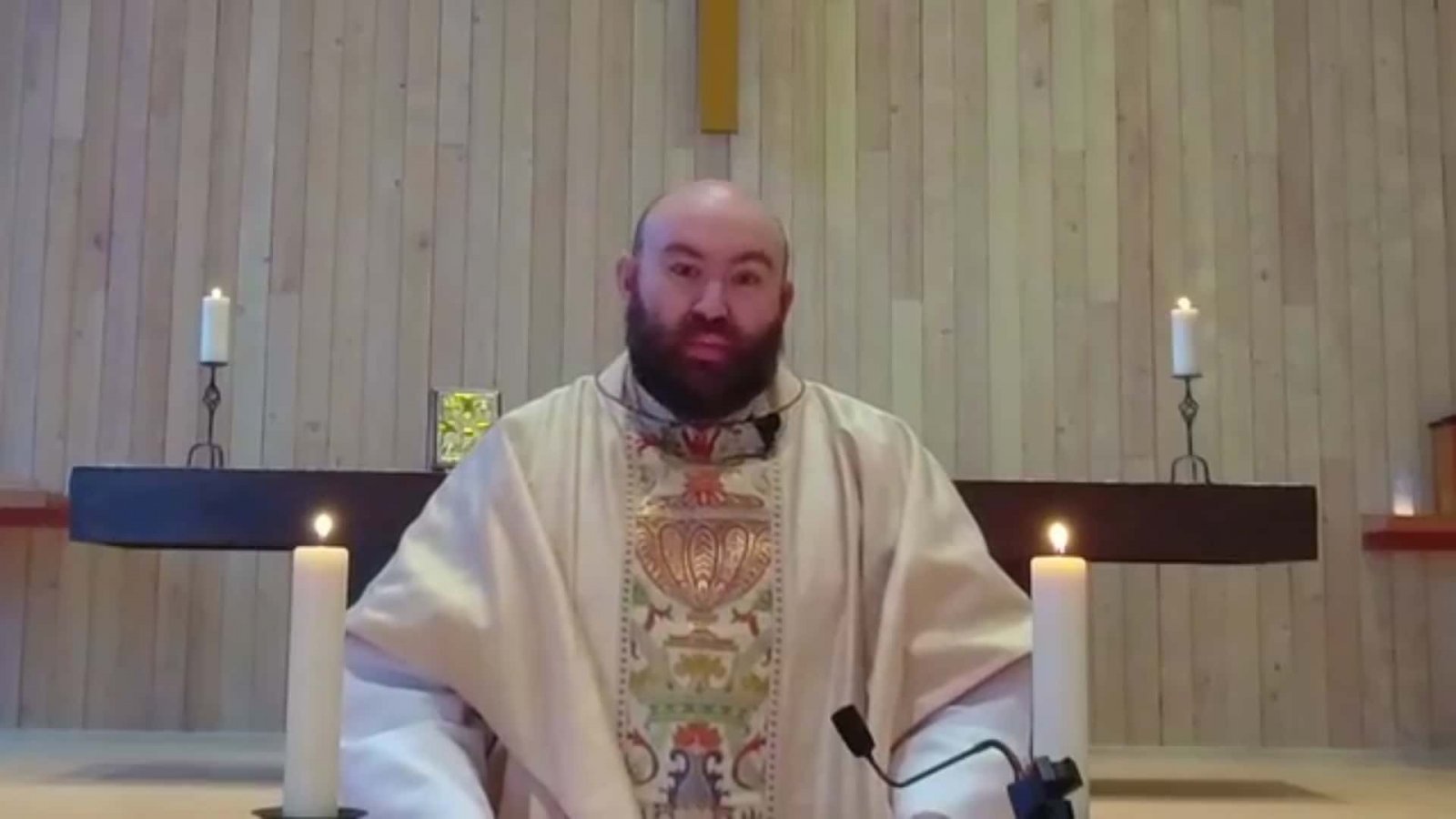
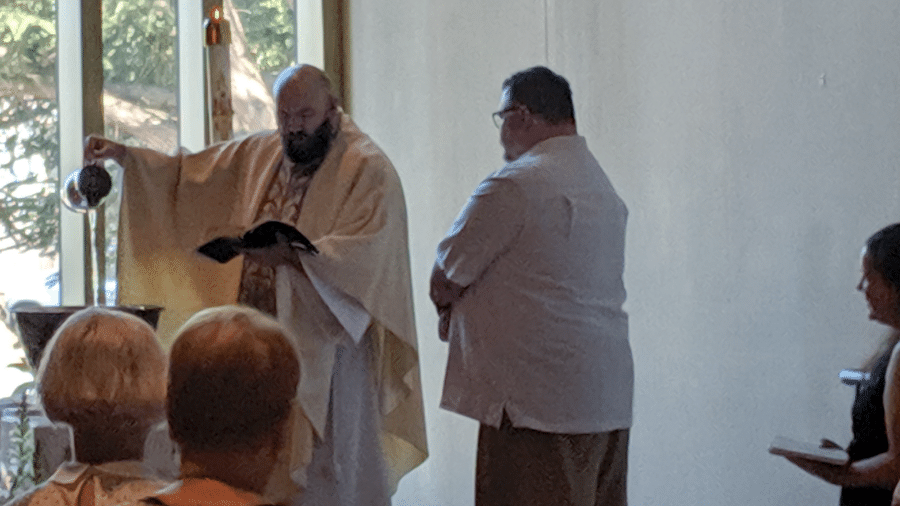
This is a transcription of the sermon on the First Sunday after the Epiphany: the Baptism of Jesus, January 10, 2021, at Church of the Redeemer in Kenmore, Washington by the Reverend Jed Fox.
The Rev. Jed Fox: In the name of the Father and the Son of the Holy Spirit. Amen.
Watching events unfold on Wednesday on Twitter–because I’m a millennial–as well as on the radio and other news sources, I was struck by the fact that it was, in fact, the Feast of the Epiphany on Wednesday: the proclamation to the world that Jesus is King and God and Sacrifice made by the Wise Ones who were directed to him by Herod. Because it didn’t seem like Epiphany. Seemed more like the subsequent events that happen in Matthew’s Gospel after the Epiphany, the events that we remember on the 28th of December, which we euphemistically call the “Feast of the Holy Innocents,” when a mad tyrant, desperate to keep his throne, puts to death an entire town’s worth of toddlers. For fear.
For many of us, it was the first time. The first time that we had ever experienced something like this. Now, I am of a generation that in my lifetime remembers the Oklahoma City bombing, 9/11, two subsequent wars, and now this. But this was different. This seemed different. And for many of us, it was seemed different because it was the first time.
There’s the first time that we felt like we should be scared of our fellow Americans. The first time that everything, even all those neoclassical, marble buildings over there and the other Washington, everything felt unstable, felt chaotic. It felt, in fact, like the description that the Book of Genesis starts with, the deep. It felt, feels like we have been dumped into the deep end of some dark murky water that we cannot surface from.
That’s what it felt like on Wednesday. And we’re desperately trying to cling on to anything that will let us come up to the surface and just breathe.
It’s not a surprise generally that Hebrew scripture would describe chaos with the metaphor of deep water. The people who comprised the writers of the Hebrew scripture, who we know as the people of Israel, were desperately afraid of the ocean. They were not boat people. They didn’t like the ocean. They preferred the hill country.
Now they’re mountain folk, hill folk, and to them, water was terrifying, but also transformational. Water changed things. You go to first century ruins in what is now considered the Holy land. You’ll see these big six foot deep stone pools. And you think, oh, that must’ve been, this must be a rich part of town. They had an in-ground pool.
No, they were called mikvahs and they were filled with water for the use of the community for the ritual purification, by dunking yourself in water. So in the morning, if you needed to ritually purify yourself, which most observant Jews usually did, you, you went and dunked yourself in the mikvah. There were stairs down. You dunked your whole body in. You came back out and you went on with your day ritually pure, although probably very cold. You were transformed from uncleanness to cleanness through water.
And Jesus at his baptism does something that is not terribly remarkable in going to John in the Jordan to be baptized. It is a more fundamental transformation, a more marked transformation than that what happens in a mikvah, but still within that realm of possibility. Still the same, still the acknowledgement that in this one, sacred act, this infinitesimal, sacred moment of time, all time has changed. All life is changed. All water has changed. Because that’s the thing. It is the holiness of that simple act that sanctifies everything.
The holiness of a little sanctifying the whole.
That’s especially true of water because water has been, yes, chaotic, yes, transformational, but always, always, always life giving. We cannot live without water. As became so famous a few years ago during the Dakota Access Pipeline protests, “Water is life.”
I remember being at a workshop several years ago when an indigenous person stood up and said, “You all need to remember. Holy water is an oxymoron. All water is holy. Water is life.”
And when we sanctified water, either in Jesus being baptized in the River Jordan and that cold wet kind-of murky river that now separates the kingdoms of Israel and Jordan, Jesus in that holy act sanctifies all water for all time, and all people for all time. You hear it in Paul saying, yes, John changed a little, but Jesus changes everything.
The holiness of a little sanctifies the whole.
It is tempting after the events of this week, after the events of Wednesday, to seek easy solutions, simple solutions to this one-time event. This has only happened one time. It was a one-time event. We’re right to be scared, but don’t worry. It was an isolated incident perpetrated by a few bad apples and et cetera, et cetera, et cetera.
We’ve heard that all before. Doubtless, we will hear it again. And it is no more true now than it was before or will be afterwards. We must resist that temptation to pass it off, to try to paper over what’s really going on. We must resist the urge to numb ourselves to the simple fact that most of us are lucky enough to say that this is the first time that we have ever experienced this.
It’s sure not true for most people.
This is not the first United States insurrection in the United States. There’ve been plenty of them. We just don’t pay attention to them. There are several insurrections in the South at the end of Reconstruction, where mobs of angry white people change the government at their whim. Often with less people than there were at the US Capitol on Wednesday.
The entire colonization of the, of what we know as, the United States is a slow motion insurrection by Western European people on land that was already lived on when we got here.
The lake that we are two blocks from [at Redeemer] had a name before Lake Washington. It was just in the language we didn’t care to learn.
This is it’s certainly not the first time that people have been afraid of their fellow citizens in this country. There are people, there are people in this country, many of them who have never felt safe with fellow citizens in this country with good reason.
And you see that most clearly illustrated in the events of Wednesday because, when a whole mob of white insurrectionists mobbed the US Capitol, there were five deaths, five terrible deaths.
In the protests this past summer, there were at least 10 times that many.
You know what the difference was? The color of the people’s skin, plain and simple. We cannot let allow ourselves to become numb to this reality.
You cannot allow ourselves to become numb to the fact that all of this is true for people all the time, that we are incredibly lucky to, to be experiencing this maybe for the first time, this level of fear, this level of uncertainty. There are brothers and sisters in faith, even in this moment, in this world, in places like Palestine who have no state to even rely on, much less one that is, that feels, unstable.
Imagine trying to grow up country-less, without the benefits that we enjoy of driver’s license and passports and centralized government.
We have brothers and sisters in Palestine who have none of those things. And we cannot simply try to slink back into numbness now that our eyes have been once again opened, because if we do, then we have forgotten our vows in baptism.
Because when we sanctify a little, when we make holy a little of a thing, we make holy all of it.
If we sanctify one person, we sanctify all of humanity. If one person is baptized, then all are worthy of it. And, if that is true, we have work to do to fulfill our baptismal covenant. And the very first thing we have to do, if we decide we are not going to go back into our numbness, slink back into our know-nothing muffled comfort, is to repent.
Will you persevere in resisting evil? And when you fall into sin, repent and return to the Lord? Because many of us have some repenting to do, not necessarily for personal actions, although there are some that certainly do, certainly need to repent for our personal actions, but all of us have some duty to do some work in repentance for the systemic white supremacy that we allow to exist and we allow ourselves to benefit from. It cannot continue, if we are to remain honest to our baptismal covenant.
And once we have done that, once we have repented and returned, begun to figure out how to do that work of dismantling systemic white supremacy, then we turn to seeking and serving all persons, in Christ, loving our neighbor as our self, seeking the least and the little. Those that this white supremacy system would rather see as not people, as less than, who have historically in our government been seen as property, been seen as roadblocks, been seen as inconveniences.
And when we have figured out how to do that, we can also seek and serve the lost. Not just those lost by society, but those lost in a sea of misinformation possessed in their hearts by hate. The way to seek and serve them to love them as our neighbor is to tell them the truth, to exorcise their hearts, to assist them in exorcising their own hearts, if we can.
Because we have been made holy in baptism, we can do no less than to remember that in our holiness all are made sacred. If we can be made sacred, then all are seen as sacred by God and must be treated so by us.
On the Feast of the Baptism of Our Lord, it is time to do the actual work that we will recommit ourselves to in a moment, the renewal of our vows in baptism.
Now, if you all were here, you’d all be getting wet. I want to make sure you felt, not only the joy of that baptism as you were sprinkled with holy water, but the responsibility of those vows that comes along with getting wet.
They have not come up with baptismo-vision. Or aspurge-a-vision.
And, so in the meantime, what you must do, please not go back to sleep, do not allow yourselves to slip into that sweet slumber of denial of numbness, pretending that everything is fine and that the problem is too big for you or me or us to do anything about.
We can no longer abrogate our Covenant of Baptism. Instead, we must fulfill it. So that we too may hear the words that Jesus hears as he comes up out of the water this morning, “You are my child, the beloved, with you I am well pleased.”
Amen.
For more information
For other commentary on January 6, 2021, the Epiphany, and the Baptism of Jesus, see the following:
Welcome to Church of the Redeemer: Worshiping God, living in community, and reaching out to the world. We are an Episcopal Church serving north King County and south Snohomish County, Washington. As you travel your road, go with friends walking the way of Jesus at Redeemer.
Church of the Redeemer is at 6220 Northeast 181st Street in Kenmore, Washington. The campus is a short distance north of Bothell Way, near the Burke-Gilman Trail. The entrance looks like a gravel driveway. The campus is larger on the inside than it is on the outside. And we managed to hide a large building on the side of a hill that is not easily seen from the street.