This bulletin insert was very lightly adapted from the entry from A Great Cloud of Witnessesfor the First Book of Common Prayer. This feast of the church can be observed on a weekday after Pentecost.
Title page of the first Book of Common Prayer in 1549.
The first Book of Common Prayer, the forerunner of those well-worn books in your pew rack, came into use on the Day of Pentecost, June 9, 1549, in the second year of the reign of King Edward VI. From it have descended all subsequent editions and revisions of the book in the churches of the Anglican Communion.
Though prepared by a commission of learned bishops and priests, the format, substance, and style of the Prayer Book were primarily the work of Thomas Cranmer, Archbishop of Canterbury, 1533–1556.
Sources for the first Book of Common Prayer
These were the principal sources employed in the compilation of the first Book of Common Prayer:
The medieval Latin service books of the Use of Sarum (Salisbury)
Enrichments from the Greek liturgies
Certain ancient Gallican rites
The vernacular German forms prepared by Luther
A revised Latin liturgy of the reforming Archbishop Hermann of Cologne
The Psalter and other biblical passages were drawn from the English “Great Bible” authorized by King Henry VIII in 1539. The Litany was taken from the English form issued as early as 1544.
The result of creating the Book of Common Prayer
The originality of the Book of Common Prayer, apart from the felicitous translations and paraphrases of the old Latin forms, lay in its simplification of the complicated liturgical usages of the medieval Church. This made it suitable for use by the laity as well as by the clergy. The book thus became both a manual of common worship for Anglicans and a primary resource for their personal spirituality.
A Collect to Mark the First Book of Common Prayer
Almighty and everliving God, whose servant Thomas Cranmer, with others, did restore the language of the people in the prayers of thy Church: Make us always thankful for this heritage; and help us so to pray in the Spirit and with the understanding, that we may worthily magnify thy holy Name; through Jesus Christ our Lord, who liveth and reigneth with thee and the Holy Spirit, one God, for ever and ever. Amen.
Weekly bulletin inserts
This weekly bulletin insert provides information about the history, music, liturgy, mission, and ministry of The Episcopal Church. For more information, please contact us at stw@episcopalchurch.org.
Sermons That Work
For more than 20 years, Sermons That Work, a ministry of The Episcopal Church’s Office of Communication, has provided free sermons, Bible studies, bulletin inserts, and other resources that speak to congregations across the Church. Our writers and readers come from numerous and varied backgrounds, and the resources we provide are used in small house churches, sprawling cathedrals, and everything between.
Church of the Redeemer
Church of the Redeemer: Worshiping God, living in community, and reaching out to the world around us. We are an Episcopal Church serving north King County and south Snohomish County, Washington. As you travel your road, go with friends walking the way of Jesus at Redeemer.
Church of the Redeemer is at 6220 Northeast 181st Street in Kenmore, Washington. The campus is a short distance north of Bothell Way, near the Burke-Gilman Trail. The entrance looks like a gravel driveway. The campus is larger on the inside than it is on the outside. And we managed to hide a large building on the side of a hill that is not easily seen from the street.
New, certified Spanish and French translations of the 1979 Book of Common Prayer are available online. Printed copies will be available January 20, 2022.
The translations were prepared under the supervision of the Task Force for Liturgical Translations, a subcommittee of the Standing Commission on Liturgy and Music. The new translations were called for by the 2018 General Convention through resolution A070 and included an opportunity for churchwide feedback last fall.
The Rev. Juan Oliver, who was the custodian of the prayer book when the new translations were being prepared, noted that the new translations were prepared by a team of professional translators with expertise in both literary translation as well as cultural sensitivity.
An additional translation into Haitian Creole is forthcoming.
“It has been clear for some years that new translations of the prayer book have been sorely needed,” said the Rt. Rev. J. Neil Alexander, who succeeded Oliver as prayer book custodian. “The current editions in Spanish and French were literal in their orientation, but effective liturgical texts require a level of fluidity, literary depth, and aural clarity. While no translation is ever perfect, these new texts provide a new level of richness to those in our church who pray common prayer in Spanish and French. I welcome their appearance and encourage their use as widely as possible.”
The translations were developed by professional literary translators and edited by teams of three editors, all native speakers. Team members were as follows:
French:
Florence LeSur, translator
Bishop Pierre Whalon, Helene Whalon, and the Rev. Luke DeVolder, editors
Spanish
Hugo Olaiz, translator
The Revs. Frederick Clarkson, Juan M.C. Oliver, and Susan Saucedo Sica, editors
Press release from the Office of Public Affairs of the Episcopal Church.
The Book of Common Prayer (BCP)
The Book of Common Prayer is the official book of worship of the Episcopal Church. The BCP provides liturgical forms, prayers, and instructions so that all members and orders of the Episcopal Church may appropriately share in common worship.
Anglican liturgical piety has been rooted in the Prayer Book tradition since the publication of the first English Prayer Book in 1549. The first American BCP was ratified by the first General Convention of the Episcopal Church in 1789. It was based on the Proposed Book of 1786, and the 1662 English Book of Common Prayer, as well as the Scottish eucharistic rite of 1764.
The BCP is ratified by General Convention, with alterations or additions requiring the approval of two successive General Conventions. The General Convention may also authorize services for trial use. The process of Prayer Book revision led to publication of editions of the BCP for the Episcopal Church in 1789, 1892, 1928, and 1979.
The BCP notes that “The Holy Eucharist, the principal act of Christian worship on the Lord’s Day and other major Feasts, and Daily Morning and Evening Prayer, as set forth in this Book, are the regular services appointed for public worship in this Church” (p. 13).
The BCP includes the calendar of the church year, and it provides
Forms for the Daily Office
The Great Litany
The Collects
Proper Liturgies for Special Days
Holy Baptism
The Holy Eucharist
Pastoral Offices
Episcopal Services [services lead by a bishop, including ordinations]
In addition to many forms for corporate worship, the BCP also provides forms for Daily Devotions for Individuals and Families (pp. 136-140).
The BCP includes both contemporary language (Rite 2) and traditional language (Rite 1) versions of the forms for Morning and Evening Prayer, the Collects, the Eucharist, and the Burial of the Dead.
The BCP also includes the following:
Psalter, or Psalms of David
Prayers and Thanksgivings
An Outline of the Faith, or Catechism
Historical Documents of the Church (including the Articles of Religion)
Tables for Finding the Date of Easter and other Holy Days
Lectionaries for the Holy Eucharist and the Daily Office
Church of the Redeemer
Church of the Redeemer: Worshiping God, living in community, and reaching out to the world around us. We are an Episcopal Church serving north King County and south Snohomish County, Washington. As you travel your road, go with friends walking the way of Jesus at Redeemer.
Church of the Redeemer is at 6220 Northeast 181st Street in Kenmore, Washington. The campus is a short distance north of Bothell Way, near the Burke-Gilman Trail. The entrance looks like a gravel driveway. The campus is larger on the inside than it is on the outside. And we managed to hide a large building on the side of a hill that is not easily seen from the street.
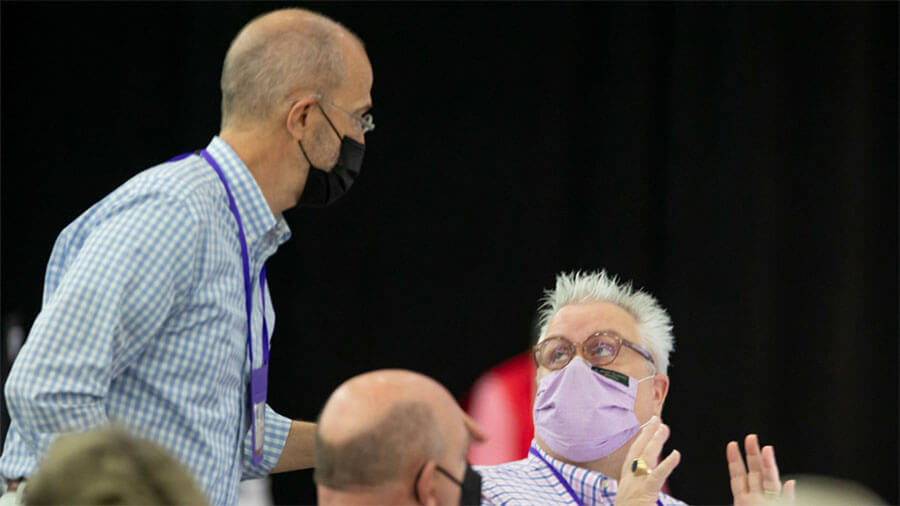
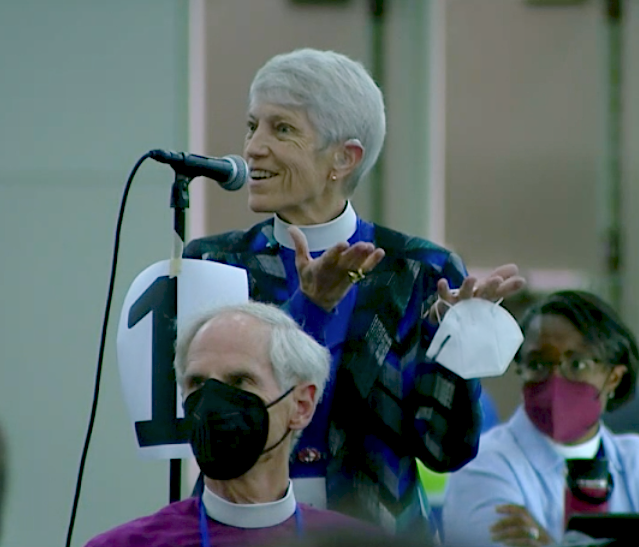
[Episcopal News Service – Baltimore, Maryland] The House of Bishops moved forward with a plan to expand and clarify what exactly the Book of Common Prayer is, ending hours of discussion with an unanimously adopted resolution on July 9. The House of Deputies concurred the following evening with a minor amendment, sending it back to the bishops for a final vote.
A larger issue that we’re trying to deal with … is we have all kinds of authorizations and all kinds of trial usages, and it’s kind of a mess.
Bishop Jeffrey Lee
The resolution – an amended version of A059, which had garnered increasing attention in the weeks leading up to General Convention – would amend Article X of the Constitution of The Episcopal Church, which lays out how the Book of Common Prayer can be revised but has never specifically provided for authorized liturgies that are not proposed revisions to the existing book.
Purpose of A059
A059, concurred on by the House of Deputies, for the first time, defines the Book of Common Prayer as “those liturgical forms and other texts authorized by the General Convention.” In other words, liturgies that are not in the current prayer book – such as same-sex marriage rites and gender-expansive liturgies – could be elevated to “prayer book status,” whether they are replacing parts of the prayer book or standing on their own.
“What A059 is about, really, is acknowledging that common prayer is evolving,” said the Rt. Rev. Jeffrey Lee, bishop provisional of Milwaukee, chair of the House of Bishops’ Committee on Prayer Book, Liturgy & Music and one of the architects of A059. “And it creates a framework for that evolution to happen, including the inclusion of a number of different rites in a curated collection.”
The discussions in the House of Bishops on July 8 and 9 – as well as in legislative committee meetings leading up to convention – mostly focused on parsing out the mechanics of what A059 would and would not do. In its current form, A059 would not change the status of the 1979 prayer book or of the various liturgies authorized by General Convention that are not in it. It would, however, set the canonical framework for future evaluation and reorganization of those liturgies.
The debate, though, went beyond that to touch on more philosophical questions like the meaning of the word “book” in the 21st century, and the concept of “common prayer” itself. Discussion on July 8 veered into the theological and political origins of the Book of Common Prayer, from Thomas Cranmer and Queen Elizabeth I through the formation of The Episcopal Church after the American Revolution.
“The cat is already out of the bag,” Lee said. “The idea of the prayer book [evolving from] a book bound and physically present in a pew to a curated collection of texts that lives online – that’s already the case, perhaps with different understandings of authorization. But we decided to do that when we first decided that you could cut and paste a PDF.”
Factors in the development of A059
Primary factors in the development of A059 included a desire for official liturgies with an expansive understanding of gender and sexuality, preparation for future prayer book revision and concern about the proliferation of other liturgies in various states of authorization. Over a dozen liturgical texts have been “authorized” – for trial use, experimental use, or simply “made available” – by General Convention over the years. However, Article X currently only addresses convention’s ability to revise all or some of the existing Book of Common Prayer. It says nothing about authorization of other liturgies not directly related to the existing prayer book, a category that encompasses many of these other texts, like “Enriching Our Worship.”
“A larger issue that we’re trying to deal with … is we have all kinds of authorizations and all kinds of trial usages, and it’s kind of a mess,” Lee said.
All authorized Episcopal liturgies have been compiled together at episcopalcommonprayer.org, which was created by the Task Force on Liturgical and Prayer Book Revision. Resolution A058, which was passed by both houses, designates the site as “the official liturgical website of The Episcopal Church.”
The original version of A059, Lee said, was “an attempt to clarify what authorization has the weight of the Book of Common Prayer and what other rites might not have that. … What’s being proposed in A059 is not the creation of a wiki-prayer book.”
The effort originated at the 2018 General Convention, where A068 created the liturgical revision task force, with the intention that it would not necessarily lead to an entirely new edition of the prayer book but propose revised liturgies with inclusive and expansive language. Existing liturgies, some deputies and bishops had argued, use gendered language that is exclusive and unnecessary.
At this convention, A059 – which was proposed by the Task Force on Liturgical & Prayer Book Revision – was introduced by Lee’s prayer book committee in a version that proposed a process by which new liturgies could achieve prayer book status. That version was ultimately replaced with a substitute developed by a group of bishops including Lee, Texas Bishop Andrew Doyle and Ohio Bishop Mark Hollingsworth.
The substitute left the specific process of authorizing new texts open to future canonical definition, focusing just on the constitutional change that would enable such work. It leaves in place the requirement that any prayer book changes must be approved by two successive General Conventions, and specifies that any changes must be authorized for trial use first.
In response to concerns that the resolution might be interpreted as demoting or restricting the 1979 prayer book, the substitute includes additional clarifying language.
“The Book of Common Prayer in this Church is intended to be communal and devotional prayer enriched by our church’s cultural, geographical, and linguistic contexts. The Book of Common Prayer shall contain both public worship and private devotion,” it reads.
“The Book of Common Prayer, as now established or hereafter amended by the General Convention, shall be in use in all the Dioceses of this Church.”
Constitutional change, not canonical
Since A059 is a constitutional and not a canonical change, it would not alter the status of any existing authorized liturgies. The amended version passed by the house would create a working group to propose canonical changes that would clarify or alter the status of the rites that have been authorized for trial or experimental use over the last few decades. That working group would present those recommendations to the 81st General Convention. Resolution A059, if it passes the House of Deputies, would not take effect until then because it needs two successive readings.
Lee, Doyle and Hollingsworth had encouraged the house not to delay acting on A059 or referring it back to another body because of the timing requirements for constitutional and canonical requirements, which Bishop Sean Rowe, the House of Bishops’ parliamentarian, explained.
“Let’s say we do pass it in 2022 and in 2024, [new] canons are ready to go,” he said, describing the ideal scenario. “If we [don’t pass] it here, we can’t do anything with it until 2027. So, it’s the difference between doing something in two years or waiting six years.”
Consensus and approval
As discussion moved into the evening on July 9, consensus around the amended resolution emerged and bishops rose to thank the team of 12 bishops who crafted it.
“I think this resolution is brilliant,” said New York Assistant Bishop Mary Glasspool. “I’m amazed – we’re in this four-day General Convention and somehow squeezing into that intensity has driven us deep. This is the best conversation that I’ve been a part of in the 11 years that I’ve been bishop and coming to these meetings.”
The resolution passed on a voice vote that was unanimous, Presiding Bishop Michael Curry confirmed for the record.
On the evening of July 10, the House of Deputies considered a lightly amended version of A059, which specified that the working group would have nine members and a budget of $30,000, in addition to making a procedural wording fix. After 20 minutes of discussion — with testimony split between supporting and opposing — the amended A059 was concurred, sending it back to the House of Bishops, which passed the final version on July 11.
—Egan Millard is an assistant editor and reporter for Episcopal News Service. He can be reached at emillard@episcopalchurch.org.
What happens at General Convention?
The legislative process of General Convention is an expression of The Episcopal Church’s belief that, under God, the Church is ordered and governed by its people: laity, deacons, priests, and bishops.
The General Convention is the Church’s highest temporal authority. As such, it has the following power:
Amend the Constitution and Canons of the Episcopal Church
Amend the Book of Common Prayer and to authorize other liturgical texts
Adopt the budget for the Church
Create covenants and official relationships with other branches of the Church
Determine requirements for its clergy and other leaders
Elect its officers, members of the Executive Council, and certain other groups
Delegate responsibilities to the Interim Bodies of The Episcopal Church
Carry out various other responsibilities and authority
Church of the Redeemer
Church of the Redeemer: Worshiping God, living in community, and reaching out to the world around us. We are an Episcopal Church serving north King County and south Snohomish County. We welcome you be with us as we walk the way of Jesus.
Church of the Redeemer is at 6220 Northeast 181st Street in Kenmore, Washington. We are a short distance north of Bothell Way, near the Burke-Gilman Trail. The entrance looks like a gravel driveway. The campus is larger on the inside than it is on the outside. And we managed to hide a large building on the side of a hill that is not easily seen from the street.
If the response to sexual misconduct at the 79th General Convention made me the most hopeful, then the issue of liturgy, particularly the revision of the Book of Common Prayer…well it showed me how far we still have to go in many ways as a church.
First a preface: I am a child of the 1979 Prayer Book. I cut my teeth on it and I am very grateful for the panoply of innovations that it contained, not the least of which was the reorientation of worship toward the Eucharist. I am even grateful for Eucharistic Prayer C. However, I was unhappy with the outcome our deliberations, which is not Prayer Book revision. In this I know I am in disagreement with the bishop, which one should always do publicly with a great deal of trepidation. Nevertheless, the resolution that passed out of General Convention was deeply flawed, I believe, in two very important ways.
First, Resolution A068 said it “memorializes” the BCP 1979. What does that mean? Whatever someone wants it to mean, I suppose. There is no hard and fast definition. To me it certainly holds “Old ‘79” up as something worthy, and that’s the problem. What is between the red covers does not reflect the church. It never has. It was written predominately by white men, for white men, and carries in it’s DNA white-cis-hetero-male supremacy. No matter if we create liturgies that sing the God’s praise from a thousand different perspectives, those liturgies will not be between the red covers and they will not be quite as worthy, and, I fear, the Episcopal branch of the Jesus movement will continue in perception and, in reality, in many ways, as a church of white supremacy, by white supremacy, for white supremacy. Revising what’s between the red covers might not change that. Who knows whether we would have ended up with a book at all. After all we still call pre-convention materials “The Blue Book,” even though at this Convention it was a PDF file unless you bought it from Amazon. But memorializing the Prayer Book 1979, I believe, means that when too many people look between the red covers that will undoubtedly remain in the pews because we’ve always done that way in many places. They will not see themselves reflected in the pages and will wonder if our worship, which our statement of theology, has no place for them, does this church have a place for them?
This last point ties then directly with my second issue with where convention ended up with regards to Prayer Book revision. One of the arguments that was stated often against revision was the cost: $1.9 million over three years. That’s a lot of money to be sure, but some perspective is in order. The triennial budget is $134 million. Revising the seminal theological document of our church, the repository of our statement of belief, would be between one and two percent of the triennial budget. By comparison, the National Church will spend almost three percent of the triennial budget on legal fees. I make this comparison not to denigrate the cost of legal fees, but to point out that we should value our common liturgy, our common theology, more highly than legal fees. This is not simply inside baseball either, as should be plain from my earlier comments, I believe that the Prayer Book (or prayer PDF or three ring binder or neural feed or whatever it will be in 20 years) is a missional document. It tells us who we are so that we can tell others who we are. It creates in us the habits of heart and mind and hand deep in our bones so that we can carry that story, the reality that our liturgy creates, out into the world in the name of the risen Christ. And that, after all, is what we are supposed to be doing.
Resolution A068, as re-written by a white-cis-hetero-male bishop, and passed by both houses of the 79th General Convention, is a less-than-half measure. Essentially it says, if your bishop is willing, let a thousand flowers bloom. If the bishop is not, then too bad. It is a missed opportunity for the church to collectively begin to think beyond what we have been and thought and done before, and find where God is drawing us forward.
Welcome to Church of the Redeemer: Worshiping God, living in community, and reaching out to the world. We are an Episcopal Church serving north King County and south Snohomish County, Washington. As you travel your road, go with friends walking the way of Jesus at Redeemer.
Church of the Redeemer is at 6220 Northeast 181st Street in Kenmore, Washington. The campus is a short distance north of Bothell Way, near the Burke-Gilman Trail. The entrance looks like a gravel driveway. The campus is larger on the inside than it is on the outside. And we managed to hide a large building on the side of a hill that is not easily seen from the street.