Tag: Civil Rights

  • The bulletin insert for August 13, 2023

    The bulletin insert for August 13, 2023

    This is the weekly bulletin insert from Sermons That Work.

    Jonathan Daniels

    Jonathan Daniels’ name resonates as one of the civil rights heroes and martyrs of our time. Giving his life at the early age of 26, Jonathan Daniels dedicated himself completely to his work, both inside and outside of The Episcopal Church.

    Born March 20, 1939, in Keene, New Hampshire, Daniels grew up devoutly religious. Drawn to the rich system of traditions and rituals, Daniels became a practicing Episcopalian early in his life. This same desire for tradition, order, and organization led him to attend the Virginia Military Institute where he eventually graduated as valedictorian of the class of 1961. A fellowship that would finance his graduate studies then led him to Harvard University’s English literature department. Not long after entering Harvard, Daniels discovered that his true calling was for ministry, so he left to pursue the priesthood.
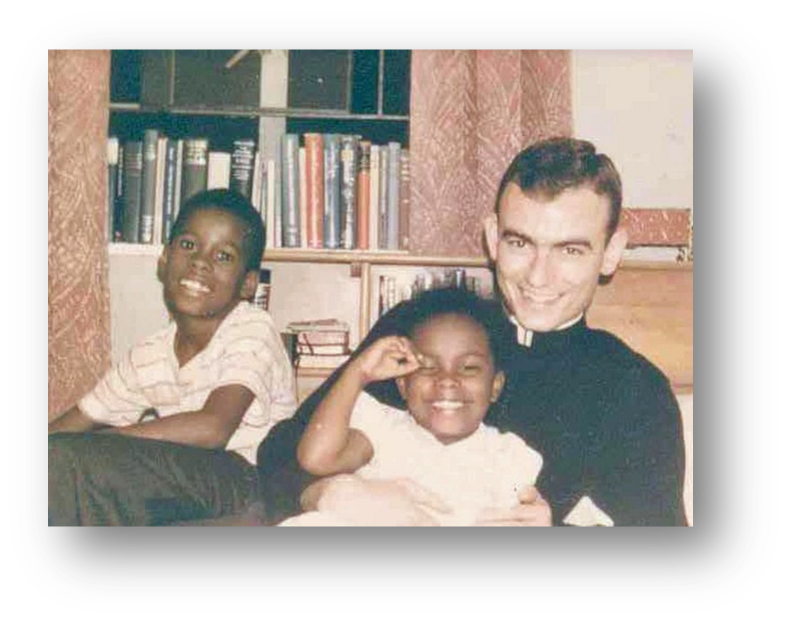
    Jonathan Daniels with two other people.

    Less than a year later, Daniels began his studies at the Episcopal Theological School in Cambridge, Massachusetts, the epicenter of a world of social activism. Meanwhile, the southern portion of the United States found itself in the midst of chaos with protests, killings, and racism running rampant. Minister and activist Martin Luther King, Jr. called upon northern clergy to go to Selma, Alabama, one location experiencing some of the worst of these atrocities.

    Jonathan Daniels decided to answer this call and moved to Selma, Alabama in the early 1960s. His time there changed his life forever. He became passionate about civil rights work and was involved in as many ways as he could.

    In August of 1965, he participated in a voters’ rights demonstration in Fort Deposit, Alabama, where authorities arrested him. On Friday, August 20, 1965, he was released from the county jail without warning and without bail. Daniels and other released activists walked across the street to buy soda at the corner store. Thomas Coleman, local and volunteer deputy sheriff, blocked their way and ordered them off the property while wielding a shotgun. He aimed his gun at 17-year-old Ruby Sales, an African-American activist. Daniels instinctively pulled her back and stepped into the line of fire, dying instantly but saving Ruby’s life. Coleman stood before an all-white jury facing charges of manslaughter, not murder, and was acquitted of all charges.

    While Jonathan Daniels’ life was cut dramatically short by an act of violence, his heroic legacy of selflessness and compassion lives on in schools, history, and the Church, even today. The Episcopal Church made Jonathan Daniels an official martyr of the church and added him to the Lesser Feasts and Fasts calendar of commemorations in 1994, designating August 14, the day of his arrest, for his feast.

    Weekly bulletin inserts

    This weekly bulletin insert provides information about the history, music, liturgy, mission, and ministry of The Episcopal Church. For more information, please contact us at stw@episcopalchurch.org.
    Sermons That Work from the Episcopal Church

    Sermons That Work

    For more than 20 years, Sermons That Work, a ministry of The Episcopal Church’s Office of Communication, has provided free sermons, Bible studies, bulletin inserts, and other resources that speak to congregations across the Church. Our writers and readers come from numerous and varied backgrounds, and the resources we provide are used in small house churches, sprawling cathedrals, and everything between.
    The Episcopal Church of the Redeemer: Worshiping God, living in community, reaching out to the world.

    Church of the Redeemer

    Church of the Redeemer: Worshiping God, living in community, and reaching out to the world around us. We are an Episcopal Church serving north King County and south Snohomish County, Washington. As you travel your road, go with friends walking the way of Jesus at Redeemer.

    Church of the Redeemer is at 6220 Northeast 181st Street in Kenmore, Washington. The campus is a short distance north of Bothell Way, near the Burke-Gilman Trail. The entrance looks like a gravel driveway. The campus is larger on the inside than it is on the outside. And we managed to hide a large building on the side of a hill that is not easily seen from the street.

    The Episcopal Church welcomes you.

  • ‘My Name Is Pauli Murray’ brings trailblazing Episcopal saint’s story to a wider audience

    ‘My Name Is Pauli Murray’ brings trailblazing Episcopal saint’s story to a wider audience

    [Episcopal News Service] In the new documentary “My Name Is Pauli Murray,” filmmakers Betsy West and Julie Cohen paint a picture of an unsung trailblazer who remains relatively unknown despite her lasting influence on American society. Episcopalians know her as the first African American woman to be ordained a priest and as a pioneer in the struggles for racial and gender equality. But many may not know about other important aspects of her life, such as her struggle to come to terms with her gender identity in an era long before transgender people were accepted in mainstream society.

    When West and Cohen came across Murray’s story while working on their previous film (“RBG,” the Ruth Bader Ginsburg biopic), they wondered why such a pivotal figure wasn’t a household name.

    “‘Why didn’t we know this person?’ was the first question everybody asked,” West told Episcopal News Service, “and could we do something about it?”

    Murray is celebrated on July 1 in The Episcopal Church’s “Holy Women, Holy Men” calendar of saints, and an increasing number Episcopal leaders – especially Black and LGBTQ+ people – cite her as an influence. Trinity Church Wall Street and the Diocese of North Carolina are supporting partners of the Pauli Murray Center for History and Social Justice at Murray’s childhood home in Durham, North Carolina.

    The result, “My Name Is Pauli Murray,” premiered online in January 2021 at the Sundance Film Festival and is now playing in select theaters. Washington National Cathedral will screen the documentary for an in-person audience on September 30. It will stream on Amazon Prime beginning October 1. It will also be shown online the same day through the Church of the Heavenly Rest in New York, followed by a discussion with West and Presiding Bishop Michael Curry. The film, which incorporates excerpts from Murray’s diaries and memoirs, shows how she laid the groundwork for future achievements for racial and gender equality.

    Murray was undaunted by the fact that she was often the first and/or only Black woman in the positions she held. Fifteen years before Rosa Parks was arrested for refusing to move out of a whites-only section on a bus, Murray and a friend did the same in Virginia, though their case did not gain momentum the way Parks’ did. In her legal career, she was among the first to argue the unconstitutionality of “separate but equal” laws, an argument cited 10 years later in Brown v. Board of Education by Supreme Court Justice Thurgood Marshall, who called her book on segregation laws “the bible of the civil rights movement.” Ginsburg used Murray’s arguments in a brief she wrote – listing her as a co-author – while arguing Reed v. Reed, the 1971 Supreme Court case that banned gender discrimination based on the 14th Amendment’s equal protection clause.

    Part of what makes Murray significant today was her commitment to intersectionality: the idea that social justice movements for different groups should support each other rather than work alone. As a Black woman experiencing discrimination based on both her race and her gender – a situation she described as “Jane Crow” – Murray supported the civil rights and feminist movements. But intersectionality was not as common then as it is today, and Murray’s penchant for crossing boundaries is one reason she didn’t achieve wider renown, West said.

    “The civil rights movement was not as open to acknowledging the contributions of women as it should have been, and the women’s movement was pretty dense at times about recognizing the needs and the contributions of African American women,” West told ENS. “The concept of Jane Crow really is intersectionalism. It’s a brilliant way to express the double bind that African American women find themselves in, and it was certainly true for Pauli.”

    Another factor was Murray’s sexuality and gender identity. In her diaries, Murray described having relationships with women but feeling that she was not a lesbian but a man living in a female body. This experience would today be classified as gender dysphoria and might have led Murray to live as a transgender man or a nonbinary person, the film suggests. The film also considers what pronouns should be used to describe Murray, who used she/her pronouns to describe herself, though some today speculate that Murray would have preferred they/them or he/him. In any case, Murray did not have those options in the mid-20th century.

    “The difficulty of living a somewhat secret life – the problem of feeling so strongly of having a male identity in what everybody says is a female body and not being able to express that – plus having what would be considered lesbian relationships at a time when that was not accepted as well – may have caused Pauli to be a little bit less up front in taking leadership roles,” West speculates. “It didn’t stop Pauli, certainly, from speaking out, having contact with lots of very powerful, important people, but Pauli didn’t stick around to take the credit for a lot of the ideas.”

    The Episcopal Church is one place, West said, where Murray received due recognition.

    “A lot of people say, ‘Why didn’t I know about Pauli Murray?’ There are a lot of Episcopalians who know about Pauli Murray,” West told ENS. “The church has been one place that has lifted up Pauli’s name.”

    —Egan Millard is an assistant editor and reporter for Episcopal News Service.
    He can be reached at emillard@episcopalchurch.org.

    Source of this article.

    The poster for “My Name Is Pauli Murray.”

    Church of the Redeemer

    Welcome to Church of the Redeemer: Worshiping God, living in community, and reaching out to the world. We are an Episcopal Church serving north King County and south Snohomish County, Washington. As you travel your road, go with friends walking the way of Jesus at Redeemer.

    Church of the Redeemer is at 6220 Northeast 181st Street in Kenmore, Washington. We are a short distance north of Bothell Way, near the Burke-Gilman Trail. The entrance looks like a gravel driveway. The campus is larger on the inside than it is on the outside. And we managed to hide a large building on the side of a hill that is not easily seen from the street.

    The Episcopal Church welcomes you.


Maundy Thursday, April 2, 2026. Services at 12:00 noon and 7:00 pm. Gethsemane Watch Vigil from about 8:30 pm to 9:30 pm.

Good Friday, April 3, 2026: Services at 12:00 noon and 7:00 pm.

Holy Saturday worship at 9:30 am.

The Great Vigil of Easter, Saturday, April 4, 2025. Service at 8:00 pm. This is the night....

The 4th Sunday of Easter (Year A), April 26, 2026. Services at 8:00 am (no music) and 10:30 (music). Education classes for adults (9:15 am) and children (9:30 am).

Episcopal Church of the Redeemer
Privacy Overview

Cookie information is stored in your browser and performs functions such as recognizing you when you return to our website and helping our team to understand which pages of the website are visited. We aren't using cookies to determine your web browsing habits, but others can.