Tag: Hurricane Ian

  • Episcopalians donate, volunteer, travel to support communities hit hard by hurricanes

    Episcopalians donate, volunteer, travel to support communities hit hard by hurricanes

    [Episcopal News Service] Dioceses and congregations across The Episcopal Church have been active in recent weeks raising money to support those impacted by hurricanes in Florida and the Caribbean. Two congregations in the Diocese of Michigan have gone the extra mile – and then some.

    From Michigan with love

    The Rev. Tom Ferguson, a curate at St. Stephen’s Episcopal Church in the Detroit suburb of Wyandotte, has a condominium in Fort Myers, Florida, and was planning a trip there to repair damage from Hurricane Ian, which made landfall near Fort Myers on September 28, 2022. Before leaving home, Ferguson reached out to St. Hilary’s Episcopal Church in Fort Myers to see what supplies the congregation might need to support communities there devastated by the storm.

    Leaders at St. Hilary’s responded by sending Ferguson a list, including baby supplies, canned goods, paper products, batteries, tarps, socks and underwear, hygiene products and first-aid kids. St. Stephen’s and the nearby congregation of St. Michael’s and All Angels Episcopal Church in Lincoln Park, Michigan, shared the list with their parishioners, and the overwhelming response was enough to fill the back of Ferguson’s Ford Explorer with needed items, including a generator and over $300 in cash donations.

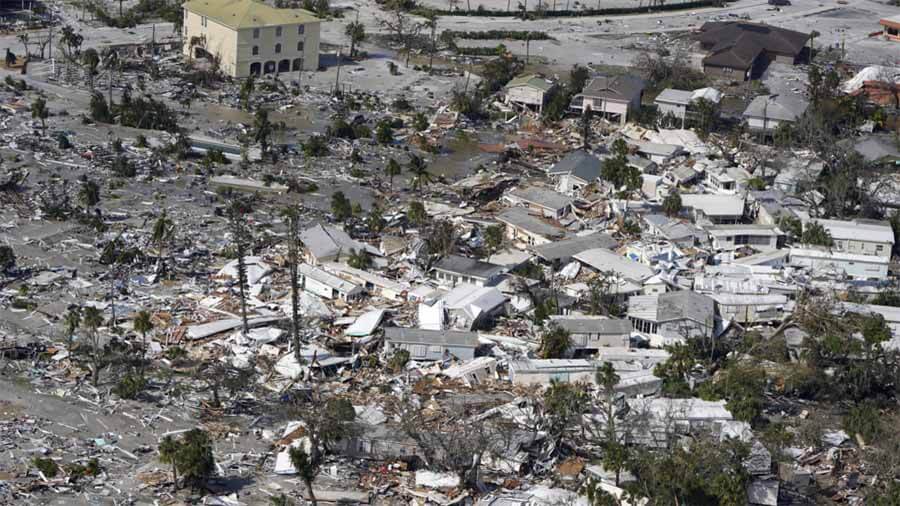
    Ferguson and his daughter left Michigan on October 9 and drove to Fort Myers, arriving on October 11, and delivered the donations to St. Hilary’s. Many of the homes in the church’s Fort Myers neighborhood were flooded by Ian and will require extensive repairs, and damaged household items and debris remained on roadsides waiting to be hauled away.

    https://www.facebook.com/EpiscopalMichigan/posts/5587121198042787

    “Who knows when the debris will be removed,” Ferguson said in an online diocesan article. “There are mountains of debris lining each side of the streets. The homes will require significant repair and will take a very long time.”

    St. Hilary’s continues to work with the local Heights Community Center to receive food, water and other supplies and money and get them to people in need.

    https://www.facebook.com/DioceseofSWFL/posts/10160205739089640

    It’s just one many examples of Episcopalians stepping up, particularly by giving generously to relief funds, in response to the destruction caused last month by hurricanes Fiona and Ian.

    Relief around the Carribean

    Since Fiona made landfall in Puerto Rico on September 18, Episcopalians there have brought relief and assistance to neighbors in need through church-affiliated programs. The diocese set up support centers in Mayagüez, Ponce, Trujillo Alto, and Maricao where church volunteers distributed food and water.

    Episcopal Relief & Development also has supported efforts in Puerto Rico, as well as in Episcopal and Anglican dioceses in Cuba, the Dominican Republic, the U.S. Virgin Islands, the Bahamas, and Turks and Caicos.

    Episcopalians churchwide are encouraged to give to Episcopal Relief & Development’s Hurricane Relief Fund, which also will assist communities in the Diocese of Southwest Florida that were hit hard by Hurricane Ian. At least 119 people died in the storm, with property damage estimated at over $50 billion dollars.

    The Episcopal diocese reported damage to 24 out of 79 churches from Hurricane Ian, and it has established its own hurricane relief fund.

    Hurricane Relief in Southwest Florida

    One of the Southwest Florida churches that is rebuilding after sustaining damaged from Ian is Trinity-by-the-Cove Episcopal Church. At the same time, the congregation is awarding $75,000 in grants on behalf of the diocese to support the work of 13 partner charities serving hurricane victims, according to the diocese.

    Another congregation, All Souls Episcopal Church in Fort Myers, offered space in its parking lot for World Central Kitchen to serve up to 1,000 hot meals a day to residents in need.

    https://www.facebook.com/DioceseofSWFL/posts/10160195031789640

    Relief from dioceses in other parts of the United States

    Episcopal dioceses outside the path of the hurricanes also are rallying members to give money to relief efforts. West Texas David Reed issued a call to his diocese on October 8 to contribute, and he asked, “that the victims of these two storms be remembered in your church’s prayers.”

    The Diocese of the Central Gulf Coast, no stranger to tropical storms in southern Alabama and the Florida Panhandle, also has asked Episcopalians to give to Episcopal Relief & Development after Fiona and Ian. Other dioceses have made similar appeals, from the Diocese of Texas to the Diocese of New Hampshire.

    And in the Jacksonville-based Diocese of Florida, an October 11 email message called on Episcopalians to support “our brothers and sisters in Puerto Rico and Southwest Florida” with donations to the dioceses or to Episcopal Relief & Development.

    “We thank you for your support and welcome your prayers as we work to help both dioceses and their communities recover,” the Florida diocese’s message said.

    —David Paulsen is an editor and reporter for Episcopal News Service. He can be reached at dpaulsen@episcopalchurch.org.
    Help communities impacted by Hurricane Ian

    Episcopal Relief & Development

    For over 80 years, Episcopal Relief & Development has been working together with supporters and partners for lasting change around the world. Each year the organization facilitates healthier, more fulfilling lives for more than 3 million people struggling with hunger, poverty, disaster and disease. Inspired by Jesus’ words in Matthew 25, Episcopal Relief & Development leverages the expertise and resources of Anglican and other partners to deliver measurable and sustainable change in three signature program areas: Women, Children and Climate.
    The Episcopal Church of the Redeemer: Worshiping God, living in community, reaching out to the world.

    Church of the Redeemer

    Church of the Redeemer: Worshiping God, living in community, and reaching out to the world around us. We are an Episcopal Church serving north King County and south Snohomish County, Washington. As you travel your road, go with friends walking the way of Jesus at Redeemer.

    Church of the Redeemer is at 6220 Northeast 181st Street in Kenmore, Washington. The campus is a short distance north of Bothell Way, near the Burke-Gilman Trail. The entrance looks like a gravel driveway. The campus is larger on the inside than it is on the outside. And we managed to hide a large building on the side of a hill that is not easily seen from the street.

    The Episcopal Church welcomes you.
  • Episcopalians assess devastation as storm moves on to South Carolina

    Episcopalians assess devastation as storm moves on to South Carolina

    [Episcopal News Service] While Episcopalians in South Carolina prepared for the arrival of Hurricane Ian, the Diocese of Southwest Florida was still reeling from the storm’s impact, with the full extent of destruction still unknown. Some parishes haven’t been able to get to their buildings yet, and some are still trying to make sure their parishioners are safe. 

    Diocese of Southwest Florida

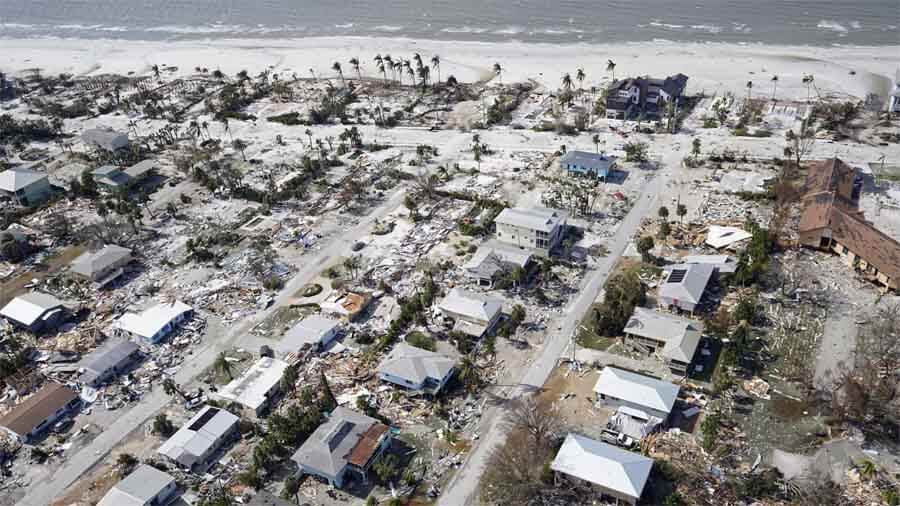
    Although Ian impacted a wide swath of Florida, extreme damage was heavily concentrated in the Fort Myers-Cape Coral area. Ian came ashore there on the afternoon of September 28, 2022, as a Category 4 hurricane with winds of about 150 mph and a storm surge that left parts of the area under several feet of water. On September 30, state officials said they had identified about three dozen storm-related deaths. 

    Select this to donate to hurricane recovery in the Diocese of Southwest Florida.

     “At this point, communication remains difficult with those in the hardest hit areas,” Bishop Coadjutor Douglas Scharf told Episcopal News Service. Scharf, who was consecrated on September 24, said the diocesan office was still without power and internet, but diocesan leaders had been able to reach most clergy and parish leaders in the affected areas.

     “Several of our churches have sustained significant damage, but we have not yet been able to gain access to those churches in the hardest hit areas. We have received messages of support and encouragement from across the church, which we deeply appreciate.”

    Sanibel Island

    One of the hardest-hit spots was Sanibel Island, which “got hit with biblical storm surge,” Gov. Ron DeSantis said. Ian washed away part of the causeway linking Sanibel Island to the mainland, rendering it inaccessible by road. Residents who did not evacuate are being rescued by helicopter, including some parishioners of St. Michael and All Angels Episcopal Church.

    The Rev. Bill Van Oss, rector, and his wife, Parish Communications Director Sue Van Oss, evacuated to a condo in Fort Myers. Sue Van Oss told ENS she has been trying to keep track of who has been rescued and who is still on the island. She said she was told there were two deaths on the island, but didn’t know the victims’ identities.

    “They’re headed over there with Chinook [helicopters] that can load 20 people. And as soon as they find people, they wade through about waist-deep water. It is absolute destruction there. There were homes on fire from the gas. They went through hell, but – praise God – they’re getting them off as much as they can.”

    The Van Osses picked up two parishioners who were airlifted to a field east of Fort Myers on the evening of Sept. 29, she said, and two more parishioners got off the next helicopter and were met by family.

    “They literally went through hell. They’re shell-shocked. Some of them don’t even know where they’re going. They got a text through to us, saying, ‘We’re alive, we’re on a helicopter, we don’t even know where we’re landing.’”

    But some parishioners were still waiting to be rescued on Sept. 30 – including some in their 90s, she said.

    “We got one text at 5 this morning from four parishioners that are in a home together, that said they’re okay,” she said, but the helicopter rescues are going slowly because there aren’t many dry spots where they can land.

    Another couple in their 90s managed to get one text message through to Van Oss, who contacted the sheriff’s department with their address, but she hasn’t heard from them since.

    Van Oss said that unlike many buildings on the island, the church itself seems relatively intact.

    “The church is standing – we got an aerial picture. There’s water all around it and it looks like some of the roof of the thrift shop came off. But the parish office is brand new. It was just completed last year, so that was hurricane-proof. Hopefully. We don’t know.”

    Fort Myers Beach

    In Fort Myers Beach, another Episcopal parish had even less information about the fate of their church. Aerial photos show a scene of total devastation in the barrier island town.

    “Fort Myers Beach and Sanibel Island look like they will need to be 80% rebuilt,” one Florida emergency management official estimated

    With little cell service and roads impassable, there was no way of knowing what state St. Raphael’s Episcopal Church was in, said the Rev. Jean Hite, rector, who had evacuated south to Naples. But more importantly, she said, the parishioners are safe, including some she had been trying to reach the day before.

    “The ones that we were really concerned about, we’ve located them. We don’t have direct contact with them, but indirectly, we know that our parishioners are OK,” Hite told ENS.

    In Fort Myers, Epiphany Episcopal Church was seriously damaged. Photos shared by the Rev. Edward Gibbons, rector, showed ceiling tiles and insulation strewn about parish offices, blown-out windows in Sunday school rooms, a large tree uprooted in the parking lot and a bell lying on the ground, cracked.

    https://www.facebook.com/EpiphanyCapeCoral/posts/213208054383228

    “This is a difficult time but we will get through this together one day at a time,” Gibbons wrote.

    Diocesan operations

     With the area facing a long road to recovery, the diocesan convention scheduled for October 14-15 in Punta Gorda has been canceled and will be rescheduled later.

     “The last 36 hours have been harrowing for many of us in the Diocese of Southwest Florida,” Diocesan Bishop Dabney Smith wrote in an email on September 29. “Many of our churches and huge numbers of our parishioners are now faced with the daunting task of recovering from the effects of Hurricane Ian. Such recovery efforts will take much time and energy.”

     “This is a time when we are called to be the Body of Christ and to care deeply for one another,” Scharf said. “As the Apostle Paul reminds us, ‘If one member suffers, all suffer together; if one member rejoices, all rejoice together.’”

    Diocese of South Carolina

    Meanwhile, as Ian tracked north, in the Diocese of South Carolina, St. Stephen’s Episcopal Church postponed a bicentennial celebration that had been scheduled for September 30 because of the approaching storm. “The safety of our guests and vendors is our priority,” the church said. “We pray for the communities already impacted by Hurricane Ian. 

    Diocese of Cuba

    Before hitting Florida and South Carolina, Hurricane Ian knocked out power across Cuba when it made landfall there on September 27. Efforts to restore electricity hadn’t progressed far beyond the capital Havana by September 29, according to Reuters.

    “The Episcopal Church in Cuba has mobilized its local disaster committees who are assessing the damage, and potential responses, in their communities,” Kellie McDaniel, program officer for Episcopal Relief & Development said in a news release. “We pray for the people of Cuba who are living through several recent disasters.”

    Diocese of Puerto Rico

    Ian was the second hurricane in a week to hit the Caribbean, after Hurricane Fiona. Episcopalians in Puerto Rico have been active since Fiona in bringing relief and assistance to neighbors in need through church-affiliated programs. The diocese set up support centers in Mayagüez, Ponce, Trujillo Alto, and Maricao, where church volunteers are distributing food and water.

    https://www.facebook.com/episcopalpr/posts/5532637936771731

    Servicios Sociales Episcopales, an Episcopal social services nonprofit, also has been taking food and water to hard-hit neighborhoods. “We want to let these communities know that they are not alone and that we are committed to bringing a message of hope to the people who need it most,” the organization said in a recent Facebook post about hot food distribution in Toa Baja. 

    https://www.facebook.com/sseipr/posts/5459169917498576

    The eye of Hurricane Fiona swiped Puerto Rico on September 18, briefly making landfall on the island’s southwest coast and dropping the most rain across the southern half of the island. The next day, the storm made landfall on the east coast of the Dominican Republic before turning northward.

    Episcopal Relief & Development has been in contact with Episcopal and Anglican diocesan leaders in Puerto Rico, the Dominican Republic, the U.S. Virgin Islands, the Bahamas, and Turks and Caicos to assist them as they respond to their communities.

    After initial power outages from Fiona, full electric service was restored September 24 at the San Lucas Episcopal Medical Center, which continues to receive patients. Full service also was restored to the San Lucas Medical Tower by September 29, according to updates on Facebook

    Power, however, remained out for about 233,000 homes in Puerto Rico as of September 30, and lack of clean water also has been a widespread problem since Fiona. 

    President Joe Biden, in discussing the federal response to Hurricane Ian, pledged not to forget the needs of Puerto Ricans struggling to bounce back after Hurricane Fiona, which hit the U.S. territory five years after it was devastated by Hurricane Maria. 

    “I want to be clear: To the people of Puerto Rico, we’re not going away,” Biden said. “I am committed to you and the recovery of the island. We’ll stand by you for however long it takes to get it done.”

    —Egan Millard is an assistant editor and reporter for Episcopal News Service. He can be reached at emillard@episcopalchurch.org. David Paulsen is an editor and reporter for Episcopal News Service. He can be reached at dpaulsen@episcopalchurch.org.

    Help communities impacted by Hurricane Ian

    Episcopal Relief & Development

    For over 80 years, Episcopal Relief & Development has been working together with supporters and partners for lasting change around the world. Each year the organization facilitates healthier, more fulfilling lives for more than 3 million people struggling with hunger, poverty, disaster and disease. Inspired by Jesus’ words in Matthew 25, Episcopal Relief & Development leverages the expertise and resources of Anglican and other partners to deliver measurable and sustainable change in three signature program areas: Women, Children and Climate.

    The Episcopal Church of the Redeemer: Worshiping God, living in community, reaching out to the world.

    Church of the Redeemer

    Church of the Redeemer: Worshiping God, living in community, and reaching out to the world around us. We are an Episcopal Church serving north King County and south Snohomish County, Washington. As you travel your road, go with friends walking the way of Jesus at Redeemer.

    Church of the Redeemer is at 6220 Northeast 181st Street in Kenmore, Washington. The campus is a short distance north of Bothell Way, near the Burke-Gilman Trail. The entrance looks like a gravel driveway. The campus is larger on the inside than it is on the outside. And we managed to hide a large building on the side of a hill that is not easily seen from the street.

    The Episcopal Church welcomes you.

  • Damage from Hurricane Ian

    Damage from Hurricane Ian

    [Episcopal News Service] Hurricane Ian’s path of destruction across Florida has left many Episcopalians in the dark, both literally and figuratively, as they try to figure out how their neighbors and buildings have fared. Many evacuated and are sheltering away from their home communities, without reliable power or phone service, and cannot return yet.

    Ian was so destructive that the extent of the damage it caused may not be known for days; there may have been “substantial loss of life,” President Joe Biden said on September 29, 2022. Thousands of people were still waiting to be rescued, local officials said in the morning, and more than 2.6 million customers remained without power.

    The path of Hurricane Ian

    Ian came ashore near Fort Myers on the afternoon of September 28 as a Category 4 hurricane with winds of about 150 mph, as storm surge left parts of the area under several feet of water. As the storm moved inland, 10 to 20 inches of rain caused record flooding on Central Florida’s lakes and rivers; floodwaters could take weeks to recede in some cases. The day before, Ian hit Cuba as a Category 3 storm, knocking out power to the entire island and killing at least two people. Episcopal Relief & Development is working with the Episcopal Church in Cuba to assess damage and organize relief efforts.

    Although Ian weakened to tropical storm status by the time it moved east over the Atlantic Ocean, it is predicted to regain strength and strike the Charleston, South Carolina, area as a Category 1 hurricane on September 30.

    Diocese of Southwest Florida

    The Diocese of Southwest Florida, covering most of the state’s Gulf Coast, took the most direct hit. Lindsey Nickel, the diocese’s director of communications, said Bishop Dabney Smith and newly consecrated Bishop Coadjutor Douglas Scharf were trying to contact clergy and congregations to assess the situation. The diocesan convention scheduled for October 14-15, 2022, in Punta Gorda has been canceled and will be rescheduled later.

    “The last 36 hours have been harrowing for many of us in the Diocese of Southwest Florida,” Smith wrote in an email. “Many of our churches and huge numbers of our parishioners are now faced with the daunting task of recovering from the effects of Hurricane Ian. Such recovery efforts will take much time and energy.”

    Nickel said the diocese is already working closely with Episcopal Relief & Development, but specific needs are still being identified.

    “At this point, the most beneficial form of assistance is financial, as we do not have the means to effectively coordinate or distribute supplies. Financial assistance will enable us to respond quickly and adaptively to the specific needs on the ground,” she said.

    Sanibel Island

    Sanibel Island, near Fort Myers, was cut off from the mainland when part of its bridge washed away, leaving St. Michael and All Angels Church inaccessible. The Rev. Bill Van Oss, rector, and his wife Sue, the church’s communications director, evacuated to Fort Myers, but they know some of their parishioners didn’t.

    “We have no word from the island,” Sue Van Oss told ENS. “It is completely cut off. … We have no cell service or power. We walk to the hospital to get a few minutes of Wi-Fi. Our immediate need is to make sure the first responders get to the people that were left on the island via boat or helicopter.”

    Boca Grande

    Boca Grande, on another barrier island near Fort Myers, also sustained major damage. The Rev. Michelle Robertshaw, rector of St. Andrew’s Episcopal Church there, said residents and business owners who evacuated are not allowed back on the island for 48 hours while emergency crews are assessing damage, but some who stayed behind said the church is “intact.”

    “But,” she told ENS, “I have not been able to get on island to assess what ‘intact’ means – is there water damage? Is the roof sheared off?”

    Fort Meyers Beach

    St. Raphael’s Episcopal Church in Fort Myers Beach was also in one of the worst-hit areas. Videos have shown water up to the roofs of homes there; Lee County Manager Roger Desjarlais said an aerial survey showed that some buildings in town “are simply missing.” The Rev. Jean Hite, rector of St. Raphael’s, told ENS she was still trying to get basic information from her evacuation site.

    “We’re just getting news on the radio at this point, but the beach itself is pretty much devastated,” Hite said. “I understand that pretty much everything around the church was flooded. We have a few parishioners that I haven’t been able to get in contact with that I know are in the area, so I’m trying to do that by whatever means possible. Other than that, I can’t give you any details. It just looks devastating.”

    —Egan Millard is an assistant editor and reporter for Episcopal News Service. He can be reached at emillard@episcopalchurch.org.

    Support for those Affected by Hurricane Ian

    Episcopal Relief & Development is in close contact with Episcopal dioceses in the southern United States and Cuba in response to Hurricane Ian, which made landfall in Cuba on Tuesday, September 27, and in southwest Florida on Wednesday, September 28.

    Cuba

    In Cuba, the category 3 storm killed two people and knocked out power to the entire country.

    “The Episcopal Church in Cuba has mobilized its local disaster committees who are assessing the damage, and potential responses, in their communities,” said Kellie McDaniel, Program Officer, Episcopal Relief & Development. “We pray for the people of Cuba who are living through several recent disasters.”

    Southern United States

    Hurricane Ian intensified to a category 4 storm before making landfall again on Wednesday near Port Charlotte, Florida with winds of 150 mph. As of Thursday morning, more than two million people were without power and a storm surge of up to 12 feet caused severe flooding. The storm also caused flooding in the Florida Keys after heavy rain on Tuesday night. It is expected to reach Georgia and South Carolina by Friday.

    Dioceses in Florida, Georgia and South Carolina have been preparing this week by checking in with communities in the storm’s path, testing emergency communications systems and coordinating with area agencies.

    “Our partners in the southern United States have deep roots in the community and are using their relationships to assess the needs caused by Hurricane Ian,” said Lura Steele, Program Officer, US Disaster Program, Episcopal Relief & Development. “We stand ready to assist in the coming days and weeks.”

    Please pray for the people impacted by the storm. Donations to the Hurricane Relief Fund will support Episcopal Relief & Development and its partners as they respond.

    Help communities impacted by Hurricane Ian

    Episcopal Relief & Development

    For over 80 years, Episcopal Relief & Development has been working together with supporters and partners for lasting change around the world. Each year the organization facilitates healthier, more fulfilling lives for more than 3 million people struggling with hunger, poverty, disaster and disease. Inspired by Jesus’ words in Matthew 25, Episcopal Relief & Development leverages the expertise and resources of Anglican and other partners to deliver measurable and sustainable change in three signature program areas: Women, Children and Climate.

    The Episcopal Church of the Redeemer: Worshiping God, living in community, reaching out to the world.

    Church of the Redeemer

    Church of the Redeemer: Worshiping God, living in community, and reaching out to the world around us. We are an Episcopal Church serving north King County and south Snohomish County, Washington. As you travel your road, go with friends walking the way of Jesus at Redeemer.

    Church of the Redeemer is at 6220 Northeast 181st Street in Kenmore, Washington. The campus is a short distance north of Bothell Way, near the Burke-Gilman Trail. The entrance looks like a gravel driveway. The campus is larger on the inside than it is on the outside. And we managed to hide a large building on the side of a hill that is not easily seen from the street.

    The Episcopal Church welcomes you.

Spring forward this Sunday, March 8, 2026. Daylight saving time starts. 

Stop by The Hangar at Kenmore Town Square anytime between 2:00 pm and 3:00 pm for Ashes to Go on Ash Wednesday, March 5, 2025.

3rd Sunday in Lent (Year A), March 8, 2026. Services at 8:00 am (no music) and 10:30 (music). Christian education for children and adults at 9:15 am. Spring forward one hour for the start of Daylight Saving Time.

Episcopal Church of the Redeemer
Privacy Overview

Cookie information is stored in your browser and performs functions such as recognizing you when you return to our website and helping our team to understand which pages of the website are visited. We aren't using cookies to determine your web browsing habits, but others can.