Tag: race relations

  • The Rev. Charlie Holt election challenged

    The Rev. Charlie Holt election challenged

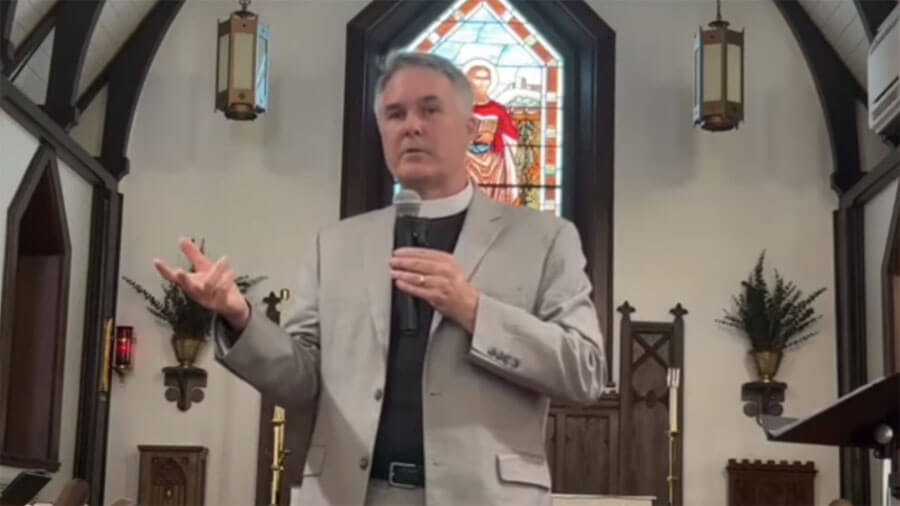
    There are concerns about the election of the Rev. Charlie Holt as bishop coadjutor of the Diocese of Florida. These concerns range from procedural matters to fitness for office. Following is an article from the Episcopal News Service and a resolution adopted by the Vestry of the Church of the Redeemer at its May 24, 2022, meeting.

    Florida bishop coadjutor election challenged with formal objection, effort to deny consent

    [Episcopal News Service] The Diocese of Florida announced May 25 that a formal objection to the May 14, 2022, election of the Rev. Charlie Holt as bishop coadjutor has been filed with the diocese.

    The objection, signed by 37 clergy and lay deputies to the diocese’s special election convention, claims that last-minute changes to the voting process violated diocesan canons and that technical problems disrupted the vote, rendering the election invalid.

    In an email to members of the diocese acknowledging receipt of the objection, its Standing Committee and chancellor responded to the points of contention and denied any procedural errors or misconduct. No objections were raised during the election itself, they said, and the election was observed and confirmed by independent auditors.

    “We want to assure you – with the highest degree of confidence – that we believe in the election’s validity from every perspective,” the committee members and chancellor wrote. “We value the input and consciences of our few friends who have objected, and we will do everything we can to follow the proper channels so that their questions and concerns may be answered.”

    The Standing Committee and chancellor did not include the text of the objection itself along with their response, and diocesan staff would not provide a copy to Episcopal News Service, citing a desire to follow the canonical process and inform the presiding bishop’s office first. ENS obtained a copy of the six-page objection letter and verified with one of the signers that it is the document that was filed with the diocese.

    The May 14 election was held to choose a successor to the diocese’s current bishop, the Rt. Rev. Samuel Johnson Howard, who intends to retire in late 2023. Upon Howard’s retirement, the bishop coadjutor would become the ninth diocesan bishop. Holt, currently associate rector of teaching and formation at The Church of St. John the Divine in Houston, Texas, was one of five candidates.

    Disputed election practices

    In their objection letter, dated May 23, 2024, the 37 delegates claimed that the required clergy quorum for the election was not met, the agenda was not followed and there were “procedural and technical flaws” that interfered with remote voting.

    According to the objection, the diocese in April invited delegates to register for an in-person election at St. John’s Cathedral in Jacksonville, writing: “…the integrity of the election at this Special Convention will require that we pay very close attention to who is present. Therefore, if you do not register by the deadline, you will not be allowed to attend. There will be no exceptions.” However, the objection says, only 89 clergy delegates had registered by the May 9 deadline, below the two-thirds quorum of canonically resident clergy required by diocesan canons. The objection says the required clergy quorum was 116, “as stated by the election officials,” being two-thirds of 174 canonically resident clergy in the diocese.

    On May 12 (two days before the election), the diocese said there were not enough clergy registrants for a quorum and announced that clergy who had not yet registered could register to participate by Zoom, but that lay delegates could still only vote in person. Standing Committee President the Rev. Joe Gibbes told ENS that this change “permitted clergy impeded by factors such as COVID-19 risk, travel and emergencies to attend and vote digitally. This option was not offered to laity because unlike clergy delegates, lay delegates have alternates who can attend and act in their stead – where we had strong participation and there was never a question of reaching a quorum [among the laity].”

    The objection says that the diocese’s governing documents do not allow for remote voting. Gibbes told ENS that the Diocesan Council and chancellor “ensured that our bylaws permit online attendance and voting, according to Florida law.” He added that an “independent, non-Episcopal audit team” – the Forde Firm of Jacksonville (CPAs) – “was present on the Zoom [election] to ensure voting procedure was in accordance with all relevant laws.”


    The objection then says that on the morning of the election, the Diocesan Council changed the rules of order, which the delegates approved during the election. The objecting delegates’ letter says this violated The Episcopal Church’s Canon III.11.1(a), which requires the “adoption of rules and procedure for [such an] election … at a regular or special Diocesan Convention with sufficient time preceding the election … .”

    At the beginning of the livestreamed election, the credentials chairman said that 89 clergy delegates were present in person and 29 were attending remotely for a total of 118, “which is more than the two-thirds requirement for a quorum,” but he did not specify the exact number necessary to satisfy the quorum requirement.

    There were 138 lay delegates present out of 145, he said.

    After the third ballot, Howard announced that Holt received 64 votes from clergy and 80 from the laity. Howard then asked the auditors to confirm the results; one rose to the podium and said the election “had no irregularities in any of the votes or counts.”

    The number of voters in the final ballot was 125 clergy and 141 lay, according to the numbers provided by the diocese to ENS. The total number of voters in the final ballot cited in the objection is off by one; it counts one additional lay voter.

    According to the objecting delegates, the Zoom voting process did not go smoothly.

    “For clergy who were attempting to be present on remote voting, there was no orientation of how to vote, no testing of communications systems, no ‘trial vote’ to test whether all could vote, and in fact, at least two clergy could not see or hear the proceedings,” the objection letter reads. “When voting was taken, in at least one instance, the votes were not registered. Also, in-person delegates could not see nor could they hear the Zoom clergy.”

    Objection process

    The objection invokes a canonical process that has only been used twice before: in the 2018 bishop coadjutor election in the Diocese of Haiti and in the 2021 diocesan bishop election in the Diocese of Ecuador Central. Under Title III.11.8 in the Canons of The Episcopal Church, an objection may be filed within 10 days of a bishop election by a group of at least 10% of the voting delegates. The objection must be filed with the secretary of the diocesan convention, “setting forth in detail all alleged irregularities.” The canons do not specify what constitutes an “irregularity.”

    The objection is then forwarded to the presiding bishop, “who shall request the Court of Review of the Province in which the Diocese is located to investigate the complaint,” according to the current canons. However, General Convention amended the canons in 2018 to replace provincial courts of review (which had primarily handled appeals in clergy disciplinary cases) with a single churchwide Court of Review. That 2018 resolution changed all canonical references to courts of review in Title IV, but not in Title III. The Rt. Rev. Todd Ousley, bishop for the churchwide Office of Pastoral Development, told ENS that the remaining reference to a provincial court of review was an oversight and that objections would be referred to the churchwide Court of Review. A resolution to correct the error has been proposed for this summer’s General Convention. The Court of Review has 30 days to investigate and release a report of its findings.

    In an interview with ENS on May 25, Ousley said he had not received the letter of objection from the Diocese of Florida. The diocese’s secretary of convention must submit the letter to Presiding Bishop Michael Curry’s office within 10 days of receiving it.

    “When the presiding bishop receives notification of an objection to an episcopal election, it is a top priority of his and his staff to review and make arrangements to transmit to the Court of Review,” Ousley said.

    The Court of Review’s mandate is not necessarily to issue rulings on the canonical validity of election procedures, Ousley explained, but to write a report that is then sent to all diocesan standing committees and bishops with jurisdiction. A majority of each group must consent before a bishop-elect can be consecrated.

    Update, May 27, 2022. Read Statement from Bishop Todd Ousley on Diocese of Florida bishop election.

    Comments on race and sexuality

    In almost all cases, the consent process is a formality, but besides the objection filed by the 37 convention delegates, Holt’s election is facing additional challenges. Some Episcopalians have voiced objections to Holt’s election on social media, citing Holt’s views on same-sex marriage and statements that they view as intolerant or insulting to LGBTQ+ people and Black people. Some have said they are writing to their bishops and standing committees to encourage them not to consent to the election.

    In interviews and Q&A sessions with bishop candidates before the election, Holt has said he holds the view of marriage expressed in the 1979 Book of Common Prayer – that marriage is between a man and a woman. Since 2018, as a result of General Convention Resolution B012, same-sex marriage liturgies must be made available to all Episcopalians in countries where same-sex marriage is legal. The compromise resolution also allows bishops who disagree with same-sex marriage to delegate any required oversight of such marriages to another bishop. In a letter to the diocese after the election, Holt said B012 “will be followed and upheld to pastorally support both our progressive and conservative parishes.”

    “I will seek a harmonious relationship with the diocese, granting authority for marriages to parish rectors in keeping with the letter and spirit of Resolution B012-2018 and the canons of General Convention,” Holt told ENS in a May 24 email. Holt declined to comment on the alleged voting irregularities, adding, “I do not have anything to offer to that part of the story as I was a candidate and not responsible for the election.”

    In the days after the election, Episcopalians from the Diocese of Florida and beyond took to Twitter and posted statements Holt made during the Q&A sessions. An anonymous YouTube account uploaded edited clips of two of Holt’s answers during those sessions, as well as a compilation of his other answers. The description of the account, “Episcopal Bishop Election Info,” reads: “Information for Standing Committees and Bishops to review as they consider whether to give consent to Episcopal elections throughout the church.”

    In an answer to one of multiple questions about how he would lead a diocese with diverse views on sexuality, Holt noted a heightened focus on LGBTQ+ issues in America and in The Episcopal church, “and by singularly focusing on one thing, we actually are a little off. And so it’s not to say that those are not important, or those people that are represented by the letters are not important. They are super important. They are children of God who need to be welcomed into the life of our church. We have something to give to them and they have things and gifts to give to us. Don’t hear me wrong. But if that is the only thing that we ever talk about all the time – which, sometimes it feels like it is – then we’re a little sick. Because you can’t talk about sex all the time. That’s not healthy. It’s not healthy for the LGBTQIA people for us to focus on them all the time.”

    Holt then appeared to indirectly draw a comparison with his own life and suggested that LGBTQ+ people might “give up” something to follow Jesus, as he did.

    “It’s not a commitment that says, ‘I can come in the doors and you have to receive me and accept me just the way I am. And I’m never going to change,’” he said. “I had to give up a lot of things when I became a Christian. I was a frat boy at the University of Florida. And I was not living a godly lifestyle. … Over time, God dealt with the various things in my life that needed to be changed.”

    In response to a question about diversity, Holt told a story about when he had previously served in the diocese and was the only white minister at a rally in Sanford, Florida, protesting the 2012 killing of Trayvon Martin. He said he was initially reluctant to speak and that he did not want to be seen in front of signs saying “Trayvon Martin: A modern-day lynching.” After encouragement from a Black pastor, Holt recalled, he did speak, even though the signs “didn’t quite represent my perspective.”

    Campaign to withhold consent

    Episcopalians including author Diana Butler Bass objected to Holt’s Q&A responses on Twitter and suggested that they were grounds for withholding consent to his election.

    https://twitter.com/dianabutlerbass/status/1526948003042443267

    One Connecticut priest – the Rev. Melissa Rohrbach – has created an online petition for other clergy in her diocese to urge their standing committee to withhold consent. A clergy Facebook group is keeping a running tally of standing committees they have contacted in a Google Doc.

    In his letter to the diocese responding to the concerns over his comments on race and sexuality, Holt said his “commitment is to be a faithful pastor to all. I am committed to embracing the diversity that the people of the Diocese of Florida represent.”

    Reiterating his commitment to uphold Resolution B012, Holt wrote, “I highly respect those who hold a different view than my own. I have always learned the most from dialogue with those who disagree with me. This is why my first mission as bishop-elect will be to listen, from one end of the Diocese of Florida, geographically and theologically, to the other. I am respectful of the lives, experiences, and opinions of all others, and I hope for the same from others.”

    Referring to Trayvon Martin’s killing, Holt wrote, “God used that moment to work change in my life which has served my ministry of reconciliation to this day,” adding that he and a Black pastor started an interracial group called Sanford Pastors Connecting dedicated to racial reconciliation after Trayvon Martin’s killing. One of their ministries was to be “pastoral observers” at the trial of George Zimmerman, who killed Trayvon Martin.

    “It will be my priority as Bishop to lead our diocese in the work of racial reconciliation. This begins with honoring our historic Black congregations,” Holt wrote. “I will encourage all of our congregations to build strong Christian ties with their nearest Black congregation neighbors in other Christian denominations. This is at the heart of what it means to be the Beloved Community.”

    On May 25, the leadership of the LGBTQ+ Caucus in the House of Deputies sent a memo to its members and the General Convention Office expressing “grave concern” about Holt’s election. Linking to the YouTube videos of Holt’s Q&A responses – including one in which he described learning about racial injustice in a conversation with a Black pastor that included both Trayvon Martin’s killing and the unsolved killings of other Black men – the caucus leaders wrote, “We decry Fr. Holt’s comments regarding race and racism, which were deeply offensive and objectionable.”

    The deputies also wrote that Holt’s promise to uphold B012 “does nothing to ensure even a base level of acceptable treatment for most LGBTQ+ Episcopalians and our allies. Would a Bishop Holt stymie the clergy of his diocese who were in favor of officiating same-sex weddings? Would he prohibit congregations from hiring an LGBTQ+ clergy or layperson?”

    “We urge every bishop with jurisdiction and every Standing Committee to sincerely consider these concerns and if necessary request further clarification from Fr. Holt and the Diocese of Florida before discerning whether to offer consent to his election,” the memo concluded.

    Once the presiding bishop receives the objection to Holt’s election, it will alter the timeline of the consent process, according to Ousley. It is up to the presiding bishop to determine when to refer the objection to the Court of Review, starting their 30-day investigative period. The normal 120-day period for bishops and standing committees to decide whether they will consent to the election does not start until the objection process has been completed and the Court of Review has submitted its report.

    According to the diocese, Holt is scheduled to be consecrated bishop coadjutor in October.

    “I welcome the opportunity to speak with any bishop and members of any standing committee if they have questions about my views,” Holt told ENS. “My goal is to bring unity and love to this wonderful Diocese and its people.”

    – Egan Millard is an assistant editor and reporter for Episcopal News Service. He can be reached at emillard@episcopalchurch.org.

    Response by the bishop-elect

    The Rev. Charlie Holt, whose election as bishop coadjutor in the Diocese of Florida has been challenged on procedural and ideological grounds, responded to concerns raised by some Episcopalians about his positions on race, sexuality and church polity in a June 16 video message to members of the diocese and The Episcopal Church. Holt apologized for what he described as poor word choices and defended his record on engaging across cultures as a priest in the video, which comes after General Convention deputies filed a proposed resolution expressing concern about his election. Read the response by the Rev. Charlie Holt.

    The resolution approved by the Vestry at Church of the Redeemer

    At its meeting on May 24, 2022, the Vestry of the Church of the Redeemer passed this resolution:

    Resolved, that the Vestry of the Church of the Redeemer wishes to convey to the Standing Committee of the Diocese of Olympia our grave reservation about the fitness of the Rev. Charles Holt, the bishop-elect of the Diocese of Florida, to carry out the ministry to which he has been elected based on his stances in regards both race and LGBTQIA+ equality and equity in the church, in contravention to the doctrine, discipline, and worship of the Episcopal Church, and of the teachings of Jesus Christ.

    In this minute clip, Fr. Holt says that he wouldn’t invite an unknown Black pastor to speak in his church. He had been given this privilege when visiting in primarily Black churches. “Who knows what he would say, right?”


    You may watch the entire video of 3 minutes. It includes where Fr. Holt said he was afraid to speak in front of signs saying “Trevon Martin, modern day lynching.”

    In this 40 second clip, Fr. Holt says that LBGTQIA+ persons should expect to change as he changed from being a college frat boy. This was in answering a question about leading a diocese of diverse opinions in regard to ordination and marriage of people in the LBGTQIA+ community.


    You may watch the entire 4:45 minute video.

    Black lives are sacred at Church of the Redeemer

    Church of the Redeemer

    Welcome to Church of the Redeemer: Worshiping God, living in community, and reaching out to the world. We are an Episcopal Church serving north King County and south Snohomish County, Washington. As you travel your road, go with friends walking the way of Jesus at Redeemer.

    Church of the Redeemer is at 6220 Northeast 181st Street in Kenmore, Washington. We are a short distance north of Bothell Way, near the Burke-Gilman Trail. The entrance looks like a gravel driveway. The campus is larger on the inside than it is on the outside. And we managed to hide a large building on the side of a hill that is not easily seen from the street.

    The Episcopal Church welcomes you.

  • ‘Sacred Ground’ course updates, report released

    ‘Sacred Ground’ course updates, report released

    Three years after launching Sacred Ground, a dialogue series on race, racism, and whiteness with more than 20,000 participants thus far, The Episcopal Church’s Racial Reconciliation and Justice Team is releasing a comprehensive evaluation report, updated curriculum and resources, and expanded licensing that invites people in other denominations/faiths to start their own Sacred Ground circles.

    “Everywhere I travel, people are bursting to tell me about the transformational impact Sacred Ground has had in their lives,” said Episcopal Church Presiding Bishop Michael Curry. “The Lord is building Beloved Community through this movement, and in its updated and expanded form, Sacred Ground will help many thousands more take the next steps in the lifelong work of racial healing.”

    Take action on racial justice, not just preach about it

    In partnership with the Union of Black Episcopalians, Sacred Ground worked with Christina Pacheco of Indígena Consulting Inc. in 2021 to conduct surveys and focus groups with more than 2,900 participants, facilitators, and organizers of the film- and readings-based series that includes circle groups throughout the U.S. (84 dioceses were represented among survey respondents).

    The resulting 63-page report is designed to help Sacred Ground facilitators, organizers, and churchwide staff discover what they can do to create the best outcomes for circles. It includes a detailed breakdown of questions and results, charts, graphs, and numerous quotes from respondents.

    Among other findings, the survey showed overwhelmingly that Sacred Ground has had a powerful impact on participants’ knowledge, attitudes, and emotional capacity. It has prompted action such as initiating “racial reckoning” conversations in one’s family, supporting Black businesses, holding listening sessions with Indigenous people, and joining county-level policing accountability projects. The survey also reflected a desire for more guidance in this area.

    “It has helped us take action on racial justice, not just preach about it,” a Sacred Ground organizer is quoted as saying in the evaluation report.

    While the program was especially designed to help White people talk with each other about race, the survey showed that participants of color also found the experience valuable for their own learning and transformation.

    Updates to Sacred Ground

    These and other survey results—as well as a curriculum review by volunteers, consultants, and advisors—informed changes, updates, and additions to the Sacred Ground program that include the following:

    • A list of best practices for organizing and facilitating Sacred Ground circles, including a recommendation for more interracial circles.
    • We Bless You,” a 22-minute invitational video produced collaboratively with the Union of Black Episcopalians that speaks to those discerning whether to participate in a circle, and whether to form a White or interracial circle.
    • A revised session 10 and new session 11 to help address the desire for help in moving from reflection to action.
    • Curriculum additions, such as some related to the history of Indigenous boarding schools.
    • Higher visibility of theological reflections in the program.
    • Deeper Dive, a list of supplementary videos and readings for those who want to go further in their learning and exploration.

    In addition to the updated curriculum, Sacred Ground’s three-year licenses for videos and readings have been renewed, with an expansion for other local-level faith groups that would like to offer the program without direct Episcopal Church involvement.

    One Sacred Ground facilitator is quoted in the report as saying: “Thank you. However painful it is to see what our country has done wrong, I am glad to have become informed of the truth. I hope everyone can have access to this program.”

    Learn more about Sacred Ground and how to start a circle.

    Presiding Bishop Curry speaks about 'Sacred Ground'

    Sacred Ground

    Sacred Ground is a film- and readings-based dialogue series on race, grounded in faith.  Small groups are invited to walk through chapters of America’s history of race and racism, while weaving in threads of family story, economic class, and political and regional identity.

    The 11-part series is built around a powerful online curriculum of documentary films and readings that focus on Indigenous, Black, Latino, and Asian/Pacific American histories as they intersect with European American histories.

    Sacred Ground is part of Becoming Beloved Community, The Episcopal Church’s long-term commitment to racial healing, reconciliation, and justice in our personal lives, our ministries, and our society.  This series is open to all, and especially designed to help white people talk with other white people.  Participants are invited to peel away the layers that have contributed to the challenges and divides of the present day – all while grounded in our call to faith, hope and love.

    Public Affairs Office of The Episcopal Church

    Public Affairs Office of the Episcopal Church

    The Public Affairs Office provides statistics, biographies, photos, background information, and other resources to media representatives reporting on the mission and ministries of The Episcopal Church.

    This press release from Episcopal Church’s ‘Sacred Ground’ releases report, updated curriculum.

    Church of the Redeemer

    Welcome to Church of the Redeemer: Worshiping God, living in community, and reaching out to the world. We are an Episcopal Church serving north King County and south Snohomish County, Washington. As you travel your road, go with friends walking the way of Jesus at Redeemer.

    Church of the Redeemer is at 6220 Northeast 181st Street in Kenmore, Washington. We are a short distance north of Bothell Way, near the Burke-Gilman Trail. The entrance looks like a gravel driveway. The campus is larger on the inside than it is on the outside. And we managed to hide a large building on the side of a hill that is not easily seen from the street.

    The Episcopal Church welcomes you.

  • ‘Concert for the Human Family’ honored

    ‘Concert for the Human Family’ honored

    [Office of Public Affairs] The International Academy of Digital Arts and Sciences has named “In These Uncertain Times—A Concert for the Human Family” as Best Event and Live Stream Video in the 26th Annual Webby Awards. The May 2021 concert was an artistic collaboration created by The Episcopal Church Office of Communication and Racial Reconciliation and Justice Team.

    Hailed as the “Internet’s highest honor” by The New York Times, The Webby Awards, presented by the digital arts and sciences academy, is the leading international awards organization honoring excellence on the internet.

    Concert for the Human Family at Philadelphia Episcopal Cathedral

    The inaugural event in the Concert for the Human Family series—filmed under strict COVID-19 protocols at the Philadelphia Episcopal Cathedral—paired pianist, composer, and musical director Kory Caudill of Nashville, Tennessee, and Baltimore-based hip-hop artist Wordsmith, for an uplifting journey through the human experience of love, grief, loss, and hope for beloved community. The event presented a musical commentary on social reckoning in the United States and a pandemic that has touched every corner of the world.

    “Honorees like The Episcopal Church are setting the standard for innovation and creativity on the internet,” said Claire Graves, president of The Webby Awards. “It is an incredible achievement to be selected among the best from more than 14,300 entries we received this year.”

    Established in 1996, The Webby Awards received entries from all 50 states and 70 countries this year.

    “Thank God for this extraordinary honor and for the hard work, vision, and sheer talent of The Episcopal Church’s multimedia team, led by Jeremy Tackett; musicians and leaders like Kory and Wordsmith; and the church’s reconciliation ministry team,” said the Rev. Stephanie Spellers, canon to the presiding bishop for evangelism, reconciliation, and creation care. “With new in-person tour dates coming this spring, we hope more people join the movement to harness the power of music and stories for the sake of healing and beloved community.”

    Learn more about Concert for the Human Family, including upcoming events, videos, and more.

    The International Academy of Digital Arts and Sciences

    The International Academy of Digital Arts and Sciences

    The International Academy of Digital Arts and Sciences, which nominates and selects The Webby Award winners, is composed of internet industry experts including the following:

    • Kerstin Emhoff, co-founder and CEO – PRETTYBIRD
    • Colleen DeCourcy, president, Wieden+Kennedy
    • Arlan Hamilton, founder and managing partner – Backstage Capital
    • John Hanke, founder and CEO – Niantic
    • Nikole Hannah-Jones, creator – 1619, The New York Times
    • Renita Jablonski, director of audio – The Washington Post
    • Mikael Jørgensen, founder and CEO – &Co
    • Monica Lewinsky, activist, fashion designer and producer
    • Swizz Beatz & Timbaland, music producers and co-founders  – Verzuz
    • Vanessa Pappas, COO – TikTok
    • Daniel Reynolds, vice president, Digital Media – Disney
    • Dara Treseder, SVP,  head of global marketing and communications – Peloton
    •  Maya Watson, head of global marketing – Clubhouse
    Episcopal Church Shield

    The Episcopal Church

    The Episcopal Church welcomes all as it seeks to follow Jesus Christ into loving, liberating, and life-giving relationship with God, each other, and the earth. As a member church in the worldwide Anglican Communion, The Episcopal Church is part of the world’s third-largest group of Christians and has around 1.8 million members across 109 dioceses and three mission areas in 17 nations or territories. Learn more at episcopalchurch.org.

    Church of the Redeemer

    Welcome to Church of the Redeemer: Worshiping God, living in community, and reaching out to the world. We are an Episcopal Church serving north King County and south Snohomish County, Washington. As you travel your road, go with friends walking the way of Jesus at Redeemer.

    Church of the Redeemer is at 6220 Northeast 181st Street in Kenmore, Washington. We are a short distance north of Bothell Way, near the Burke-Gilman Trail. The entrance looks like a gravel driveway. The campus is larger on the inside than it is on the outside. And we managed to hide a large building on the side of a hill that is not easily seen from the street.

    The Episcopal Church welcomes you.

  • “Give Me Jesus!” from Presiding Bishop Michael Curry

    “Give Me Jesus!” from Presiding Bishop Michael Curry

    “Give me Jesus!” is Presiding Bishop Michael Curry’s sermon for the House of Bishops on March 15, 2022.

    The following is a transcript of the sermon of Presiding Bishop Michael Curry at the House of Bishops of The Episcopal Church, meeting in retreat at Camp Allen, Navasota, Texas, through March 21, 2022. These remarks have been lightly edited for clarity. A transcript in Spanish is available at the same link.

    In the name of our loving, liberating and life-giving God, Father, Son, and Holy Spirit.

    Some of y’all remember the TV show “Welcome Back, Kotter”? Welcome back, Kotter. Welcome, bishops. Welcome back, in person. It feels like a modified exile. And in one sense, I suppose it has been. COVID, racial reckoning, an attempted overthrow of the government of the United States. And now a world that hasn’t been this close to self-destruction since the Cuban missile crisis. But welcome back anyway.

    So when I saw the lessons that had been appointed—because I love lectionaries. You can love in a dialectical sort of way. When I saw the lessons that were appointed for today, I said, “Those are good lessons.” But I think I heard the Spirit, maybe. I won’t blame it on the Spirit. Something said, “I got another text for you.” And this is a welcome back text. Words of Jesus found in the 11th chapter of Matthew:

    “Come unto me all ye who are weary and heavy laden and I will give you rest. Take my yoke upon you and learn from me, for my yoke is easy.” It’ll fit, because my burden is light.

    Come unto me, all ye who were bishops before this pandemic, and all ye, [inaudible] bishops who were consecrated during the pandemic. Come unto me, all ye who have been consecrated since then and all who soon will be. Come unto me, Episcopal Church. Come unto me, people who follow in my way and claim the name Christian. Come unto me whosoever will, who are weary, tired, beaten down, worn out, COVID crazy, right? Come unto me, all ye who are weary and heavy laden, and I will give you rest.

    Take my yoke. Instead of the yoke that’s imposed on you from this world, take my yoke and learn from me. For my yoke is easy, and my burden is not slavery. It’s freedom.

    An old spiritual said it this way, “In the morning when I rise, in the morning when I rise, in the morning when I rise, give me Jesus. When it’s time for me to die, when it’s time for me to die, when it’s time for me to die, just give me Jesus. Give me Jesus. Give me Jesus. You can have all this world. Just give me Jesus” (paraphrased). Come unto me, he said. Or as he would’ve said in south of Judah, y’all come. Come.

    That spiritual, you can have all the world, give me Jesus, I’ve known it all my life. It’s kind of like the Lord’s prayer. I don’t remember when I didn’t know it. And I think I know it because it tended to get sung at family funerals, at least at the Baptist side of my family. Not at the Episcopal side. Those funerals were so short, they’re not memorable, but anyway, oops.

    But in the Baptist side of my family, the Pentecostal Holiness side of my family, that was always sung. You can have all this world, give me Jesus. I suspect that’s where I heard it, but I remember at one particular funeral—this would’ve been the summer of 1969, I believe. The funeral had been at 16th Street Baptist Church in Birmingham, where my Aunt Callie taught Sunday school. And she had gone on the glory, and so the whole family trucked to Birmingham for a funeral. And then we buried her out in the country and came back to Birmingham for the family repast after the funeral.

    I don’t know if y’all’s families are like this. I don’t know if this is an ethnic thing or not. I have no idea. But usually the repast is the time folk tell stories, and that’s what people do at funerals anyway. They tell stories and lies, and usually critique the preacher. Because sometimes the preachers will preach folk into heaven and say, “Oh, so and so, oh, he was a saint. He was a…” And we say, “You know, we loved uncle so and so, but we knew him. He wasn’t no saint now.”

    But anyway, folk would come back. And then in my family, on my father’s side, folk, they would debate politics, and sports, and the Bible. On this one occasion, this was 1968, the summer of ‘68, Dr. King had been assassinated. Bobby Kennedy had been assassinated. Medgar Evers. Viola Liuzzo. John Kennedy, a president. And one of my cousins got in a debate, a polite debate, because in those day you didn’t talk back to the elders. A polite debate with one of my uncles who was a preacher, Baptist preacher. And he said, “You know, I’m tired of hearing folks sing that song, ‘You can have all this world, just give me Jesus.’” And he said, “That’s exactly what our folk got. We’ve been singing that song. You can have all this world, and somebody else got the world and all we got was Jesus.”

    And I don’t remember how the debate ended, but needless to say, my uncle was not pleased. But it was like what Desmond Tutu said about Southern Africa, he said, “When the missionaries came, they had the Bible and we had the land. Next thing we knew, we had the Bible, and they had the land.” Something was wrong with that deal. We love the Bible, but how about Bible and land?

    My cousin had a point, that religion sometimes can be an opiate of the people. It can be twisted and distorted and misused to a narcotic, to keep people from rising up and claiming their God-given rights and human dignity. Although it has been used before, but I believe that old song has a deeper wisdom. “You can have all this world, just give me Jesus.” See, don’t underestimate the power of that which is authentically spiritual. Because if it is authentically of the spirit, it is of God. Don’t underestimate that. It may take its time. As the old preachers say, “It may not be on your time.” It may not happen on my time, but when God’s will is done on earth, as it is in heaven, it is always on time.

    Don’t underestimate the power of hope. Dante warned us, “Abandon hope, all ye who enter here,” over the gates of hell. Don’t underestimate the power of faith. Don’t underestimate the power of love. Don’t underestimate the spiritual. People who believe. People got God. They will make it against all the odds. If you don’t believe me, ask the folk of Ukraine. Help me, somebody. Mary Glasspool gave this to me right before the Eucharist. It is a candle, adorned. She got it from a Ukrainian shop in New York. Don’t, Putin, oh, I’m going to get in trouble. I know I’m going to get in trouble with what I’m about to say. Putin may overrun the country, but he will not defeat the people of Ukraine. He will not. Spirit will always win over flesh. It may not be in the forecast time, but it’s real.

    In 1853, Theodore Parker, an abolitionist, when it looked like slavery would never end in this country, said, and I quote, “I do not pretend to understand the moral universe. The arc seems to be a long one, but from what I can see it bends toward justice.” Dr. King shortened it and said, “The moral arc of the universe is long, but it is bent toward justice.” Not because of some metaphysical magic, but because there is a God. And if there is a God, then there is hope. If there is a God, then there can be faith. And if there is a God, as my Bible says, who is love, then in the end, no matter what we have to go through now, in the end, love is going to win. If there’s a God, love is going to win.

    Pray for Ukraine. Don’t give up on them. Do other things, send money to the refugees—Episcopal Relief & Development is working with other Christian groups in Hungary and in Eastern Europe. So get folk to send money. This is a commercial. Am I on TV somewhere here? Get the money to Episcopal Relief & Development. And there may be other things we can do, but do not abandon them without prayer. Pray. Pray for Ukraine. Pray for Russia. Pray for Putin, that unlike Pharaoh his hardened heart may be turned.

    And if it doesn’t turn, pray for the leaders of the nations, that they will have moral courage, spiritual wisdom to do what is right, to do justice, love mercy, and walk humbly with our God. Don’t abandon prayer now. Pray for the children of Ukraine. I love, I got to tell this, I have fallen in love with the people of Ukraine. First of all, they cuss better than anybody else I have … I mean, they have invented some cussing that wasn’t there. They are incredible. I can’t say some of the words that they … There was a group of little old ladies who looked like a prayer group on CNN, and they asked them, “What do you think of Putin?” And I think it was “glossolalia,” some unknown tongue, because they got to cussing and saying all sorts of stuff.

    But these are remarkable people. Their spirit, they just want to free. They just want to be free. And the truth of the matter is, Thomas Jefferson, he had his issues like the lesson that we just had from Matthew 23, where Jesus said, “Do what the scribes and pharisees say, don’t do what they do.” When it comes to Thomas Jefferson, don’t do what he did, but he was right: “We hold these truths to be self-evident that all men”—all people—”are created equal.” Thomas Jefferson said the God who gave us life, gave us liberty at the same time. And that is true for everybody. The people of Ukraine just want to be free.

    I’m not going to talk long this morning, but I ain’t seen y’all in person in a long time. You don’t know. You have no idea how glad I am to see you all. You have no idea. Oh, dear Lord. I remember this would’ve been, well, probably 1960, and I went to the movie with my daddy. And we went to see “Exodus.” It was based on Leon Uris’ book, “Exodus.” And now we understand that’s a complex story, more complex than we understood in 1960. I understand all of that, so don’t go political on me right now. But it is the story of people seeking freedom.

    At the end of the movie, we went out and daddy just blurted out—it was really fascinating now that I think about it—he just said, “The Lord didn’t make anybody to be under anybody’s boot. He made us all to be free.” All of us. He was right. He made the people of Ukraine to be free. Not free for licentiousness, but free to be all that God intends for us to be. But freedom, stay with me, freedom is a spiritual reality. You see where I’m going now? Don’t underestimate the power for freedom, said St. Paul. “Christ has set us free. Stand fast and do not accept the yoke of slavery again.” That’s St. Paul. That’s in the Bible. And it ain’t just talking about personal sin. It’s talking about that, but it’s talking about for freedom, Christ has set us free.

    Those slaves used to sing a spiritual. It said, “Oh, freedom. Oh, freedom. Oh, freedom over me. And before I’ll be a slave, I’ll be buried in my grave and go home to my Lord and be free.”

    Did you catch that? Somebody who is legally chattel property, somebody who by every political socioeconomic reality of this world—stay with me—is a slave, declaring, “I’m not a slave. Before I’ll be a slave, I’ll be buried in my grave and go home to my Lord and be free.” Oh, this spiritual thing, this business we are, this is powerful stuff. It can set the captive free, even when the world would enslave. Jesus says, “Come unto me. Come unto me, all ye who are weary and heavy laden.”

    I don’t know if it’s just because I’m 69, but I’m not lying. I’m tired. But I’m feeling good this morning because I see you all. Yeah, we’re all kind of tired. And folk in church, I call it COVID crazy. Everybody’s a little bit on edge and folk acting out in ways that… Have you noticed a pattern? Yeah, I don’t know if it’s just Christian COVID crazy or if it’s human COVID crazy. And I got to go to the meeting with the primates of the Anglican communion right after this meeting . . . I don’t know what to expect in that, but I’m looking forward to a great, getting-up morning. But nonetheless, I mean the truth is everybody, there is a weariness, and you have been frontline folk even on Zoom. And our clergy have been frontline folk. And they’re tired. And the world is giving us no rest.

    Jesus says, come unto me all who are weary, heaven laden and beaten down by the realities of this world. Take my yoke. Take my way of life and love. Take what I’m trying to teach you. Take my yoke upon you. Learn from me. Don’t you know? Oh, Cynthia Bourgeault is coming. You all got to know Jesus is Sophia’s child. “Learn from me for my yoke is easy.” That Greek, where it doesn’t mean it’s easy. What was that? “Ease on down, ease on down the road” (singing). This is not that. No. Easy means it fits. It was made for you. My yoke is easy. It was made to make human life human as God dreamed and intended. It fits. My yoke is easy, and my burden is light. And you will find rest. Did you catch this? Rest. God’s eternal Sabbath rest for your soul.

    I read [Walter] Brueggemann’s book, “Sabbath as Resistance,” or at least most of the part I could understand. Rob Wright turned me on to Brueggemann. He understands it. Lot of times I just go, that’s deep. I don’t know what he was talking about, but it’s deep. But at one point, the one part I did understand was when Brueggemann said, “When God rested on the Sabbath, the seventh day, it is rest in one sense. But, it also means that everything,” stay with me, I’m coming at something, “is in its right relationship and proportion. It is as God intended it to be.” That’s when everything is at rest and God saw after the Sabbath was made, everything that God had made, including Sabbath rest. And God said, “Oh, that is showing off good.” Or as George Jefferson used to say, you all remember “The Jeffersons”? When George did something right, he used to pat himself on the back and say, “Good one, George.”

    God kind of said, “This is a good one.” When the world is the way I intended it to be. When all things are consistent with the created order. When love is the law of the creation. When the creation is cared for. When there’s room for all of God’s children. And God rested and said, “It is good.” Oh, you can have all this world. You all see this? Is this making some sense? Just give me Jesus. Well, I’m really going to bring this home. I really am now.

    As many of you know, this past January, Dr. Charles Willie, who served at one time as the vice president of the House of Deputies in the 1970s, and who was, oh yeah, you know him well, yeah. I mean, Jennifer (Baskerville-Burrows) would know him from Syracuse, from Grace Church. But Dr. Charles Willie, who was a lifelong Episcopalian from Dallas, Texas, he died and entered life eternal in January. And that has been the case with many who have gone on to glory during the COVID pandemic; funerals are delayed. And so I got a note, an email from Byron Rushing, our current vice president of the House of Deputies, just Sunday, saying that the family’s having a memorial service for him this coming Saturday, in light of the fact that the omicron spread was happening in January.

    When I got that note from Byron, I thought about Dr. Willie, and remembered that he was an African American child born and reared here in Texas a long time ago. His mama was a teacher, but not allowed to teach in the public schools because of Jim Crow. Daddy was a Pullman car porter. My granddaddy was a Pullman porter. Went with A. Philip Randolph to the march on Washington in the ‘40s. I wish I had asked him when I was a little kid, what was all that like? Dr. Willie was, Arthur Williams would know Dr. Willie, was a great person, committed Episcopalian, lifelong. He was somebody who devised these segregation plans that were used in a number of cities in this country that actually worked. He was a sociologist who challenged the prevailing notions about the inadequacies of the Black family. And he statistically verified that frankly, that the survival of the Black family was a miracle. A miracle. He was a remarkable guy, not only in his career as an academician, but in his churchmanship and his commitment to Jesus Christ and his church.

    He became the vice president of the House of Deputies. And Byron Rushing, in an article, said this, “Black Episcopalians were both proud of Chuck being elected first African American to the Executive Council and vice president of the House of Deputies.” They were so proud because you cannot imagine and cannot overemphasize how racially segregated The Episcopal Church was before the 1970s. It was a stunning reality. Dr. Willie believed that God made all people equal. He believed that the “imago Dei,” the image of God that is conferred upon every human being, is a conferral of infinite value and worth of every human child of God. And that imago Dei is equally distributed upon everybody. Nobody’s got a little bit more of imago Dei than anybody else. Nobody got no more superiority of that imago Dei than anybody else. This is God’s image. This is God’s likeness. This is the God who is love, conferring his dignity and words on every human child of God. And Dr. Willie came to believe that if this was true for his African American community, this must be true for everybody.

    And in 1974, he preached at the ordination of the Philadelphia 11. And when the House of Bishops spoke against him, I know I’m getting in trouble, but I’m 69 now. When the House spoke—and we respect people’s opinions, don’t misunderstand me, please—the voices and the chorus against him, and the tide turned against him. And he found himself receiving criticism from Blacks and whites alike. Black folk were upset because he could have been the first Black president of the House of Deputies. And others had their reasons.

    But he believed in it, in the God who is love and who is an equal opportunity lover. And so he resigned as vice president of the House of Deputies. And this is what he said to explain this decision, and I quote, “An officer is a servant of the people who attend to the collective life and the rules and regulations developed by that community or association for its life. Either I had to enforce sexist laws, or I had to get the church to change them, or I had to resign as vice president of the House of Deputies. It was the only path of integrity.” And then listen to this: “I could not act like Pilate and do what I knew was wrong. I could not segregate, alienate, and discriminate against women simply because it was legal to do this and yet somehow claim to be acting in love. When that which is legal and that which is loving are in contention, legality must give way to love. I decided not to be Pontius Pilate.”

    That, my friends, is a profile in courage. That, my friends, is someone who chose Jesus and not the way of the world. And don’t misunderstand me. Courage comes in conservative stripes as well as liberal ones. Courage comes in all colors. Courage comes in all kinds. Courage comes in all shapes.

    For all who have been baptized into Christ and put on Christ, and there is no more slave or free. There is no more male or female. There is no more Jew or Greek, for all are one in Christ. And those who are in Christ, they shall wait upon the Lord. They shall mount up on wings like eagles. They shall run and not be weary. They shall walk and they will not faint. Come unto me, all ye who are weary and heavy laden, and I will give you rest.

    (singing)

    You can have all this world,
    Give me Jesus!

    In the morning when I rise,
    In the morning when I rise,
    In the morning when I rise,

    Give me Jesus!
    Give me Jesus!
    Give me Jesus!
    You can have all this world,
    Give me Jesus!

    Welcome back.

    Amen.

    Presiding Bishop Michael Curry

    Being a Christian is not essentially about joining a church or being a nice person, but about following in the footsteps of Jesus, taking his teachings seriously, letting his Spirit take the lead in our lives, and in so doing helping to change the world from our nightmare into God’s dream.

    ―Michael Curry, Crazy Christians: A Call to Follow Jesus

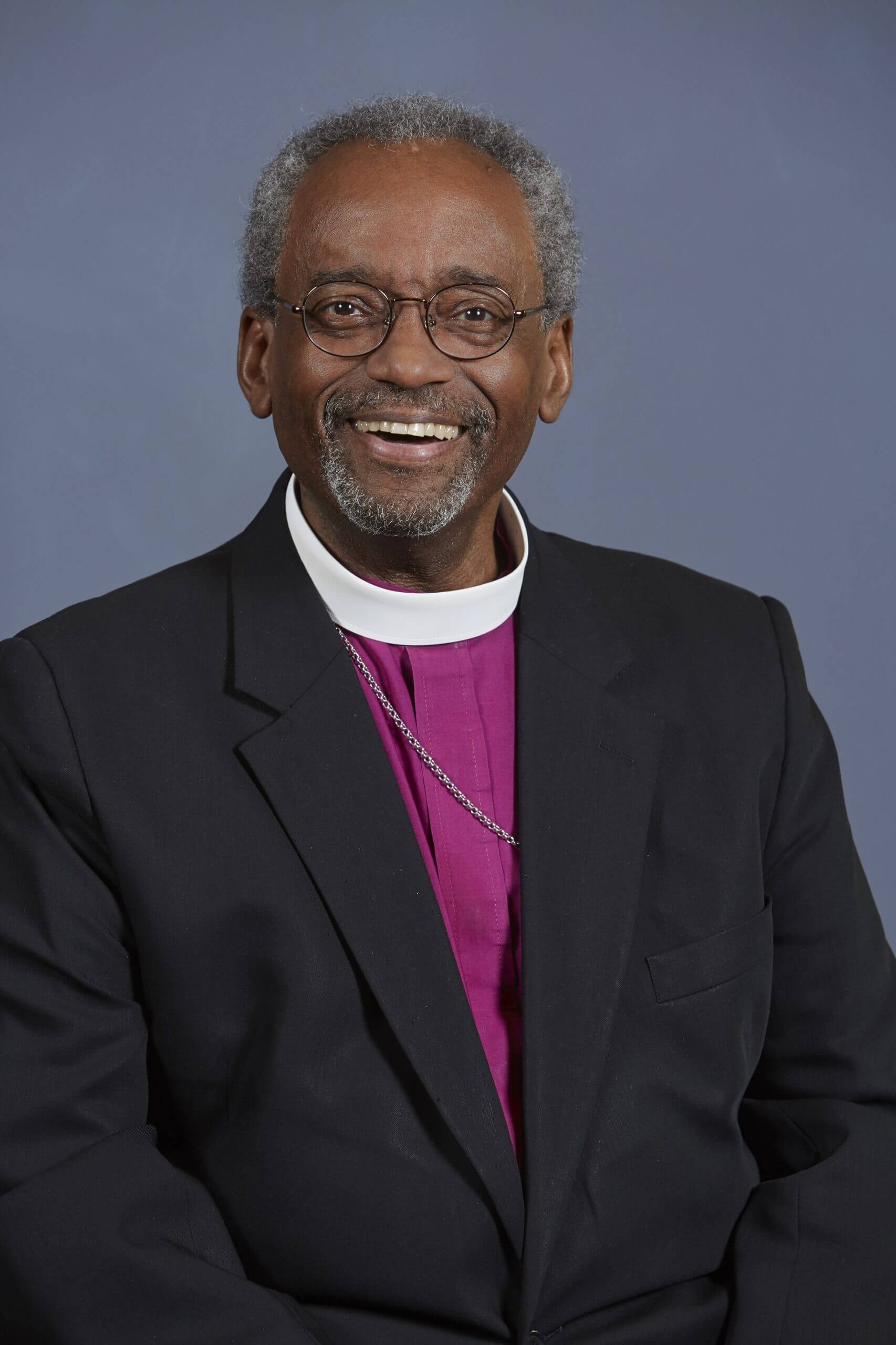
    The Most Rev. Michael Bruce Curry is Presiding Bishop and Primate of The Episcopal Church. He is the Chief Pastor and serves as President and Chief Executive Officer, and as Chair of the Executive Council of the Episcopal Church.

    Presiding Bishop Curry was installed as the 27th Presiding Bishop and Primate of The Episcopal Church on November 1, 2015. He was elected to a nine-year term and confirmed at the 78th General Convention of The Episcopal Church in Salt Lake City, Utah, on June 27, 2015.

    Read Presiding Bishop Curry’s biography and find out about the Jesus Movement.

    Crest of the Presiding Bishop of the Episcopal Church

    House of Bishops

    This second house, along with the House of Deputies, of the General Convention of the Episcopal Church. This house is composed of all bishops, active and retired, of the church. It meets concurrently with the House of Deputies during General Convention. The House of Bishops also holds yearly meetings between conventions.

    From House of Bishops.

    Church of the Redeemer

    Church of the Redeemer: Worshiping God, living in community, and reaching out to the world around us. We are an Episcopal Church serving north King County and south Snohomish County, Washington. As you travel your road, go with friends walking the way of Jesus at Redeemer.

    Church of the Redeemer is at 6220 Northeast 181st Street in Kenmore, Washington. The campus is a short distance north of Bothell Way, near the Burke-Gilman Trail. The entrance looks like a gravel driveway. The campus is larger on the inside than it is on the outside. And we managed to hide a large building on the side of a hill that is not easily seen from the street.

    The Episcopal Church welcomes you.

  • Organize to disrupt White Christian Nationalism

    Organize to disrupt White Christian Nationalism

    This article is from Aaron Scott, currently of Chaplains in the Harbor in Gray’s Harbor County, Washington. He is moving to a new role at the Kairos Center for Religions, Rights, and Social Justice at Union Theological Seminary in New York. This role is to counter the explosive rise of White Christian Nationalism across the United States.

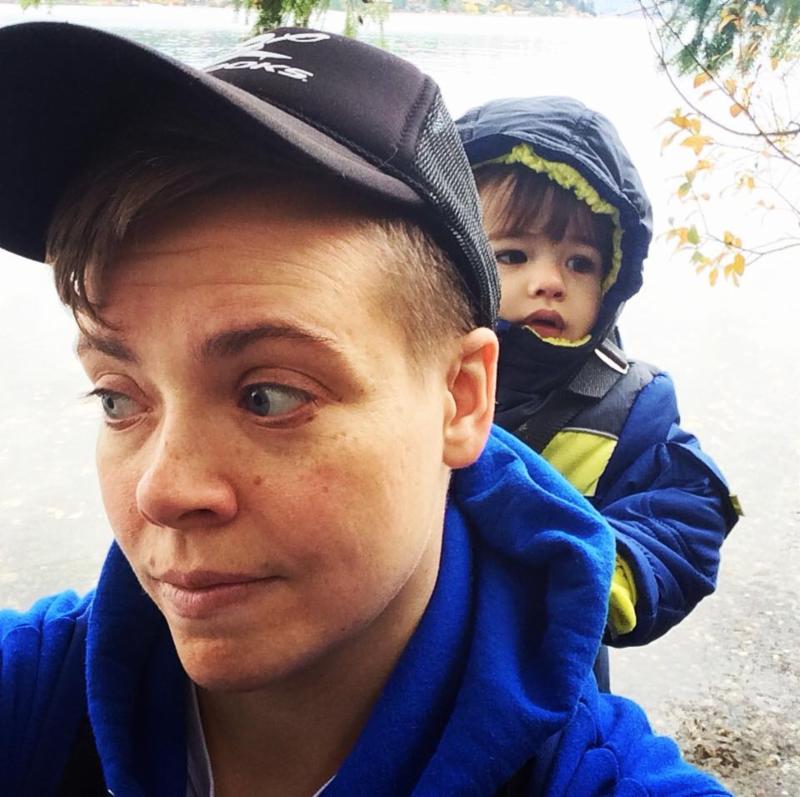
    Aaron Scott, Missioner for Anti-Poverty Organizing in the Diocese of Olympia, preached at Church of the Redeemer on September 16, 2018. A video of this sermon is later on this page.

    Aaron Scott and Moses at Redeemer on September 16, 2018

    Dear friends and loved ones

    As some of you know, I will be leaving my job at Chaplains on the Harbor at the end of March. I am so proud of this organization and all the work we’ve done together over the past eight years, and deeply grateful to know that many capable hands are picking up the work I’m handing off. I plan to stay in close contact with our leadership and the whole team at Chaplains as I move into my new work, which is what I’m writing to you about.

    In April, I will begin working with the Kairos Center for Religions, Rights, and Social Justice at Union Theological Seminary—one of the anchor organizations for the Poor People’s Campaign: A National Call for Moral Revival. I will be responsible for building out the Kairos Center’s strategy on countering the explosive rise of White Christian Nationalism across the U.S.

    As a graduate of Union and long-time collaborator with the Kairos Center, this move feels both like a homecoming as well as an invaluable way to build upon the key lessons we’ve learned at Chaplains on the Harbor—from counter-recruitment in white supremacist networks, to building projects of survival in predominantly poor white rural communities, to leveraging the power and support of the institutional church to defend human rights for poor, homeless, and incarcerated people. I am beyond eager to share these lessons across the country with other faith and grassroots groups engaged in similar struggles, and look forward to widely expanding the work we’ve begun at Chaplains.

    Because this is a new position and a new front of work for the Kairos Center, I am responsible for fundraising my own salary and benefits for the first year. I am asking you, your congregations, and/or your organizations to prayerfully consider making a financial contribution to this effort. Any amount you are able to give is deeply appreciated by me and my family, as well as by the communities across this nation with whom we will be working. I would be grateful for leads you may have on grants or other relevant funding, and more than glad to teach, preach, and present on our work for interested groups and supporters.

    To contribute to this effort, you can donate online through the Kairos Center, with “Aaron Scott” in the last field on this form, labeled In Celebration, Honor, Memory Of. Your donation is tax deductible. If writing a paper check, please make it out to:

    Union Theological Seminary
    Memo: “Kairos/Aaron Scott”
    3041 Broadway #47
    New York, NY 10027

    Thank you so much for your encouragement, your support, and most of all for your prayers on this journey toward a fair and loving transformation of our country. If you’d like to know a little more about me, or the context of this work, read on for more– and please feel free to write, text, or call me with any thoughts, ideas, or questions.

    Blessings and much gratitude!

    Aaron Scott
    he/him
    cell: +1 (360) 721-5419
    email: ascott@chaplainsontheharbor.com

    Donate to support Aaron Scott's work at the Kairos Center at Union Theological Seminary

    Context for this work addressing White Christian Nationalism

    As the pandemic and economic crises give way to growing inequality, racist violence, and widening poverty, an epoch-defining fight over the moral values and priorities of our nation is underway. Within this fight, the forces of White Christian Nationalism (WCN) wield tremendous political power and find common cause through a complex web of beliefs and values, religious interpretations and social theories, and historical revisionism. The result is an ideological battering ram used to justify and advance violence on a startling scale, whether that be the epidemic of mass shootings or the violence inherent in policy decisions that limit health care and keep wages low.

    The future of our country rests, in part, on addressing WCN and the rise of violent authoritarianism in American politics. The last five years, culminating in the events of January 6, [2021,] should not be seen as a new development or an aberration from the norm, but as an intensification of a long-term dynamic of American life. The Trump years only affirmed the rising threat of a highly motivated White Christian Nationalist movement with political power.

    Today, the social forces committed to this nationalism are growing bolder and are even able to win certain aspects of mainstream exposure and support, even as their agenda is unpopular in the country as a whole (in fact, recent polling suggests that a majority of people across the partisan spectrum support progressive policies like universal health care, raising the minimum wage, and more). The America we collectively envision—a multiracial democracy where everyone can thrive—is diametrically opposed to WCN and realizing that vision necessitates overcoming WCN. This is an ambitious, centuries-old struggle. But we believe that we can make a contribution to it.

    Aaron Scott and Moses

    Aaron Scott’s role at the Kairos Center

    Aaron Scott’s role at the Kairos Center will be to spearhead education, training, strategic interventions and counter-recruitment efforts in regard to the rapid growth of White Christian Nationalism across the United States—particularly through engaging religious networks and institutions, rural and poor white communities, and places where White Christian Nationalism is on the rise. Aaron has worked in grassroots poor people’s organizing for fifteen years. Trained by the Poverty Initiative (now Kairos Center) and their Poverty Scholars Program, he graduated from Union Theological Seminary with a Master of Arts in Biblical Studies in 2009. Aaron co-founded Chaplains on the Harbor in 2014, an outpost of the “freedom church of the poor” in rural Gray’s Harbor County, Washington State. He is the Missioner for Anti-Poverty Organizing in the Episcopal Diocese of Olympia, a previous winner of the Bishop’s Preaching Award, and founding member of the Kairos Center’s Freedom Church of the Poor.

    Aaron Scott’s sermon at Redeemer

    Church of the Redeemer

    Welcome to Church of the Redeemer: Worshiping God, living in community, and reaching out to the world. We are an Episcopal Church serving north King County and south Snohomish County, Washington. As you travel your road, go with friends walking the way of Jesus at Redeemer.

    Church of the Redeemer is at 6220 Northeast 181st Street in Kenmore, Washington. We are a short distance north of Bothell Way, near the Burke-Gilman Trail. The entrance looks like a gravel driveway. The campus is larger on the inside than it is on the outside. And we managed to hide a large building on the side of a hill that is not easily seen from the street.

    The Episcopal Church welcomes you.

  • Bishop Rickel’s statement on HBCU bomb threats

    Bishop Rickel’s statement on HBCU bomb threats

    As many of you are well aware by now, yesterday, on the first of February and the first day of Black History Month, several of our historically Black colleges and universities (HBCUs) were terrorized with bomb threats. Sadly, this incarnates the reality that we still have a long collective way to go to reach Beloved Community and that any notion that we can now stop talking, working, and struggling toward it is an illusion.

    I want to say first how sorry I am to our African American and Black siblings who feel the terror of such acts and to all the BIPOC community as well. Second, I want to encourage all of you to be proactive in speaking out against this, and also to be working to change it.

    Another concrete thing that I was going to put before you and ask of you, even before the sad events of yesterday, was to consider a gift to the HBCUs. Below, you will find a link to our Presiding Bishop’s invitation to give to the Absalom Jones fund in support of our HBCUs. You will also find instructions that will help facilitate your generosity both to economically assist these fine institutions but now, even more, to stand in solidarity with them. I gave today! Please pray for those who live in fear and anxiety due to such acts, and for those who feel the need to perpetrate them. Pray for our human family.

    Presiding Bishop Curry invites gifts to Absalom Jones Fund for Episcopal HBCUs.

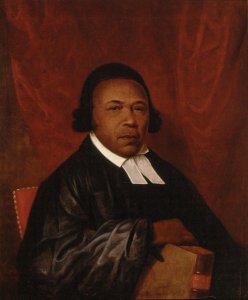
    Absalom Jones painted by Raphaelle Peale

    Giving the full history: Who owned Absalom Jones?

    Absalom Jones is one of the Episcopal Church’s and our nation’s most heroic founding fathers, and on February 13, we commemorate blessed Absalom, the first black priest and founder of the first black congregation in the Episcopal Church. Absalom Jones had been born into slavery in 1746 and achieved his own freedom in 1784. But, from whom?

    I know it’s awkward at this time of celebration to acknowledge the man who enslaved Absalom. But the 2006 General Convention mandated that the Episcopal Church give a “full, faithful and informed account of our history” with slavery. So, the time is right to remember that the man he called “master” for 38 years was Benjamin Wynkoop vestrymen, warden and benefactor of Christ Church and St. Peter’s in Philadelphia, our Church’s two historic congregations that helped give birth both to the nation and the Episcopal Church. May a fair accounting of Jones’ and Wynkoop’s history as slave and master provide Episcopalians today with the insight to overcome the legacies of a racist past infecting our society, and beloved Church, still.

    Absalom was not given the last name of Jones when born on the plantation of Wynkoop’s parents in Sussex, Delaware. At an early age, he was taken from the fields and came to work in the house. When Wynkoop chose to farm no longer, but to make his way as a merchant, he sold Absalom’s mother and six siblings, and brought the 16-year-old Absalom as his slave to Philadelphia in 1762.

    Upon arriving in Philadelphia, Wynkoop began attending the newly constructed St. Peter’s, built when Christ Church had become fully subscribed; Christ Church and St. Peter’s were one parish church in two congregations.

    Wynkoop’s business was successful, and how not? Absalom labored from dawn to dusk, he reported, often till midnight. Not only staffed by slave labor, the store sold the fruits of slave labor: “rum, molasses, coffee, chocolate, pepper, and other groceries.” According to a biographer, Wynkoop was a “prompt contributor to worthy causes” through his gains reaped by the labor of others. A major donor in the parish, Wynkoop was elected to the common Vestry of Christ Church and St. Peter’s in 1769.

    According to Absalom’s own autobiographical sketch, Wynkoop permitted him to attend a school for blacks, possibly one in Christ Church conducted by the Bray Associates (another history that needs a full accounting). Absalom married a slave, Mary, whose master was Wynkoop’s neighbor and fellow parishioner at St. Peter’s. Absalom took on the cause of Mary’s freedom. With the skills learned in school, he wrote the case and raised the necessary money to purchase her freedom, which her master accepted. Absalom remained a slave.

    When General Howe marched his British troops into Philadelphia in the autumn of 1777, Wynkoop temporarily fled. Absalom could have easily taken refuge with and received freedom from the British. But he stayed in the Wynkoop’s store. Mary was now free, he had a family that he would not abandon, and a house he had built that he rented to free blacks, saving the money. “I made application to my master in 1778 to purchase my own freedom,” he wrote, “but this was not granted.”

    “My desire for freedom increased,” he wrote, because he feared that, while a slave, his house might be taken by Wynkoop. He made “many applications to [Wynkoop] for liberty to purchase my freedom,” but Wynkoop wouldn’t budge. Why couldn’t Wynkoop breath the air of freedom rich and redolent in Philadelphia? Why did his Church, that had many abolitionists as members, remain silent? Those are the questions we are obligated to ask now.

    On October 1, 1784, Absalom recounts with a charity surprising that Wynkoop, “generously gave me a manumission.” Then, Absalom freely took the surname Jones, uniquely American and sounding nothing like the Dutch Wynkoop.

    Within three years, Absalom Jones co-founded the Free African Society. In 1792, he led his congregation from St. George’s Methodist Church and founded St. Thomas, which then in 1794 affiliated with the Episcopal Diocese, and the African Episcopal Church of St. Thomas was born. But what of Benjamin Wynkoop? He becomes warden of Christ Church and St. Peter’s during these formative years of the Episcopal Church, but little detail of his life remains. The most interesting detail is from Absalom Jones.

    After his manumission, he writes, “I have ever since continued in [Wynkoop’s] service at good wages, and I still find it my duty, both late and early, to be industrious to improve the little estate that a kind Providence has put in my hands.”

    I leave to historians the interpretation of the meaning or importance of Absalom Jones continuing to work for Benjamin Wynkoop, building a relationship of some warmth and forbearance such that Wynkoop’s respect for Jones was quoted in Jones’ obituary in 1818. But I challenge myself, and the tour guides at Christ Church who will tell Wynkoop’s history of slaveholding this year to some 100,000 school children, not to jump to the conclusion of a happy ending to a slavery story in our beloved Episcopal Church. I hope that Jones and Wynkoop truly enjoyed the embrace of reconciliation, but take that possibility as a challenge today to reconcile our present Church with its own history with slavery. Might we be guided by the wisdom of theologian Miroslav Volf: “Remembering well is one key to redeeming the past; and the redemption of the past is itself nestled in the broader story of God’s restoring of our broken world to wholeness — a restoration that includes the past, present, and future.”

    Absalom Jones wrote that the motivation for founding the African Episcopal Church of St. Thomas was “to encourage us to arise out of the dust and shake ourselves, and throw off that servile fear, that the habit of oppression and bondage trained us up in.” That same habit of oppression and bondage will continue to infect the Episcopal Church until we tell our complete history with slavery. I pray we, as a Church, arise out of the dust and shake ourselves, and give an informed account of the slaveholders in our past, and not just the slaves.

    [This article from the Episcopal Church website.]

    Bishop Greg Rickel

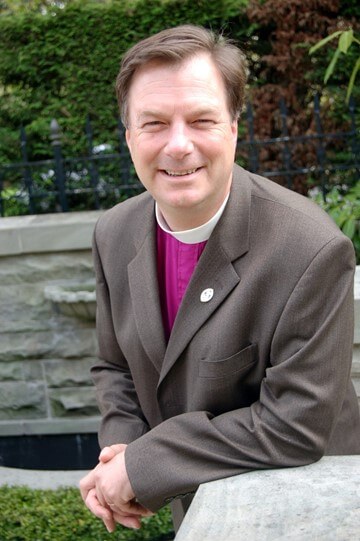
    The Rt. Rev. Gregory H. Rickel was elected bishop on May 12, 2007, and became the eighth Bishop of Olympia in September 2007. He embraces radical hospitality that welcomes all, no matter where they find themselves on their journey of faith. He envisions a church that is a safe and authentic community in which to explore God’s infinite goodness and grace as revealed in the life and continuing revelation of Jesus Christ.

    Church of the Redeemer

    Welcome to Church of the Redeemer: Worshiping God, living in community, and reaching out to the world. We are an Episcopal Church serving north King County and south Snohomish County, Washington. As you travel your road, go with friends walking the way of Jesus at Redeemer.

    Church of the Redeemer is at 6220 Northeast 181st Street in Kenmore, Washington. We are a short distance north of Bothell Way, near the Burke-Gilman Trail. The entrance looks like a gravel driveway. The campus is larger on the inside than it is on the outside. And we managed to hide a large building on the side of a hill that is not easily seen from the street.

    The Episcopal Church welcomes you.

     

  • Bishops respond to verdict in Ahmaud Arbery case

    Bishops respond to verdict in Ahmaud Arbery case

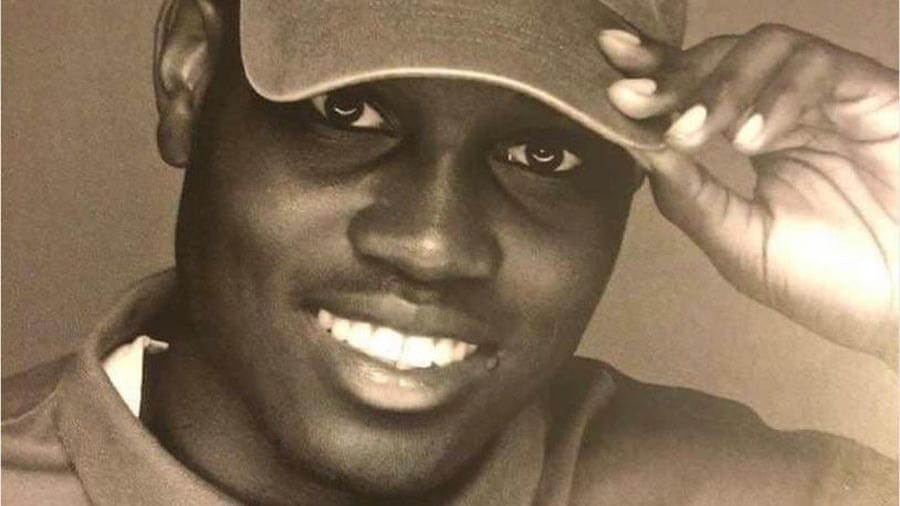
    Presiding Bishop Michael Curry, Bishop Gregory Rickel, and bishops in Georgia respond to verdict in Ahmaud Arbery case from Georgia.

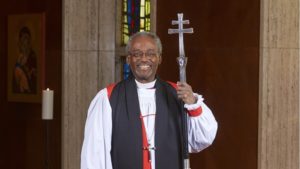
    Presiding Bishop Michael Curry in choir dress

    Presiding Bishop Michael Curry responds to verdict in Ahmaud Arbery case

    While nothing will return Ahmaud Arbery to his loved ones, our justice system has held three men accountable for hunting down and killing a Black man who did nothing but go for a run in a predominately white neighborhood, and I give thanks for this outcome. My prayers are with Arbery’s family as they continue to grieve his loss.

    Even so, our work as followers of Jesus, as a church, and as a nation, continues; we cannot rest until these modern embodiments of terror against any human child of God are no more. We must labor on for racial healing and reconciliation in each of our hearts—and in our society. We must reimagine and advocate against systems, laws, and policies that encourage vigilantism and diminish human life, because all people should be treated with the dignity, love, and respect that is due children of God.

    Presiding Bishop Michael Curry responds to verdict in Ahmaud Arbery case (English and Español). The Most Rev. Michael Curry is the Presiding Bishop and Primate of the Episcopal Church.

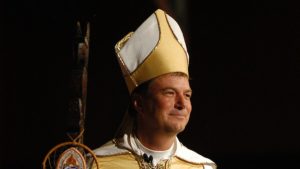
    Bishop Greg Rickel wearing cope and mitre

    Bishop Greg Rickel statement on the verdict in the Ahmaud Arbery case

    Today, the jury in the Ahmad Arbery trial has returned its verdict and found the men responsible for Arbery’s death guilty on nearly all counts. While this verdict does not, as our Presiding Bishop has said, bring Ahmaud Arbery back to his family and loved ones, it does provide a measure of justice from a system that has too often denied justice to our BIPOC siblings.

    I echo the prayers and pleas of our Presiding Bishop and the Episcopal and Lutheran bishops of Georgia in their statements following the verdict [below]. I commend them to you. The joint statement from the Georgia bishops is especially good and also provides some very good resources, including a link to the resource library of the Center for Racial Healing.

    There is much work still to be done in reforming our justice system, and quite frankly much of that work is inside ourselves, for as many of you have reminded me over this past week, we humans make up, implement, and oversee this system. Much work remains to be done in each of our hearts to dismantle our own racism and bring about healing and reconciliation. When this happens I do believe any unbalanced and/or unjust system can and will change. I most definitely include myself as one that continues to need work and most likely will the remainder of my life. I ask you to pray for everyone involved in this case, their families, and for the repose of the soul of Ahmaud Arbery.

    Bishop Rickel’s Statement on the Verdict in the Ahmad Arbery Case. The Rt. Rev. Gregory Rickel is the Bishop of the Diocese of Olympia.

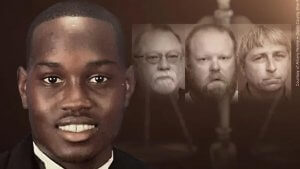
    Ahmaud Arbery shown with his murderers. Photos courtesy of Ahmaud family and Glynn County Sheriff's Office

    Episcopal and Lutheran bishops in Georgia respond to the verdict in the McMichaels-Bryan trial

    The jury charged with handing down a verdict in the case of three men accused of murder for their roles in the death of Ahmaud Arbery issued its decision today finding Travis McMichael guilty of malice murder and other charges, Gregory McMichael guilty of felony murder and other charges, and Roddie Bryan guilty of felony murder and other charges. We give thanks for the dedicated work of the judge and jurors who served in a charged atmosphere with intense public scrutiny. Any verdict arrives too late to offer true justice in this case. Ahmaud Arbery is dead, and the court cannot return him to his family. Nonetheless, this moment is an important one.

    We prayed for the court to bring earthly justice and the court has acted. But it took a public outcry and the release of video of the incident to force the system into action. The three men who are now convicted of crimes were initially shielded from facing their accusers in court. Until we can bring equity to the system that initially protected them, the rest of us will not have done what we can to create the just society for which we long. Our country has not dealt with the racism built into the system at its founding and perpetuated until this day. Living into our faith means addressing directly any sin we see in our lives and in our communities. Divisions around the human-made concept of race are an offense against our faith which teaches that all people are made in God’s image and likeness. Jesus taught us to love God and love our neighbor as ourselves. Through his parable of the Good Samaritan, Jesus made it clear that all are our neighbors. Any racial divide breaks the heart of God.

    One bright spot of hope we have seen emerge following Ahmaud’s tragic death has been the interfaith group of clergy in Glynn County. Their clarion call for justice after the video surfaced was critical in getting attention to this case. They followed this call by engaging in candid conversations that drew them together even as other forces could have deepened divisions. Participants included clergy from all five Episcopal Churches in the county and those of many other denominations, as well as leaders of Jewish and Muslim congregations. News stories have often quoted the clergy who were consistently engaged, offering a non-anxious presence on the courthouse grounds. They have witnessed to the dream of God: all of us becoming beloved community, not divided by ethnicity, but united in our common humanity. We know that long after the cameras and reporters are gone, the clergy in Glynn County will still be working together toward that dream.

    We hope not just for good to overcome evil, but for God to redeem even the worst tragedies and the gravest injustices. While the court has acted, the work of healing and justice remains. Maya Angelou said, “Do the best you can until you know better. Then when you know better, do better.”

    The Episcopal Diocese of Georgia offers the following resources: ​​Resources for Racial Healing and Justice.

    The Southern Synod of the Evangelical Lutheran Church in America offers resources: Racial Justice.

    The Episcopal Diocese of Atlanta’s resources can be found at the Absalom Jones Center for Racial Healing: Our Virtual Resource Library.

    It does not take an evil person to do an evil act. Murder is evil. Ahmaud’s killing was evil. But we need to guard against demonizing anyone or denying their basic humanity. The accused have been convicted. They will serve their sentences and need our prayers that they may be awakened to repentance. In this, as with all of us, we pray that God will bring all who are guilty to repentance and amendment of life and give us all hope for the future. In that spirit, we offer this prayer:

    Eternal God, we give thanks for the judge and jurors charged with bringing earthly justice in the death of Ahmaud Arbery. Be with the Arbery family and all in the Brunswick and Glynn County Community as they seek further healing. Be with Gregory, Travis, and Roddie and their families as they serve their sentences and work toward their own repentance. Be with all of us as we seek repentance and healing for ourselves, one another, and our communities. Give us all the grace to hunger and thirst for your righteousness that we may work together to become the beloved community to which you call us. This we ask for the sake of your Son our Savior, Jesus Christ, who with you and the Holy Spirit lives and reigns now and forever. Amen.

    May God grant us grace to see the healing needed in our lives, our families, and our communities.

    In Christ,

    The Rt. Rev. Frank S. Logue, Bishop of the Episcopal Diocese of Georgia
    The Rt. Rev. Rob C. Wright, Bishop of the Episcopal Diocese of Atlanta
    The Rev. Kevin L. Strickland, Bishop of the Southeastern Synod, Evangelical Lutheran Church in America

    Episcopal and Lutheran bishops in Georgia respond to the verdict in the McMichaels-Bryan trial

    Early morning mist in the Memorial Garden at Church of the Redeemer

    Church of the Redeemer

    Church of the Redeemer: Worshiping God, living in community, and reaching out to the world around us. We are an Episcopal Church serving north King County and south Snohomish County, Washington. As you travel your road, go with friends walking the way of Jesus at Redeemer.

    Church of the Redeemer is at 6220 Northeast 181st Street in Kenmore, Washington. The campus is a short distance north of Bothell Way, near the Burke-Gilman Trail. The entrance looks like a gravel driveway. The campus is larger on the inside than it is on the outside. And we managed to hide a large building on the side of a hill that is not easily seen from the street.

    The Episcopal Church welcomes you.

  • Bishop Rickel’s Statement on the Kyle Rittenhouse Verdict

    Bishop Rickel’s Statement on the Kyle Rittenhouse Verdict

    Bishop Rickel’s Statement on the Kyle Rittenhouse Verdict
    Declaración del Obispo Rickel sobre el veredicto en el caso de Kyle Rittenhouse

    Dear Ones,

    I was saddened to learn of the verdict today in the trial of Kyle Rittenhouse, the young man who traveled to Kenosha, Wisconsin, last year and fatally shot two people, seriously injuring a third. The incident brought to the surface many of the issues that our country wrestles with—and all-too-often attempts to ignore—around racial justice, white vigilantism, and gun violence. Rittenhouse came to Kenosha, heavily armed, as part of a mob of white men to stop the protests for racial justice and took two lives. Under the auspices of protecting property, he came prepared to commit violent acts and did just that. As the prosecutor stated, there is a difference in defending yourself from violence perpetrated against you, and you creating the situation in order for you to do it—or more specifically, “You lose the right to self-defense when you’re the one who brought the gun, when you are the one creating the danger, when you’re the one provoking other people.”

    As the verdict came in today, it has been widely observed that we have two legal systems in this country—one for white men, and one for everyone else. Many have suggested that if Rittenhouse had been Black, the verdict would have been drastically different. I would go further—when you watch the videos of that night, I would say if Rittenhouse had been Black, he most likely would not have come out of that night alive. A young white man brazenly carrying an automatic weapon through city streets was virtually ignored by law enforcement. Had it been a Black man, I do believe the result would be drastically different.

    In these same days we are witnessing the trial of the ambush of Ahmaud Arbery, a Black man, in Brunswick, Georgia. And even with all the accused admitting that Arbery was unarmed and ultimately not threatening them, and all evidence pointing to Arbery trying to flee the scene unarmed, this case hangs in this unjust balance as well. In both cases, we see self-appointed vigilante’s taking justice into their own hands. And folks, if it can happen to these folks, it can just as easily happen to any of us.

    But, the point is, mostly, it doesn’t. Especially if we are white, if we are privileged, if we have enough money to defend ourselves. We simply must do better, and we must be better.

    This comes only one day after a judge in New York “prayed” about the sentencing of a young white man who had pleaded guilty to charges rape, sexual abuse, and sexual harassment and only gave the man probation because he said that prison time “wasn’t appropriate” (Judge ‘Prayed’ About It and Decided That Prison Time for Admitted Rapist of Teen Girls ‘Isn’t Appropriate’).

    We know that incarceration rates for Black Americans is five times the rate of white Americans, and for Latin Americans it is 1.3 times higher (The Color of Justice: Racial and Ethnic Disparity in State Prisons). According to the ACLU, women who kill their abusers will spend an average of 15 years in prison, while men who kill their spouses spend two to six years in prison (Women Serve Longer Prison Sentences After Killing Abusers: When men kill the women they’re abusing, statistics say they get out sooner). Men from Indigenous communities are four times more likely to be incarcerated than white men, while Indigenous women are six time more likely (Indigenous Communities and Mass Incarceration).

    Justice is supposed to be blind, but time and time again, our justice system has been proven to favor white men. It is severely out of balance.

    I pray for all involved in this case, including Kyle Rittenhouse. I pray for all the victims of gun violence. I pray for our country and for our justice system. There is so much that needs to change. Let’s engage and act so that we may see a more just system going forward. To get involved in making our criminal justice system equitable, you can see what steps The Episcopal Church’s Office of Government Relations recommends here: Get Involved with Criminal Justice Reform.

    Blessings,

    +Greg

    Bishop Greg Rickel

    Bishop Greg Rickel

    The Rt. Rev. Gregory H. Rickel was elected bishop on May 12, 2007, and became the eighth Bishop of Olympia in September 2007. He embraces radical hospitality that welcomes all, no matter where they find themselves on their journey of faith. He envisions a church that is a safe and authentic community in which to explore God’s infinite goodness and grace as revealed in the life and continuing revelation of Jesus Christ.

    Diocese of Olympia

    The Episcopal Diocese of Olympia

    The Episcopal Diocese of Olympia traces its history to the establishment of the Missionary Jurisdiction of the Oregon and Washington Territories in 1853. We are also known as the Episcopal Church in Western Washington.

    Admitted by General Convention in 1910, the Diocese of Olympia is made up of more than 26,000 Episcopalians in more than 100 worshiping communities through Western Washington. Our geographic area stretches south from Canada to Oregon and west from the foothills of the Cascade Mountains to the Pacific Ocean.

    Through worship we do the following:

    • Affirm our faith
    • Pray together
    • Reconcile together
    • Share peace and thanksgiving together
    • Gain strength and renewal through Eucharist
    • Prepare ourselves to minister to the world

    We share hope in God’s incredibly extensive grace to forgive all repentant people.

    Our congregations cover a whole range of sizes and stages of development. Several affiliated institutions and numerous outreach and social justice ministries as well as a number of multicultural ministries are supported by the whole diocese.

    Church of the Redeemer

    Church of the Redeemer: Worshiping God, living in community, and reaching out to the world around us. We are an Episcopal Church serving north King County and south Snohomish County, Washington. As you travel your road, go with friends walking the way of Jesus at Redeemer.

    Church of the Redeemer is at 6220 Northeast 181st Street in Kenmore, Washington. We are a short distance north of Bothell Way, near the Burke-Gilman Trail. The entrance looks like a gravel driveway. The campus is larger on the inside than it is on the outside. And we managed to hide a large building on the side of a hill that is not easily seen from the street.

    The Episcopal Church welcomes you.

  • Executive Council opening remarks, October 2021

    Executive Council opening remarks, October 2021

    The following are the opening remarks of the Presiding Bishop of the Episcopal Church Michael Curry and the President of the House of Deputies Gay Clark Jennings at the Executive Council of The Episcopal Church. They are meeting virtually from October 25, 2021, through October 28.

    Presiding Bishop Michael Curry portrait

    Presiding Bishop Michael Curry’s opening remarks

    The following is a transcript of the opening remarks of Presiding Bishop Michael Curry. These remarks have been lightly edited for clarity.

    It’s just good to be back. Even in what Mark Goodman earlier reminded us, these are in-between times. This is in-between. Which for Christians whose Lord promised, “I’ll be back,” probably is not a surprise, but it is a surprise.

    Just to give context to some opening remarks, I thought I would refer back to a passage in the first chapter of the Acts of the Apostles. This is after the crucifixion and the resurrection, and moments before Jesus ascends or returned to the fullness of the Godhead before the Ascension. And Jesus is speaking to people who are going to have to live in in-between times, and who aren’t anxious for the in-between times to enter. And for us to know when it ends and something new begins.

    And so this may well be a text for our time, for this moment when not only our meetings are hybrid, but life is hybrid. So when they had come together, they asked Jesus, “Lord, is this the time when you will restore the kingdom to Israel?” He replied, “It is not for you to know the times or the seasons that the Father has fixed by His own authority, but this you will know. You will receive power when the Holy Spirit has come upon you, and you will be my witnesses in Jerusalem, in Judea, in Samaria, to the ends of the earth.”

    It is not for you to know all the ins and outs of life. That’s just the way it is. Some things you can know, and some things you don’t. Like my grandma used to sing, we’ll understand it better by and by. But this much you can count on. You will receive power when the Holy Spirit has come upon you, and you will be my witnesses in Jerusalem and Judea, in Samaria, in first-century Palestine, and in the 21st century world of a global pandemic. Of a world struggling with itself profoundly, and maybe of a world where something is trying to be born. Who knows, but you’ll be my witnesses. And maybe that’s enough.

    I want to suggest that Jesus has given us some wisdom to be his witnesses, to witness to his way of life, his way of love. To witness to a way of, to borrow from Mally [Lloyd] again, this morning, I’m telling you, Ted Lasso is my hero. I love this dude. But to witness the things like kindness and forgiveness and giving and loving, that they matter. And that in the end, those are the things that do matter. You will be my witnesses. Whatever mistakes you make, church, whatever ways you err, however you fumble the ball, you will be my witnesses, and that’s enough.

    You are not God, you’re witnesses. You are not perfect, you’re witnesses. You don’t have all the answers, you’re witnesses. You will be my witnesses. Since our last meeting, things that none of us could have foreseen have happened. Our last two meetings before the pandemic may well have been prophetic, proleptic, anticipatory. In October of 2019, we went to Montgomery, Alabama, the [Equal Justice Initiative].

    And we were blessed and privileged to spend time with Bryan Stevenson there. And blessed in great agony and pain to face into lynching in this country, to face into part of our history, in spite of what the critics of critical racial theory would have you believe. To dare to look into our history. And I say our history, we’re all in it. I’m a descendant of slaves. Some are descendants of slave owners, but be that as it may, we’re all in this now. It’s our history. To face into that history, to learn from it, and hopefully to learn and then turn and work to build a new future. We did that. We started that. The group in this council who worked on that envisioned that as a continuing work of anti-racism, continuing work of truth-telling, continuing work to lead us eventually to the healing that leads the beloved community.

    And then in February, just a few weeks before we discovered we were in pandemic, we met in Salt Lake City, and there we heard a similar story. There it was Native Americans, Indigenous peoples, the First Nations of this land, forcibly removed, and in many cases slaughtered in a genocidal massacre against humanity. Again, trails of tears and weeping and moaning. And again, this is part of our history. And I say our history. Whether any of us were there or not, it is part of our history, and we faced it.

    And then a virus became known to us. And then suddenly there was suffering throughout the land, not just this land, around the globe. People got sick. Hospitals were overrun, healthcare folk and first responders and the folk who packed the groceries in our stores were overwhelmed. And people died alone and people were alone. And much of the world lived through a horrible pandemic of a virus, and it was a nightmare lived out. That still continues. These are in-between times. We need a witness.

    But as if the biologic wasn’t enough, the sociologic, the spiritual, may well have been equally as bad, if not worse. Demons of our past came out to haunt us again, and they were legion. In the face of George Floyd, Breonna Taylor—Ahmaud Arbery had been right before the pandemic—in their faces and in their lives, and you can go back to the Trayvon Martins and the Eric Garners, you can go back in time—all of a sudden those charged to protect and serve, many of them no longer protected or served—many, not all, please hear me. Many of them in a culture of violence and hatred, literally killed people before our eyes. This happened here.

    These are in-between times. We need a witness. And I could go on. I don’t mean to depress you. I just say January the 6th, I don’t need to say any more. I don’t mean to depress you. I could say something about the discovery, no, the recognition of Indigenous children who were taken from their homes forcefully over 100 years ago to boarding schools. Whatever the intentions, the reality was a kind of cultural genocide that was a perpetuation of the physical genocide that had been going on before. And some of the children died at those boarding schools and were buried.

    And some of us thought those Indigenous boarding schools were only in Canada. North America is North America, and the bodies are on this land as well. And we began to realize that a society of democratic values forgot human decency and kindness. This is part of our history, and I underscore our. I was rereading some writings of King back in June, and realized that one of his greatest moments of despair was the realization that the church that he loved as a Christian and as a pastor was often silently complicit. And in some cases, loudly and explicitly participant in ways of white supremacy, in ways of domination and putting down any human child of God, and daring sometimes to do it in the name of God. That was his greatest despair.

    And those who follow Jesus had forgotten who Jesus was and is, and what the Gospel is. But let me not leave you in despair. The good news is only good news when you face the bad news. Our Lutheran friends teach us, you’ve got to deal with law before you get to Gospel. And there’s some good news. That in the midst of this—while we are not perfect in this church—in the midst of this I have seen this church do what I never thought it would do or could do. Not everybody, I understand that, but I’ve seen goodness rise up, in spite of the fact that we were a little confused by what was going on around us.

    I’ve seen people try to figure out how do we care for each other when we can’t touch each other. I’ve seen people reach out and call their neighbor. At one point, I said, look, if you’re high tech, text. If you’re low tech, email. If you’re no tech, just pick up the phone and call, but stay in contact with each other. And the people in this church did that. I mean, they really have done that. I’ve seen it. All is not gloom and doom.

    But I’ve seen it in this church.

    Let me tell you something. I’m going to get in trouble, what I’m about to say, but I’m going to say it anyway. I was on TREC [Task Force for Reimagining the Episcopal Church], which recommended massive changes, which may or may not happen, but maybe it just wasn’t the right time. Things have to happen in their own time and season.

    If we had had a commission, another kind of TREC that would have said to the church, Episcopal Church, you must move your worship from in the buildings that you love and put it online, I guarantee you the same thing that happened to the TREC report, would happen to that report. But I’m here to tell you that I saw this church rise up and figure out—not quite sure how to do it—we are going to worship God come what may, and The Episcopal Church got online and did it. It wasn’t always pretty, but God bless us, we did it, and kept doing it. And then realized, wait a minute, have we stumbled into people who might never darken the doors of our church? Have we actually reached somebody … Let no child of God be left behind when we go back into those churches. We figured out and we’re doing it. God bless this church. Something good, something’s emerging.

    I’ve seen people in study groups around racism, that is Sacred Ground. I mean, massive numbers of Episcopalians studying. I’ve seen Episcopalians throughout this country joining with young people in the streets, calling on this nation to claim the high calling of justice, equality, dignity for every child of God.

    The first trip that I took was last May to go to Virginia seminary for their commencement. And the reason I went was to address the graduating class and to say thank you to them, because that was the class and they were the seminarians who were there at St. John’s church, Lafayette Square. They had been there passing out water and things to support, to be a pastoral presence for the protestors. And they were there the night, the then-president of the United States did what he did. And I just wanted on your behalf, on behalf of this church, to say thank you.

    And to say to them, don’t let the days that are ahead of you, the ministry that is before you, take out the zeal that you had that led you to Lafayette Square. Continue that ministry following in the footsteps of Jesus. Oh, my friends, something is trying to be born. I’m smart enough not to predict. I don’t know exactly what it is, but something is trying to be born.

    I shared something with some friends, and then later I’ve shared it around the church. All it is—please hear me—it’s not an official statement. It’s not a papal bull, though somebody says it’s PB bull. It’s not a papal bull, it’s not an official statement, but please hear me when I say, it’s coming out of this experience of a nightmare and of something trying to be born. I just want to read part of it to you.

    It’s more a dream, more a hope, maybe a prayer, maybe a poem still in the forming, for this church that has raised me, this church that taught me about Jesus and his way of love, that when others see us, they might see him. It says, come and see. Come and see. We are becoming—we’re not finished yet—but God help us we are becoming a new and re-formed church, Episcopal branch of the Jesus movement.

    Individuals, small gatherings and communities and congregations, whose way of life is striving to be the way of Jesus and his way of love. No longer centered on empire, no longer centered on establishment, no longer fixated on preserving institutions, no longer shoring up white supremacy or anything that hurts or harms any child of God or God’s creation. By God’s grace we are becoming a church that looks and acts, and maybe better yet, that loves like Jesus. A church that is his witness to his love and not to ourselves.

    When I was a new priest, actually I was still a deacon—I was the deacon in charge of St. Stephens in Winston-Salem. And this is 1978. I had never had an office before, and I was so excited to actually have an office and a typewriter. It was an IBM electric typewriter. Remember those? I was just so happy and proud of myself.

    Anyway, so I was sitting in the church office, and there was a hallway with some classrooms. And then there was another section where we had a daycare center with 3- and 4-year-olds, basically, preschool. The children, generally as a rule, in order to either go to the bathroom or to go out to the playground, had to come by my office. It was that small. I’d see them every time they passed by.

    So anyway, so I was sitting in the office—I hadn’t yet been introduced to the children; it was probably my first day, I suspect. And this little boy came by. He looked in the office, and I was sitting there. I said, “Hello.” And he said, “Hello.” And I was wondering, OK, where does the conversation go from here? He said, “Are you God?”

    Well, I had just taken GOE, the General Ordination Exams, and had passed successfully, so I had an answer readily available. I said, “No, I’m not God, but I work for him.” Which I thought was not a bad answer. I thought it was pretty good. And he seemed satisfied. So he went on, went to the bathroom and went back with the other kids. Well, another child came down and looked at me and asked the same question. I said, did my little evangelist go back and share the good news?

    I still didn’t make too much of it, until later the kids came out to go to the playground. And again, they had to walk past my office to get there. They came by the office and all these kids are going, “Hi, God. Good morning, God. Hello, God.” At that point, I really, you’ve never seen a Black person turn red, but I was red at that point, because I knew the teachers were thinking, what’s this guy been telling these kids? But then I started thinking about it, and the more I thought about it, I said, you know something? Well, maybe those kids ought to look at me and see the God that Jesus was teaching us about.

    I don’t mean that they ought to see us and actually think we’re God. Maybe they ought to look at the way I live my life, and see the love of God so vividly manifested in me. That when they see me, they actually see God. Maybe the world ought to look at this church and actually see, when they see us, people who are willing to face hard truths, willing to do the hard work, and willing to hang in there come what may. And when they see us, they don’t glorify us, but glorify our Father who is in heaven. Maybe when they look for Jesus and look for Christianity, someone will look at this wonderful Episcopal church and look at us and say, “That’s what a Christian looks like.”

    You won’t have all the answers. You won’t have it all figured out, but this much I know, you will receive power, and the Holy Ghost has come upon you, and we will be his witnesses in Jerusalem, in Judea, in Samaria, in the first century and in the 21st.

    God love you.

    And it sure is good to see you.

    Amen.

    —The Most Rev. Michael Curry

    The Rev. Gay Clark Jennings

    President of the House of Deputies Gay Clark Jennings opening remarks

    The following are the opening remarks of President of the House of Deputies Gay Clark Jennings.

    Good morning. It is wonderful to see you again. I pray that our time together this week will be energetic and productive and holy and safe. Please take good care while we are here and observe all of the risk mitigation measures that were outlined in our meeting materials. I know that we are all ready to be done with this pandemic, but unfortunately, it is not ready to be done with us.

    In fact, in the last few days, I have been reflecting on the ways in which the effects of the pandemic will be with us for a long time to come, particularly through the troubling disparities that it has exacerbated. In the United States, the wealth gap before COVID was already enormous. Now it is much worse, after months in which white collar workers stayed home, kept their jobs, and collected their stock market gains, while front line workers—many of whom are people of color—lost wages and jobs and, in far too many cases, lost their lives. And women, especially women of color, suffered disproportionate job loss and caregiving burdens during COVID.

    In short, if you started the pandemic with a lot of privilege, there’s a good chance that you have more of it now. And if you didn’t, things might well be worse for you and those you love than they were in March of 2020.

    A couple of weeks ago, we learned that COVID hasn’t just widened disparities among individuals. It has also widened the gap that separates our congregations. Thanks to the good work of the House of Deputies State of the Church Committee, which crafted new narrative questions for the 2020 parochial report; and to Elena G. van Stee, a doctoral student at the University of Pennsylvania who analyzed the data; and to the General Convention Office, which coordinated the work, we now have extensive qualitative data about how our congregations have weathered the pandemic.

    The report is called “The Church Is Not a Building: Observations and Insights from Narrative Responses to the 2020 Parochial Report.” You might not have heard about this new element of the parochial report results, and I commend it to you. I want to read a few sentences from it now in the hope that it will pique your interest and help guide our work this week:

    • Considered as a whole, the narrative responses paint a portrait of a year characterized by loss and grief as well as innovation and growth. Churches experienced unprecedented challenges and opportunities that varied greatly across the denomination and cannot be reduced to a simple narrative of denominational growth or decline. On the one hand, the pandemic exacerbated and exposed fault lines of inequality, particularly with regards to human and financial resources. On the other hand, the circumstances of the pandemic inspired innovative new initiatives, fostered intra- and inter-personal growth, and provided new opportunities for the church to be the hands and feet of Christ in the world. Recognizing the truth in both narratives will be essential for understanding the complexity of the The Episcopal Church’s past, critically evaluating the present, and pursuing new ways of loving God and neighbor in the future.

    I find this report especially helpful right now, as we are all struggling to make sense of what we have experienced in the last 19 months. If you are a person with privilege, or if you come from a congregation with privilege, you might be seeing the entire church through the lens of your pandemic experience. You might be thinking—the economy is strong, people have lots of disposable cash, the outlook for our congregation and diocese is good, and so that must be true of the entire Episcopal Church. You might not be seeing the congregations that closed during the pandemic, the lay leaders who are struggling to hold things together in congregations without clergy or paid staff, the dioceses whose revenue forecasts are grim. But at the same time, it might be hard for all of us to recognize the ways in which the pandemic did inspire new opportunities and foster growth and connection. And so I hope this report will help us understand better the needs of all of the people and all of the congregations we are here to serve.

    As we try to understand where God is calling The Episcopal Church in this late pandemic world, I am especially grateful for the guidance of previous General Convention resolutions that can guide us through these difficult times. In particular, I want to highlight for you two issues—one on which the church is speaking now, and one on which I hope we will find our voice:

    • In August, the Presiding Bishop and I became two of the lead signers on a faith leaders amicus brief submitted to the Supreme Court of the United States in the matter of the New York State Rifle & Pistol Association v. Bruen. This case, which is scheduled for oral arguments on November 3, will determine whether New York State’s law setting sensible restrictions on the concealed carry of firearms in public is constitutional. It could also have significant implications for a broad range of common-sense gun laws. We were proud to be joined by more than 20 participants in the Bishops United Against Gun Violence Network and many Episcopal clergy from across the church.The amicus brief cites General Convention resolutions from both 1976 and 2015 and urges the court to consider the burdens on religious institutions that would be imposed by the unrestricted ability to carry concealed weapons in public, including the heightened risk of gun violence in houses of worship. This is a critical issue for our congregations, but even more so for faith communities that are too often the target of hate crimes. I am proud that General Convention has put us on record in favor of sensible gun restrictions and that we are able to make a witness in this critical case.
    • The second issue is one that many of you will have heard about in the last few days. According to news reports, the House of Bishops of the Anglican Church in Ghana has endorsed a draconian anti-LGBTQ law now awaiting a vote in the Ghanaian parliament. This is upsetting and particularly regrettable in light of the 2005 commitment of the primates of the Anglican Communion to stand against the “victimisation or diminishmentof LGBTQI people.For our part, in 2015, General Convention passed Resolution A051, which commits us to stand with our LGBTQI Anglican siblings in Africa, and that our churchwide offices, including the Office of the Presiding Bishop, “be directed to work in partnership with African Anglicans who publicly oppose laws that criminalize homosexuality and incite violence against Lesbian, Gay, Bisexual, Transgender, and Intersex people.”

    I expect that it has not yet been possible to understand exactly what has transpired in the church in Ghana, and what kind of risk our LGBTQI friends and allies there are now facing, but we must commit ourselves to standing with them in whatever ways we can. I hope that it will be possible for us to discuss this matter at this meeting with the goal of hearing a full report and taking action in keeping with Resolution 2015-A051 at our January meeting. Mission Beyond, I believe that this would be in your portfolio.

    Yesterday, as you know, the gospel reading appointed for the day was the story of Jesus restoring sight to Bartimaeus. When Jesus and his disciples were leaving Jericho, Mark tells us, Bartimaeus called out to Jesus from the side of the road, begging him for mercy. And when Jesus called him over and asked what Bartimaeus wanted him to do, Bartimaeus said, “Teacher, let me see again.”

    As we begin this meeting—together, at last—let that also be our prayer. Let us ask Jesus to let us see again so that we might better understand the needs of the people God calls us to serve and the church we have been elected to lead.

    —The Rev. Gay Clark Jennings

    Public Affairs Office of The Episcopal Church

    Executive Council of the Episcopal Church

    The Executive Council of the Episcopal Church is the national body that administers the program and policies adopted by the General Convention. It was called the National Council from 1919-1964.

    It is currently composed of the following:

    • Twenty members elected by General Convention
    • Eighteen members elected by the Provincial Synods

    The following are ex officio members:

    • The presiding bishop
    • The president of the House of Deputies
    • The vice president, secretary, and treasurer of the Executive Council

    Members are elected to six-year terms with half the membership elected each triennium. The body must have specified numbers of bishops, presbyters, and lay persons. The council meets at least three times each year.

    Church of the Redeemer

    Church of the Redeemer: Worshiping God, living in community, and reaching out to the world around us. We are an Episcopal Church serving north King County and south Snohomish County, Washington. As you travel your road, go with friends walking the way of Jesus at Redeemer.

    Church of the Redeemer is at 6220 Northeast 181st Street in Kenmore, Washington. We are a short distance north of Bothell Way, near the Burke-Gilman Trail. The entrance looks like a gravel driveway. The campus is larger on the inside than it is on the outside. And we managed to hide a large building on the side of a hill that is not easily seen from the street.

    The Episcopal Church welcomes you.
  • ‘My Name Is Pauli Murray’ brings trailblazing Episcopal saint’s story to a wider audience

    ‘My Name Is Pauli Murray’ brings trailblazing Episcopal saint’s story to a wider audience

    [Episcopal News Service] In the new documentary “My Name Is Pauli Murray,” filmmakers Betsy West and Julie Cohen paint a picture of an unsung trailblazer who remains relatively unknown despite her lasting influence on American society. Episcopalians know her as the first African American woman to be ordained a priest and as a pioneer in the struggles for racial and gender equality. But many may not know about other important aspects of her life, such as her struggle to come to terms with her gender identity in an era long before transgender people were accepted in mainstream society.

    When West and Cohen came across Murray’s story while working on their previous film (“RBG,” the Ruth Bader Ginsburg biopic), they wondered why such a pivotal figure wasn’t a household name.

    “‘Why didn’t we know this person?’ was the first question everybody asked,” West told Episcopal News Service, “and could we do something about it?”

    Murray is celebrated on July 1 in The Episcopal Church’s “Holy Women, Holy Men” calendar of saints, and an increasing number Episcopal leaders – especially Black and LGBTQ+ people – cite her as an influence. Trinity Church Wall Street and the Diocese of North Carolina are supporting partners of the Pauli Murray Center for History and Social Justice at Murray’s childhood home in Durham, North Carolina.

    The result, “My Name Is Pauli Murray,” premiered online in January 2021 at the Sundance Film Festival and is now playing in select theaters. Washington National Cathedral will screen the documentary for an in-person audience on September 30. It will stream on Amazon Prime beginning October 1. It will also be shown online the same day through the Church of the Heavenly Rest in New York, followed by a discussion with West and Presiding Bishop Michael Curry. The film, which incorporates excerpts from Murray’s diaries and memoirs, shows how she laid the groundwork for future achievements for racial and gender equality.

    Murray was undaunted by the fact that she was often the first and/or only Black woman in the positions she held. Fifteen years before Rosa Parks was arrested for refusing to move out of a whites-only section on a bus, Murray and a friend did the same in Virginia, though their case did not gain momentum the way Parks’ did. In her legal career, she was among the first to argue the unconstitutionality of “separate but equal” laws, an argument cited 10 years later in Brown v. Board of Education by Supreme Court Justice Thurgood Marshall, who called her book on segregation laws “the bible of the civil rights movement.” Ginsburg used Murray’s arguments in a brief she wrote – listing her as a co-author – while arguing Reed v. Reed, the 1971 Supreme Court case that banned gender discrimination based on the 14th Amendment’s equal protection clause.

    Part of what makes Murray significant today was her commitment to intersectionality: the idea that social justice movements for different groups should support each other rather than work alone. As a Black woman experiencing discrimination based on both her race and her gender – a situation she described as “Jane Crow” – Murray supported the civil rights and feminist movements. But intersectionality was not as common then as it is today, and Murray’s penchant for crossing boundaries is one reason she didn’t achieve wider renown, West said.

    “The civil rights movement was not as open to acknowledging the contributions of women as it should have been, and the women’s movement was pretty dense at times about recognizing the needs and the contributions of African American women,” West told ENS. “The concept of Jane Crow really is intersectionalism. It’s a brilliant way to express the double bind that African American women find themselves in, and it was certainly true for Pauli.”

    Another factor was Murray’s sexuality and gender identity. In her diaries, Murray described having relationships with women but feeling that she was not a lesbian but a man living in a female body. This experience would today be classified as gender dysphoria and might have led Murray to live as a transgender man or a nonbinary person, the film suggests. The film also considers what pronouns should be used to describe Murray, who used she/her pronouns to describe herself, though some today speculate that Murray would have preferred they/them or he/him. In any case, Murray did not have those options in the mid-20th century.

    “The difficulty of living a somewhat secret life – the problem of feeling so strongly of having a male identity in what everybody says is a female body and not being able to express that – plus having what would be considered lesbian relationships at a time when that was not accepted as well – may have caused Pauli to be a little bit less up front in taking leadership roles,” West speculates. “It didn’t stop Pauli, certainly, from speaking out, having contact with lots of very powerful, important people, but Pauli didn’t stick around to take the credit for a lot of the ideas.”

    The Episcopal Church is one place, West said, where Murray received due recognition.

    “A lot of people say, ‘Why didn’t I know about Pauli Murray?’ There are a lot of Episcopalians who know about Pauli Murray,” West told ENS. “The church has been one place that has lifted up Pauli’s name.”

    —Egan Millard is an assistant editor and reporter for Episcopal News Service.
    He can be reached at emillard@episcopalchurch.org.

    Source of this article.

    The poster for “My Name Is Pauli Murray.”

    Church of the Redeemer

    Welcome to Church of the Redeemer: Worshiping God, living in community, and reaching out to the world. We are an Episcopal Church serving north King County and south Snohomish County, Washington. As you travel your road, go with friends walking the way of Jesus at Redeemer.

    Church of the Redeemer is at 6220 Northeast 181st Street in Kenmore, Washington. We are a short distance north of Bothell Way, near the Burke-Gilman Trail. The entrance looks like a gravel driveway. The campus is larger on the inside than it is on the outside. And we managed to hide a large building on the side of a hill that is not easily seen from the street.

    The Episcopal Church welcomes you.
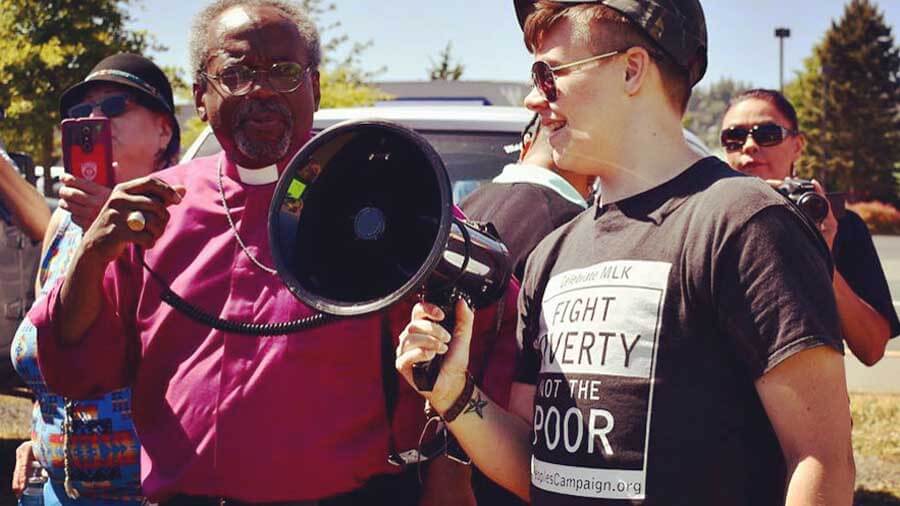
     

Participants in the pageant on Sunday, January 4, 2025, should be present by 9:30 am. 

2nd Sunday in Lent (Year A), March 1, 2026. Services at 8:00 am (no music) and 10:30 (music). Christian education for children and adults at 9:15 am. 

Episcopal Church of the Redeemer
Privacy Overview

Cookie information is stored in your browser and performs functions such as recognizing you when you return to our website and helping our team to understand which pages of the website are visited. We aren't using cookies to determine your web browsing habits, but others can.