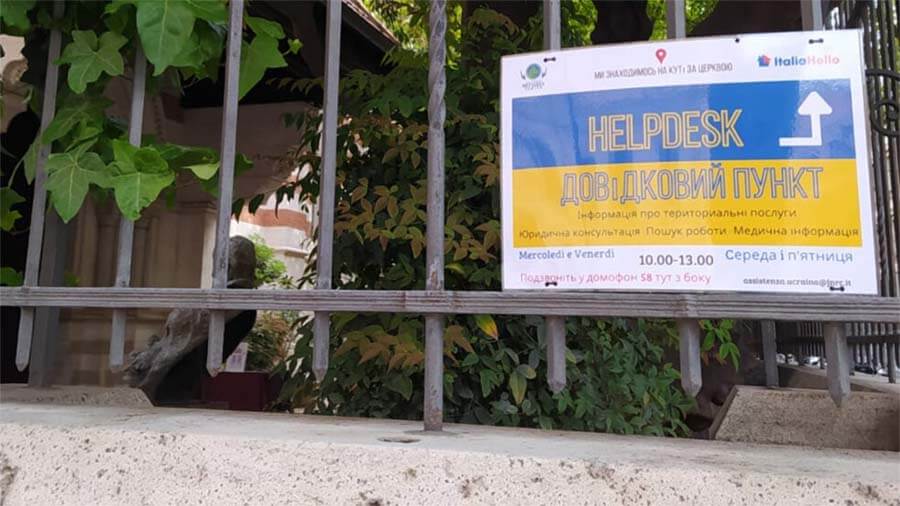
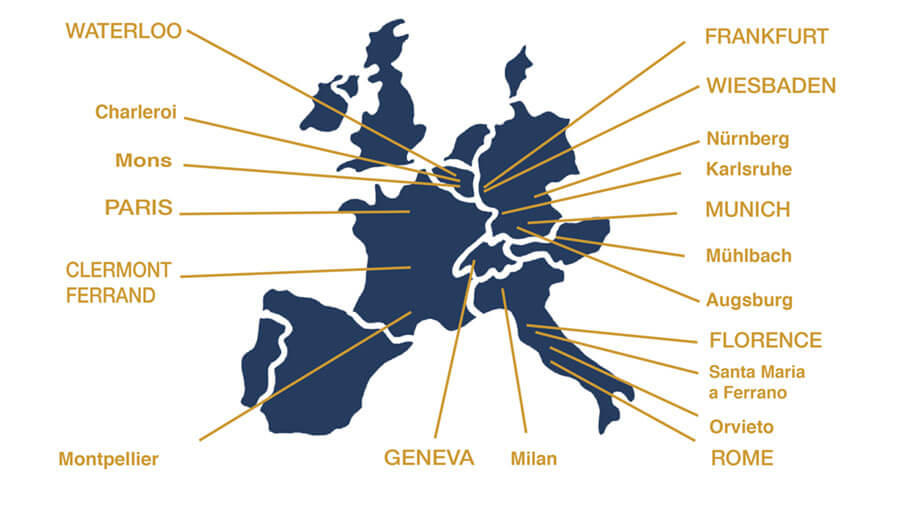
Episcopal Relief & Development is partnering with the Convocation of Episcopal Churches in Europe to help local congregations throughout Europe provide assistance to refugees from Ukraine.
The Convocation of Episcopal Churches in Europe is the European presence of The Episcopal Church. It has a long history of ministry to refugees dating back to before World War I. Since the late 1980s, the Joel Nafuma Refugee Center (JNRC) – based at Saint Paul’s Within the Walls in Rome – has provided direct service to refugees from countless countries, helping them rebuild shattered lives.
Episcopal Relief & Development is working with the Convocation to strengthen and expand the capacity of all Episcopal Congregations across Europe to respond to the refugee emergency caused by the violence in Ukraine. The Convocation is creating a fund to support local congregations’ refugee response and will pair those grants with training from JNRC staff. This assistance will vary depending on the needs of the specific refugee groups. It will likely include food, shelter, emergency supplies and trauma counseling. Additionally, JNRC plans to increase its staffing levels, allowing it to provide aid to more people.
“The Convocation of Episcopal Churches in Europe is reporting refugees in their congregations throughout Europe,” said Nagulan Nesiah, senior program officer, Episcopal Relief & Development. “Through this partnership, we are taking steps to equip congregations to welcome these refugees and connect them to ongoing humanitarian initiatives.”
Episcopal Relief & Development is also working with other partners, including the ACT Alliance, on immediate and longer-term responses.
Please continue to pray for all those impacted by the violence. Donations to Episcopal Relief & Development’s Ukraine Crisis Response fund will help meet critical needs created by this crisis.
Episcopal Relief & Development
For over 80 years, Episcopal Relief & Development has been working together with supporters and partners for lasting change around the world. Each year the organization facilitates healthier, more fulfilling lives for close to 3 million people struggling with hunger, poverty, disaster and disease. Inspired by Jesus’ words in Matthew 25, Episcopal Relief & Development leverages the expertise and resources of Anglican and other partners to deliver measurable and sustainable change in three signature program areas: Women, Children and Climate.
The Convocation of Episcopal Churches in Europe is a collection of churches, mission congregations, and specialized ministries spread geographically over six countries in continental Europe.
We are a part of The Episcopal Church, a branch of the global Anglican Communion. The Episcopal Church is a community of 2.4 million members in 16 countries and 110 dioceses. In Europe, our Episcopal churches serve an impressive number of people of different nationalities, as well as local nationals attracted to the appeal of Anglican worship. Congregations within the Convocation vary in size from fewer than 100 members in the mission congregations to more than 1,000 at the Cathedral in Paris. Find an Episcopal Church community in Europe.
Church of the Redeemer
Welcome to Church of the Redeemer: Worshiping God, living in community, and reaching out to the world. We are an Episcopal Church serving north King County and south Snohomish County, Washington. As you travel your road, go with friends walking the way of Jesus at Redeemer.
Church of the Redeemer is at 6220 Northeast 181st Street in Kenmore, Washington. We are a short distance north of Bothell Way, near the Burke-Gilman Trail. The entrance looks like a gravel driveway. The campus is larger on the inside than it is on the outside. And we managed to hide a large building on the side of a hill that is not easily seen from the street.
Episcopal Relief & Development is supporting the South Sudanese Development and Relief Agency (SSUDRA) of the Episcopal Church of South Sudan as it responds to recent civil unrest and the COVID-19 pandemic. In collaboration with the Diocese of Salisbury and Christian Aid, SSUDRA is providing assistance to families in northwest South Sudan who have been impacted by the violence. The Church is also implementing COVID-19 educational campaigns in the central part of the country.
In early January 2022, the village of Yith Pabol was invaded by Sudanese extremists, leaving much destruction in their wake. Houses, other buildings and crops were destroyed. Almost 2,400 families were displaced. Respiratory infections and other diseases are spreading rapidly due to overcrowding and lack of access to healthcare or clean water. People have lost their crops and livestock, making it challenging to find adequate food sources.
SSUDRA is providing cash assistance to 840 families who have been displaced. Volunteers will distribute the aid while taking appropriate measures to ensure the security and safety of all involved.
“With financial assistance, people are able to buy what they need most, rather than what others think they need,” said Nagulan Nesiah, Senior Program Officer, Episcopal Relief & Development. “Direct cash support will also benefit the local economy and is the most cost-effective way to distribute aid, as storage and transportation costs are reduced.”
Relationship with the Episcopal Church of South Sudan
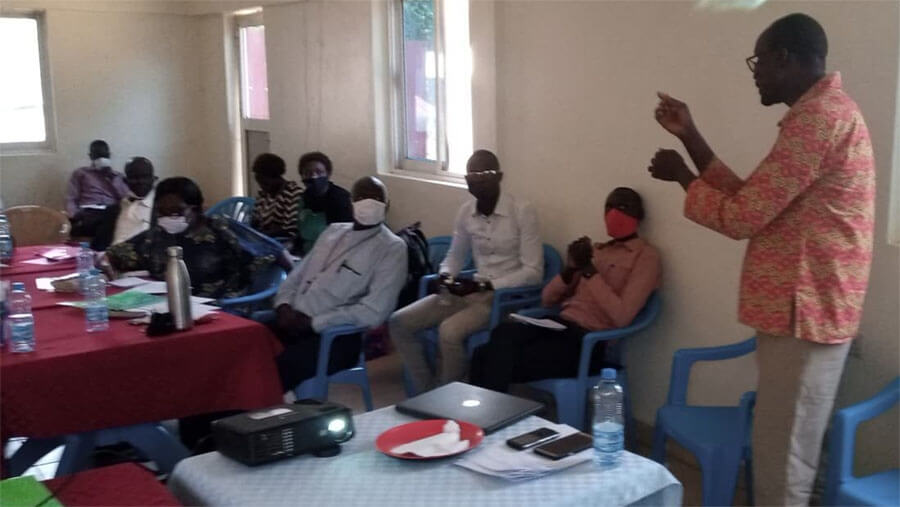
Episcopal Relief & Development has a long-standing relationship with the Episcopal Church of South Sudan. Disaster management teams, trained by Episcopal Relief & Development, have led emergency responses to crises, including the COVID-19 pandemic. In the fall of 2021, the organizations launched an educational campaign in the Diocese of Juba to dispel misinformation about the coronavirus and to enhance public awareness about preventive measures. SSUDRA staff and volunteers distributed personal protective equipment such as masks and sanitizers to help reduce the spread of the virus in public places such as churches, mosques, offices and markets.
COVID-19 cases and deaths are still low today, particularly in Western Equatoria, but this is likely a misleading number due to a lack of testing and contact tracing. Many people in rural villages don’t have access to accurate information about the virus and how it is spread. SSUDRA, in collaboration with the local government and Episcopal Relief & Development, is planning a two-day workshop for 750 diverse volunteers to address these issues. The workshop will include information about the virus and how to reduce its spread and strategies for how the volunteers can bring this information back to their communities. Additionally, the diocese is implementing a campaign that will take advantage of mass media such as radio to reach 50,000 people with COVID-19 educational messaging.
For more than 80 years, Episcopal Relief & Development has been working together with supporters and partners for lasting change around the world. Each year the organization facilitates healthier, more fulfilling lives for close to 3 million people struggling with hunger, poverty, disaster and disease. Inspired by Jesus’ words in Matthew 25, Episcopal Relief & Development leverages the expertise and resources of Anglican and other partners to deliver measurable and sustainable change in three signature program areas: Women, Children and Climate.
Church of the Redeemer
Church of the Redeemer: Worshiping God, living in community, and reaching out to the world around us. We are an Episcopal Church serving north King County and south Snohomish County, Washington. As you travel your road, go with friends walking the way of Jesus at Redeemer.
Church of the Redeemer is at 6220 Northeast 181st Street in Kenmore, Washington. The campus is a short distance north of Bothell Way, near the Burke-Gilman Trail. The entrance looks like a gravel driveway. The campus is larger on the inside than it is on the outside. And we managed to hide a large building on the side of a hill that is not easily seen from the street.
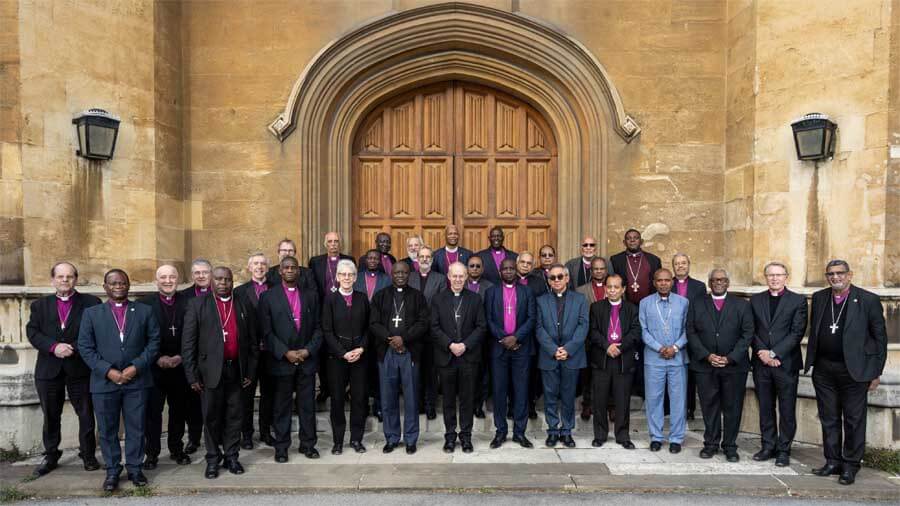
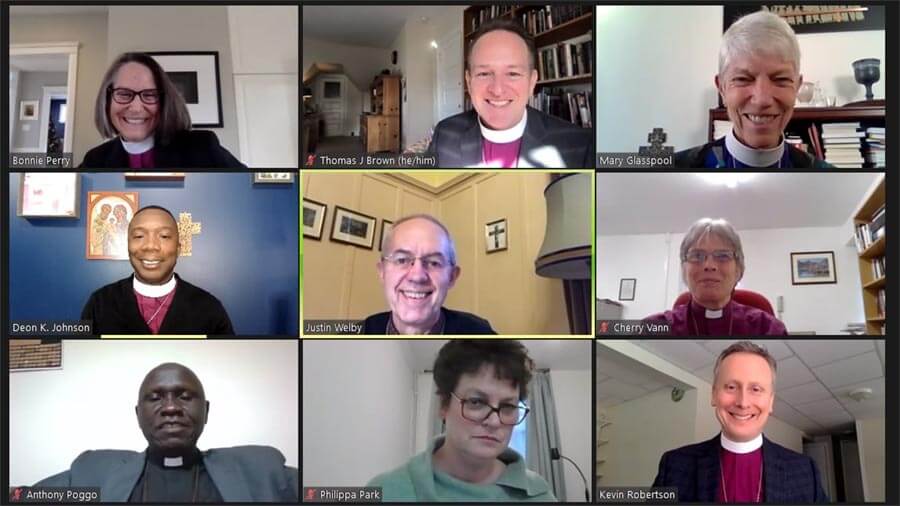
[Episcopal News Service] The heads of most of the Anglican Communion’s 42 provinces, including Presiding Bishop Michael Curry of The Episcopal Church, wrapped their four-day Primates’ Meeting in London. They issued a written statement March 31, 2022, that addresses a range of global issues and looks ahead to the Lambeth Conference of Anglican bishops planned for this summer.
“We return to our churches and dioceses conscious of the calling that is given to us by God, through Jesus Christ, and of our need for grace,” the archbishops and presiding bishops said in their communiqué from the March 28-31 meeting. “We have reflected on the servant leadership of Christ and our own roles as shepherds of his flock.”
The Primates’ Meeting is known as one of the Anglican instruments of communion. This is in addition to the Anglican Consultative Council, the communion’s main policymaking body, and the Lambeth Conference of bishops. Archbishop of Canterbury Justin Welby chairs the meeting of primates, is president of the Anglican Consultative Council, and calls the Lambeth Conference.
Primates’ Meetings during the pandemic
During the COVID-19 pandemic, Welby had led two meetings of the primates online. The Primates’ Meeting this week was the first to be held in person since January 2020, when Welby and the other top Anglican leaders met in Jordan.
“After being separated for our own good during the height of the pandemic, to just be able to be together and pray together and take Communion together and wash each other’s feet quite literally, that’s some holy time,” Curry said in a phone interview with Episcopal News Service before the meeting’s conclusion. “It’s been deeply, wonderfully spiritual.”
Curry also emphasized the importance of hearing stories from Anglican provinces around the world, especially in places where fellow Christians are dealing with war, famine and persecution. “There are people who really do suffer, who are members of this church, and they suffer because of their faith,” Curry said.
Concerns in the communiqué
The Primates’ Meeting communiqué specifically expressed alarm at the humanitarian crisis caused by Russia’s ongoing invasion of Ukraine. “We call for an immediate ceasefire and the withdrawal of Russian troops from Ukraine,” the archbishops and presiding bishops said.
They also acknowledged ongoing conflicts and violence in other parts of the world, from Afghanistan and the Holy Land to South Sudan and Mozambique. They described the plight of refugees from those and other countries as “one of the major tragedies of our time.”
Climate change was another issue highlighted in the Primates’ Meeting statement. It cited the example of four Indian Ocean cyclones to hit Africa in two months, devastating communities in Madagascar and Mozambique. “Environmental damage affects the most vulnerable people in the world, including indigenous peoples who are affected by the exploitation of forests and others natural resources.”
Primates also discussed a consultation from the Church of England on extending the involvement of the wider Anglican Communion in the choice of future archbishops of Canterbury. And they addressed “the unilateral decision to construct the Grand Ethiopian Dam” and the potential for water shortage in Egypt and Sudan that may result from it.
“We strongly believe the Blue Nile is God’s gift to the countries through which it flows and should therefore be a reason for cooperation between Ethiopia, Sudan, and Egypt to achieve sustainable development,” they said. “We wish to appeal to the three countries to resume, with good will, their negotiations immediately to ensure a fair distribution of the water of the Blue Nile.”
Low-key gathering
This Primates’ Meeting was billed as a low-key gathering, with “very little ‘formal’ business” and intended primarily for prayer and conversation, according to the Anglican Communion Office. Bible studies focused on 1 Peter, which also will be the core Scripture for the more than 700 Anglican bishops who are preparing to attend the Lambeth Conference from July 26 to August 8, 2022.
The archbishops and presiding bishops initially intended to convene in Rome, but the Primates’ Meeting was moved to England because of COVID-19 restrictions in Italy. A few primates still chose not to attend in person due to pandemic precautions that remain in effect in their home countries, but they were able to join their fellow primates online.
Absence of three primates
Three additional primates chose to skip this meeting entirely for other reasons. In a Zoom news conference on March 31, Welby identified those primates as the leaders of the Anglican provinces in Uganda, Rwanda and Nigeria. They did not give specific reasons for their absences, Welby said, but those primates previously have made clear they “don’t want to be in the room” with leaders from other provinces, like The Episcopal Church, that have allowed same-sex marriage and LGBTQ+ clergy.
Such issues continue to fuel tensions around the Anglican Communion. At the news conference, Welby was asked about his handling of a recent controversy stemming from Ghanaian bishops’ support for anti-LGBTQ+ legislation in their country. Ghana in 1957 was the first country in sub-Saharan Africa to achieve independence from Britain, Welby said, and that colonial history requires a degree of caution in how he voices concerns over the policies and actions of an autonomous Anglican province.
“If I speak carelessly, it can still sound to many people around the world as thought a white man from the formal colonial power is giving instructions,” he said. “And since I’m passionately anti-colonialist and know that I have no authority, I’m constantly walking a tightrope in how I express myself.”
On January 11, 2022, some of the LGBTQ Bishops within the Anglican Communion met with the Archbishop of Canterbury.
Hopes for the upcoming Lambeth Conference
The upcoming Lambeth Conference likely will again face issues of LGBTQ+ inclusion. Welby said he also hopes the bishops of the Anglican Communion will broaden their conversations to the church’s larger role in the world, following the conference’s theme of “God’s Church for God’s World.”
“The encouragement of it is to look outward, and to look at other issues which are deeply troubling to the way we treat people on the edge, whether it’s food insecurity, whether it’s rising sea levels, whether it’s war, persecution, freedom of religion and belief, torture, unfair trade practices and a million other things,” Welby said. “Those are things that come under the heading of God’s call to the church to speak for justice in every area.”
Anglican Compass Rose
Primate
The chief bishop in an Anglican Province is called a primate. In the United States, the Presiding Bishop serves as “Chief Pastor and Primate.” The 1978 Lambeth Conference requested that primates’ meetings should be established to enable regular consultation among the primates of the Anglican Communion. These meetings have taken place throughout the Anglican Communion. The primates’ meeting provides opportunities for collegiality and enables the primates to provide support for the Archbishop of Canterbury.
The Anglican Communion are churches in communion with the See of Canterbury [Archbishop of Canterbury] throughout the world. Member churches exercise jurisdictional independence but share a common heritage concerning Anglican identity and commitment to scripture, tradition, and reason as sources of authority.
Churches in the Anglican Communion continue to reflect the balance of Protestant and Catholic principles that characterized the via media of the Elizabethan settlement.
Unity and cooperation in the Anglican Communion are encouraged by the assembly of Anglican bishops every ten years at Lambeth Conferences. The work and vision of the Lambeth Conferences are continued between meetings by the Anglican Consultative Council, which includes representatives from Anglican churches throughout the world.
Welcome to Church of the Redeemer: Worshiping God, living in community, and reaching out to the world. We are an Episcopal Church serving north King County and south Snohomish County, Washington. As you travel your road, go with friends walking the way of Jesus at Redeemer.
Church of the Redeemer is at 6220 Northeast 181st Street in Kenmore, Washington. We are a short distance north of Bothell Way, near the Burke-Gilman Trail. The entrance looks like a gravel driveway. The campus is larger on the inside than it is on the outside. And we managed to hide a large building on the side of a hill that is not easily seen from the street.
Episcopal Relief & Development is supporting Action by Churches Together (ACT Alliance) as it provides critical assistance to support people affected by violence in Ukraine. Working through ACT member Hungarian Interchurch Aid (HIA) and other local organizations, ACT Alliance is providing emergency assistance such as food, shelter, water and basic supplies to refugees and people displaced within Ukraine.
2 million leave Ukraine
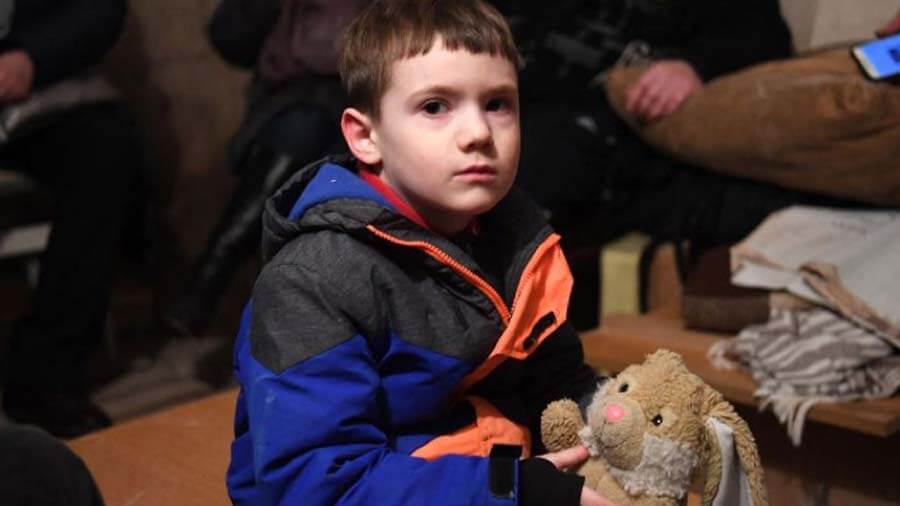
The UN Refugee Agency estimates that as of March 8, [2022,] more than two million people have left Ukraine since Russian forces invaded the country, making this the fastest-growing refugee crisis since World War II. Damage to civilian infrastructure has left thousands without electricity or water. Homes have been damaged and destroyed, displacing hundreds of thousands within the country. People are fleeing to neighboring countries such as Poland, Hungary and Romania and their long-term destination is unclear.
HIA response to those leaving Ukraine
On February 27, [2022,] HIA set up a refugee support point on the Ukrainian side of the border at Beregsurány where volunteers are providing hot tea, sandwiches, refreshments, blankets and basic hygiene items for refugees, who often wait long hours to cross the border into Hungary. These refugees include many children and older adults. HIA is in contact with its network of churches and organizations, as well as local governments in Hungary, to coordinate cash assistance, shelter, food and medicine for people who have been displaced.
Other partners in Ukrainian response
ACT Alliance is setting up similar support points at other border towns to assist people as they leave Ukraine. It is working through local partners to provide aid for refugees in Hungary, Romania, Slovakia and Poland.
“Episcopal Relief & Development was founded by The Episcopal Church to help people fleeing violence in World War II,” said Nagulan Nesiah, Senior Program Officer, Disaster Response and Risk Reduction, Episcopal Relief & Development. “We remain committed to supporting our partners on the ground as they meet both immediate and long-term needs created by this crisis.”
Donations to Episcopal Relief & Development’s Ukraine Crisis Response Fund will help the organization and its partners continue to provide assistance to people displaced by the crisis in Ukraine.
Episcopal Relief & Development
For over 80 years, Episcopal Relief & Development has been working together with supporters and partners for lasting change around the world. Each year the organization facilitates healthier, more fulfilling lives for close to 3 million people struggling with hunger, poverty, disaster and disease. Inspired by Jesus’ words in Matthew 25, Episcopal Relief & Development leverages the expertise and resources of Anglican and other partners to deliver measurable and sustainable change in three signature program areas: Women, Children and Climate.
Church of the Redeemer
Welcome to Church of the Redeemer: Worshiping God, living in community, and reaching out to the world. We are an Episcopal Church serving north King County and south Snohomish County, Washington. As you travel your road, go with friends walking the way of Jesus at Redeemer.
Church of the Redeemer is at 6220 Northeast 181st Street in Kenmore, Washington. We are a short distance north of Bothell Way, near the Burke-Gilman Trail. The entrance looks like a gravel driveway. The campus is larger on the inside than it is on the outside. And we managed to hide a large building on the side of a hill that is not easily seen from the street.
Episcopal Relief & Development is mobilizing with Anglican agencies and other partners in order to provide humanitarian assistance to people fleeing the violence in Ukraine.
Working through the Action by Churches Together Alliance (ACT Alliance), Episcopal Relief & Development will provide cash, blankets, hygiene supplies and other needed assistance.
“Ecumenical and orthodox faith networks are on the ground in the border areas of Poland and Hungary,” said Abagail Nelson, Executive Vice President, Episcopal Relief & Development. “We will continue to coordinate with these networks, in order to meet the needs of people who have been displaced.”
Please pray for all those affected. Donations to Episcopal Relief & Development’s International Disaster Response Fund will provide humanitarian assistance for the crisis in Ukraine.
Join Episcopal Relief & Develpment’s response to this ongoing crisis
Your gift will help provide cash, blankets, hygiene supplies and other needed assistance to refugees from Ukraine, as well as others affected by disasters, emergencies and humanitarian crises around the world.
Episcopal Relief & Development
For over 80 years, Episcopal Relief & Development has been working together with supporters and partners for lasting change around the world. Each year the organization facilitates healthier, more fulfilling lives for close to 3 million people struggling with hunger, poverty, disaster and disease. Inspired by Jesus’ words in Matthew 25, Episcopal Relief & Development leverages the expertise and resources of Anglican and other partners to deliver measurable and sustainable change in three signature program areas: Women, Children and Climate.
Church of the Redeemer
Welcome to Church of the Redeemer: Worshiping God, living in community, and reaching out to the world. We are an Episcopal Church serving north King County and south Snohomish County, Washington. As you travel your road, go with friends walking the way of Jesus at Redeemer.
Church of the Redeemer is at 6220 Northeast 181st Street in Kenmore, Washington. We are a short distance north of Bothell Way, near the Burke-Gilman Trail. The entrance looks like a gravel driveway. The campus is larger on the inside than it is on the outside. And we managed to hide a large building on the side of a hill that is not easily seen from the street.