Category: Lambeth Conference

  • The church called to tell, teach, and transform

    The church called to tell, teach, and transform

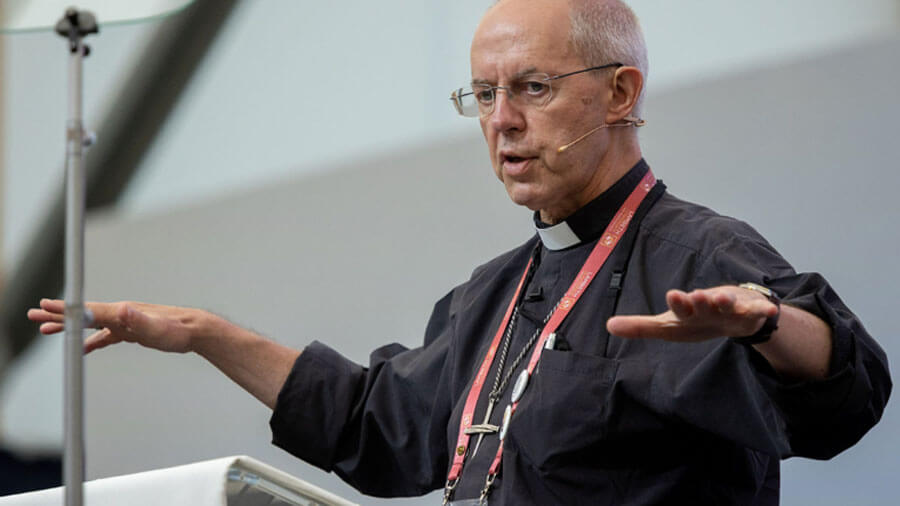
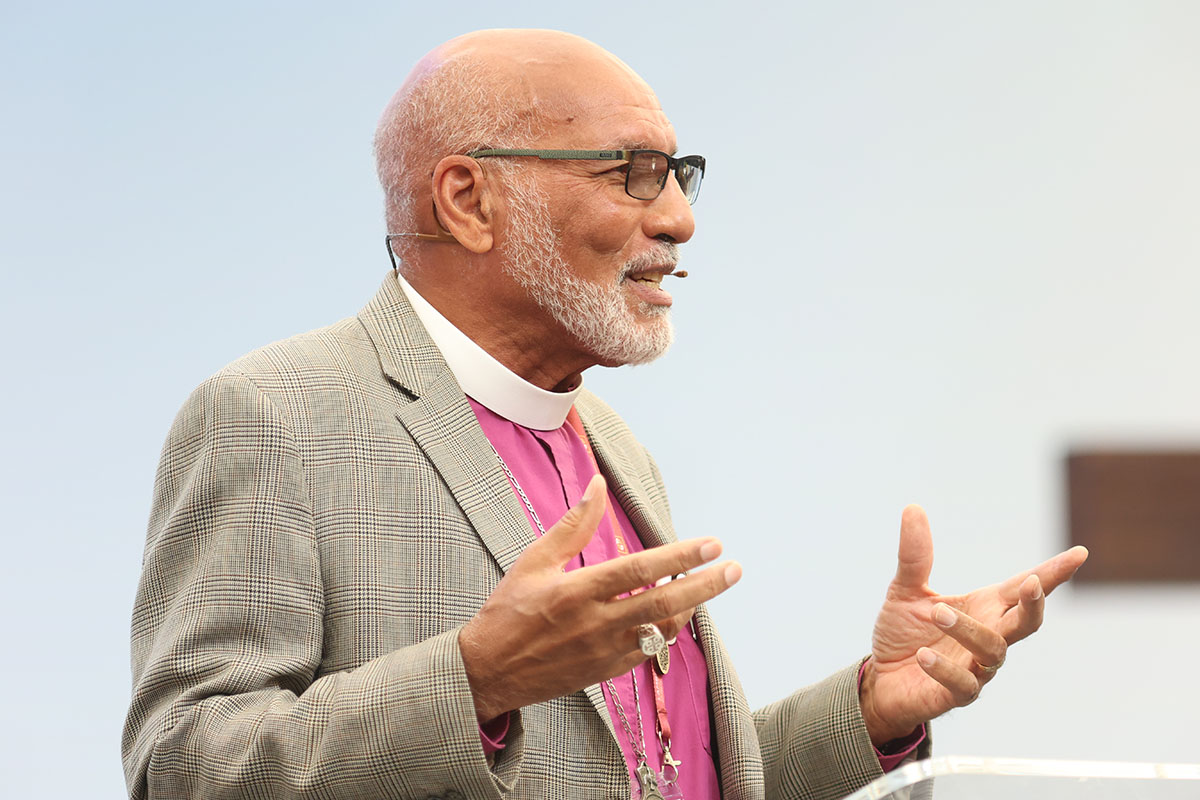
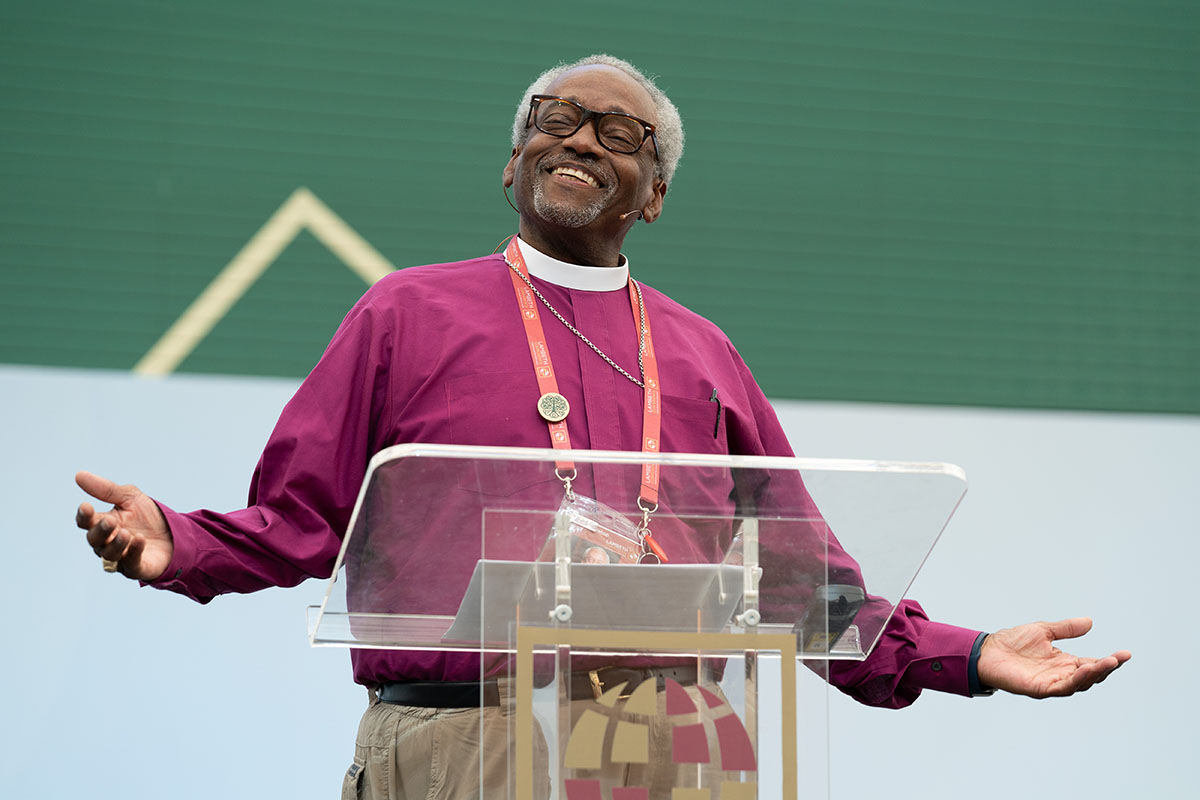
    [Episcopal News Service – Canterbury, England] In his third and final keynote address of the 15th Lambeth Conference, Archbishop of Canterbury Justin Welby called on the church “to tell, to teach, and to transform by responding to human need,” driving home the conference’s theme, “God’s Church for God’s World.”

    “The church united is not merely a help to the world; it is the sign of salvation to the transformation of the world. The church humbled and hospitable, generous and full of love, is not just a nice thing to have in society; it points to the kingdom of heaven,” said Welby on August 7, 2022, at the University of Kent, the site of the conference.

    Please accept YouTube cookies to play this video. By accepting you will be accessing content from YouTube, a service provided by an external third party.

    YouTube’s privacy policy

    If you accept this notice, your choice will be saved and the page will refresh.

    The church is not just another nongovernmental organization but “God’s chosen means of shining light in the darkness,” he said. Throughout his final address, Welby emphasized evangelism, formation, and discipleship, focusing on bishops’ vocation in leading God’s church, which exists for the sake of the salvation of God’s world.

    It’s in periods of darkness that churches confront the world’s challenges and grow, and their members must be educated in Scripture and extrapolate it into the world.

    “The strength of many churches that grow – grow deeper and grow in numbers – is that everyone knows the Gospel and can say something about their own testimony of their love and meeting with Jesus Christ,” Welby said. “They may not be eloquent, their theology may be slightly crude, but when they speak from the heart, others listen and their transformed lives illustrate their words.

    “It is essential throughout the churches of the communion that everyone understands themselves to be witnesses because they are baptized and filled with the Holy Spirit.”

    Over 650 bishops from across the Anglican Communion gathered July 26 at the University of Kent, just outside the city center, for the 12-day conference. Welby addressed the conference one last time when he preached at the closing Eucharist.

    The office of the archbishop of Canterbury is one of the four Instruments of Communion, as is the Lambeth Conference, which is typically held every 10 years. Installed in March 2013, Welby is the 105th bishop appointed to the office.

    Lambeth Calls

    At this Lambeth Conference, discussion centered on “Lambeth Calls,” draft papers on 10 subject areas that were intended to initiate discussion among the bishops and to offer action items for when they return to their provinces and dioceses after the conference. Calls focused on mission and evangelism, discipleship, environment and sustainable developmentreconciliation and human dignity.

    Despite Welby’s and organizers’ intentions to keep the discussions focused on the conference’s theme, long-standing disputes over human sexuality began simmering even before the conference began as conservatives sought to affirm a resolution adopted by bishops attending the 1998 Lambeth Conference that condemns same-sex marriage and all sex outside of marriage between a man and a woman. But by the conference’s seventh day, Welby had managed to tamp down some of the tension by lifting up both traditional and progressive marriage beliefs.

    Though stark divisions remain over issues of human sexuality across the communion, which covers 165 countries, many Anglican and Episcopal bishops concluded their time in Canterbury on a more hopeful note, looking toward unity despite lingering differences.

    Christians, he said, are called to reconciliation and to be reconcilers, though at times the church “coughs and staggers” along in the darkness of the world “in fear of the future.” How, he asked, should the church act in relationship?

    “That is the first and greatest call, the one we haven’t listed, but it is the greatest call because it is the Scriptural call. And through these weeks of calls and conversations, this week has not planned to be, but has become, a time of intense ecclesiological development and thinking and reflection for the Anglican Communion.

    “We are a communion of churches catholic and reformed, autonomous and interdependent, and we must keep to the principles of both.”

    The Scriptures, he said, form the “heart” of the reformed tradition, and the catholic tradition is not only staying true to the historical episcopacy but recognizing membership in a global church and upholding the principles of social organizing and education.

    “Autonomy is an expression of subsidiarity, the principle in Catholic social teaching that we should always work at the most local level possible.”

    Throughout the conference, and particularly when organizers decided to eliminate voting on the calls, delegates were reminded that the Lambeth Conference is not a legislative body, nor does it have binding authority.

    Statements of support

    In addition to the 10 Lambeth Calls, on August 6, the conference’s final business day, primates continued a tradition of issuing “statements of support” for areas of the Anglican Communion that are facing particular turmoil. Distinct from the Lambeth Calls, which recommend action, the statements bear witness to crises around the world – especially those that affect Anglican provinces – and send prayers for peace and resolution.

    The statements range from the need to address gun violence in the United States to the climate crisis to peace in Israel and Palestine to the world’s refugee crisis. In his final address, Welby made it clear that church leaders need to be courageous and use their voices to stand up to governments.

    “This is not the church getting involved in politics; it’s the church getting involved in God,” he said to applause.

    “All too often, all churches, not only Anglicans, have got sucked into supporting governments colluding with injustice and upholding oppression at any and every level. To stand up against oppression is frightening because it is costly and so many of you know that so well,” Welby said.

    “We don’t like it when governments speak forcefully against us or do worse than that … yet we must speak. To be silent on the climate emergency … on the unethical treatment of migrants or on war and oppression, on the abuse of human rights, on persecution, is to be one of the oppressors.”

    Lambeth Conference in phases

    As a result of the pandemic, the 15th Lambeth Conference took place in phases:

    • Phase 1, or the listening phase, happened in the year leading up to the conference.
    • Phase 2 was the conference itself.
    • Phase 3, which will be led by South Sudanese Bishop Anthony Poggo, the incoming secretary-general of the Anglican Communion, will take place over the next two years, aimed at further deepening understanding, building relationships and learning from one another.

    “It’s not an action list; it’s a relationship approach. But we will have the aim of seeing how we can put into practice, contextually, in our local area, in the right way, those things on which we have agreed …,” Welby said. “[It] will enable us to pray for one another, but most of all, it will take us facing outwards, going outwards; it will enable our relationships to draw us towards greater holiness and unity.”

    —Lynette Wilson is the managing editor of Episcopal News Service. She can be reached at lwilson@episcopalchurch.org.
    Lambeth Conference: God's Church for God's World

    What is the Lambeth Conference?

    Every bishop of the Anglican Communion is invited to the Lambeth Conference, which is convened by the Most Reverend Justin Welby, The Archbishop of Canterbury. The Lambeth Conference has met since 1867, happens once-a-decade, and is a significant event in the life of the Anglican Communion.

    The conference will explore church and world affairs. Outcomes of the conference will shape the life of the Anglican Communion in the decade ahead.
    Anglican Compass Rose

    The Anglican Communion

    The Anglican Communion has no central authority figure or body. It is made up of 42 autonomous members or provinces. Each member church makes its own decisions in its own way.

    However, their decision-making bodies are guided by recommendations from each of the four so-called Instruments of Communion

    The Secretariat, also known as the Anglican Communion Office, based in London, England support Anglicans and Episcopalians worldwide to carry out any requests from the Instruments and work to enable members of the Anglican Communion to fulfil their calling to be God’s people in the world.
    The Episcopal Church of the Redeemer: Worshiping God, living in community, reaching out to the world.

    Church of the Redeemer

    Church of the Redeemer: Worshiping God, living in community, and reaching out to the world around us. We are an Episcopal Church serving north King County and south Snohomish County, Washington. As you travel your road, go with friends walking the way of Jesus at Redeemer.

    Church of the Redeemer is at 6220 Northeast 181st Street in Kenmore, Washington. The campus is a short distance north of Bothell Way, near the Burke-Gilman Trail. The entrance looks like a gravel driveway. The campus is larger on the inside than it is on the outside. And we managed to hide a large building on the side of a hill that is not easily seen from the street.

    The Episcopal Church welcomes you.
  • Prioritize discipleship centered on Christ

    Prioritize discipleship centered on Christ

    [Episcopal News Service – Canterbury, England] Efforts to promote intentional discipleship took center stage on August 5, 2022, at the Lambeth Conference, as bishops from across the Anglican Communion considered ways of encouraging the Christians in their congregations to live a “Jesus-shaped life” as they grow together in their faith.

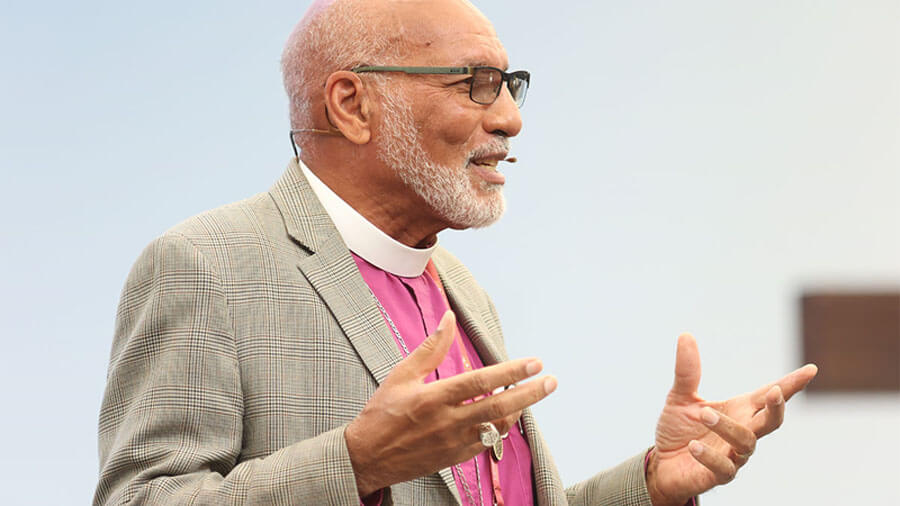
    “The term disciple can be used in an all-encompassing sense to refer to everyone in church who has been baptized,” West Indies Archbishop Howard Gregory said in his presentation during the day’s plenary. But, he continued, the church is increasingly aware of the need and desire for Christians to progress beyond a passive stage of spiritual development to becoming “disciples of Christ in every sphere of life.”

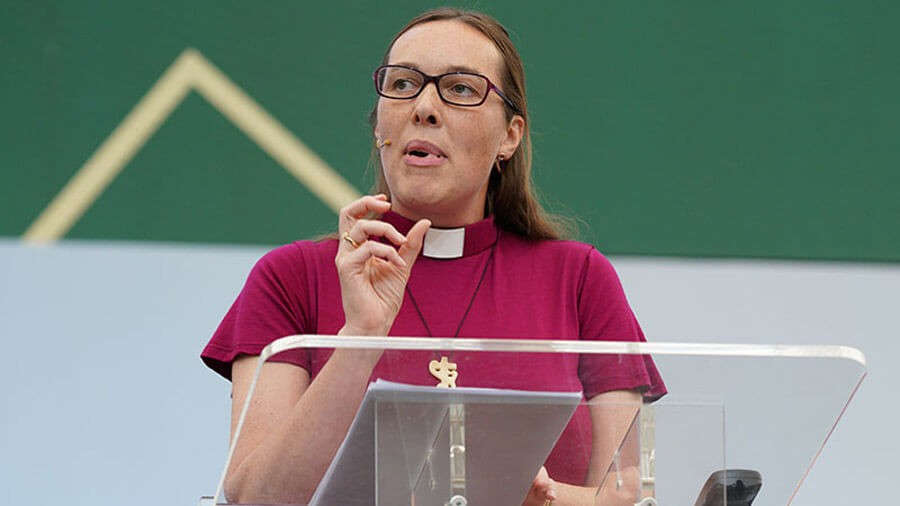
    The Rt. Rev. Eleanor Sanderson, assistant bishop in Wellington, New Zealand, spoke of working with young people in the Anglican Church in Aotearoa, New Zealand and Polynesia. Photo: The Lambeth Conference.

    Embrace “adventures with Jesus”

    The Rt. Rev. Eleanor Sanderson, assistant bishop in Wellington, New Zealand, spoke of embracing “adventures with Jesus” as she shared her experience with young people through the Anglican Youth Movement of the Anglican Church in Aotearoa, New Zealand and Polynesia. For the past 20 years, that work has involved the establishment of 40 missional “edge communities” centered around discipleship and engagement with the local community. It also has renewed the life of existing congregations that have partnered in these efforts.

    “We stood together with a commitment that we would make disciple-making a priority,” Sanderson said. “We felt called by the Holy Spirit to live and to model and to nurture this way of life ourselves.”

    Please accept YouTube cookies to play this video. By accepting you will be accessing content from YouTube, a service provided by an external third party.

    YouTube’s privacy policy

    If you accept this notice, your choice will be saved and the page will refresh.

    Discipleship deepens faith and strengthen commitment

    At this Lambeth Conference, planners have issued drafts of what are known as Lambeth Calls focusing on 10 subject areas, to initiate discussion among the more than 650 bishops and to offer action items for when they return to their provinces and dioceses after the conference concludes on August 8. The bishops’ Discipleship Call (page 29) says it is a call “for all Anglicans in every aspect of their lives to learn and to learn again to love and serve in the way of Christ ‘with the strength that God supplies.’”

    The Anglican Consultative Council also recognized the need to encourage Anglicans to deepen their faith and strengthen their commitment to leading Christ-centered lives in 2016, when it launched the Season of Intentional Discipleship and Disciple-Making. That initiative was reaffirmed in 2019 and will continue through 2026.

    West Indies Archbishop Howard Gregory spoke during the Aug. 5 discipleship plenary. Photo: The Lambeth Conference.

    Gregory, who also serves as bishop of Jamaica and the Cayman Islands, described a related initiative in Jamaica. The diocese developed Bible study materials for use in the diocese’s 300 congregations, which generated an unprecedented response, particularly from lay members. “We have seen a significant increase in lay involvement in ministry and ministry,” Gregory said.

    The Lambeth Call on Discipleship anchors itself in passages from 1 Peter, whose author called on the early Christians to “be serious and discipline yourselves for the sake of your prayers. … Like good stewards of the manifold grace of God, serve one another with whatever gift each of you has received.”

    Protect from a roaring lion

    Before the August 5 plenary, Archbishop of Canterbury Justin Welby, in his fifth and final Bible exposition on 1 Peter, held up the New Testament letter’s metaphor of the shepherd protecting his flock from “a roaring lion,” the devil, as also symbolic of discipleship. “There’s no option for being distracted by other matters,” Welby said.

    Today, Christians practice discipleship as something like modern shepherds, alert to the evils of the world, Welby said, but he also stressed that Christian discipleship is a humble and ongoing process of mutual transformation that sometimes calls Christians to the work of the shepherd and other times to the role of the flock that needs tending.

    “We are on a journey of growth into being shepherds,” he said. “We need guidance, and we need to be called to guide.”

    Sanderson, in a press briefing before the plenary, said it is easy to get distracted by church-centered thinking, focusing on what it takes to grow and maintain the church. “Jesus was really clear, he would build the church,” she said. “He asked us to make disciples.”

    That was one of Jesus’ central commands in the Gospel of Matthew, “Go therefore and make disciples of all nations,” as is cited by the Lambeth Call on Discipleship.

    Presiding Bishop Michael Curry co-chaired the Aug. 5 morning plenary session on discipleship. Photo: Richard Washbrooke/For the Lambeth Conference.

    Discipleship creates something profound

    Episcopal Church Presiding Bishop Michael Curry and Archbishop Ng Moon Hing, former primate of South East Asia, co-chaired the plenary on discipleship. Curry, in the morning press briefing, drew a connection between the Anglican Communion today and the discipleship of the early Christians during the time of 1 Peter.

    “Something profound happens in a person’s life when their center of gravity, or center of life, is no longer the self but Jesus of Nazareth,” Curry said. “That’s when we become the light of the world. … They changed the world in the first century, and If it can happen to them in the first century, it can happen to us in the 21st century.”

    – David Paulsen is an editor and reporter for Episcopal News Service. He can be reached at dpaulsen@episcopalchurch.org.

    Lambeth Conference: God's Church for God's World

    What is the Lambeth Conference?

    Every bishop of the Anglican Communion is invited to the Lambeth Conference, which is convened by the Most Reverend Justin Welby, The Archbishop of Canterbury. The Lambeth Conference has met since 1867, happens once-a-decade, and is a significant event in the life of the Anglican Communion.

    The conference will explore church and world affairs. Outcomes of the conference will shape the life of the Anglican Communion in the decade ahead.

    Anglican Compass Rose

    The Anglican Communion

    The Anglican Communion has no central authority figure or body. It is made up of 42 autonomous members or provinces. Each member church makes its own decisions in its own way.

    However, their decision-making bodies are guided by recommendations from each of the four so-called Instruments of Communion

    The Secretariat, also known as the Anglican Communion Office, based in London, England support Anglicans and Episcopalians worldwide to carry out any requests from the Instruments and work to enable members of the Anglican Communion to fulfil their calling to be God’s people in the world.

    The Episcopal Church of the Redeemer: Worshiping God, living in community, reaching out to the world.

    Church of the Redeemer

    Church of the Redeemer: Worshiping God, living in community, and reaching out to the world around us. We are an Episcopal Church serving north King County and south Snohomish County, Washington. As you travel your road, go with friends walking the way of Jesus at Redeemer.

    Church of the Redeemer is at 6220 Northeast 181st Street in Kenmore, Washington. The campus is a short distance north of Bothell Way, near the Burke-Gilman Trail. The entrance looks like a gravel driveway. The campus is larger on the inside than it is on the outside. And we managed to hide a large building on the side of a hill that is not easily seen from the street.

    The Episcopal Church welcomes you.
  • Be ‘revolutionary’ to meet modern challenges

    Be ‘revolutionary’ to meet modern challenges

    [Episcopal News Service – Canterbury, England] In his second keynote address to the bishops of the Anglican Communion on August 5, 2022, Archbishop of Canterbury Justin Welby said the church should be “a place of revolution without violence,” taking bold action against the social injustices that afflict the poor and powerless.

    Some 650 bishops representing 165 countries are attending the 15th Lambeth Conference, the first in 14 years, after past conferences typically were held once a decade.

    In his later afternoon address, Welby expounded on some of the defining topics of the conference, which will end on August 7 with a closing service at Canterbury Cathedral. Churches, he said, are called to disrupt oppressive and exploitative systems, such as extreme economic disparities, resource hoarding and environmental destruction.

    Please accept YouTube cookies to play this video. By accepting you will be accessing content from YouTube, a service provided by an external third party.

    YouTube’s privacy policy

    If you accept this notice, your choice will be saved and the page will refresh.

    “How can science serve the Kingdom unless we have those who can argue the claims of God based on the gifts God has given us in science and technology?” Welby asked. “How can we challenge the selfishness of the rich if we are unable to argue with economics in the power of the Spirit?”

    In advance of the 2022 Lambeth Conference, Welby had said he hoped to unite the 85-million-member communion under common expressions of faith and social engagement, rather than focusing on debates over human sexuality that have divided bishops at past conferences. Instead, bishops were to come together around the theme “God’s Church for God’s World.” Aspects of that theme were have been presented in a series of 10 “Lambeth Calls,” including science and faith, mission and evangelism, interfaith relations, climate change and human dignity.

    On August 2, in a closed session on the Lambeth Call on Human Dignity, Welby sought to bring the bishops closer together by affirming the sincerity and theological rigor of Anglicans on both sides of the divide over the extent of LGBTQ+ inclusion in the church.

    In his August 5 address, the second of three, he indirectly referenced the Anglican Communion’s internal disputes over sexuality, saying Anglicans must be “united” but not necessarily “unanimous.”

    “The miracle that God has brought about in the church is not that like-minded people like each other, but that the most unlike people, love each other,” he said.

    Lambeth Conference: God's Church for God's World

    What is the Lambeth Conference?

    Every bishop of the Anglican Communion is invited to the Lambeth Conference, which is convened by the Most Reverend Justin Welby, The Archbishop of Canterbury. The Lambeth Conference has met since 1867, happens once-a-decade, and is a significant event in the life of the Anglican Communion.

    The conference will explore church and world affairs. Outcomes of the conference will shape the life of the Anglican Communion in the decade ahead.

    Anglican Compass Rose

    The Anglican Communion

    The Anglican Communion has no central authority figure or body. It is made up of 42 autonomous members or provinces. Each member church makes its own decisions in its own way.

    However, their decision-making bodies are guided by recommendations from each of the four so-called Instruments of Communion

    The Secretariat, also known as the Anglican Communion Office, based in London, England support Anglicans and Episcopalians worldwide to carry out any requests from the Instruments and work to enable members of the Anglican Communion to fulfil their calling to be God’s people in the world.

    The Episcopal Church of the Redeemer: Worshiping God, living in community, reaching out to the world.

    Church of the Redeemer

    Church of the Redeemer: Worshiping God, living in community, and reaching out to the world around us. We are an Episcopal Church serving north King County and south Snohomish County, Washington. As you travel your road, go with friends walking the way of Jesus at Redeemer.

    Church of the Redeemer is at 6220 Northeast 181st Street in Kenmore, Washington. The campus is a short distance north of Bothell Way, near the Burke-Gilman Trail. The entrance looks like a gravel driveway. The campus is larger on the inside than it is on the outside. And we managed to hide a large building on the side of a hill that is not easily seen from the street.

    The Episcopal Church welcomes you.
  • Pray for the Lambeth Conference: Day 11-12

    Pray for the Lambeth Conference: Day 11-12

    Thank you for praying with us for the fifteenth Lambeth Conference – which will meet in Canterbury, the United Kingdom, between 26 July– 8 August 2022.

    Through this prayer guide we hope that the prayers we share here will encourage all who use it to unite in prayer for the bishops gathered in the Lambeth Conference.

    The closing of the conference

    The conference closes with summaries from the week, giving thanks to God for all that has happened and looking to the future – asking what will it mean to be God’s Church for God’s World in the decade ahead?

    The Sisters of Jesus Way, Church of England

    Our prayer for the Lambeth Conference is the prayer of Jesus for His Disciples and for All Believers in John 17:

    Holy Father, protect them by the power of your name – the name you gave me – so that they may be one as we are one.

    John 17:11

    My prayer is not for them alone. I pray also for those who will believe in me through their message, that all of them may be one, Father, just as you are in me and I am in you. May they also be in us so that the world may believe that you have sent me….I have given them the glory that you gave me, that they may be one as we are one: I in them and you in me. May they be brought to complete unity to let the world know that you sent me and have loved them even as you have loved me.

    John 17:20-22

    Captain of Israel’s host, and guide
    Of all who seek the land above,
    Beneath thy shadow we abide,
    The cloud of thy protecting love;
    Our strength, thy grace; our rule, thy word;
    Our end, the glory of the Lord.

    By thine unerring Spirit led,
    We shall not in the desert stray;
    We shall not full direction need,
    Nor miss our providential way;
    As far from danger as from fear,
    While love, almighty love, is near.

    Charles Wesley

    What is the Lambeth Conference?

    Every bishop of the Anglican Communion is invited to the Lambeth Conference, which is convened by the Most Reverend Justin Welby, The Archbishop of Canterbury. The Lambeth Conference has met since 1867, happens once-a-decade, and is a significant event in the life of the Anglican Communion.

    The conference will explore church and world affairs. Outcomes of the conference will shape the life of the Anglican Communion in the decade ahead.

    Anglican Compass Rose

    The Anglican Communion

    The Anglican Communion has no central authority figure or body. It is made up of 42 autonomous members or provinces. Each member church makes its own decisions in its own way.

    However, their decision-making bodies are guided by recommendations from each of the four so-called Instruments of Communion

    The Secretariat, also known as the Anglican Communion Office, based in London, England support Anglicans and Episcopalians worldwide to carry out any requests from the Instruments and work to enable members of the Anglican Communion to fulfil their calling to be God’s people in the world.

    The Episcopal Church of the Redeemer: Worshiping God, living in community, reaching out to the world.

    Church of the Redeemer

    Church of the Redeemer: Worshiping God, living in community, and reaching out to the world around us. We are an Episcopal Church serving north King County and south Snohomish County, Washington. As you travel your road, go with friends walking the way of Jesus at Redeemer.

    Church of the Redeemer is at 6220 Northeast 181st Street in Kenmore, Washington. The campus is a short distance north of Bothell Way, near the Burke-Gilman Trail. The entrance looks like a gravel driveway. The campus is larger on the inside than it is on the outside. And we managed to hide a large building on the side of a hill that is not easily seen from the street.

    The Episcopal Church welcomes you.
  • Ecumenical, interfaith at Lambeth sessions

    Ecumenical, interfaith at Lambeth sessions

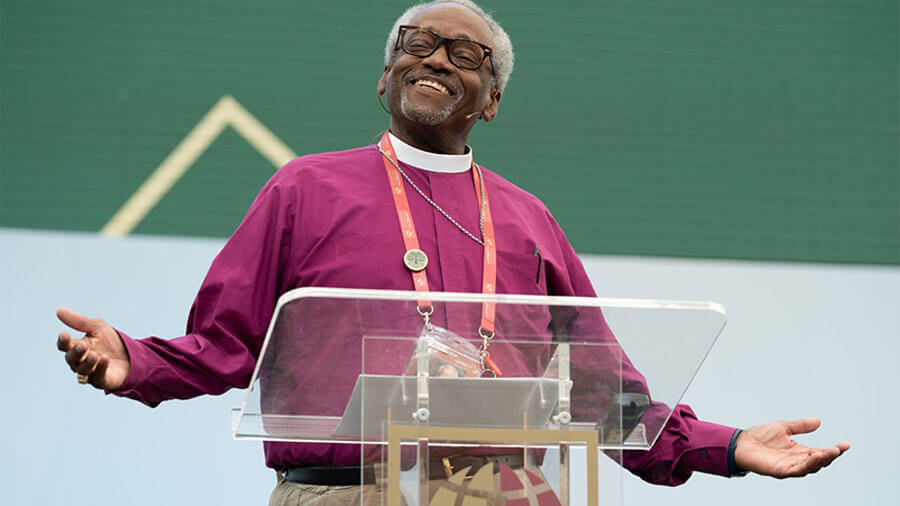
    [Episcopal News Service – Canterbury, England] Planners of this Lambeth Conference have sought to emphasize points of internal unity across the Anglican Communion’s 42 global provinces through their shared Christian faith, despite deep divisions over human sexuality. On August 4, 2022, the more than 650 bishops who are gathered here at the University of Kent widened their focus to striving for unity among all Christian denominations, as well as efforts to bridge gaps between Christians and people of other faiths.

    The day’s two plenaries featured panelists sharing their experiences with ecumenical and interfaith relations, and the bishops’ closed session later in the day took up two corresponding Lambeth Calls, which are the documents this conference is using to initiate discussion while recommending action items for bishops when they return to their provinces and dioceses.

    “The disunity of the Church is a continuing and damaging wound in the body of Christ,” the Lambeth Call on Christian Unity says, referencing a century of history of ecumenical work since “An Appeal to all Christian People” was issued by the 1920 Lambeth Conference. The Christian Unity Call, however, says progress has slowed in recent years, limiting Christian churches’ ability to more closely share in ministries and sacraments, including Communion. Also at stake is shared Christian witness for reconciliation “at a time when in many parts of the world, government regulation, persecution and even terrorism make Christians vulnerable in their life and witness.”

    “Despite our divisions, we recognize in other Christian churches the fruitfulness of the work of the Holy Spirit, commitment to the proclamation of the Gospel and loyalty to Jesus’ institution of the Sacraments that we cherish in our own lives,” the Christian Unity Call says.

    Ecumenical partners at Lambeth

    The presence of some 40 representatives from other churches, Christian organizations and ecumenical partners could be seen as a sign of hope. Those individuals have joined or plan to join the Anglican bishops meeting at the University of Kent through August 8, and several guests were welcomed as panelists for the first plenary of this ninth day of the conference.

    Statement by Cardinal Kurt Koch of the dicastery for promoting Christian unity

    Roman Catholic Cardinal Kurt Koch, prefect of the dicastery for promoting Christian unity, was unable to attend the Lambeth Conference in person, but he submitted a written statement that was read on his behalf by the Rev. Anthony Currer. It referenced the Lambeth Conference theme, “God’s Church for God’s World,” which was chosen by Archbishop of Canterbury Justin Welby, who is convening the conference.

    “This motto can only be true to its meaning if the church can undertake its global mission in reconciled form,” Koch said in his statement, which examined some of the challenges in improving ecumenical relations. “We need a common vision, because we shall grow further apart if we do not aim towards a common goal.”

    David Wells of the Pentecostal World Fellowship

    David Wells, vice chair of the Pentecostal World Fellowship, also spoke of the challenges and benefits of ecumenism.

    “Spiritual ecumenism has assisted us in coming more and more to the table,” Wells said of his church. He acknowledged that when denominations focus only on their own Christian practices, “one can end up with a fixed set of identity, and it can lead to a myopic view of the family of God and from it sometimes arises arrogance and judgement.” Christian churches can hold on to their core beliefs, he said, but also “understand that there is so much more to learn from our other brothers and sisters.”

    Archbishop Nikitas of Thyateira and Great Britain

    Two other panelists highlighted the ways members of the global Christian church can respond together to the issues of the day. Greek Orthodox Archbishop Nikitas of Thyateira and Great Britain cited the example of human trafficking and modern forms of slavery. “The sins of the past are alive and thriving in a modern world that dares to speak of human rights, justice and truth,” the archbishop said. “It is therefore time for us as Christians to unify our efforts and do what is required by God to speak out against injustice and every evil.”

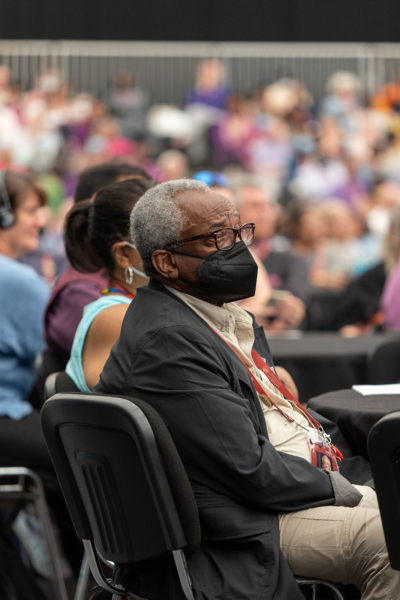
    Atlanta Bishop Rob Wright listens as Archbishop of Canterbury Justin Welby speaks on Aug. 4 during the morning’s Bible Exposition. Photo: Neil Turner/For the Lambeth Conference.

    Bishop Marinez Bassotto of the Amazon

    And representing the Episcopal Anglican Church of Brazil, the Rt. Rev. Marinez Bassotto, bishop of the Amazon, described some of her diocese’s recent work with ecumenical partners to support the rights of Indigenous peoples. They have been oppressed by a government that allows continued abuse by corporations hungry for their land and its resources, she said.

    “The church is a witness, that only through unconditional respect is it possible to live according to Christ,” Bassotto said through an interpreter.

    Breakaway Anglican groups

    Reference to the breakaway Anglican groups that have formed their own provinces over theological and doctrinal disagreements, particularly their opposition to full LGBTQ+ inclusion in the life of the church, was absent from these official discussions. The Anglican Church in North America, or ACNA, and the Anglican Church in Brazil are not recognized as member provinces of the Anglican Communion, though they still maintain relationships with some of the communion’s more conservative provinces and bishops.

    Welby had invited ACNA to attend this Lambeth Conference, but as an observer. ACNA Archbishop Foley Beach responded by refusing to participate, “as long as the Archbishop of Canterbury is inviting bishops to Lambeth who are living in immorality and continuing to tear the fabric of the Communion.”

    The relationship between ACNA and the Anglican Communion is complicated, the Ven. Will Adam told Episcopal News Service when asked about ACNA’s “observer” label. Adam is the former deputy general secretary of the Anglican Communion and now serves as archdeacon of Canterbury.

    Other Christian churches were invited to attend as ecumenical observes or participants, but there is no such easy or established category for churches that are made up largely of breakaway groups of former members of the Anglican Communion. “You can’t put the Anglican Church of North America in the same box as the Greek Orthodox Church,” Adam said.

    “What I would be really interested to see in the future is whether the next generation, particularly the Anglican Church in North America – whether the next generation still ends up fighting the same battles as the previous ones,” Adam said. The generation of ACNA leaders “who haven’t left anything” may fuel hope of a thaw in relations.

    Bishop John Bauerschmidt of the Episcopal Diocese of Tennessee, in an interview with ENS, said he wasn’t aware of any Episcopal or Anglican dialogue underway with ACNA, but like Adam, he expressed a hope for the future. Bauerschmidt is a member of a group of conservative Episcopal and Canadian Anglican bishops known as the Communion Partners.

    “Sometimes, it’s those who are closest to us where there’s the most friction,” he said, noting that many ACNA clergy are former Episcopal clergy. “There’s a new generation in each church that doesn’t share that history and doesn’t share the history of conflict either, so there will be a new day in the relationship between our churches as there’s a generational change. That would be my hope and prayer.”

    Presiding Bishop Michael Curry listens as Archbishop of Canterbury Justin Welby speaks on Aug. 4 during the morning’s Bible Exposition. Photo: Neil Turner/For the Lambeth Conference.

    Ecumenical winter beginning to thaw

    Bauerschmidt, who also served last month on the 80th General Convention’s Committee on Ecumenical and Interreligious Relations, said he was pleased that this Lambeth Conference gave such a high profile to Christian unity. “People sometimes talk about an ‘ecumenical winter,’” he said. “I think that the ecumenical winter is beginning to thaw.”

    He pointed to examples of what is known as “receptive ecumenism” through organizations and initiatives like the World Council of Churches and the Anglican-Roman Catholic International Commission. “It’s a kind of willingness to see the gifts that each other brings that help build up both churches,” he said.

    Interfaith relations

    As for interfaith relations, “it would be a mistake for Christians to simply concentrate on their own dialogue within the Christian family,” Bauerschmidt said. “We must be aware of what’s happening in other religious traditions.”

    The afternoon plenary on interfaith relations was titled “Hospitality and Generosity.” The keynote speaker, Chelmsford Bishop Guli Francis-Dehqani of the Church of England, shared her childhood experience as a Christian refugee. Her family fled Iran when she was 14 in response to the 1979 Iranian Revolution. Her father was the Anglican bishop of the diocese in Iran, and her brother was killed there, presumably because of his connection to the church.

    And yet, Francis-Dehqani said, she felt called by her Christian faith to unravel the paradox of Christian engagement with other faiths “when elements within those faiths wish us harm.” She came to believe that “the evils which have befallen the church are not a reflection of the whole Islamic faith,” she said, just as the violence of the medieval Crusades and today’s Christian nationalist movements are not a reflection of the whole Christian faith.

    The Lambeth Call on Inter Faith Relations alludes to the sometimes dramatic difference in contexts in which Anglicans around the globe interact with people of other faiths.

    “For some in the Anglican Communion there is the freedom to call people into baptism and discipleship, and our neighbors of other religious traditions can also become partners in work for the common good, tackling areas of shared concern such as the pandemic or climate change,” the call states. “In some contexts, however, Anglicans face hostility and even persecution.”

    In the morning news briefing before the plenaries, Francis-Dehqani said that she finds hope rather than trouble in the variety of global faiths.

    “As human beings we’re hard-wired to be drawn more naturally to people who are like ourselves,” she said. “[When] actually, we’re much more enriched when we engage with people who are different from ourselves, and we begin to get the sense of seeing the world through their eyes and understanding their experiences. It’s more difficult, but I do think it’s more enriching – and far more connects us as human beings.”

    – David Paulsen is an editor and reporter for Episcopal News Service. He can be reached at dpaulsen@episcopalchurch.org.

    Lambeth Conference: God's Church for God's World

    What is the Lambeth Conference?

    Every bishop of the Anglican Communion is invited to the Lambeth Conference, which is convened by the Most Reverend Justin Welby, The Archbishop of Canterbury. The Lambeth Conference has met since 1867, happens once-a-decade, and is a significant event in the life of the Anglican Communion.

    The conference will explore church and world affairs. Outcomes of the conference will shape the life of the Anglican Communion in the decade ahead.

    Anglican Compass Rose

    The Anglican Communion

    The Anglican Communion has no central authority figure or body. It is made up of 42 autonomous members or provinces. Each member church makes its own decisions in its own way.

    However, their decision-making bodies are guided by recommendations from each of the four so-called Instruments of Communion

    The Secretariat, also known as the Anglican Communion Office, based in London, England support Anglicans and Episcopalians worldwide to carry out any requests from the Instruments and work to enable members of the Anglican Communion to fulfil their calling to be God’s people in the world.

    The Episcopal Church of the Redeemer: Worshiping God, living in community, reaching out to the world.

    Church of the Redeemer

    Church of the Redeemer: Worshiping God, living in community, and reaching out to the world around us. We are an Episcopal Church serving north King County and south Snohomish County, Washington. As you travel your road, go with friends walking the way of Jesus at Redeemer.

    Church of the Redeemer is at 6220 Northeast 181st Street in Kenmore, Washington. The campus is a short distance north of Bothell Way, near the Burke-Gilman Trail. The entrance looks like a gravel driveway. The campus is larger on the inside than it is on the outside. And we managed to hide a large building on the side of a hill that is not easily seen from the street.

    The Episcopal Church welcomes you.
  • Anglican Communion Forest Initiative launch

    Anglican Communion Forest Initiative launch

    [Episcopal News Service – London, England] With the launch of the Anglican Communion Forest Initiative, Anglican and Episcopal bishops from across the world are seeking to make tangible their shared commitment of the Fifth Mark of Mission, to strive to safeguard the integrity of creation and sustain and renew the life of the Earth.

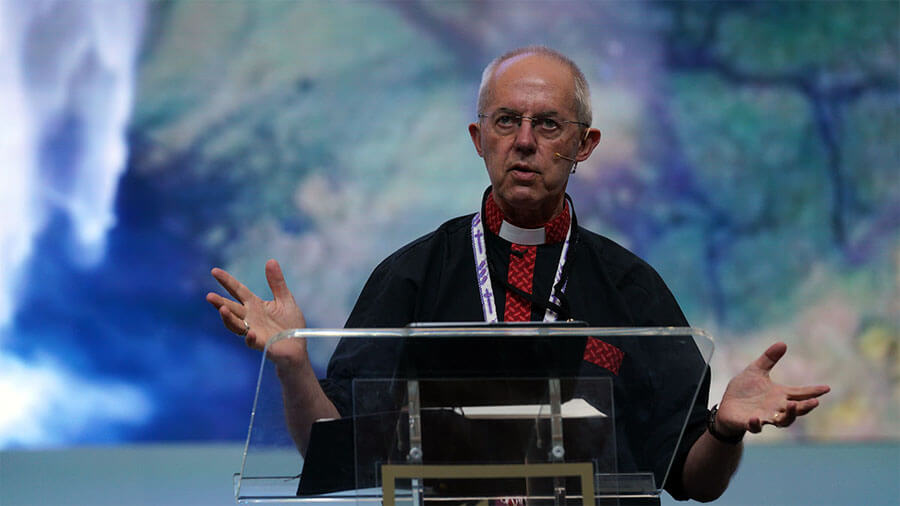
    Climate change “is an absolutely enormous emergency for literally billions of the world’s population,” Archbishop of Canterbury Justin Welby said during an August 3, 2022, press conference held in the Lambeth Palace Library.

    “If we stand united, we can, as the global Anglican Communion, make a transformative difference around the world,” he said. “There is a real sense of unity on this, and today is a sign of great hope for the poorest who represent the vast majority of Anglicans in the world.”

    Environment and sustainable development discussions

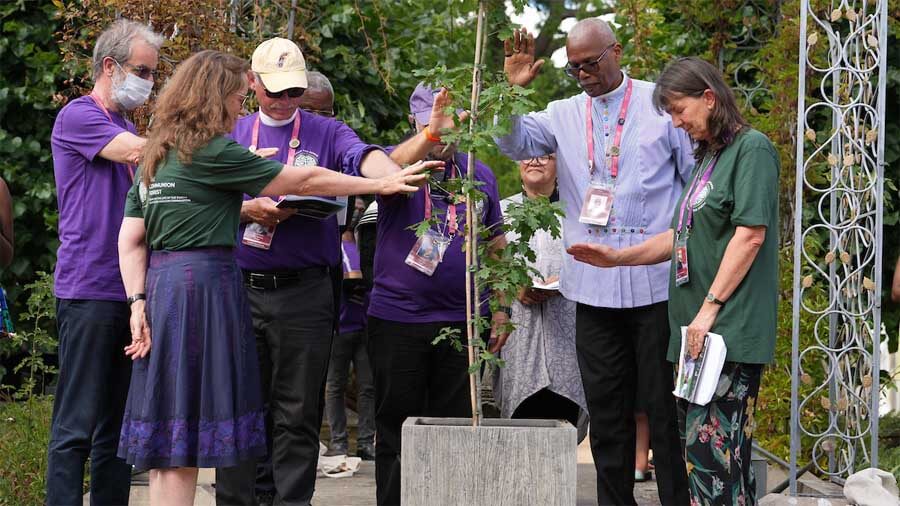
    It was the eighth day of the Lambeth Conference, and bishops and their spouses traveled by bus to spend the day in Lambeth Palace’s garden, where the discussion focused on environment and sustainable development. While there, the forest’s first tree was planted in the garden marking the launch of the global forest initiative focused on provinces’, dioceses’ and individual churches’ efforts toward forest protection, tree growing and eco-system restoration.

    “I believe that to plant a tree is a symbol of hope, to protect an ecosystem is a symbol of love, and to restore a habitat is to bring healing to our planet,” said Diocese of Norwich Bishop Graham Usher, the Church of England’s lead bishop for the environment, during the press conference.

    Although there is no existing funding mechanism for the initiative, it is the organizers’ hope that it will become the legacy of the 15th Lambeth Conference and that the launch is designed to encourage people to join the effort.

    Please accept YouTube cookies to play this video. By accepting you will be accessing content from YouTube, a service provided by an external third party.

    YouTube’s privacy policy

    If you accept this notice, your choice will be saved and the page will refresh.

    Forest initiative a “nature-based solution”

    California Bishop Marc Andrus, a long-time leader on environmental issues in The Episcopal Church, called the forest initiative “a nature-based solution.”

    “Instead of putting carbon dioxide into the atmosphere, the greenhouse gases that we know are heating the planet up and causing not just heating but climate ‘weirding,’ all the erratic and increasingly violent storms and other kinds of events – instead of that effect, we’re pulling greenhouse gases out of the atmosphere,” Andrus told Episcopal News Service in a video interview in the palace’s garden.

    Discussions on the environment and sustainable development

    The Lambeth Conference is a typically once-a-decade gathering of Anglican bishops from around the world; it has been underway since July 26, 2022, to the southeast of London in Canterbury. Over 650 bishops from 165-plus countries are gathered at Welby’s invitation, engaging in Bible study, plenary and closed sessions to discuss world issues, including mission, evangelism, “safe church” policies, reconciliation, human dignity and sexuality. The conversations are meant to guide the communion in the coming decade.

    (See full ENS coverage of the Lambeth Conference.)

    While gathered at Lambeth Palace, bishops discussed the Lambeth Call on Environment and Sustainable Development.

    Archbishop Julio Murray of the Anglican Church of Central America

    During the press conference, Archbishop Julio Murray, primate of the Anglican Church of Central America and bishop of the Diocese of Panama, stressed the importance of holding global leaders to their commitments to fund climate adaptation and mitigation programs in less-developed countries, what is commonly referred to as “loss and damages,” spelled out in the 2015 Paris Climate Agreement.

    “The most wealthy countries have signed on, but when we were at COP 26, we found out that what they had signed onto they weren’t complying with,” said Murray, who led the Anglican delegation to the 2021 United Nation’s climate conference in Glasgow, Scotland. And, he said, even when the funds were available, countries encounter real bureaucratic hurdles in accessing them. Advocating for easier, better access at the level of national government, he suggested, is one way religious leaders can have a positive impact.

    Elizabeth Wathuti from Kenya

    Elizabeth Wathuti, a Kenyan youth climate activist, echoed Murray’s remarks, stressing that what is needed now is courageous leadership.

    “I would add that people listen to their faith leaders,” she said during the press conference. “From the part of the world where I’m coming, faith leaders share and have a seat at the table with the people that make the decisions across different sectors in the countries. Being able to understand the big role that leaders can play in helping us actually act is really important.”

    It’s those same leaders, she said, who get ordinary citizens to understand what’s at stake, the lives of people and their livelihoods. “To also understand that the climate issues are so much interrelated with other issues with the food we eat, the air that we breathe, the health and everything that surrounds us … If we do not really take action on climate right now, it’s going to mean that the world is going to be uninhabitable,” Wathuti said.

    Other comments about the environment and climate change

    Following the press conference, in a conversation with ENS, Murray stressed that churches, especially those on the front lines, often find themselves providing relief.

    “The church calls upon the membership to help us respond to the relief that is so needed around the world,” Murray said, adding also that “the church is also saying to the government, listen, we are doing it out of relief, because we know the impact that it causes on the life of the people, but you need to do it because you sign on to a protocol, you need to be committed and you need to respond.”

    In her message to the Lambeth Conference, Queen Elizabeth II acknowledged “the effects of climate change are threatening the lives and livelihoods of many people and communities, not least the poorest and those less able to adapt and adjust.” The conference, she said, is happening “at a time of great need for the love of God.”

    Bishop Marinez Bassotto leads the Episcopal-Anglican Church of Brazil’s Diocese of the Amazon, which covers five of Brazil’s northern, remote states where heat, deforestation, mudslides, fires and other climate-related disasters are forcing people to flee the region and look for work in cities, which in turn causes poverty rates to increase there, she told ENS.

    On the same day the bishops gathered in London, flash floods killed at least 24 people in Uganda and just last week, deadly floods ravaged Kentucky leaving at least 37 people dead.

    Efforts of the Episcopal Church

    The immediate impacts of climate change are being felt worldwide, and Episcopal churches in the United States and Europe, where the church is present in seven countries, are making efforts to minimize their carbon footprints and educate people about creation care, clean energy and climate impact mitigation strategies.

    Convocation of Episcopal Churches in Europe

    The Convocation of Episcopal Churches in Europe, for instance, has a ministry initiative on climate and creation care, which stresses environmental stewardship as a Christian value, Bishop Mark Edington, who leads the convocation, told ENS in the palace’s garden.

    Diocese of South Carolina

    In the Charleston-based Episcopal Diocese of South Carolina, where sea level rise is an immediate threat, the diocese is just beginning a creation care initiative to include education around “habits and practices that we have that, simply, both individually and collectively, need to change around our use of fossil fuels and around our use of plastics,” Bishop Ruth Woodliff-Stanley, told ENS.

    Diocese of Colorado

    In Colorado, where an outdoor lifestyle is part of the culture, and where water shortages and wildfires are becoming increasingly frequent, environmental stewardship is a priority.

    “All of our churches, each in their own way, are working on how they care for creation and how they can help lessen their carbon footprint,” Bishop Kym Lucas, who leads the Episcopal Church in Colorado, told ENS. “And it’s really important for us to talk about these in terms of our stewardship and not in terms of politics or policies, but our obligation as baptized Christians to take care of this gift that we’ve been given.”

    Diocese of Wyoming

    A sensitive “dichotomy” also exists to the north in Wyoming, where Bishop Paul-Gordon Chandler leads the Episcopal Church in Wyoming.

    “We’ve got this beautiful, gorgeous terrain and wildlife that we’re known for, but we also are one of the energy states, coal especially,” he told ENS in the palace’s garden. And, so, what we’re doing is seeking to find a moderating voice, and let the church be right in the center of it all.”

    One way Episcopalians in Wyoming approach that is what Chandler calls “a sacred harmony, of being at one with the Earth and all that was created and lives on the Earth.”

    And, he said, they are increasingly looking to their “Native American sisters and brothers, where this is inherently part of their spirituality, and giving them a voice, not just in our local context but sharing that voice nationally.”

    —Lynette Wilson is the managing editor of Episcopal News Service. She can be reached at lwilson@episcopalchurch.org.

    Lambeth Conference: God's Church for God's World

    What is the Lambeth Conference?

    Every bishop of the Anglican Communion is invited to the Lambeth Conference, which is convened by the Most Reverend Justin Welby, The Archbishop of Canterbury. The Lambeth Conference has met since 1867, happens once-a-decade, and is a significant event in the life of the Anglican Communion.

    The conference will explore church and world affairs. Outcomes of the conference will shape the life of the Anglican Communion in the decade ahead.

    Anglican Compass Rose

    The Anglican Communion

    The Anglican Communion has no central authority figure or body. It is made up of 42 autonomous members or provinces. Each member church makes its own decisions in its own way.

    However, their decision-making bodies are guided by recommendations from each of the four so-called Instruments of Communion

    The Secretariat, also known as the Anglican Communion Office, based in London, England support Anglicans and Episcopalians worldwide to carry out any requests from the Instruments and work to enable members of the Anglican Communion to fulfil their calling to be God’s people in the world.

    The Episcopal Church of the Redeemer: Worshiping God, living in community, reaching out to the world.

    Church of the Redeemer

    Church of the Redeemer: Worshiping God, living in community, and reaching out to the world around us. We are an Episcopal Church serving north King County and south Snohomish County, Washington. As you travel your road, go with friends walking the way of Jesus at Redeemer.

    Church of the Redeemer is at 6220 Northeast 181st Street in Kenmore, Washington. The campus is a short distance north of Bothell Way, near the Burke-Gilman Trail. The entrance looks like a gravel driveway. The campus is larger on the inside than it is on the outside. And we managed to hide a large building on the side of a hill that is not easily seen from the street.

    The Episcopal Church welcomes you.

  • Pray for the Lambeth Conference: Day 10

    Pray for the Lambeth Conference: Day 10

    Thank you for praying with us for the fifteenth Lambeth Conference – which will meet in Canterbury, the United Kingdom, between 26 July– 8 August 2022.

    Through this prayer guide we hope that the prayers we share here will encourage all who use it to unite in prayer for the bishops gathered in the Lambeth Conference.

    Pray for Christian unity

    Bible focus: 1 Peter 5: 1-14 – Authority in Christ

    The bishops will explore what it means to grow churches that are intentional about discipleship – developing communities of faith that nurture Christians to follow Jesus and develop their spirituality.

    The Order of St Benedict – Mucknell Abbey, Church of England

    Holy and loving God, we thank you for calling us to be disciples of Jesus Christ.

    As we grow in our discipleship, we ask for the gift of eager curiosity to discover ever deeper and richer meaning in Jesus’ way of life and teaching.

    Give us the grace to recognise their implications for our own attitudes and ways of living, and rather than take refuge in past assumptions, give us the courage to respond to the challenges with trustful obedience.

    May our discipleship be our increasingly faithful witness to your Risen Christ who dwells in us and to your unbounded love for all your creation.

    We ask this as members of Christ’s mystical body here on earth. Amen

    The Community of the Holy Name, Diocese of Zululand, Anglican Church of Southern Africa

    Heavenly Father, you are the only living God.
    You bring light in the darkness, you bring hope because you are the God of love.
    Lord God, make us one as you are one in the Holy Trinity.
    Help us realize that you are the source of unity and that if we are not united we cannot defeat our enemy, the devil.
    Let the Holy Spirit take control and keep us united as Christians so that the whole world may confess that we are the children of God and praise him who is our strong tower.
    We pray for our Christian families and all other institutions.
    When we get weary on the way, unity in Christ will always give us strength to rise on wings like eagles and sing praises to God in the highest.
    So, dear Lord, keep us united in the precious name of our Lord Jesus Christ.

    Amen

    What is the Lambeth Conference?

    Every bishop of the Anglican Communion is invited to the Lambeth Conference, which is convened by the Most Reverend Justin Welby, The Archbishop of Canterbury. The Lambeth Conference has met since 1867, happens once-a-decade, and is a significant event in the life of the Anglican Communion.

    The conference will explore church and world affairs. Outcomes of the conference will shape the life of the Anglican Communion in the decade ahead.

    Anglican Compass Rose

    The Anglican Communion

    The Anglican Communion has no central authority figure or body. It is made up of 42 autonomous members or provinces. Each member church makes its own decisions in its own way.

    However, their decision-making bodies are guided by recommendations from each of the four so-called Instruments of Communion

    The Secretariat, also known as the Anglican Communion Office, based in London, England support Anglicans and Episcopalians worldwide to carry out any requests from the Instruments and work to enable members of the Anglican Communion to fulfil their calling to be God’s people in the world.

    The Episcopal Church of the Redeemer: Worshiping God, living in community, reaching out to the world.

    Church of the Redeemer

    Church of the Redeemer: Worshiping God, living in community, and reaching out to the world around us. We are an Episcopal Church serving north King County and south Snohomish County, Washington. As you travel your road, go with friends walking the way of Jesus at Redeemer.

    Church of the Redeemer is at 6220 Northeast 181st Street in Kenmore, Washington. The campus is a short distance north of Bothell Way, near the Burke-Gilman Trail. The entrance looks like a gravel driveway. The campus is larger on the inside than it is on the outside. And we managed to hide a large building on the side of a hill that is not easily seen from the street.

    The Episcopal Church welcomes you.

  • Bishops agree to foster restorative justice

    Bishops agree to foster restorative justice

    [Episcopal News Service – Canterbury, England] Anglican bishops took up the Lambeth Call on Reconciliation on August 2, 2022, uniting in a message of justice and healing for those who have been oppressed. Coming just before their session on the more controversial Call on Human Dignity, the Call on Reconciliation focused on the church’s broader work on rectifying unjust social systems and less on addressing the factions within the Anglican Communion.

    The call encourages provinces to address, in their own ways, the wounds caused by racism, sexism and other abuses of power. It specifically cites The Episcopal Church’s antiracism work as an example for other provinces to follow.

    The bishops did not vote during the session, but there was a general sense of agreement on the message of the call, said Connecticut Bishop Ian Douglas, who was on the drafting group for the call. Instead, they shared stories of what reconciliation has looked like in their dioceses and countries.

    “We’re actually sharing our lives in a meaningful way, as bishops, one with another, rather than some kind of exercise in political platitudes or disembodied votes,” Douglas told Episcopal News Service. “What we were trying to do was actually model in our process what we were talking about in our content. Because if we’re talking about reconciliation, the last thing we want to do is construct winners and losers.”

    Much of the day’s discussion centered on the theological basis of reconciliation. True reconciliation, Anglican leaders said, can take myriad forms, but it must incorporate the same fundamental concepts.

    Please accept YouTube cookies to play this video. By accepting you will be accessing content from YouTube, a service provided by an external third party.

    YouTube’s privacy policy

    If you accept this notice, your choice will be saved and the page will refresh.

    “Reconciliation has elements of truth, it has elements of restoration, it has elements of reparation,” said Archbishop of Cape Town Thabo Makgoba, primate of the Anglican Church of Southern Africa, at the morning press briefing. “And I hope that as we discuss, as bishops, we will keep those in balance so that we don’t degenerate into retribution.”

    The call’s declaration that “in order for God’s reconciliation to be fully realized there needs to be both justice and accountability” was underscored by Archbishop of Canterbury Justin Welby – who literally wrote the book on reconciliation – in the morning’s Biblical exposition session. Expounding on “challenging” language in 1 Peter that seems to approve slavery and the subjugation of women, Welby said the church must expose and dismantle unjust systems of power like colonialism, racism and sexism – power structures that churches have been intertwined with for centuries.

    Welby and others cited sexism in particular – and the disenfranchisement and violence that it often spawns – as an oppressive power structure that the church has not paid enough attention to.

    “We’re good at condemning some of these things but we don’t do so uniformly. Wives and slaves are explicitly compared in 1 Peter. And yet we’re very confident in condemning slavery, but less confident in condemning systems that keep women, girls, wives in situations of domestic violence, abuse and exploitation,” Welby said. “We do say that slavery is something that must be rejected in contemporary contexts by Christians, but the system of patriarchy has not yet been discarded and left behind in the same way.”

    Mothers’ Union Worldwide President Sheran Harper echoed Welby’s call in the plenary session.

    “Women and families are often powerful forces for reconciliation right across the world,” Harper said. “And may I say in the same breath that women and families suffer most in times of division and conflict, and also the long journey of reconciliation. Women and girls always seem to be on the front line of the harshest and most violent of circumstances.”

    Archbishop Carlos Matsinhe – primate of the Anglican Communion’s newest diocese, the Anglican Church of Mozambique and Angola – testified to the impact of those violent circumstances in Africa, and the need to address the power imbalances that have contributed to them. Angola and Mozambique are both particularly affected by colonialism; both were Portuguese colonies for centuries until 1975.

    “The slave trade has had a very painful impact on African people,” Matsinhe said through a translator. “Racism, disdain, continue this day in many ways. … We also have military conflicts in independent countries. Some of these military conflicts transformed into civil wars, where some outside groups – which represent countries where there is Anglicanism – influenced African countries and feed, still, these military conflicts.”

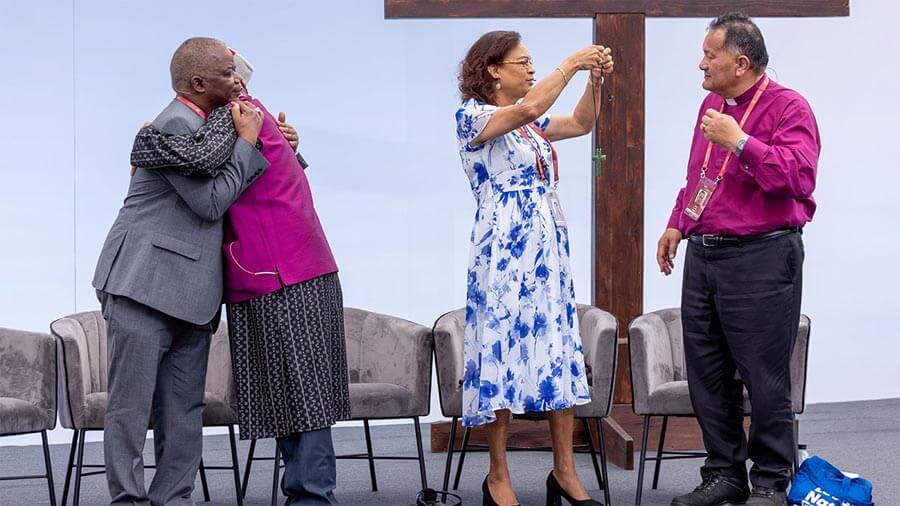
    Bishop Te Kitohi Wiremu Pikaahu of the Anglican Church in Aotearoa, New Zealand and Polynesia proposed an exercise to illustrate the importance of trust in the process of reconciliation. He invited the bishops to exchange their pectoral crosses – or some other valuable item – with the person next to them, to be returned at the end of the plenary.

    Reconciliation, he said, “requires trust. It requires us to be optimistic in our intent. … I want to highlight the giving away of something of value, knowing that it will return to you.”

    As with other calls, the reconciliation call encourages provinces and dioceses to take certain steps, using methods relevant to their unique contexts. The call specifically commends The Episcopal Church’s antiracism work, citing it as a model that other provinces may follow.

    “Inspired by many Anglican churches’ work in truth telling, reckoning and racial healing,” the most recent draft of the call reads, “we invite each province to an exercise of self-examination and reflection, listening respectfully to the experiences of those who have historically been, and continue to be, marginalized in their contexts and in their church.”

    The call asks that each province “engages with a reconciliation resource of their choice by the 2025 Primates Meeting, in order to share stories from that experience and from listening to groups who have historically been marginalized.” Each of the Anglican Instruments of Communion is also requested to undertake a “similar self-examining, listening exercise.”

    The call also asks Welby “to renew and refresh the conversation with the Churches of Nigeria, Rwanda and Uganda, seeking a full life together as an Anglican family of churches.” The primates of those three Anglican provinces are boycotting this Lambeth Conference because of their objection to other Anglican provinces’ approaches to sexuality. It asks Welby and the Standing Committee of the Anglican Communion to report on their progress at the 2023 Anglican Consultative Council meeting.

    Douglas said there were differing reactions to some of those specific items, but they were not put to yes or no votes, “so that we can have a substantial set of responses, rather than [pressing] buttons or quietly assenting or yelling. I mean, that that doesn’t build up the Body of Christ. And then we had a prayerful moment at the end, where we stood in prayer, offering these conversations to God and to one another.”

    —Egan Millard is an assistant editor and reporter for Episcopal News Service. He can be reached at emillard@episcopalchurch.org.

    Lambeth Conference: God's Church for God's World

    What is the Lambeth Conference?

    Every bishop of the Anglican Communion is invited to the Lambeth Conference, which is convened by the Most Reverend Justin Welby, The Archbishop of Canterbury. The Lambeth Conference has met since 1867, happens once-a-decade, and is a significant event in the life of the Anglican Communion.

    The conference will explore church and world affairs. Outcomes of the conference will shape the life of the Anglican Communion in the decade ahead.

    Anglican Compass Rose

    The Anglican Communion

    The Anglican Communion has no central authority figure or body. It is made up of 42 autonomous members or provinces. Each member church makes its own decisions in its own way.

    However, their decision-making bodies are guided by recommendations from each of the four so-called Instruments of Communion

    The Secretariat, also known as the Anglican Communion Office, based in London, England support Anglicans and Episcopalians worldwide to carry out any requests from the Instruments and work to enable members of the Anglican Communion to fulfil their calling to be God’s people in the world.

    The Episcopal Church of the Redeemer: Worshiping God, living in community, reaching out to the world.

    Church of the Redeemer

    Church of the Redeemer: Worshiping God, living in community, and reaching out to the world around us. We are an Episcopal Church serving north King County and south Snohomish County, Washington. As you travel your road, go with friends walking the way of Jesus at Redeemer.

    Church of the Redeemer is at 6220 Northeast 181st Street in Kenmore, Washington. The campus is a short distance north of Bothell Way, near the Burke-Gilman Trail. The entrance looks like a gravel driveway. The campus is larger on the inside than it is on the outside. And we managed to hide a large building on the side of a hill that is not easily seen from the street.

    The Episcopal Church welcomes you.

  • Pray for the Lambeth Conference: Day 9

    Pray for the Lambeth Conference: Day 9

    Thank you for praying with us for the fifteenth Lambeth Conference – which will meet in Canterbury, the United Kingdom, between 26 July– 8 August 2022.

    Through this prayer guide we hope that the prayers we share here will encourage all who use it to unite in prayer for the bishops gathered in the Lambeth Conference.

    Pray for Christian unity

    Bible Focus: 1 Peter 4:1-19 – Suffering in Christ

    Bishops will explore Christian unity and inter faith Relations. How can we be a church that walks together with Christian sisters and brothers from other denominations? How can we learn from and engage in constructive dialogue with other faiths as we respond to issues in our world?

    The Community of the Holy Name, Diocese of Zululand, Anglican Church of Southern Africa

    Lord Jesus, you are the father to all the people of the world, Especially, those who had confessed that Jesus is Lord. We pray for peace and unity among the Christian family. Let your Holy Spirit dwell and intervene among us when we have different views so as to do the work you sent us to do and fulfil your will. You are the only one who can bring peace and tranquility among your people. Without you, there is nothing we can do, you are our rock and salvation through Jesus Christ our Lord. Amen

    Order of St Helena, the Episcopal Church

    Our prayer for the Lambeth Conference and the life of the Anglican Communion is that we open our hearts to peoples of other faith traditions: where there is a history of hurt and pain, may we seek reconciliation; where there are differences in beliefs and practices, may we engage in respectful dialogue; where we have been divided in our mission and values, may we strive to transcend these differences in our shared responsibility for peace and for stewardship of this precious earth. We pray for sacred friendships to grow and flourish in our common desire to live holy lives as we seek the divine presence.

    What is the Lambeth Conference?

    Every bishop of the Anglican Communion is invited to the Lambeth Conference, which is convened by the Most Reverend Justin Welby, The Archbishop of Canterbury. The Lambeth Conference has met since 1867, happens once-a-decade, and is a significant event in the life of the Anglican Communion.

    The conference will explore church and world affairs. Outcomes of the conference will shape the life of the Anglican Communion in the decade ahead.

    Anglican Compass Rose

    The Anglican Communion

    The Anglican Communion has no central authority figure or body. It is made up of 42 autonomous members or provinces. Each member church makes its own decisions in its own way.

    However, their decision-making bodies are guided by recommendations from each of the four so-called Instruments of Communion

    The Secretariat, also known as the Anglican Communion Office, based in London, England support Anglicans and Episcopalians worldwide to carry out any requests from the Instruments and work to enable members of the Anglican Communion to fulfil their calling to be God’s people in the world.

    The Episcopal Church of the Redeemer: Worshiping God, living in community, reaching out to the world.

    Church of the Redeemer

    Church of the Redeemer: Worshiping God, living in community, and reaching out to the world around us. We are an Episcopal Church serving north King County and south Snohomish County, Washington. As you travel your road, go with friends walking the way of Jesus at Redeemer.

    Church of the Redeemer is at 6220 Northeast 181st Street in Kenmore, Washington. The campus is a short distance north of Bothell Way, near the Burke-Gilman Trail. The entrance looks like a gravel driveway. The campus is larger on the inside than it is on the outside. And we managed to hide a large building on the side of a hill that is not easily seen from the street.

    The Episcopal Church welcomes you.
  • Archbishop of Canterbury’s remarks on human dignity lift up traditional and progressive marriage beliefs

    Archbishop of Canterbury’s remarks on human dignity lift up traditional and progressive marriage beliefs

    [Episcopal News Service – Canterbury, England] Heading into this Lambeth Conference, a draft of what is known as the Lambeth Call on Human Dignity generated the most discussion, sparking controversy for how it addressed human sexuality even before the start of the July 26-August 8, 2022, conference of more than 650 Anglican bishops. But on August 2, when bishops finally took up the Human Dignity Call in closed session, accounts of those discussions bore little evidence of the divisions that simmered on the sidelines during the first half of the conference.

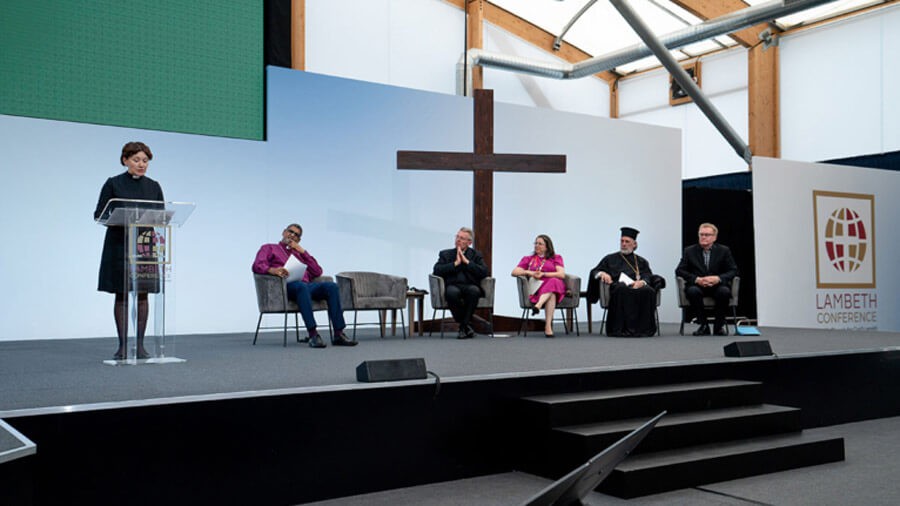
    Instead, what resonated for bishops attending the session was the extended introduction by Archbishop of Canterbury Justin Welby, who sought in his remarks to bring the bishops closer together by affirming the sincerity and theological rigor of Anglicans on both sides of the divide over the extent of LGBTQ+ inclusion in the church.

    Remarks by Archbishop Justin Welby on human dignity

    “This is one of the most important sessions of this conference,” Welby said, according to a transcription of his remarks released by the Lambeth Conference. The Human Dignity Call references the need to address racism, exploitation, inequality, gender justice and climate change, but Welby acknowledged that human sexuality is part “of what we believe about human dignity.”

    Read the Archbishop of Canterbury’s remarks here.

    A majority of the more than 80 million Anglicans around the world have deeply held convictions that marriage is for a man and a woman, Welby said, but others “have not arrived lightly at their ideas that traditional teaching needs to change.”

    “So let us not treat each other lightly or carelessly,” Welby said. “We are deeply divided. That will not end soon. We are called by Christ himself both to truth and unity.”

    Discussions on human dignity

    The session progressed to table discussions by bishops in their small groups and concluded in prayer, without taking any collective action to express agreement or disagreement with the call itself. The Lambeth Calls were designed as an alternative to resolutions and intended to initiate discussion among the bishops while suggesting action items.

    Welby and planners have tried to steer the conference away from focusing narrowly on human sexuality, instead emphasizing points of Christian unity and fellowship while filling the conference’s schedule with discussions of a wide range of topics. The bishops, for example, also will devote a whole day to the environment and sustainable development during a trip to Lambeth Palace in London on August 3.

    Resolution 1.10

    Divisions had flared, however, over an attempt by conservatives, particularly from what is known as the Global South, to reaffirm Resolution 1.10, which was passed at the 1998 Lambeth Convention and asserts conservative theological positions on human sexuality and marriage, including that marriage is between a man and a woman, and that unmarried people should abstain from sex.

    The revised draft of the Lambeth Call on Human Dignity taken up by the bishops references the 1998 resolution’s assertion that “all baptized, believing and faithful persons, regardless of sexual orientation are full members of the Body of Christ.” It also states there is no consensus across all 42 of the Anglican Communion’s autonomous but interdependent provinces on the legitimacy of blessings and marriage rites for same-sex couples. “As bishops we remain committed to listening and walking together to the maximum possible degree, despite our deep disagreement on these issues,” the call says.

    Response by Presiding Bishop Michael Curry

    In the early evening, Episcopal Church Presiding Bishop Michael Curry described the day’s discussion as a moment of hope.

    “I’ve been a bishop 22 years and a priest over 40 years. And I have to tell you that as far as I know, it is the first time a document in the Anglican Communion has recognized that there is a plurality of views on marriage and that these are perspectives that reflect deep theological and biblical work and reflection,” Curry said in a video statement. “That’s why I say today is a hopeful day. There is work to do, but hope can help us run the race and ascent before us.”

    Actions by the Global South Fellowship

    Leaders of the Global South Fellowship of Anglican Churches, with 23 member provinces, most from Africa and Asia, were denied in their attempt at the Lambeth Conference to engineer an official show of majority support for anti-LGBTQ+ stances on marriage and sexuality. On August 2, some Global South bishops announced an alternative plan, to make their case on the conference’s sidelines. They now are asking like-minded bishops from across the Anglican Communion to register their support for their own document reaffirming Resolution 1.10.

    South Sudan Archbishop Justin Badi, chairman of the Global South Fellowship, confirmed in an interview with Episcopal News Service earlier in the day that he and other conservative bishops had no intention of raising the issue during the open plenary, as previously planned, and they didn’t press it during the closed discussion of the conference’s Lambeth Call on Human Dignity,

    “We wanted to bring [the reaffirmation of 1.10] as any other business in the plenary, but the organizers said, ‘No, that cannot happen,’” Badi said. Instead, their stated goal now is a show of support for their own reaffirmation document, “reminding people” of what was passed in 1998.

    The document will eventually be presented to Welby, who convened this Lambeth Conference, but the Global South bishops are not asking Welby to take any action on the document. When asked about his earlier call to “impose sanctions” on The Episcopal Church and at least five other provinces with inclusive LGBTQ+ policies, Badi told ENS that such action will no longer be pursued at this Lambeth Conference.

    The Human Dignity Call

    The initial draft of the Human Dignity Call included language favored by conservative bishops reaffirming 1.10, which stated that homosexuality is forbidden, marriage is only for heterosexual couples and unmarried people should practice abstinence. Conference planners revised that call after some bishops, including from The Episcopal Church, raised concerns about the original language and the process for accepting it.

    Resolution 1.10 is bigger than the Lambeth Conference, Badi told ENS. “Why we take it to be important [is] because it has the authority of the Bible.”

    Welby spoke to the biblical underpinnings of the conservative bishops’ beliefs in his remarks during the Human Dignity Call. “For them, to question this teaching is unthinkable, and in many countries would make the church a victim of derision, contempt and even attack,” Welby said. “For many churches to change traditional teaching challenges their very existence.”

    He drew a direct parallel to the discernment of provinces like The Episcopal Church that reached a different conclusion on human sexuality. “They are not careless about scripture. They do not reject Christ. But they have come to a different view on sexuality after long prayer, deep study and reflection on understandings of human nature,” Welby said. “For these churches not to change traditional teaching challenges their very existence.”

    The focus on human dignity has roots in the Anglican tradition. The Baptismal Covenant in The Episcopal Church’s Book of Common Prayer, for example, calls on Episcopalians to “strive for justice and peace among all people, and respect the dignity of every human being.”

    What comes next

    It remains uncertain how much support the Global South Fellowship of Anglican Churches will receive for its push to reaffirm Resolution 1.10. Bishops are asked to register their support via email by noon on August 4, with results to follow “in due course.” Some bishops from the 23 member provinces have told ENS that they agree with the language of the document, though the bishops are not all of one mind on how strongly to press against the actions of other provinces.

    The reaffirmation of 1.10 “is right,” Tanzania Archbishop Maimbo Mndolwa told ENS, but he added that he is opposed to one province telling another province what to do, including on matters of human sexuality. He also questioned the real source of energy on this issue. “There has been a tendency over many years of some people from the Global North to use provinces from the Global South to champion their own ideas,” he said, without specifying who might be pressing their influence.

    The Global South Fellowship of Anglican Churches is a fellowship, Mndolwa said, but not an organization that speaks directly for all member provinces. He also distanced himself and his province from the decision of leaders in the provinces of Nigeria, Rwanda and Uganda to skip this Lambeth Conference and other Anglican Communion meetings. “We don’t want to be separatists,” Mndolwa said of his province. “We are here to dialogue. We are here to debate. We are not here to fight.”

    South African Archbishop Thabo Makgoba spoke about the Human Dignity Call in a morning press conference. “We are all made in the image of God,” he said. The call “seeks to remind us of that.” He also stressed that the call is not just about human sexuality.

    “Please, let’s move away from a single issue and move to the broader issues,” Makgoba said.

    Arizona Bishop Jennifer Reddall told ENS before the afternoon sessions that she and other progressive bishops have been grappling with how to affirm their support for LGBTQ+ inclusion in The Episcopal Church while remaining open to the views of their more conservative counterparts. “I’m enjoying much of the dialogue. I enjoy conversation across difference,” she said.

    On the Human Dignity Call, “I think the LGBTQ differences are very real and very painful personally,” she said, while adding, “it’s not the whole story” of the Lambeth Conference.

    Overall, however, Reddall worries that too much is being packed into a short period of time, making it difficult to fully consider each individual call. “These are deep questions that are worthy of so much more conversation and time than we have,” she said.

    In the afternoon, as the Global South Fellowship was launching its effort to generate support for document reaffirming the full text of Resolution 1.10, Welby issued a written statement responding to the controversy. He affirmed “the validity of the resolution passed at the Lambeth Conference 1998.” At the same time, the Human Dignity Call’s acknowledgement of differences from province to province “states the reality of life in the Communion today,” Welby said.

    “What is also clear is that Lambeth 1.10 itself continues to be a source of pain, anxiety and contention among us,” Welby continued. “That has been very clear over the course of this Lambeth Conference. That is also part of the current reality of our communion. To be reconciled to one another across such divides is not something we can achieve by ourselves.”

    – David Paulsen is an editor and reporter for Episcopal News Service. He can be reached at dpaulsen@episcopalchurch.org.

    Lambeth Conference: God's Church for God's World

    What is the Lambeth Conference?

    Every bishop of the Anglican Communion is invited to the Lambeth Conference, which is convened by the Most Reverend Justin Welby, The Archbishop of Canterbury. The Lambeth Conference has met since 1867, happens once-a-decade, and is a significant event in the life of the Anglican Communion.

    The conference will explore church and world affairs. Outcomes of the conference will shape the life of the Anglican Communion in the decade ahead.

    Anglican Compass Rose

    The Anglican Communion

    The Anglican Communion has no central authority figure or body. It is made up of 42 autonomous members or provinces. Each member church makes its own decisions in its own way.

    However, their decision-making bodies are guided by recommendations from each of the four so-called Instruments of Communion

    The Secretariat, also known as the Anglican Communion Office, based in London, England support Anglicans and Episcopalians worldwide to carry out any requests from the Instruments and work to enable members of the Anglican Communion to fulfil their calling to be God’s people in the world.

    The Episcopal Church of the Redeemer: Worshiping God, living in community, reaching out to the world.

    Church of the Redeemer

    Church of the Redeemer: Worshiping God, living in community, and reaching out to the world around us. We are an Episcopal Church serving north King County and south Snohomish County, Washington. As you travel your road, go with friends walking the way of Jesus at Redeemer.

    Church of the Redeemer is at 6220 Northeast 181st Street in Kenmore, Washington. The campus is a short distance north of Bothell Way, near the Burke-Gilman Trail. The entrance looks like a gravel driveway. The campus is larger on the inside than it is on the outside. And we managed to hide a large building on the side of a hill that is not easily seen from the street.

    The Episcopal Church welcomes you.

Maundy Thursday, April 2, 2026. Services at 12:00 noon and 7:00 pm. Gethsemane Watch Vigil from about 8:30 pm to 9:30 pm.

Good Friday, April 3, 2026: Services at 12:00 noon and 7:00 pm.

Holy Saturday worship at 9:30 am.

The Great Vigil of Easter, Saturday, April 4, 2025. Service at 8:00 pm. This is the night....

The 2nd Sunday of Easter (Year A), April 12, 2026. Services at 8:00 am (no music) and 10:30 (music). Education classes resume next week.

Episcopal Church of the Redeemer
Privacy Overview

Cookie information is stored in your browser and performs functions such as recognizing you when you return to our website and helping our team to understand which pages of the website are visited. We aren't using cookies to determine your web browsing habits, but others can.