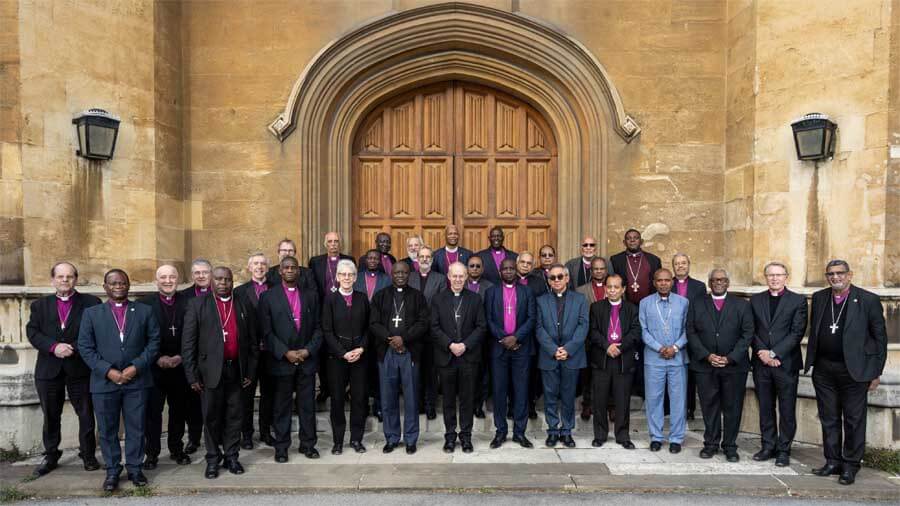
Thank you for praying with us for the fifteenth Lambeth Conference – which will meet in Canterbury, the United Kingdom, between 26 July– 8 August 2022.
Through this prayer guide we hope that the prayers we share here will encourage all who use it to unite in prayer for the bishops gathered in the Lambeth Conference.
Opening service day
The official opening of the conference will be marked by a special service at Canterbury Cathedral. Bishops attending the Lambeth Conference have travelled from all around the world to take part in this event.
Conference discussions later in the day will explore the importance of safe church.
A prayer from The Community of the Gospel, the Episcopal Church
O good and gracious God, we come with joyful hearts of expectation, offering prayers to you for unity, strength, and great success at the Lambeth Conference. As the bishops of your church gather to seek your direction, to share with each other, and to carry out your will, we pray, dear Lord, that you continue to fill them with the Spirit of love, and that it is manifested in the transformed lives of these shepherds, and the flock to whom they minister. And then, Lord, it is our plea, that the transformed children of your Kingdom would, through missionary zeal, seek to transform others, by your love flowing through us. These mercies we ask, in the name of the one loved us to death; Jesus the Christ. Amen
What is the Lambeth Conference?
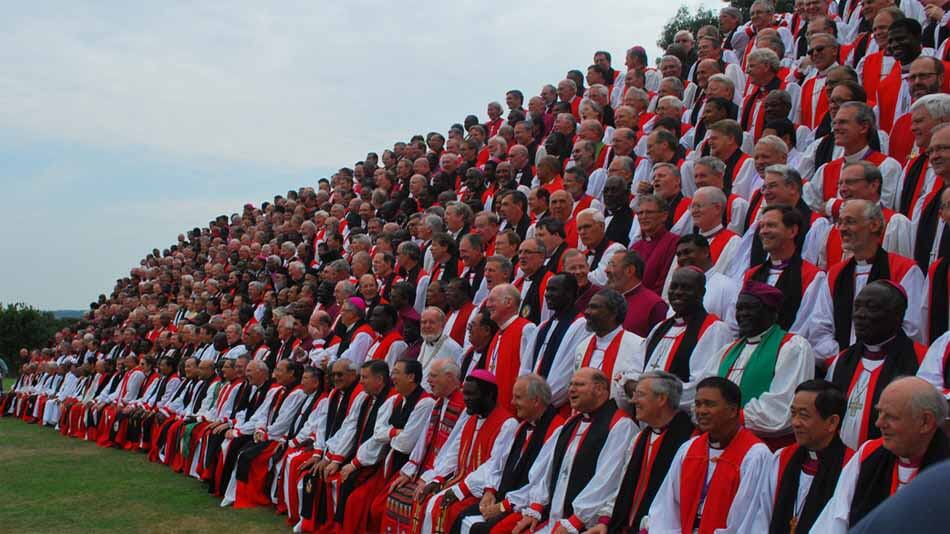
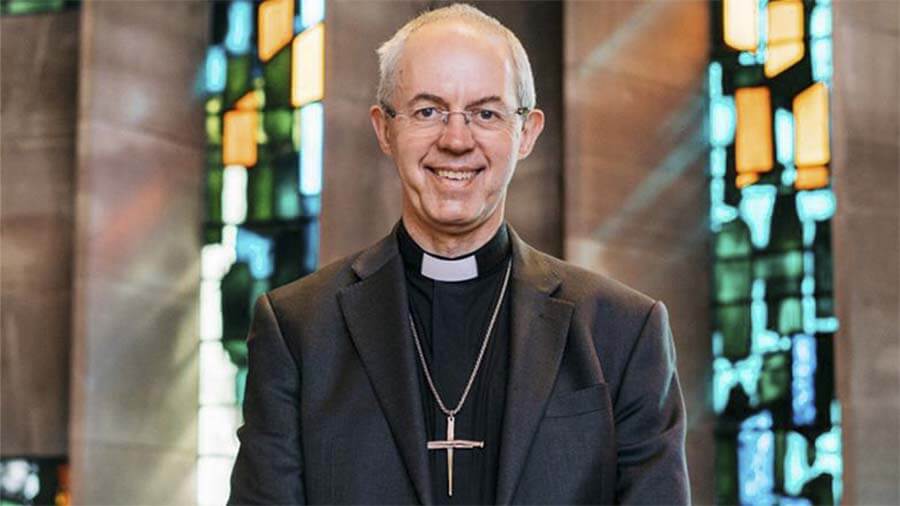
Every bishop of the Anglican Communion is invited to the Lambeth Conference, which is convened by the Most Reverend Justin Welby, The Archbishop of Canterbury. The Lambeth Conference has met since 1867, happens once-a-decade, and is a significant event in the life of the Anglican Communion.
The conference will explore church and world affairs. Outcomes of the conference will shape the life of the Anglican Communion in the decade ahead.
The Anglican Communion
The Anglican Communion has no central authority figure or body. It is made up of 42 autonomous members or provinces. Each member church makes its own decisions in its own way.
However, their decision-making bodies are guided by recommendations from each of the four so-called Instruments of Communion
The Secretariat, also known as the Anglican Communion Office, based in London, England support Anglicans and Episcopalians worldwide to carry out any requests from the Instruments and work to enable members of the Anglican Communion to fulfil their calling to be God’s people in the world.
Church of the Redeemer
Church of the Redeemer: Worshiping God, living in community, and reaching out to the world around us. We are an Episcopal Church serving north King County and south Snohomish County, Washington. As you travel your road, go with friends walking the way of Jesus at Redeemer.
Church of the Redeemer is at 6220 Northeast 181st Street in Kenmore, Washington. The campus is a short distance north of Bothell Way, near the Burke-Gilman Trail. The entrance looks like a gravel driveway. The campus is larger on the inside than it is on the outside. And we managed to hide a large building on the side of a hill that is not easily seen from the street.
Thank you for praying with us for the fifteenth Lambeth Conference – which will meet in Canterbury, the United Kingdom, between 26 July– 8 August 2022.
Through this prayer guide we hope that the prayers we share here will encourage all who use it to unite in prayer for the bishops gathered in the Lambeth Conference.
Pray for mission and evangelism
Bible Focus: 1 Peter 1: 1-25 – Called in to hope and holiness
Learning from 1 Peter’s vision of church, the day will explore mission and evangelism in the Anglican Communion, as part of the Global Church.
A prayer from The Church Mission Society. Church of England – working with partners across Africa, Asia, Europe, Latin America and the Middle East
Lord, as you have entered into our life and death and in all the world you call us into your death and risen life. Forgive us our sins; and draw us we pray, by the power and encouragement of your Spirit, into an exchange of gifts and needs, joys and sorrows, strength and weakness with your people everywhere; that with them we may have grace to break through every barrier, to make disciples of all peoples and to share your love with everyone for your glory’s sake. Amen
What is the Lambeth Conference?
Every bishop of the Anglican Communion is invited to the Lambeth Conference, which is convened by the Most Reverend Justin Welby, The Archbishop of Canterbury. The Lambeth Conference has met since 1867, happens once-a-decade, and is a significant event in the life of the Anglican Communion.
The conference will explore church and world affairs. Outcomes of the conference will shape the life of the Anglican Communion in the decade ahead.
The Anglican Communion
The Anglican Communion has no central authority figure or body. It is made up of 42 autonomous members or provinces. Each member church makes its own decisions in its own way.
However, their decision-making bodies are guided by recommendations from each of the four so-called Instruments of Communion
The Secretariat, also known as the Anglican Communion Office, based in London, England support Anglicans and Episcopalians worldwide to carry out any requests from the Instruments and work to enable members of the Anglican Communion to fulfil their calling to be God’s people in the world.
Church of the Redeemer
Church of the Redeemer: Worshiping God, living in community, and reaching out to the world around us. We are an Episcopal Church serving north King County and south Snohomish County, Washington. As you travel your road, go with friends walking the way of Jesus at Redeemer.
Church of the Redeemer is at 6220 Northeast 181st Street in Kenmore, Washington. The campus is a short distance north of Bothell Way, near the Burke-Gilman Trail. The entrance looks like a gravel driveway. The campus is larger on the inside than it is on the outside. And we managed to hide a large building on the side of a hill that is not easily seen from the street.
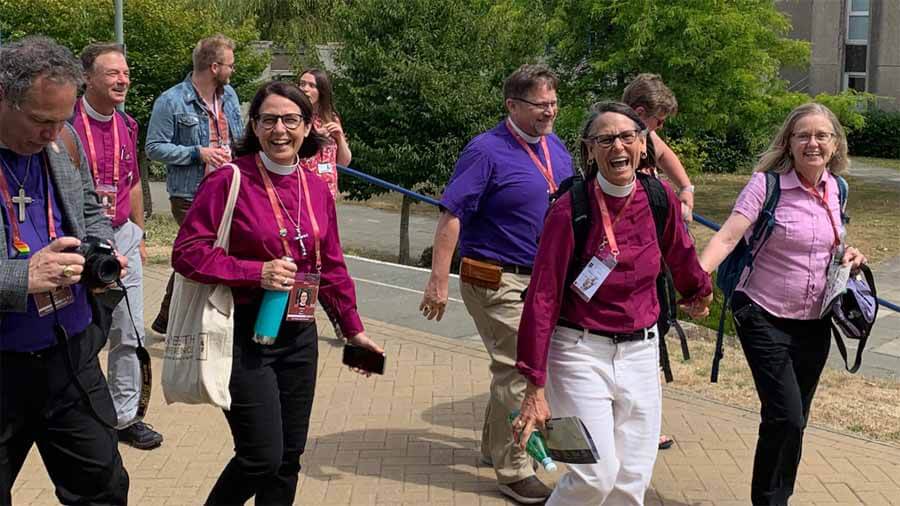
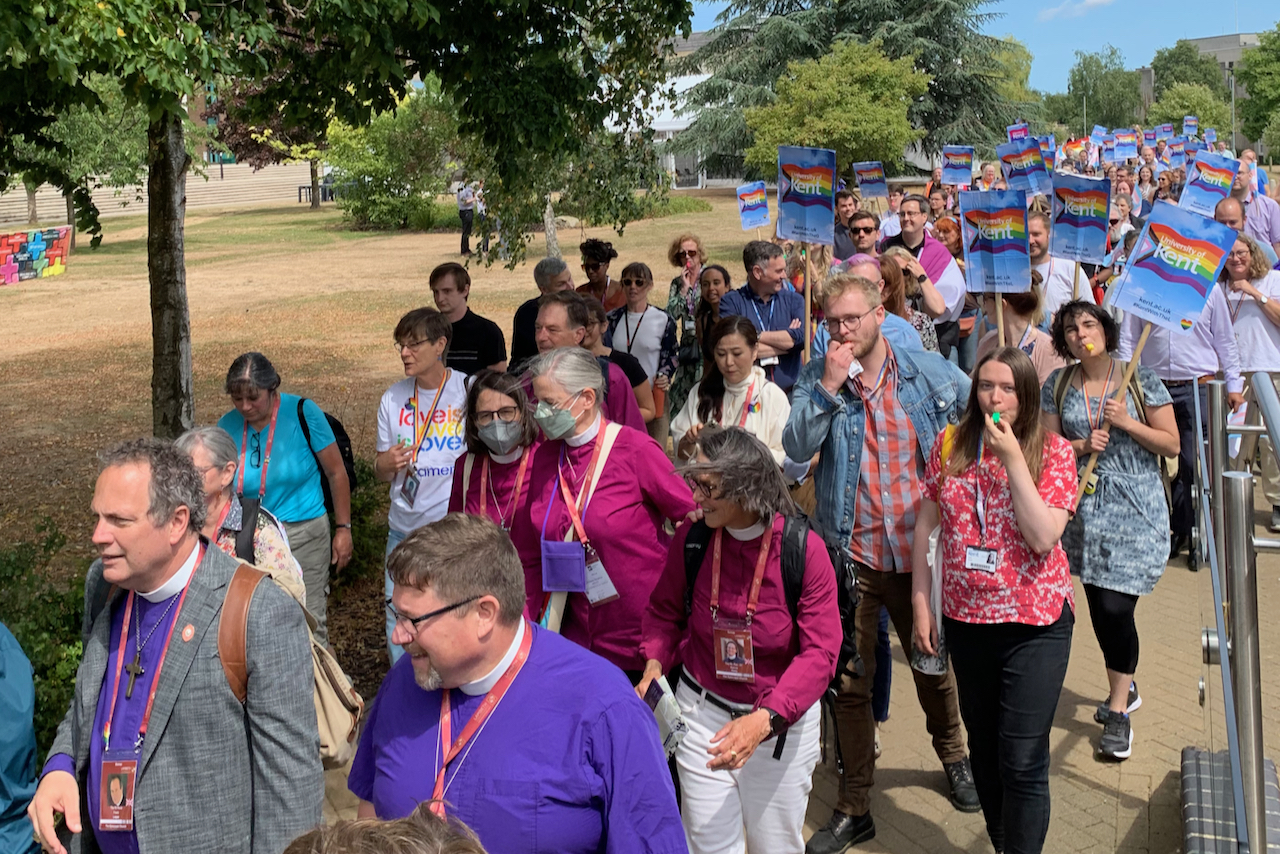
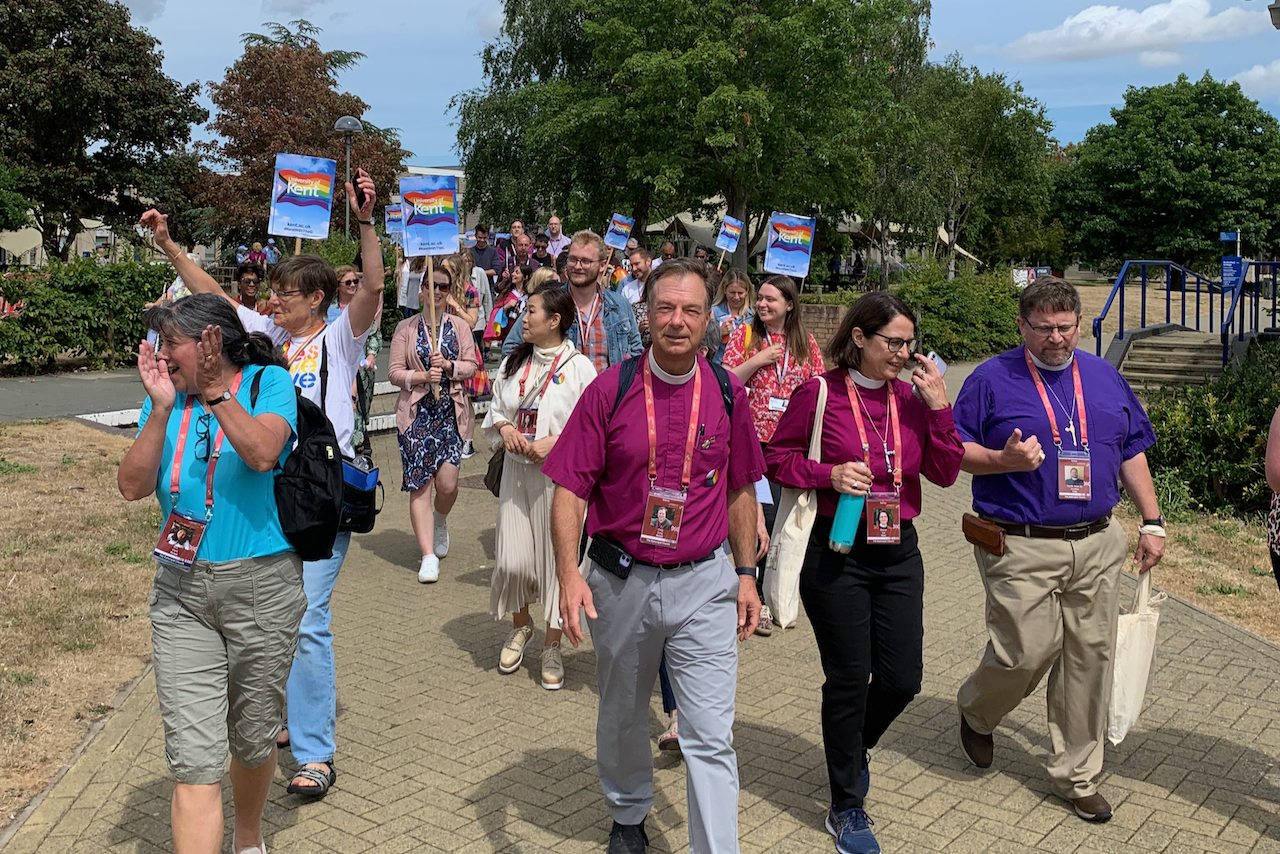
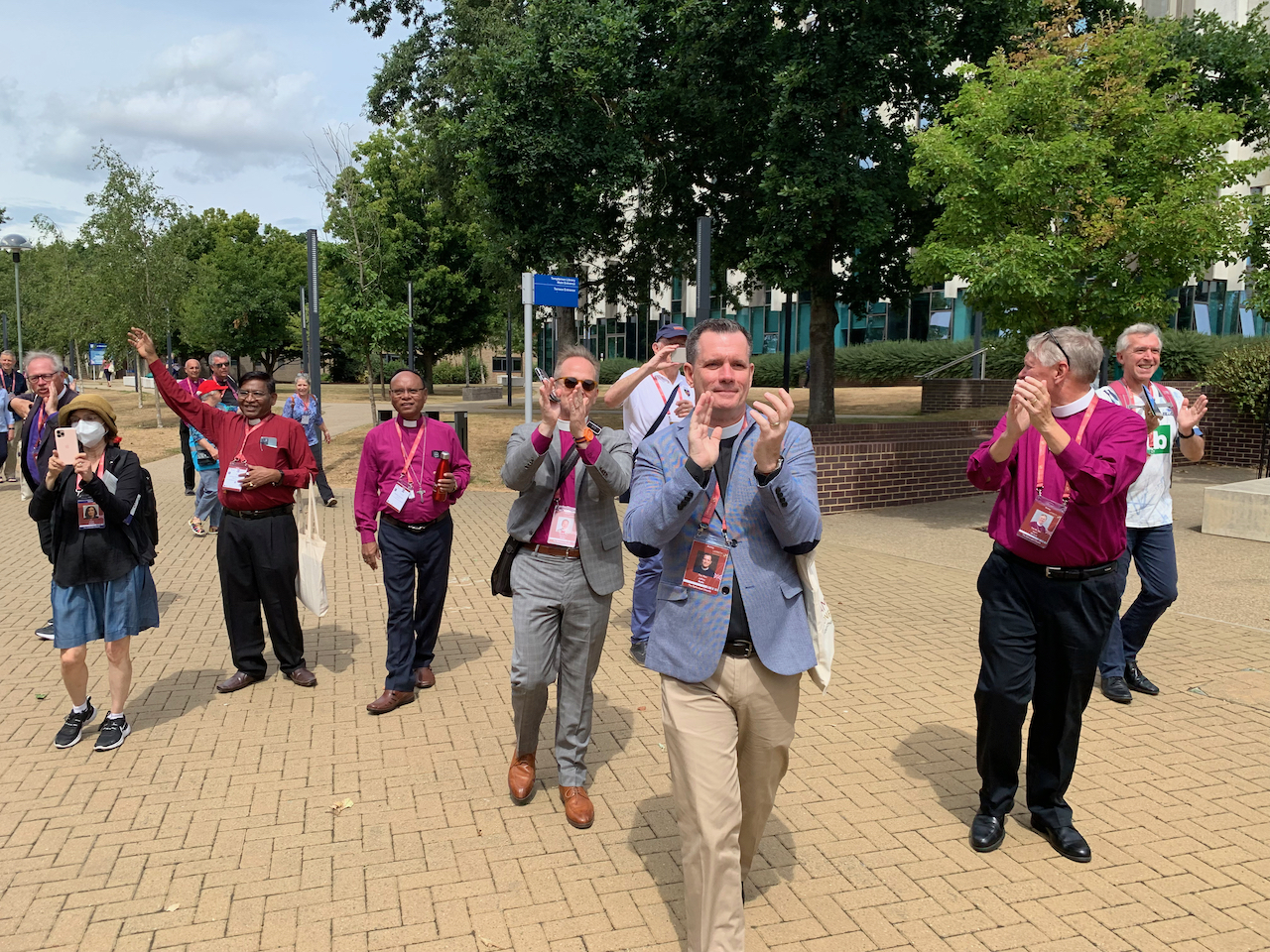
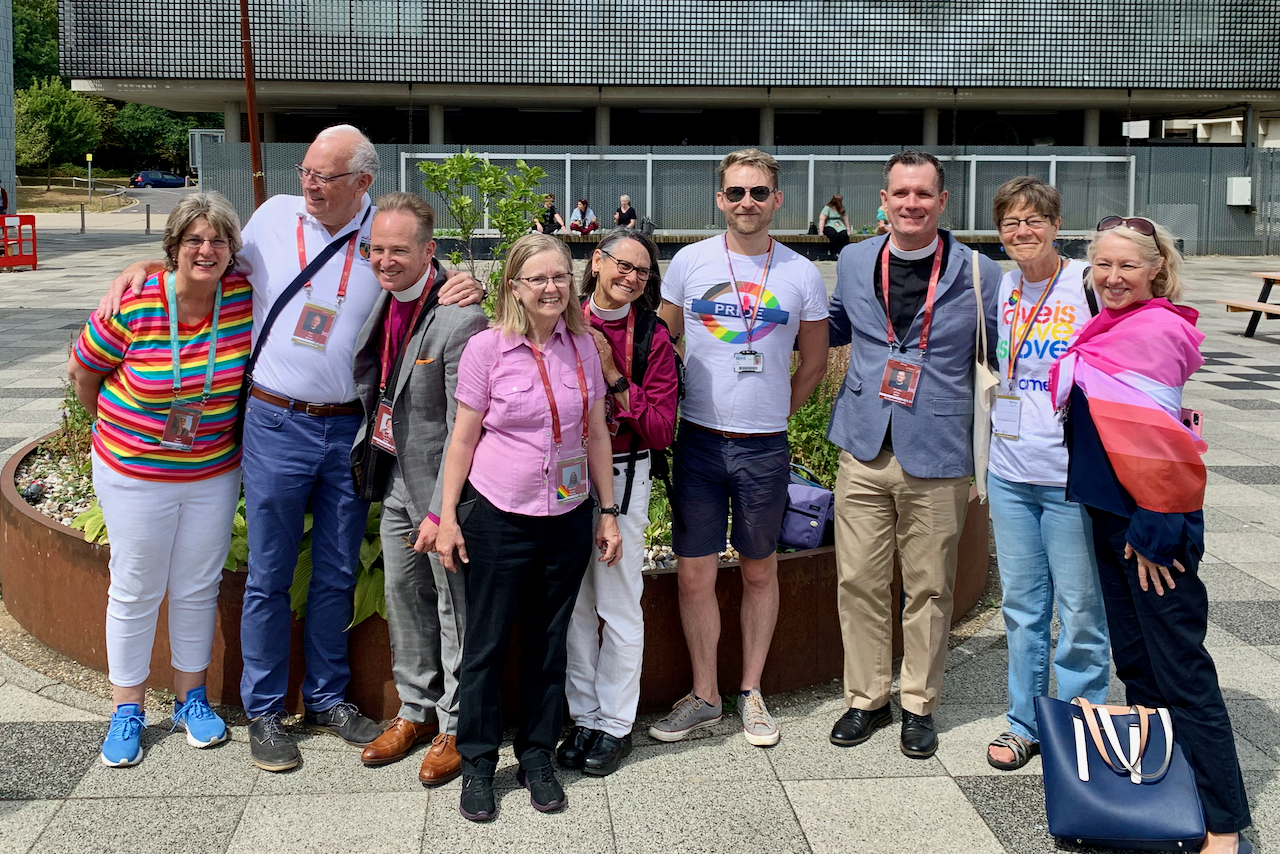
[Episcopal News Service – Canterbury, England] Over a dozen Episcopal bishops joined a march across the campus of the University of Kent, site of the Lambeth Conference, on July 27, 2022, to show support for LGBTQ+ inclusion as the topic once again looms large over the once-a-decade gathering of bishops from across the Anglican Communion, underway here through August 8.
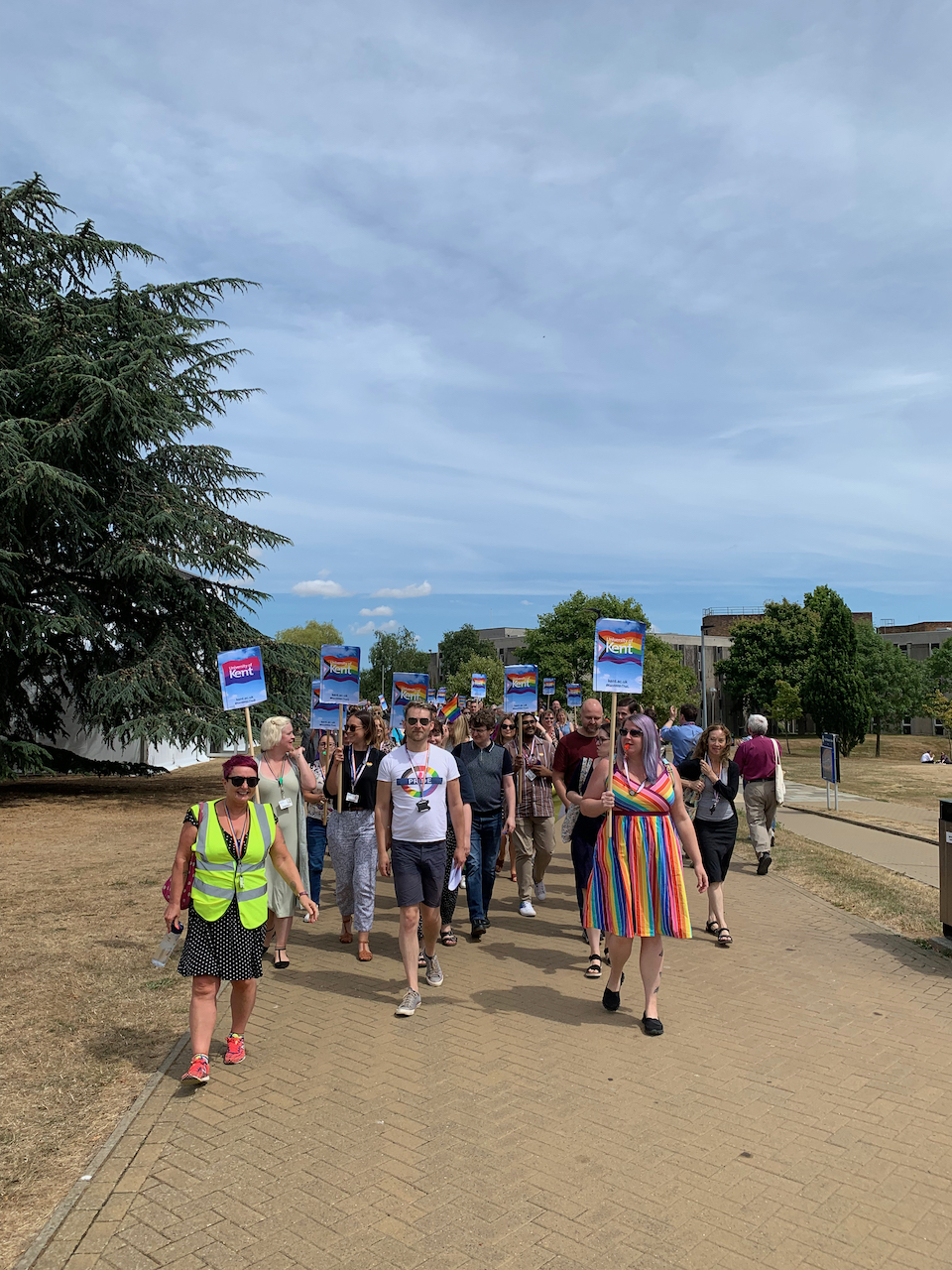
The raucous sound of whistles and drums accompanied the procession throughout the campus, punctuated by cheers from onlookers. The bishops’ purple shirts barely stood out among the stream of rainbow flags and stickers, signs, trans pride flags and colorful outfits. Some bishops marched with their same-sex spouses, who were not invited to participate fully in the conference as bishops’ opposite-sex spouses are but who are invited to attend some events as observers.
The march on the conference’s first official day was organized by the university’s LGBT+ Staff Network and brought together over 100 university students and staff, clergy and their spouses, local residents and other supporters. It had been planned months in advance as part of the university’s parallel programming during the conference, which it is hosting despite its objections to how the conference is handling LGBTQ+ issues.
Welcome from the march organizers at Kent University
“We warmly welcome the gathering of voices from diverse backgrounds, cultures, and outlooks to the Lambeth Conference and, as a University, we intend to learn from and, where appropriate, add our voice to the discussion of the vital questions under discussion,” university administrators wrote in June.
“Alongside this we are clear that the position of the worldwide Anglican Communion on the place of LGBT+ people within the Church and wider society does not fit with our deeply held values of equality, inclusion, tolerance, and mutual respect. We say that openly and unambiguously.”
Some 650 bishops and their spouses from 42 Anglican provinces and 165 countries are gathered in Canterbury for the conference. It does not have legislative authority, but is intended, through common study of world issues and matters impacting the Christian faith – as well as fellowship and worship – to shape the life of the communion in the coming decade. This is the 15th such gathering held in 155 years.
Views on same-sex marriage vary widely throughout the communion, with The Episcopal Church leading the way toward full marriage equality and full inclusion of LGBTQ+ people.
The university pledged to hold events that responded to and engaged with the debate over LGBTQ+ inclusion in Anglican churches. The march kicked off a day-long “Rainbows in Religion” symposium that included presentations and panel discussions on the topic.
Though the march’s organizers had singled out Archbishop of Canterbury Justin Welby’s decision not to invite the same-sex spouses as the main motivation for the march, it took on added significance after a statement saying the Anglican Communion “as a whole” rejects same-sex marriage was added to one of the draft documents – “Lambeth calls” – that bishops will vote on. The language was altered on July 26 to eliminate the most divisive language and to reflect the lack of consensus on the issue across the communion.
Episcopal Church bishops who participated
Among the marchers from The Episcopal Church were New York Assistant Bishop Mary Glasspool, the first openly lesbian bishop in the Anglican Communion, and several other bishops whose spouses were not invited. At the end of the march, one of the university organizers addressed them specifically, telling them, “You are welcome here” as the crowd applauded.
Maine Bishop Thomas Brown marched with his husband, the Rev. Thomas Mousin.
“Whenever there’s a sense of welcome, there’s a sense of joy. And what I felt was that this university community came together to say, ‘We are glad you’re here,’” Brown told Episcopal News Service.
“It’s delightful to be here – it’s just like a wave of love,” Mousin added. “It’s wonderful that we’ve received it.”
—Egan Millard is an assistant editor and reporter for Episcopal News Service. He can be reached at emillard@episcopalchurch.org.
What is the Lambeth Conference?
Every bishop of the Anglican Communion is invited to the Lambeth Conference, which is convened by the Most Reverend Justin Welby, The Archbishop of Canterbury. The Lambeth Conference has met since 1867, happens once-a-decade, and is a significant event in the life of the Anglican Communion.
The conference will explore church and world affairs. Outcomes of the conference will shape the life of the Anglican Communion in the decade ahead.
The Anglican Communion
The Anglican Communion has no central authority figure or body. It is made up of 42 autonomous members or provinces. Each member church makes its own decisions in its own way.
However, their decision-making bodies are guided by recommendations from each of the four so-called Instruments of Communion
The Secretariat, also known as the Anglican Communion Office, based in London, England support Anglicans and Episcopalians worldwide to carry out any requests from the Instruments and work to enable members of the Anglican Communion to fulfil their calling to be God’s people in the world.
Church of the Redeemer
Welcome to Church of the Redeemer: Worshiping God, living in community, and reaching out to the world. We are an Episcopal Church serving north King County and south Snohomish County, Washington. As you travel your road, go with friends walking the way of Jesus at Redeemer.
Church of the Redeemer is at 6220 Northeast 181st Street in Kenmore, Washington. The campus is a short distance north of Bothell Way, near the Burke-Gilman Trail. The entrance looks like a gravel driveway. The campus is larger on the inside than it is on the outside. And we managed to hide a large building on the side of a hill that is not easily seen from the street.
[Episcopal News Service] Facing an uproar from some bishops, particularly from within The Episcopal Church, planners of the upcoming Lambeth Conference of Anglican bishops significantly rewrote part of the preparatory “Lambeth Calls” document, eliminating language from an earlier draft that had affirmed a 24-year-old resolution opposing same-sex marriage.
The changes to the Call on Human Dignity were endorsed by that call’s drafting group “following consideration of widespread responses from bishops and others,” the Lambeth Conference said in a news release on July 26. A member of that drafting group, Toronto Bishop Kevin Robertson of the Anglican Church of Canada, had said this week that the language opposing same-sex marriage was never discussed or approved by the drafting group.
Revisions also were made to three other Lambeth Calls, on discipleship, mission and evangelism and interfaith relations.
Calls as basis for conversation
“We have listened carefully and prayerfully to what bishops and many others have said in response to the draft Calls, especially that on Human Dignity. Archbishop Justin has invited the bishops of the Anglican Communion to come together as a family to listen, pray and discern – sometimes across deeply held differences,” Bishop Tim Thornton, chair of the Lambeth Conference’s Lambeth Calls subgroup, said in the news release. “It is our prayer that these Calls can offer a basis for those conversations, and that all of our discussions will be marked by the grace and love of Jesus Christ.”
The planners of the conference in Canterbury, England, have described the 10 calls as “short written statements that include declarations, affirmations and common ‘calls’ to the church and the world that the bishops want to make.” Each call was developed by a drafting group that included bishops “representing Anglican churches from around the Anglican Communion,” according to the Lambeth study guide.
Call for Human Dignity
When the study guide and drafts were released on July 18, 2022, the Lambeth Call on Human Dignity referenced the need for the Anglican Communion to confront its history of colonialism while addressing “the ongoing climate emergency,” working toward more just economic systems, alleviating poverty and standing “in witness against injustice.” But it also ignited a firestorm of criticism from Episcopal bishops over language that would have affirmed a 1998 Lambeth Conference resolution opposing same-sex marriage.
The initial draft stated it sought “a reaffirmation of Lambeth I.10 that upholds marriage as between a man and a woman and requires deeper work to uphold the dignity and witness of LGBTQ Anglicans” – language that echoed the demands of conservative Anglican bishops who are members of the Global South Fellowship of Anglican Churches.
The revised Lambeth Call on Human Dignity still references the 1998 resolution’s assertion that “all baptized, believing and faithful persons, regardless of sexual orientation are full members of the Body of Christ” while now acknowledging that there is no consensus across all 42 of the Anglican Communion’s provinces on the legitimacy of blessings and marriage rites for same-sex couples.
“As bishops we remain committed to listening and walking together to the maximum possible degree, despite our deep disagreement on these issues,” the revised call says.
Lambeth Conference
The Lambeth Conference is called by the archbishop of Canterbury, typically once a decade. More than 650 bishops and 480 spouses were registered to attend as of last month, including more than 100 from The Episcopal Church. Archbishop of Canterbury Justin Welby invited partnered gay and lesbian bishops for the first time but declined to invite their spouses. The husband of Robertson, the Toronto bishop, was among the spouses Welby declined to invite.
Presiding Bishop Michael Curry, who will be attending his first Lambeth Conference as presiding bishop, alluded to the “rapidly changing” situation in a July 25 news release.
“For now, I offer this message of love to all my LGBTQ+ siblings: We have worked hard to become a church where, as the old African slaves used to sing, “There is plenty good room, plenty good room,” for all of God’s children,” Curry said. “We are all The Episcopal Church, and we will not compromise who we are, our connections, or our love. We head to this conference with you in our hearts and Jesus’ Way of Love as our guide.
Curry also said the House of Bishops will gather in person on July 27 in Canterbury “to discern its way forward” before the conference begins.
—David Paulsen is an editor and reporter for Episcopal News Service. He can be reached at dpaulsen@episcopalchurch.org.
Church of the Redeemer
Welcome to Church of the Redeemer: Worshiping God, living in community, and reaching out to the world. We are an Episcopal Church serving north King County and south Snohomish County, Washington. As you travel your road, go with friends walking the way of Jesus at Redeemer.
Church of the Redeemer is at 6220 Northeast 181st Street in Kenmore, Washington. The campus is a short distance north of Bothell Way, near the Burke-Gilman Trail. The entrance looks like a gravel driveway. The campus is larger on the inside than it is on the outside. And we managed to hide a large building on the side of a hill that is not easily seen from the street.
Thank you for praying with us for the fifteenth Lambeth Conference – which will meet in Canterbury, the United Kingdom, between 26 July– 8 August 2022.
Through this prayer guide we hope that the prayers we share here will encourage all who use it to unite in prayer for the bishops gathered in the Lambeth Conference.
Pray for the days of retreat and opening days of the event
What does it mean to be God’s Church for God’s World? The conference community of bishops and spouses will start the event in prayer, Bible study and contemplation. Hosted at the University and Canterbury Cathedral, the days will be devoted to seeking God’s wisdom and calling as we embark on our Lambeth Conference journey, of walking, listening, and witnessing together. Spouses will attend a separate retreat. The opening days will also feature The Archbishop of Canterbury’s opening address to the conference.
A prayer from The Community of Hope Weavers, Church of England (also active in Europe)
Gracious God, we thank you that in Jesus you reconcile the world and all who are in it to yourself. Touch the hearts of those attending the Lambeth Conference to extend your peace to all, and to work for the reconciliation of all creation. Bless them with your grace and love as they connect with one another and with you. May your Spirit of peace hover over their conversations and their resting times, and may your gracious will be done in the life of the Anglican Communion and in the whole of your precious world. In the name of Jesus Christ, our Prince of Peace. Amen.
A prayer from Chama cha Mariamu Mtakatifu (Community of St Mary of Nazareth and Calvary), Anglican Church of Tanzania
Our prayer for the Lambeth Conference and the life of the Anglican Communion is for Christian Unity. We pray for Christian Unity as our Lord Jesus Christ said in John Chapter 17:21-23 that all of them may be one so that we may be brought to complete unity and the world should know that we are in Christ and Christ is in us. May the life of the Anglican Communion bring people to Christ, to know him, to believe him so that the world may be saved and we may fulfil the words of our Lord Jesus Christ. Amen.
What is the Lambeth Conference?
Every bishop of the Anglican Communion is invited to the Lambeth Conference, which is convened by the Most Reverend Justin Welby, The Archbishop of Canterbury. The Lambeth Conference has met since 1867, happens once-a-decade, and is a significant event in the life of the Anglican Communion.
The conference will explore church and world affairs. Outcomes of the conference will shape the life of the Anglican Communion in the decade ahead.
The Anglican Communion
The Anglican Communion has no central authority figure or body. It is made up of 42 autonomous members or provinces. Each member church makes its own decisions in its own way.
However, their decision-making bodies are guided by recommendations from each of the four so-called Instruments of Communion
The Secretariat, also known as the Anglican Communion Office, based in London, England support Anglicans and Episcopalians worldwide to carry out any requests from the Instruments and work to enable members of the Anglican Communion to fulfil their calling to be God’s people in the world.
Church of the Redeemer
Church of the Redeemer: Worshiping God, living in community, and reaching out to the world around us. We are an Episcopal Church serving north King County and south Snohomish County, Washington. As you travel your road, go with friends walking the way of Jesus at Redeemer.
Church of the Redeemer is at 6220 Northeast 181st Street in Kenmore, Washington. The campus is a short distance north of Bothell Way, near the Burke-Gilman Trail. The entrance looks like a gravel driveway. The campus is larger on the inside than it is on the outside. And we managed to hide a large building on the side of a hill that is not easily seen from the street.
While this situation is rapidly changing, I want to assure all Episcopalians that the House of Bishops will be meeting Wednesday in Canterbury to discern its way forward before the Lambeth Conference begins.
For now, I offer this message of love to all my LGBTQ+ siblings: We have worked hard to become a church where, as the old African slaves used to sing, “There is plenty good room, plenty good room,” for all of God’s children. We are all The Episcopal Church, and we will not compromise who we are, our connections, or our love. We head to this conference with you in our hearts and Jesus’ Way of Love as our guide.
Being a Christian is not essentially about joining a church or being a nice person, but about following in the footsteps of Jesus, taking his teachings seriously, letting his Spirit take the lead in our lives, and in so doing helping to change the world from our nightmare into God’s dream.
―Michael Curry, Crazy Christians: A Call to Follow Jesus
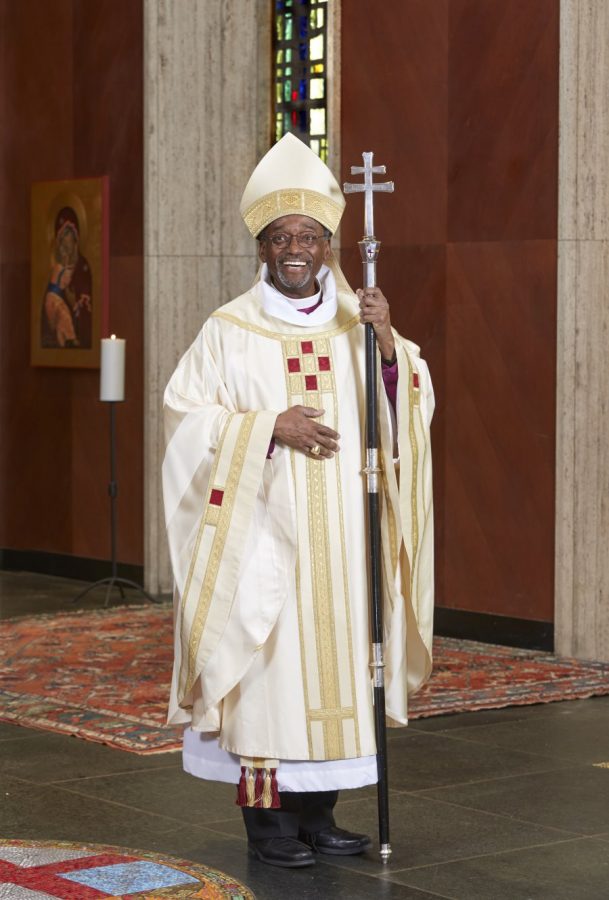
The Most Rev. Michael Bruce Curry is Presiding Bishop and Primate of The Episcopal Church. He is the Chief Pastor and serves as President and Chief Executive Officer, and as Chair of the Executive Council of the Episcopal Church.
Presiding Bishop Curry was installed as the 27th Presiding Bishop and Primate of The Episcopal Church on November 1, 2015. He was elected to a nine-year term and confirmed at the 78th General Convention of The Episcopal Church in Salt Lake City, Utah, on June 27, 2015.
Welcome to Church of the Redeemer: Worshiping God, living in community, and reaching out to the world. We are an Episcopal Church serving north King County and south Snohomish County, Washington. As you travel your road, go with friends walking the way of Jesus at Redeemer.
Church of the Redeemer is at 6220 Northeast 181st Street in Kenmore, Washington. The campus is a short distance north of Bothell Way, near the Burke-Gilman Trail. The entrance looks like a gravel driveway. The campus is larger on the inside than it is on the outside. And we managed to hide a large building on the side of a hill that is not easily seen from the street.
[Episcopal News Service] The 80th General Convention passed 14 resolutions, with little or no debate, speaking to the full inclusion and protection of LGBTQ+ persons in the life of The Episcopal Church and the larger society. Those actions represent a remarkable change from previous conventions, including the same-sex marriage access compromise in 2018, when such measures occupied large swaths of the gatherings’ time and emotional energy.
“Our church is on record—both officially and in practice—with our commitment to the full inclusion of all who seek to follow Jesus and his way of love,” Presiding Bishop Michael Curry said on July 22, 2022. “As we head to the Lambeth Conference, the same dedication leading us to the full welcome, embrace, and inclusion of LGBTQ+ children of God likewise commits us to communion with one another across our differences. We will be true to who we are while upholding our relationships and engaging in real and open conversation.”
The Episcopal Church and LGBTI+ inclusion
The Episcopal Church was set on the path of full inclusion 46 years ago when the 65th General Convention passed resolutions saying “homosexual persons are children of God who have a full and equal claim with all other persons upon the love, acceptance, and pastoral concern and care of the Church” and that they “are entitled to equal protection of the laws with all other citizens.”
Earlier this month, the majority of LGBTQ+ related resolutions passed mostly via the 80th General Convention’s massive consent calendars, in what the Rev. Susan Russell described as “extraordinary.”
“And that was a sign of the health of the church that we are at a place where we want to focus on what we can do together, not argue about what we disagree about,” Russell, a Diocese of Los Angeles deputy and longtime advocate for LGBTQ+ Episcopalians, told Episcopal News Service.
She attended the last 11 General Conventions including two as a deputy, and said the July 8-11 gathering in Baltimore, Maryland, was “a watermark convention” for “those of us who continue to advocate for the church to continue in its movement to make the full and equal claim for LGBTQ people that was promised in 1976 not just a resolution but a reality.”
LGBTI+ resolutions at the 80th General Convention
Resolutions passed by the 80th General Convention include:
Direct the Domestic and Foreign Missionary Society to establish a staff position of director of LBGTQI and women’s ministries (A063).
Direct the presiding bishop and the president of the House of Deputies to appoint a task force on LGBTQ+ inclusion (D026).
Affirm that non-binary, as well as binary identified transgender and cisgender people, are included in the phrase “gender identity and expression” and that the canonical provisions of The Episcopal Church apply equally to people of all genders (D029).
Direct the Church Center to develop multilingual, multicultural churchwide resources for “living into our commitments to welcome and support people and communities of diverse genders, including transgender and non-binary” (D030).
Express convention’s full support of the United Nations High Commissioner for Refugees and the International Organization for Migration in their mission to protect LGBTQ+ persons forced to seek refugee or asylee status because they fear being persecuted based on their sexual orientation, gender identity, gender expression and/or sex characteristics (D045).
Call for support for LGBTQ+ persons facing additional discrimination during the COVID-19 pandemic (D060).
Call for The Episcopal Church to advocate for access to gender-affirming care in all forms (social, medical, or any other) and at all ages as part of the baptismal call to “respect the dignity of every human being” (D066).
Address “the urgent need for gender and sexuality training in our church on all levels” (D072).
Convention also passed three resolutions about evangelism (C060), revitalization of congregational ministries (A096) and planting new faith communities (A095) that all specifically include “people who are gay, lesbian, bisexual or transgender (LGBTQI+), gender non-conforming people.” And deputies passed a courtesy resolution (D059) giving thanks for “the extraordinary ministry of Louie Crew Clay,” an LGBTQ+ activist who died in 2020.
“We understand this as a living out of our commitment to holy baptism, which is profoundly articulated by St. Paul in Galatians 3:27-28: ‘As many of you as were baptized into Christ have clothed yourselves with Christ. There is no longer Jew or Greek; there is no longer slave or free; there is no longer male and female, for all of you are one in Christ Jesus,’” the presiding bishop said. “For me, personally, this is a living out of what the old slaves used to sing: ‘There’s plenty good room for all God’s children.’”
Advocacy predates Stonewall in 1969
The Episcopal Church’s advocacy for LGBTQ+ people pre-dates the 1969 Stonewall Uprising, although its early efforts were slow and halting, and echoed the era’s perceptions about human sexuality. That work, at times, has prompted some conservative Episcopalians to leave the church in protest, in some cases setting up decades-long legal disputes. More recently, following the 2003 historic election of the Rt. Rev. Gene Robinson, the now-retired bishop of New Hampshire, four dioceses have elected openly gay partnered priests to be their bishops.
Meanwhile, at the upcoming Lambeth Conference
Until earlier this week, tensions over LGBTQ+ bishops’ attendance at the upcoming Lambeth Conference of Anglican bishops had focused on Archbishop of Canterbury Justin Welby’s decision to invite those bishops – a new precedent – but not their spouses.
The Episcopal Church’s bishops and deputies passed a resolution in Baltimore expressing to Welby the General Convention’s dismay at his decision to exclude same-sex spouses of LGBTQ+ bishops (D092) from the gathering.
The Conference, set for July 26-August 8, 2022, is a typically once-a-decade gathering of Anglican bishops from across the 85 million-member worldwide Anglican Communion. It brings together bishops and spouses for prayer, Bible study, worship and fellowship, in addition to joint consultation by the bishops on internal Anglican matters, relations with other churches and religions, and theological, social and international questions. The gatherings help shape the life of the Anglican Communion for the next decade.
Calls versus resolutions
In advance of the 2022 Lambeth Conference, Welby said he hoped to unite the Anglican Communion under common expressions of faith and social engagement, rather than focusing on debates over human sexuality that have divided bishops at past conferences.
He plans for the bishops to vote on “Lambeth Calls” meant to replace the previous gatherings’ resolutions to acknowledge that the conference does not have any legislative or policy-setting power over the 42 autonomous churches and five extra-provincial churches that make up the Anglican Communion.
“The move from resolutions to calls is simply a recognition of the reality that the Lambeth Conference is not a synod. It can’t resolve things in the sense that they’re then resolved. They can call on provinces to consider for themselves, and that’s why we call them a call, because they’re a call; they are not a resolution,” Welby said in a June 22 press conference.
On July 18, the Lambeth Conference released to the public and emailed to bishops a 58-page study guide including draft versions of 10 Lambeth Calls covering such topics of Anglican identity, science and faith, discipleship, reconciliation and human dignity.
The study guide asks bishops to consider whether they can envision the calls “put into practice” or not in their provinces or dioceses. Calls with be discussed as a group beginning on the conference’s fourth day, and bishops will be asked to vote “to adopt” or “adapt” a call. By adopting a bishop acknowledges the call speaks to them, adds their voice and commits to taking the action to implement it; and by adapt, a bishop acknowledges the call requires further discernment and commits their voice to the ongoing process.
Human Dignity call
The Human Dignity Call, scheduled for the seventh day, August 2, 2022, includes, on pages 31 and 32, provisions that call on the bishops to reaffirm the 1998 Lambeth gathering’s stance against same-sex marriage (in Resolution 1.10) by stating that “it is the mind of the Anglican Communion as a whole that same-gender marriage is not permissible.”
Archbishop Justin Badi, primate of the Episcopal Church of South Sudan and leader of the Global South Fellowship of Anglican Churches, recently said that the group’s members would seek to have the conference reaffirm Resolution 1.10 as the “‘official teaching’ of the Anglican Church on marriage and sexuality.” This, they said, would “directly challenge” bishops from The Episcopal Church of America, Canada, New Zealand, Scotland and Wales who favor marriage equality.
Some Episcopalians have reacted strongly against the effort to reaffirm the call’s opposition to same-sex marriage.
Los Angeles Bishop John Taylor wrote in a widely shared July 20 Facebook post that “moderate and progressive Anglicans and Episcopalians” had been led to believe that such dividing issues were going to be avoided through the Calls process. Instead, he wrote, they will arrive in Canterbury “as credulous props for what is likely to be a majority vote against marriage equity.”
If the Lambeth Call on Human Dignity passes in its current form, Taylor said, “The Episcopal Church will again have to work hard to remind people that we don’t read the Bible literally, divorced from its historic rootedness — that slowly but surely, across generations, we have moved away from arguing that the word of God countenances slavery, misogyny, homophobia, and transphobia.”
The call would also reaffirm Resolution 1.10’s admonition that “all baptized, believing and faithful persons, regardless of sexual orientation are full members of the Body of Christ” and should be “welcomed, cared for, and treated with respect.”
Convocation of Episcopal Churches in Europe Bishop Mark Edington on July 22 criticized what he called a tragic juxtaposition of the reaffirmation of Resolution 1.10 in the same Lambeth Call that would have bishops acknowledge “the existence and ongoing impact of an imperialist Anglicanism involved in dehumanizing practices predicated upon cultural and racial supremacy,” as the call text puts it.
Thus, Edington said, what he called “a lot of good stuff” in the calls could get lost in the possible debate about whether Resolution 1.10 truly does express the mind of the entire communion.
“The whole reason that you asked some of the spouses to stay home was that at least in their part of the Anglican Communion they are regarded unapologetically as legit children of God,” Edington wrote.
“But the play here is pretty obvious, right?” he continued. “Who wants to be seen voting against a great statement acknowledging our colonial past and condemning our unequal present?”
Same-sex marriage controversies
The status of same-sex marriage has, at times, roiled The Episcopal Church as well as the Anglican Communion. The 78th General Convention in 2015 changed the church’s canons to eliminate language defining marriage as between a man and a woman (via Resolution A036). That convention also authorized trial use of two new marriage rites with language allowing them to be used by same-sex or opposite-sex couples (via Resolution A054).
After eight diocesan bishops would not permit the use of the rites in their dioceses and required couples wanting to use them to be married outside their diocese and away from their home church, the next meeting of convention in 2018 passed Resolution B012 to ensure all Episcopalians unfettered access to those rites in jurisdictions where same-sex marriage is legal.
Taylor added that he felt bad for the more-conservative Episcopal bishops who, at the General Convention in 2018, agreed to what he called “an historic compromise on marriage equity,” which Russell, the Los Angeles deputy, helped lead. “Without denying their belief in traditional marriage, these bishops generously acknowledged a pastoral responsibility to make sure that all people in their dioceses, irrespective of orientation, had access to the marriage rite in the parishes they love,” Taylor wrote. “As a result, we have achieved considerable unity in spite of substantial diversity of opinion. Now these bishops are being dragged back into the same old wearying binary argument.”
Welby states the purpose of the calls
As the calls have already provoked conversation even before many of them have left their diocese for England, Welby on July 22 sent a message to bishops attending the Lambeth Conference.
“I know that many of you are reading and praying about the draft Lambeth Calls that have been published this week – and they are naturally the subject of debate ahead of the conference. Indeed, these Calls have grown out of a process of discussion and encounter with one another. They are informed by the insights and themes of the online video conversations between bishops across the world over the past year. They have been drafted by a diverse group of Anglicans – male and female, lay and ordained, from different generations and from every part of the Communion,” the archbishop wrote.
“They are one part of a process that began before this part of the Conference, and will continue long after it formally finishes, as every Province discerns its own response to the Calls in their own contexts.”
Meanwhile, the LGBTQ+ staff of the University of Kent, where the bulk of the conference will take place, is planning two parallel events on July 27 “to stand up for quality & inclusion.”
—The Rev. Mary Frances Schjonberg retired in July 2019 as senior editor and reporter for Episcopal News Service.
Church of the Redeemer
Welcome to Church of the Redeemer: Worshiping God, living in community, and reaching out to the world. We are an Episcopal Church serving north King County and south Snohomish County, Washington. As you travel your road, go with friends walking the way of Jesus at Redeemer.
Church of the Redeemer is at 6220 Northeast 181st Street in Kenmore, Washington. The campus is a short distance north of Bothell Way, near the Burke-Gilman Trail. The entrance looks like a gravel driveway. The campus is larger on the inside than it is on the outside. And we managed to hide a large building on the side of a hill that is not easily seen from the street.
[Church of England] The global Anglican Communion will have a greater voice on the body which nominates future Archbishops of Canterbury as a result of changes approved by the Church of England’s General Synod today.
Until now the wider worldwide Anglican Communion, outside of England, has been represented by just one of the 16 members of the Crown Nominations Commission (CNC) for the See of Canterbury.
But under changes to the Standing Orders of the General Synod formally approved today, there will now be five representatives of other churches of the Anglican Communion – one each from Africa; the Americas; Middle East and Asia; Oceania and Europe.
The new rules will also ensure the inclusion of laity and clergy as well as bishops; a balance of men and women and that at least half of the five will be of Global Majority Heritage.
Crown Nominations Commission for the See of Canterbury
All diocesan bishops of the Church of England, including the archbishops, are appointed by Her Majesty the Queen following a nomination by the Crown Nominations Commission for the see.
Under the changes the Canterbury CNC will now have 17 voting members, with the number of representatives from the Diocese of Canterbury reducing from six to three.
Meanwhile the appointment process for the Bishop of Dover, the suffragan bishop in the Diocese of Canterbury, will be carried out by a CNC rather than being appointed by the Archbishop of Canterbury, as in the past.
The changes were agreed in principle through a series of motions passed at Synod and Saturday. New standing orders were then drafted and were approved in a further vote today.
The Archbishop of Canterbury, Justin Welby, said:
From the richest to the poorest nations, the Anglican Communion spans a hugely diverse tapestry of societies, cultures and human experience.
Anglicans worldwide have a profound and historic relationship with the See of Canterbury, and the Archbishop of Canterbury has the great privilege of serving as a focus of unity for Anglican churches across the globe.
It is only right that this international family of churches is given a voice in the process of selecting the ‘first among equals’ of the bishops of our global communion.
That is why I am pleased that General Synod has voted to increase the representation of Anglicans from around the Communion in the process of choosing future Archbishops of Canterbury.
This small but important step will ensure that the Crown Nominations Commission for the See of Canterbury has balanced and diverse representation from the entire Anglican Communion.
I also want to thank the Diocese of Canterbury for giving up three seats on the Canterbury CNC to enable this change.
I pray that this significant step will bind us more closely together as disciples of Jesus Christ, called to share his good news with a world in need.
Church of the Redeemer
Church of the Redeemer: Worshiping God, living in community, and reaching out to the world around us. We are an Episcopal Church serving north King County and south Snohomish County. We welcome you be with us as we walk the way of Jesus.
Church of the Redeemer is at 6220 Northeast 181st Street in Kenmore, Washington. We are a short distance north of Bothell Way, near the Burke-Gilman Trail. The entrance looks like a gravel driveway. The campus is larger on the inside than it is on the outside. And we managed to hide a large building on the side of a hill that is not easily seen from the street.
[Episcopal News Service] The heads of most of the Anglican Communion’s 42 provinces, including Presiding Bishop Michael Curry of The Episcopal Church, wrapped their four-day Primates’ Meeting in London. They issued a written statement March 31, 2022, that addresses a range of global issues and looks ahead to the Lambeth Conference of Anglican bishops planned for this summer.
“We return to our churches and dioceses conscious of the calling that is given to us by God, through Jesus Christ, and of our need for grace,” the archbishops and presiding bishops said in their communiqué from the March 28-31 meeting. “We have reflected on the servant leadership of Christ and our own roles as shepherds of his flock.”
The Primates’ Meeting is known as one of the Anglican instruments of communion. This is in addition to the Anglican Consultative Council, the communion’s main policymaking body, and the Lambeth Conference of bishops. Archbishop of Canterbury Justin Welby chairs the meeting of primates, is president of the Anglican Consultative Council, and calls the Lambeth Conference.
Primates’ Meetings during the pandemic
During the COVID-19 pandemic, Welby had led two meetings of the primates online. The Primates’ Meeting this week was the first to be held in person since January 2020, when Welby and the other top Anglican leaders met in Jordan.
“After being separated for our own good during the height of the pandemic, to just be able to be together and pray together and take Communion together and wash each other’s feet quite literally, that’s some holy time,” Curry said in a phone interview with Episcopal News Service before the meeting’s conclusion. “It’s been deeply, wonderfully spiritual.”
Curry also emphasized the importance of hearing stories from Anglican provinces around the world, especially in places where fellow Christians are dealing with war, famine and persecution. “There are people who really do suffer, who are members of this church, and they suffer because of their faith,” Curry said.
Concerns in the communiqué
The Primates’ Meeting communiqué specifically expressed alarm at the humanitarian crisis caused by Russia’s ongoing invasion of Ukraine. “We call for an immediate ceasefire and the withdrawal of Russian troops from Ukraine,” the archbishops and presiding bishops said.
They also acknowledged ongoing conflicts and violence in other parts of the world, from Afghanistan and the Holy Land to South Sudan and Mozambique. They described the plight of refugees from those and other countries as “one of the major tragedies of our time.”
Climate change was another issue highlighted in the Primates’ Meeting statement. It cited the example of four Indian Ocean cyclones to hit Africa in two months, devastating communities in Madagascar and Mozambique. “Environmental damage affects the most vulnerable people in the world, including indigenous peoples who are affected by the exploitation of forests and others natural resources.”
Primates also discussed a consultation from the Church of England on extending the involvement of the wider Anglican Communion in the choice of future archbishops of Canterbury. And they addressed “the unilateral decision to construct the Grand Ethiopian Dam” and the potential for water shortage in Egypt and Sudan that may result from it.
“We strongly believe the Blue Nile is God’s gift to the countries through which it flows and should therefore be a reason for cooperation between Ethiopia, Sudan, and Egypt to achieve sustainable development,” they said. “We wish to appeal to the three countries to resume, with good will, their negotiations immediately to ensure a fair distribution of the water of the Blue Nile.”
Low-key gathering
This Primates’ Meeting was billed as a low-key gathering, with “very little ‘formal’ business” and intended primarily for prayer and conversation, according to the Anglican Communion Office. Bible studies focused on 1 Peter, which also will be the core Scripture for the more than 700 Anglican bishops who are preparing to attend the Lambeth Conference from July 26 to August 8, 2022.
The archbishops and presiding bishops initially intended to convene in Rome, but the Primates’ Meeting was moved to England because of COVID-19 restrictions in Italy. A few primates still chose not to attend in person due to pandemic precautions that remain in effect in their home countries, but they were able to join their fellow primates online.
Absence of three primates
Three additional primates chose to skip this meeting entirely for other reasons. In a Zoom news conference on March 31, Welby identified those primates as the leaders of the Anglican provinces in Uganda, Rwanda and Nigeria. They did not give specific reasons for their absences, Welby said, but those primates previously have made clear they “don’t want to be in the room” with leaders from other provinces, like The Episcopal Church, that have allowed same-sex marriage and LGBTQ+ clergy.
Such issues continue to fuel tensions around the Anglican Communion. At the news conference, Welby was asked about his handling of a recent controversy stemming from Ghanaian bishops’ support for anti-LGBTQ+ legislation in their country. Ghana in 1957 was the first country in sub-Saharan Africa to achieve independence from Britain, Welby said, and that colonial history requires a degree of caution in how he voices concerns over the policies and actions of an autonomous Anglican province.
“If I speak carelessly, it can still sound to many people around the world as thought a white man from the formal colonial power is giving instructions,” he said. “And since I’m passionately anti-colonialist and know that I have no authority, I’m constantly walking a tightrope in how I express myself.”
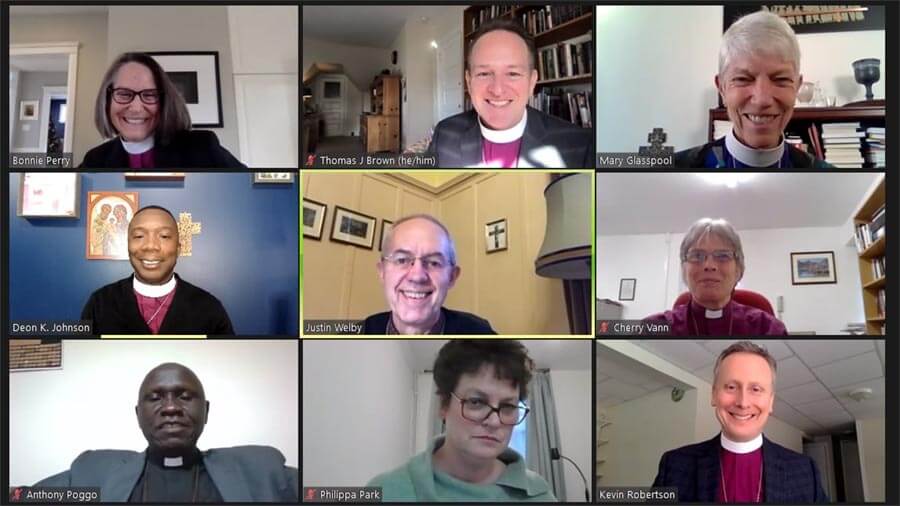
On January 11, 2022, some of the LGBTQ Bishops within the Anglican Communion met with the Archbishop of Canterbury.
Hopes for the upcoming Lambeth Conference
The upcoming Lambeth Conference likely will again face issues of LGBTQ+ inclusion. Welby said he also hopes the bishops of the Anglican Communion will broaden their conversations to the church’s larger role in the world, following the conference’s theme of “God’s Church for God’s World.”
“The encouragement of it is to look outward, and to look at other issues which are deeply troubling to the way we treat people on the edge, whether it’s food insecurity, whether it’s rising sea levels, whether it’s war, persecution, freedom of religion and belief, torture, unfair trade practices and a million other things,” Welby said. “Those are things that come under the heading of God’s call to the church to speak for justice in every area.”
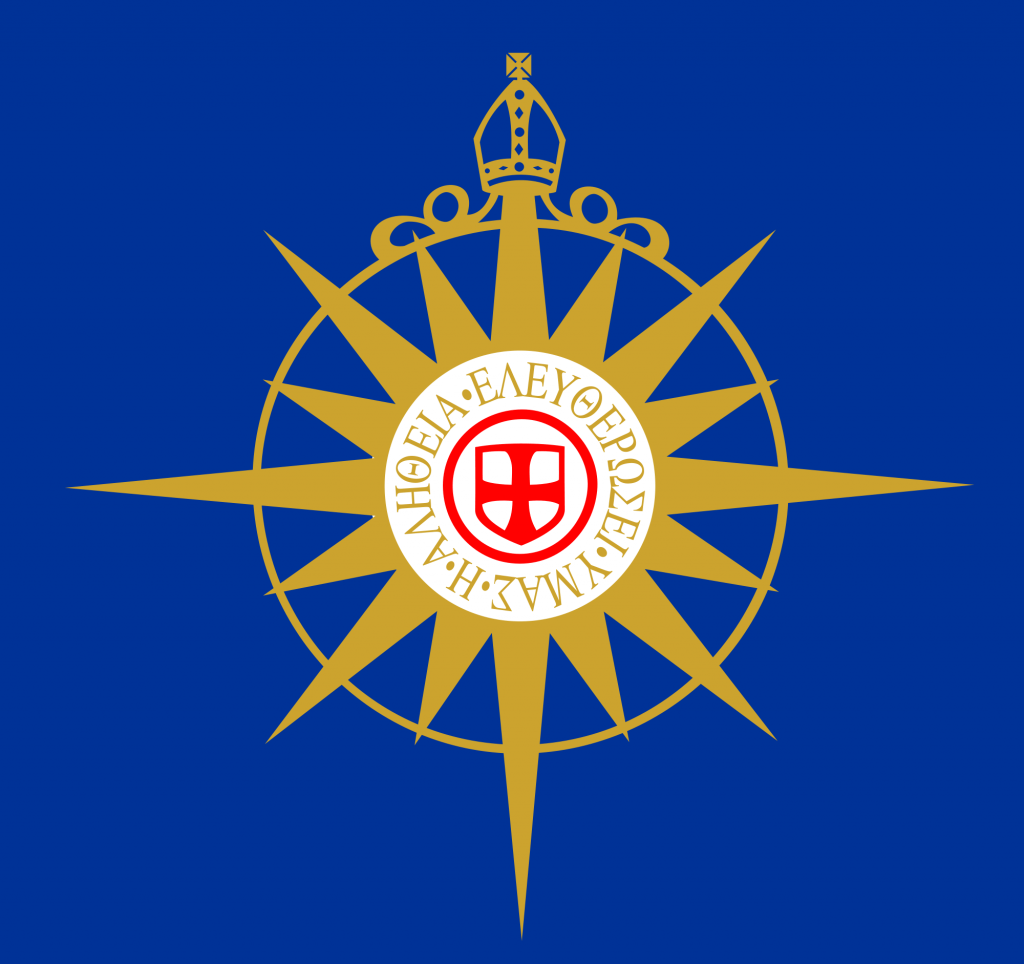
Anglican Compass Rose
Primate
The chief bishop in an Anglican Province is called a primate. In the United States, the Presiding Bishop serves as “Chief Pastor and Primate.” The 1978 Lambeth Conference requested that primates’ meetings should be established to enable regular consultation among the primates of the Anglican Communion. These meetings have taken place throughout the Anglican Communion. The primates’ meeting provides opportunities for collegiality and enables the primates to provide support for the Archbishop of Canterbury.
The Anglican Communion are churches in communion with the See of Canterbury [Archbishop of Canterbury] throughout the world. Member churches exercise jurisdictional independence but share a common heritage concerning Anglican identity and commitment to scripture, tradition, and reason as sources of authority.
Churches in the Anglican Communion continue to reflect the balance of Protestant and Catholic principles that characterized the via media of the Elizabethan settlement.
Unity and cooperation in the Anglican Communion are encouraged by the assembly of Anglican bishops every ten years at Lambeth Conferences. The work and vision of the Lambeth Conferences are continued between meetings by the Anglican Consultative Council, which includes representatives from Anglican churches throughout the world.
Welcome to Church of the Redeemer: Worshiping God, living in community, and reaching out to the world. We are an Episcopal Church serving north King County and south Snohomish County, Washington. As you travel your road, go with friends walking the way of Jesus at Redeemer.
Church of the Redeemer is at 6220 Northeast 181st Street in Kenmore, Washington. We are a short distance north of Bothell Way, near the Burke-Gilman Trail. The entrance looks like a gravel driveway. The campus is larger on the inside than it is on the outside. And we managed to hide a large building on the side of a hill that is not easily seen from the street.
Watch the Archbishop of Canterbury’s Christmas message to churches in the Anglican Communion around the world.
Please accept YouTube cookies to play this video. By accepting you will be accessing content from YouTube, a service provided by an external third party.
If you accept this notice, your choice will be saved and the page will refresh.
I feel so privileged to be able to wish you a joy-filled Christmas and a hope-filled 2022.
Right across the Anglican Communion, we are facing the most enormous challenges. Outside the tragedies of war, this is the biggest time of global tension we have faced since the Communion began.
So many parts of the Communion already know what it is to suffer. Floods, wars, civil war, corruption, suffering, illness, pandemic, malaria, measles, cholera, typhoid, poverty, oppression, persecution. These continue to be the facts of life.
But we can still find joy, because that’s the world that Jesus Christ came into.
All around the world, the Communion is meeting these needs. We can’t do everything, but we can do everything that God gives us the resources to do. I know of a place in the middle of a civil war, which is nevertheless running a COVID clinic. I know of a province, where there is appalling terrorism, which is strengthening communities. I know of places that are speaking up for injustice, and saying ‘this must stop’. I know of places that are welcoming refugees and internally displaced persons.
The Anglican Communion is called to the Five Marks of Mission – to tell, to teach, to tend, to transform and to treasure the world in which we live. We are God’s church for God’s world, as the Lambeth Conference title rightly says. That’s God’s mission to us. And we can give thanks at Christmas that all over the world people are carrying out that mission.
And the challenges that God has called us to face are indeed huge. At the COP26 climate conference in Glasgow in Scotland in November I saw the struggles that people are facing all over the world, calling us to recognise that unless climate change is tackled it is a threat to every single one of us. None of us can be a passenger in this challenge. It’s one we all have to face.
As Christians we face this challenge because it is God’s world that we are seeking to preserve and care for. It is God’s church that has to look after refugees and face the issue of war, which will become worse if climate change just rages unchecked around the world over the next generation. We need to pray for that, act on that, speak about that, and take part in transformation. Let’s work together on that.
And then we look forward in hope as well. Not just at the challenges but in the fact that in ’22 we will meet online and physically. We will meet and we will celebrate that we belong to one another with all our differences. The bishops and their spouses will come from all over the world. To pray, to learn, to think, to commitment afresh to telling people of the hope that is found only and uniquely in Jesus Christ.
We will recommit to teaching people how to grow in love and in knowledge of Christ. To look afresh at how with changes in science and climate and so many ways we tend the needy. To talk about how we can transform unjust structures of society and bring reconciliation in places of conflict. And to campaign to treasure the earth in which we live.
I have learned so much about the Anglican Communion in the almost nine years that I have been Archbishop of Canterbury. I am not a pope. We are a fellowship, a Communion. Sisters and brothers in Christ of all ages and cultures. God has brought us together. Let us stay and walk together, to do God’s work together and to be together in heaven through the salvation he offers us.
Again, may God grant you Christ’s joy this Christmas, and Christ’s hope in this coming year.
Archbishop Justin Welby
The Most Rev. Justin Welby was ordained in 1992 after an 11-year career in the oil industry. He spent his first 15 years serving in Coventry diocese, often in places of significant deprivation.
In 2002 he was made a Canon of Coventry Cathedral, where he jointly led its international reconciliation work. During this time, he worked extensively in Africa and the Middle East. Archbishop Justin has had a passion for reconciliation and peace-making ever since.
He was Dean of Liverpool from 2007 to 2011 and Bishop of Durham from 2011 to 2012, before being announced as the 105th Archbishop of Canterbury in late 2012.
Please accept YouTube cookies to play this video. By accepting you will be accessing content from YouTube, a service provided by an external third party.
If you accept this notice, your choice will be saved and the page will refresh.
Mission of the Anglican Communion
As followers of Jesus Christ, Christians are sent into the world to live lives inspired by his love and teaching and to bring that transforming and sacrificial love into all aspects of society.
They invite others to find faith and follow Jesus as disciples, inspired to live a “Jesus Shaped Life.”
This work of mission is encapsulated in the Anglican Communion’s Five Marks of Mission:
The mission of the Church is the mission of Christ:
To proclaim the Good News of the Kingdom
To teach, baptize and nurture new believers
To respond to human need by loving service
To transform unjust structures of society, to challenge violence of every kind and pursue peace and reconciliation
To strive to safeguard the integrity of creation, and sustain and renew the life of the earth
The mission and discipleship of Anglicans and Episcopalians are shaped, expressed and lived out in numerous areas such as:
Anglicans and Episcopalians work alongside some of the world’s poorest communities but also seek to influence the powerful, for example, through representation at the United Nations. The work might be through churches or agencies such as the Anglican Alliance.
Mutual support and interdependence are important. The Anglican Communion encourages dioceses around the world to form partnerships for mutual benefit. These are known as Companion Links.
Church of the Redeemer
Welcome to Church of the Redeemer: Worshiping God, living in community, and reaching out to the world. We are an Episcopal Church serving north King County and south Snohomish County, Washington. As you travel your road, go with friends walking the way of Jesus at Redeemer.
Church of the Redeemer is at 6220 Northeast 181st Street in Kenmore, Washington. We are a short distance north of Bothell Way, near the Burke-Gilman Trail. The entrance looks like a gravel driveway. The campus is larger on the inside than it is on the outside. And we managed to hide a large building on the side of a hill that is not easily seen from the street.
Funeral for the Rev. Canon John Fergueson, Saturday, March 2, 2026, at 10:00 am in Church of the Redeemer. Additional parking available at The Vine Church across 181st Street from Redeemer.
The 6th Sunday of Easter (Year A), May 10, 2026. Services at 8:00 am (no music) and 10:30 (music). Xristos Kuxwoo-digoot! Xegaa-kux Kuxwoo-digoot!