Everyone of faith seems to have an opinion on the “He Gets Us” ads during the Super Bowl. Some are enamored with the concept of reaching out with a message about Jesus to such a broad audience, something Christians don’t seem to be able to access as much in the United States as they once did.
Others question both the expense, somewhere around $100 million, and whether such a vast sum could have been put to better use. There is also the concern about who is funding this and what people will see if they go to the website the ad lead views to. Several sources report that the family which owns Hobby Lobby are among the main backers of the campaign. This family, and its company has become infamous for denial of vaccines, masks, female reproductive health, LGBTQ+ rights and dignity, and participation in the theft of biblical antiquities. They are associated with a brand of Christianity that is looking more and more like the Christian Nationalism. What if, people wonder, the messages of the ads, which promote care for the marginalized (including refugees), compromise, and relationship, are being used as a smokescreen for the getting people into churches that don’t really practice any of the things that these ideas that the ads preach?
I confess that, until this week, I have avoided these ads because of their main conceit—He, being Jesus, gets us. That is undeniable true. God knows exactly what it means to be human, with all of the emotion, excitement, and exquisitely mundane existence that entails. But I don’t believe that’s nearly as important for God, or for us as they why of all that. Why would God do that? Because of love. God loves us before Jesus dwelt among us. At the very moment that God’s hands touched the dirt to form us in the divine image it was an act borne of love. It is that love from which all else springs and that, above all else is the Good News that Jesus made manifest to us, and calls us to make manifest to the world.
The “He Gets Us” campaign lacks the gravity and effect that it could otherwise have because, in a world where information available, people see those who promote these fair words bear fruits that are bitter poison.
In the Gospels, Jesus commends those who go and do as closest to the kingdom. As Episcopalians, we’ve taken this to heart. We love the idea of letting our actions do the talking, and attracting people without have to preach at them. It would be easy, given this, to dismiss “He Gets Us” out of hand. But then there is Jesus who directed us to preach the Gospel—even us Episcopalians. If we are not ready to tell people what drives our actions, how they are a response to loving gifts that God has given us, most especially in the life, death, and resurrection of Jesus, then we are also failing to fulfill the request of Jesus, to help people understand what God wants, and to jumpstart people’s relationship with God and God’s people.
God, and Jesus, may get us, but I don’t think that was ever the question. How do we choose to respond to God’s unrelenting, fathomless love for us and the world, which Jesus shares? This is the question. It can’t be just words, and it can’t be just actions. It must be both. We must do the work of getting ready for God’s kingdom—bearing fruits like love, peace, patience, etc. And we must share the story to plant the seed that might one day bear fruit. It can only be both. I hope we get that.
Welcome to Church of the Redeemer: Worshiping God, living in community, and reaching out to the world. We are an Episcopal Church serving north King County and south Snohomish County, Washington. As you travel your road, go with friends walking the way of Jesus at Redeemer.
Church of the Redeemer is at 6220 Northeast 181st Street in Kenmore, Washington. The campus is a short distance north of Bothell Way, near the Burke-Gilman Trail. The entrance looks like a gravel driveway. The campus is larger on the inside than it is on the outside. And we managed to hide a large building on the side of a hill that is not easily seen from the street.
Holy Week approaches, and in years past, that would mean that it’s almost time for us to gather not only at the altar, but also at table for meals. But not this year. This year we will be able to gather at the altar, but we will not at the table.
In the recent masking survey, the vast majority of the respondents indicated that their comfort level includes remaining masked for the time being while indoors. Eating a meal would be in indirect conflict with wearing a mask. I tried drinking coffee without removing my mask on Sunday morning. It went poorly. So, we won’t be gathering for a simple supper in the parish hall on Maundy Thursday. Or eating together in celebration after the Vigil. Or sharing a potluck breakfast between Easter Sunday services—at least not this year.
Eating together is one of the fundamental practices of the Christian faith. One of the things I love about Redeemer is the gusto with which we enjoy eating meals together. It is one of the things that I have missed most in the past two years.
One of the things I have been talking about often with my kid recently is doing the thing that we know is right even when we don’t want to. It is not an easy lesson of a kid, but then again, it’s not an easy lesson for me either.
Choosing what is the right thing to do is an essential act of discernment for us as stewards of God’s love. How we choose to interact with, to make space for each other in the presence of the God who created us and loves us, is the measure of how close we are coming to the heart of God. Choosing to continue to wear masks, to postpone the moment when we sit down to a meal together is hard, but I believe it is the right thing right now; the thing that looks like being a steward of what God has given us in the Church of Redeemer—each other.
I am looking forward to celebrating our journey through the Passion of Jesus on the way to resurrection with you this Holy Week, whether you are joining in-person, virtually, or in prayer. And I hope that soon we can celebrate the resurrection around altar and table.
Welcome to Church of the Redeemer: Worshiping God, living in community, and reaching out to the world. We are an Episcopal Church serving north King County and south Snohomish County, Washington. As you travel your road, go with friends walking the way of Jesus at Redeemer.
Church of the Redeemer is at 6220 Northeast 181st Street in Kenmore, Washington. We are a short distance north of Bothell Way, near the Burke-Gilman Trail. The entrance looks like a gravel driveway. The campus is larger on the inside than it is on the outside. And we managed to hide a large building on the side of a hill that is not easily seen from the street.
Here we are again, at the precipice of Lent. This year I am filled with an excitement for Lent. That is not maybe the response to Lent that you might expect. We think of Lent as a penitential season when we are thinking about the things that keep us from God, and when we give things up, which no one really likes to do. However, for me, this year, thinking about Lent, celebrating it with people for the first time in two years in the sanctuary, I am getting back in touch with what Lent was originally intended to be about—a preparation for joy.
Lent emerged in the early church out of a desire to prepare for the joy of the Resurrection. The church recognized that that joy could be best experienced, most fully realized, if people were not distracted when they began the journey through Holy Week to Easter. So, they began to set aside time to get themselves in order. The forty days before Holy Week were when people were to assess what was going to distract them from the joy of God’s love in the Resurrection, both at Easter and the mini-easter celebrated every Sunday.
Lent was never intended as a time of intentional suffering and misery. There’s more than enough suffering in the world already, far more than God intended. Instead, Lent is an invitation to discipline—which does not mean suffering or punishment—but learning. In Lent we are invited to learn about the things that are coming between us and Gods love and hope for us, and to put those things aside so that we are ready celebrate with joy the Paschal Feast.
Whatever you do to mark Lent this year, I pray that it brings you new learning and a fuller experience of the joy of God’s Love.
Welcome to Church of the Redeemer: Worshiping God, living in community, and reaching out to the world. We are an Episcopal Church serving north King County and south Snohomish County, Washington. As you travel your road, go with friends walking the way of Jesus at Redeemer.
Church of the Redeemer is at 6220 Northeast 181st Street in Kenmore, Washington. We are a short distance north of Bothell Way, near the Burke-Gilman Trail. The entrance looks like a gravel driveway. The campus is larger on the inside than it is on the outside. And we managed to hide a large building on the side of a hill that is not easily seen from the street.
This is a transcription of the sermon on the First Sunday after the Epiphany: the Baptism of Jesus, January 10, 2021, at Church of the Redeemer in Kenmore, Washington by the Reverend Jed Fox.
The Rev. Jed Fox: In the name of the Father and the Son of the Holy Spirit. Amen.
Watching events unfold on Wednesday on Twitter–because I’m a millennial–as well as on the radio and other news sources, I was struck by the fact that it was, in fact, the Feast of the Epiphany on Wednesday: the proclamation to the world that Jesus is King and God and Sacrifice made by the Wise Ones who were directed to him by Herod. Because it didn’t seem like Epiphany. Seemed more like the subsequent events that happen in Matthew’s Gospel after the Epiphany, the events that we remember on the 28th of December, which we euphemistically call the “Feast of the Holy Innocents,” when a mad tyrant, desperate to keep his throne, puts to death an entire town’s worth of toddlers. For fear.
For many of us, it was the first time. The first time that we had ever experienced something like this. Now, I am of a generation that in my lifetime remembers the Oklahoma City bombing, 9/11, two subsequent wars, and now this. But this was different. This seemed different. And for many of us, it was seemed different because it was the first time.
There’s the first time that we felt like we should be scared of our fellow Americans. The first time that everything, even all those neoclassical, marble buildings over there and the other Washington, everything felt unstable, felt chaotic. It felt, in fact, like the description that the Book of Genesis starts with, the deep. It felt, feels like we have been dumped into the deep end of some dark murky water that we cannot surface from.
That’s what it felt like on Wednesday. And we’re desperately trying to cling on to anything that will let us come up to the surface and just breathe.
It’s not a surprise generally that Hebrew scripture would describe chaos with the metaphor of deep water. The people who comprised the writers of the Hebrew scripture, who we know as the people of Israel, were desperately afraid of the ocean. They were not boat people. They didn’t like the ocean. They preferred the hill country.
Now they’re mountain folk, hill folk, and to them, water was terrifying, but also transformational. Water changed things. You go to first century ruins in what is now considered the Holy land. You’ll see these big six foot deep stone pools. And you think, oh, that must’ve been, this must be a rich part of town. They had an in-ground pool.
No, they were called mikvahs and they were filled with water for the use of the community for the ritual purification, by dunking yourself in water. So in the morning, if you needed to ritually purify yourself, which most observant Jews usually did, you, you went and dunked yourself in the mikvah. There were stairs down. You dunked your whole body in. You came back out and you went on with your day ritually pure, although probably very cold. You were transformed from uncleanness to cleanness through water.
And Jesus at his baptism does something that is not terribly remarkable in going to John in the Jordan to be baptized. It is a more fundamental transformation, a more marked transformation than that what happens in a mikvah, but still within that realm of possibility. Still the same, still the acknowledgement that in this one, sacred act, this infinitesimal, sacred moment of time, all time has changed. All life is changed. All water has changed. Because that’s the thing. It is the holiness of that simple act that sanctifies everything.
The holiness of a little sanctifying the whole.
That’s especially true of water because water has been, yes, chaotic, yes, transformational, but always, always, always life giving. We cannot live without water. As became so famous a few years ago during the Dakota Access Pipeline protests, “Water is life.”
I remember being at a workshop several years ago when an indigenous person stood up and said, “You all need to remember. Holy water is an oxymoron. All water is holy. Water is life.”
And when we sanctified water, either in Jesus being baptized in the River Jordan and that cold wet kind-of murky river that now separates the kingdoms of Israel and Jordan, Jesus in that holy act sanctifies all water for all time, and all people for all time. You hear it in Paul saying, yes, John changed a little, but Jesus changes everything.
The holiness of a little sanctifies the whole.
It is tempting after the events of this week, after the events of Wednesday, to seek easy solutions, simple solutions to this one-time event. This has only happened one time. It was a one-time event. We’re right to be scared, but don’t worry. It was an isolated incident perpetrated by a few bad apples and et cetera, et cetera, et cetera.
We’ve heard that all before. Doubtless, we will hear it again. And it is no more true now than it was before or will be afterwards. We must resist that temptation to pass it off, to try to paper over what’s really going on. We must resist the urge to numb ourselves to the simple fact that most of us are lucky enough to say that this is the first time that we have ever experienced this.
It’s sure not true for most people.
This is not the first United States insurrection in the United States. There’ve been plenty of them. We just don’t pay attention to them. There are several insurrections in the South at the end of Reconstruction, where mobs of angry white people change the government at their whim. Often with less people than there were at the US Capitol on Wednesday.
The entire colonization of the, of what we know as, the United States is a slow motion insurrection by Western European people on land that was already lived on when we got here.
The lake that we are two blocks from [at Redeemer] had a name before Lake Washington. It was just in the language we didn’t care to learn.
This is it’s certainly not the first time that people have been afraid of their fellow citizens in this country. There are people, there are people in this country, many of them who have never felt safe with fellow citizens in this country with good reason.
And you see that most clearly illustrated in the events of Wednesday because, when a whole mob of white insurrectionists mobbed the US Capitol, there were five deaths, five terrible deaths.
In the protests this past summer, there were at least 10 times that many.
You know what the difference was? The color of the people’s skin, plain and simple. We cannot let allow ourselves to become numb to this reality.
You cannot allow ourselves to become numb to the fact that all of this is true for people all the time, that we are incredibly lucky to, to be experiencing this maybe for the first time, this level of fear, this level of uncertainty. There are brothers and sisters in faith, even in this moment, in this world, in places like Palestine who have no state to even rely on, much less one that is, that feels, unstable.
Imagine trying to grow up country-less, without the benefits that we enjoy of driver’s license and passports and centralized government.
We have brothers and sisters in Palestine who have none of those things. And we cannot simply try to slink back into numbness now that our eyes have been once again opened, because if we do, then we have forgotten our vows in baptism.
Because when we sanctify a little, when we make holy a little of a thing, we make holy all of it.
If we sanctify one person, we sanctify all of humanity. If one person is baptized, then all are worthy of it. And, if that is true, we have work to do to fulfill our baptismal covenant. And the very first thing we have to do, if we decide we are not going to go back into our numbness, slink back into our know-nothing muffled comfort, is to repent.
Will you persevere in resisting evil? And when you fall into sin, repent and return to the Lord? Because many of us have some repenting to do, not necessarily for personal actions, although there are some that certainly do, certainly need to repent for our personal actions, but all of us have some duty to do some work in repentance for the systemic white supremacy that we allow to exist and we allow ourselves to benefit from. It cannot continue, if we are to remain honest to our baptismal covenant.
And once we have done that, once we have repented and returned, begun to figure out how to do that work of dismantling systemic white supremacy, then we turn to seeking and serving all persons, in Christ, loving our neighbor as our self, seeking the least and the little. Those that this white supremacy system would rather see as not people, as less than, who have historically in our government been seen as property, been seen as roadblocks, been seen as inconveniences.
And when we have figured out how to do that, we can also seek and serve the lost. Not just those lost by society, but those lost in a sea of misinformation possessed in their hearts by hate. The way to seek and serve them to love them as our neighbor is to tell them the truth, to exorcise their hearts, to assist them in exorcising their own hearts, if we can.
Because we have been made holy in baptism, we can do no less than to remember that in our holiness all are made sacred. If we can be made sacred, then all are seen as sacred by God and must be treated so by us.
On the Feast of the Baptism of Our Lord, it is time to do the actual work that we will recommit ourselves to in a moment, the renewal of our vows in baptism.
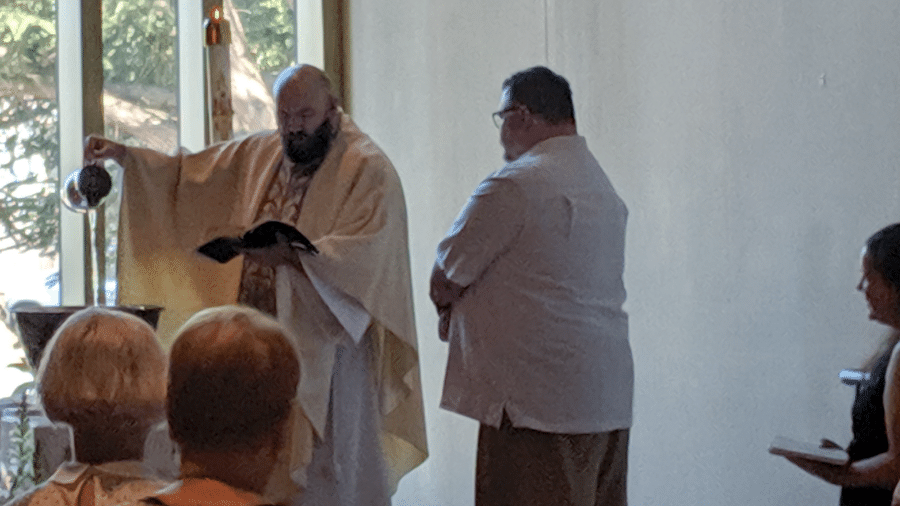
Now, if you all were here, you’d all be getting wet. I want to make sure you felt, not only the joy of that baptism as you were sprinkled with holy water, but the responsibility of those vows that comes along with getting wet.
They have not come up with baptismo-vision. Or aspurge-a-vision.
And, so in the meantime, what you must do, please not go back to sleep, do not allow yourselves to slip into that sweet slumber of denial of numbness, pretending that everything is fine and that the problem is too big for you or me or us to do anything about.
We can no longer abrogate our Covenant of Baptism. Instead, we must fulfill it. So that we too may hear the words that Jesus hears as he comes up out of the water this morning, “You are my child, the beloved, with you I am well pleased.”
Amen.
For more information
For other commentary on January 6, 2021, the Epiphany, and the Baptism of Jesus, see the following:
Welcome to Church of the Redeemer: Worshiping God, living in community, and reaching out to the world. We are an Episcopal Church serving north King County and south Snohomish County, Washington. As you travel your road, go with friends walking the way of Jesus at Redeemer.
Church of the Redeemer is at 6220 Northeast 181st Street in Kenmore, Washington. The campus is a short distance north of Bothell Way, near the Burke-Gilman Trail. The entrance looks like a gravel driveway. The campus is larger on the inside than it is on the outside. And we managed to hide a large building on the side of a hill that is not easily seen from the street.
This Sunday, August 25, 2019, we are marking as a larger church, 400 years since the first slaves were brought to what we now call the United States. To some, this might seem like a ghoulish thing to commemorate. Since there are better things that we could be talking about, some people may say, shouldn’t we just not acknowledge this, and starve it of attention? My short answer to this is no, and here’s why.
As author Ibram X. Kendi recently observed in his new book, How To Be An Antiracist, that ignoring racism in America allows racist ideas to flourish. Racism, white supremacy, and other causes born of hate do not shrivel in the absence of attention like green and growing things. They flourish in darkness, decrepitude, secrecy, and decay. What’s required is something that we ought to be familiar with, repentance and amendment of life. It’s that second part, amendment of life, though that seems to be always our hang up. It’s hard to imagine for us how our lives need to be amended. We had nothing to do with it, right? Well, not exactly. For nearly 250 years, people were held as property in this country, and used to create the first flowering of industry, of agriculture, and of wealth in the United States. Then for another 100 years, those same populations were used, but in different ways—treated as second class citizens, without rights or recourse, to continue to drive other parts of the population to thrive and the wellbeing of the nation of the system to continue to grow. It’s only in the last fifty years that that system has been officially changed, and is still implicitly challenged much of the time.
This is not something that’s simply going to go away anymore than a relative who makes inappropriate comments is gonna stop because those comments are ignored. So this Sunday we acknowledge, out loud, that the system in which we live, and for most, experience immense privilege in, is built on, fortified by, and and ingrained in slavery and it’s other faces, white supremacy and racism, and living in that system looks nothing like the Gospel of our Lord Jesus Christ and his Kingdom. We have this problem, one among many, and not addressing it will not make it go away—already tried that, and it hasn’t worked. We will try repentance, and amendment of life, and keep trying it. God knows it might actually work, with God’s help.
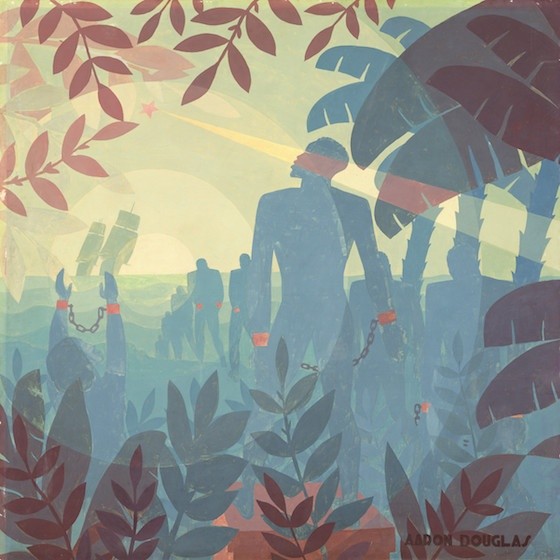
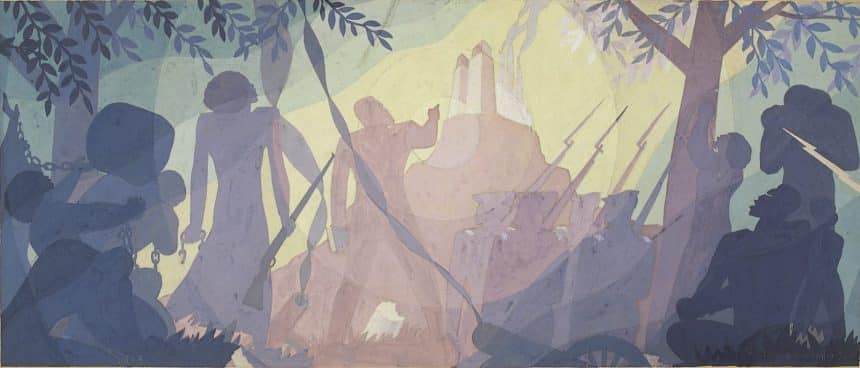
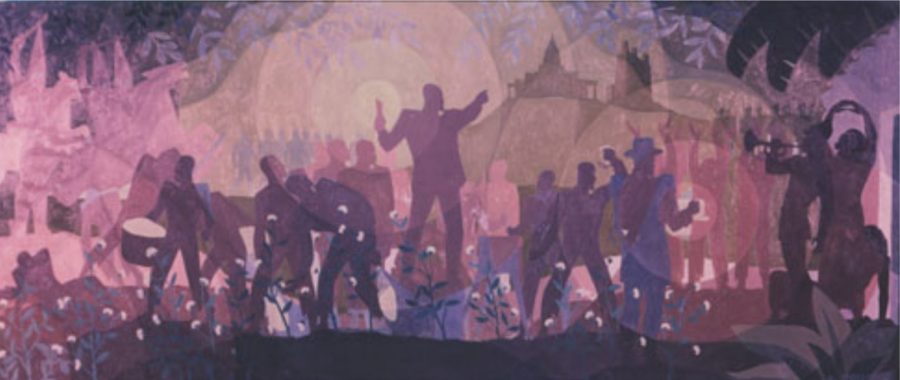
Aaron Douglas was an African-American painter and graphic artist who played a leading role in the Harlem Renaissance of the 1920s. The works used, from top to bottom, are the following:
Into Bondage
The Judgement Day
Mural study
Study for aspects of Negro life: From Slavery through Reconstruction
From Slavery through Reconstruction
Church of the Redeemer
Welcome to Church of the Redeemer: Worshiping God, living in community, and reaching out to the world. We are an Episcopal Church serving north King County and south Snohomish County, Washington. As you travel your road, go with friends walking the way of Jesus at Redeemer.
Church of the Redeemer is at 6220 Northeast 181st Street in Kenmore, Washington. We are a short distance north of Bothell Way, near the Burke-Gilman Trail. The entrance looks like a gravel driveway. The campus is larger on the inside than it is on the outside. And we managed to hide a large building on the side of a hill that is not easily seen from the street.
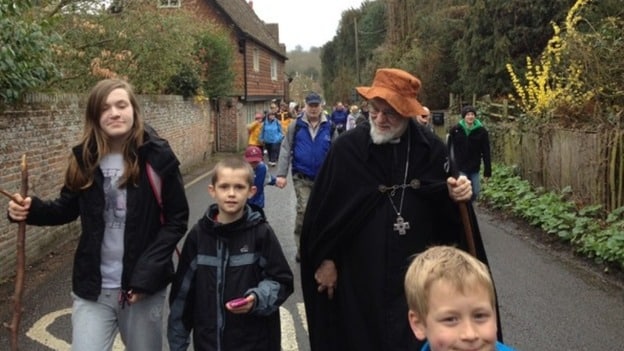
Not a tour. Not a vacation. Not sight seeing. Pilgrimage is something different. It bears all the hallmarks of those other things, but it’s more.
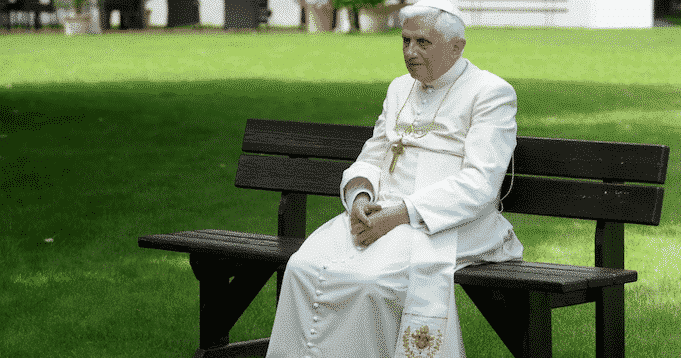
Pope Benedict XVI said, “To go on pilgrimage is not simply to visit a place to admire its treasures of nature, art or history. To go on pilgrimage really means to step out of ourselves in order to encounter God where he has revealed himself, where his grace has shone with particular splendour and produced rich fruits of conversion and holiness among those who believe. Above all, Christians go on pilgrimage to the Holy Land, to the places associated with the Lord’s passion, death and resurrection.”
Former Archbishop Rowan Williams said of his own pilgrimage as Archbishop of Canterbury, “When I choose to make a pilgrimage it’s not just to make a trip, it’s not just to do some sight-seeing. With a pilgrimage you let things go so that there is enough room for the place and the story to settle in and make an impact. It’s the company, it’s the sharing, and it’s also that sense of stripping down.”
As I prepare to journey with more than 30 other people to the Holy land on pilgrimage, I am both excited and trepidatious about what that encounter will mean. Heres a brief synopsis of where we will be:
We start in Galilee for 3 days. We will visit the sites where Jesus began his ministry—Nazareth, Sepphoris, the Jezreel valley, the sea of Galilee, and Capernaum. We will spend a few days in Bethlehem, while journeying to Bethany, and spend time at the sight where Jesus’s birth is commemorated. Then we will travel to Jerusalem by way of Hebron and the Mount of Olives, as well as the Garden of Gethsemane. We will walk along that road Jesus is supposed to have walked on the way to his crucifixion and travel the road to what is thought to be Emmaus. Periodically through the trip we will meet with people doing the work of Christ here and now amidst these ancient places and we will learn more about the extremely complex day to day life of our brothers and sisters who still live in these places.
Many of you have asked if I will be at church the Sunday after we get back. I’m so grateful for that concern. Yes, I will be back. I will undoubtedly be jet lagged and awake only because of the Holy Spirit and coffee, but I feel certain I will have something to share.
Jed, along with his family, enjoy being outdoors, reading, and travel. He has also tried his hand at woodworking, various musical instruments, and triathlon.
Church of the Redeemer
Welcome to Church of the Redeemer: Worshiping God, living in community, and reaching out to the world. We are an Episcopal Church serving north King County and south Snohomish County, Washington. As you travel your road, go with friends walking the way of Jesus at Redeemer.
Church of the Redeemer is at 6220 Northeast 181st Street in Kenmore, Washington. We are a short distance north of Bothell Way, near the Burke-Gilman Trail. The entrance looks like a gravel driveway. The campus is larger on the inside than it is on the outside. And we managed to hide a large building on the side of a hill that is not easily seen from the street.
The article appeared on my newsfeed on Saturday, as I was scrolling through Facebook. “Debates about LGBTQ acceptance roil Seattle-area nonprofits, churches.” The Seattle Times headline caught my eye. I started to read it, but only made it so far before I had to stop. “But in Christian circles at least,” it read “the risks [of being LGBTQ] are enormous, with jobs, funding and congregation membership in the balance.” Ten minutes later I was three hundred words in to a rebuttal letter reminding the Times that Episcopalians are indeed Christians, and decrying the article in general as lazy writing, when I paused. For all my frustration, all my angst, and the truth that the article was indeed pretty poorly researched and written without a real depth of understanding of the issue—all points that a colleague had already deftly articulated to the Times, a small voice kept asking, why doesn’t the author know about the Episcopal experience? It’s because of us.
“Don’t worry,” we want to say, “we aren’t those sort of Christians.” This runs dangerously close, though, to saying “not all Christians,” just as some are quick to say “Not all white people…” “Not all rich people…” If the best we can do in talking about the marvelous power and presence of God in our lives is to say, “we don’t agree with those people,” then we should not be surprised that articles like the one in the Times get published. We cannot expect to define ourselves in opposition and be taken seriously.
We must define ourselves by what we do believe. We believe in a God who is known in love. We believe in a God who sent Jesus to witness to that love and to become a sign of God’s faithful love for all people. We believe in God who abides with the world, who enervates all living things to lead the whole of creation into love that flows from the heart of God. We will not speak of God perfectly, but that’s not what is asked of us. It is not what we promised in baptism to do. Each of us must speak about what we believe in our lives, the good news of God in Christ that give us hope, and instructs us to love as God loves. It’s either that, or let someone else tell our story, poorly.
Welcome to Church of the Redeemer: Worshiping God, living in community, and reaching out to the world. We are an Episcopal Church serving north King County and south Snohomish County, Washington. As you travel your road, go with friends walking the way of Jesus at Redeemer.
Church of the Redeemer is at 6220 Northeast 181st Street in Kenmore, Washington. The campus is a short distance north of Bothell Way, near the Burke-Gilman Trail. The entrance looks like a gravel driveway. The campus is larger on the inside than it is on the outside. And we managed to hide a large building on the side of a hill that is not easily seen from the street.
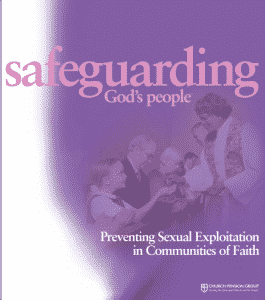
A few weeks ago a group of Redeemer-ites, and other members of the Diocese gathered in the Ed building on a sunny Saturday to attend a training called Safeguarding God’s Children/Safeguarding God’s People. The goal of the training was to understand how we can participate in making the Church as safe a place as we could for all of God’s children by creating space where people are free from harassment, coercion, and predation. I am grateful for everyone who came to do this hard and important work.
A few days before this workshop, our bishop released model guidelines for guns on church grounds, titled Gun Violence Guidelines. The model guidelines are meant to be used by churches to allow congregants, as well volunteers and staff, to carry concealed firearms on church property with the permission of the church. I have to say, when I saw the title, I did not expect what was contained in the communication—an avenue to carrying guns in church. It felt very counter to the work that I was preparing to undertake with many of you.
Jesus was quite clear on the night he was arrested by armed authorities. He told the disciples to put their swords away. And elsewhere he calls on disciples, on the church not to put our personal protection above creating spaces where God can be known in the fullest way possible. We should, we must, do what we can to make our communities safe for all people. I believe that work such as Safeguarding trainings is essential to that work. The church should also be at the forefront of advocacy for police de-escalation training, and fighting poverty by creating pathways for individuals to move out of poverty, as well as addressing the systemic issues that keep people poor. These are things that we do to make the church and the world safe. Firearms in the house of the Lord do not.
We also need to acknowledge that being a follower of Jesus is risky. Jesus is also clear about that. Jesus promises that we will be persecuted, hated, and tempted to put our own personal safety above all else. The truth is that, as a predominantly white congregation in the north suburbs of Seattle, we have already faced, in the break-in this past February, as bad an event as is likely to occur to us. I pray daily that this is true. But as long as our doors are open there is always risk. I am certain, though, that if we close the doors, lock the doors, hunker down in the name of safety, that we will cease to be a church in fairly short order.
So long as I am rector, we will not adopt guidelines about concealed weapons in church. They are an idol, of power, of control, of safety. Let me be clear. If, as a member of the Church of the Redeemer you feel that you absolutely must carry a concealed firearm in church in order to feel safe—stay home. We must do what we can to build up the church to make the church as much a place of safety as we can, and remember at the same time that we risk everything because we have everything to gain in Christ who risked all for us.
Welcome to Church of the Redeemer: Worshiping God, living in community, and reaching out to the world. We are an Episcopal Church serving north King County and south Snohomish County, Washington. As you travel your road, go with friends walking the way of Jesus at Redeemer.
Church of the Redeemer is at 6220 Northeast 181st Street in Kenmore, Washington. The campus is a short distance north of Bothell Way, near the Burke-Gilman Trail. The entrance looks like a gravel driveway. The campus is larger on the inside than it is on the outside. And we managed to hide a large building on the side of a hill that is not easily seen from the street.
Everyone of faith seems to have an opinion on the “He Gets Us” ads during the Super Bowl. Some are enamored with the concept of reaching out with a message about Jesus to such a broad audience, something Christians don’t seem to be able to access as much in the United States as they once did.
This is a transcription of the sermon on the First Sunday after the Epiphany, January 10, 2021, at Church of the Redeemer in Kenmore, Washington by the Reverend Jed Fox.
If the best we can do in talking about the marvelous power and presence of God in our lives is to say, “we don’t agree with those people,” then we should not be surprised that articles like the one in the Times get published. We cannot expect to define ourselves in opposition and be taken seriously.
As long as our doors are open there is always risk. I am certain, though, that if we close the doors, lock the doors, hunker down in the name of safety, that we will cease to be a church in fairly short order.
If the response to sexual misconduct at the 79th General Convention made me the most hopeful, then the issue of liturgy, particularly the revision of the Book of Common Prayer…well it showed me how far we still have to go in many ways as a church.
This General Convention might end up being known as the #Metoo convention. I have hope that we have begun the process of excising this illness and that, if the work can be completed, the church may heal and become whole.
I’ve been reflecting on my experience at General Convention since I got back form Texas. In the next several weeks I’m going to share my thoughts on some of the most important things that I think came out of the Convention, both things that I am really hopeful about and things that make me less hopeful.
Welcome to Church of the Redeemer: Worshiping God, living in community, and reaching out to the world. We are an Episcopal Church serving north King County and south Snohomish County, Washington. As you travel your road, go with friends walking the way of Jesus at Redeemer.
Church of the Redeemer is at 6220 Northeast 181st Street in Kenmore, Washington. The campus is a short distance north of Bothell Way, near the Burke-Gilman Trail. The entrance looks like a gravel driveway. The campus is larger on the inside than it is on the outside. And we managed to hide a large building on the side of a hill that is not easily seen from the street.
How do we live a life of faith? Particularly in the midst of a world, of a society that feels like its tilting more off its axis than usual, it would be nice to have a guide, a roadmap, on how to get through a day, a year, a life with our faith intact, much less a faith that can grow, and can flourish. Luckily, there is such a guide, several in fact. Through the centuries of the church, members of the church have come up with rules to help in the life of faith. A rule of life provides a structure to guide us, both in good times and difficult ones.
At the Opening Eucharist of the General Convention, Presiding Bishop Michael Curry offered to the church a new rule of life for our times, in our branch of the Jesus Movement. He called it The Way of Love: Practices for a Jesus-Centered Life. You can watch and read Bishop Curry’s sermon. I hope you will.
The seven steps of the way of The Way of Love will be basis of Adult Christian Education this year. Beginning in November we will practice the work to Turn, Learn, Pray, Worship, Bless, Go, and Rest to better serve Jesus and live the life of the Kingdom of God. I hope you will join me on this journey beginning Sunday, November 11, 2018, at 9:30 am in the Education Building.
Church of the Redeemer: Worshiping God, living in community, and reaching out to the world around us. We are an Episcopal Church serving north King County and south Snohomish County. We welcome you be with us as we walk the way of Jesus.
Church of the Redeemer is at 6220 Northeast 181st Street in Kenmore, Washington. The campus is a short distance north of Bothell Way, near the Burke-Gilman Trail. The entrance looks like a gravel driveway. The campus is larger on the inside than it is on the outside. And we managed to hide a large building on the side of a hill that is not easily seen from the street.