Category: Rector’s Study

  • The Rector’s Study: Prayer Book Revision

    The Rector’s Study: Prayer Book Revision

    If the response to sexual misconduct at the 79th General Convention made me the most hopeful, then the issue of liturgy, particularly the revision of the Book of Common Prayer…well it showed me how far we still have to go in many ways as a church.

    First a preface: I am a child of the 1979 Prayer Book. I cut my teeth on it and I am very grateful for the panoply of innovations that it contained, not the least of which was the reorientation of worship toward the Eucharist. I am even grateful for Eucharistic Prayer C. However, I was unhappy with the outcome our deliberations, which is not Prayer Book revision. In this I know I am in disagreement with the bishop, which one should always do publicly with a great deal of trepidation. Nevertheless, the resolution that passed out of General Convention was deeply flawed, I believe, in two very important ways.

    First, Resolution A068 said it “memorializes” the BCP 1979. What does that mean? Whatever someone wants it to mean, I suppose. There is no hard and fast definition. To me it certainly holds “Old ‘79” up as something worthy, and that’s the problem. What is between the red covers does not reflect the church. It never has. It was written predominately by white men, for white men, and carries in it’s DNA white-cis-hetero-male supremacy. No matter if we create liturgies that sing the God’s praise from a thousand different perspectives, those liturgies will not be between the red covers and they will not be quite as worthy, and, I fear, the Episcopal branch of the Jesus movement will continue in perception and, in reality, in many ways, as a church of white supremacy, by white supremacy, for white supremacy. Revising what’s between the red covers might not change that. Who knows whether we would have ended up with a book at all. After all we still call pre-convention materials “The Blue Book,” even though at this Convention it was a PDF file unless you bought it from Amazon. But memorializing the Prayer Book 1979, I believe, means that when too many people look between the red covers that will undoubtedly remain in the pews because we’ve always done that way in many places. They will not see themselves reflected in the pages and will wonder if our worship, which our statement of theology, has no place for them, does this church have a place for them?

    This last point ties then directly with my second issue with where convention ended up with regards to Prayer Book revision. One of the arguments that was stated often against revision was the cost: $1.9 million over three years. That’s a lot of money to be sure, but some perspective is in order. The triennial budget is $134 million. Revising the seminal theological document of our church, the repository of our statement of belief, would be between one and two percent of the triennial budget. By comparison, the National Church will spend almost three percent of the triennial budget on legal fees. I make this comparison not to denigrate the cost of legal fees, but to point out that we should value our common liturgy, our common theology, more highly than legal fees. This is not simply inside baseball either, as should be plain from my earlier comments, I believe that the Prayer Book (or prayer PDF or three ring binder or neural feed or whatever it will be in 20 years) is a missional document. It tells us who we are so that we can tell others who we are. It creates in us the habits of heart and mind and hand deep in our bones so that we can carry that story, the reality that our liturgy creates, out into the world in the name of the risen Christ. And that, after all, is what we are supposed to be doing.

    Resolution A068, as re-written by a white-cis-hetero-male bishop, and passed by both houses of the 79th General Convention, is a less-than-half measure. Essentially it says, if your bishop is willing, let a thousand flowers bloom. If the bishop is not, then too bad. It is a missed opportunity for the church to collectively begin to think beyond what we have been and thought and done before, and find where God is drawing us forward.

    The Rev. Jedediah (Jed) Fox

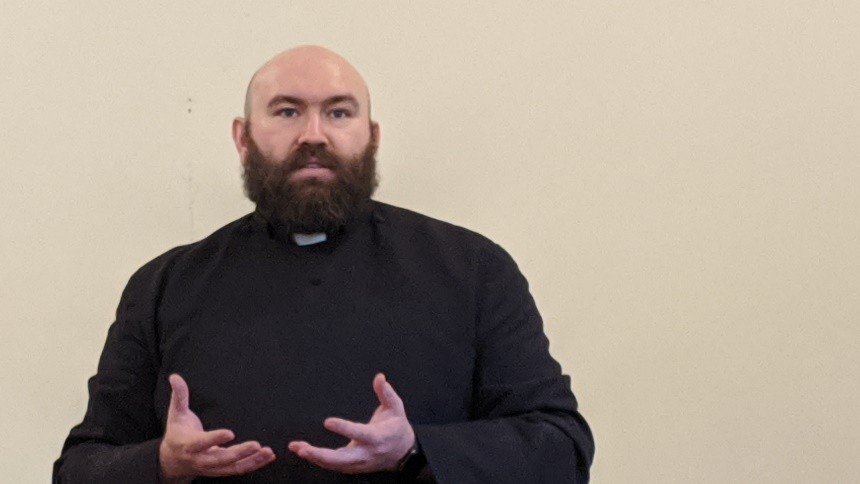
    The Rev. Jedediah (Jed) Fox has been the rector of Church of the Redeemer since January 2015. Prior to being called to Redeemer, Fr. Jed served as curate and assistant at The Church of St. Michael and St. George in St. Louis, Missouri, and was a seminarian at the Church of St. Mary the Virgin while attending the General Theological Seminary. Fr. Jed was raised at St. Peter’s Cathedral in Helena, Montana.
    Fr. Jed Fox with a cup of coffee.

    Church of the Redeemer

    Welcome to Church of the Redeemer: Worshiping God, living in community, and reaching out to the world. We are an Episcopal Church serving north King County and south Snohomish County, Washington. As you travel your road, go with friends walking the way of Jesus at Redeemer.

    Church of the Redeemer is at 6220 Northeast 181st Street in Kenmore, Washington. The campus is a short distance north of Bothell Way, near the Burke-Gilman Trail. The entrance looks like a gravel driveway. The campus is larger on the inside than it is on the outside. And we managed to hide a large building on the side of a hill that is not easily seen from the street.

    The Episcopal Church welcomes you.
  • The #Metoo convention

    The #Metoo convention

    This General Convention might end up being known as the #Metoo convention.

    The worship set the tone early. The bishops held what they called a “listening session.” In it, bishops came forward and recited snippets of stories about the experience of abuse, harassment, misconduct, and further wounding that happened when these instances were reported. Then, they repented of the ways in which the church had injured God’s children. For many it was a powerful experience for bishops to stand up and take some level of responsibility.

    This carried over into the rest of the convention. Many of the resolutions were the result of efforts begun by a special committee that worked on many of these issues from February right through convention. The #Metoo committee, as it became known, and members of that committee were the proposers of many of the actions that were approved by the Convention. There were also many who stood up and told their stories, such as the writers and signatories to Memorial to the General Convention from the Gathering of Gen X and Millennial Clergy (you can read the memorial).

    This theme also carried over into the legislative committee that was tasked with working on Title IV of the canons (canons are the church equivalent of laws, and Title IV is the section of the canons that deal with clergy discipline), as well as Safeguarding (the training programs Safeguarding God’s People and Safeguarding God’s Children are mandatory for clergy and lay volunteers in charge of ministry). The committee dealt with over 50 resolutions, the vast majority of them dealing with sexual misconduct, harassment, abuse, and the church’s response to it.

    Among the actions that taken by this committee were the following:

    • The creation of a Taskforce for Women, Truth, and Reconciliation, which would address all levels of misconduct which have happened in the past.
    • The creation of a Taskforce on Sexual Harassment, tasked with finding and beginning the process of dismantling the structures that allow misconduct and harassment to continue in the church.
    • A suspension of the statute of limitations on sexual harassment beginning January 2019 and lasting until the end of 2021, allowing people to come forward, tell their stories, and hold the predatory or complicity clergy and church systems accountable for their actions.

    This is just a small sample of the work that was begun during General Convention.

    I spent much of my time early in this General Convention sitting in the Title IV committee’s hearing and deliberations. If you stopped to read the memorial that I linked to earlier you will see my name as a signatory to it. I was at that gathering. I heard every one of those stories, and I have heard more since. Once my eyes and ears were open, I had a choice: do I close them again, or use them to see, to listen to the pain that is all to prevalent in the church. I was present at almost every meeting of the Title IV and Safeguarding legislative committee, testified before it, and wrote a resolution that was considered by the committee.

    I believe that this is an issue of liberation in the Episcopal church. If anyone in the church is injured, then I am because I am a part of that same body of Christ that is the church; more so if it is the body that does the harm to any member. Misconduct, misogyny, abuse, sexual or otherwise, and the predatory and/or complicit systems that enable them are abscesses, cancers with in the body of the church. I have hope that we have begun the process of excising this illness, and that, if the work can be completed, the church may heal and become whole.

    In Christ,
    Fr. Jed Fox
    rector@redeemer-kenmore.org

    Read the first reflection on the 79th General Convention of the Episcopal Church.

    General Convention of the Episcopal Church

    The Rev. Jedediah (Jed) Fox

    The Rev. Jedediah (Jed) Fox has been the rector of Church of the Redeemer since January 2015. Prior to being called to Redeemer, Fr. Jed served as curate and assistant at The Church of St. Michael and St. George in St. Louis, Missouri, and was a seminarian at the Church of St. Mary the Virgin while attending the General Theological Seminary. Fr. Jed was raised at St. Peter’s Cathedral in Helena, Montana.

    Fr. Jed Fox with a cup of coffee.

    Church of the Redeemer

    Church of the Redeemer: Worshiping God, living in community, and reaching out to the world around us. We are an Episcopal Church serving north King County and south Snohomish County. We welcome you be with us as we walk the way of Jesus.

    Church of the Redeemer is at 6220 Northeast 181st Street in Kenmore, Washington. The campus is a short distance north of Bothell Way, near the Burke-Gilman Trail. The entrance looks like a gravel driveway. The campus is larger on the inside than it is on the outside. And we managed to hide a large building on the side of a hill that is not easily seen from the street.

    The Episcopal Church welcomes you.

  • General Convention Reflections

    General Convention Reflections

    I’ve been reflecting on my experience at General Convention since I got back from Texas. In the next several weeks, I’m going to share my thoughts on some of the most important things that I think came out of the Convention, both things that I am really hopeful about and things that make me less hopeful.

    The General Convention is a bit of an odd beast. It’s full of different streams of thought and emotion all ebbing, flowing, all with thoughts and hopes and ideas about what General Convention, what the Episcopal Church, can and should be. All of these thoughts and emotions collide and mix like a ocean tide mixing with the mouth of a river at the edge of the sea. And, like that collision of river and sea, the collision of all of these ideas and hopes and dreams is a source of life for the church, a place rife with action, and emotion, and life.

    Once upon a time Convention was every year. In the 19th century, without airplanes or reliable communications, this was the way that the whole church stayed connected. Now, we have other means of communicating and much of the work of the church at a national level gets done between conventions rather than during them. But still, convention is a way in which we can sit together as a whole branch of the Jesus Movement, as Presiding Bishop Curry likes to call us, and talk about what the future holds for us. I’m going to be writing about the work that was begun at Convention, the work of becoming more and more a part of God’s kingdom, a kingdom built on love.

    In Christ,
    Fr. Jed Fox
    rector@redeemer-kenmore.org

    General Convention of the Episcopal Church

    The Rev. Jedediah (Jed) Fox

    The Rev. Jedediah (Jed) Fox has been the rector of Church of the Redeemer since January 2015. Prior to being called to Redeemer, Fr. Jed served as curate and assistant at The Church of St. Michael and St. George in St. Louis, Missouri, and was a seminarian at the Church of St. Mary the Virgin while attending the General Theological Seminary. Fr. Jed was raised at St. Peter’s Cathedral in Helena, Montana.

    Fr. Jed Fox with a cup of coffee.

    Church of the Redeemer

    Welcome to Church of the Redeemer: Worshiping God, living in community, and reaching out to the world. We are an Episcopal Church serving north King County and south Snohomish County, Washington. As you travel your road, go with friends walking the way of Jesus at Redeemer.

    Church of the Redeemer is at 6220 Northeast 181st Street in Kenmore, Washington. The campus is a short distance north of Bothell Way, near the Burke-Gilman Trail. The entrance looks like a gravel driveway. The campus is larger on the inside than it is on the outside. And we managed to hide a large building on the side of a hill that is not easily seen from the street.

    The Episcopal Church welcomes you.
  • The Rector’s Study: Decline or opportunity?

    The Rector’s Study: Decline or opportunity?

    A church in decline or the opportunity of space?

    On Covenant, a part of The Living Church, there is an article on numeric decline in the Episcopal Church. Even saying the word decline is somewhat fraught these days. Some people will point out that the church does not have to be big to matter. Or, will trot out the old Mark Twain quote about statistics and lies.

    Mark Twain, "There are lies, damned lies, and statistics."

    The author of the article, David Goodhew, is quick to acknowledge that numbers only tell part of the story. However, he says, “If we believe Christian faith is good news, we should be seeking its proliferation, and be worried when it shrinks. Ignoring uncomfortable numbers does no good. Indeed, it only means the problems will have increased by the time we face the true state of affairs” (Facing Episcopal Church decline – Covenant).

    Some of the numbers that the author quotes appear breathtaking in their severity. The statistics are broken down. The numbers of baptisms and marriages are particularly startling. Baptisms in 2015 compared with 1980 have dropped by half. Marriages in that same epoch have dropped from almost 39,000 to under 10,000. Taken along with the other membership data that Goodhew reports, it would not be hard to conclude that the Episcopal church will be consigned to the dustbin of history in a few decades.

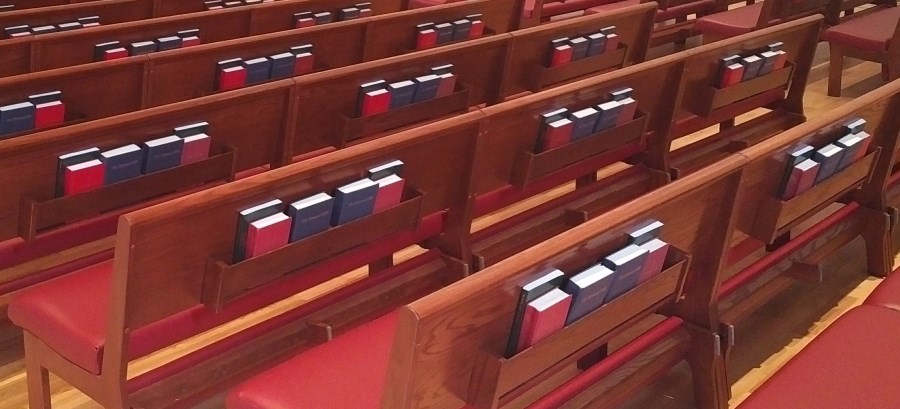
    Empty pews at Redeemer

    Goodhew is also at pains to draw our attention to the fact that some of the causes of this are out of our control. Demographics do not favor the church — in a church that is predominately white, the low birthrate does us no favors. Nor has the decade of conflict and schism been a factor that makes the church particularly attractive — though these trends predate the latest unpleasantness over human sexuality. The rising secularism in American society is also noted — though we in the Pacific Northwest are much more accustomed to this trend than other parts of the country.

    It is, Goodhew infers, the church’s response to these realities that has done the most damage. We tend to move slowly to change and adapt, a natural outgrowth of our traditionalist mindset as a denomination. Being a church that sits in the middle of things — both Catholic and Reformed — we are slow to make too many course corrections. This habit served us well for hundreds of years, but now, it might cause us to disappear, in theory.

    Though it is easy to read Goodhew’s article and jump to the doom and gloom scenarios for our denomination, it’s important to center ourselves, even in this, in the resurrection. Each church is an outpost of God’s Kingdom in the world. We are heralds of Good News that God is doing something in the world. We are not responsible for the growth or shrinking of the church, local or national. We are responsible for heralding the Good News of God in Christ by living our lives in accordance with the Baptismal Covenant and engaging in the ministry of reconciling the world to God through loving relationship with God and our neighbor. I believe that continuing this work, hard though it may be when we hear statistics that seem ruinous, constitutes the best, the only way to “grow” the church: to plant and water seeds of the Good News that will grow with God’s grace. After all, we have the room now to grow.

    Fr. Jed Fox with a cup of coffee.

    Church of the Redeemer

    Church of the Redeemer: Worshiping God, living in community, and reaching out to the world around us. We are an Episcopal Church serving north King County and south Snohomish County. We welcome you be with us as we walk the way of Jesus.

    Church of the Redeemer is at 6220 Northeast 181st Street in Kenmore, Washington. We are a short distance north of Bothell Way, near the Burke-Gilman Trail. The entrance looks like a gravel driveway. The campus is larger on the inside than it is on the outside. And we managed to hide a large building on the side of a hill that is not easily seen from the street.

    The Episcopal Church welcomes you.

Funeral for the Rev. Canon John Fergueson, Saturday, March 2, 2026, at 10:00 am in Church of the Redeemer. Additional parking available at The Vine Church across 181st Street from Redeemer.

The 6th Sunday of Easter (Year A), May 10, 2026. Services at 8:00 am (no music) and 10:30 (music). Xristos Kuxwoo-digoot! Xegaa-kux Kuxwoo-digoot!

Episcopal Church of the Redeemer
Privacy Overview

Cookie information is stored in your browser and performs functions such as recognizing you when you return to our website and helping our team to understand which pages of the website are visited. We aren't using cookies to determine your web browsing habits, but others can.