This is the weekly bulletin insert from Sermons That Work.
The Nicene Creed, Week 2
To commemorate the 1700th anniversary of the Council of Nicaea, the Rt. Rev. Matthew Gunter, bishop of Wisconsin, has written a series of reflections on the Nicene Creed and its relevance for contemporary Episcopalians. Over the coming weeks, we’ll share his teachings, written mostly in a question-and-answer format.
Wasn’t the Nicene Creed the product of the political machinations of Emperor Constantine?
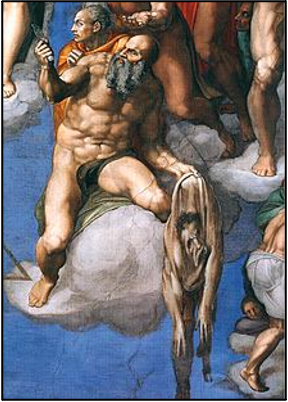
Constantine, Pontifex Maximus
It is true that Constantine called for a council of bishops to be held in Nicaea. His reasons for convening it were probably complex.
He wanted order in the empire and probably saw the divisions within the church as a threat to that. And conflicting church parties had caused social disturbances in some places around the empire.
As with most times and places before the modern era, this was an age in which politics and faith were seen as inseparable. The idea that whether the church was on the right track in its doctrine and worship could affect God’s blessing on the church and the empire might also have played a role.
The pagan Roman emperors had assumed the role of “Pontifex Maximus” – the guardian of the Empire’s worship and piety. Constantine, who had sided with Christianity and was eventually baptized, might have understood himself as inheriting that role. This would mean he understood himself as at least the guardian of the faith with some responsibility for the church’s teaching.
He is also recorded to have expressed concern that the disunity represented in different factions teaching different things about the nature of Jesus and of God was a potential scandal compromising the church’s witness and contradicting Jesus’ prayer that the church should be one.
Did writing the Nicene Creed stop division?
The emperor opened and, to an extent, participated in the Council. However, it is unclear whether Constantine was directly involved beyond pressing for a “workable” compromise among various theological factions.
It is the case that once the council “settled” on the Creed, Constantine did put the weight of the empire behind what was now considered the orthodox position. But he also eventually pardoned Arius.
And his son, Constantius, promoted the teaching of Arius that the Nicene Council had condemned. Arianism might have actually been the more politically astute option. It was a popular position at the time. It was more philosophically respectable. And it would have ingrained into the cosmos an unquestionable hierarchy of all being—God, Jesus, emperor, people, that would have been helpful for shoring up power in an empire that had been fractured among multiple co-emperors.
The idea of two, or three, co-equal persons in God didn’t have the same implications!
For several decades, different emperors supported different church factions until 380, when the emperor Theodosius I declared Nicene Christianity the empire’s official faith. The following year, he also convened the Council of Constantinople, which slightly revised the Creed into the form we affirm now.
Clarity and unifying power of the Nicene Creed
The legacy of Christianity’s enmeshment with empire is, in many ways, problematic. But that does not necessarily compromise the legitimacy of the Council of Nicaea or the Creed it affirmed. One might even say that the clarity and unifying power of the Nicene Creed appears to be a work of the Holy Spirit.
Weekly bulletin inserts
This weekly bulletin insert provides information about the history, music, liturgy, mission, and ministry of The Episcopal Church. For more information, please contact us at stw@episcopalchurch.org.
Sermons That Work
For more than 20 years, Sermons That Work, a ministry of The Episcopal Church’s Office of Communication, has provided free sermons, Bible studies, bulletin inserts, and other resources that speak to congregations across the Church. Our writers and readers come from numerous and varied backgrounds. Small house churches, sprawling cathedrals, and everything between use the resources that Sermons That Work provides.
Church of the Redeemer
Church of the Redeemer: Worshiping God, living in community, and reaching out to the world around us. We are an Episcopal Church serving north King County and south Snohomish County, Washington. As you travel your road, go with friends walking the way of Jesus at Redeemer.
Church of the Redeemer is at 6220 Northeast 181st Street in Kenmore, Washington. The campus is a short distance north of Bothell Way, near the Burke-Gilman Trail. The entrance looks like a gravel driveway. The campus is larger on the inside than it is on the outside. And we managed to hide a large building on the side of a hill that is not easily seen from the street.
The Episcopal Church welcomes you.