Category: The Episcopal Church

  • The bulletin insert for July 20, 2025

    The bulletin insert for July 20, 2025

    This is the weekly bulletin insert from Sermons That Work.

    The Feast of St. James, Apostle and Martyr
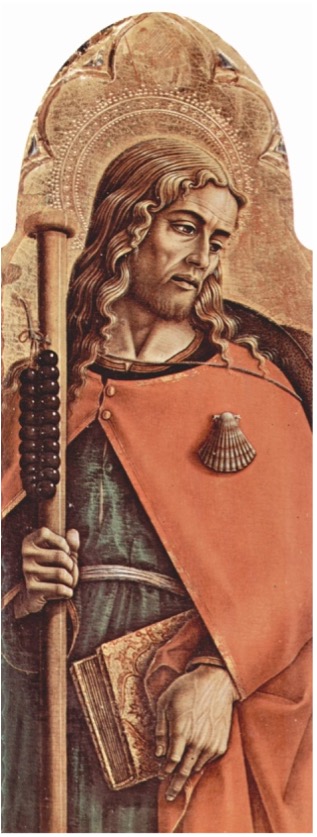
    St. James the Greater

    On July 25, the Church celebrates the Feast of St. James, apostle and martyr.

    This James is often styled “St. James the Greater,” to distinguish him from the other Apostle of the same name and from James, “the brother of our Lord.” Along with his brother John, James was called by Jesus at the Sea of Galilee as they mended nets with their father, Zebedee, and his hired hands. St. James is named regularly during major events in the Gospels, witnessing the Transfiguration of Christ (Matthew 17; Mark 9; Luke 9), the raising of Jairus’ daughter (Mark 5, Matthew 9; Luke 8), and Jesus’ agony in the garden (Matthew 26; Mark 14; Luke 22).

    For all this honor, though, James also receives correction from Jesus on more than one occasion. He and his brother are given the nickname “Sons of Thunder,” or Boanerges, for their zealous and temperamental dispositions. For example, when Samaritan villagers refused to welcome Jesus, the brothers eagerly asked whether he would have them call down fire from heaven to destroy the town. The Lord rebukes them and instead moves on to another village (Luke 9). The Gospels record the brothers (or perhaps their mother) asking the Lord to place them at his right and left hands in his kingdom, which also results in admonishment (Matthew 20), and James is among the apostles who fall asleep in the garden while Jesus prays (Matthew 26; Mark 14; Luke 22).

    Still, James’ dedication to Jesus is without question, as he is understood to be the first of the twelve to die for him. As the Acts of the Apostles records, “About that time Herod the King laid violent hands upon some who belonged to the Church. He killed James the brother of John with the sword” (Acts 12:1–2).

    Holy Women, Holy Men explains the veneration of and devotion to St. James following his death: “According to an old tradition, the body of James was taken to Compostela, Spain, which has been a shrine for pilgrims for centuries” (p. 484). His name was translated from the Hebrew Ya’akov to the Spanish Iago; thus, “Saint James” becomes “Santo Iago,” or “Santiago.” Santiago de Compostela was an extraordinarily popular destination for pilgrimages, leading to the development of the Camino de Santiago, a route across the countryside, marked by the fisherman’s symbol of a scallop shell.

    Collect for the Feast of St. James

    O gracious God, we remember before you today your servant and apostle James, first among the Twelve to suffer martyrdom for the Name of Jesus Christ; and we pray that you will pour out upon the leaders of your Church that spirit of self-denying service by which alone they may have true authority among your people; through Jesus Christ our Lord, who lives and reigns with you and the Holy Spirit, one God, now and for ever. Amen.


    Weekly bulletin inserts

    This weekly bulletin insert provides information about the history, music, liturgy, mission, and ministry of The Episcopal Church. For more information, please contact us at stw@episcopalchurch.org.
    Sermons That Work from the Episcopal Church

    Sermons That Work

    For more than 20 years, Sermons That Work, a ministry of The Episcopal Church’s Office of Communication, has provided free sermons, Bible studies, bulletin inserts, and other resources that speak to congregations across the Church. Our writers and readers come from numerous and varied backgrounds. Small house churches, sprawling cathedrals, and everything between use the resources that Sermons That Work provides.
    The Episcopal Church of the Redeemer: Worshiping God, living in community, reaching out to the world.

    Church of the Redeemer

    Church of the Redeemer: Worshiping God, living in community, and reaching out to the world around us. We are an Episcopal Church serving north King County and south Snohomish County, Washington. As you travel your road, go with friends walking the way of Jesus at Redeemer.

    Church of the Redeemer is at 6220 Northeast 181st Street in Kenmore, Washington. The campus is a short distance north of Bothell Way, near the Burke-Gilman Trail. The entrance looks like a gravel driveway. The campus is larger on the inside than it is on the outside. And we managed to hide a large building on the side of a hill that is not easily seen from the street.

    The Episcopal Church welcomes you.
  • The bulletin insert for July 13, 2025

    The bulletin insert for July 13, 2025

    This is the weekly bulletin insert from Sermons That Work.

    The Feast of William White

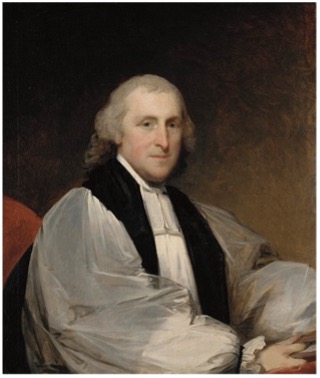
    Bishop William White

    On July 17, the Episcopal Church commemorates William White:

    • First bishop of Pennsylvania
    • First and fourth presiding bishop of The Episcopal Church
    • First and fourth president of the House of Deputies
    • United States Senate chaplain

    He stands as a foundational figure in the history of The Episcopal Church, shepherding our particular expression of Anglicanism through and beyond the wake of the American Revolution.

    White was born in Philadelphia and educated at the College of Philadelphia, now the University of Pennsylvania, graduating in 1765. In 1770, he sailed to England for his diaconal ordination, returning again in 1772 for his priestly ordination. Christ Church, Philadelphia, called White to become rector. The Continental Congress called White to be its chaplain.

    Deeply rooted in both Anglican tradition and early American ideals, White saw the need for an autonomous church that would retain historic faith and order while adapting to a completely new, democratic context. He wrote and distributed a pamphlet, “The Case of The Episcopal Churches in the United States Considered,” which envisioned a church governed not by bishops alone but with broad lay and clerical participation. This was a radical idea for its time, though. of course, White proposed it within the other social constraints of the time. His vision was one of shared authority, unity in diversity, and responsive leadership.

    In 1787, White again traveled to England to be consecrated bishop. He eventually took his seat in Pennsylvania.

    White became the first presiding bishop of The Episcopal Church in 1789. At that time, it was a position that rotated between the existing bishops (there were only three). In 1795, the Church adjusted the position to be the most senior bishop in the House of Bishops.

    White’s time was marked by a growing church that established an American line of bishops. He participated in the consecration of more than two dozen colleagues.

    He ordained Absalom Jones, the first African American priest in The Episcopal Church. And he presided over a church that struggled to find a foothold as an institution tethered to English spirituality as other formal connections frayed and snapped.

    In this era with the questioning of institutions and shifting authority, we do well to recall a bishop who helped build something lasting, not by power alone, but by patience, prayer, and a commitment to the truth.

    Collect for the Feast of William White

    O Lord, who in a time of turmoil and confusion raised up your servant William White to lead your church into ways of stability and peace; Hear our prayer, and give us wise and faithful leaders, that, through their ministry, your people may be blessed and your will be done; through Jesus Christ our Lord, who lives and reigns with you and the Holy Spirit, one God, for ever and ever. Amen.


    Weekly bulletin inserts

    This weekly bulletin insert provides information about the history, music, liturgy, mission, and ministry of The Episcopal Church. For more information, please contact us at stw@episcopalchurch.org.

    Sermons That Work from the Episcopal Church

    Sermons That Work

    For more than 20 years, Sermons That Work, a ministry of The Episcopal Church’s Office of Communication, has provided free sermons, Bible studies, bulletin inserts, and other resources that speak to congregations across the Church. Our writers and readers come from numerous and varied backgrounds. Small house churches, sprawling cathedrals, and everything between use the resources that Sermons That Work provides.

    The Episcopal Church of the Redeemer: Worshiping God, living in community, reaching out to the world.

    Church of the Redeemer

    Church of the Redeemer: Worshiping God, living in community, and reaching out to the world around us. We are an Episcopal Church serving north King County and south Snohomish County, Washington. As you travel your road, go with friends walking the way of Jesus at Redeemer.

    Church of the Redeemer is at 6220 Northeast 181st Street in Kenmore, Washington. The campus is a short distance north of Bothell Way, near the Burke-Gilman Trail. The entrance looks like a gravel driveway. The campus is larger on the inside than it is on the outside. And we managed to hide a large building on the side of a hill that is not easily seen from the street.

    The Episcopal Church welcomes you.

  • Respond to deadly Texas flooding

    Respond to deadly Texas flooding

    Episcopal Relief & Development helps local diocesan partners in Texas provide support to those impacted by the catastrophic July 4-5, 2025, Texas Hill Country flooding. The storm killed over 80 people. Many more are still missing.

    Area affected by flash flooding

    During the weekend flash flooding event, between 5 and 13 inches of rain fell rapidly on central Texas. This event affected multiple counties, including these:

    • Kerr
    • Kendall
    • Gillespie
    • Comal
    • Hays
    • Travis
    • Williamson
    • Tom Green

    The full extent of the damage is still unfolding. The storm affected hundreds of homes, mobile parks, RVs, roads and parks so far. Thousands of people lost power. Many have been evacuated. 

    “This disaster is still unfolding. We will learn much more in the days and weeks ahead,” said the Rt. Rev. David Read, Bishop of West Texas, and the Rt. Rev. Angela Cortiñas, Bishop Suffragan of West Texas, in a joint statement released on July 5, 2025. “The recovery of the Hunt, Ingram, Comfort and Kerrville communities will not happen overnight. It will take time to catalog the loss of homes, businesses, livelihoods, and lives, and the best ways we can tangibly be part of healing, hope and recovery.” 

    Work with local partners

    Episcopal Relief & Development is working with longstanding local partners in the Episcopal Diocese of West Texas to help people most in need. Working through trusted relationships, Episcopal Relief & Development helps partners offer their financial resources, physical property and spiritual support in places where it is most useful after a disaster of this scale.

    “Texans have experienced devastating disasters in the past decade, like the 2021 winter storm and Hurricane Harvey, and our heart goes out to them as they face tragedy once again,” said Race Hodges, Program Officer, Episcopal Relief & Development. “We worked with our local partners through each of these major events to provide comfort and safety to many people. And we will continue to do so.” 

    What you can do

    Please pray for the communities affected by the Texas flash flooding. Donations help our local partners respond to the emerging needs caused by this disaster.

    Episcopal Relief and Development

    Episcopal Relief and Development

    For over 80 years, Episcopal Relief & Development has worked with an extensive network of faith and community partners to advance lasting change in communities affected by injustice, poverty, disaster and climate change. Inspired by our faith, we reach over three million people each year by focusing on four interconnected priorities: nurturing the potential of caregivers and young children, reducing violence against women and girls, strengthening communities’ resilience to climate change and facilitating humanitarian response to disasters. Together with our partners, we leverage what’s working well to drive impact, learning and sustainability. Together, we create lasting change. Join us.

    The Episcopal Church of the Redeemer: Worshiping God, living in community, reaching out to the world.

    Church of the Redeemer

    Church of the Redeemer: Worshiping God, living in community, and reaching out to the world around us. We are an Episcopal Church serving north King County and south Snohomish County, Washington. As you travel your road, go with friends walking the way of Jesus at Redeemer.

    Church of the Redeemer is at 6220 Northeast 181st Street in Kenmore, Washington. The campus is a short distance north of Bothell Way, near the Burke-Gilman Trail. The entrance looks like a gravel driveway. The campus is larger on the inside than it is on the outside. And we managed to hide a large building on the side of a hill that is not easily seen from the street.

    The Episcopal Church welcomes you.

  • The Episcopal Church must now be an engine of resistance

    The Episcopal Church must now be an engine of resistance

    [Episcopal News Service] In an opinion piece originally published July 3, 2025, in Religion News Service, Presiding Bishop Sean Rowe reflected on The Episcopal Church’s history as it has emerged as an institutional leader in resistance to the Trump Administration’s “overreach and recklessness” since President Donald Trump took office in January.

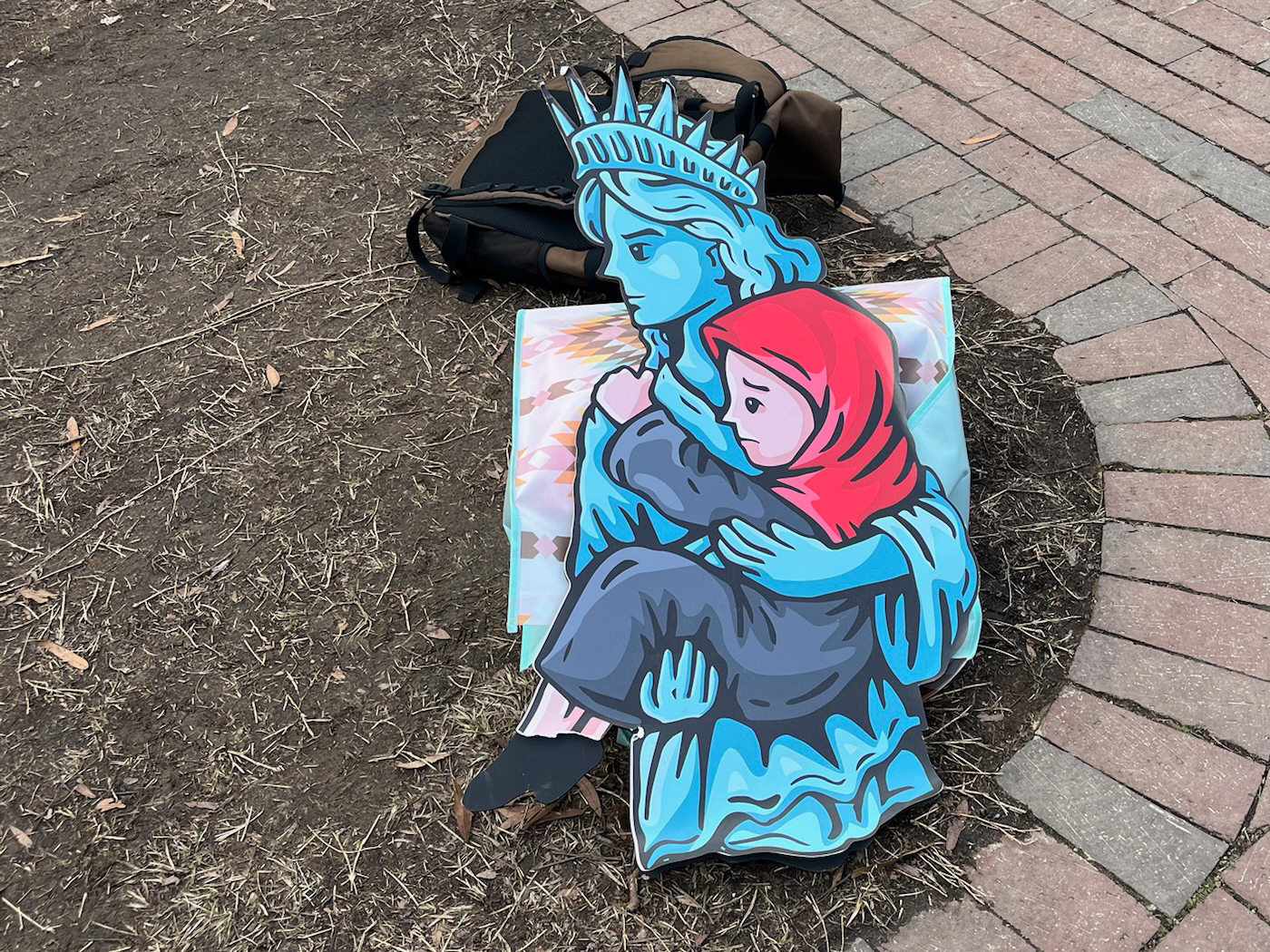
    A depiction of a refugee being held by Lady Liberty during a resistance protest in Washington, D.C., Feb. 4, 2025. (RNS photo/Aleja Hertzler-McCain)
    A depiction of a refugee being held by Lady Liberty during a protest in Washington, D.C., Feb. 4, 2025. (RNS photo/Aleja Hertzler-McCain)

    Resistance to the rising tide of authoritarianism and Christian nationalism

    It is shaping up to be a complicated Independence Day for The Episcopal Church. We were once the church of the Founding Fathers and presidents—34 of the 56 signers of the Declaration of Independence were members of what became our church after the Revolution, and 11 presidents, including George Washington, have professed our faith. Today, however, we are known less for the powerful people in our pews than for our resistance to the rising tide of authoritarianism and Christian nationalism emanating from Washington, D.C.

    When religious institutions like ours enjoy easy coexistence with earthly power, our traditions and inherited systems can become useless for interpreting what is happening around us. But our recent reckoning with the federal government has allowed us to see clearly the ease with which the Protestant tradition of patriotism can lead Christians to regard our faith more as a tool of dominion than a promise of liberation.

    The reckoning, if we are honest, is long overdue.

    The Most Reverend Sean Rowe

    We have had an eventful few months. In February, we joined a coalition of interfaith partners to sue the federal government on the grounds that the threat of U.S. Immigration and Customs Enforcement raids in houses of worship is a violation of our religious freedom. In May, we ended our four-decade participation in the federal refugee resettlement program over the current administration’s demand that we resettle white Afrikaners designated as refugees. We are now assessing how to respond to the travel ban, which prevents us from gathering and worshipping freely with the people of our churches in Venezuela, Haiti and Cuba, and may limit entry for our members in several other of the 22 countries and territories where The Episcopal Church is found. These challenges to our ability to practice our faith have strained the comfortable intermingling of church and state that our institution has enjoyed for nearly 250 years.

    The reckoning, if we are honest, is long overdue. Every July 4, our prayer book reminds us of our failure to stand against the enslavement of Black Americans with a prayer for Independence Day claiming that “the founders of this country won liberty for themselves and for us.” But not all of us. The Episcopal Church did not make a moral stand against slavery, and some of our eminent leaders were pillars of the transatlantic slave trade. Our church ran residential schools for Indigenous children at which they were denied their culture and God-given humanity. And in the mid-20th century, our foreign missions aligned with U.S. foreign policy in Asia and the Pacific, and in Central America and the Caribbean.

    The history of the church in Nazi Germany is a cautionary tale about how Christians can falter in perilous times. Some Christians in that time and place sided with the Reich based on their theological tradition of nationalism and loyalty to the state. Others, who came to be called the Confessing Church, became determined that they needed to oppose the government’s interference in religion. They resisted the Nazi regime — some, like Lutheran theologian and pastor Dietrich Bonhoeffer, to the death.

    But the Confessing Church’s resistance was not primarily based in resistance to the Nazis’ deadly and dehumanizing antisemitism, but rather in its belief in the autonomy of the institutional church and its resulting desire to block state interference in church affairs. The last six months has heightened my understanding of that impulse, and I do not intend to diminish the witness of the Confessing Church — especially that of Bonhoeffer, who was brutally executed by the Nazi regime less than a month before the end of the war in Europe. Its history, however, teaches us that when we are awash in propaganda, even our resistance can be bound by its definitions and incline us to see the world in the same categories — foreigner and neighbor, cisgender and transgender, white and people of color, Christian and Muslim — that we seek to transcend.

    These historical lessons are urgent. Churches like ours, protected by the First Amendment and practiced in galvanizing people of goodwill, may be some of the last institutions capable of resisting this administration’s overreach and recklessness. To do so faithfully, we must see beyond the limitations of our tradition and respond not in partisan terms, but as Christians who seek to practice our faith fully in a free and fair democracy.

    We did not seek this predicament, but God calls us to place the most vulnerable and marginalized at the center of our common life, and we must follow that command regardless of the dictates of any political party or earthly power. We are now being faced with a series of choices between the demands of the federal government and the teachings of Jesus, and that is no choice at all.

    This is not the same kind of patriotism that has guided our church since its founding in 1785, but this July Fourth, it may be the most faithful service we can render — both to the country we love and the God we serve.

    – The Most Rev. Sean W. Rowe is presiding bishop of The Episcopal Church. The views expressed in this commentary do not necessarily reflect those of Religion News Service.

    Presiding Bishop Sean Rowe

    The Most Rev. Sean W. Rowe

    The Most Rev. Sean W. Rowe was elected presiding bishop and primate of The Episcopal Church in June 2024 and took office on Nov. 1 for a nine-year term. In this role, he serves as the church’s chief pastor and CEO. Known for his expertise in organizational learning and adaptive change, Rowe is committed to strengthening support for local ministry and mission.  

    He was ordained bishop of the Episcopal Diocese of Northwestern Pennsylvania in 2007 after serving as rector of St. John’s in Franklin, Pennsylvania, for seven years. From 2014 to 2018, he served as bishop provisional of the Episcopal Diocese of Bethlehem, and from 2019 to 2024, he led a partnership between the Episcopal Dioceses of Northwestern Pennsylvania and Western New York. 

    Rowe holds a bachelor’s degree in history from Grove City College, a Master of Divinity degree from Virginia Theological Seminary, and a doctorate in organizational learning and leadership from Gannon University. He has served as a leader of many civic and churchwide organizations and governance bodies, and as parliamentarian for the House of Bishops. 

    The Episcopal Church of the Redeemer: Worshiping God, living in community, reaching out to the world.

    Church of the Redeemer

    Church of the Redeemer: Worshiping God, living in community, and reaching out to the world around us. We are an Episcopal Church serving north King County and south Snohomish County, Washington. As you travel your road, go with friends walking the way of Jesus at Redeemer.

    Church of the Redeemer is at 6220 Northeast 181st Street in Kenmore, Washington. The campus is a short distance north of Bothell Way, near the Burke-Gilman Trail. The entrance looks like a gravel driveway. The campus is larger on the inside than it is on the outside. And we managed to hide a large building on the side of a hill that is not easily seen from the street.

    The Episcopal Church welcomes you.
  • The bulletin insert for July 6, 2025

    The bulletin insert for July 6, 2025

    This is the weekly bulletin insert from Sermons That Work.

    Becoming Beloved Community Grants

    Episcopalians are invited to apply for a Becoming Beloved Community grant.

    The General Convention budget funds these Beloved Community grants to do the following:

    • Support projects that seek to create sustainable, systemic change in truth-telling.
    • Share the dream of Beloved Community.
    • Practice healing and reconciliation.
    • Repair the breach in institutions and society.

    Since 2019, approximately 120 projects have received Becoming Beloved Community grants totaling more than $1 million.

    [These grants] help communities root deeper into God’s dream—where truth is told with courage, healing is practiced in community, and justice flows not as charity but as relationship restored.

    the Rev. Lester Mackenzie
    Racial Reconciliation
    Racial Reconciliation

    Applicants should review criteria and additional information online at iam.ec/bbcg. Priority will be given to initiatives that address policy advocacy, systems transformation, and environmental change strategies. Projects may include efforts to reform institutional policies, shift cultural norms, reallocate resources, or influence public systems and structures in ways that align with the vision of Becoming Beloved Community.

    The deadline to apply for grants will be August 31, 2025. Applications officially opened online on July 3, 2025, at iam.ec/bbcg.

    Grants include seed grants up to $7,500 and impact grants up to $15,000.

    • Seed grants are geared toward groups launching new projects or growing existing projects.
    • Impact grants are aimed primarily at increasing the capacity, impact, and reach of communities and institutions already working to advance justice, healing, reconciliation, and creation care.

    “These grants are seeds of communion. They help communities root deeper into God’s dream—where truth is told with courage, healing is practiced in community, and justice flows not as charity but as relationship restored,” said the Rev. Lester Mackenzie, chief of mission program and an Associate of the Holy Cross, a Benedictine community. “As one elder once whispered to me, ‘We do not walk alone—we carry one another home.’ 

    “Jesus said, ‘The kingdom of God is within you’ (Luke 17:21). These grants call that kingdom forth. Yebo [I agree].”


    Weekly bulletin inserts

    This weekly bulletin insert provides information about the history, music, liturgy, mission, and ministry of The Episcopal Church. For more information, please contact us at stw@episcopalchurch.org.

    Sermons That Work from the Episcopal Church

    Sermons That Work

    For more than 20 years, Sermons That Work, a ministry of The Episcopal Church’s Office of Communication, has provided free sermons, Bible studies, bulletin inserts, and other resources that speak to congregations across the Church. Our writers and readers come from numerous and varied backgrounds. Small house churches, sprawling cathedrals, and everything between use the resources that Sermons That Work provides.

    The Episcopal Church of the Redeemer: Worshiping God, living in community, reaching out to the world.

    Church of the Redeemer

    Church of the Redeemer: Worshiping God, living in community, and reaching out to the world around us. We are an Episcopal Church serving north King County and south Snohomish County, Washington. As you travel your road, go with friends walking the way of Jesus at Redeemer.

    Church of the Redeemer is at 6220 Northeast 181st Street in Kenmore, Washington. The campus is a short distance north of Bothell Way, near the Burke-Gilman Trail. The entrance looks like a gravel driveway. The campus is larger on the inside than it is on the outside. And we managed to hide a large building on the side of a hill that is not easily seen from the street.

    The Episcopal Church welcomes you.
  • Navajoland calls for prayers as Oak Ridge Fire continues to burn through Navajo Nation in northeastern Arizona

    Navajoland calls for prayers as Oak Ridge Fire continues to burn through Navajo Nation in northeastern Arizona

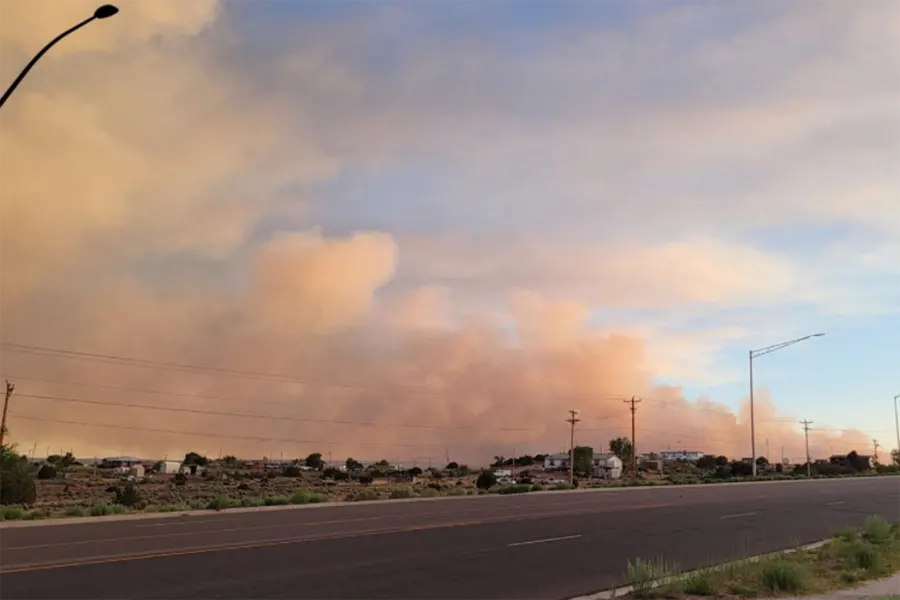
    [Episcopal News ServiceThe Episcopal Church in Navajoland is calling for prayers as a wildfire that sparked June 28, 2025, on the Navajo Nation in northeastern Arizona continues to burn. The wildfire, called the Oak Ridge Fire, has so far burned 10,623 acres and is 0% contained.

    “Our church remains open for prayer and emotional support by those impacted by the fire,” the communications office for the Farmington, New Mexico-based diocese wrote in a July 1 update on Navajoland’s website. “We invite anyone in need of comfort or connection to join us in prayer.”

    The Navajo Nation

    The Navajo Nation is the largest Native American tribe by both land and tribal enrollment. With the exception of Colorado, its reservation occupies a large portion of the Four Corners region. This includes portions of northeastern Arizona, northwestern New Mexico and southeastern Utah.

    The cause of the Oak Ridge Fire is unknown. Officials have confirmed that it was human-caused, possibly by wood haulers. It ignited 8 miles southwest of Window Rock, Navajo Nation’s capital,

    Navajo Nation President Buu Nygren declared a state of emergency on June 29.

    People affected by the Oak Ridge Fire

    So far, 300-500 people, including some Episcopalians in the diocese, have evacuated their homes, and 508 firefighters are on the ground.

    “We also want to express our sincere gratitude to the firefighters and first responders who work tirelessly around the clock to keep our communities safe,” the update said.

    Navajo Nation Animal is also sheltering pets and livestock. Some Navajoland Episcopalians’ sheep camps have been affected by the fire, according to the update.

    Good Shepherd Mission, an Episcopal church in Fort Defiance, Arizona, 6.7 miles north of Window Rock, is closest to the wildfire.

    Shelters in Fort Defiance and Ganado are providing food, water and emotional support services to evacuees.

    The Episcopal Church in Navajoland’s website will post updates as more information becomes available.

    Episcopal News Service

    Episcopal News Service (ENS) offers in-depth reporting of local, regional, national and international news for Episcopalians and others interested in the church’s mission and ministry. ENS is the official news source of the Episcopal Church.

    Church of the Redeemer logo

    Church of the Redeemer

    Welcome to Church of the Redeemer: Worshiping God, living in community, and reaching out to the world. We are an Episcopal Church serving north King County and south Snohomish County, Washington. As you travel your road, go with friends walking the way of Jesus at Redeemer.

    Church of the Redeemer is at 6220 Northeast 181st Street in Kenmore, Washington. We are a short distance north of Bothell Way, near the Burke-Gilman Trail. The entrance looks like a gravel driveway. The campus is larger on the inside than it is on the outside. And we managed to hide a large building on the side of a hill that is not easily seen from the street.

    The Episcopal Church welcomes you.
  • Navajoland officially becomes a missionary diocese

    Navajoland officially becomes a missionary diocese

    [Episcopal News Service – Linthicum Heights, Maryland] The Episcopal Church welcomed its newest diocese on June 24, 2025 – the Missionary Diocese of Navajoland – though, as Navajo Episcopalians and church leaders noted, the elevation of Navajoland from an Episcopal mission formalizes a reality already felt for years in Navajo Nation communities.

    Culmination of a process for Navajoland

    “Navajoland was already living as a missionary diocese in spirit and practice,” GJ Gordy, an Executive Council member from Navajoland, said before the council voted to accept the missionary diocese’s new constitution. “This is not just a structural change. It is recognition of our readiness to lead ourselves.”

    Executive Council, the church’s governing body between the triennial meetings of General Convention, is meeting June 23-25, 2025, in suburban Baltimore. Council’s vote was the final step in a process dating back at least to 2022, when General Convention sought to empower Navajo Episcopalians to plan for the future of the mission, covering a region that includes Navajo congregations in parts of Arizona, New Mexico and Utah.

    That step responded to their call for self-determination after years of work toward sustainability and dreaming of someday calling their own bishop, which they now are preparing to do as a missionary diocese.

    “This has been a long time coming,” the Rev. Cathlena Plummer said during Executive Council’s meeting in suburban Baltimore. “It’s been in the works for years and years and years.”

    Gratitude for establishing the new missionary diocese

    Plummer and other Navajo clergy and elders joined the meeting via Zoom to share their gratitude to the church for establishing the new missionary diocese. The Rev. Leon Sampson struggled to speak through tears as he thanked Executive Council.

    “This is a wonderful journey,” Sampson said. “We thank you for allowing us to be a part of [the church] … to see us as we are, Episcopalians.”

    GJ Gordy, an Executive Council member from Navajoland, speaks to the governing body June 24 before its vote to accept the new missionary diocese’s constitution. Photo: David Paulsen/Episcopal News Service
    GJ Gordy, an Executive Council member from Navajoland, speaks to the governing body June 24 before its vote to accept the new missionary diocese’s constitution. Photo: David Paulsen/Episcopal News Service

    Establishment of Navajoland

    The Episcopal Church named the area mission Navajoland in 1977. The House of Bishops appoint bishops to the role in area missions rather than election by a local convention. The Rt. Rev. Barry Beisner was the last bishop appointed to the area mission in this way. By becoming a missionary diocese, Navajoland’s members can elect their own bishop while continuing to receive financial and other support from the wider church.

    In 2022, the 80th General Convention passed a resolution entrusting Navajoland “to establish its own rules and procedures for a process of discernment for the calling of a bishop that reflects the values, teachings, and traditions of the Diné.” Navajoland leaders worked on the plan with the church’s Standing Commission on Structure, Governance, Constitution and Canons, and in January 2024, a special convocation in Navajoland voted in favor of the request for missionary diocese status. Bishops and deputies then authorized the missionary diocese when they gathered in June 2024 at the 81st General Convention.

    Approval of the diocesan constitution

    On June 7, 2025, Navajoland held its first diocesan convention and approved its new constitution. The preamble, written in English and the Diné language, incorporates Navajoland’s mission statement into a document that respects Navajo culture and spiritual practices.

    “In the name of Jesus Christ, the Holy One, we set out to walk in harmony, seeking forgiveness and wholeness,” the preamble says. “Through compassion and service, Love binds us in relationship to all creation. In the Beauty Way all is restored again.”

    One of the constitution’s articles says that the diocese will strive to adhere in its communications and decision-making to “the historic and sacred traditions of the Navajo people as well as the Constitution and Canons of The Episcopal Church.”

    In its June 24 session, Executive Council voted to accept the constitution with a round of applause.

    “I am very grateful for this opportunity for all of us here at Navajoland to be present at Executive Council and witness this historic moment in the life of the church,” the Rev. Cornelia Eaton, Navajoland’s canon to the ordinary, said on Zoom. “I also want to acknowledge all the hard work that has been put into this over the last few years.”

    Support for Navajoland

    Separately, the 2025-27 churchwide budget plan includes a three-year block grant of nearly $1.5 million to support Navajoland’s congregations and ministries. Additionally, the churchwide budgeted $800,000 over three years for the office and staff of the bishop appointed by the House of Bishops to serve Navajoland, though it is unclear how much money would support a new diocesan bishop. Gordy said a search committee has been appointed to begin the process of calling the missionary diocese’s first bishop.

    The Rev. Paula Henson, a priest serving a Navajo congregation in Utah, was among those joining the meeting via Zoom to thank Executive Council.

    “On this day, at this hour, at this second, we live our lives the way our people have lived long ago, by way of our Navajo ways, and we continue to thrive with that,” Henson said.


    David Paulsen is a senior reporter and editor for Episcopal News Service based in Wisconsin. You can reach him at dpaulsen@episcopalchurch.org.

    Executive Council of the Episcopal Church

    The Executive Council of the Episcopal Church administers the program and policies adopted by the General Convention. It was called the National Council from 1919-1964.

    It is currently composed of twenty members elected by General Convention, eighteen members elected by the Provincial Synods, and the following ex officio members:

    • The presiding bishop
    • The president of the House of Deputies
    • The vice president, secretary, and treasurer of the Executive Council

    Members are elected to six-year terms with half the membership elected each triennium. The body must have specified numbers of bishops, presbyters, and lay persons. The council meets at least three times each year.

    Church of the Redeemer logo

    Church of the Redeemer

    Welcome to Church of the Redeemer: Worshiping God, living in community, and reaching out to the world. We are an Episcopal Church serving north King County and south Snohomish County, Washington. As you travel your road, go with friends walking the way of Jesus at Redeemer.

    Church of the Redeemer is at 6220 Northeast 181st Street in Kenmore, Washington. We are a short distance north of Bothell Way, near the Burke-Gilman Trail. The entrance looks like a gravel driveway. The campus is larger on the inside than it is on the outside. And we managed to hide a large building on the side of a hill that is not easily seen from the street.

    The Episcopal Church welcomes you.
  • The bulletin insert for June 29, 2025

    The bulletin insert for June 29, 2025

    This is the weekly bulletin insert from Sermons That Work.

    Traveling the Way of Love: Pray

    “Traveling the Way of Love” Season 2 offers video stories of the ways people across The Episcopal Church participate in the seven Way of Love practices. Produced by the Office of Communication in partnership with Evangelism colleagues, it includes study guides to help congregations or small groups engage the stories and strengthen one another’s discipleship. Each week, we’ll share information about an episode, along with study questions suitable for congregational, small group, or personal reflection. You can find each episode and its discussion guide at iam.ec/TWOL2.

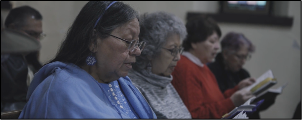
    Oneida praying

    Episode 6: Pray

    He was praying in a certain place, and after he had finished, one of his disciples said to him, ‘Lord, teach us to pray, as John taught his disciples.’

    Luke 11:1

    Jesus teaches us to come before God with humble hearts, boldly offering our thanksgivings and concerns to God, or simply listening for God’s voice in our lives and in the world. Whether in thought, word, or deed, individually or corporately, when we pray, we invite and dwell in God’s loving presence.

    1. In this episode, host Chris Sikkema visits Holy Apostles, a congregation founded by Episcopalian Oneidas from New York, who settled in Wisconsin on Menominee and Ho-Chunk land in 1822. The first community initially first gathered beneath the trees to worship, a history reflected in Judy Cornelius’ description of prayer as “holy quiet.” Whether during high mass or under trees, prayer allows us to connect with something of God, transcendent beyond ourselves. Where do you experience “holy quiet”? How does God meet you there?

    2. Consider the connection between your own prayer practices and the outward and visible signs that accompany them. For instance, like Jennifer Webster, do you find comfort in the scent of incense or the act of burning tobacco as you send your prayers to the divine? What are some of your unique prayer traditions?

    3. The Oneida hymns are an important part of Holy Apostles’ prayer life—both communally and individually. Are there songs or styles of music that you find helpful for your prayer life?


    Weekly bulletin inserts

    This weekly bulletin insert provides information about the history, music, liturgy, mission, and ministry of The Episcopal Church. For more information, please contact us at stw@episcopalchurch.org.

    Sermons That Work from the Episcopal Church

    Sermons That Work

    For more than 20 years, Sermons That Work, a ministry of The Episcopal Church’s Office of Communication, has provided free sermons, Bible studies, bulletin inserts, and other resources that speak to congregations across the Church. Our writers and readers come from numerous and varied backgrounds. Small house churches, sprawling cathedrals, and everything between use the resources that Sermons That Work provides.

    The Episcopal Church of the Redeemer: Worshiping God, living in community, reaching out to the world.

    Church of the Redeemer

    Church of the Redeemer: Worshiping God, living in community, and reaching out to the world around us. We are an Episcopal Church serving north King County and south Snohomish County, Washington. As you travel your road, go with friends walking the way of Jesus at Redeemer.

    Church of the Redeemer is at 6220 Northeast 181st Street in Kenmore, Washington. The campus is a short distance north of Bothell Way, near the Burke-Gilman Trail. The entrance looks like a gravel driveway. The campus is larger on the inside than it is on the outside. And we managed to hide a large building on the side of a hill that is not easily seen from the street.

    The Episcopal Church welcomes you.
  • The bulletin insert for June 22, 2025

    The bulletin insert for June 22, 2025

    This is the weekly bulletin insert from Sermons That Work.

    Traveling the Way of Love: Learn

    “Traveling the Way of Love” Season 2 offers video stories of the ways people across The Episcopal Church participate in the seven Way of Love practices. Produced by the Office of Communication in partnership with Evangelism colleagues, it includes study guides to help congregations or small groups engage the stories and strengthen one another’s discipleship. Each week, we’ll share information about an episode, along with study questions suitable for congregational, small group, or personal reflection. You can find each episode and its discussion guide at iam.ec/TWOL2.

    Episcopal youth in Europe

    Episode 6: Learn

    Those love me will keep my word, and my Father will love them, and will come to them and make our home with them.

    John 14:23

    By reading and reflecting on Scripture, especially the life and teachings of Jesus, we draw near to God, and God’s word dwells in us. When we open our minds and hearts to Scripture, we learn to see God’s story and God’s activity in everyday life.

    1. In this episode, host Chris Sikkema visits a group of youth in the Convocation of the Episcopal Church in Europe that includes Aija Rios and Bishop Mark Edington. Bishop Edington remarks on the reality that there is no social reward for being a Christian in Europe. Yet, the youth of the Convocation continue to show up for each other, forming community, praying, and studying Scripture together. What does their witness stir in you? How are you inspired or encouraged by their dedication?

    2. While chatting with Chris, Aija shares about a weekly gathering at her home parish called “Wednesdays Within the Walls,” which includes Taizé music, a meal, and reading Scripture together, followed by a conversation about the Scripture. From her story, it is clear that people of all ages and walks of life are a part of this weekly community and that all voices are listened to, and that this opportunity to reflect on Scripture within a large group has impacted her life.  How could you–or your community of faith–be more intentional about hosting time for reading and reflecting on Scripture apart from Sunday mornings and across demographics such as age and stage of life? What might that look like?

    3. In this episode, Chris Sikkema states that it is very hard to be a Christian alone. Perhaps this is because we are not meant to do it alone. From the beginning, the Christian life has been one rooted in community. In our baptismal covenant, we even promise to “continue in the apostles’ teaching, the fellowship, and the breaking of the bread.” This includes how we approach studying and reflecting on Scripture. Take a moment and think back on when your mind and heart have been opened to Scripture in the midst of a Bible study or community reflection. How did you learn to see God’s story and God’s activity in everyday life from that experience?


    Weekly bulletin inserts

    This weekly bulletin insert provides information about the history, music, liturgy, mission, and ministry of The Episcopal Church. For more information, please contact us at stw@episcopalchurch.org.

    Sermons That Work from the Episcopal Church

    Sermons That Work

    For more than 20 years, Sermons That Work, a ministry of The Episcopal Church’s Office of Communication, has provided free sermons, Bible studies, bulletin inserts, and other resources that speak to congregations across the Church. Our writers and readers come from numerous and varied backgrounds. Small house churches, sprawling cathedrals, and everything between use the resources that Sermons That Work provides.

    The Episcopal Church of the Redeemer: Worshiping God, living in community, reaching out to the world.

    Church of the Redeemer

    Church of the Redeemer: Worshiping God, living in community, and reaching out to the world around us. We are an Episcopal Church serving north King County and south Snohomish County, Washington. As you travel your road, go with friends walking the way of Jesus at Redeemer.

    Church of the Redeemer is at 6220 Northeast 181st Street in Kenmore, Washington. The campus is a short distance north of Bothell Way, near the Burke-Gilman Trail. The entrance looks like a gravel driveway. The campus is larger on the inside than it is on the outside. And we managed to hide a large building on the side of a hill that is not easily seen from the street.

    The Episcopal Church welcomes you.
  • The bulletin insert for June 15, 2025

    The bulletin insert for June 15, 2025

    This is the weekly bulletin insert from Sermons That Work.

    Traveling the Way of Love: Rest

    “Traveling the Way of Love” Season 2 offers video stories of the ways people across The Episcopal Church participate in the seven Way of Love practices. Produced by the Office of Communication in partnership with Evangelism colleagues, it includes study guides to help congregations or small groups engage the stories and strengthen one another’s discipleship. Each week, we’ll share information about an episode, along with study questions suitable for congregational, small group, or personal reflection. You can find each episode and its discussion guide at iam.ec/TWOL2.

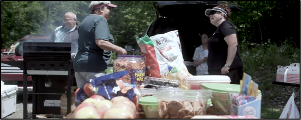
    People at an outdoor picnic and barbeque

    Episode 5: Rest

    Jesus, knowing that the Father had given all things into his hands and that he had come from God and was going to God, got up from supper, took off his outer robe, and tied a towel around himself. Then he poured water into a basin and began to wash the disciples’ feet and to wipe them with the towel that was tied around him. He came to Simon Peter, who said to him, ‘Lord, are you going to wash my feet?’ Jesus answered, ‘You do not know now what I am doing, but later you will understand.’ Peter said to him, ‘You will never wash my feet.’ Jesus answered, ‘Unless I wash you, you have no share with me.’ Simon Peter said to him, ‘Lord, not my feet only but also my hands and my head!’”

    John 13:3-9

    From the beginning of creation, God has established the sacred pattern of going and returning, labor and rest. Especially today, God invites us to dedicate time for restoration and wholeness – within our bodies, minds, and souls, and within our communities and institutions. By resting we place our trust in God, the primary actor who brings all things to their fullness.

    1. In this episode, host Chris Sikkema visits with Bishop Audrey Scanlan as they hike a small portion of the Appalachian Trail. Bishop Scanlan recounts her experience of learning how to humbly receive hospitality along the trail during longer hikes. She shares how when we stop doing and start receiving, we can rest in God’s presence and love differently. Take a moment and consider—is there a place where you need to stop doing to receive instead? What steps do you need to take to lean into that practice of rest?

    2. Host Sikkema comments that when we take time to stop and disconnect from our devices and to-do lists, we are more likely to see where God is present around us. He notes that “stopping is an act of faith.” What do you think of this statement? What does it bring up for you?

    3. The spiritual practice of rest, in its various forms, holds a transformative power. For Bishop Scanlan, it manifests in long solo hikes, where she carries everything she needs for survival on her back, and nothing needs to be accomplished beyond putting one foot in front of the other. In this space, she can release the tyranny of the urgent, allowing her to notice the shape and symmetry of wildflowers and the presence of God all around. What rest practice could you adopt to experience this transformative power? If you don’t have one, can you imagine what one might be?


    Weekly bulletin inserts

    This weekly bulletin insert provides information about the history, music, liturgy, mission, and ministry of The Episcopal Church. For more information, please contact us at stw@episcopalchurch.org.

    Sermons That Work from the Episcopal Church

    Sermons That Work

    For more than 20 years, Sermons That Work, a ministry of The Episcopal Church’s Office of Communication, has provided free sermons, Bible studies, bulletin inserts, and other resources that speak to congregations across the Church. Our writers and readers come from numerous and varied backgrounds. Small house churches, sprawling cathedrals, and everything between use the resources that Sermons That Work provides.

    The Episcopal Church of the Redeemer: Worshiping God, living in community, reaching out to the world.

    Church of the Redeemer

    Church of the Redeemer: Worshiping God, living in community, and reaching out to the world around us. We are an Episcopal Church serving north King County and south Snohomish County, Washington. As you travel your road, go with friends walking the way of Jesus at Redeemer.

    Church of the Redeemer is at 6220 Northeast 181st Street in Kenmore, Washington. The campus is a short distance north of Bothell Way, near the Burke-Gilman Trail. The entrance looks like a gravel driveway. The campus is larger on the inside than it is on the outside. And we managed to hide a large building on the side of a hill that is not easily seen from the street.

    The Episcopal Church welcomes you.

The 13th Sunday after Pentecost, August 23, 2026. Services at 8:00 am (no music) and 10:30 (music).

Episcopal Church of the Redeemer
Privacy Overview

Cookie information is stored in your browser and performs functions such as recognizing you when you return to our website and helping our team to understand which pages of the website are visited. We aren't using cookies to determine your web browsing habits, but others can.