Category: The Episcopal Church

  • Weekly bulletin insert for the 5th Sunday after the Epiphany (Year C)

    Weekly bulletin insert for the 5th Sunday after the Epiphany (Year C)

    This is the weekly bulletin insert from the Episcopal Church, the 5th Sunday after the Epiphany (Year C).

    Global Partnerships Lectio Divina: The Diocese of New York and the Diocese of Central Tanganyika

    The season of Epiphany is when we celebrate the revealing of Christ to the world. We mark the arrival of the One who is the light of the world: a light that brings life, a light that brings hope. This light shines its brightest when we are in community – with God and with one another. The Office of Global Partnerships of The Episcopal Church invites individuals, small groups, congregations, and dioceses to use our weekly video series throughout the season of Epiphany to draw closer to each other and our Lord. Using an adaptation of lectio divina with the gospel passage for each Sunday, you’ll meet and hear from Episcopalians and Anglican partners from around the world as they read and reflect on Jesus’ revelation to us.

    Global Partner lectio divina participants for Epiphany 5

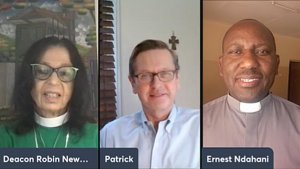
    This week’s lectio divina features Mr. Patrick Kidd, chair of the Diocese of New York’s Global Mission Commission, Canon Ernest Ndahini of the Msalato Theological College, Central Tanganyika Diocese, in the Anglican Church of Tanzania, and Deacon Robin Newman, chair of the Diocese of New of York’s Tanzania Task Force. Watch their discussion at iam.ec/epiphany2022 and follow along by yourself or in a small group. To participate:

    1. Read today’s Gospel passage:

    Once while Jesus was standing beside the lake of Gennesaret, and the crowd was pressing in on him to hear the word of God, he saw two boats there at the shore of the lake; the fishermen had gone out of them and were washing their nets. He got into one of the boats, the one belonging to Simon, and asked him to put out a little way from the shore. Then he sat down and taught the crowds from the boat. When he had finished speaking, he said to Simon, “Put out into the deep water and let down your nets for a catch.” Simon answered, “Master, we have worked all night long but have caught nothing. Yet if you say so, I will let down the nets.” When they had done this, they caught so many fish that their nets were beginning to break. So they signaled their partners in the other boat to come and help them. And they came and filled both boats, so that they began to sink. But when Simon Peter saw it, he fell down at Jesus’ knees, saying, “Go away from me, Lord, for I am a sinful man!” For he and all who were with him were amazed at the catch of fish that they had taken; and so also were James and John, sons of Zebedee, who were partners with Simon. Then Jesus said to Simon, “Do not be afraid; from now on you will be catching people.” When they had brought their boats to shore, they left everything and followed him. (Luke 5:1-11, NRSV)

    2. Reflect: Which word or short phrase caught your attention or came to mind? Whether you’re alone or in a group, say it aloud.

    3. Read: Reread the passage, perhaps in a different translation.

    4. Reflect: Where does the passage touch your life today? If you’re with a group, share your responses with each other, without discussing further. If you’re alone, say your response aloud or write it down.

    5. Read: Reread the passage, perhaps in yet another translation.

    6. Reflect: From what I’ve heard and shared, what do I believe God wants me to do or be? Is God inviting me to change in any way? You might consider journaling out your response and meditating on it over the course of this week.

    7. Pray: In closing, say the Lord’s Prayer, today’s collect, or the Collect for Proper 28 in the Book of Common Prayer (p. 236).

    Our Father in heaven,
    hallowed be your Name,
    your kingdom come,
    your will be done,
    on earth as in heaven.
    Give us today our daily bread.
    Forgive us our sins
    as we forgive those
    who sin against us.
    Save us from the time of trial,
    and deliver us from evil.
    For the kingdom, the power,
    and the glory are yours,
    now and for ever. Amen

    Set us free, O God, from the bondage of our sins, and give us
    the liberty of that abundant life which you have made known
    to us in your Son our Savior Jesus Christ; who lives and reigns
    with you, in the unity of the Holy Spirit, one God, now and
    for ever. Amen.

    Blessed Lord, who caused all holy Scriptures to be written for our learning: Grant us so to hear them, read, mark, learn, and inwardly digest them, that we may embrace and ever hold fast the blessed hope of everlasting life, which you have given us in our Savior Jesus Christ; who lives and reigns with you and the Holy Spirit, one God, for ever and ever. Amen.

    Epiphany 2022: Global Partnerships

    The Office of Global Partnerships of The Episcopal Church invites individuals, small groups, congregations, and dioceses to use this video series throughout the season of Epiphany to draw closer to each other and our Lord. Our weekly videos include a “lectio divina”-style study on the Gospel passage for each Sunday, read by Episcopalians and Anglican Communion partners from around the world. You will hear the passage read at least twice and a short reflection offered by the partners. Then, you will be invited to do your own reflection individually or as a group.

    Church of the Redeemer

    Welcome to Church of the Redeemer: Worshiping God, living in community, and reaching out to the world. We are an Episcopal Church serving north King County and south Snohomish County, Washington. As you travel your road, go with friends walking the way of Jesus at Redeemer.

    Church of the Redeemer is at 6220 Northeast 181st Street in Kenmore, Washington. The campus is a short distance north of Bothell Way, near the Burke-Gilman Trail. The entrance looks like a gravel driveway. The campus is larger on the inside than it is on the outside. And we managed to hide a large building on the side of a hill that is not easily seen from the street. The Episcopal Church welcomes you.

  • Special bulletin insert: The Absalom Jones Fund for Episcopal HBCUs

    Special bulletin insert: The Absalom Jones Fund for Episcopal HBCUs

    This is a special bulletin insert from the Episcopal Church.

    The Absalom Jones Fund for Episcopal HBCUs

    Episcopal Church Presiding Bishop Michael Curry invites people of all backgrounds and faiths to support the hope-filled, life-impacting work of two historically Black institutions of higher education through donations and dedicated offerings on the Feast of Absalom Jones—the first Black priest ordained by the Episcopal Church—observed February 13.

    Saint Augustine’s University in Raleigh, North Carolina, and Voorhees College in Denmark, South Carolina, were founded after the Civil War to create educational opportunities for formerly enslaved people. They provide a liberal arts education to thousands of students, as well as offer robust campus ministries to help form young adults as followers of Jesus and his way of love.

    “Historically Black colleges and universities (HBCUs) are essential engines of justice, equity, and social mobility,” Curry said. “They provide high-quality education to students whose backgrounds and experiences may not have prepared them well for college success. They nurture talent that may have otherwise been discouraged by obstacles.”

    Donations to the HBCUs (divided equally between the two) help support scholarships and financial aid for students in need as well as funding for quality facilities, faculty recruitment and retention, and the development of religious life on campus. Voorhees and Saint Augustine’s are seeking to build strong programs in STEM fields and the health sciences as they overcome the financial pressures created by COVID-19.

    Supporting HBCUs is an investment in the ministry of reconciliation and building a better future for all, Curry said. “As much as we give to these institutions, they give back to our world many times over,” he said.

    To give: Make a donation online at iam.ec/givehbcu, or text GIVEHBCU to 41444. 

    For questions or additional information, email Cecilia Malm, associate director/senior development officer, at cmalm@episcopalchurch.org, or call +1 (212) 716-6062.

    The Rev. Absalom Jones

    What is the Absalom Jones Fund?

    The Absalom Jones Fund for Episcopal HBCUs supports two institutions affiliated with The Episcopal Church since the 1800s: Saint Augustine’s University in Raleigh, North Carolina, and Voorhees College in Denmark, South Carolina.

    In 1804, Absalom Jones became the first African American to be ordained a priest in The Episcopal Church. His witness to the way of Jesus included efforts to abolish slavery and to lift up all those cast down. He understood that education is the key to empowerment. We honor Absalom Jones by supporting our HBCUs, which prepare the talented leaders who will continue the work of building a more just and humane society.

    Read more, including a biography of the Rev. Absalom Jones and material appropriate for children.

    Church of the Redeemer

    Welcome to Church of the Redeemer: Worshiping God, living in community, and reaching out to the world. We are an Episcopal Church serving north King County and south Snohomish County, Washington. As you travel your road, go with friends walking the way of Jesus at Redeemer.

    Church of the Redeemer is at 6220 Northeast 181st Street in Kenmore, Washington. The campus is a short distance north of Bothell Way, near the Burke-Gilman Trail. The entrance looks like a gravel driveway. The campus is larger on the inside than it is on the outside. And we managed to hide a large building on the side of a hill that is not easily seen from the street.

    The Episcopal Church welcomes you.

  • 2022 Lenten Meditations

    2022 Lenten Meditations

    Ash Wednesday is just a few weeks away, falling on March 2, 2022. Episcopal Relief & Development’s 2022 Lenten Meditations will focus on the close to 3 million people whose lives are transformed by our work and the work of our partners each year.

    The 2022 Lenten Meditations are organized into the following areas:

    • Episcopal Relief & Development’s priorities:
    • Those whose lives have been touched by our disaster response and resilience work.

    We invite you to subscribe to our daily Lenten Meditation emails that will begin on Ash Wednesday and continue through Easter Sunday.

    As a part of our goal to become a carbon-neutral organization, the 2022 Lenten Meditations are now delivered only via email and as downloadable PDFs. You can find a digital copy of the 2022 Lenten Meditations in both English and Spanish to download. We also encourage you to sign up to receive daily Lenten Meditations in your inbox by subscription.

    We hope that the 2022 Lenten Meditations will help you to seek and serve Christ in the world’s most vulnerable. May we continue to work together for lasting change.

    Episcopal Relief & Development: Working together for lasting change

    Episcopal Relief & Development

    “Truly I tell you, just as you did it to one of the least of these who are members of my family, you did it to me.” — Matthew 25:40 (NRSV, extracted from our mandate 25:37-40)

    For over 80 years, Episcopal Relief & Development has been working together with supporters and partners for lasting change around the world. Each year the organization facilitates healthier, more fulfilling lives for more than 3 million people struggling with hunger, poverty, disaster and disease. Inspired by Jesus’ words in Matthew 25, Episcopal Relief & Development leverages the expertise and resources of Anglican and other partners to deliver measurable and sustainable change in three signature program areas: Women, Children and Climate.

    We take our mandate from the words of Jesus, found in Matthew 25:37-40, that call us to feed the hungry, care for the sick and welcome the stranger.

    Church of the Redeemer

    Welcome to Church of the Redeemer: Worshiping God, living in community, and reaching out to the world. We are an Episcopal Church serving north King County and south Snohomish County, Washington. As you travel your road, go with friends walking the way of Jesus at Redeemer.

    Church of the Redeemer is at 6220 Northeast 181st Street in Kenmore, Washington. We are a short distance north of Bothell Way, near the Burke-Gilman Trail. The entrance looks like a gravel driveway. The campus is larger on the inside than it is on the outside. And we managed to hide a large building on the side of a hill that is not easily seen from the street.

    The Episcopal Church welcomes you.

  • Weekly bulletin insert for the 4th Sunday after the Epiphany (Year C)

    Weekly bulletin insert for the 4th Sunday after the Epiphany (Year C)

    This is the weekly bulletin insert from the Episcopal Church, the 4th Sunday after the Epiphany (Year C).

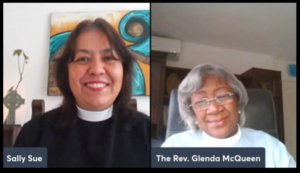
    Global Partnerships Lectio Divina: The Very Rev. Sally Sue Hernández and the Rev. Glenda McQueen

    The season of Epiphany is when we celebrate the revealing of Christ to the world. We mark the arrival of the One who is the light of the world: a light that brings life, a light that brings hope. This light shines its brightest when we are in community – with God and with one another. The Office of Global Partnerships of The Episcopal Church invites individuals, small groups, congregations, and dioceses to use our weekly video series throughout the season of Epiphany to draw closer to each other and our Lord. Using an adaptation of lectio divina with the gospel passage for each Sunday, you’ll meet and hear from Episcopalians and Anglican partners from around the world as they read and reflect on Jesus’ revelation to us.

    Global Partner lectio divina participants for Epiphany 4

    This week’s lectio divina features the Rev. Glenda McQueen, Episcopal Church Partnership Officer for Latin America and the Caribbean, and the Very Rev. Sally Sue Hernández, Dean of the Catedral Anglicana de San José de Gracia, in the Anglican Church of Mexico. Watch their discussion at iam.ec/epiphany2022 and follow along by yourself or in a small group. To participate:

    1. Read today’s Gospel passage:

    Jesus began to speak in the synagogue at Nazareth: “Today this scripture has been fulfilled in your hearing.” All spoke well of him and were amazed at the gracious words that came from his mouth. They said, “Is not this Joseph’s son?” He said to them, “Doubtless you will quote to me this proverb, ‘Doctor, cure yourself!’ And you will say, ‘Do here also in your hometown the things that we have heard you did at Capernaum.’” And he said, “Truly I tell you, no prophet is accepted in the prophet’s hometown. But the truth is, there were many widows in Israel in the time of Elijah, when the heaven was shut up three years and six months, and there was a severe famine over all the land; yet Elijah was sent to none of them except to a widow at Zarephath in Sidon. There were also many lepers in Israel in the time of the prophet Elisha, and none of them was cleansed except Naaman the Syrian.” When they heard this, all in the synagogue were filled with rage. They got up, drove him out of the town, and led him to the brow of the hill on which their town was built, so that they might hurl him off the cliff. But he passed through the midst of them and went on his way. (Luke 4:21-30, NRSV)

    2. Reflect: Which word or short phrase caught your attention or came to mind? Whether you’re alone or in a group, say it aloud.

    3. Read: Reread the passage, perhaps in a different translation. In this week’s video, you’ll hear the text in Portuguese.

    4. Reflect: Where does the passage touch your life today? If you’re with a group, share your responses with each other, without discussing further. If you’re alone, say your response aloud or write it down.

    5. Read: Reread the passage, perhaps in yet another translation.

    6. Reflect: From what I’ve heard and shared, what do I believe God wants me to do or be? Is God inviting me to change in any way? You might consider journaling out your response and meditating on it over the course of this week.

    7. Pray: In closing, say the Lord’s Prayer, today’s collect, or the Collect for Proper 28 in the Book of Common Prayer (p. 236).

    Our Father in heaven,
    hallowed be your Name,
    your kingdom come,
    your will be done,
    on earth as in heaven.
    Give us today our daily bread.
    Forgive us our sins
    as we forgive those
    who sin against us.
    Save us from the time of trial,
    and deliver us from evil.
    For the kingdom, the power,
    and the glory are yours,
    now and for ever. Amen

    Almighty and everlasting God, you govern all things both in
    heaven and on earth: Mercifully hear the supplications of
    your people, and in our time grant us your peace; through
    Jesus Christ our Lord, who lives and reigns with you and the
    Holy Spirit, one God, for ever and ever. Amen.

    Blessed Lord, who caused all holy Scriptures to be written for our learning: Grant us so to hear them, read, mark, learn, and inwardly digest them, that we may embrace and ever hold fast the blessed hope of everlasting life, which you have given us in our Savior Jesus Christ; who lives and reigns with you and the Holy Spirit, one God, for ever and ever. Amen.

    Epiphany 2022: Global Partnerships

    The Office of Global Partnerships of The Episcopal Church invites individuals, small groups, congregations, and dioceses to use this video series throughout the season of Epiphany to draw closer to each other and our Lord. Our weekly videos include a “lectio divina”-style study on the Gospel passage for each Sunday, read by Episcopalians and Anglican Communion partners from around the world. You will hear the passage read at least twice and a short reflection offered by the partners. Then, you will be invited to do your own reflection individually or as a group.

    Church of the Redeemer

    Welcome to Church of the Redeemer: Worshiping God, living in community, and reaching out to the world. We are an Episcopal Church serving north King County and south Snohomish County, Washington. As you travel your road, go with friends walking the way of Jesus at Redeemer.

    Church of the Redeemer is at 6220 Northeast 181st Street in Kenmore, Washington. The campus is a short distance north of Bothell Way, near the Burke-Gilman Trail. The entrance looks like a gravel driveway. The campus is larger on the inside than it is on the outside. And we managed to hide a large building on the side of a hill that is not easily seen from the street. The Episcopal Church welcomes you.

  • Executive Council opening remarks, January 2022

    Executive Council opening remarks, January 2022

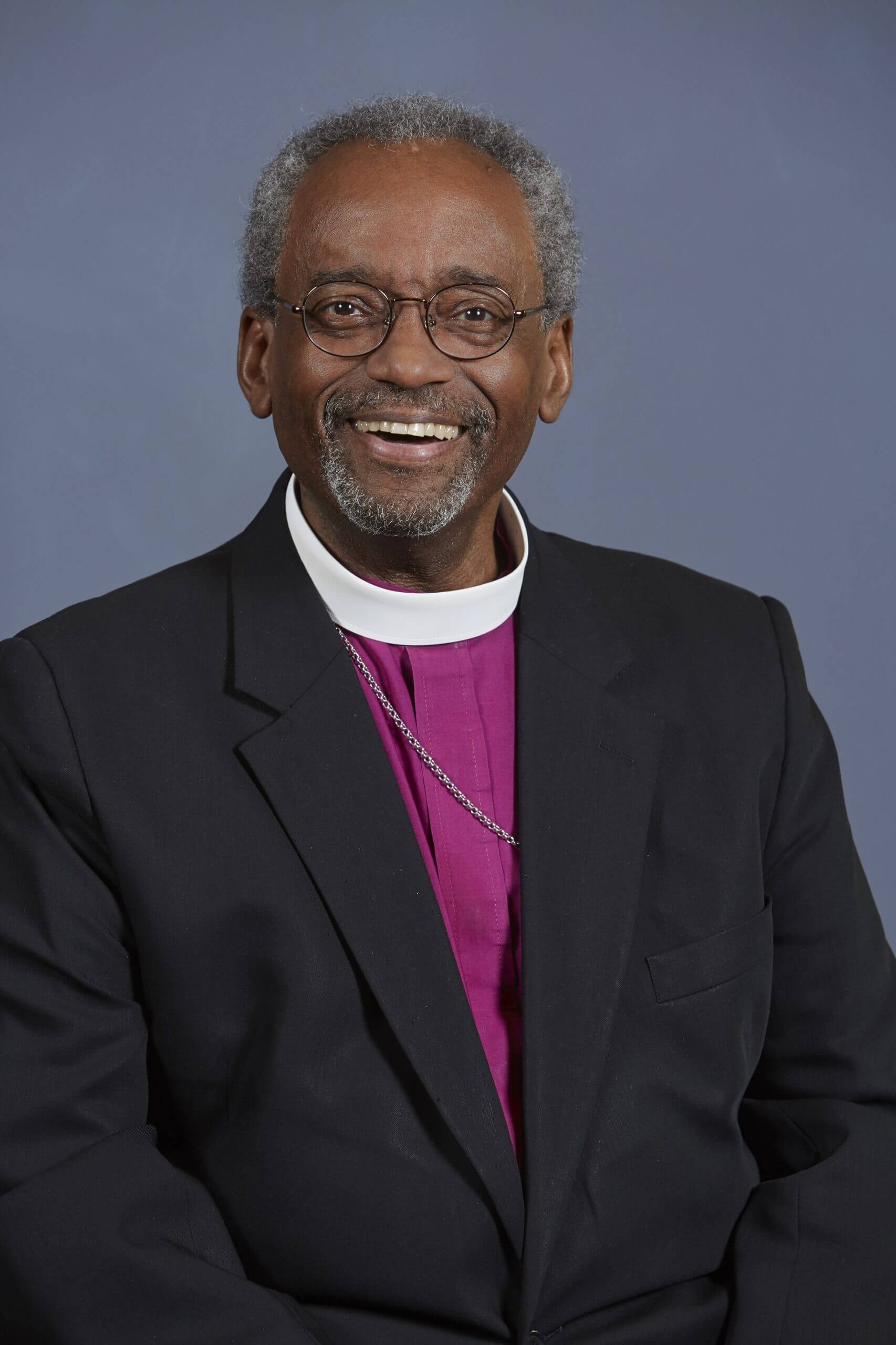
    Presiding Bishop Michael Curry portrait

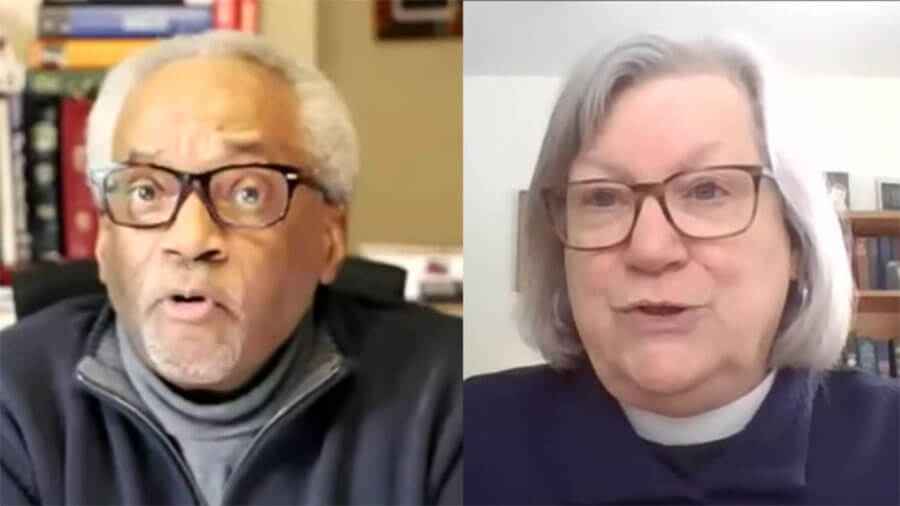
    Opening remarks by the Presiding Bishop to the Executive Council

    The following is a transcript of the opening remarks of Presiding Bishop Michael Curry at the Executive Council of The Episcopal Church, meeting virtually through Jan. 27. These remarks have been lightly edited for clarity. The text is from the Public Affairs Office of the Episcopal Church.

    Desire to meet together

    It is good to be together, I wish we were in Cleveland right now, I wish we were all together, but we will be together very soon.

    Part I: Weeping at the reading, interpreting, application of God’s Word

    Recently I was talking to a good friend who suggested that I needed to take a look at the reading from Nehemiah appointed for last Sunday (Nehemiah 8:1-10).

    In the text, Ezra the priest reads the law of God to the people. And the text says that when he reads it and interprets it and applies it to their lives, the people wept when they heard it. Why did they weep? My friend was right. That’s simply extraordinary! God’s word was read, interpreted, and applied to their lives, and the people wept! Why in God’s name did they weep?

    They had been through a long period of dislocation, disorientation, and disequilibrium. Worse than a pandemic, but related. Their world had actually fallen apart when the Babylonian armies razed the Judea countryside, breached the walls of Jerusalem, desecrated the Temple King Solomon had built, and virtually destroyed Jerusalem.

    Many of the people were then carted off to Babylon, to virtual servitude, a long, long way from home. As the exile went on, they forgot what home was like. The temple of Jerusalem became a distant memory.

    In time many probably forgot the faith that gave them birth. Holy days sometimes went unobserved. Teachings unlearned. Traditions left unkept. They did what they could to survive on what they had. The deep spiritual and emotional pain of this is captured in one of the psalms that they have left us, Psalm 137, which says:

    By the waters of Babylon—
    we sat down and wept
    and we remembered thee, O Zion,
    when we remembered home.
    On the willows
    we hung up our harps.
    For it was there that our captors
    required of us a song,
    tormenting us with the words,
    ‘Sing us one of the songs of Zion!’
    But how, how shall we sing the LORD’s song
    in a strange land?” (paraphrased)

    And soon the very song was forgotten.

    And then on that day years later in Jerusalem, Ezra read the Torah, God’s law for life; he interpreted it and applied it to them. And they remembered!

    • They remembered their high calling.
    • They remembered life that is more than mere survival.
    • They remembered who they were and whose they were.

    The congruence of their lives with their calling, their highest and noblest aspirations, ideals gave them something exile had taken away—a deep sense of a divine purpose for living.

    In God‘s law they discovered who they were. And when you know that you can face anything, you can endure anything, you can bear any burden, with a sense of direction no matter how hard life can be.

    Another way to say it is they found their soul, their core, the essence, their heart. And when that happens the word of Ezra in the rest of the text becomes true –

    “Go your way,” he said to them, “eat the fat and drink sweet wine and send portions of them to those for whom nothing is prepared, for this day is holy to our LORD; and do not be grieved, for the joy of the LORD is your strength.”

    Part II: Restoration of Christianity

    In 2005 Huston Smith, who was himself a Christian, grown up the son of Methodist missionaries in Asia but who was a scholar of world religions, wrote one of his last books. In it he spoke of the renewal of genuine Christianity in our time in a process similar to that described when Ezra read the law. Part of what he said in that book was that Christianity would be revived, renewed, and restored as it rediscovers and reclaims its soul, its origin, its essence, found in the teachings, and the life and the spirit of Jesus of Nazareth.  He called his book The Soul of Christianity: Restoring the Great Tradition.

    The wisdom here is one of the reasons I believe passionately that we in our time must reclaim the teachings, and the example, and the spirit of Jesus of Nazareth and his way of love as our way of life.

    Some years later, after Huston Smith had published his book, historian Jon Meacham followed a similar trajectory to Huston Smith and to Ezra—now for American democracy and society, to reclaim the high calling and noble ideals, in a book titled, interestingly enough, The Soul of America: The Battle for Our Better Angels.

    To find our way as a nation that is more than a collection of individual self-interest, it will be necessary for us to claim the high calling of the ideals and principles at the core, the soul of the American experiment in representational democracy.

    Part III: Imago Deo

    Those ideals are found in such texts as the Declaration of Independence, Lincoln’s Gettysburg Address, King’s “Letter from a Birmingham Jail.” They are found, though imperfect it may be, in the Constitution of the United States, the Bill of Rights and subsequent amendments. But listen again to the words of the Preamble:

    We the People of the United States, in Order to form a more perfect Union, establish Justice, insure domestic Tranquility, provide for the common defense, promote the general Welfare, and secure the Blessings of Liberty to ourselves and our Posterity, do ordain and establish this Constitution for the United States of America.

    The ideal of democracy, while not perfectly lived out to be sure, offers the best hope yet devised for government that fosters human freedom, equal justice under law, the dignity and equality of every human being made as the Bible says in the image and likeness of God.

    A cornerstone of that democratic ideal is and remains the right to vote. The right to vote is a fundamental human right grounded in the dignity and equality of human beings. I am thankful that this Executive Council previously has gone on record supporting, or advocating for the John R. Lewis Voting Rights Advancement Act, the Freedom to Vote Act, and/or other similar legislation that enhances and furthers the provisions and intention of the Voting Rights Acts of 1965.

    But as you know from the news, this is not going to happen overnight, and it’s not going to happen easily. But we and other people of good will must work, we must persist, and we must labor on against the odds until the right to vote is fully protected and unencumbered by partisan self interest.

    Like the story of the persistent widow that Jesus told, who would not let the judge get away with ignoring her, we must persist until justice rolls down like a mighty stream and righteousness like an ever-flowing brook.

    But we must do something else. We must both advocate for these legislative remedies and also roll up our sleeves to do the hard and laborious work of nonpartisan—and please hear me when I say this; don’t anybody send me emails saying this is partisan since this is not a partisan rant—we must do the hard and laborious work of nonpartisan voter education, registration, and facilitation. And it’s hard work. And you wonder why is he saying this now? It’s January—the midterms aren’t till November. We can’t wait until November to start that work! We must start now.

    The Office of Government Relations has begun an effort to do just that. It’s called Episcopal ActivatorsThis is a practical effort to help people to vote in spite of encumbrances that may currently stand in the way for many in many of our states. We must help folks be able to cast an unencumbered ballot. We must do so in a nonpartisan way, but we must do it.

    The right to vote is not merely a secular ideal. It is a fundamental human right grounded in the innate dignity and equality of every human being created, as the Bible says, in the image and likeness of God.

    For this reason the passage of the foundational Voting Rights Bill of 1965 only occurred after long, protracted nonviolent struggle and protest.

    It is salutary to remember that countless people were beaten and hospitalized on the successive marches in Selma. It is important to remember that on that March “Bloody Sunday,” 17 marchers were hospitalized by beatings from law enforcement. Several dozen were treated in hospitals and released.

    And maybe it is most important to remember that in the Selma struggle for voting rights, four nonviolent protesters and children of God involved in voter registration were killed:

    • Jimmie Lee Jackson, a local Baptist deacon
    • The Rev. James Reeb, a Unitarian minister
    • Viola Liuzzo, a housewife who volunteered from Detroit
    • Jonathan Myrick Daniels, an Episcopal seminarian

    They gave their lives for the right to vote. But they were martyrs who gave their lives for the cause of our God-given human right and dignity. “We hold these truths to be self-evident, that all men are created equal. That they are endowed—not by a parliament, not by a government—endowed by their Creator with certain unalienable rights.” That is not simply a secular ideal, that is an ideal born of the God who made all human beings equally imago dei, in the image of God. And we who are followers of Jesus Christ, we who are citizens of this country, we who are people of good will and human decency of any stripe or type, must not, cannot, and we will not allow their sacrifice to be in vain.

    Amen.

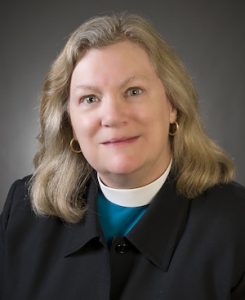
    The Rev. Gay Clark Jennings

    Opening remarks by the President of the House of Deputies to the Executive Council

    The following are the opening remarks of President of the House of Deputies Gay Clark Jennings at the Executive Council of The Episcopal Church, meeting virtually through January 27, 2022. The text is from the Public Affairs Office of the Episcopal Church.

    Welcome to the Executive Council meeting

    Welcome to this virtual meeting of Executive Council, which was originally supposed to be an in-person meeting in Cleveland, near where I live. I was looking forward to having you all here, but now I confess to some relief that you are all home and, I hope, safe on Zoom.

    In addition to the omicron surge, which is still contributing to a shortage of healthcare capacity here in the Cleveland area, we are in the midst of the snowiest January in several years, with some parts of town having received more than 25 inches so far. Plus, the temperature tomorrow isn’t going to get out of the teens. While I know that those of you from Erie and Buffalo and Minneapolis scoff at those numbers, those of us who live here are very glad that we didn’t spend Sunday afternoon at the airport trying to retrieve you from your delayed flights. We have lovely weather here in Cleveland for a couple of weeks in June and a couple of weeks in October, and we warmly invite you to visit us then.

    Brant Lee to speak to the Executive Council

    Even though you weren’t able to travel to Northeast Ohio in person for this meeting, I am proud to say that we’re still bringing some of the best of our region to you via Zoom. Tomorrow afternoon we will hear from Professor Brant Lee, assistant dean of diversity and social justice initiatives at the University of Akron Law School, faithful lifelong Episcopalian, Wordle master, a member of the Task Force on Theology of Social Justice Advocacy that served during this never-ending triennium, and a member of the Presiding Officers’ Advisory Group on Beloved Community Implementation.

    Brant’s scholarly focus is on race and complex systems, and before joining the law school faculty, he served as counsel to the U.S. Senate Judiciary Committee and in the White House as acting deputy staff secretary and special assistant to the president. Brant holds a bachelor’s degree in philosophy from the University of California, Berkeley, a law degree from Harvard University, and a master’s degree in public policy from Harvard, and is much in demand as a teacher, speaker, and anti-racism trainer.

    If it sounds like I’m bragging about him, I am. We are a fiercely proud people here in Northeast Ohio—it is what we do to pass the time while it is snowing—and I am delighted that Brant will be with us tomorrow to talk with us about dismantling racism.

    Work to dismantle racism

    At our October meeting, the focus of our work to dismantle racism involved hearing from the Indigenous Boarding Schools Ad Hoc Committee, which is working to investigate and address our church’s complicity with the schools that decimated so many Native American families and communities.

    Earlier this month, the presiding bishop and I both had the amazing opportunity to continue our listening by attending Winter Talk, a yearly gathering that highlights the ministry of Indigenous people in our church. During Winter Talk, we heard heartbreaking stories from leaders who have helped bring home the remains of children who died at boarding schools in the late 19th and early 20th centuries. These stories, which you will never forget once you hear them, underscore the need for us to face the truth of our church’s historic complicity in the boarding school system.

    Winter Talk was held online this year due to COVID-19, and as a result, you can visit the Episcopal Church’s YouTube channel to watch recordings of this powerful event. I commend that to you. I am grateful to Brad Hauff, missioner for Indigenous Ministries, and all of the leaders who made Winter Talk possible despite pandemic restrictions, and I am grateful to the Joint Standing Committee on Mission Within the Episcopal Church for its ongoing work to deliver to our April meeting a comprehensive proposal for how we can address the legacy of Indigenous schools at General Convention and beyond.

    LGBTQI+ issues

    Several times during this triennium, which we should perhaps now be calling an Olympiad, we have also reckoned with the church’s historic and ongoing complicity with homophobia, transphobia, and other discrimination and abuse against our LGBTQI+ siblings. With thanks to Julia Ayala Harris and the Mission Within Committee, we will have a chance at this meeting to listen deeply to several LGBTQI+ leaders and allies in our church who can help us better understand the ways in which we can continue the journey toward full inclusion, mindful that distorted forms of Christianity are, even today, too often toxic, and even lethal, to LGBTQI+ people.

    I look forward to welcoming Deputy Cameron Partridge, Rowan Larson, Gwen Fry, Lauren Kay, Kit Wang, Shaneequa Brokenleg, Deputy Sarah Lawton, and Iain Stanford to our meeting this afternoon to help educate us about gender identity and talk with us about the experiences of transgender and non-binary children of God.

    Upcoming General Convention

    As we peer at one another through our Zoom screens, surely you are wondering about our plans for General Convention, which is scheduled for just under six months from now. While the presiding bishop and I have every hope that it will be possible to hold General Convention in Baltimore from July 7-14, we have recently formed a scenario planning group made up of leaders in both the House of Bishops and House of Deputies and key staff people.

    This group, which Canon Michael Barlowe has agreed to convene, will keep a close watch on public health data and guidance and provide the presiding bishop and me with various options for holding the 80th General Convention in a way that safeguards all of us who will participate and all those who will host us in airports, hotels, restaurants, and convention facilities.

    We will provide you and the members of both houses of General Convention with updates once we have had the opportunity to consider the scenarios presented to us and consult with the Joint Standing Committee on Planning and Arrangements.

    Work in uncertain times

    Friends, these are hard and uncertain times. During this meeting, I pray that we can be generous and patient with one another, remembering that our call is not to make the church the most comfortable place it can be for ourselves, but to bring The Episcopal Church ever closer to the Beloved Community we are called to be. As the gospel reading for last Sunday reminded us, our job is “to bring good news to the poor… to proclaim release to the captives and recovery of sight to the blind, to let the oppressed go free, to proclaim the year of the Lord’s favor.” Let us follow Jesus in that holy work this week and always.

    Episcopal Church Shield

    Executive Council of the Episcopal Church

    The Executive Council of the General Convention, an elected body representing the whole church, carries out the programs and policies adopted by General Convention. Its job is to oversee the ministry and mission of The Episcopal Church. This includes oversight responsibility for the work done by the Domestic and Foreign Missionary Society as well as the disposition of funds and other property in accordance with the canons of The Episcopal Church and the resolutions, orders, and budgets adopted or approved by the General Convention. Also included is oversight responsibility for the work of the Office of General Convention.

    The Executive Council is composed of 20 members elected by General Convention (four bishops, four priests or deacons, and 12 laypersons) and 18 members elected by province (one clergy, one lay person per province).

    The presiding bishop and the president of the House of Deputies are the chair and vice chair. The other officers of the Executive Council are ex-officio with seat and voice but no vote.

    View the roster of members.

    Church of the Redeemer

    Welcome to Church of the Redeemer: Worshiping God, living in community, and reaching out to the world. We are an Episcopal Church serving north King County and south Snohomish County, Washington. As you travel your road, go with friends walking the way of Jesus at Redeemer.

    Church of the Redeemer is at 6220 Northeast 181st Street in Kenmore, Washington. We are a short distance north of Bothell Way, near the Burke-Gilman Trail. The entrance looks like a gravel driveway. The campus is larger on the inside than it is on the outside. And we managed to hide a large building on the side of a hill that is not easily seen from the street.

    The Episcopal Church welcomes you.

  • Weekly bulletin insert for the 3rd Sunday after the Epiphany (Year C)

    Weekly bulletin insert for the 3rd Sunday after the Epiphany (Year C)

    This is the weekly bulletin insert from the Episcopal Church, the 3rd Sunday after the Epiphany (Year C).

    Global Partnerships Lectio Divina: The Ven. Paul Feheley and the Rev. Zhu Peijin

    The season of Epiphany is when we celebrate the revealing of Christ to the world. We mark the arrival of the One who is the light of the world: a light that brings life, a light that brings hope. This light shines its brightest when we are in community – with God and with one another. The Office of Global Partnerships of The Episcopal Church invites individuals, small groups, congregations, and dioceses to use our weekly video series throughout the season of Epiphany to draw closer to each other and our Lord. Using an adaptation of lectio divina with the gospel passage for each Sunday, you’ll meet and hear from Episcopalians and Anglican partners from around the world as they read and reflect on Jesus’ revelation to us.

    Global Partner lectio divina participants for Epiphany 3

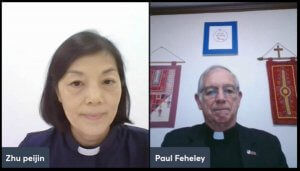
    This week’s lectio divina features the Ven. Paul Feheley, Episcopal Church Partnership Officer for the Middle East, and the Rev. Zhu Peijin, Assistant Priest in the Parish and Chaplaincy of St. Paul, Kuwait, in the Anglican Diocese of Cyprus and the Gulf. Watch their discussion at iam.ec/epiphany2022 and follow along by yourself or in a small group. To participate:

    1. Read today’s Gospel passage:

    Jesus, filled with the power of the Spirit, returned to Galilee, and a report about him spread through all the surrounding country. He began to teach in their synagogues and was praised by everyone. When he came to Nazareth, where he had been brought up, he went to the synagogue on the sabbath day, as was his custom. He stood up to read, and the scroll of the prophet Isaiah was given to him. He unrolled the scroll and found the place where it was written:

    “The Spirit of the Lord is upon me, because he has anointed me to bring good news to the poor. He has sent me to proclaim release to the captives and recovery of sight to the blind, to let the oppressed go free, to proclaim the year of the Lord’s favor.”

    And he rolled up the scroll, gave it back to the attendant, and sat down. The eyes of all in the synagogue were fixed on him. Then he began to say to them, “Today this scripture has been fulfilled in your hearing.” (Luke 4:14-21, NRSV)

    2. Reflect: Which word or short phrase caught your attention or came to mind? Whether you’re alone or in a group, say it aloud.

    3. Read: Reread the passage, perhaps in a different translation.

    4. Reflect: Where does the passage touch your life today? If you’re with a group, share your responses with each other, without discussing further. If you’re alone, say your response aloud or write it down.

    5. Read: Reread the passage, perhaps in yet another translation.

    6. Reflect: From what I’ve heard and shared, what do I believe God wants me to do or be? Is God inviting me to change in any way? You might consider journaling out your response and meditating on it over the course of this week.

    7. Pray: In closing, say the Lord’s Prayer, today’s collect, or the Collect for Proper 28 in the Book of Common Prayer (p. 236).

    Our Father in heaven,
    hallowed be your Name,
    your kingdom come,
    your will be done,
    on earth as in heaven.
    Give us today our daily bread.
    Forgive us our sins
    as we forgive those
    who sin against us.
    Save us from the time of trial,
    and deliver us from evil.
    For the kingdom, the power,
    and the glory are yours,
    now and for ever. Amen.

    Give us grace, O Lord, to answer readily the call of our
    Savior Jesus Christ and proclaim to all people the Good News
    of his salvation, that we and the whole world may perceive
    the glory of his marvelous works; who lives and reigns with
    you and the Holy Spirit, one God, for ever and ever. Amen.

    Blessed Lord, who caused all holy Scriptures to be written for our learning: Grant us so to hear them, read, mark, learn, and inwardly digest them, that we may embrace and ever hold fast the blessed hope of everlasting life, which you have given us in our Savior Jesus Christ; who lives and reigns with you and the Holy Spirit, one God, for ever and ever. Amen.

    Epiphany 2022: Global Partnerships

    The Office of Global Partnerships of The Episcopal Church invites individuals, small groups, congregations, and dioceses to use this video series throughout the season of Epiphany to draw closer to each other and our Lord. Our weekly videos include a “lectio divina”-style study on the Gospel passage for each Sunday, read by Episcopalians and Anglican Communion partners from around the world. You will hear the passage read at least twice and a short reflection offered by the partners. Then, you will be invited to do your own reflection individually or as a group.

    Church of the Redeemer

    Welcome to Church of the Redeemer: Worshiping God, living in community, and reaching out to the world. We are an Episcopal Church serving north King County and south Snohomish County, Washington. As you travel your road, go with friends walking the way of Jesus at Redeemer.

    Church of the Redeemer is at 6220 Northeast 181st Street in Kenmore, Washington. The campus is a short distance north of Bothell Way, near the Burke-Gilman Trail. The entrance looks like a gravel driveway. The campus is larger on the inside than it is on the outside. And we managed to hide a large building on the side of a hill that is not easily seen from the street. The Episcopal Church welcomes you.
  • Boarding school student remains repatriation discussed at Winter Talk 2022

    Boarding school student remains repatriation discussed at Winter Talk 2022

    [Episcopal News Service] Indigenous children who died at boarding school finally make it home as tribes repatriate remains.

    Repatriation of Oneida boarding school student remains

    Kirby Metoxen had long heard the stories of Pennsylvania’s Carlisle Indian Industrial School from his parents, grandparents and other elders on the Oneida Reservation in Wisconsin, just west of Green Bay. He knew attending boarding schools like Carlisle had devastated earlier generations of Native Americans who were separated from their families, sometimes against their will. The U.S. government-backed education system’s intent was to force them to assimilate into white culture, at the expense of their own cultural identities.

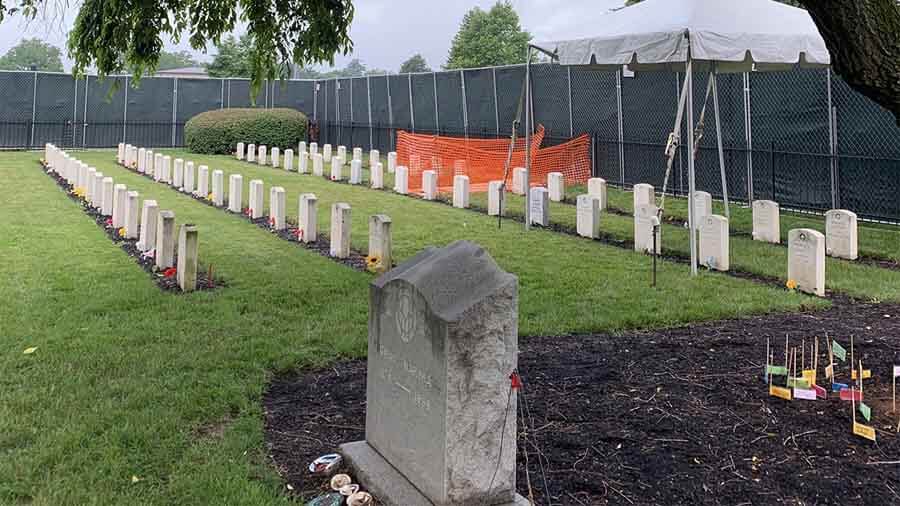
    But it wasn’t until a few years ago, thanks to a detour on a road trip, that Metoxen confronted the tragic depths of that history. In the four decades the school was open, from 1879 to 1918, nearly 200 students died and were buried at Carlisle, far from home.

    Metoxen, an Oneida tribal councilman and member of Church of the Holy Apostles on the reservation, first visited the former site of the government-run boarding school in 2017, while he and a group of friends were driving through Pennsylvania. They walked through the cemetery that still exists on the grounds, an experience Metoxen described Jan. 15 during The Episcopal Church’s annual Winter Talk gathering of Native American church leaders.

    Some of the cemetery’s headstones indicated the deceased were Oneida. “I came across the name Jemima Metoxen, and that’s my last name,” he said in his Winter Talk presentation. “It kind of took me aback a little bit.” The name on another headstone was Sophia Coulon, a common Oneida last name. Further along was the grave of Ophelia Powless. “My grandmother is a Powless,” Metoxen said.

    Overcome with emotion, Metoxen struggled to continue his presentation. “I think it affected me, walking through that cemetery, that this is our own,” he said. “These children didn’t ask to be here. How come nobody came to get these kids? It’s forever changed me.”

    Ophelia Powless died in 1891 of pneumonia, and Jemima Metoxen died in 1904 of meningitis, according to school records. Both were 16. Sophia Coulon, 18, died in 1893 of tuberculosis. In 2019, all three finally were returned home. Their remains were disinterred from Pennsylvania and brought to the Oneida Reservation as part of an ongoing federal repatriation effort.

    funeral service for the three girls was held in June 2019 at Holy Apostles. Powless is now buried at the church’s cemetery, while Oneida tribal burial grounds hold the graves of the other two girls.

    “It was done right for our children, here at Oneida,” Metoxen said.

    Discussions during Winter Talk

    Discussions of the Oneida repatriation and a parallel repatriation effort on the Rosebud Sioux Reservation in South Dakota formed the emotional core of the weekend’s Winter Talk. Holy Apostles Episcopal Church hosted the two-day conference, which had been planned as an in-person meeting but was moved online because of the latest surge in COVID-19 cases.

    The wide-ranging sessions on January 15 and 16, 2022, included Native American music, a church-produced documentary about the colonial-era Doctrine of Discovery and a presentation on Indigenous theological education. The Rev. Bradley Hauff, The Episcopal Church’s missioner for Indigenous ministries, shared highlights from the past year, and Indigenous deputies reviewed some of the issues they hope to raise in July at the church’s 80th General Convention in Baltimore, Maryland.

    Presiding Bishop Michael Curry and the Rev. Gay Clark Jennings, president of the House of Deputies, have pledged to “make right relationships with our Indigenous siblings an important focus” of General Convention’s upcoming work. In their joint statement last year, they acknowledged church’s past complicity in the federal boarding school system. Many schools were run by Christian denominations, and at least nine were thought to have Episcopal Church connections. The dearth of churchwide records has made it difficult to fully account for the church’s role.

    Curry and Jennings joined other attendees at the online Winter Talk conference and thanked the presenters in brief remarks toward the end of the day January 15. “President Jennings and I are here not to speak, but to hear and to learn and to humbly be present with you,” Curry said.

    Boarding schools today

    Some Indigenous boarding schools remain open today, though they no longer operate under former federal policies of forced assimilation. The U.S. Department of Interior announced in June 2021 it was launching a comprehensive review of American boarding school policies dating to 1819, and some lawmakers are pushing for creation of a truth and healing commission to investigate further.

    The former Carlisle school site is now part of the Army War College campus. Kirby Metoxen and other tribal and church leaders worked with the U.S. Army to arrange for the repatriation of the Oneida girls’ remains from the Carlisle cemetery, and other tribes with children buried there have pursued similar efforts, with costs covered by the Army. The Rev. Rodger Patience, vicar at Holy Apostles, traveled to Carlisle in 2019 with Metoxen and some of the girls’ relatives to consult with the forensics experts who oversaw the disinterment and examination of the remains.

    Ophelia Powless headstone, a student who died at a native boarding school
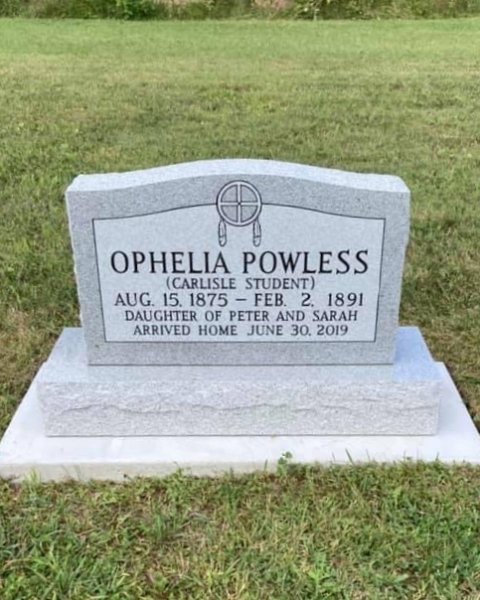
    Ophelia Powless, who died in 1891 at age 16 while in a boarding school in Carlisle, Pennsylvania, is now buried in the cemetery at Church of the Holy Apostles on the Oneida Reservation in Wisconsin. Photo: Rodger Patience

    Though not directly related to the girls, Metoxon said he was overwhelmed by emotion at seeing the bones belonging to the girls. “It was like my own child,” he said. “And the thought they were all by themselves, I couldn’t get over thinking of a young child getting ready to go to the next world, alone, with no family.”

    Patience, the Holy Apostles vicar, said it is likely but not certain that Ophelia and her family were members of the church. In 2021, the congregation unveiled a new headstone for Ophelia’s grave in the church cemetery. It identifies her as the daughter of Peter and Sarah and says she “arrived home June 30, 2019.”

    Jennings said she was deeply moved by Metoxen’s story, adding that it evoked memories of her own grief over the death of her daughter 11 years ago.

    “In the deepest times of grief, early on, I would just say ‘come back!” Jennings recalled. “In my grief, ‘Come back to me!’ And so, I imagine Peter and Sarah Powless [saying], ‘Please come back! Come back, Ophelia!’ And you brought her back – her parents’ deepest desire, to have her back.”

    Repatriation of Rosebud Sioux boarding school student remains

    The Rev. Lauren Stanley, canon to the ordinary in the Diocese of South Dakota, presented information at Winter Talk about the efforts to repatriate students’ remains to the Rosebud Sioux Reservation.

    The Rosebud effort began when teenagers from the tribe’s Sicangu Youth Council visited Carlilse during a 2015 trip to attend a Washington, D.C., summit for Indigenous youth – a trip that the Rosebud Episcopal Mission had donated funds for. When they saw the graves on the grounds of the former school, “they recognized [the names of] a bunch of their relatives – of children who died there,” Stanley told Episcopal News Service in a previous interview.

    “They said, ‘We need to bring these children home.’ They were very upset, very distraught to see these gravesites, including a bunch that are marked ‘unknown,’ which is just a ridiculous travesty.”

    The teens asked the Rosebud Sioux Tribal Council to help bring the remains back to Lakota land. In May 2016, the tribe hosted a meeting with lawyers from the Army, during which Stanley and others testified in support of repatriation and the Army agreed to fund the exhumation of the remains.

    After years of delays, the Army transferred the remains of nine children to the tribe in a ceremony at Carlisle in July 2021. Tribal members drove the remains over 1,400 miles to the Rosebud reservation in a caravan that grew to about 400 vehicles, with people lining roadsides to salute them.

    Six of the children were buried in the Rosebud Sioux Tribe Veterans Cemetery on July 17. Three received private family burials, including one — Ernest Knocks Off (White Thunder) – who was buried in the Old St. James Episcopal Cemetery. The family, who are Episcopalians, invited Stanley to offer prayers at the burial.

    Jennings said such stories underscore the need for the church to face the truth of its own historic complicity in the boarding school system.

    “I know some of the history, but hearing it in the way that all of you presented it today hits in a deeper level, and to come to grips with our own church’s participation in that will take perseverance and tenacity on our part,” Jennings said. “And I think I can speak for the presiding bishop that both of us are deeply, deeply committed to doing what needs to be done.”

    —David Paulsen and Egan Millard of Episcopal News Service

    David Paulsen is an editor and reporter for Episcopal News Service. He can be reached at dpaulsen@episcopalchurch.org.

    Egan Millard is an assistant editor and reporter for Episcopal News Service. He can be reached at emillard@episcopalchurch.org.

    A copy of the agenda and a video of each day’s sessions of Winter Talk 2022 are on the Episcopal Church website.

    Indigenous Ministries

    Indigenous Ministries

    The Office of Indigenous Ministries celebrates the longstanding presence and influence of Native Americans throughout the history of The Episcopal Church in the U.S., from its earliest days in the New World.

    Exercising a deep spirituality grounded in respect for and care of creation and others, Indigenous Episcopalians enrich the church through myriad roles in lay and ordained ministry, modeling wisdom, resilience, and forbearance.

    Indigenous Ministries works for the full inclusion of Indigenous people in the life and leadership of the church.

    Read more about Indigenous Ministries.

    Church of the Redeemer

    Welcome to Church of the Redeemer: Worshiping God, living in community, and reaching out to the world. We are an Episcopal Church serving north King County and south Snohomish County, Washington. As you travel your road, go with friends walking the way of Jesus at Redeemer.

    Church of the Redeemer is at 6220 Northeast 181st Street in Kenmore, Washington. We are a short distance north of Bothell Way, near the Burke-Gilman Trail. The entrance looks like a gravel driveway. The campus is larger on the inside than it is on the outside. And we managed to hide a large building on the side of a hill that is not easily seen from the street.

    The Episcopal Church welcomes you.
  • Weekly bulletin insert for the 2nd Sunday after the Epiphany (Year C)

    Weekly bulletin insert for the 2nd Sunday after the Epiphany (Year C)

    This is the weekly bulletin insert from the Episcopal Church, the 2nd Sunday after the Epiphany (Year C).

    Global Partnerships Lectio Divina: Fr. Daniel Karanja, Bishop Rose Okeno, and Bishop Vicentia Kgabe

    The season of Epiphany is when we celebrate the revealing of Christ to the world. We mark the arrival of the One who is the light of the world: a light that brings life, a light that brings hope. This light shines its brightest when we are in community – with God and with one another. The Office of Global Partnerships of The Episcopal Church invites individuals, small groups, congregations, and dioceses to use our weekly video series throughout the season of Epiphany to draw closer to each other and our Lord. Using an adaptation of lectio divina with the gospel passage for each Sunday, you’ll meet and hear from Episcopalians and Anglican partners from around the world as they read and reflect on Jesus’ revelation to us.

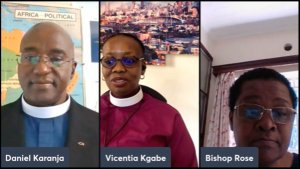
    Global Partner lectio divina participants for Epiphany 2

    This week’s lectio divina features the Rev. Daniel Karanja, Episcopal Church Partnership Officer for Africa, the Rt. Rev. Rose Okeno, Bishop of Butere in the Anglican Church of Kenya, and the Rt. Rev. Vicentia Kgabe, Bishop of Lesotho in the Anglican Church of Southern Africa. Watch their discussion at iam.ec/epiphany2022 and follow along by yourself or in a small group. To participate:

    1. Read today’s Gospel passage:

    On the third day there was a wedding in Cana of Galilee, and the mother of Jesus was there. Jesus and his disciples had also been invited to the wedding. When the wine gave out, the mother of Jesus said to him, “They have no wine.” And Jesus said to her, “Woman, what concern is that to you and to me? My hour has not yet come.” His mother said to the servants, “Do whatever he tells you.” Now standing there were six stone water jars for the Jewish rites of purification, each holding twenty or thirty gallons. Jesus said to them, “Fill the jars with water.” And they filled them up to the brim. He said to them, “Now draw some out, and take it to the chief steward.” So they took it. When the steward tasted the water that had become wine, and did not know where it came from (though the servants who had drawn the water knew), the steward called the bridegroom and said to him, “Everyone serves the good wine first, and then the inferior wine after the guests have become drunk. But you have kept the good wine until now.” Jesus did this, the first of his signs, in Cana of Galilee, and revealed his glory; and his disciples believed in him. (John 2:1-11, NRSV)

    2. Reflect: Which word or short phrase caught your attention or came to mind? Whether you’re alone or in a group, say it aloud.

    3. Read: Reread the passage, perhaps in a different translation.

    4. Reflect: Where does the passage touch your life today? If you’re with a group, share your responses with each other, without discussing further. If you’re alone, say your response aloud or write it down.

    5. Read: Reread the passage, perhaps in yet another translation.

    6. Reflect: From what I’ve heard and shared, what do I believe God wants me to do or be? Is God inviting me to change in any way? You might consider journaling out your response and meditating on it over the course of this week.

    7. Pray: In closing, say the Lord’s Prayer, today’s collect, or the Collect for Proper 28 in the Book of Common Prayer (p. 236).

    Our Father in heaven,
    hallowed be your Name,
    your kingdom come,
    your will be done,
    on earth as in heaven.
    Give us today our daily bread.
    Forgive us our sins
    as we forgive those
    who sin against us.
    Save us from the time of trial,
    and deliver us from evil.
    For the kingdom, the power,
    and the glory are yours,
    now and for ever. Amen.

    Almighty God, whose Son our Savior Jesus Christ is the light
    of the world: Grant that your people, illumined by your Word
    and Sacraments, may shine with the radiance of Christ’s
    glory, that he may be known, worshiped, and obeyed to the
    ends of the earth; through Jesus Christ our Lord, who with
    you and the Holy Spirit lives and reigns, one God, now and
    for ever. Amen.

    Blessed Lord, who caused all holy Scriptures to be written for our learning: Grant us so to hear them, read, mark, learn, and inwardly digest them, that we may embrace and ever hold fast the blessed hope of everlasting life, which you have given us in our Savior Jesus Christ; who lives and reigns with you and the Holy Spirit, one God, for ever and ever. Amen.

    Epiphany 2022: Global Partnerships

    The Office of Global Partnerships of The Episcopal Church invites individuals, small groups, congregations, and dioceses to use this video series throughout the season of Epiphany to draw closer to each other and our Lord. Our weekly videos include a “lectio divina”-style study on the Gospel passage for each Sunday, read by Episcopalians and Anglican Communion partners from around the world. You will hear the passage read at least twice and a short reflection offered by the partners. Then, you will be invited to do your own reflection individually or as a group.

    Church of the Redeemer

    Welcome to Church of the Redeemer: Worshiping God, living in community, and reaching out to the world. We are an Episcopal Church serving north King County and south Snohomish County, Washington. As you travel your road, go with friends walking the way of Jesus at Redeemer.

    Church of the Redeemer is at 6220 Northeast 181st Street in Kenmore, Washington. The campus is a short distance north of Bothell Way, near the Burke-Gilman Trail. The entrance looks like a gravel driveway. The campus is larger on the inside than it is on the outside. And we managed to hide a large building on the side of a hill that is not easily seen from the street. The Episcopal Church welcomes you.

  • Presiding bishop to speak at King Center celebration as nation honors Martin Luther King Jr.

    Presiding bishop to speak at King Center celebration as nation honors Martin Luther King Jr.

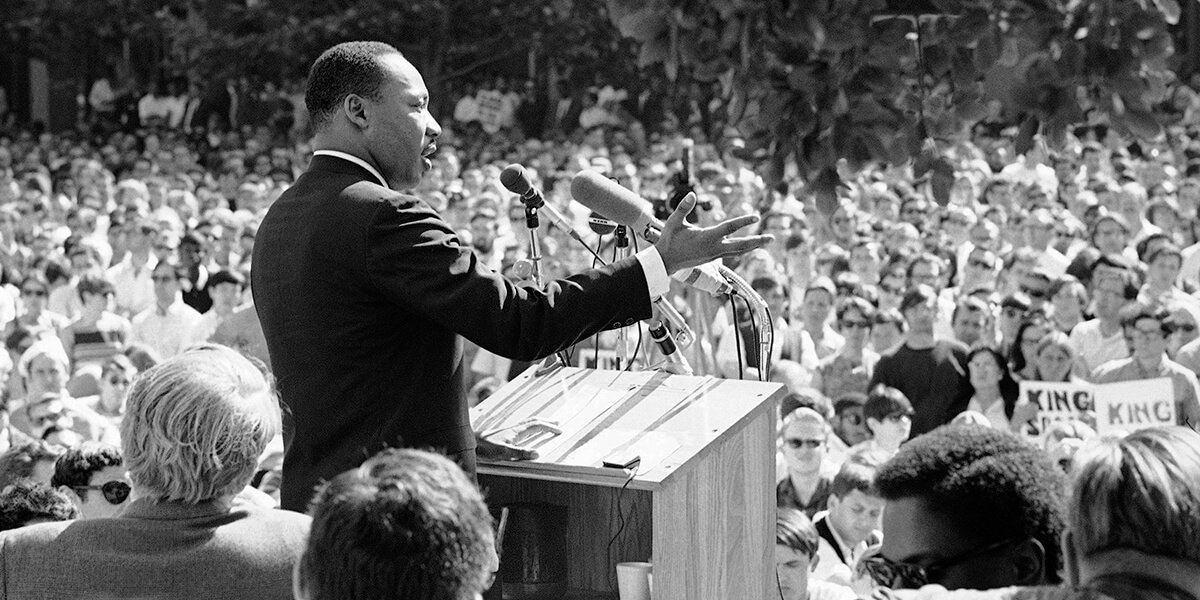
    Presiding Bishop Michael Curry will be the keynote speaker Jan. 17 at the annual Martin Luther King Day observance organized by the King Center in Atlanta, Georgia, as Episcopalians prepare to join citizens around the United States in remembering the civil rights icon on the holiday that bears his name.

    Events at the King Center

    The King Center, founded by King’s family after his 1968 assassination, has scheduled a week’s worth of activities to commemorate King’s birthday and celebrate his legacy. All of the events will be accessible online, as will the Beloved Community Commemorative Service from 10 a.m. to 1 p.m. Eastern Time on January 17. Curry will be among the limited number of participants speaking at that event in person. Others include Georgia Sen. Raphael Warnock and Georgia Gov. Brian Kemp.

    “We often ask ourselves how the life and legacy of people like the Rev. Martin Luther King Jr. remain relevant in our current moment, and it would be difficult to overstate how much we need King’s prophetic witness right now,” Curry said in a written statement to Episcopal News Service. “From his tireless advocacy for the right of all Americans to vote, to his model of faith animating nonviolent work for justice, King calls us to continue his work — and to truly labor for the realization of God’s Beloved Community.”

    King was born 93 years ago on January 15, 1929. As a Baptist preacher in Montgomery, Alabama, and Atlanta, Georgia, he was the leading voice and icon of the civil rights movement in the late 1950s and 1960s, and in the last years of his life, he also spoke against economic injustice and the Vietnam War. He was assassinated on April 4, 1968, during a trip to Memphis, Tennessee, to support city sanitation workers who were striking for better pay and working conditions.

    Other events remembering Martin Luther King around the Episcopal Church

    As in past years, dioceses and congregations across The Episcopal Church are organizing, hosting and participating in a variety of worship services and other public events honoring the civil rights leader.

    King preached his final Sunday sermon four days before his death at Washington National Cathedral. This year, the cathedral will celebrate King’s life at Holy Eucharist at 11:15 a.m. Eastern Jan. 16, with a sermon by Barbara Williams-Skinner, co-founder of the Congressional Black Caucus Foundation Prayer Breakfast. It will be livestreamed on the cathedral’s YouTube channel. In addition, the cathedral will host a service for students of its three Episcopal schools at 9 a.m. on January 18 featuring King’s 13-year-old granddaughter, Yolanda Renee King.

    On January 15, a luncheon honoring King will be sponsored by the Union of Black Episcopalians chapter in Jacksonville, Florida, and hosted by St. John’s Cathedral. Civil rights activist Rodney Hurst Sr. is the featured speaker.

    The Diocese of Los Angeles will hold an online service honoring King at 4 p.m. Pacific Jan. 15. Los Angeles Bishop John Harvey Taylor will be the celebrant, and Missouri Bishop Deon Johnson will preach. It will be livestreamed on Facebook and YouTube.

    In Pittsburgh, Pennsylvania, the Episcopal diocese has partnered with the local synod of the Evangelical Lutheran Church in America to organize an ecumenical tribute to King. It will be held at 4 p.m. Eastern Time on January 16 at Pittsburgh’s Berkley Hills Lutheran Church. The service will include in-person attendance and will be livestreamed.

    The Diocese of Arizona is promoting “Let Justice Roll,” a celebration of King’s life and vision, at St. Matthew’s Episcopal Church in Chandler. The event at 5 p.m. Mountain time January 16 will feature music and readings from King’s “Letter from Birmingham Jail” (PDF).

    Also in Atlanta, All Saints’ Episcopal Church will welcome guest preacher Luther Smith, a retired professor of church and community from Emory University at its worship services on January 16. Afterward, a group will embark on a pilgrimage to the Sweet Auburn neighborhood, which includes King’s birth home.

    To begin the January 17 holiday, St. Cyprian’s Episcopal Church and Union United Methodist Church in Boston, Massachusetts, will host their 52nd annual Martin Luther King Jr. Memorial Breakfast. Annette Gordon-Reed, a historian and Harvard Law School professor, will speak at the 9 a.m. Eastern time event. It will be held online, with registration in advance.

    New York Bishop Andrew Dietsche will preside at an online service at 10 a.m. Eastern time on January 17 as part of a Martin Luther King Day celebration in the Bronx. The Rev. Robert Jemonde Taylor from Raleigh, North Carolina, will preach, and donations will be collected for the MLK Memorial Scholarship Fund.

    The Diocese of Georgia, led by St. Matthew’s Episcopal Church in Savanna, will participate in that city’s Martin Luther King Day Parade on January 17, followed by a short worship service at the church.

    The Maine Council of Churches, of which the Diocese of Maine is a member, is offering an online event at 12:15 p.m. Eastern time January 17 called “Committed to Listen” that will include a reading of King’s National Cathedral sermon, “Remaining Awake Through a Great Revolution.” Those wishing to participate should register on this page.

    The dioceses of Western New York and Northwestern Pennsylvania are organizing a five-hour prayer vigil on the King holiday titled “Embodied Peacemaking,” to be held online from noon to 5 p.m. Eastern time.

    “In 1963, Dr. King specifically addressed the apathy of white Christians and why African Americans could no longer wait for justice,” Gabrie’l Atchison, administration missioner for the two-diocese partnership, said in a news release. “Now, many decades later and one year after the death of George Floyd, what steps do we need to take as leaders of the Christian church to become the Beloved Community that Dr. King called us to be?”

    The King holiday also is celebrated across the country as a day of service, designated by Congress and coordinated by the Corporation for National and Community Service.

    Some churches have service projects planned to coincide with the holiday. St. James’ Episcopal Church in Mount Vernon, Virginia, is organizing a canned food drive. All Saints’ Episcopal Church in Scotch Plains, New Jersey, will provide a meal and activities for seniors. And in Fayetteville, Arkansas, St. Paul’s Episcopal Church invites people to meet in the afternoon to participate in projects that support Black-led organizations in the community.

    —David Paulsen is an editor and reporter for Episcopal News Service. He can be reached at dpaulsen@episcopalchurch.org.

    Church of the Redeemer

    Welcome to Church of the Redeemer: Worshiping God, living in community, and reaching out to the world. We are an Episcopal Church serving north King County and south Snohomish County, Washington. As you travel your road, go with friends walking the way of Jesus at Redeemer.

    Church of the Redeemer is at 6220 Northeast 181st Street in Kenmore, Washington. We are a short distance north of Bothell Way, near the Burke-Gilman Trail. The entrance looks like a gravel driveway. The campus is larger on the inside than it is on the outside. And we managed to hide a large building on the side of a hill that is not easily seen from the street.

    The Episcopal Church welcomes you.
  • Weekly bulletin insert for the 1st Sunday after the Epiphany (Year C)

    Weekly bulletin insert for the 1st Sunday after the Epiphany (Year C)

    This is the weekly bulletin insert from the Episcopal Church, the 1st Sunday after the Epiphany (Year C).

    Global Partnerships Lectio Divina: St. Luke’s, Rio de Janeiro, and Good Shepherd, Covington

    The season of Epiphany is when we celebrate the revealing of Christ to the world. We mark the arrival of the One who is the light of the world: a light that brings life, a light that brings hope. This light shines its brightest when we are in community – with God and with one another. The Office of Global Partnerships of The Episcopal Church invites individuals, small groups, congregations, and dioceses to use our weekly video series throughout the season of Epiphany to draw closer to each other and our Lord. Using an adaptation of lectio divina with the gospel passage for each Sunday, you’ll meet and hear from Episcopalians and Anglican partners from around the world as they read and reflect on Jesus’ revelation to us.

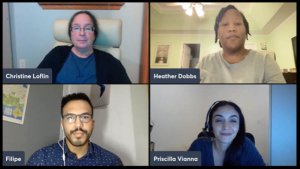
    Global Partner lectio divina participants for Epiphany 1

    This week’s lectio divina features parishioners Heather and Christine from the Episcopal Church of the Good Shepherd in Covington, Georgia, and the congregation’s Anglican Communion partners, Priscilla and Filipe from St. Luke’s Church in Rio de Janeiro, Anglican Episcopal Church of Brazil. Watch their discussion at iam.ec/epiphany2022 and follow along by yourself or in a small group. To participate:

    1. Read today’s Gospel passage:

    As the people were filled with expectation, and all were questioning in their hearts concerning John, whether he might be the Messiah, John answered all of them by saying, “I baptize you with water; but one who is more powerful than I is coming; I am not worthy to untie the thong of his sandals. He will baptize you with the Holy Spirit and fire. His winnowing fork is in his hand, to clear his threshing floor and to gather the wheat into his granary; but the chaff he will burn with unquenchable fire.”

    Now when all the people were baptized, and when Jesus also had been baptized and was praying, the heaven was opened, and the Holy Spirit descended upon him in bodily form like a dove. And a voice came from heaven, “You are my Son, the Beloved; with you I am well pleased.” (Luke 3:15-17, 21-22, NRSV)

    2. Reflect: Which word or short phrase caught your attention or came to mind? Whether you’re alone or in a group, say it aloud.

    3. Read: Reread the passage, perhaps in a different translation. In this week’s video, you’ll hear the text in Portuguese.

    4. Reflect: Where does the passage touch your life today? If you’re with a group, share your responses with each other, without discussing further. If you’re alone, say your response aloud or write it down.

    5. Read: Reread the passage, perhaps in yet another translation.

    6. Reflect: From what I’ve heard and shared, what do I believe God wants me to do or be? Is God inviting me to change in any way? You might consider journaling out your response and meditating on it over the course of this week.

    7. Pray: In closing, say the Lord’s Prayer, today’s collect, or the Collect for Proper 28 in the Book of Common Prayer (p. 236).

    Our Father in heaven,
    hallowed be your Name,
    your kingdom come,
    your will be done,
    on earth as in heaven.
    Give us today our daily bread.
    Forgive us our sins
    as we forgive those
    who sin against us.
    Save us from the time of trial,
    and deliver us from evil.
    For the kingdom, the power,
    and the glory are yours,
    now and for ever. Amen.

    Father in heaven, who at the baptism of Jesus in the River
    Jordan proclaimed him your beloved Son and anointed him
    with the Holy Spirit: Grant that all who are baptized into his
    Name may keep the covenant they have made, and boldly
    confess him as Lord and Savior; who with you and the Holy
    Spirit lives and reigns, one God, in glory everlasting. Amen.

    Blessed Lord, who caused all holy Scriptures to be written for our learning: Grant us so to hear them, read, mark, learn, and inwardly digest them, that we may embrace and ever hold fast the blessed hope of everlasting life, which you have given us in our Savior Jesus Christ; who lives and reigns with you and the Holy Spirit, one God, for ever and ever. Amen.

    Epiphany 2022: Global Partnerships

    The Office of Global Partnerships of The Episcopal Church invites individuals, small groups, congregations, and dioceses to use this video series throughout the season of Epiphany to draw closer to each other and our Lord. Our weekly videos include a “lectio divina”-style study on the Gospel passage for each Sunday, read by Episcopalians and Anglican Communion partners from around the world. You will hear the passage read at least twice and a short reflection offered by the partners. Then, you will be invited to do your own reflection individually or as a group.

    Church of the Redeemer

    Welcome to Church of the Redeemer: Worshiping God, living in community, and reaching out to the world. We are an Episcopal Church serving north King County and south Snohomish County, Washington. As you travel your road, go with friends walking the way of Jesus at Redeemer.

    Church of the Redeemer is at 6220 Northeast 181st Street in Kenmore, Washington. The campus is a short distance north of Bothell Way, near the Burke-Gilman Trail. The entrance looks like a gravel driveway. The campus is larger on the inside than it is on the outside. And we managed to hide a large building on the side of a hill that is not easily seen from the street. The Episcopal Church welcomes you.
The 13th Sunday after Pentecost, August 23, 2026. Services at 8:00 am (no music) and 10:30 (music).

Episcopal Church of the Redeemer
Privacy Overview

Cookie information is stored in your browser and performs functions such as recognizing you when you return to our website and helping our team to understand which pages of the website are visited. We aren't using cookies to determine your web browsing habits, but others can.