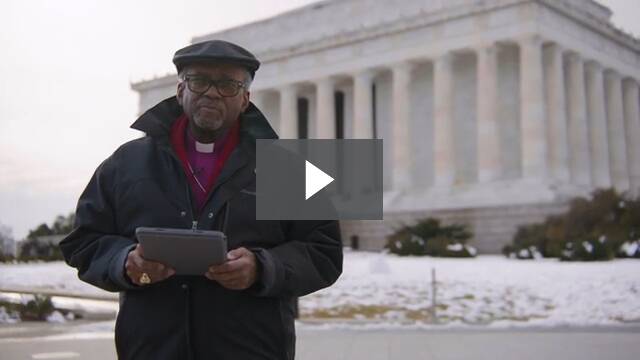
Following a January 6, 2022, noon Epiphany service at Church of the Epiphany in Washington, D.C., Episcopal Church Presiding Bishop Michael Curry shared words of reflection and exhortation to the church and nation in a videotaped message from the Lincoln Memorial.
The nightmare of last January 6th was not just an event—it was a revelation,” he said. “It was a revelation of deeply dangerous divisions in our nation. … That day, and our response to it, contain potential for both peril and promise.
“Being a Christian is not essentially about joining a church or being a nice person, but about following in the footsteps of Jesus, taking his teachings seriously, letting his Spirit take the lead in our lives, and in so doing helping to change the world from our nightmare into God’s dream.” ―Michael Curry, Crazy Christians: A Call to Follow Jesus
The Most Rev. Michael Bruce Curry is Presiding Bishop and Primate of The Episcopal Church. He is the Chief Pastor and serves as President and Chief Executive Officer, and as Chair of the Executive Council of the Episcopal Church.
Presiding Bishop Curry was installed as the 27th Presiding Bishop and Primate of The Episcopal Church on November 1, 2015. He was elected to a nine-year term and confirmed at the 78th General Convention of The Episcopal Church in Salt Lake City, Utah, on June 27, 2015.
Welcome to Church of the Redeemer: Worshiping God, living in community, and reaching out to the world. We are an Episcopal Church serving north King County and south Snohomish County, Washington. As you travel your road, go with friends walking the way of Jesus at Redeemer.
Church of the Redeemer is at 6220 Northeast 181st Street in Kenmore, Washington. We are a short distance north of Bothell Way, near the Burke-Gilman Trail. The entrance looks like a gravel driveway. The campus is larger on the inside than it is on the outside. And we managed to hide a large building on the side of a hill that is not easily seen from the street.
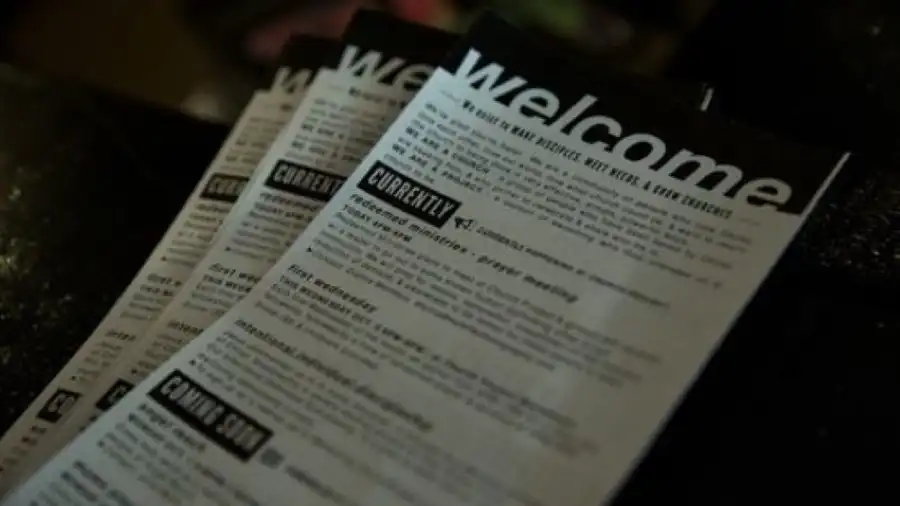
This is the weekly bulletin insert from the Episcopal Church, 2nd Sunday of Christmas (Year C).
Anglican Cycle of Prayer
The below is the weekly calendar produced by the Anglican Communion for 2022. Over the course of each year, we pray for each of the 41 provinces of the Communion. For more information, visit The Anglican Cycle of Prayer: From Aba to Zululand (PDF).
January
2 Province de l’Église anglicane du Congo 9 Iglesia Anglicana de Chile 16 The Church of England 23 Hong Kong Sheng Kung Hui (香港聖公會) 30 The Church of the Province of the Indian Ocean
February
6 The Church of Ireland 13 Nippon Sei Kō Kai (日本聖公会) 20 The Episcopal Church in Jerusalem & The Middle East 27 The Anglican Church of Kenya
March
6 The Anglican Church of Korea (대한성공회) 13 The Anglican Church of Melanesia 20 La Iglesia Anglicana de México 27 The Church of the Province of Myanmar (Burma)
April
3 The Church of Nigeria (Anglican Communion) 10 The Church of North India (United) 17 The Church of Pakistan (United) 24 The Anglican Church of Papua New Guinea
May
1 The Episcopal Church in the Philippines 8 Église anglicane du Rwanda 15 The Scottish Episcopal Church 22 Church of the Province of South East Asia 29 The Church of South India (United)
June
5 The Anglican Church of Southern Africa 12 Iglesia Anglicana de Sudamérica 19 Province of the Episcopal Church of South Sudan 26 Province of the Episcopal Church of Sudan
July
3 The Anglican Church of Tanzania 10 The Church of the Province of Uganda 17 The Episcopal Church 24 The Church in Wales 31 The Church of the Province of West Africa
August
7 The Church in the Province of the West Indies 14 The Extra-Provincial Churches 21 The Episcopal/Anglican Province of Alexandria 28 The Anglican Church in Aotearoa, New Zealand and Polynesia
September
4 The Anglican Church of Australia 11 The Church of Bangladesh 18 Igreja Episcopal Anglicana do Brasil 25 The Anglican Church of Burundi
October
2 The Anglican Church of Canada (l’Église anglicane du Canada) 9 The Church of the Province of Central Africa 16 Iglesia Anglicana de la Región Central de América 23 Province de l’Église anglicane du Congo 30 Iglesia Anglicana de Chile
November
6 The Church of England 13 Hong Kong Sheng Kung Hui (香港聖公會) 20 The Church of the Province of the Indian Ocean 27 Nippon Sei Kō Kai (日本聖公会)
December
4 The Episcopal Church in Jerusalem & The Middle East 11 The Anglican Church of Kenya 18 The Anglican Church of Korea (대한성공회) 25 The Anglican Church of Melanesia
Welcome to Church of the Redeemer: Worshiping God, living in community, and reaching out to the world. We are an Episcopal Church serving north King County and south Snohomish County, Washington. As you travel your road, go with friends walking the way of Jesus at Redeemer.
Church of the Redeemer is at 6220 Northeast 181st Street in Kenmore, Washington. The campus is a short distance north of Bothell Way, near the Burke-Gilman Trail. The entrance looks like a gravel driveway. The campus is larger on the inside than it is on the outside. And we managed to hide a large building on the side of a hill that is not easily seen from the street.
Join The Episcopal Church and Anglican Communion partners for a lectio divina-style study on the Gospel reading for each Sunday in Epiphany. The study spans the eight Sundays this year, starting January 9, and concluding on World Mission Sunday, February 27, with a special recorded sermon in the final session.
The videos are designed to help individuals, small groups, congregations, and dioceses do the following:
Reflect on the Gospel.
Remember and honor The Episcopal Church’s international relationships and partners.
Ponder our global interconnectedness and opportunities to see Christ in one another.
Celebrate the many ways the church participates in God’s mission around the world.
Lectio Divina is a contemplative way of reading the Bible. It dates back to the early centuries of the Christian Church and was established as a monastic practice by Benedict in the 6th century. It is a way of praying the scriptures that leads us deeper into God’s word.
The Epiphany season is a season of four to nine weeks, from the Feast of the Epiphany (January 6) through the Tuesday before Ash Wednesday. The length of the season varies according to the date of Easter.
The gospel stories of this season describe various events that manifest the divinity of Jesus. The coming of the Magi is celebrated on the Epiphany. The Baptism of our Lord is observed on the Sunday after Epiphany. The gospels for the other Sundays of the Epiphany season describe the wedding at Cana, the calling of the disciples, and various miracles and teachings of Jesus. The Last Sunday after the Epiphany is always devoted to the Transfiguration.
Jesus’ identity as the Son of God is dramatically revealed in the Transfiguration gospel, as well as the gospel of the baptism of Christ. We are called to respond to Christ in faith through the showings of his divinity recorded in the gospels of the Epiphany season.
Taken from the Glossary on the Episcopal Church website.
Church of the Redeemer
Welcome to Church of the Redeemer: Worshiping God, living in community, and reaching out to the world. We are an Episcopal Church serving north King County and south Snohomish County, Washington. As you travel your road, go with friends walking the way of Jesus at Redeemer.
Church of the Redeemer is at 6220 Northeast 181st Street in Kenmore, Washington. We are a short distance north of Bothell Way, near the Burke-Gilman Trail. The entrance looks like a gravel driveway. The campus is larger on the inside than it is on the outside. And we managed to hide a large building on the side of a hill that is not easily seen from the street.
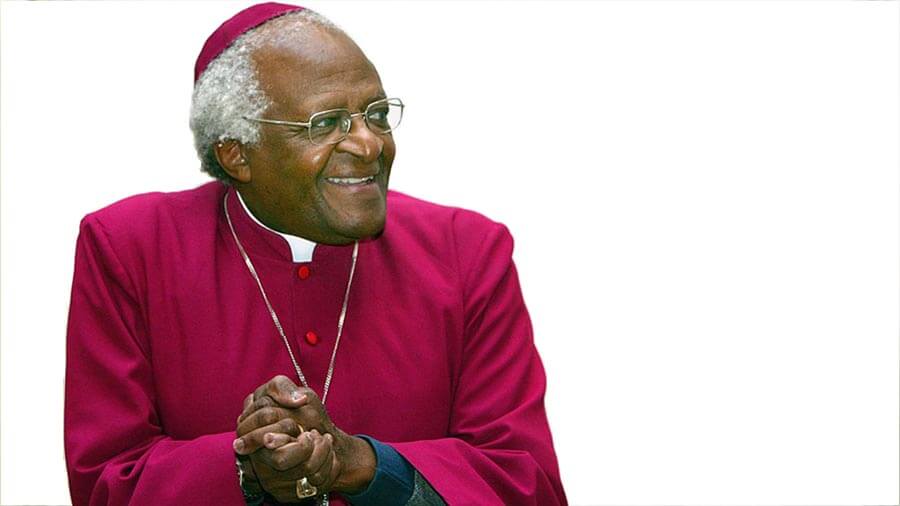
With the passing of Archbishop Desmond Tutu, a true friend, colleague, and mentor—and a genuinely humble, great soul—has gone before us. He has passed through the gate of death into the arms of the God who gave him life.
While on this earth, he sought to follow Jesus of Nazareth in God’s way of love and life. In so doing, he showed us how to live God’s dream as children of the one God and creator of all.
So, even in our sorrow that he is no longer walking among us, we can thank God that he did.
Perhaps we best give thanks by honoring his legacy—not merely with lip service to racial justice and reconciliation, but with lives dedicated to this work. We do this by learning to live together as the children and family of God, no longer hurting each other or God’s creation, but together living the dream God intended. For in God’s dream, as the Hebrew prophet Isaiah said, “they will not hurt or destroy on all my holy mountain; for the earth will be full of the knowledge of the Lord as the waters cover the sea.”
To borrow from a friend who texted me on Archbishop Tutu’s passing, may the knowledge of his life and heart keep us all strong, good, kind, and loving.
May he rest in peace and rise in glory.
The Most Rev. Michael Bruce Curry Presiding Bishop and Primate The Episcopal Church
Archbishop Emeritus Desmond Tutu’s spiritual leadership helped guide South Africa through and beyond apartheid, and thus set an example to the world. His selfless guidance—focused as it was on healing a deeply divided society—sought neither personal power nor political office. It held fast to an ethical keel, remaining idealistic, always forgiving and inspiring. It brought moral insight to a torn society, encouraging constructive dialogue, consolation and the healing of divisions. One of the great moral leaders of our time, Tutu won the Nobel Prize for Peace for his role in the opposition to Apartheid in South Africa.
Welcome to Church of the Redeemer: Worshiping God, living in community, and reaching out to the world. We are an Episcopal Church serving north King County and south Snohomish County, Washington. As you travel your road, go with friends walking the way of Jesus at Redeemer.
Church of the Redeemer is at 6220 Northeast 181st Street in Kenmore, Washington. We are a short distance north of Bothell Way, near the Burke-Gilman Trail. The entrance looks like a gravel driveway. The campus is larger on the inside than it is on the outside. And we managed to hide a large building on the side of a hill that is not easily seen from the street.
This is the weekly bulletin insert from the Episcopal Church, 1st Sunday of Christmas (Year C).
The Presiding Bishop’s Christmas Message
A number of years ago, I read a book by Roberta Bondi, who at that time was teaching at the Candler School of Theology at Emory University. The title of the book was “To Love as God Loves”. Professor Bondi, in that book, looked at and examined early Christians. And one of the things she observed was that early Christians saw their vocation of following Jesus as learning how to love as God loves. And that was the title of the book, “To Love as God Loves”.
If that is true, as I believe it is, when we look at the New Testament stories of Jesus, and particularly the stories around Christmas, we see early glimmers of Jesus showing us how to love as God loves. The Christmas stories found in Matthew and in Luke, for example, actually show us something about God’s way of love. We all know the Christmas stories, the baby wrapped in swaddling clothes as it’s found in Luke’s gospel, the baby that’s born of Mary, the stories of Mary while she was pregnant meeting her cousin Elizabeth, and the words of the Magnificat, “My soul doth magnify the Lord and my spirit rejoices in God my Savior…” We know the stories of Mary giving birth in the manger, because there was no room for them in the inn, the stories of the shepherds out on the field beholding the angel choir: “Gloria in Excelsis Deo!”
The story of a baby born is the story of beauty, a story of hope, whereas the Jewish tradition says every child who is born is a reminder that God is not finished with the world yet. In this case, the baby that was born was named Jesus. But Matthew tells the same story, but highlights other dimensions that remind us profoundly of the way God loves. In Matthew’s story, the child is born and there is great beauty in it, but there is some difficulty, even in the relationship between Mary and Joseph when they discover that she is with child before they’re actually married. But an angel intervenes and tells Joseph in the dream that this child is God’s miracle. And so, Joseph accepts his responsibility and cares for Mary and the baby Jesus who is to be born. And all moves along well. And in Matthew’s version there is the star, the Magi or the wise men who come from afar, but then the story takes a dark turn.
And all of a sudden, the same beauty that surrounded the birth of a child now is tinged by an ugliness of tyranny, the ugliness of injustice, the ugliness of hatred, the ugliness of unbridled selfishness as King Herod hears rumors of a rival to his throne being born and begins plans to execute children to stamp out his rival. In Matthew, that is the context for the birth of Jesus. And Mary and Joseph and the baby Jesus when he is born are forced to flee as refugees, seeking political asylum eventually in Egypt because of the wrath of King Herod. They are saved from the destruction, but many do die.
In the late 1930s, The Episcopal Church embarked on efforts to save refugees who were fleeing tyranny, evil, injustice, bigotry, hatred in Europe at the advent of the Second World War. In The Episcopal Church, Episcopalians and many other Christians and Jewish people in the United States and people of goodwill and human decency worked together in a variety of ways to save as many refugees as they could. And at that time, Episcopalians created this image. It shows Mary holding the baby Jesus in her arms on the donkey, with Joseph walking with them. And as you can see, the sign said in the name of these refugees, aid all refugees.
The Christmas stories are reminders that this Jesus came to show us how to love as God loves. And one of the ways we love as God loves is to help those who are refugees, those who seek asylum from political tyranny, poverty, famine, or other hardship. In the 1930s, Episcopalians did this to love as God loves, and today, ministries like Episcopal Migration Ministries, the work of this church, have helped to resettle some 100,000 refugees as of December 2021. And that work goes on for refugees from Afghanistan and from other places around the world.
The Christian vocation as Jesus taught us is to love as God loves. And in the name of these refugees, let us help all refugees. God love you, God bless you. And this Christmas, may God hold us all in those almighty hands of love.
Welcome to Church of the Redeemer: Worshiping God, living in community, and reaching out to the world. We are an Episcopal Church serving north King County and south Snohomish County, Washington. As you travel your road, go with friends walking the way of Jesus at Redeemer.
Church of the Redeemer is at 6220 Northeast 181st Street in Kenmore, Washington. The campus is a short distance north of Bothell Way, near the Burke-Gilman Trail. The entrance looks like a gravel driveway. The campus is larger on the inside than it is on the outside. And we managed to hide a large building on the side of a hill that is not easily seen from the street.
This is the weekly bulletin insert from the Episcopal Church, Advent 4 (C).
Fourth Week of Advent: Journeying in the World
As we come closer to the joy and promise of the Incarnation, we invite you to continue journeying the Way of Love. Consider this week which of the seven practices captured your imagination this Advent. Which challenged you or brought the most joy? Where did you find blessings or cross boundaries? Where is God calling you to witness to salvation being birthed into the world today?
For more Advent resources related to the Way of Love, visit The Way of Love. There, you’ll find links to the full Advent curriculum Journeying the Way of Love, as well as Living the Way of Love in Community, a nine-session curriculum for use anytime.
Sunday, December 19: Worship
Linger before leaving your worship time today. How is God calling you to hear and sing along with Mary’s Song? Read Luke 1:39-55.
Monday, December 20: Go
Go out into your neighborhood today. Where is God at work? Ask God to show you how you can celebrate that good work and name God’s presence in your community.
Tuesday, December 21: Learn
Read Habakkuk 2:1-4. Does this reading remind you of Thomas the disciple? Why do you think the folks who organized the lectionary picked this reading from the Old Testament for this friend of Jesus?
Wednesday, December 22: Pray
Pray along with the Collect for Advent 4, found on page 212 in The Book of Common Prayer. Pick three or four of your beloveds to focus your prayers on today. Make sure to leave some silent space for God to offer you some wisdom about what they may need right now.
Purify our conscience, Almighty God, by your daily visitation,
that your Son Jesus Christ, at his coming, may find in us a
mansion prepared for himself; who lives and reigns with you,
in the unity of the Holy Spirit, one God, now and for ever. Amen.
Thursday, December 23: Bless
Make sure to pick up an extra present or two—a nice candy sampler or a warm pair of slippers or pajama pants, just in case you have extra friends or guests drop by. Ask God to bless those who travel and those who may be alone in the coming days. Take some bottled water and sports drinks over to your local community cold weather shelter. They will be extra glad to have that during the winter months.
Friday, December 24: Turn
If you are gathering with friends and family today, consider taking time during the meal to turn to the folks on your right, and then on your left, to thank them for their love in your life. See how this might spread some joy and comfort around the table—or maybe even ease some potentially prickly guests.
Saturday, December 25: Rest
The conventional wisdom is that new parents should rest when the baby is resting. Make sure you take some time out to rest with Baby Jesus—and marvel in the wonder of a fresh, new, clean, shiny, tiny, precious start. Take a nap and thank God for the gift of Jesus and for peace at Christmas.
Welcome to Church of the Redeemer: Worshiping God, living in community, and reaching out to the world. We are an Episcopal Church serving north King County and south Snohomish County, Washington. As you travel your road, go with friends walking the way of Jesus at Redeemer.
Church of the Redeemer is at 6220 Northeast 181st Street in Kenmore, Washington. The campus is a short distance north of Bothell Way, near the Burke-Gilman Trail. The entrance looks like a gravel driveway. The campus is larger on the inside than it is on the outside. And we managed to hide a large building on the side of a hill that is not easily seen from the street.
“The Christmas stories are reminders that this Jesus came to show us how to love as God loves. And one of the ways we love as God loves is to help those who are refugees, those who seek asylum from political tyranny, poverty, famine, or other hardship.
“In the 1930s, Episcopalians did this to love as God loves, and today, ministries like Episcopal Migration Ministries, the work of this church, have helped to resettle some 100,000 refugees as of December 2021. And that work goes on for refugees from Afghanistan and from other places around the world.
“The Christian vocation as Jesus taught us is to love as God loves. And in the name of these refugees, let us help all refugees.
“God love you. God bless you. And, this Christmas, may God hold us all in those almighty hands of love.”
—The Most Rev. Michael B. Curry, Presiding Bishop and Primate
The Episcopal Church
Download full video transcript of Presiding Bishop Michael Curry’s Christmas message in English or Spanish.
Download a copy of 1938 iconic poster produced by the Episcopal Diocese of Southern Ohio, titled “In the Name of These Refugees.”
Those interested in helping with the urgent need for housing assistance for Afghan allies arriving in the U.S. can find donation information online.
Volunteer or sponsor
Those interested in volunteer opportunities or community sponsorship to support Afghan allies can fill out this interest form.
Support
To directly support EMM and its life-changing work, visit episcopalmigrationministries.org/give, or text “EMM” to 41444 (standard messaging and data may rates apply).
Seattle-area refugee efforts
Founded in 1978, Diocese of Olympia’s Refugee Resettlement Office (RRO), an affiliate of Episcopal Migration Ministries and the Episcopal Diocese of Olympia, serves refugees and asylees in the Seattle area. Our clients come to us from anywhere in the world seeking guidance and assistance in building a new life in America and achieving economic self-sufficiency. Our mission is accomplished through resettlement, job placement activities, and business development programs that promote self-employment.
The Episcopal Church has served immigrants new to the United States since the late 1800s, when the Church opened port chaplaincies to minister to sojourners on both coasts. In the 1930s, local parishes collected donations to provide steamship passage for those fleeing Nazi Europe. Out of this effort, the Presiding Bishop’s Fund for World Relief was born, the forerunner organization to Episcopal Relief & Development and Episcopal Migration Ministries.
Through the mid- and late 20th century, Episcopal Migration Ministries (EMM) partnered with other faith organizations to resettle those oppressed by the Iron Curtain and the genocides of Southeast Asia. In the 1980s, EMM was formally established. In partnership with a network of affiliate agencies, dioceses, churches, and volunteers, EMM is today one of only nine national agencies through which all refugees enter the United States.
Church of the Redeemer
Welcome to Church of the Redeemer: Worshiping God, living in community, and reaching out to the world. We are an Episcopal Church serving north King County and south Snohomish County, Washington. As you travel your road, go with friends walking the way of Jesus at Redeemer.
Church of the Redeemer is at 6220 Northeast 181st Street in Kenmore, Washington. We are a short distance north of Bothell Way, near the Burke-Gilman Trail. The entrance looks like a gravel driveway. The campus is larger on the inside than it is on the outside. And we managed to hide a large building on the side of a hill that is not easily seen from the street.
In this fifth episode of season 3 of Prophetic Voices: Preaching and Teaching Beloved Community, we speak with Episcopalians committed to the Beloved Community about the texts for Christmas Day. The texts covered in this episode are Luke 2:1-20 and John 1:1-14. Our guests this week are the following:
The Rev. Charles Graves IV, a college campus minister in Houston, Episcopal Diocese of Texas, and a member of the Executive Council of The Episcopal Church.
Hazel Monae (she/her), a lover of freedom who serves as the missioner for Equity & Justice with the Episcopal Diocese of Washington.
The Rev. Rachel Taber-Hamilton is of Indigenous, Shackan First Nation, and European heritage. She is rector of Trinity Episcopal Church in Everett, Washington, serves on the board of the Anglican Indigenous Network, and cofounded the Circles of Color advocacy network in the Episcopal Diocese of Olympia.
Prophetic Voices is hosted by the Rev. Isaiah “Shaneequa” Brokenleg, The Episcopal Church’s staff officer for Racial Reconciliation. For more information visit Becoming Beloved Community.
Find the episode online or wherever you listen to podcasts.
Prophetic Voices: Preaching and Teaching Beloved Community
Across our church and our society, we are having profound dialogues about race, truth, justice, and healing. Coming this Advent, Prophetic Voices: Preaching and Teaching Beloved Community explores where that dialogue intersects with our faith. Join us and our invited guests as we share prophetic voices and explore the readings for each week of Advent and Christmas Day through the lens of social justice.
You’ll hear ancient texts interpreted in new ways, find fodder for preaching and teaching, and make present day connections to the prophetic voices of the Bible. This podcast will help us rethink how we hear, see, and interact with the lectionary readings, refocusing from the rush of the Christmas season to the voice crying out in the wilderness.
Welcome to Church of the Redeemer: Worshiping God, living in community, and reaching out to the world. We are an Episcopal Church serving north King County and south Snohomish County, Washington. As you travel your road, go with friends walking the way of Jesus at Redeemer.
Church of the Redeemer is at 6220 Northeast 181st Street in Kenmore, Washington. We are a short distance north of Bothell Way, near the Burke-Gilman Trail. The entrance looks like a gravel driveway. The campus is larger on the inside than it is on the outside. And we managed to hide a large building on the side of a hill that is not easily seen from the street.
This is the weekly bulletin insert from the Episcopal Church, Advent 3 (C).
Third Week of Advent: Journeying with Community
As we continue our Advent walk, we invite you to see the Way of Love as a journey that includes the community. The witness of Zechariah and Elizabeth who bring infant John to the Temple to be circumcised reminds us of the importance of our faith community to sustaining the Way of Love. Just as the community did for John’s family, communities provide a place for discernment, sometimes challenging us and other times affirming us. Communities celebrate and mark important moments along the journey.
For more Advent resources related to the Way of Love, visit The Way of Love. There, you’ll find links to the full Advent curriculum Journeying the Way of Love, as well as Living the Way of Love in Community, a nine-session curriculum for use anytime.
Sunday, December 12: Worship
Imagine the faces you’d like to see at church—an all-star list of folks you want to worship with. This could be people you know from summer camp when you were a kid, people who might have already died, people you work with—all your favorites. Commit to pray for those folks this week. And make a commitment to ask one of your all-stars to come to church with you in the next month.
Monday, December 13: Go
Take a new or different route to work, or school, or out to run errands. See how using a different route requires you to see the world differently—to pay a different kind of attention. What do you notice along the way that makes you stop and take a second look? Does anything on this new route inspire your faith journey or remind you of lessons learned?
Tuesday, December 14: Learn
Read Luke 1:59-80. When Zechariah’s speech returns, he praises God. If you lost the power to speak for nine months like Zechariah did, what would be your first word of praise? Share this with your family, friends, and on social media.
Wednesday, December 15: Pray
Pray along with the Collect for Advent 3, found on page 212 in The Book of Common Prayer. How will prayer guide you through the rest of the week? Set aside special time today to focus your intentions on stirring up peace and spreading joy.
Stir up your power, O Lord, and with great might come
among us; and, because we are sorely hindered by our sins,
let your bountiful grace and mercy speedily help and deliver
us; through Jesus Christ our Lord, to whom, with you and
the Holy Spirit, be honor and glory, now and for ever. Amen.
Thursday, December 16: Bless
Spend a significant amount of time today discerning if there is a special blessing or gift you can share with your church, a local ministry, or with your community. Ask God to inspire and equip you with the fortitude and tools to make this gift something truly memorable and heartfelt.
Friday, December 17: Turn
Turn away from the busyness of the world right now. Turn your heart and mind toward giving thanks for this time of reflection, refreshment, and renewal. Turn your attention toward how you will be resting tomorrow, and put things in place so you can make the most of your sabbath time.
Saturday, December 18: Rest
Spend at least 45 minutes outside today, without doing yard work or fixing lights or redoing bows on the garland. Take some time to just sit outside and let the air wash over you, taking away the stress and worry of the moment. Read Psalm 100 before and after your outside time. See how this psalm may help you rest and recharge your spirit.
Psalm 100 (BCP)
Jubilate Deo
Be joyful in the Lord, all you lands
serve the Lord with gladness
and come before his presence with a song.
Know this: The Lord himself is God; *
he himself has made us, and we are his;
we are his people and the sheep of his pasture.
Enter his gates with thanksgiving;
go into his courts with praise; *
give thanks to him and call upon his Name.
For the Lord is good;
his mercy is everlasting; *
and his faithfulness endures from age to age.
Welcome to Church of the Redeemer: Worshiping God, living in community, and reaching out to the world. We are an Episcopal Church serving north King County and south Snohomish County, Washington. As you travel your road, go with friends walking the way of Jesus at Redeemer.
Church of the Redeemer is at 6220 Northeast 181st Street in Kenmore, Washington. The campus is a short distance north of Bothell Way, near the Burke-Gilman Trail. The entrance looks like a gravel driveway. The campus is larger on the inside than it is on the outside. And we managed to hide a large building on the side of a hill that is not easily seen from the street.
[Episcopal News Service] Episcopal Migration Ministries is nearing a milestone in the church’s 40-year history of participation in the U.S. refugee resettlement program: Sometime this month, the church will have helped more than 100,000 people establish new homes in the United States after fleeing war, violence and persecution in their home countries.
In the 1980s and 1990s, many of those refugees came from East Africa, South Asia and Eastern Europe. In recent years, the new arrivals most commonly have been displaced by turmoil in Burma, Syria and the Democratic Republic of Congo, according to State Department data. And in the past four months, Episcopal Migration Ministries, or EMM, and its affiliated local organizations have scrambled to welcome thousands of Afghan evacuees who were allowed into the United States after the Taliban took control of Afghanistan in August.
While each new neighbor has a personal story to share, all 100,000 have benefited from the support of local Episcopalians and a range of federally funded services provided by EMM’s affiliates, including English language and cultural orientation classes, employment services, school enrollment, and initial assistance with housing and transportation.
“They all have one underlying common thread, and that is they are people who needed protection. They were seeking safety and security,” EMM Director of Operations Demetrio Alvero told Episcopal News Service. He estimated that the church would pass the milestone in the week leading up to Christmas. “The 100,000 represents 100,000 lives that have changed; they found security in this country, they found hope, opportunities.”
EMM’s work is historically rooted in the Presiding Bishop’s Fund for World Relief, which began assisting people from Europe fleeing the Nazis in the 1930s and 1940s. After World War II, The Episcopal Church partnered with 16 other Protestant denominations to create Church World Service to provide overseas aid and resettlement assistance for displaced people. After the Vietnam War ended in 1975, thousands of Southeast Asian refugees were resettled in U.S. communities with The Episcopal Church’s help.
The current federal refugee resettlement program was created in 1980, and The Episcopal Church participated from the start, through the Presiding Bishop’s Fund. EMM was established in 1988 as a separate agency to coordinate The Episcopal Church’s resettlement work.
Ali Al Sudani is one of the nearly 100,000 people who have received assistance from The Episcopal Church to resettle in the United States. He was 36 when he arrived in Houston, Texas, as a refugee in 2009. Al Sudani told ENS he had fled his native Iraq over threats to his safety because of his work as a translator for the U.S.-led coalition of troops stationed in his country.
Al Sudani now serves as chief programs officer for Interfaith Ministries for Greater Houston, the EMM affiliate that helped welcome him to Houston 12 years ago. He praised the Episcopal agency’s continued commitment to serving refugees as the church approaches its resettlement milestone.
“As a beneficiary of The Episcopal Church’s support, I think this is beautiful,” Al Sudani said when asked about the significance of 100,000 people resettled. EMM and Interfaith Ministries not only eased his transition into the Houston community, he said. They also helped him find a sense of purpose through his work helping other refugees start new lives there. “I will always be grateful for this opportunity.”
The Episcopal Church’s General Convention regularly expresses its support for refugee resettlement, most recently in 2018, when it called on governments “to expand refugee resettlement as a humanitarian response that offers individuals safety and opportunity.” Its support for immigrants dates back at least as far as 1883, when it created a Committee for the Spiritual Care of Immigrants. Subsequent chaplaincies were based in New York and ports on the West Coast to minister to immigrants coming from Europe and Asia.
Most of the 100,000 people resettled by the church in the past 40 years have come to the United States as refugees. EMM also assists recipients of special immigrant visas, which the government typically offers to people who have worked with the U.S. military overseas.
This year, EMM was asked to assist about 3,200 Afghan evacuees as they arrive in cities like Houston. Some may be able to apply for special immigrant visas, while others will apply for asylum. They are among the 50,000 Afghans who were welcomed into the country under a humanitarian parole program tied to the end of the United States’ 20-year war in Afghanistan.
Though not classified as refugees, they will receive services similar to those provided to refugees by EMM and the other eight agencies with federal contracts to carry out the resettlement program. The other agencies are Church World Service, Ethiopian Community Development Council, Hebrew Immigrant Aid Society, the International Rescue Committee, U.S. Committee for Refugees and Immigrants, Lutheran Immigration and Refugee Services, the United States Conference of Catholic Bishops and World Relief Corporation.
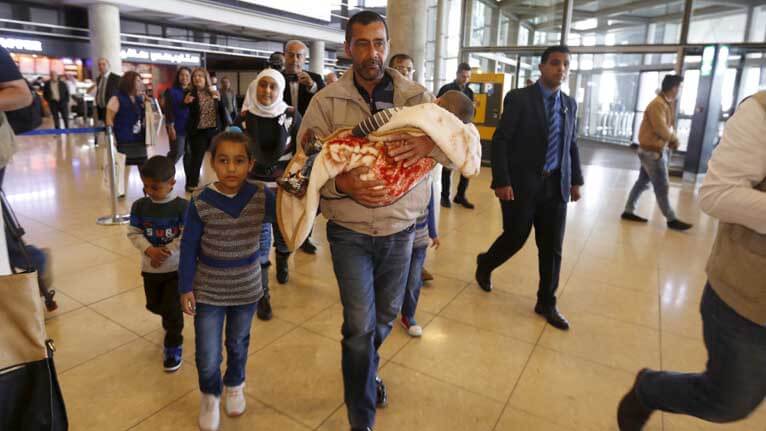
Syrian refugee Ahmad al Aboud and his family members, on their way to be resettled in the United States as part of a refugee admissions program, walk to board their plane in Amman, Jordan, in 2016. Photo: Reuters
Helping refugees “is a tangible way of living out our commitment to be a church that looks and acts like Jesus, sharing his way of love with all, especially the most vulnerable among us,” the Rev. Charles Robertson, canon to the presiding bishop for ministry beyond The Episcopal Church, said in a written statement to ENS. “While EMM is one of the smaller of the nine official resettlement agencies for the United States, it has been acknowledged as a model of excellence in this vital work.”
Alvero, EMM’s director of operations, said the agency typically resettles about 5% of the total refugees brought to the country through the federal program. Historically, EMM has served about 2,000 to 3,000 refugees a year, with a peak of 6,600 resettled in 2016, the last year of the Obama administration. At that time, EMM oversaw the work of 31 resettlement affiliates in 26 dioceses.
Refugee resettlement plummeted during the Trump administration, as President Donald Trump pursued policies to restrict both legal and illegal immigration. Trump slashed the maximum number of refugees allowed into the United States to a historic low of 15,000 a year, down from a norm of between 70,000 and 90,000 during the previous two decades.
The diminished resettlement activity forced the nine resettlement agencies to end their work with about 100 local affiliates, Alvero said, and EMM’s number of affiliates has since decreased to 11.
Global resettlement needs, meanwhile, have only increased in recent years. The United Nations High Commissioner for Refugees estimates there are 26 million such refugees worldwide, and tens of millions more have been displaced within their home countries.
With President Joe Biden taking office in January, his administration pledged to work with EMM and other resettlement agencies to restore a spirit of welcome to refugees fleeing war and persecution in their home countries. Biden increased the resettlement cap to 125,000 for the fiscal year that began Oct. 1, though it remains uncertain how soon EMM and the other resettlement agencies will be able to ramp up their operations to accommodate additional refugees awaiting resettlement.
“This country is big enough and rich enough really to assist 125,000,” Alvero said, but the government needs to restore its overseas processing operations to full capacity while the resettlement agencies rebuild networks that were decimated under Trump. EMM has not yet added new affiliates, though it is researching options in Kansas, West Virginia and Wyoming, a state that has no prior history of refugee resettlement.
For the Afghans who arrived in the United States under the humanitarian parole program, EMM has invited Episcopalians and their congregations and dioceses to support the resettlement work by making donations online to the Neighbors Welcome: Afghan Allies Fund and by volunteering in other ways, which they can do after filling out an online form.
Donations to the Afghan Allies Fund have topped $500,000 so far, Alvero said.
Afghan refugee girls watch a soccer match near where they are staying at the Fort McCoy U.S. Army base in Wisconsin on September 30, 2021. Photo: Reuters.
The Afghans initially were housed at U.S. military bases. Many of them now are making their way to Houston, where Interfaith Ministries is in the middle of welcoming an estimated 1,300 individuals, Al Sudani said. About 730 already have moved to the city. Most of the remaining are expected by mid-February.
The number of arrivals is unprecedented in such a short period of time, he said, but the community and The Episcopal Church are stepping up. “We have seen an outpouring of support during this crisis in a manner that we haven’t experienced it before,” he said.
He recalled a similar experience when he first arrived in Houston in 2009, not knowing what to expect. “My perception about Houston was about oil and, you know, the Wild West, cowboys. But I was surprised how welcoming and generous and supportive the people of Houston are. It’s a great city to be in.”
Now, with Interfaith Ministries and other EMM affiliates about to begin welcoming the church’s next 100,000 refugees, Al Sudani, who became a U.S. citizen in 2014, said the underlying mission endures. “We are creating new Americans,” he said. “We are helping these people to become new Americans and support them as they contribute to their communities.”
– David Paulsen is an editor and reporter for Episcopal News Service. He can be reached at dpaulsen@episcopalchurch.org.
Seattle-area refugee efforts
Founded in 1978, Diocese of Olympia’s Refugee Resettlement Office (RRO), an affiliate of Episcopal Migration Ministries and the Episcopal Diocese of Olympia, serves refugees and asylees in the Seattle area. Our clients come to us from anywhere in the world seeking guidance and assistance in building a new life in America and achieving economic self-sufficiency. Our mission is accomplished through resettlement, job placement activities, and business development programs that promote self-employment.
The Episcopal Church has served immigrants new to the United States since the late 1800s, when the Church opened port chaplaincies to minister to sojourners on both coasts. In the 1930s, local parishes collected donations to provide steamship passage for those fleeing Nazi Europe. Out of this effort, the Presiding Bishop’s Fund for World Relief was born, the forerunner organization to Episcopal Relief & Development and Episcopal Migration Ministries.
Through the mid- and late 20th century, Episcopal Migration Ministries (EMM) partnered with other faith organizations to resettle those oppressed by the Iron Curtain and the genocides of Southeast Asia. In the 1980s, EMM was formally established. In partnership with a network of affiliate agencies, dioceses, churches, and volunteers, EMM is today one of only nine national agencies through which all refugees enter the United States.
Church of the Redeemer
Welcome to Church of the Redeemer: Worshiping God, living in community, and reaching out to the world. We are an Episcopal Church serving north King County and south Snohomish County, Washington. As you travel your road, go with friends walking the way of Jesus at Redeemer.
Church of the Redeemer is at 6220 Northeast 181st Street in Kenmore, Washington. We are a short distance north of Bothell Way, near the Burke-Gilman Trail. The entrance looks like a gravel driveway. The campus is larger on the inside than it is on the outside. And we managed to hide a large building on the side of a hill that is not easily seen from the street.