Category: Racial Reconciliation

  • Prophetic Voices podcast available for Christmas Day

    Prophetic Voices podcast available for Christmas Day

    In this fifth episode of season 3 of Prophetic Voices: Preaching and Teaching Beloved Community, we speak with Episcopalians committed to the Beloved Community about the texts for Christmas Day. The texts covered in this episode are Luke 2:1-20 and John 1:1-14. Our guests this week are the following:

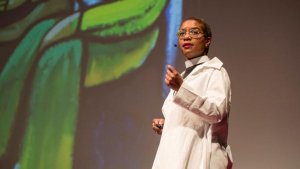
    Prophetic Voices is hosted by the Rev. Isaiah “Shaneequa” Brokenleg, The Episcopal Church’s staff officer for Racial Reconciliation. For more information visit Becoming Beloved Community.

    Find the episode online or wherever you listen to podcasts.

    Prophetic Voices: Preaching and Teaching Beloved Community from the Episcopal Church

    Prophetic Voices: Preaching and Teaching Beloved Community

    Across our church and our society, we are having profound dialogues about race, truth, justice, and healing. Coming this Advent, Prophetic Voices: Preaching and Teaching Beloved Community explores where that dialogue intersects with our faith. Join us and our invited guests as we share prophetic voices and explore the readings for each week of Advent and Christmas Day through the lens of social justice.

    You’ll hear ancient texts interpreted in new ways, find fodder for preaching and teaching, and make present day connections to the prophetic voices of the Bible. This podcast will help us rethink how we hear, see, and interact with the lectionary readings, refocusing from the rush of the Christmas season to the voice crying out in the wilderness.

    Find other podcasts available from the Episcopal Church.

    Racial Reconciliation ministry of the Episcopal Church

    Racial Reconciliation

    Here are just some of the Episcopal Church’s pathways, resources, and major partners in the ministry of racial reconciliation, justice, and healing.

    Church of the Redeemer

    Welcome to Church of the Redeemer: Worshiping God, living in community, and reaching out to the world. We are an Episcopal Church serving north King County and south Snohomish County, Washington. As you travel your road, go with friends walking the way of Jesus at Redeemer.

    Church of the Redeemer is at 6220 Northeast 181st Street in Kenmore, Washington. We are a short distance north of Bothell Way, near the Burke-Gilman Trail. The entrance looks like a gravel driveway. The campus is larger on the inside than it is on the outside. And we managed to hide a large building on the side of a hill that is not easily seen from the street.

    The Episcopal Church welcomes you.

  • Prophetic Voices podcast available for Advent 4

    Prophetic Voices podcast available for Advent 4

    In this fourth episode of season 3 of Prophetic Voices: Preaching and Teaching Beloved Community, we speak with Episcopalians committed to the Beloved Community about the texts for Advent 4. The texts covered in this episode are Luke 1:39-45 and Canticle 15. Our guests this week are the following:

    • The Hon. Warren Hawk, Isnala Ohitika (Brave Alone), who serves his tribe as a member of the Standing Rock Tribal Council. Warren is an active, lifelong Episcopalian who serves on several Episcopal boards and committees.
    • Dr. Sandra T. Montes, an indigenous Latina (born in Peru and raised in Guatemala) who splits her time between New York City and Houston. She holds a Doctor of Education from the University of Houston and her book, Becoming REAL and Thriving in Ministry, was published in May 2020. She is the dean of chapel at Union Theological Seminary.
    • Tamara Plummer, a program officer in the U.S. Disaster Program at Episcopal Relief & Development and host of the podcast Pursuing Call.

    Prophetic Voices is hosted by the Rev. Isaiah “Shaneequa” Brokenleg, The Episcopal Church’s staff officer for Racial Reconciliation. For more information visit Becoming Beloved Community.

    Find the episode online or wherever you listen to podcasts.

    Prophetic Voices: Preaching and Teaching Beloved Community from the Episcopal Church

    Prophetic Voices: Preaching and Teaching Beloved Community

    Across our church and our society, we are having profound dialogues about race, truth, justice, and healing. Coming this Advent, Prophetic Voices: Preaching and Teaching Beloved Community explores where that dialogue intersects with our faith. Join us and our invited guests as we share prophetic voices and explore the readings for each week of Advent and Christmas Day through the lens of social justice.

    You’ll hear ancient texts interpreted in new ways, find fodder for preaching and teaching, and make present day connections to the prophetic voices of the Bible. This podcast will help us rethink how we hear, see, and interact with the lectionary readings, refocusing from the rush of the Christmas season to the voice crying out in the wilderness.

    Find other podcasts available from the Episcopal Church.

    Racial Reconciliation ministry of the Episcopal Church

    Racial Reconciliation

    Here are just some of the Episcopal Church’s pathways, resources, and major partners in the ministry of racial reconciliation, justice, and healing.

    Church of the Redeemer

    Welcome to Church of the Redeemer: Worshiping God, living in community, and reaching out to the world. We are an Episcopal Church serving north King County and south Snohomish County, Washington. As you travel your road, go with friends walking the way of Jesus at Redeemer.

    Church of the Redeemer is at 6220 Northeast 181st Street in Kenmore, Washington. We are a short distance north of Bothell Way, near the Burke-Gilman Trail. The entrance looks like a gravel driveway. The campus is larger on the inside than it is on the outside. And we managed to hide a large building on the side of a hill that is not easily seen from the street.

    The Episcopal Church welcomes you.

  • Prophetic Voices podcast available for Advent 3

    Prophetic Voices podcast available for Advent 3

    In this third episode of season 3 of Prophetic Voices: Preaching and Teaching Beloved Community, we speak with Episcopalians committed to the Beloved Community about the texts for Advent 3. The texts covered in this episode are Luke 3:7-18 and Zephaniah 3:14-20. Our guests this week are the following:

    Prophetic Voices is hosted by the Rev. Isaiah “Shaneequa” Brokenleg, The Episcopal Church’s staff officer for Racial Reconciliation. For more information visit Becoming Beloved Community.

    Find the episode online or wherever you listen to podcasts.

    Prophetic Voices: Preaching and Teaching Beloved Community from the Episcopal Church

    Prophetic Voices: Preaching and Teaching Beloved Community

    Across our church and our society, we are having profound dialogues about race, truth, justice, and healing. Coming this Advent, Prophetic Voices: Preaching and Teaching Beloved Community explores where that dialogue intersects with our faith. Join us and our invited guests as we share prophetic voices and explore the readings for each week of Advent and Christmas Day through the lens of social justice.

    You’ll hear ancient texts interpreted in new ways, find fodder for preaching and teaching, and make present day connections to the prophetic voices of the Bible. This podcast will help us rethink how we hear, see, and interact with the lectionary readings, refocusing from the rush of the Christmas season to the voice crying out in the wilderness.

    Find other podcasts available from the Episcopal Church.

    Racial Reconciliation ministry of the Episcopal Church

    Racial Reconciliation

    Here are just some of the Episcopal Church’s pathways, resources, and major partners in the ministry of racial reconciliation, justice, and healing.

    Church of the Redeemer

    Welcome to Church of the Redeemer: Worshiping God, living in community, and reaching out to the world. We are an Episcopal Church serving north King County and south Snohomish County, Washington. As you travel your road, go with friends walking the way of Jesus at Redeemer.

    Church of the Redeemer is at 6220 Northeast 181st Street in Kenmore, Washington. We are a short distance north of Bothell Way, near the Burke-Gilman Trail. The entrance looks like a gravel driveway. The campus is larger on the inside than it is on the outside. And we managed to hide a large building on the side of a hill that is not easily seen from the street.

    The Episcopal Church welcomes you.

  • Bishops respond to verdict in Ahmaud Arbery case

    Bishops respond to verdict in Ahmaud Arbery case

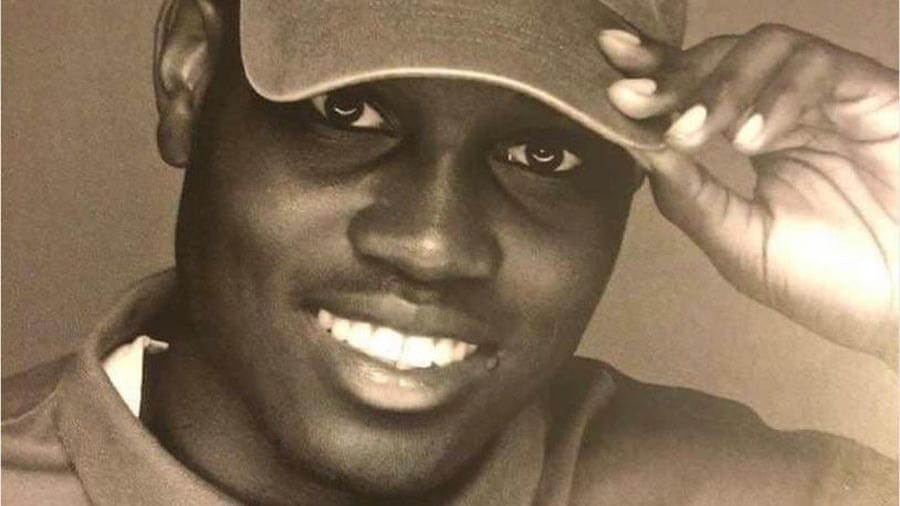
    Presiding Bishop Michael Curry, Bishop Gregory Rickel, and bishops in Georgia respond to verdict in Ahmaud Arbery case from Georgia.

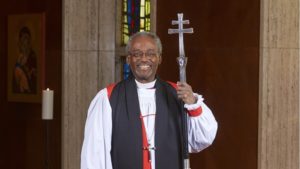
    Presiding Bishop Michael Curry in choir dress

    Presiding Bishop Michael Curry responds to verdict in Ahmaud Arbery case

    While nothing will return Ahmaud Arbery to his loved ones, our justice system has held three men accountable for hunting down and killing a Black man who did nothing but go for a run in a predominately white neighborhood, and I give thanks for this outcome. My prayers are with Arbery’s family as they continue to grieve his loss.

    Even so, our work as followers of Jesus, as a church, and as a nation, continues; we cannot rest until these modern embodiments of terror against any human child of God are no more. We must labor on for racial healing and reconciliation in each of our hearts—and in our society. We must reimagine and advocate against systems, laws, and policies that encourage vigilantism and diminish human life, because all people should be treated with the dignity, love, and respect that is due children of God.

    Presiding Bishop Michael Curry responds to verdict in Ahmaud Arbery case (English and Español). The Most Rev. Michael Curry is the Presiding Bishop and Primate of the Episcopal Church.

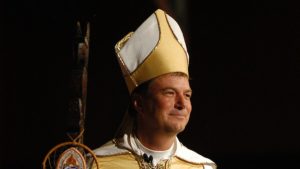
    Bishop Greg Rickel wearing cope and mitre

    Bishop Greg Rickel statement on the verdict in the Ahmaud Arbery case

    Today, the jury in the Ahmad Arbery trial has returned its verdict and found the men responsible for Arbery’s death guilty on nearly all counts. While this verdict does not, as our Presiding Bishop has said, bring Ahmaud Arbery back to his family and loved ones, it does provide a measure of justice from a system that has too often denied justice to our BIPOC siblings.

    I echo the prayers and pleas of our Presiding Bishop and the Episcopal and Lutheran bishops of Georgia in their statements following the verdict [below]. I commend them to you. The joint statement from the Georgia bishops is especially good and also provides some very good resources, including a link to the resource library of the Center for Racial Healing.

    There is much work still to be done in reforming our justice system, and quite frankly much of that work is inside ourselves, for as many of you have reminded me over this past week, we humans make up, implement, and oversee this system. Much work remains to be done in each of our hearts to dismantle our own racism and bring about healing and reconciliation. When this happens I do believe any unbalanced and/or unjust system can and will change. I most definitely include myself as one that continues to need work and most likely will the remainder of my life. I ask you to pray for everyone involved in this case, their families, and for the repose of the soul of Ahmaud Arbery.

    Bishop Rickel’s Statement on the Verdict in the Ahmad Arbery Case. The Rt. Rev. Gregory Rickel is the Bishop of the Diocese of Olympia.

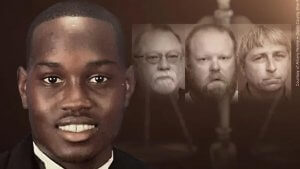
    Ahmaud Arbery shown with his murderers. Photos courtesy of Ahmaud family and Glynn County Sheriff's Office

    Episcopal and Lutheran bishops in Georgia respond to the verdict in the McMichaels-Bryan trial

    The jury charged with handing down a verdict in the case of three men accused of murder for their roles in the death of Ahmaud Arbery issued its decision today finding Travis McMichael guilty of malice murder and other charges, Gregory McMichael guilty of felony murder and other charges, and Roddie Bryan guilty of felony murder and other charges. We give thanks for the dedicated work of the judge and jurors who served in a charged atmosphere with intense public scrutiny. Any verdict arrives too late to offer true justice in this case. Ahmaud Arbery is dead, and the court cannot return him to his family. Nonetheless, this moment is an important one.

    We prayed for the court to bring earthly justice and the court has acted. But it took a public outcry and the release of video of the incident to force the system into action. The three men who are now convicted of crimes were initially shielded from facing their accusers in court. Until we can bring equity to the system that initially protected them, the rest of us will not have done what we can to create the just society for which we long. Our country has not dealt with the racism built into the system at its founding and perpetuated until this day. Living into our faith means addressing directly any sin we see in our lives and in our communities. Divisions around the human-made concept of race are an offense against our faith which teaches that all people are made in God’s image and likeness. Jesus taught us to love God and love our neighbor as ourselves. Through his parable of the Good Samaritan, Jesus made it clear that all are our neighbors. Any racial divide breaks the heart of God.

    One bright spot of hope we have seen emerge following Ahmaud’s tragic death has been the interfaith group of clergy in Glynn County. Their clarion call for justice after the video surfaced was critical in getting attention to this case. They followed this call by engaging in candid conversations that drew them together even as other forces could have deepened divisions. Participants included clergy from all five Episcopal Churches in the county and those of many other denominations, as well as leaders of Jewish and Muslim congregations. News stories have often quoted the clergy who were consistently engaged, offering a non-anxious presence on the courthouse grounds. They have witnessed to the dream of God: all of us becoming beloved community, not divided by ethnicity, but united in our common humanity. We know that long after the cameras and reporters are gone, the clergy in Glynn County will still be working together toward that dream.

    We hope not just for good to overcome evil, but for God to redeem even the worst tragedies and the gravest injustices. While the court has acted, the work of healing and justice remains. Maya Angelou said, “Do the best you can until you know better. Then when you know better, do better.”

    The Episcopal Diocese of Georgia offers the following resources: ​​Resources for Racial Healing and Justice.

    The Southern Synod of the Evangelical Lutheran Church in America offers resources: Racial Justice.

    The Episcopal Diocese of Atlanta’s resources can be found at the Absalom Jones Center for Racial Healing: Our Virtual Resource Library.

    It does not take an evil person to do an evil act. Murder is evil. Ahmaud’s killing was evil. But we need to guard against demonizing anyone or denying their basic humanity. The accused have been convicted. They will serve their sentences and need our prayers that they may be awakened to repentance. In this, as with all of us, we pray that God will bring all who are guilty to repentance and amendment of life and give us all hope for the future. In that spirit, we offer this prayer:

    Eternal God, we give thanks for the judge and jurors charged with bringing earthly justice in the death of Ahmaud Arbery. Be with the Arbery family and all in the Brunswick and Glynn County Community as they seek further healing. Be with Gregory, Travis, and Roddie and their families as they serve their sentences and work toward their own repentance. Be with all of us as we seek repentance and healing for ourselves, one another, and our communities. Give us all the grace to hunger and thirst for your righteousness that we may work together to become the beloved community to which you call us. This we ask for the sake of your Son our Savior, Jesus Christ, who with you and the Holy Spirit lives and reigns now and forever. Amen.

    May God grant us grace to see the healing needed in our lives, our families, and our communities.

    In Christ,

    The Rt. Rev. Frank S. Logue, Bishop of the Episcopal Diocese of Georgia
    The Rt. Rev. Rob C. Wright, Bishop of the Episcopal Diocese of Atlanta
    The Rev. Kevin L. Strickland, Bishop of the Southeastern Synod, Evangelical Lutheran Church in America

    Episcopal and Lutheran bishops in Georgia respond to the verdict in the McMichaels-Bryan trial

    Early morning mist in the Memorial Garden at Church of the Redeemer

    Church of the Redeemer

    Church of the Redeemer: Worshiping God, living in community, and reaching out to the world around us. We are an Episcopal Church serving north King County and south Snohomish County, Washington. As you travel your road, go with friends walking the way of Jesus at Redeemer.

    Church of the Redeemer is at 6220 Northeast 181st Street in Kenmore, Washington. The campus is a short distance north of Bothell Way, near the Burke-Gilman Trail. The entrance looks like a gravel driveway. The campus is larger on the inside than it is on the outside. And we managed to hide a large building on the side of a hill that is not easily seen from the street.

    The Episcopal Church welcomes you.

  • Prophetic Voices podcast available for Advent 2

    Prophetic Voices podcast available for Advent 2

    In this second episode of season 3 of Prophetic Voices: Preaching and Teaching Beloved Community, we speak with Episcopalians committed to the Beloved Community about the texts for Advent 2. The texts covered in this episode are Luke 3:1-6 and Canticle 16 (The Song of Zechariah). Our guests this week are the following:

    Prophetic Voices is hosted by the Rev. Isaiah “Shaneequa” Brokenleg, The Episcopal Church’s staff officer for Racial Reconciliation. For more information visit Becoming Beloved Community.

    Find the episode online or wherever you listen to podcasts.

    Prophetic Voices: Preaching and Teaching Beloved Community from the Episcopal Church

    Prophetic Voices: Preaching and Teaching Beloved Community

    Across our church and our society, we are having profound dialogues about race, truth, justice, and healing. Coming this Advent, Prophetic Voices: Preaching and Teaching Beloved Community explores where that dialogue intersects with our faith. Join us and our invited guests as we share prophetic voices and explore the readings for each week of Advent and Christmas Day through the lens of social justice.

    You’ll hear ancient texts interpreted in new ways, find fodder for preaching and teaching, and make present day connections to the prophetic voices of the Bible. This podcast will help us rethink how we hear, see, and interact with the lectionary readings, refocusing from the rush of the Christmas season to the voice crying out in the wilderness.

    Find other podcasts available from the Episcopal Church.

    Racial Reconciliation ministry of the Episcopal Church

    Racial Reconciliation

    Here are just some of the Episcopal Church’s pathways, resources, and major partners in the ministry of racial reconciliation, justice, and healing.

    Church of the Redeemer

    Welcome to Church of the Redeemer: Worshiping God, living in community, and reaching out to the world. We are an Episcopal Church serving north King County and south Snohomish County, Washington. As you travel your road, go with friends walking the way of Jesus at Redeemer.

    Church of the Redeemer is at 6220 Northeast 181st Street in Kenmore, Washington. We are a short distance north of Bothell Way, near the Burke-Gilman Trail. The entrance looks like a gravel driveway. The campus is larger on the inside than it is on the outside. And we managed to hide a large building on the side of a hill that is not easily seen from the street.

    The Episcopal Church welcomes you.

  • Prophetic Voices podcast available for Advent 1

    Prophetic Voices podcast available for Advent 1

    The first episode of season 3 of the “Prophetic Voices: Preaching and Teaching Beloved Community” podcast features discussion about the texts for Advent 1: Jeremiah 33:14-16, Psalm 25:1-10, and Luke 21:25-36 (PDF).

    Guests are the following:

    • Rev. Canon Lauren Stanley, Canon to the Ordinary in the Episcopal Diocese of South Dakota
    • Katina Assimacopoulos, a medical doctor pursuing a Juris Doctorate who is from the Greek Orthodox tradition
    • GJ Gordy, communications director for the Navajoland Area Mission

    The podcast is hosted by the Rev. Isaiah “Shaneequa” Brokenleg, the Episcopal Church’s staff officer for racial reconciliation.

    Find the episode online or wherever you listen to podcasts.

    Prophetic Voices: Preaching and Teaching Beloved Community from the Episcopal Church

    Prophetic Voices: Preaching and Teaching Beloved Community

    Across our church and our society, we are having profound dialogues about race, truth, justice, and healing. Coming this Advent, Prophetic Voices: Preaching and Teaching Beloved Community explores where that dialogue intersects with our faith. Join us and our invited guests as we share prophetic voices and explore the readings for each week of Advent and Christmas Day through the lens of social justice.

    You’ll hear ancient texts interpreted in new ways, find fodder for preaching and teaching, and make present day connections to the prophetic voices of the Bible. This podcast will help us rethink how we hear, see, and interact with the lectionary readings, refocusing from the rush of the Christmas season to the voice crying out in the wilderness.

    Find other podcasts available from the Episcopal Church.

    Church of the Redeemer

    Welcome to Church of the Redeemer: Worshiping God, living in community, and reaching out to the world. We are an Episcopal Church serving north King County and south Snohomish County, Washington. As you travel your road, go with friends walking the way of Jesus at Redeemer.

    Church of the Redeemer is at 6220 Northeast 181st Street in Kenmore, Washington. We are a short distance north of Bothell Way, near the Burke-Gilman Trail. The entrance looks like a gravel driveway. The campus is larger on the inside than it is on the outside. And we managed to hide a large building on the side of a hill that is not easily seen from the street.

    The Episcopal Church welcomes you.

  • Let’s Talk CRT: Christian Race Theory

    Let’s Talk CRT: Christian Race Theory

    “Let’s Talk CRT: Christian Race Theory” is by Canon Stephanie Spellers.

    Canon Stephanie Spellers for Evangelism Reconciliation Creation Care

    CRT is nothing new. I distinctly recall reading legal theorist Derrick Bell in the early 1990s. He flicked on the light for a generation of college students first learning about critical race theory, an umbrella that covers the study of structural racism and the intricate ways that white supremacy is baked into the very fabric of American life.

    Conservatives cried foul, but their fearful, quasi-patriotic, racism-laden arguments were easy to dismiss. I couldn’t imagine they’d come back. But they’ve returned with a vengeance, just in time to derail a historic racial reckoning that was shaking the foundations of American life. Now the anti-critical race theory forces are sweeping not only classrooms and school boards but also legislatures and courts. One might say the empire is striking back.

    And yet … if you listen closely, you may discover the “CRT” so many critics decry doesn’t sound that scary or problematic. If anything, I’ve found it sounds like what I understand about following Jesus. All of which makes me wonder if perhaps CRT isn’t critical race theory but actually Christian race theory. Here are four reasons why.

    Point 1

    The reality and naming of structural racism was no mystery to Jesus or to the biblical people of God. If anything, God seems particularly concerned about divisions and hierarchies that leave one group protected and privileged while another group is outcast and vulnerable.

    It’s in the first books of the Bible: “When an alien resides with you in your land, you shall not oppress the alien. The alien who resides with you shall be to you as the citizen among you; you shall love the alien as yourself, for you were aliens in the land of Egypt” (Leviticus 19:34). It’s in the Psalms: “Give justice to the weak and the orphan; maintain the right of the lowly and the destitute” (Psalm 82:3).

    Of course, it’s all over the prophets, including Jesus’ own mother, Mary, who sings:

    [The Lord] has brought down rulers from their thrones
    but has lifted up the humble.
    He has filled the hungry with good things
    but has sent the rich away empty.

     (Luke 1:52-53)

    Her son Jesus keeps up the family tradition. “Truly I tell you, just as you did it to one of the least of these who are members of my family, you did it to me” (Matthew 25:40). And don’t forget the Apostle Paul’s fury at the Corinthians. He says they “show contempt for God” whenever they allow the rich to eat and drink with abandon in front of their poor, hungry siblings in Christ, then all gather at the table for the Lord’s Supper as if everything was OK (1 Corinthians 11).

    Scripture regularly cites power relations between groups, where one category of people lords over the other. It also tells us where God stands in the face of those power imbalances. In Christ, hierarchies are named for what they are and then leveled. Oppressive systems are not ignored, not covered up, but dismantled and healed. That’s how Christians reckon with racism.

    Point 2

    I once heard a sincere Christian woman ask, “Isn’t designating and highlighting our identities sinful and selfish?” Absolutely not. Difference is a given and is not in and of itself bad. Diversity is a key feature of God’s glorious creation. It is God-made. Hierarchies are the problem, and they’re human-made.

    So don’t be fooled by people who want to erase difference in the name of Jesus. Some will point to Galatians 3:28, where Paul famously declares that, “In Christ there is no longer Jew or Greek, male or female, slave or free, but all are one in Christ.” Obviously, those groups and identities remained. His point is that the power imbalances and hierarchies aren’t supposed to carry into Christian community. So I’m free and you’re a slave. I don’t get to lord over you or expect you to bow to me. (If anything, according to 1 Corinthians 12:22-25, I should bow to you and tip the scales the other direction—how’s that for affirmative action?).

    In Revelation 7:9, we see the image of people from all nations and races gathered around the throne and worshiping God. That vision doesn’t merge us all into one race or nation. It says we’ll be united in love, not uniform in identity. That’s the dream of God. That’s how Christians embrace the grace of race.

    Point 3

    Speaking of difference, Christians worship and pattern our lives after a God who became human in a specific place, time and social location. It cannot be a coincidence that Jesus was a poor boy from a backwater town with an unwed teenage mother who was taken in by a man willing to raise her son as his own. Born on the margins, he blessed and preferred the company of people marginalized because of their culture, ethnicity, gender, economic status, physical ability, age, education, and religious affiliation. He was executed by the state for the crime of defying authority.

    Christians worship a God who came from a particular social location—the underside—and stayed allied with people in a particular social location—the underside. Whenever Jesus encountered difference, he clearly acknowledged power differentials and opted to stand with suffering groups. He constantly lifted up stories, people and wisdom from the underside: women, poor people, Samaritans (a different race), and more.

    Christianity is—at its core—a conscious reversal of dominant racial, cultural narratives and patterns. It retrieves and holds aloft what has been forgotten, left for dead, called unclean or blasted as unholy, and it says “God works through this.” Likewise, Christianity seeks hidden stories and brings them forward, in order to correct narratives once controlled by the powerful. Correcting and reversing false narratives and declaring the goodness of things cast to the underside is no problem for Christians. That’s our specialty.

    Point 4

    The airwaves are full of parents who grind against CRT because they say it makes their children (and many of them) feel bad. First of all, if all you feel in the presence of these difficult truths is bad, then it probably isn’t being done responsibly. My husband is a middle-school social studies teacher, and I know how hard he and his colleagues work not to bludgeon anybody with guilt. He’s trying to teach history correctly and to help shape citizens who will be thoughtful, fair members of their communities (he has a sign over his classroom door that says “Beloved Community”).

    Not everyone can handle that nuance. We say racism is bad. We say White people are racist (insofar as they participate in racism rather than consciously resisting, dismantling and healing it). So are all white people bad or is it bad to be a white person? No. You can choose not to be racist. It’s tough, but it is possible.

    Jesus loved everyone and invited everybody into his radical community of love. He also told them what it takes to join and truly inhabit that community, and he didn’t lay out the same path for everyone. If you occupy the higher rungs of a social ladder based on personal or group identity, you’ll need to relinquish your hold on privilege, admit what you got at other’s expense, change your ways, and make amends to those who’ve been hurt. Remember the rich young man who wanted to know about eternal life (Matthew 19:16-22)? Jesus told him to sell his possessions and give the proceeds to the poor. You got it at their expense; now you’ve got to heal what’s been broken.

    When the rich young man felt bad, hung his head and walked away, Jesus didn’t chase him down and reverse the message. He spoke a true word to his brother in love, and then he let the young man walk, pray and re-examine his life in light of this troubling reality. He trusted the young man could bear the truth, and he didn’t shield him from it. Jesus knew this young man would experience abundant life, if only he could stay with the painful feelings long enough to emerge into a new state of wisdom and freedom.

    We have the same option. A Christian approach to dismantling racism holds out grace and hope, and at the same time treats us like morally accountable human beings who will not break when faced with painful, once-hidden realities. The truth will not destroy you. The only thing the truth destroys is narratives and structures built on lies, none of which should have stood in first place.

    By the grace and love of God, we can rebuild and transform systems and stories and lives together, rooting out White supremacy and replacing it with truth and hope. That’s Christian race theory. I long to see followers of Jesus rising up across this land to preach and practice it.


    Canon Stephanie Spellers is the Presiding Bishop’s Canon for Evangelism, Reconciliation and Creation Care and author of The Church Cracked Open: Disruption, Decline and New Hope for Beloved Community.

    This article comes from Let’s Talk CRT: Christian Race Theory.

    Here are just some of the Episcopal Church’s pathways, resources, and major partners in the ministry of racial reconciliation, justice, and healing.

    Church of the Redeemer

    Welcome to Church of the Redeemer: Worshiping God, living in community, and reaching out to the world. We are an Episcopal Church serving north King County and south Snohomish County, Washington. As you travel your road, go with friends walking the way of Jesus at Redeemer.

    Church of the Redeemer is at 6220 Northeast 181st Street in Kenmore, Washington. We are a short distance north of Bothell Way, near the Burke-Gilman Trail. The entrance looks like a gravel driveway. The campus is larger on the inside than it is on the outside. And we managed to hide a large building on the side of a hill that is not easily seen from the street.

    The Episcopal Church welcomes you.

Maundy Thursday, April 2, 2026. Services at 12:00 noon and 7:00 pm. Gethsemane Watch Vigil from about 8:30 pm to 9:30 pm.

Good Friday, April 3, 2026: Services at 12:00 noon and 7:00 pm.

Holy Saturday worship at 9:30 am.

The Great Vigil of Easter, Saturday, April 4, 2025. Service at 8:00 pm. This is the night....

The 2nd Sunday of Easter (Year A), April 12, 2026. Services at 8:00 am (no music) and 10:30 (music). Education classes resume next week.

Episcopal Church of the Redeemer
Privacy Overview

Cookie information is stored in your browser and performs functions such as recognizing you when you return to our website and helping our team to understand which pages of the website are visited. We aren't using cookies to determine your web browsing habits, but others can.