Tag: Epiphany

  • The bulletin insert for February 23, 2025

    The bulletin insert for February 23, 2025

    This is the weekly bulletin insert from Sermons That Work.

    Epiphany Bible Study: Week 7

    During the season of Epiphany, The Episcopal Church’s Office of Global Partnerships is offering a weekly Bible study prepared by writers across the church and Anglican Communion. Each piece, consisting of the Sunday readings, can be studied alone, in small groups, or even with a congregation. You can find the whole study for each week at www.sermonsthatwork.org.

    This week’s study for Epiphany 7 (C) was written by the Rt. Rev. Eduardo Coelho Grillho, the bishop of Rio de Janeiro.

    Genesis 45:3-11, 15

    Joseph said to his brothers, “I am Joseph. Is my father still alive?” But his brothers could not answer him, so dismayed were they at his presence.

    Then Joseph said to his brothers, “Come closer to me.” And they came closer. He said, “I am your brother, Joseph, whom you sold into Egypt. And now do not be distressed or angry with yourselves because you sold me here, for God sent me before you to preserve life. For the famine has been in the land these two years, and there are five more years in which there will be neither plowing nor harvest. God sent me before you to preserve for you a remnant on earth and to keep alive for you many survivors. So it was not you who sent me here but God; he has made me a father to Pharaoh and lord of all his house and ruler over all the land of Egypt. Hurry and go up to my father and say to him, ‘Thus says your son Joseph, God has made me lord of all Egypt; come down to me; do not delay. 10 You shall settle in the land of Goshen, and you shall be near me, you and your children and your children’s children, as well as your flocks, your herds, and all that you have. 11 I will provide for you there, since there are five more years of famine to come, so that you and your household and all that you have will not come to poverty.’

    15 And he kissed all his brothers and wept upon them, and after that his brothers talked with him.

    Commentary from Eduardo Coelho Grillo

    The story of Joseph is well known. His brothers sold him to merchants and, after some time dealing with imprisonment and dreams, he ended up becoming a great administrator in the land of Egypt. Today’s reading brings us a reunion between Joseph and his brothers. Such an emotional meeting brought not only regret and sadness but also joy and reconciliation. All that in a few verses, in a few sentences. By that family story, we are invited to reflect on reconciliation and rebuilding relationships. As we read that passage lightly, it may sound as if the forgiveness was instantaneous between Joseph and his brothers. In fact, they all had to overcome resentment and guilt to move forward. They were called by God, as Joseph points out, to restore their family bonds as life challenged them all with famine and difficult living conditions.

    Discussion Questions

    • Have you ever felt betrayed or despised by those you love or trust (family, friends, mates, etc.)?
    • Do you believe in reconciliation and forgiveness as essential experiences for mental and spiritual health?

    Weekly bulletin inserts

    This weekly bulletin insert provides information about the history, music, liturgy, mission, and ministry of The Episcopal Church. For more information, please contact us at stw@episcopalchurch.org.
    Sermons That Work from the Episcopal Church

    Sermons That Work

    For more than 20 years, Sermons That Work, a ministry of The Episcopal Church’s Office of Communication, has provided free sermons, Bible studies, bulletin inserts, and other resources that speak to congregations across the Church. Our writers and readers come from numerous and varied backgrounds. Small house churches, sprawling cathedrals, and everything between use the resources that Sermons That Work provides.
    The Episcopal Church of the Redeemer: Worshiping God, living in community, reaching out to the world.

    Church of the Redeemer

    Church of the Redeemer: Worshiping God, living in community, and reaching out to the world around us. We are an Episcopal Church serving north King County and south Snohomish County, Washington. As you travel your road, go with friends walking the way of Jesus at Redeemer.

    Church of the Redeemer is at 6220 Northeast 181st Street in Kenmore, Washington. The campus is a short distance north of Bothell Way, near the Burke-Gilman Trail. The entrance looks like a gravel driveway. The campus is larger on the inside than it is on the outside. And we managed to hide a large building on the side of a hill that is not easily seen from the street.

    The Episcopal Church welcomes you.
  • The bulletin insert for February 16, 2025

    The bulletin insert for February 16, 2025

    This is the weekly bulletin insert from Sermons That Work.

    Epiphany Bible Study: Week 6

    During the season of Epiphany, The Episcopal Church’s Office of Global Partnerships is offering a weekly Bible study prepared by writers across the church and Anglican Communion. Each piece, consisting of the Sunday readings, can be studied alone, in small groups, or even with a congregation. You can find the whole study for each week at www.sermonsthatwork.org.

    This week’s study for Epiphany 7 (C) was written by Larissa Minniecon, the truth-telling and reconciliation missioner for the Anglican Board of Mission, Australia, and an Indigenous emergency relief worker with St. John’s Anglican Church, Glebe.

    1 Corinthians 15:12-20

    15 Now I want you to understand, brothers and sisters, the good news that I proclaimed to you, which you in turn received, in which also you stand, through which also you are being saved, if you hold firmly to the message that I proclaimed to you—unless you have come to believe in vain. For I handed on to you as of first importance what I in turn had received: that Christ died for our sins in accordance with the scriptures and that he was buried and that he was raised on the third day in accordance with the scriptures and that he appeared to Cephas, then to the twelve. Then he appeared to more than five hundred brothers and sisters at one time, most of whom are still alive, though some have died. Then he appeared to James, then to all the apostles. Last of all, as to one untimely born, he appeared also to me. For I am the least of the apostles, unfit to be called an apostle, because I persecuted the church of God. 10 But by the grace of God I am what I am, and his grace toward me has not been in vain. On the contrary, I worked harder than any of them, though it was not I but the grace of God that is with me. 11 Whether then it was I or they, so we proclaim and so you believed.

    Commentary from Larissa Minniecon

    “That the Gospel did not come as Good News for Aboriginal people, but rather came as bad news, was due to the notion held by Missionaries that all of Aboriginal Culture was demonic. Thus began a Ministry of oppression and degradation, in trying to turn Aboriginal people into White folk. So, today the Christian faith of Aboriginal people is endeavouring to Aboriginalise the Gospel and Christian teaching.”

    – Bishop James Leftwich, from Christian Faith and Aboriginal Culture, National Council of Churches in Australia

    As people of faith, we hold this tension of the resurrection as an anchor to our Christian faith, proclaiming that without Christ’s resurrection, faith is futile and humanity remains in sin. The Apostle Paul’s writing challenges believers to recognize the transformative power of the Gospel, but how is this message being shared and received across others and cultures? Bishop James Leftwich’s words shed light on the historical tension between the Christian faith and our experience as Indigenous people and Aboriginal culture. Missionaries, in their colonial mindset, often misrepresented the Gospel by framing Aboriginal traditions and identity as inherently demonic. This injustice opposes the gift of transformative justice we inherit in the resurrection of Christ, which restores and redeems all creation. Today, Aboriginal and Torres Strait Islander Christians are reclaiming their faith by “Aboriginalising” the Gospel, ensuring it speaks to our unique experiences through a cultural lens. This act of resistance and restoration demonstrates the Gospel’s true purpose – a message of hope, liberation, and justice. The church must confront its complicity in oppression and injustice; it must embody a faith that upholds transformative justice and true reconciliation. 

    Discussion Questions

    • How does the resurrection of Christ challenge us to confront systems of oppression and embody a faith that brings restoration and dignity for all?
    • In what ways can we ensure that the resurrection and faith are shared and lived out in ways that honor justice and truth-telling for marginalized and oppressed communities?

    Weekly bulletin inserts

    This weekly bulletin insert provides information about the history, music, liturgy, mission, and ministry of The Episcopal Church. For more information, please contact us at stw@episcopalchurch.org.

    Sermons That Work from the Episcopal Church

    Sermons That Work

    For more than 20 years, Sermons That Work, a ministry of The Episcopal Church’s Office of Communication, has provided free sermons, Bible studies, bulletin inserts, and other resources that speak to congregations across the Church. Our writers and readers come from numerous and varied backgrounds. Small house churches, sprawling cathedrals, and everything between use the resources that Sermons That Work provides.

    The Episcopal Church of the Redeemer: Worshiping God, living in community, reaching out to the world.

    Church of the Redeemer

    Church of the Redeemer: Worshiping God, living in community, and reaching out to the world around us. We are an Episcopal Church serving north King County and south Snohomish County, Washington. As you travel your road, go with friends walking the way of Jesus at Redeemer.

    Church of the Redeemer is at 6220 Northeast 181st Street in Kenmore, Washington. The campus is a short distance north of Bothell Way, near the Burke-Gilman Trail. The entrance looks like a gravel driveway. The campus is larger on the inside than it is on the outside. And we managed to hide a large building on the side of a hill that is not easily seen from the street.

    The Episcopal Church welcomes you.
  • The bulletin insert for February 9, 2025

    The bulletin insert for February 9, 2025

    This is the weekly bulletin insert from Sermons That Work.

    Epiphany Bible Study: Week 5

    During the season of Epiphany, The Episcopal Church’s Office of Global Partnerships is offering a weekly Bible study prepared by writers across the church and Anglican Communion. Each piece, consisting of the Sunday readings, can be studied alone, in small groups, or even with a congregation. You can find the whole study for each week at www.sermonsthatwork.org.

    This week’s study for Epiphany 5 (C) was written by the Rev. Sharack Owuor, a priest formed in Butere, Uganda, currently serving as the rector of Grace Episcopal Church in Port Huron, Michigan.

    Isaiah 6:1-8

    In the year that King Uzziah died, I saw the Lord sitting on a throne, high and lofty, and the hem of his robe filled the temple. Seraphs were in attendance above him; each had six wings: with two they covered their faces, and with two they covered their feet, and with two they flew. And one called to another and said,

    “Holy, holy, holy is the Lord of hosts;
    the whole earth is full of his glory.”

    The pivots on the thresholds shook at the voices of those who called, and the house filled with smoke. And I said, “Woe is me! I am lost, for I am a man of unclean lips, and I live among a people of unclean lips, yet my eyes have seen the King, the Lord of hosts!”

    Then one of the seraphs flew to me, holding a live coal that had been taken from the altar with a pair of tongs. The seraph touched my mouth with it and said, “Now that this has touched your lips, your guilt has departed and your sin is blotted out.” Then I heard the voice of the Lord saying, “Whom shall I send, and who will go for us?” And I said, “Here am I; send me!”

    Commentary from Shadrack Owuor

    Isaiah is overwhelmed by the majesty of God. The seraphim’s cry, “Holy, holy, holy is the Lord of hosts; the whole earth is full of his glory,” reveals the unmatched holiness of God. Confronted with God’s splendor, Isaiah is painfully aware of his sinfulness, exclaiming, “Woe is me! I am lost.” Yet God does not leave him in despair. The seraph cleanses him with a live coal, a powerful symbol of forgiveness and purification. Set free from guilt, Isaiah responds eagerly to God’s call: “Here am I; send me!”

    Isaiah reminds me of our own lives, especially those moments when we feel unworthy in the face of God’s holiness. However, through Christ, we are encouraged that our sins are blotted out, freeing us to embrace our calling as messengers of his love. We cannot encounter the holy God and remain the same.

    Discussion Questions

    • How does God’s grace free you to respond to his call?
    • How do the holiness and love of God inspire both awe and action in you?

    Weekly bulletin inserts

    This weekly bulletin insert provides information about the history, music, liturgy, mission, and ministry of The Episcopal Church. For more information, please contact us at stw@episcopalchurch.org.

    Sermons That Work from the Episcopal Church

    Sermons That Work

    For more than 20 years, Sermons That Work, a ministry of The Episcopal Church’s Office of Communication, has provided free sermons, Bible studies, bulletin inserts, and other resources that speak to congregations across the Church. Our writers and readers come from numerous and varied backgrounds. Small house churches, sprawling cathedrals, and everything between use the resources that Sermons That Work provides.

    The Episcopal Church of the Redeemer: Worshiping God, living in community, reaching out to the world.

    Church of the Redeemer

    Church of the Redeemer: Worshiping God, living in community, and reaching out to the world around us. We are an Episcopal Church serving north King County and south Snohomish County, Washington. As you travel your road, go with friends walking the way of Jesus at Redeemer.

    Church of the Redeemer is at 6220 Northeast 181st Street in Kenmore, Washington. The campus is a short distance north of Bothell Way, near the Burke-Gilman Trail. The entrance looks like a gravel driveway. The campus is larger on the inside than it is on the outside. And we managed to hide a large building on the side of a hill that is not easily seen from the street.

    The Episcopal Church welcomes you.
  • The bulletin insert for February 2, 2025

    The bulletin insert for February 2, 2025

    This is the weekly bulletin insert from Sermons That Work.

    Epiphany Bible Study: Week 4

    During the season of Epiphany, The Episcopal Church’s Office of Global Partnerships is offering a weekly Bible study prepared by writers across the church and Anglican Communion. Each piece, consisting of the Sunday readings, can be studied alone, in small groups, or even with a congregation. You can find the whole study for each week at www.sermonsthatwork.org.

    This week’s study for the Presentation was written by the Rev. Cn. Wadie N. Far, a priest from Jordan serving in the Episcopal Diocese of Jerusalem.

    Hebrews 2:14-18

    14 Since, therefore, the children share flesh and blood, he himself likewise shared the same things, so that through death he might destroy the one who has the power of death, that is, the devil, 15 and free those who all their lives were held in slavery by the fear of death. 16 For it is clear that he did not come to help angels but the descendants of Abraham. 17 Therefore he had to become like his brothers and sisters in every respect, so that he might become a merciful and faithful high priest in the service of God, to make a sacrifice of atonement for the sins of the people. 18 Because he himself was tested by what he suffered, he is able to help those who are being tested.

    Commentary from Wadie Far

    While for some, God is far and distant, that should not be the case for us Christians. We believe that God came down to earth to be with us, to guide, to teach, to heal, and to give us salvation. In this belief, we should find great strength, for our God is not a distant, far away God, who does not understand our problems and challenges. Rather, God is the one who humbled himself and took on flesh for us. We believe in a God who wants to dwell in our hearts and wants to be close to us. Jesus paid our debt on the wood of the cross, and gave us life; in return, we are asked to believe in him, and that faith, if it is a living faith, should lead us to care for others as he has cared for us. We are to walk humbly with people, teaching and guiding them, listening to them, proclaiming the gift of salvation to them, and reminding them that our Lord and Savior knows what they are going through. He is not far from their suffering, and he has given them life.

    Discussion Questions

    • Have you opened your heart for Jesus to dwell in it?
    • Do you trust Jesus with your sufferings and challenges, or are you still trying to take care of them by yourself?
    • Do you lead others to Christ, so that they can find their comfort in him?

    Weekly bulletin inserts

    This weekly bulletin insert provides information about the history, music, liturgy, mission, and ministry of The Episcopal Church. For more information, please contact us at stw@episcopalchurch.org.

    Sermons That Work from the Episcopal Church

    Sermons That Work

    For more than 20 years, Sermons That Work, a ministry of The Episcopal Church’s Office of Communication, has provided free sermons, Bible studies, bulletin inserts, and other resources that speak to congregations across the Church. Our writers and readers come from numerous and varied backgrounds. Small house churches, sprawling cathedrals, and everything between use the resources that Sermons That Work provides.

    The Episcopal Church of the Redeemer: Worshiping God, living in community, reaching out to the world.

    Church of the Redeemer

    Church of the Redeemer: Worshiping God, living in community, and reaching out to the world around us. We are an Episcopal Church serving north King County and south Snohomish County, Washington. As you travel your road, go with friends walking the way of Jesus at Redeemer.

    Church of the Redeemer is at 6220 Northeast 181st Street in Kenmore, Washington. The campus is a short distance north of Bothell Way, near the Burke-Gilman Trail. The entrance looks like a gravel driveway. The campus is larger on the inside than it is on the outside. And we managed to hide a large building on the side of a hill that is not easily seen from the street.

    The Episcopal Church welcomes you.
  • The bulletin insert for January 26, 2025

    The bulletin insert for January 26, 2025

    This is the weekly bulletin insert from Sermons That Work.

    Epiphany Bible Study: Week 3

    During the season of Epiphany, The Episcopal Church’s Office of Global Partnerships is offering a weekly Bible study prepared by writers across the church and Anglican Communion. Each piece, consisting of the Sunday readings, can be studied alone, in small groups, or even with a congregation. You can find the whole study for each week at www.sermonsthatwork.org.

    This week’s study for Epiphany 3 (C) was written by Lynnaia Main, The Episcopal Church’s representative to the United Nations.

    Luke 4:14-21

    14 Then Jesus, in the power of the Spirit, returned to Galilee, and a report about him spread through all the surrounding region. 15 He began to teach in their synagogues and was praised by everyone.

    16 When he came to Nazareth, where he had been brought up, he went to the synagogue on the Sabbath day, as was his custom. He stood up to read, 17 and the scroll of the prophet Isaiah was given to him. He unrolled the scroll and found the place where it was written:

    18 “The Spirit of the Lord is upon me,
        because he has anointed me
            to bring good news to the poor.
    He has sent me to proclaim release to the captives
        and recovery of sight to the blind,
            to set free those who are oppressed,
    19 to proclaim the year of the Lord’s favor.”

    20 And he rolled up the scroll, gave it back to the attendant, and sat down. The eyes of all in the synagogue were fixed on him. 21 Then he began to say to them, “Today this scripture has been fulfilled in your hearing.”

    Commentary from Lynnaia Main

    Luke writes of Jesus’ return to Galilee, after having been tempted by the devil in the wilderness. He is now filled with the power of the Spirit and about to begin his ministry in Galilee. Jesus begins to teach in the synagogues and word begins to spread about him through the surrounding country. When he arrives on the Sabbath day at the synagogue in his hometown of Nazareth, which would have been his usual practice when he lived there, he stands up and reads from Isaiah: “The Spirit of the Lord is upon me…” along with subsequent verses that seem to describe the ministry he is beginning. This might have appeared to the listeners in the synagogue to be simply a regular reading of the scriptures… until Jesus goes on to say, “Today this scripture has been fulfilled in your hearing.”

    One might think that those who were listening to Jesus in the synagogue that day would have been incredulous about his seemingly self-important conclusions. On the contrary, although it is not included in the passage chosen for this commentary, the next verse reveals that his actions are, at first, well received: “All spoke well of him and were amazed at the gracious words that came from his mouth.  They said, ‘Is not this Joseph’s son?’”

    Discussion Questions

    • Imagine yourself in the synagogue the day that Jesus read these scriptures aloud. What would have been your reaction to his declaring, “Today this scripture has been fulfilled in your hearing”? What would have convinced you that his seemingly outlandish statement should be taken seriously?
    • As Christians, we believe that God calls each of us to ministry. Imagine that you, like Jesus, are called to read this Isaiah passage that begins with “The Spirit of the Lord is upon me.” What actions of ministry would you describe thereafter? What has God called you to do at this point in your life, or what is God calling you to do?

    Weekly bulletin inserts

    This weekly bulletin insert provides information about the history, music, liturgy, mission, and ministry of The Episcopal Church. For more information, please contact us at stw@episcopalchurch.org.

    Sermons That Work from the Episcopal Church

    Sermons That Work

    For more than 20 years, Sermons That Work, a ministry of The Episcopal Church’s Office of Communication, has provided free sermons, Bible studies, bulletin inserts, and other resources that speak to congregations across the Church. Our writers and readers come from numerous and varied backgrounds. Small house churches, sprawling cathedrals, and everything between use the resources that Sermons That Work provides.

    The Episcopal Church of the Redeemer: Worshiping God, living in community, reaching out to the world.

    Church of the Redeemer

    Church of the Redeemer: Worshiping God, living in community, and reaching out to the world around us. We are an Episcopal Church serving north King County and south Snohomish County, Washington. As you travel your road, go with friends walking the way of Jesus at Redeemer.

    Church of the Redeemer is at 6220 Northeast 181st Street in Kenmore, Washington. The campus is a short distance north of Bothell Way, near the Burke-Gilman Trail. The entrance looks like a gravel driveway. The campus is larger on the inside than it is on the outside. And we managed to hide a large building on the side of a hill that is not easily seen from the street.

    The Episcopal Church welcomes you.
  • The bulletin insert for January 19, 2025

    The bulletin insert for January 19, 2025

    This is the weekly bulletin insert from Sermons That Work.

    Epiphany Bible Study: Week 2

    During the season of Epiphany, The Episcopal Church’s Office of Global Partnerships is offering a weekly Bible study prepared by writers across the church and Anglican Communion. Each piece, consisting of the Sunday readings, can be studied alone, in small groups, or even with a congregation. You can find the whole study for each week at www.sermonsthatwork.org.

    This week’s study for Epiphany 2 (C) was written by the Most Rev. Ian Ernest, the Archbishop of Canterbury’s personal representative to the Holy See and the director of the Anglican Centre in Rome.

    1 Corinthians 12:1-11

    12 Now concerning spiritual gifts, brothers and sisters, I do not want you to be ignorant. You know that when you were gentiles you were enticed and led astray to idols that could not speak. Therefore I want you to understand that no one speaking by the Spirit of God ever says “Let Jesus be cursed!” and no one can say “Jesus is Lord” except by the Holy Spirit.

    Now there are varieties of gifts but the same Spirit, and there are varieties of services but the same Lord, and there are varieties of activities, but it is the same God who activates all of them in everyone. To each is given the manifestation of the Spirit for the common good. To one is given through the Spirit the utterance of wisdom and to another the utterance of knowledge according to the same Spirit, to another faith by the same Spirit, to another gifts of healing by the one Spirit, 10 to another the working of powerful deeds, to another prophecy, to another the discernment of spirits, to another various kinds of tongues, to another the interpretation of tongues. 11 All these are activated by one and the same Spirit, who allots to each one individually just as the Spirit chooses.

    Commentary from Ian Ernest

    I wish to lay emphasis on one part of this text which refers to the unity of the Church. Being the Body of Christ, the Church is called to allow every part of it to play its role so that it can bear true witness to the love of God as revealed in Christ. There is no place for uniformity in the Church, as within it people are bestowed with different gifts and have different tasks to attend to. The gift is offered by the Holy Spirit and is designed for an interdependent life in unity and harmony which brings glory to God.

    As all gifts come from God, each one is therefore invited to use his or her competence in the service of God. Unfortunately, we have an erroneous perception that the gifts we receive are limited to the spiritual or the academic realm. Thus, it would be important for us to acknowledge that no distinction is to be made regarding the gifts we freely receive. A person who is a worker in a skilled trade, for example, a carpenter, an electrician, a plumber, and others, should be encouraged to see that the talent he or she possesses comes from God.

    The Church would then be enriched if all were given the opportunity to dedicate their skills to serve God and his people. This teaching of Paul also gives a detailed view of the gifts graciously offered to us; from it, we learn about the work and nature of the early Church. It informs us that, as members of the Body of Christ, we have to possess the word of wisdom and the word of knowledge. This means that we have to know the deep things about God and simultaneously apply them to our daily lives.

    Discussion Questions

    • Do we have a full understanding of how we could serve God and God’s people with the potential we have?
    • What is the distinction between wisdom and knowledge?

    Weekly bulletin inserts

    This weekly bulletin insert provides information about the history, music, liturgy, mission, and ministry of The Episcopal Church. For more information, please contact us at stw@episcopalchurch.org.

    Sermons That Work from the Episcopal Church

    Sermons That Work

    For more than 20 years, Sermons That Work, a ministry of The Episcopal Church’s Office of Communication, has provided free sermons, Bible studies, bulletin inserts, and other resources that speak to congregations across the Church. Our writers and readers come from numerous and varied backgrounds. Small house churches, sprawling cathedrals, and everything between use the resources that Sermons That Work provides.

    The Episcopal Church of the Redeemer: Worshiping God, living in community, reaching out to the world.

    Church of the Redeemer

    Church of the Redeemer: Worshiping God, living in community, and reaching out to the world around us. We are an Episcopal Church serving north King County and south Snohomish County, Washington. As you travel your road, go with friends walking the way of Jesus at Redeemer.

    Church of the Redeemer is at 6220 Northeast 181st Street in Kenmore, Washington. The campus is a short distance north of Bothell Way, near the Burke-Gilman Trail. The entrance looks like a gravel driveway. The campus is larger on the inside than it is on the outside. And we managed to hide a large building on the side of a hill that is not easily seen from the street.

    The Episcopal Church welcomes you.
  • The bulletin insert for January 12, 2025

    The bulletin insert for January 12, 2025

    This is the weekly bulletin insert from Sermons That Work.

    Epiphany Bible Study: Week 1

    During the season of Epiphany, The Episcopal Church’s Office of Global Partnerships is offering a weekly Bible study prepared by writers across the church and Anglican Communion. Each piece, consisting of the Sunday readings, can be studied alone, in small groups, or even with a congregation. You can find the whole study for each week at www.sermonsthatwork.org.

    This week’s study for Epiphany 1 (C) was written by the Rev. David Copley, director of Global Partnerships and Mission Personnel. He has served on the churchwide staff since 2006.

    Luke 3:15-17, 21-22

    15 As the people were filled with expectation and all were questioning in their hearts concerning John, whether he might be the Messiah, 16 John answered all of them by saying, “I baptize you with water, but one who is more powerful than I is coming; I am not worthy to untie the strap of his sandals. He will baptize you with the Holy Spirit and fire. 17 His winnowing fork is in his hand to clear his threshing floor and to gather the wheat into his granary, but the chaff he will burn with unquenchable fire.”

    21 Now when all the people were baptized and when Jesus also had been baptized and was praying, the heaven was opened, 22 and the Holy Spirit descended upon him in bodily form like a dove. And a voice came from heaven, “You are my Son, the Beloved; with you I am well pleased.”

    Commentary from David Copley

    I can imagine the scene: A long line of people who have heard the preaching of John, a voice crying in the wilderness to all who would listen. His calling was one of repentance and forgiveness as he baptized the throng of humanity with water along the banks of the Jordan. Jesus arrives and joins the end of the line, waiting patiently for his baptism by John. Fully God and fully human, Jesus lines up with the brokenness of humanity and in solidarity with them. At the beginning of Jesus’ ministry, he becomes of part of who we are in our humanity as wounded people, not fully saint or fully sinner, just human beings in all our frailty. Jesus become part of who we are in this world. After John’s baptism, Jesus is filled with the presence of the Holy Spirit and declared the Son of God. Fully human as he lined up with the people to receive John’s baptism and fully the Son of God through the presence of the Holy Spirit.

    Baptism marks the beginning of our faith journey with our siblings in Christ and our journey as children of God. Baptism reminds us that we are filled with the Holy Spirit and marked as Christ’s own forever. Learning to fully experience and live into that reality is a lifelong adventure with Christ. As children of God, we are called to live out our baptismal vows in prayer and action, recognizing that all humanity and creation are part of God’s care and that we are siblings in Christ with our neighbors in all the world.

    Discussion Questions

    • Where in your life have you lined up with those who are different than yourself and joined in solidarity with others who are also broken and needy?
    • How are you stretching yourself in your life journey into experiencing the Holy Spirit through the presence of others?

    Weekly bulletin inserts

    This weekly bulletin insert provides information about the history, music, liturgy, mission, and ministry of The Episcopal Church. For more information, please contact us at stw@episcopalchurch.org.

    Sermons That Work from the Episcopal Church

    Sermons That Work

    For more than 20 years, Sermons That Work, a ministry of The Episcopal Church’s Office of Communication, has provided free sermons, Bible studies, bulletin inserts, and other resources that speak to congregations across the Church. Our writers and readers come from numerous and varied backgrounds. Small house churches, sprawling cathedrals, and everything between use the resources that Sermons That Work provides.

    The Episcopal Church of the Redeemer: Worshiping God, living in community, reaching out to the world.

    Church of the Redeemer

    Church of the Redeemer: Worshiping God, living in community, and reaching out to the world around us. We are an Episcopal Church serving north King County and south Snohomish County, Washington. As you travel your road, go with friends walking the way of Jesus at Redeemer.

    Church of the Redeemer is at 6220 Northeast 181st Street in Kenmore, Washington. The campus is a short distance north of Bothell Way, near the Burke-Gilman Trail. The entrance looks like a gravel driveway. The campus is larger on the inside than it is on the outside. And we managed to hide a large building on the side of a hill that is not easily seen from the street.

    The Episcopal Church welcomes you.
  • For an Epiphany blessing, chalk the door with ‘holy graffiti’

    For an Epiphany blessing, chalk the door with ‘holy graffiti’

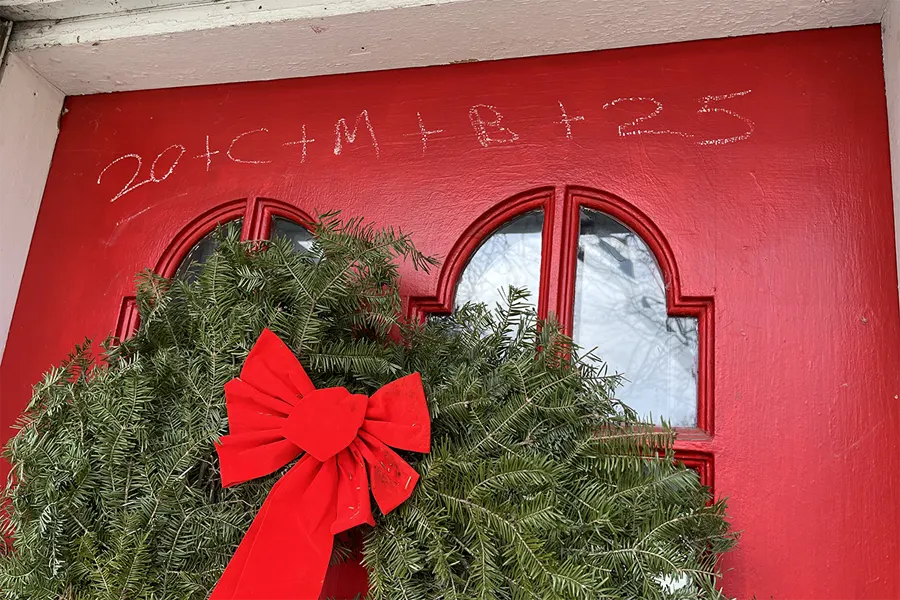
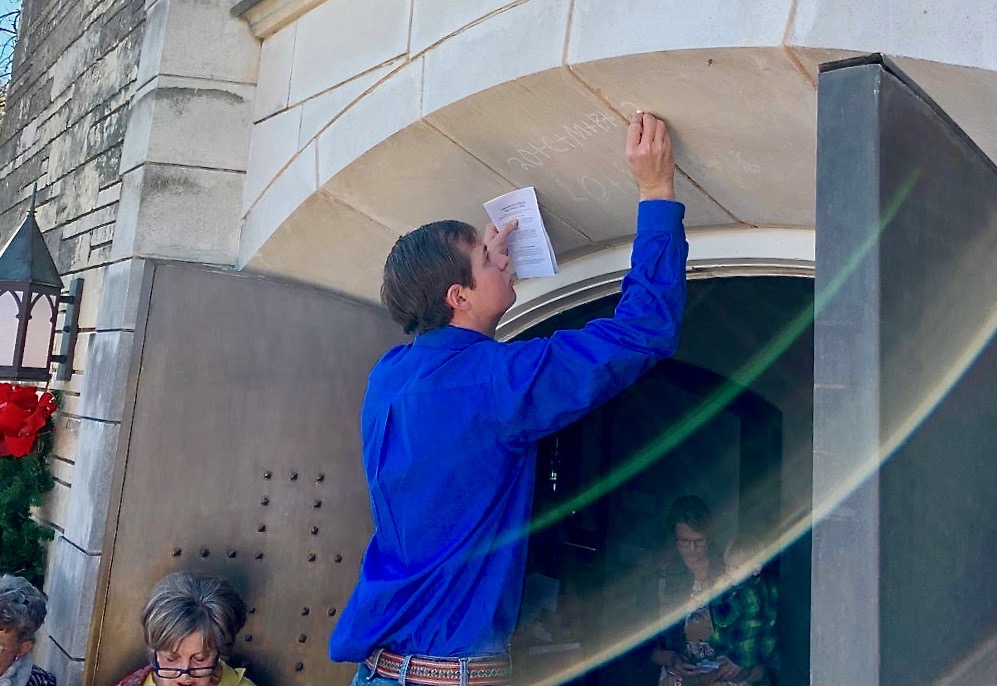
    [Episcopal News Service] From the Epiphany and continuing for days to come, more and more Episcopalians are joining other Christians around the world by writing in chalk this ancient yet ever-changing formula on their doors: 20+C+M+B+25.

    The numbers, letters and symbols have been called “holy graffiti,” and some people suggest the combination looks like the start of an algebraic equation.

    The letters C, M, B come from the traditional names for the wise men—Caspar, Melchior, and Balthazar. We celebrate Their arrival at Mary and Joseph’s home on the Epiphany. Tradition also says that three men visited the infant Jesus because the gospel writer Matthew, the only one who describes such a visit but does not number them, says they brought three gifts: gold, frankincense and myrrh. Their names appear in a Greek manuscript from 500 AD translated into Latin, which many biblical scholars consider the source of the names.

    The letters are also an abbreviation for Christus Mansionem Benedicat, which means “May Christ bless this dwelling.” The first and last numbers refer to the current year, and the plus signs in between represent the cross.

    Chalking the Door

    Brandon Schirmer chalks the door of St. Philip’s Episcopal Church in Uvalde, Texas, west of San Antonio, after Eucharist on Jan. 5, 2020. Photo: Cyndy Marsh/St. Philip’s Episcopal Church
    Brandon Schirmer chalks the door of St. Philip’s Episcopal Church in Uvalde, Texas, west of San Antonio, after Eucharist on Jan. 5, 2020. Photo: Cyndy Marsh/St. Philip’s Episcopal Church

    “Chalking the door,” as it is known, is seen as invoking Christ’s blessing not only on the physical house but on the people who live there and those who visit. There is a long tradition of blessing homes, especially on the Epiphany, which falls on January 6 each year, and the weeks that follow. Europeans have chalked their doors as part of Epiphany house blessings for centuries, especially Roman Catholics. The practice has become popular in the United States only relatively recently. You can do chalking simply with a short prayer or with songs, prayers, processions, incense and holy water. Clergy or laypeople can do the chalking.

    The Episcopal Church recognized the practice five years ago. Its Book of Occasional Services historically has contained a liturgy for blessing each room of a house, along with a shorter Epiphany house blessing. When the Standing Commission on Liturgy and Music revised the book in 2018, the editors included chalking the door for the first time. They wanted to respect how the tradition had caught on among individual Episcopalians and their congregations, according to the Rev. Paul Fromberg, then a member of the commission. (Find the blessing on page 167 of the Book of Occasional Services [PDF].)

    Spread of using chalk to bless homes

    The Rev. Mike Marsh, rector of St. Philip’s Episcopal Church in Uvalde, Texas, told Episcopal News Service in 2020 that he was glad the tradition of door blessing is spreading.

    “Given what’s going on in our country and in our world today, we need homes of refuge, whether you are a church member or not,” he said.

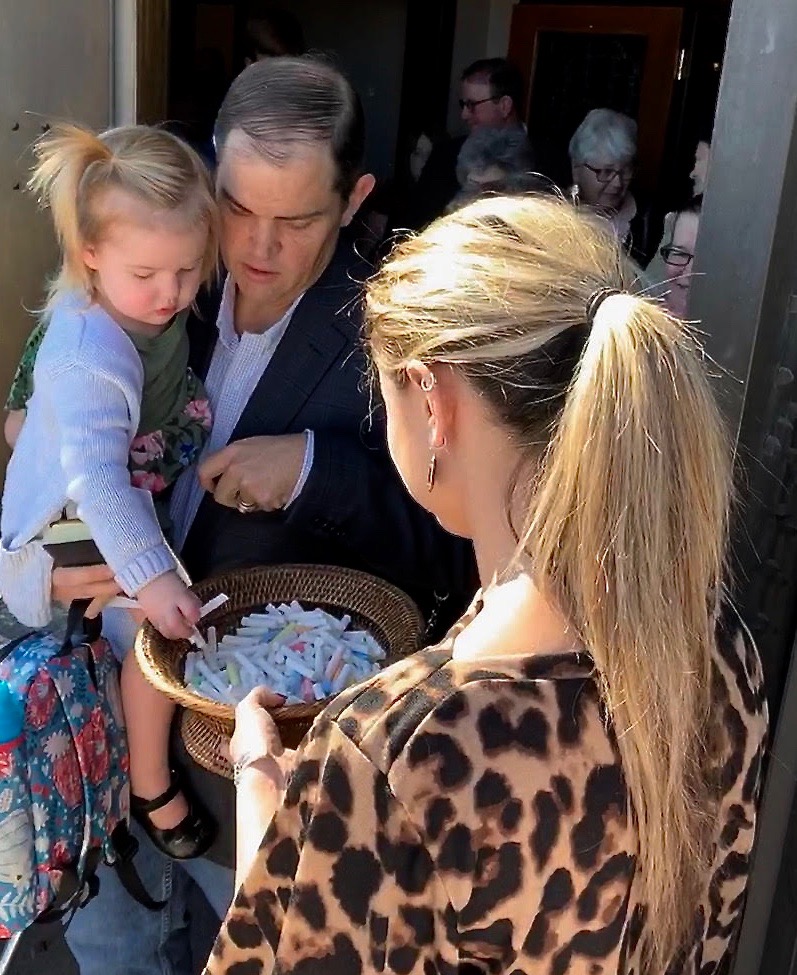
    Marsh, who annually writes about the tradition on his “Interrupting the Silence” blog, blessed about 80 pieces of chalk during the Sunday Eucharist closest to Epiphany in 2020 so that parishioners could take some home to chalk their doors. They will use a copy of the prayer he suggests. The parish also keeps some chalk for neighbors who often come asking about the practice after they see the symbols on their friends’ homes.

    “We’re all Magi, visitors bearing gifts to other people’s homes, and we’re all the Holy Family who received the visitors,” Marsh said. “The chalk reminds us of that. It’s a reminder that this is a home of refuge, it’s a home of love, it’s a home of Christ for you to come into. And, it’s not only for the guests who come into our homes; it’s a reminder to us when we come home that we have a home, that we have a refuge.”

    As Epiphany and the days beyond it come and go, he said, the chalk fades, but the blessing remains.

    “If all we do is chalk the doors and then it goes away, we haven’t done much,” Marsh said. “It needs to go into the home and into our hearts.”

    Origins of the chalking tradition

    The tradition’s origins are obscure, but the practice has its echoes in the story of the Israelite exiles in Egypt marking their doors with lamb’s blood so that the angel of the Lord will pass over their homes when it comes to kill the firstborn of Egypt. In Deuteronomy, the Israelites are told to write God’s words on their hearts, their gates and the doorposts of their houses, and to talk about them when they are at home.

    Diocese of Central Pennsylvania Bishop Audrey Scanlan and her husband, Glenn, chalk the inside lintel of their front door so that the formula is a reminder to take their faith out into the world. Yet, she added, the “Christus Mansionem Benedicat” abbreviation “is really about an internal blessing, not a blessing of sending.”

    Hanna Case holds a basket of blessed chalk as Tamsin Gerdes and her father, Mickey, choose some to take home from St. Philip’s Episcopal Church in Uvalde, Texas. Photo: Cyndy Marsh/St. Philip’s Episcopal Church
    Hanna Case holds a basket of blessed chalk as Tamsin Gerdes and her father, Mickey, choose some to take home from St. Philip’s Episcopal Church in Uvalde, Texas. Photo: Cyndy Marsh/St. Philip’s Episcopal Church

    Symbolism of using chalk this way

    Scanlan likened the chalked symbolism to the mezuzah, the small case on the right outside doorpost of Jewish homes that contains a scroll, which typically is inscribed with Deuteronomy 6:4-9 and 11:13-21. The verses tell of God’s covenant with Jews to protect them and help them flourish if they keep God’s law. They instruct Jews to write the words of the covenant on their doorposts as a reminder to them when they enter or leave a home.

    Both the mezuzah and the door chalking are “a totem to remind us, coming and going, of our faith,” Scanlan said.

    She first experienced chalking the door at Trinity Episcopal Church in Collinsville, Connecticut, the parish that sponsored her for ordination in the early 2000s. Her family has practiced it ever since. “One of the things that I’ve always coveted about other faith traditions is the prayer and expression of faith in the home,” she told ENS, adding that Episcopalians do not always explore the daily practice of faith. “I love the idea of bringing faith into the home,” she said.

    Chalking as a public declaration

    At some times and in some places, chalking the door has also been a far more public declaration of faith and refuge. Some say that in the years of Soviet dominance of Eastern Europe, the practice defied state-imposed atheism.

    Marsh likes to link chalking the door to another Epiphany tradition: the ancient church’s practice of announcing the dates of Easter as well as other major feasts and fasts which, unlike Christmas and the Epiphany, do not have a fixed date. They are the following:

    • Ash Wednesday.
    • The Triduum [3 days of holy observance] of Good Friday, Holy Saturday, and Easter.
    • Ascension.
    • Pentecost.
    • First Sunday of Advent.

    Marsh has copies of the proclamation for people to take, along with their chalk and blessing prayers.

    The so-called Easter Proclamation, he wrote, is about more than dates.

    “Ultimately, it proclaims the reality that our lives are to be lived in rhythm with and according to Jesus’ life,” Marsh said.


    The Rev. Mary Frances Schjonberg wrote this article in 2020. She retired in July 2019 as the Episcopal News Service’s senior editor and reporter. ENS updated this 2020 story slightly for Epiphany 2025.

    Episcopal News Service

    Episcopal News Service (ENS) offers in-depth reporting of local, regional, national and international news for Episcopalians and others interested in the church’s mission and ministry. Episcopal News Service is the official news source of the Episcopal Church.

    The Episcopal Church of the Redeemer: Worshiping God, living in community, reaching out to the world.

    Church of the Redeemer

    Church of the Redeemer: Worshiping God, living in community, and reaching out to the world around us. We are an Episcopal Church serving north King County and south Snohomish County, Washington. As you travel your road, go with friends walking the way of Jesus at Redeemer.

    Church of the Redeemer is at 6220 Northeast 181st Street in Kenmore, Washington. The campus is a short distance north of Bothell Way, near the Burke-Gilman Trail. The entrance looks like a gravel driveway. The campus is larger on the inside than it is on the outside. And we managed to hide a large building on the side of a hill that is not easily seen from the street.

    The Episcopal Church welcomes you.

  • The bulletin insert for January 28, 2024

    The bulletin insert for January 28, 2024

    This is the weekly bulletin insert from Sermons That Work.

    The Feast of the Presentation

    Each year on February 2, the church celebrates the Feast of the Presentation of Jesus at the Temple, also known as the Feast of the Purification, and Candlemas. This feast commemorates the 40th day after Jesus’ birth, when he was presented in the Jerusalem Temple and Mary was purified in accordance with Jewish Law.

    The Book of Leviticus mandates that, after childbirth, a woman must go to the temple to offer “two turtle-doves or two pigeons, one for a burnt-offering and the other for a sin-offering; and the priest shall make atonement on her behalf, and she shall be clean” (Leviticus 12:8).

    The Presentation of Jesus at the Temple is chronicled in the Gospel of Luke, when St. Simeon the Righteous saw Jesus in the temple and “took him in his arms and praised God,” saying, “My eyes have seen your salvation” (Luke 2:30).

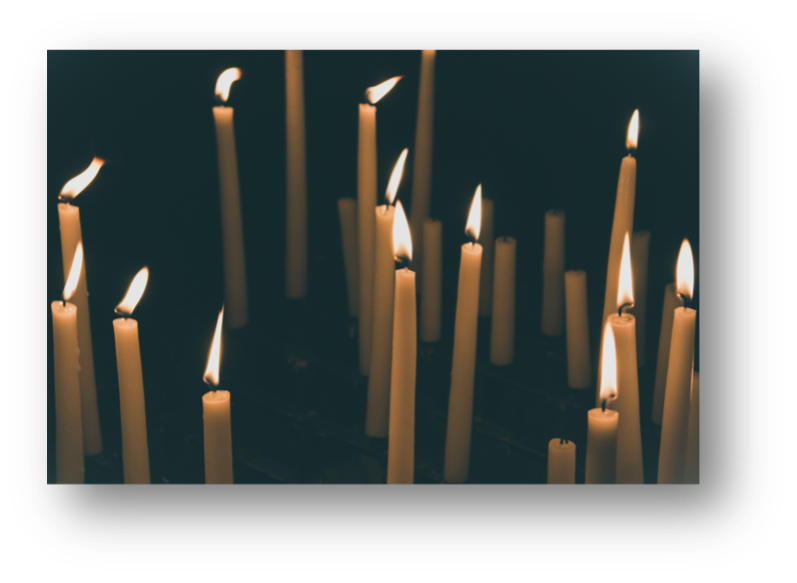
    Many lit tapers (long, thin candles)

    This blessing by Simeon is the basis for the canticle Nunc dimittis or “The Song of Simeon”:

    Lord, you now have set your servant free
    to go in peace as you have promised;
    For these eyes of mine have seen the Savior,
    whom you have prepared for all the world to see:
    A Light to enlighten the nations,
    and the glory of your people Israel.
    Glory to the Father, and to the Son, and to the Holy Spirit:
    as it was in the beginning, is now, and will be for ever. Amen

    Luke 2:29-32; Book of Common Prayer, p. 120

    An Episcopal Dictionary of the Church, edited by Don S. Armentrout and Robert Boak Slocum, explains that when the celebration of the Presentation was first introduced in Rome in the seventh century, it included a procession with candles and the singing of the Nunc dimittis, which is why this feast also became known as “Candlemas.”

    Collect for the Presentation

    Almighty and everliving God, we humbly pray that, as your only-begotten Son was this day presented in the temple, so we may be presented to you with pure and clean hearts by Jesus Christ our Lord; who lives and reigns with you and the Holy Spirit, one God, now and for ever. Amen.


    Published by the Office of Formation of The Episcopal Church, 815 Second Avenue, New York, N.Y. 10017

    © 2024 The Domestic and Foreign Missionary Society of the Protestant Episcopal Church in the United States of America. All rights reserved.

    Weekly bulletin inserts

    This weekly bulletin insert provides information about the history, music, liturgy, mission, and ministry of The Episcopal Church. For more information, please contact us at stw@episcopalchurch.org.

    Sermons That Work from the Episcopal Church

    Sermons That Work

    For more than 20 years, Sermons That Work, a ministry of The Episcopal Church’s Office of Communication, has provided free sermons, Bible studies, bulletin inserts, and other resources that speak to congregations across the Church. Our writers and readers come from numerous and varied backgrounds, and the resources we provide are used in small house churches, sprawling cathedrals, and everything between.

    The Episcopal Church of the Redeemer: Worshiping God, living in community, reaching out to the world.

    Church of the Redeemer

    Church of the Redeemer: Worshiping God, living in community, and reaching out to the world around us. We are an Episcopal Church serving north King County and south Snohomish County, Washington. As you travel your road, go with friends walking the way of Jesus at Redeemer.

    Church of the Redeemer is at 6220 Northeast 181st Street in Kenmore, Washington. The campus is a short distance north of Bothell Way, near the Burke-Gilman Trail. The entrance looks like a gravel driveway. The campus is larger on the inside than it is on the outside. And we managed to hide a large building on the side of a hill that is not easily seen from the street.

    The Episcopal Church welcomes you.

  • The bulletin insert for January 21, 2024

    The bulletin insert for January 21, 2024

    This is the weekly bulletin insert from Sermons That Work.

    Religious Life Sunday

    Did you know that there are monks, nuns, sisters and brothers, and friars in The Episcopal Church? We invite you to learn what religious life can offer you and to observe Religious Life Sunday on the 3rd Sunday in Epiphany.

    What is “Religious Life Sunday”?

    General Convention approved resolution 2022-B004, “Foundation of Religious Life Sunday,” to be held each year on the 3rd Sunday of Epiphany. On this Sunday, we reach out to Episcopalians to spread the message that monastic and Christian communities exist in The Episcopal Church, who we are, and how to find out what we can offer you.

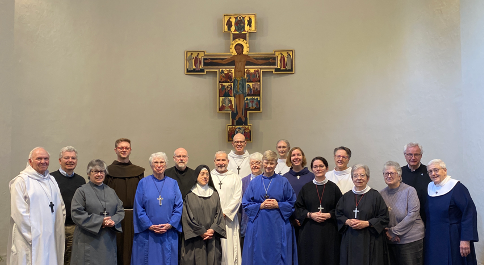
    A picture showing men and women from the various religious orders within the Episcopal Church.

    What are the “religious” communities in The Episcopal Church?

    Religious communities in The Episcopal Church include monastic communities, whose members live together under a rule of life and under vows such as poverty, chastity, and obedience. “Religious life” also includes Christian communities whose members are from all walks of life, who live in their own homes and have jobs, and who form unified, vowed communities.

    What can religious life do for me and for my faith journey?

    In religious life, over the centuries, traditions and practices have been developed to assist spiritual growth and discernment. Religious in the Episcopal Church teach about prayer practices, lead retreats, give spiritual direction, assist in writing and living a rule of life, give presentations about the spiritual journey, and provide spiritual friendship. Many of our monastic communities offer hospitality for short visits or longer retreats. The website religiouslifesunday.org includes resources, videos, a speakers list, and much more.

    Once you have made a connection with one religious community, you might want to explore becoming an associate or oblate. The process usually begins with discernment and preparation, followed by a formal service of commitment. Associates and oblates pray for the members of the community and other associates and oblates, and they usually give financial and other support, commit to a rule of life, and attend retreats. We also discern with those exploring a vocation to religious life.

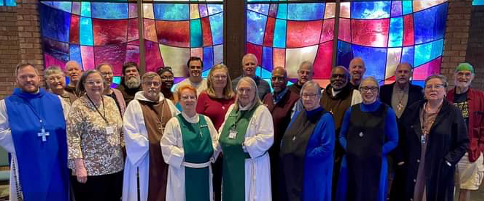
    Another picture showing men and women in religious life.

    How can I connect with a religious community?

    We welcome your interest in our lives and our communities! To learn more about monastic communities in The Episcopal Church, visit caroa.net. Form more information on Christian communities, visit naecc.net. For more resources and information, visit religiouslifesunday.org.

    Collect For Monastic Orders and Vocations

    O Lord Jesus Christ, you became poor for our sake, that we might be made rich through your  poverty: Guide and sanctify, we pray, those whom you call to follow you under the vows of poverty, chastity, and obedience, that by their prayer and service they may enrich your Church, and by their life and worship may glorify your Name; for you reign with the Father and the Holy Spirit, one God, now and forever. Amen.


    Published by the Office of Formation of The Episcopal Church, 815 Second Avenue, New York, N.Y. 10017

    © 2024 The Domestic and Foreign Missionary Society of the Protestant Episcopal Church in the United States of America. All rights reserved.

    Weekly bulletin inserts

    This weekly bulletin insert provides information about the history, music, liturgy, mission, and ministry of The Episcopal Church. For more information, please contact us at stw@episcopalchurch.org.

    Sermons That Work from the Episcopal Church

    Sermons That Work

    For more than 20 years, Sermons That Work, a ministry of The Episcopal Church’s Office of Communication, has provided free sermons, Bible studies, bulletin inserts, and other resources that speak to congregations across the Church. Our writers and readers come from numerous and varied backgrounds, and the resources we provide are used in small house churches, sprawling cathedrals, and everything between.

    The Episcopal Church of the Redeemer: Worshiping God, living in community, reaching out to the world.

    Church of the Redeemer

    Church of the Redeemer: Worshiping God, living in community, and reaching out to the world around us. We are an Episcopal Church serving north King County and south Snohomish County, Washington. As you travel your road, go with friends walking the way of Jesus at Redeemer.

    Church of the Redeemer is at 6220 Northeast 181st Street in Kenmore, Washington. The campus is a short distance north of Bothell Way, near the Burke-Gilman Trail. The entrance looks like a gravel driveway. The campus is larger on the inside than it is on the outside. And we managed to hide a large building on the side of a hill that is not easily seen from the street.

    The Episcopal Church welcomes you.

Maundy Thursday, April 2, 2026. Services at 12:00 noon and 7:00 pm. Gethsemane Watch Vigil from about 8:30 pm to 9:30 pm.

Good Friday, April 3, 2026: Services at 12:00 noon and 7:00 pm.

Holy Saturday worship at 9:30 am.

The Great Vigil of Easter, Saturday, April 4, 2025. Service at 8:00 pm. This is the night....

The 4th Sunday of Easter (Year A), April 26, 2026. Services at 8:00 am (no music) and 10:30 (music). Education classes for adults (9:15 am) and children (9:30 am).

Episcopal Church of the Redeemer
Privacy Overview

Cookie information is stored in your browser and performs functions such as recognizing you when you return to our website and helping our team to understand which pages of the website are visited. We aren't using cookies to determine your web browsing habits, but others can.