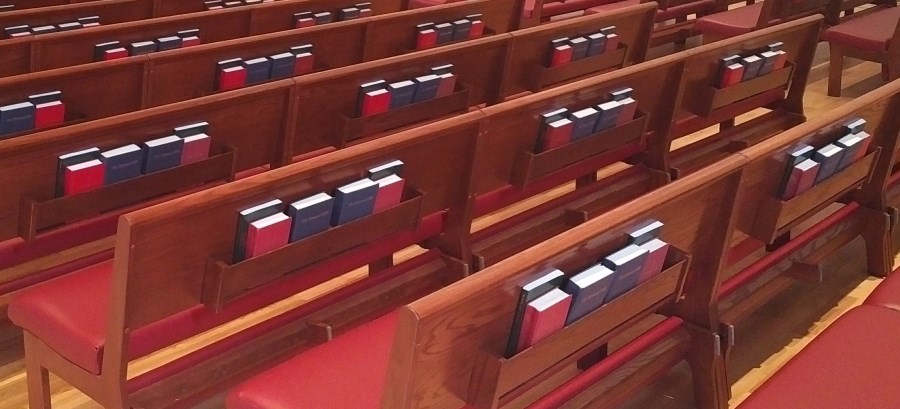
Episcopal institutions are invited to apply for evangelism grants (iam.ec/evangelismgrants) to support local and regional efforts to grow Episcopal ministries, resources, and gatherings—and to energize the church to share and celebrate the Good News of Jesus Christ. The application deadline is October 28, 2024.
The grant application, criteria, requirements, budget information, and more are available online in English, Spanish, and French.
The grants committee will consider proposals for up to $2,000 for individual faith communities and up to $8,000 for multichurch, diocesan, provincial, and other regional collaborations. A total of $125,000 is available for this funding cycle.
The 2024 grant focus is on evangelism initiatives that minister across barriers. Projects that would fit this theme include the following:
Collaborative, lay-led ministries that are not clergy dependent.
Ministries that explicitly support and include communities traditionally underrepresented in The Episcopal Church.
Ministries that engage new ways of being the church in new spaces.
Grants were awarded to 22 projects during the 2023 funding cycle. Funded projects included:
Creating Space in New Spaces, Episcopal Diocese of Kansas
Encuentros con Jesús en El Trabajo Agrícola, Episcopal Diocese of Ecuador Litoral
Episco-PRIDE, Episcopal Diocese of Iowa
Hispanic Ministries Evangelism Project, Episcopal Church in Southeast Florida
Latino/Hispanic Bilingual Camp, Episcopal Diocese of Western North Carolina
Dove Faith Café Podcast, Episcopal Diocese of Northern Indiana
Imagine Cincinnati: Nature-Based, Liturgically Rooted Worship for Families, Episcopal Diocese of Southern Ohio
Neighbor to Neighbor Evangelism, Episcopal Diocese of Alabama
Relationship Evangelism, Episcopal Diocese of Los Angeles
Weekly bulletin inserts
This weekly bulletin insert provides information about the history, music, liturgy, mission, and ministry of The Episcopal Church. For more information, please contact us at stw@episcopalchurch.org.
Sermons That Work
For more than 20 years, Sermons That Work, a ministry of The Episcopal Church’s Office of Communication, has provided free sermons, Bible studies, bulletin inserts, and other resources that speak to congregations across the Church. Our writers and readers come from numerous and varied backgrounds, and the resources we provide are used in small house churches, sprawling cathedrals, and everything between.
Church of the Redeemer
Church of the Redeemer: Worshiping God, living in community, and reaching out to the world around us. We are an Episcopal Church serving north King County and south Snohomish County, Washington. As you travel your road, go with friends walking the way of Jesus at Redeemer.
Church of the Redeemer is at 6220 Northeast 181st Street in Kenmore, Washington. The campus is a short distance north of Bothell Way, near the Burke-Gilman Trail. The entrance looks like a gravel driveway. The campus is larger on the inside than it is on the outside. And we managed to hide a large building on the side of a hill that is not easily seen from the street.
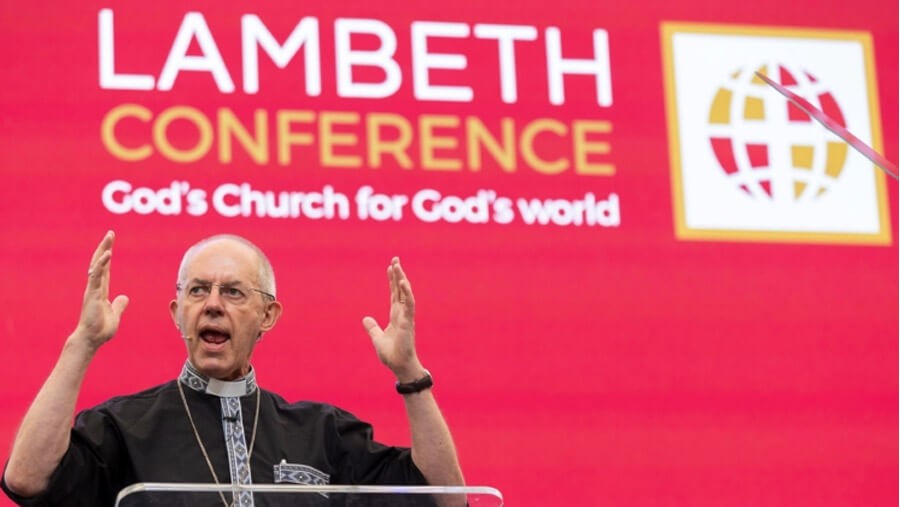
[Episcopal News Service – Canterbury, England] In his third and final keynote address of the 15th Lambeth Conference, Archbishop of Canterbury Justin Welby called on the church “to tell, to teach, and to transform by responding to human need,” driving home the conference’s theme, “God’s Church for God’s World.”
“The church united is not merely a help to the world; it is the sign of salvation to the transformation of the world. The church humbled and hospitable, generous and full of love, is not just a nice thing to have in society; it points to the kingdom of heaven,” said Welby on August 7, 2022, at the University of Kent, the site of the conference.
Please accept YouTube cookies to play this video. By accepting you will be accessing content from YouTube, a service provided by an external third party.
If you accept this notice, your choice will be saved and the page will refresh.
The church is not just another nongovernmental organization but “God’s chosen means of shining light in the darkness,” he said. Throughout his final address, Welby emphasized evangelism, formation, and discipleship, focusing on bishops’ vocation in leading God’s church, which exists for the sake of the salvation of God’s world.
It’s in periods of darkness that churches confront the world’s challenges and grow, and their members must be educated in Scripture and extrapolate it into the world.
“The strength of many churches that grow – grow deeper and grow in numbers – is that everyone knows the Gospel and can say something about their own testimony of their love and meeting with Jesus Christ,” Welby said. “They may not be eloquent, their theology may be slightly crude, but when they speak from the heart, others listen and their transformed lives illustrate their words.
“It is essential throughout the churches of the communion that everyone understands themselves to be witnesses because they are baptized and filled with the Holy Spirit.”
Over 650 bishops from across the Anglican Communion gathered July 26 at the University of Kent, just outside the city center, for the 12-day conference. Welby addressed the conference one last time when he preached at the closing Eucharist.
The office of the archbishop of Canterbury is one of the four Instruments of Communion, as is the Lambeth Conference, which is typically held every 10 years. Installed in March 2013, Welby is the 105th bishop appointed to the office.
Lambeth Calls
At this Lambeth Conference, discussion centered on “Lambeth Calls,” draft papers on 10 subject areas that were intended to initiate discussion among the bishops and to offer action items for when they return to their provinces and dioceses after the conference. Calls focused on mission and evangelism, discipleship, environment and sustainable development, reconciliation and human dignity.
Despite Welby’s and organizers’ intentions to keep the discussions focused on the conference’s theme, long-standing disputes over human sexuality began simmering even before the conference began as conservatives sought to affirm a resolution adopted by bishops attending the 1998 Lambeth Conference that condemns same-sex marriage and all sex outside of marriage between a man and a woman. But by the conference’s seventh day, Welby had managed to tamp down some of the tension by lifting up both traditional and progressive marriage beliefs.
Though stark divisions remain over issues of human sexuality across the communion, which covers 165 countries, many Anglican and Episcopal bishops concluded their time in Canterbury on a more hopeful note, looking toward unity despite lingering differences.
Christians, he said, are called to reconciliation and to be reconcilers, though at times the church “coughs and staggers” along in the darkness of the world “in fear of the future.” How, he asked, should the church act in relationship?
“That is the first and greatest call, the one we haven’t listed, but it is the greatest call because it is the Scriptural call. And through these weeks of calls and conversations, this week has not planned to be, but has become, a time of intense ecclesiological development and thinking and reflection for the Anglican Communion.
“We are a communion of churches catholic and reformed, autonomous and interdependent, and we must keep to the principles of both.”
The Scriptures, he said, form the “heart” of the reformed tradition, and the catholic tradition is not only staying true to the historical episcopacy but recognizing membership in a global church and upholding the principles of social organizing and education.
“Autonomy is an expression of subsidiarity, the principle in Catholic social teaching that we should always work at the most local level possible.”
Throughout the conference, and particularly when organizers decided to eliminate voting on the calls, delegates were reminded that the Lambeth Conference is not a legislative body, nor does it have binding authority.
Statements of support
In addition to the 10 Lambeth Calls, on August 6, the conference’s final business day, primates continued a tradition of issuing “statements of support” for areas of the Anglican Communion that are facing particular turmoil. Distinct from the Lambeth Calls, which recommend action, the statements bear witness to crises around the world – especially those that affect Anglican provinces – and send prayers for peace and resolution.
The statements range from the need to address gun violence in the United States to the climate crisis to peace in Israel and Palestine to the world’s refugee crisis. In his final address, Welby made it clear that church leaders need to be courageous and use their voices to stand up to governments.
“This is not the church getting involved in politics; it’s the church getting involved in God,” he said to applause.
“All too often, all churches, not only Anglicans, have got sucked into supporting governments colluding with injustice and upholding oppression at any and every level. To stand up against oppression is frightening because it is costly and so many of you know that so well,” Welby said.
“We don’t like it when governments speak forcefully against us or do worse than that … yet we must speak. To be silent on the climate emergency … on the unethical treatment of migrants or on war and oppression, on the abuse of human rights, on persecution, is to be one of the oppressors.”
Lambeth Conference in phases
As a result of the pandemic, the 15th Lambeth Conference took place in phases:
Phase 1, or the listening phase, happened in the year leading up to the conference.
Phase 2 was the conference itself.
Phase 3, which will be led by South Sudanese Bishop Anthony Poggo, the incoming secretary-general of the Anglican Communion, will take place over the next two years, aimed at further deepening understanding, building relationships and learning from one another.
“It’s not an action list; it’s a relationship approach. But we will have the aim of seeing how we can put into practice, contextually, in our local area, in the right way, those things on which we have agreed …,” Welby said. “[It] will enable us to pray for one another, but most of all, it will take us facing outwards, going outwards; it will enable our relationships to draw us towards greater holiness and unity.”
—Lynette Wilson is the managing editor of Episcopal News Service. She can be reached at lwilson@episcopalchurch.org.
What is the Lambeth Conference?
Every bishop of the Anglican Communion is invited to the Lambeth Conference, which is convened by the Most Reverend Justin Welby, The Archbishop of Canterbury. The Lambeth Conference has met since 1867, happens once-a-decade, and is a significant event in the life of the Anglican Communion.
The conference will explore church and world affairs. Outcomes of the conference will shape the life of the Anglican Communion in the decade ahead.
The Anglican Communion
The Anglican Communion has no central authority figure or body. It is made up of 42 autonomous members or provinces. Each member church makes its own decisions in its own way.
However, their decision-making bodies are guided by recommendations from each of the four so-called Instruments of Communion
The Secretariat, also known as the Anglican Communion Office, based in London, England support Anglicans and Episcopalians worldwide to carry out any requests from the Instruments and work to enable members of the Anglican Communion to fulfil their calling to be God’s people in the world.
Church of the Redeemer
Church of the Redeemer: Worshiping God, living in community, and reaching out to the world around us. We are an Episcopal Church serving north King County and south Snohomish County, Washington. As you travel your road, go with friends walking the way of Jesus at Redeemer.
Church of the Redeemer is at 6220 Northeast 181st Street in Kenmore, Washington. The campus is a short distance north of Bothell Way, near the Burke-Gilman Trail. The entrance looks like a gravel driveway. The campus is larger on the inside than it is on the outside. And we managed to hide a large building on the side of a hill that is not easily seen from the street.
[Episcopal News Service – Canterbury, England] The business portion of the Lambeth Conference got underway on July 30 as more than 650 bishops from across the Anglican Communion gathered at the University of Kent for Bible studies, presentations on mission and evangelism and a collective endorsement of a statement on those topics of the day.
Archbishop of Canterbury Justin Welby, who convened the conference, chose the New Testament letter of 1 Peter to provide its biblical foundation. In the morning session, Welby offered the conference’s first Bible exposition, underscoring how the reading from Scripture finds the early Christians seeking hope through their belief in Jesus during a time of exile and persecution.
Among the key themes found in 1 Peter, Welby said, are power and authority, hope and suffering, holiness, displacement and hospitality. “Although the world in which we live is completely different to that of Peter in the first century and although the world has shifted on its axis in the last 10 years with COVID and other things, the message of 1 Peter is absolutely still relevant,” Welby said. “For many of us, Peter touches on difficult topics, and we are not going to skip them. We’re going to talk about them.”
The Lambeth Conference, though typically held once a decade, last met 14 years ago in 2008. Welby’s chosen theme for this gathering is “God’s Church for God’s World,” and the first day’s plenary session, on mission and evangelism, turned the focus outward, with a call to offer Jesus’ good news to the world, like a gift for those open to hearing it.
But conference planners also have been aware of the need to look inward to address often seismic divisions within the Anglican Communion. Welby acknowledged the church’s fault lines in his reflections on 1 Peter.
“We are united in our hope, in our love for Jesus absolutely,” he said. “But as a church – in common, by the way, with every global church – we are also divided, by the assumption that the key themes of 1 Peter mean the same for everyone, that my suffering is exactly the same as your suffering. But it is not.”
The threat of persecution is a particularly consequential difference in how Anglicans around the world experience their faith, Welby noted. Belief in Jesus can be a matter of life and death in some provinces. “In this hall, many live in places of persecution, some of it violent and open, some of it slightly better concealed,” he said. “And it is difficult for those who do not experience persecution to understand the reality of the recipients of this letter.”
Welby has stressed that the Lambeth Conference is not a legislative or governing body. And, though he avoided direct mention of the controversy during his Bible reflections, Welby urged bishops to join in listening, learning and “walking together” out of a shared love for God, despite their disagreements.
“The call to us across the whole catholic church – the global church; I’m not just talking about Anglicans – is to stop our civil wars. There are enough in the world without having them in our church,” he said. “When we are one in Christ … divisions are rubbed of power. The power of Christ overcomes all that seeks to alienate, to fragment, to make for fear.
“We may be disparate. We are divided. But we have a common identity that is over everything, that we belong to Jesus Christ.”
He concluded by asking the bishops: “What is the good news that you bring to this gathering?”
Please accept YouTube cookies to play this video. By accepting you will be accessing content from YouTube, a service provided by an external third party.
If you accept this notice, your choice will be saved and the page will refresh.
Planners of this Lambeth Conference, from July 26-August 8, 2022, instituted a “Lambeth Calls” process in lieu of resolutions, partly in recognition that neither Welby nor the Lambeth Conference has authority over its 42 member provinces, including The Episcopal Church. After daily discussions, the Lambeth Calls reports are to be finalized with a consensus-building process similar to voting, though planners have preferred not to describe it as a vote.
After discussing the draft version of each of the Lambeth Calls, bishops will be given electronic devices to indicate their view in one of three ways: “This Call speaks for me,” “This Call requires further discernment” or “This Call does not speak for me.”
The Lambeth Call on Mission and Evangelism was taken up July 30 as the first of the conference’s 10 calls, opening the conference on a unifying note. The draft text of the call includes the declaration: “Every church across the Anglican Communion joyfully shares this vocation to declare the good news of God’s salvation of the world in Christ Jesus.”
The afternoon sessions in which the bishops discuss the calls are closed to the public and to reporters, though the Lambeth Conference released results of the first discussion later in the day. The call was endorsed by two-thirds of about 450 participating bishops, with another third favoring further discernment. It was not immediately clear why not all bishops attending the Lambeth Conference registered their views.
Please accept YouTube cookies to play this video. By accepting you will be accessing content from YouTube, a service provided by an external third party.
If you accept this notice, your choice will be saved and the page will refresh.
The topic also was developed during an open plenary earlier in the day, featuring the Church of England’s Archbishop of York Stephen Cottrell and Archbishop Tito Zavala of the Anglican Church of Chile.
If McDonald’s makes hamburgers and Cadbury makes chocolate, Cottrell said, “the church of Jesus Christ makes disciples. That is our core business.”
But disciples aren’t just converts, and discipleship isn’t just about going to church, he continued. “We make disciples, and disciples make peace,” he said. “We call that evangelism.”
“What the world needs is what God has lavished upon us in Christ,” Cottrell said. It needs hope, and it needs reconciliation. It needs humility in the face of the damage done to the environment, he said, evoking what will be a major theme later in the conference. “What the world needs is the knowledge that peace can be found even with disagreement.
“And dear sisters and brothers, isn’t this a particular opportunity before us this week? We can show the world that despite profound disagreement, what we have in Christ is love.”
Zavala spoke of his experience emphasizing church planting in Chile, as a priest and now as archbishop. “Our God – Father, Son, Holy Spirit – is a missionary god,” he said, and church planting isn’t a calling that God is saving for us in heaven. It is the necessary work of Christians here on Earth, he said.
Zavala also argued that Anglicans worldwide need to shift from being primarily maintenance-minded and work toward becoming a mission-minded church, always seeking new opportunities for growth. Much mission-minded work is led by the laity, he added, echoing a common refrain in The Episcopal Church about the importance of empowering lay leaders.
“We have not been called by God to close churches. We have been born to plant churches,” he said while describing his work expanding a congregation in Santiago that eventually grew to spin off new congregations established by some of the initial congregation’s members. From that experience, his province has developed a “mother church” model for starting new congregations.
From the beginning of any newly formed congregation, Zavala prompts the local leaders to consider: “What will be your next church planting project?”
The plenary session closed with an encouragement among bishops to discuss briefly with those sitting next to them how such a calling is experienced in their local contexts, tying in Welby’s earlier emphasis on the importance of learning from each other’s stories.
Bishop Jacque Boston of the Diocese of Guinea in the Province of West Africa, speaking with Episcopal News Service, described how the local context can differ significantly just within his own diocese, even as his diocese and province worlds apart in some ways from what many other Anglicans and Episcopalians experience.
Boston’s country is overwhelmingly Muslim, so the Anglican Church faces strong resistance from most of fellow citizens to Christian appeals, he told Episcopal News Service. Christians in some parts of the country also suffer discrimination for their beliefs, he said. He doesn’t fear persecution personally, partly because he is based in the southern part of the country, which is more tolerant of the minority Christians.
“It’s very difficult,” he said, adding that the Anglican diocese also struggles with lack of resources to support evangelism efforts.
The draft Lambeth Call on Mission and Evangelism includes 10 specific requests that bishops will be encouraged to take back to their dioceses. Several of them require no financial commitment, allowing them to transcend disparities in resources among Anglican provinces. “Each diocese and every church to seek fervently to be renewed by the wonder and power of the good news of Christ,” the first request says. Another calls on Episcopalians and Anglicans to discern “how to bear faithful witness to Christ and authentically proclaim the Gospels.”
Prayer plays a large role. “We pray for each other in this ministry and commit to listen to, learn from and find encouragement together in this Call,” one of the items says.
Other parts of the Call on Mission and Evangelism identify more tangible actions, such as training and deploying evangelists, and the final item asks the Anglian Communion’s secretary general “to support and monitor progress in these areas with the help of the Commission on Evangelism and Discipleship.”
—David Paulsen is an editor and reporter for Episcopal News Service. He can be reached at dpaulsen@episcopalchurch.org.
What is the Lambeth Conference?
Every bishop of the Anglican Communion is invited to the Lambeth Conference, which is convened by the Most Reverend Justin Welby, The Archbishop of Canterbury. The Lambeth Conference has met since 1867, happens once-a-decade, and is a significant event in the life of the Anglican Communion.
The conference will explore church and world affairs. Outcomes of the conference will shape the life of the Anglican Communion in the decade ahead.
The Anglican Communion
The Anglican Communion has no central authority figure or body. It is made up of 42 autonomous members or provinces. Each member church makes its own decisions in its own way.
However, their decision-making bodies are guided by recommendations from each of the four so-called Instruments of Communion
The Secretariat, also known as the Anglican Communion Office, based in London, England support Anglicans and Episcopalians worldwide to carry out any requests from the Instruments and work to enable members of the Anglican Communion to fulfil their calling to be God’s people in the world.
Church of the Redeemer
Church of the Redeemer: Worshiping God, living in community, and reaching out to the world around us. We are an Episcopal Church serving north King County and south Snohomish County, Washington. As you travel your road, go with friends walking the way of Jesus at Redeemer.
Church of the Redeemer is at 6220 Northeast 181st Street in Kenmore, Washington. The campus is a short distance north of Bothell Way, near the Burke-Gilman Trail. The entrance looks like a gravel driveway. The campus is larger on the inside than it is on the outside. And we managed to hide a large building on the side of a hill that is not easily seen from the street.
Episcopal Church Presiding Bishop Michael Curry invites Episcopalians everywhere to mark the Season after Pentecost with 30 days of prayer leading up to and encompassing the 80th General Convention in Baltimore, Maryland.
“A Season of Prayer for Revival”—from June 12 through July 11, 2022—will feature daily prayers drawn from the Book of Common Prayer. Individuals can sign up online (iam.ec/soprsignup) to receive the prayers and inspirational messages via email. The prayers will also be posted daily on social media accounts for The Episcopal Church and Forward Movement.
Downloadable bulletin inserts are available for congregational use at iam.ec/ensopr. All materials are in Spanish and English.
“As we move toward and adapt to a shorter, smaller General Convention, I invite every Episcopalian—whether you’re in Baltimore or Alaska or Honduras, whether you’re a deputy, a bishop, or a new member sitting in the pews—I invite all of us to pause each day just for a moment to pray for the expansive, reviving power of the Holy Spirit to fill our hearts and minds,” Curry said. “We are people of common prayer; may we embrace this season as an opportunity for us all to become a church that truly lives, looks, and loves like Jesus.”
The 80th General Convention is scheduled for July 8-11, 2022.
Today’s prayer from A Season of Prayer for Revival:
Almighty God, you have revealed to your Church your eternal Being of glorious majesty and perfect love as one God in Trinity of Persons: Give us grace to continue steadfast in the confession of this faith, and constant in our worship of you, Father, Son, and Holy Spirit; for you live and reign, one God, now and for ever. Amen.
Bulletin inserts
These weekly bulletin inserts provide information about the history, music, liturgy, mission, and ministry of The Episcopal Church. For more information, please contact us at stw@episcopalchurch.org.
Sermons That Work
For more than 20 years, Sermons That Work, a ministry of The Episcopal Church’s Office of Communication, has provided free sermons, Bible studies, bulletin inserts, and other resources that speak to congregations across the Church. Our writers and readers come from numerous and varied backgrounds, and the resources we provide are used in small house churches, sprawling cathedrals, and everything between.
Church of the Redeemer
Church of the Redeemer: Worshiping God, living in community, and reaching out to the world around us. We are an Episcopal Church serving north King County and south Snohomish County, Washington. As you travel your road, go with friends walking the way of Jesus at Redeemer.
Church of the Redeemer is at 6220 Northeast 181st Street in Kenmore, Washington. The campus is a short distance north of Bothell Way, near the Burke-Gilman Trail. The entrance looks like a gravel driveway. The campus is larger on the inside than it is on the outside. And we managed to hide a large building on the side of a hill that is not easily seen from the street.
The article appeared on my newsfeed on Saturday, as I was scrolling through Facebook. “Debates about LGBTQ acceptance roil Seattle-area nonprofits, churches.” The Seattle Times headline caught my eye. I started to read it, but only made it so far before I had to stop. “But in Christian circles at least,” it read “the risks [of being LGBTQ] are enormous, with jobs, funding and congregation membership in the balance.” Ten minutes later I was three hundred words in to a rebuttal letter reminding the Times that Episcopalians are indeed Christians, and decrying the article in general as lazy writing, when I paused. For all my frustration, all my angst, and the truth that the article was indeed pretty poorly researched and written without a real depth of understanding of the issue—all points that a colleague had already deftly articulated to the Times, a small voice kept asking, why doesn’t the author know about the Episcopal experience? It’s because of us.
“Don’t worry,” we want to say, “we aren’t those sort of Christians.” This runs dangerously close, though, to saying “not all Christians,” just as some are quick to say “Not all white people…” “Not all rich people…” If the best we can do in talking about the marvelous power and presence of God in our lives is to say, “we don’t agree with those people,” then we should not be surprised that articles like the one in the Times get published. We cannot expect to define ourselves in opposition and be taken seriously.
We must define ourselves by what we do believe. We believe in a God who is known in love. We believe in a God who sent Jesus to witness to that love and to become a sign of God’s faithful love for all people. We believe in God who abides with the world, who enervates all living things to lead the whole of creation into love that flows from the heart of God. We will not speak of God perfectly, but that’s not what is asked of us. It is not what we promised in baptism to do. Each of us must speak about what we believe in our lives, the good news of God in Christ that give us hope, and instructs us to love as God loves. It’s either that, or let someone else tell our story, poorly.
Welcome to Church of the Redeemer: Worshiping God, living in community, and reaching out to the world. We are an Episcopal Church serving north King County and south Snohomish County, Washington. As you travel your road, go with friends walking the way of Jesus at Redeemer.
Church of the Redeemer is at 6220 Northeast 181st Street in Kenmore, Washington. The campus is a short distance north of Bothell Way, near the Burke-Gilman Trail. The entrance looks like a gravel driveway. The campus is larger on the inside than it is on the outside. And we managed to hide a large building on the side of a hill that is not easily seen from the street.
On Covenant, a part of The Living Church, there is an article on numeric decline in the Episcopal Church. Even saying the word decline is somewhat fraught these days. Some people will point out that the church does not have to be big to matter. Or, will trot out the old Mark Twain quote about statistics and lies.
The author of the article, David Goodhew, is quick to acknowledge that numbers only tell part of the story. However, he says, “If we believe Christian faith is good news, we should be seeking its proliferation, and be worried when it shrinks. Ignoring uncomfortable numbers does no good. Indeed, it only means the problems will have increased by the time we face the true state of affairs” (Facing Episcopal Church decline – Covenant).
Some of the numbers that the author quotes appear breathtaking in their severity. The statistics are broken down. The numbers of baptisms and marriages are particularly startling. Baptisms in 2015 compared with 1980 have dropped by half. Marriages in that same epoch have dropped from almost 39,000 to under 10,000. Taken along with the other membership data that Goodhew reports, it would not be hard to conclude that the Episcopal church will be consigned to the dustbin of history in a few decades.
Goodhew is also at pains to draw our attention to the fact that some of the causes of this are out of our control. Demographics do not favor the church — in a church that is predominately white, the low birthrate does us no favors. Nor has the decade of conflict and schism been a factor that makes the church particularly attractive — though these trends predate the latest unpleasantness over human sexuality. The rising secularism in American society is also noted — though we in the Pacific Northwest are much more accustomed to this trend than other parts of the country.
It is, Goodhew infers, the church’s response to these realities that has done the most damage. We tend to move slowly to change and adapt, a natural outgrowth of our traditionalist mindset as a denomination. Being a church that sits in the middle of things — both Catholic and Reformed — we are slow to make too many course corrections. This habit served us well for hundreds of years, but now, it might cause us to disappear, in theory.
Though it is easy to read Goodhew’s article and jump to the doom and gloom scenarios for our denomination, it’s important to center ourselves, even in this, in the resurrection. Each church is an outpost of God’s Kingdom in the world. We are heralds of Good News that God is doing something in the world. We are not responsible for the growth or shrinking of the church, local or national. We are responsible for heralding the Good News of God in Christ by living our lives in accordance with the Baptismal Covenant and engaging in the ministry of reconciling the world to God through loving relationship with God and our neighbor. I believe that continuing this work, hard though it may be when we hear statistics that seem ruinous, constitutes the best, the only way to “grow” the church: to plant and water seeds of the Good News that will grow with God’s grace. After all, we have the room now to grow.
Church of the Redeemer
Church of the Redeemer: Worshiping God, living in community, and reaching out to the world around us. We are an Episcopal Church serving north King County and south Snohomish County. We welcome you be with us as we walk the way of Jesus.
Church of the Redeemer is at 6220 Northeast 181st Street in Kenmore, Washington. We are a short distance north of Bothell Way, near the Burke-Gilman Trail. The entrance looks like a gravel driveway. The campus is larger on the inside than it is on the outside. And we managed to hide a large building on the side of a hill that is not easily seen from the street.