Episcopal Youth Event and Encuentro de Jóvenes Episcopales
The following letter from the Rev. Lester Mackenzie, chief of Mission Program, provides an update on The Episcopal Church’s two largest events for young people. It was published on July 25, 2025.
May grace and peace be with you during these warm summer days. After listening carefully and discerning with Presiding Bishop Sean Rowe, our leadership team, and many of you across the church, and reading this report on EYE (Episcopal Youth Event) from 2021, I write with a full heart and deep hope for the future of our youth gatherings. We are all asking the same questions; and after much prayer and conversation, I want to share where we feel called to go next.
As Bishop Sean has said, “We will be a strong, adaptive church that communicates and embodies the depth of Christian spirituality and works toward The Episcopal Church’s vision of God’s kingdom by supporting ministry on the ground in dioceses.” This vision guides these plans.
EJE 2026 – A Celebration in Iglesia Episcopal en Colombia
Encuentro de Jóvenes Episcopales (EJE) will meet July 13–16, 2026, in Medellín, Colombia. This gathering will give Province IX a beautiful chance to celebrate faith, culture, and the gifts our young people bring. Our Mission Program team will work closely with Province IX leaders to bring this to life.
Looking Ahead to EYE 2028
After EJE 2026, we will pause to pray and reflect on what Episcopal Youth Event should look like in 2028. This space will help us hear what our communities most need. Some have wondered if EYE could happen alongside General Convention. After looking at that carefully, we decided combining them would stretch our volunteers too thin and make it harder to honor the unique spirit of both events. We will preserve the essence of each gathering and fully support the Official Youth Presence at General Convention.
Regional Gatherings
During late 2026 and 2027, we will invite dioceses, regions, and provinces to host smaller, more local gatherings where we can learn, connect, and try new ideas together.
After EJE 2026, we will gather young people, mentors, and leaders—especially those from communities of color—to help us imagine what comes next. You can expect to hear more about the timeline and opportunities to participate by fall 2026. We will move forward with purpose and care.
As I sit with all of this, I keep thinking about Esther and her moment of purpose. Maybe you are here “for such a time as this.” We must trust that good will grow from this work, even if we can’t see it all yet. I ask for your prayers and your partnership. Here’s how you can join us:
Lift up young leaders in your communities.
Share this vision with others who care about youth ministry.
Walk alongside us as we move through this transition.
Pray for our youth, their families, and the adult mentors who walk alongside them.
Thank you for everything you do to keep the holy fire alive in our young people. Your dedication makes all the difference.
With deep gratitude,
The Rev. Lester V. Mackenzie, AHC (Associate of the Holy Cross) Chief of Mission Program, Presiding Bishop’s Office
Weekly bulletin inserts
This weekly bulletin insert provides information about the history, music, liturgy, mission, and ministry of The Episcopal Church. For more information, please contact us at stw@episcopalchurch.org.
Sermons That Work
For more than 20 years, Sermons That Work, a ministry of The Episcopal Church’s Office of Communication, has provided free sermons, Bible studies, bulletin inserts, and other resources that speak to congregations across the Church. Our writers and readers come from numerous and varied backgrounds. Small house churches, sprawling cathedrals, and everything between use the resources that Sermons That Work provides.
Church of the Redeemer: Worshiping God, living in community, and reaching out to the world around us. We are an Episcopal Church serving north King County and south Snohomish County, Washington. As you travel your road, go with friends walking the way of Jesus at Redeemer.
Church of the Redeemer is at 6220 Northeast 181st Street in Kenmore, Washington. The campus is a short distance north of Bothell Way, near the Burke-Gilman Trail. The entrance looks like a gravel driveway. The campus is larger on the inside than it is on the outside. And we managed to hide a large building on the side of a hill that is not easily seen from the street.
In this episode of Prophetic Voices, we’ll be discussing the lectionary for Sunday, September 14, Proper 19 (C). The texts covered are Luke 15:1-10 and Jeremiah 4:11-12, 22-28.
Our amazing guests this week are:
The Rev. Jazzy Bostock, a kanaka maoli woman serving St. John the Baptist and Maluhia Lutheran Church in Waianae, Hawaii. She and her wife have a small homestead, consisting of raised garden beds, some fruit trees, a flock of hens, a hive of bees, and a dog. Their two sons, Theo, who came to them through foster care, and Sam, keep joy, laughter, and coffee flowing in their home.
The Rev. Dr. Lisa da Silva, a professor of wisdom traditions in the San Francisco Bay Area, where she also serves as a spiritual director. The creation of art is her passion, as is deep house music. Lisa was selected to be a 2024 Episcopal Church delegate at COP29 in Azerbaijan.
The Rev. Anna Shine, a campus minister at Appalachian State University and the missioner for creation care and social justice at St. Luke’s Episcopal Church in Boone, Diocese of Western North Carolina. Her deepest passion is to find ways to connect and reconnect people of faith with the rest of God’s creation. She loves listening to stories, doing puzzles, making music with others through singing and playing violin, getting her hands dirty in garden soil, and spending time with her dog, Hugo.
Prophetic Voices is hosted by the Rev. Isaiah “Shaneequa” Brokenleg, The Episcopal Church’s interim officer for Indigenous Ministries. For more information on Becoming Beloved Community, visit iam.ec/becomingbelovedcommunity. To learn more about Creation Care, visit episcopalchurch.org/creation-care.
Prophetic Voices: Preaching and Teaching Beloved Community
Across our church and our society, we are having profound dialogues about race, truth, justice, and healing. Coming this Advent, Prophetic Voices: Preaching and Teaching Beloved Community explores where that dialogue intersects with our faith. Join us and our invited guests as we share prophetic voices and explore the readings through the lens of social justice.
You’ll hear ancient texts interpreted in new ways, find fodder for preaching and teaching, and make present day connections to the prophetic voices of the Bible. This podcast will help us rethink how we hear, see, and interact with the lectionary readings.
Church of the Redeemer
Welcome to Church of the Redeemer: Worshiping God, living in community, and reaching out to the world. We are an Episcopal Church serving north King County and south Snohomish County, Washington. As you travel your road, go with friends walking the way of Jesus at Redeemer.
Church of the Redeemer is at 6220 Northeast 181st Street in Kenmore, Washington. We are a short distance north of Bothell Way, near the Burke-Gilman Trail. The entrance looks like a gravel driveway. The campus is larger on the inside than it is on the outside. And we managed to hide a large building on the side of a hill that is not easily seen from the street.
The talented Phoebe Chatfield, who serves as the staff officer for creation care for The Episcopal Church. She lives in Somerville, Mass., and is committed to creating a world where all can thrive.
The Rev. Canon Deborah Royals, who serves as the canon for Native American ministry in the Diocese of Arizona. She is developing the Four Winds Indigenous new church community in Tucson, and is piloting a chaplain position for the Coalition to Dismantle the Doctrine of Discovery. Debbie is Indigenous Pascua Yaqui, a registered nurse, a mom, and a grandma, and is passionate about living out her call to serve the spiritual, mental, emotional, and physical wellness of all God’s people.
Dr. David O’Hara, who is the canon for creation care for the Diocese of South Dakota. He is a professor of religion, philosophy, classics, and environmental studies at Augustana University in Sioux Falls, where he also serves as the director of environmental studies and sustainability. He studies the diverse relationships between fish and forests, global water systems, and the way our beliefs take concrete form in what we build. He loves sharing books, tea, and the great outdoors with others, and especially with his wife, the Rev. Dr. Christina O’Hara.
Prophetic Voices is hosted by the Rev. Isaiah “Shaneequa” Brokenleg, The Episcopal Church’s staff officer for Racial Reconciliation. For more information on Becoming Beloved Community, visit iam.ec/becomingbelovedcommunity. To learn more about Creation Care, visit episcopalchurch.org/creation-care.
Feminism in the Wild: How Human Biases Shape Our Understanding of Animal Behavior by Ambika Kamath and Melina Packer
Ishkode: A Story of Fire by Evan Larson and Melonee Montano
The Service Berry: Abundance and Reciprocity in the Natural World by Robin Wall Kimmerer
So We & Our Children May Live: Following Jesus in Confronting the Climate Crisis by Sarah Augustine and Sheri Hostetler
The Land Is Not Empty: Following Jesus in Dismantling the Doctrine of Discovery by Sarah Augustine
Birds in the Sky, Fish in the Sea: Attending to Creation with Delight and Wonder by Matthew Dickerson and Matthew L. Clark
Living Resistance: An Indigenous Vision for Seeking Wholeness Every Day by Kaitlin B. Curtice
Prophetic Voices: Preaching and Teaching Beloved Community
Across our church and our society, we are having profound dialogues about race, truth, justice, and healing. Coming this Advent, Prophetic Voices: Preaching and Teaching Beloved Community explores where that dialogue intersects with our faith. Join us and our invited guests as we share prophetic voices and explore the readings through the lens of social justice.
You’ll hear ancient texts interpreted in new ways, find fodder for preaching and teaching, and make present day connections to the prophetic voices of the Bible. This podcast will help us rethink how we hear, see, and interact with the lectionary readings.
Church of the Redeemer
Welcome to Church of the Redeemer: Worshiping God, living in community, and reaching out to the world. We are an Episcopal Church serving north King County and south Snohomish County, Washington. As you travel your road, go with friends walking the way of Jesus at Redeemer.
Church of the Redeemer is at 6220 Northeast 181st Street in Kenmore, Washington. We are a short distance north of Bothell Way, near the Burke-Gilman Trail. The entrance looks like a gravel driveway. The campus is larger on the inside than it is on the outside. And we managed to hide a large building on the side of a hill that is not easily seen from the street.
On August 15, the church celebrates the Feast of Saint Mary the Virgin. Mary, the mother of Christ, has been celebrated since the earliest days of the Christian church.
The Gospel of Luke contains a “Song of Praise” that was sung by Mary when her cousin Elizabeth recognized her as the mother of the Lord (Luke 1:43). Elizabeth was pregnant with John the Baptist when her cousin Mary, who was pregnant with Jesus, came to see her:
“When Elizabeth heard Mary’s greeting, the child leapt in her womb. And Elizabeth was filled with the Holy Spirit and exclaimed with a loud cry, ‘Blessed are you among women, and blessed is the fruit of your womb. And why has this happened to me, that the mother of my Lord comes to me? For as soon as I heard the sound of your greeting, the child in my womb leapt for joy’” (Luke 1:41-44).
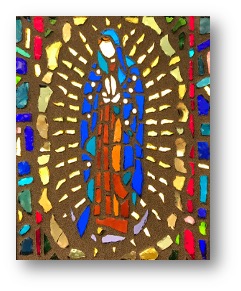
Stained glass depiction of St. Mary the Virgin from the Episcopal Church Center, San Diego, Diocese of San Diego
“Mary’s Song of Praise” is also called “The Magnificat” because its opening line in Latin is: “Magnificat anima mea Dominum,” “My soul magnifies the Lord.”
Mary’s Song of Praise (The Magnificat)
My soul magnifies the Lord, and my spirit rejoices in God my Savior, for he has looked with favor on the lowliness of his servant. Surely, from now on all generations will call me blessed; for the Mighty One has done great things for me, and holy is his name. His mercy is for those who fear him from generation to generation. He has shown strength with his arm; he has scattered the proud in the thoughts of their hearts. He has brought down the powerful from their thrones, and lifted up the lowly; he has filled the hungry with good things, and sent the rich away empty. He has helped his servant Israel, in remembrance of his mercy, according to the promise he made to our ancestors, to Abraham and to his descendants for ever.
Luke 1:46-55
Weekly bulletin inserts
This weekly bulletin insert provides information about the history, music, liturgy, mission, and ministry of The Episcopal Church. For more information, please contact us at stw@episcopalchurch.org.
Sermons That Work
For more than 20 years, Sermons That Work, a ministry of The Episcopal Church’s Office of Communication, has provided free sermons, Bible studies, bulletin inserts, and other resources that speak to congregations across the Church. Our writers and readers come from numerous and varied backgrounds. Small house churches, sprawling cathedrals, and everything between use the resources that Sermons That Work provides.
Church of the Redeemer: Worshiping God, living in community, and reaching out to the world around us. We are an Episcopal Church serving north King County and south Snohomish County, Washington. As you travel your road, go with friends walking the way of Jesus at Redeemer.
Church of the Redeemer is at 6220 Northeast 181st Street in Kenmore, Washington. The campus is a short distance north of Bothell Way, near the Burke-Gilman Trail. The entrance looks like a gravel driveway. The campus is larger on the inside than it is on the outside. And we managed to hide a large building on the side of a hill that is not easily seen from the street.
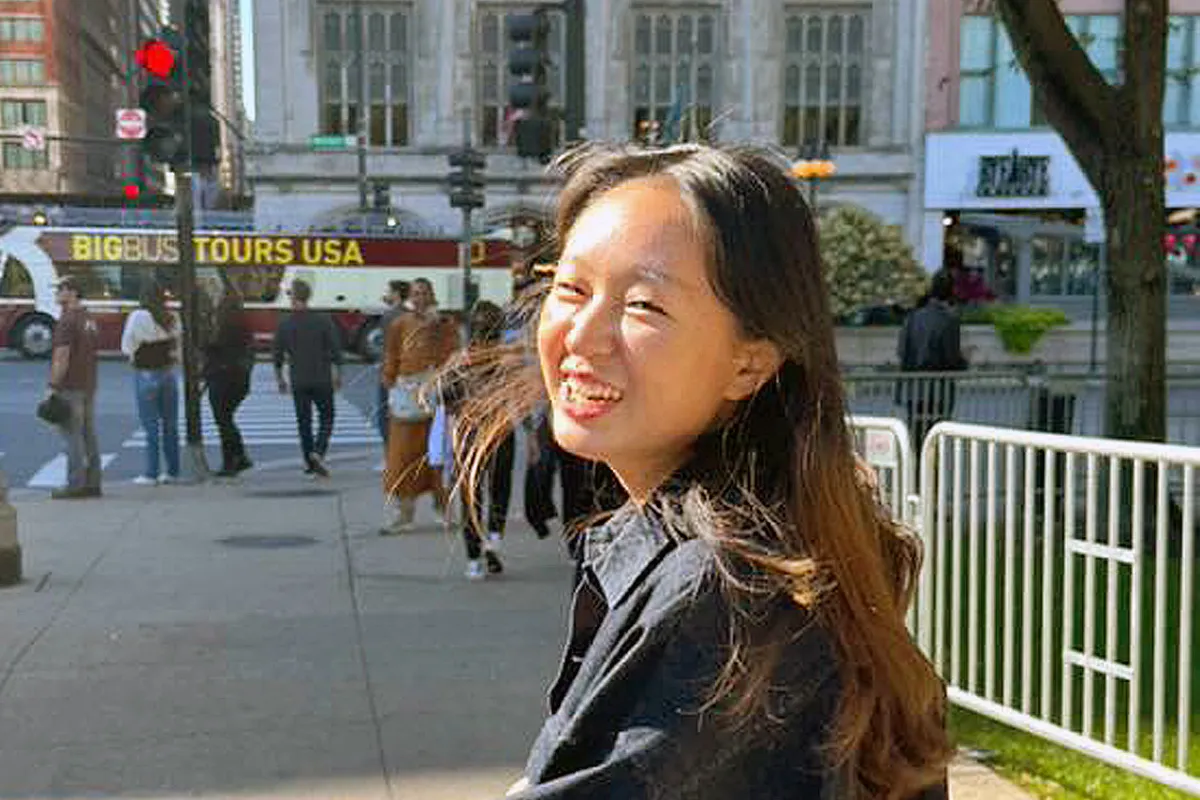
[Episcopal News Service] The Diocese of New York is calling for prayers and sharing news stories, statements and advocacy efforts on social media in response to the arrest and detainment of Yeonsoo Go, the 20-year-old daughter of an Episcopal priest, who is from South Korea.
Yeonsoo Go’s mother is the Rev. Kyrie Kim, is a priest in the diocese. She went to a routine visa hearing on July 31, 2025, at Federal Plaza in Manhattan as part of the process to renew her visa. Her visa is set to expire in December. An immigration judge scheduled Go’s next hearing for October. After Go left the hearing, U.S. Immigration and Customs Enforcement agents arrested her outside the building. They placed her in federal detention nearby before relocating her to a facility in Louisiana. ICE is accusing Go of “overstaying her visa.” She has been placed in expedited deportation proceedings, according to Tricia McLaughlin, assistant secretary at the Department of Homeland Security.
“[Go’s] detention represents a disturbing ans unacceptable escalation of enforcement against individuals in good standing with pending immigration cases,” the Diocese of New York said in a Facebook post promoting an August 2, 2025, interfaith vigil “calling for Yeonsoo’s immediate release and for broader accountability in how ICE is targeting immigrants, students, and family members.” The diocese hosted the public vigil in collaboration with the Interfaith Center of New York and the New York Immigration Coalition.
Yeonsoo Go’s immigration history
Go moved to the United States in 2021 from South Korea on a religious worker’s dependent visa, known as the R-2. She graduated from Scarsdale High School in Westchester County, New York, in 2024. Now Go is majoring in pre-pharmacy at Purdue University in West Lafayette, Indiana. Throughout her freshman year at Purdue, Go was “very active” in campus ministry,” according to the Rev. Hilary Cooke, chaplain of the Chapel of the Good Shepherd, Purdue’s Episcopal campus ministry.
“Yeonsoo was involved in all sorts of outreach activities. She raised money for Riley Children’s Hospital during Purdue’s dance marathon, and when I last saw her in May, she was helping with Girls on the Run,” Cooke told Episcopal News Service. “Yeonsoo is always willing to help people in need – always kind and caring.”
Indianapolis Bishop Jennifer Baskerville-Burrows told ENS in an Aug. 4 written statement that Go’s “illegal detention” has “shaken us deeply.”
“[Yeonsoo Go] is a cherished member of our diocesan family, the Chapel of the Good Shepherd, the West Lafayette community, and the wider Church – and we are gravely concerned for her well-being,” Baskerville-Burrows said. “The Diocese of Indianapolis has long stood with immigrant families, and we will continue to do so now, as we pray, act, and advocate for her release. We will not look away; we will stand with Yeon-Soo until she is safely home.”
Immigrants in ICE custody
As of August 1, 2025, 56,579 immigrants are in ICE custody. This is according to the latest available data compiled by NBC News.
President Donald Trump campaigned on a promise to deport undocumented immigrants and immigrants with criminal histories. However, ICE arrested and deported many immigrants since Trump took office in January were in the United States legally and have no criminal background. Go has no criminal record, according to news reports.
Since January, ICE and the U.S. Customs and Border Protection agents have been arresting immigrants at courthouses, workplaces and other public and private places nationwide. In the New York City area, more than half of the detained immigrants arrested by ICE had gone to federal immigration offices or immigration courts for routine and mandated appearances. This is according to federal data shared by the New York Times. Between January and late June, ICE arrested at least 2,365 immigrants in metro New York.
Interfaith leaders and state and local officials plan to host another community rally and vigil event for Go. They scheduled this on August 7, 2025, at 5 p.m. Eastern in Scarsdale at Chase Park. The Diocese of New York’s Episcopal Asian Supper Table, or EAST, and other leaders and Episcopal organizations are promoting the event on social media.
Episcopal Church immigration information resources
To help Episcopalians track updates on U.S. immigration policy and available resources, The Episcopal Church’s Office of Government Relations and Episcopal Migration Ministries host 30-minute virtual updates Tuesdays from 1-1:30 p.m. Eastern.
The Episcopal Church also maintains an immigration action toolkit and other resources available online.
Shireen Korkzan is a reporter and assistant editor for Episcopal News Service. Reached her at skorkzan@episcopalchurch.org.
Church of the Redeemer
Church of the Redeemer: Worshiping God, living in community, and reaching out to the world around us. We are an Episcopal Church serving north King County and south Snohomish County, Washington. As you travel your road, go with friends walking the way of Jesus at Redeemer.
Church of the Redeemer is at 6220 Northeast 181st Street in Kenmore, Washington. The campus is a short distance north of Bothell Way, near the Burke-Gilman Trail. The entrance looks like a gravel driveway. The campus is larger on the inside than it is on the outside. And we managed to hide a large building on the side of a hill that is not easily seen from the street.
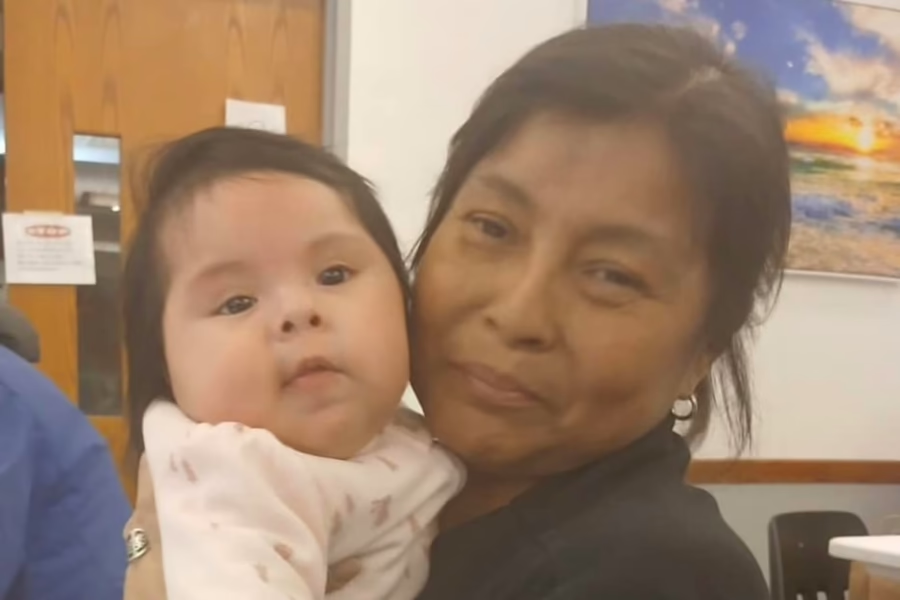
[Episcopal News Service] On the same day the daughter of an Episcopal priest in the Diocese of New York was arrested and detained by U.S. Immigration and Customs Enforcements agents outside Federal Plaza in Manhattan, Elizabeth “Ketty” De Los Santos was also arrested in the same place and is now being detained in a facility in Louisiana.
The 59-year-old grandmother from Peru is a parishioner of St. Bartholomew’s Episcopal Church in White Plains. She went to a routine asylum hearing on July 31, 2025, at Federal Plaza. Her arrest by ICE agents was after leaving the hearing.
“[De Los Santos] was following the rules. Showing up to continue her case,” the Rev. Este Gardner, rector of St. Bartholomew’s, wrote on the parish’s Facebook page on August 4, 2025. “She is now in a detention center in Louisiana. They sleep on the floor. The conditions are terrible. There is constant pressure to sign self-deportation papers, which she is sorely tempted to do.”
Why De Los Santos seeks asylum
De Los Santos fled to the United States from Peru after her bakery business was extorted. The extortioners threatened to kill her when she couldn’t pay them enough money, according to the Facebook post.
Asylum-seekers, like De Los Santos, and refugees leave their homes for a variety of reasons. This includes but not limited to war, violence and persecution over race, ethnicity, religion or sexual orientation. Seeking asylum in the United States is legal. As of December 31, 2024, 1,446,908 people have open asylum claims in the United States, according to the latest data from the U.S. Citizenship and Immigration Services. The federal government’s backlog in U.S. immigration courts is at 3,830,855 pending cases as of June 30, according to the latest numbers from the Executive Office for Immigration Review.
Although people often use the terms migrants and asylum-seekers interchangeably, not all migrants are asylum-seekers. Asylum-seekers ask for protection from persecution or violence before legal recognition as refugees. They can apply for work authorization while their asylum application is pending.
Prayer vigil held for De Los Santos and Go
The Diocese of New York held a prayer vigil on August 2, 2025, outside Federal Plaza calling for the immediate release of De Los Santos and Yeonsoo Go, a visa holder from South Korea and an incoming sophomore at Purdue University in West Lafayette, Indiana. ICE released Go from custody on August 4.
“We showed up … for our sisters and for thousands we don’t know. And we will keep praying, keep coming back, keep demanding justice for them all,” the Rev. Stephanie Spellers, canon-in-residence at St. Bartholomew’s Episcopal Church in Midtown Manhattan, wrote in an August 2 Facebook post.
Mary Rothwell Davis, an immigration attorney for the Diocese of New York, said in a live August 4 interview on CNN that De Los Santos and Go were on the same bus heading to a nearby airport to fly to Louisiana for detainment at ICE’s Richwood Correction Center in Monroe. The bus drove past the vigil en route to the airport.
“They saw themselves being supported but also felt themselves being torn away from their community,” Davis said.
Number of immigrants in ICE custody
As of August 1, 56,579 immigrants are in ICE custody, according to the latest available data compiled by NBC News.
Since President Donald Trump took office on January 20, 2025, ICE and U.S. Customs and Border Protection agents have been arresting immigrants at courthouses, workplaces and other public and private places nationwide. In the New York City area, agents arrested more than half of the detained immigrants, like De Los Santos and Go, after going to federal immigration offices or immigration courts for routine and mandated appearances, according to data shared by the New York Times. Between January and late June, ICE and CBP has arrested 2,365 immigrants in metro New York.
The Diocese of New York said in an August 4 Facebook post that it “will continue to fight for Ketty’s release, along with so many others who remain voiceless.”
Spellers echoed a similar sentiment.
“Americans, please understand: Due process means nothing here. Justice, truth the Constitution – they mean nothing here. What’s operative is a blank check and free rein for ICE to illegally terrorize and disappear the most vulnerable among us,” Spellers said in her Facebook post. “If you love America, if you follow Jesus, please stand against this evil. Now.”
Resources
The Episcopal Church provides information to track updates on U.S. immigration policy and available resources.
The Episcopal Church also maintains an immigration action toolkit and other resources available online.
Shireen Korkzan is a reporter and assistant editor for Episcopal News Service. Reached her at skorkzan@episcopalchurch.org.
Church of the Redeemer
Church of the Redeemer: Worshiping God, living in community, and reaching out to the world around us. We are an Episcopal Church serving north King County and south Snohomish County, Washington. As you travel your road, go with friends walking the way of Jesus at Redeemer.
Church of the Redeemer is at 6220 Northeast 181st Street in Kenmore, Washington. The campus is a short distance north of Bothell Way, near the Burke-Gilman Trail. The entrance looks like a gravel driveway. The campus is larger on the inside than it is on the outside. And we managed to hide a large building on the side of a hill that is not easily seen from the street.
[Episcopal News Service — Dyer, Indiana] Nearly 60 years after Jonathan Myrick Daniels was killed by a white special deputy sheriff from Lowndes County, Alabama, hundreds of Episcopalians – including clergy, seminarians and lay people – and civil rights activists will gather and march in Hayneville to commemorate the Episcopal seminarian and other martyrs of the Civil Rights Movement in the state.
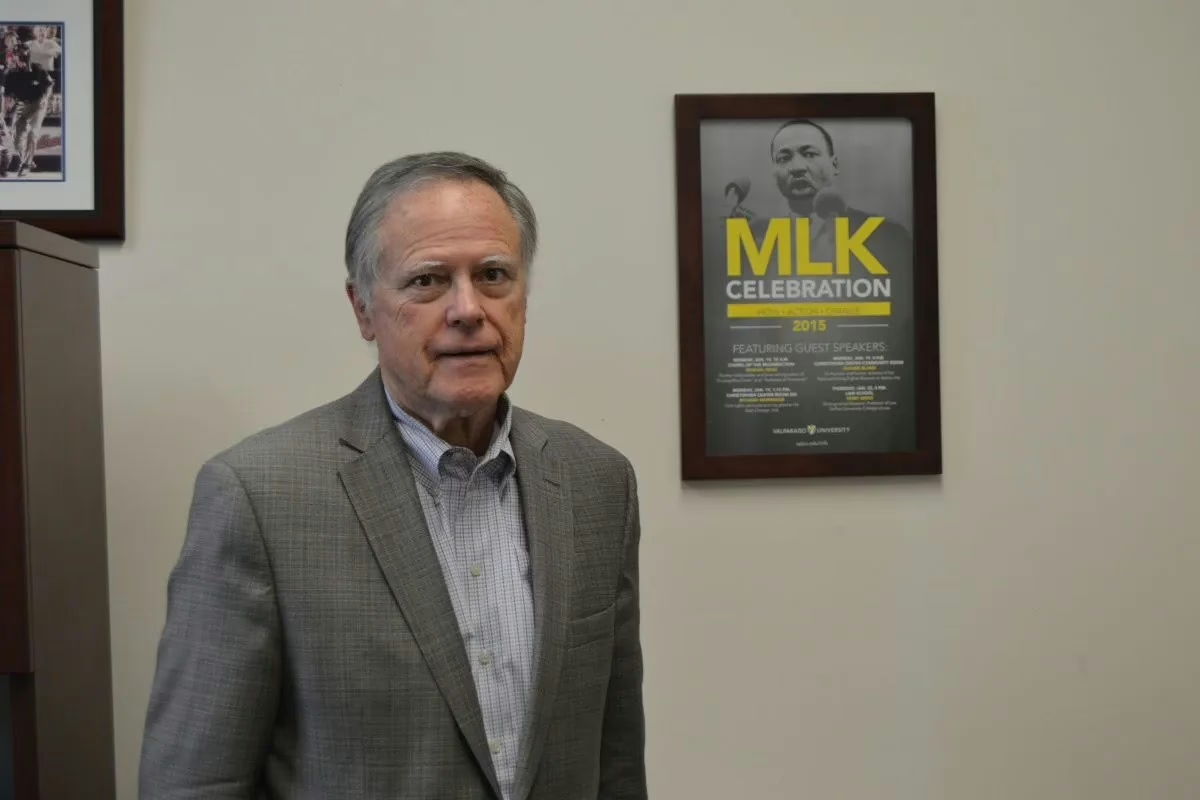
“Jonathan’s actions were very much an act of faith, there was no doubt about it,” Richard Morrisroe, a white former Catholic priest from Chicago, Illinois, who witnessed Daniels’ martyrdom, told Episcopal News Service during an August 5, 2025, in-person interview here.
Like Daniels, Morrisroe was a civil rights activist. He walked with the Rev. Martin Luther King Jr. in Chicago and in Selma. Today, Morrisroe is 86 years old and lives with his wife, Sylvia Morrisroe, in East Chicago, Indiana.
Pilgrimage to Hayneville
Since 1998, the Diocese of Alabama has honored Daniels by organizing an annual pilgrimage to Hayneville with support from the Pensacola, Florida-based Diocese of the Central Gulf Coast. The pilgrimage usually takes place on or around Daniels’ feast day, August 14 in The Episcopal Church.
“Even before the pilgrimage started, people from the Southern Poverty Law Center’s headquarters in Montgomery and locals did different things to honor Jonathan,” Morrisroe said. “The pilgrimage in the way that it is now is a very good thing.”
Also, some pilgrims from Episcopal Divinity School will gather the evening before at St. John’s Episcopal Church in Montgomery for a special dinner. Ruby Sales, the person Daniels shielded from gunfire, will be the guest speaker. Morrisroe also was scheduled to speak at the dinner, but he’s unable to travel due to health issues.
After the dinner, Episcopal Divinity School will host the public “Walk With Me” vigil commemorating the 60th anniversary of Daniels’ martyrdom at St. John’s. The Rev. Kelly Brown Douglas, canon theologian of Washington National Cathedral, will speak. Ashley M. Jones, Alabama’s poet laureate, also will speak at the vigil.
On the 9th, the pilgrims will gather at the Lowndes County Courthouse Square and march to the following:
The jail where Daniels, Morrisroe, and other arrested civil rights activists were held.
The site where Daniels was later killed.
The courtroom where his killer was acquitted.
After the procession, the pilgrims will gather inside the courthouse for a worship service. Former Presiding Bishop Michael Curry will preach.
Daniels’ martyrdom shaped Morrisroe’s life
Morrisroe – who also was shot by the same man who killed Daniels – said his shooting and Daniels’ martyrdom have greatly shaped his life.
“We knew going in that there was a risk of violence, but I never expected to actually get shot and to witness someone getting killed being part of the Civil Rights Movement,” Morrisroe said.
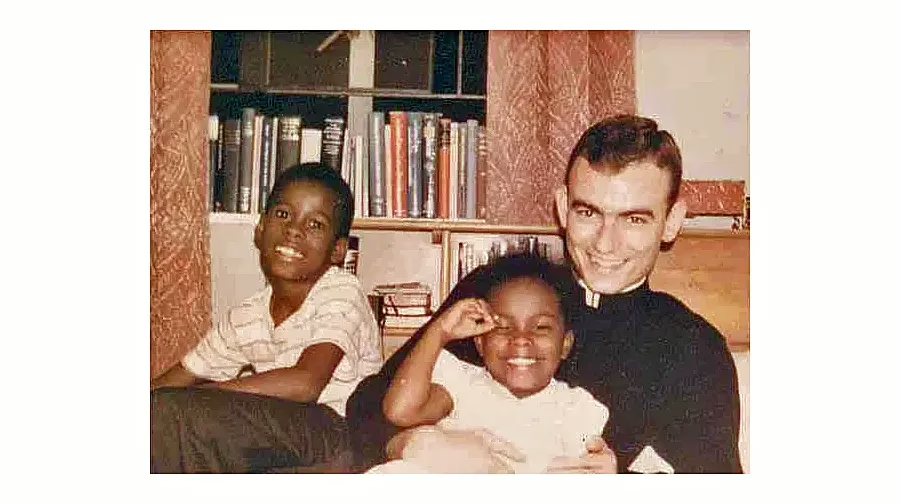
Richard Morrisroe is a former Catholic priest and civil rights activist. On Aug. 20, 1965, he and Jonathan Myrick Daniels, an Episcopal seminarian, were shot after shielding two Black teenage girls from gunfire outside of Varner’s Cash Store in Hayneville, Alabama. Morrisroe survived, but Daniels died. Daniels is designated as a martyr in The Episcopal Church. Photo: Courtesy of Richard Morrisroe
What happened that day
Daniels, a white 26-year-old originally from Keene, New Hampshire, was a seminarian at the Episcopal Theological School in Cambridge, Massachusetts, which today is Episcopal Divinity School based in New York City. While a seminarian, he was actively involved in civil rights work. In 1965, he met Morrisroe at the ninth annual Southern Christian Leadership Conference in Birmingham, which took place August 9-13.
After the conference, on August 14, Daniels and Morrisroe joined a group of protesters in Fort Deposit to picket whites-only stores. Following arrest and transport in a garbage truck, all protestors went to a jail without air conditioning in Hayneville, less than 25 miles southwest of Montgomery.
After release from jail on August 20, Daniels and Morrisroe accompanied two Black teenage protesters, Sales and Joyce Bailey, to nearby Varner’s Cash Store to purchase sodas.
“It was late August in Alabama. I remember it was very, very hot that day,” Morrisroe said.
As the group neared the store, Tom Coleman confronted them and attempted to shoot the teenagers. Daniels shielded Sales from Coleman’s shotgun blast, taking the fatal wound himself. Morrisroe grabbed Bailey and they ran off together. He survived his shot in the back. Morrisroe then spent several years relearning how to walk and coping with post-traumatic stress disorder.
What happened to Morrisroe
“I remember going to Montgomery Baptist Hospital in a hearse. Jonathan was below me, lying dead, and I was alive in a kind of gurney or something,” Morrisroe said. “They dropped me off at the emergency room, and I waited there for about, maybe an hour-and-a-half in the hearse without much attention. …A Catholic priest from that area came in and anointed me and convinced a military doctor – Dr. Charles Cox – to put together a group of six doctors. They spent 11 hours keeping me alive as they removed the bullet that had landed in my spine.”
Morrisroe eventually transferred to a hospital in Oak Park, Illinois, where he remained hospitalized until February 1966. While hospitalized, he missed Coleman’s trial at the Lowndes County Courthouse. An all-white grand jury acquitted Coleman of manslaughter charges.
“The closest I ever got to interacting with Tom Coleman since the shooting was when my daughter went down to Lowndes County with some nuns who had an outreach ministry not too far from Hayneville,” said Morrisroe. He left the priesthood in 1972 after years of therapy recovering from the injuries he suffered from Coleman’s gunshot. Then Morrisroe worked in city planning and in academia until he retired. “Some people pointed out his house to her. She was tempted to knock on his door and identify herself, but she never did that. And then he died a couple of years later.”
Daniel’s addition to the Episcopal calendar
At the 1991 General Convention in Phoenix, Arizona, Morrisroe testified in favor of Daniels’ sainthood in front of the House of Bishops. Typical observance of feast days is on the saints’ death anniversaries. Morrisroe said August 14 – the day of Daniels’ arrest – was designated Daniels’ feast day instead of the 20th because August 20 is already observed as the Feast of St. Bernard of Clairvaux.
Morrisroe told ENS that when he met Daniels at the conference, he didn’t expect their lives would be forever changed in the coming days.
“Everything Daniels did was rooted in his faith – I can’t stress it enough.” Morrisroe said.
Shireen Korkzan is a reporter and assistant editor for Episcopal News Service. Reached her at skorkzan@episcopalchurch.org.
Church of the Redeemer
Church of the Redeemer: Worshiping God, living in community, and reaching out to the world around us. We are an Episcopal Church serving north King County and south Snohomish County, Washington. As you travel your road, go with friends walking the way of Jesus at Redeemer.
Church of the Redeemer is at 6220 Northeast 181st Street in Kenmore, Washington. The campus is a short distance north of Bothell Way, near the Burke-Gilman Trail. The entrance looks like a gravel driveway. The campus is larger on the inside than it is on the outside. And we managed to hide a large building on the side of a hill that is not easily seen from the street.
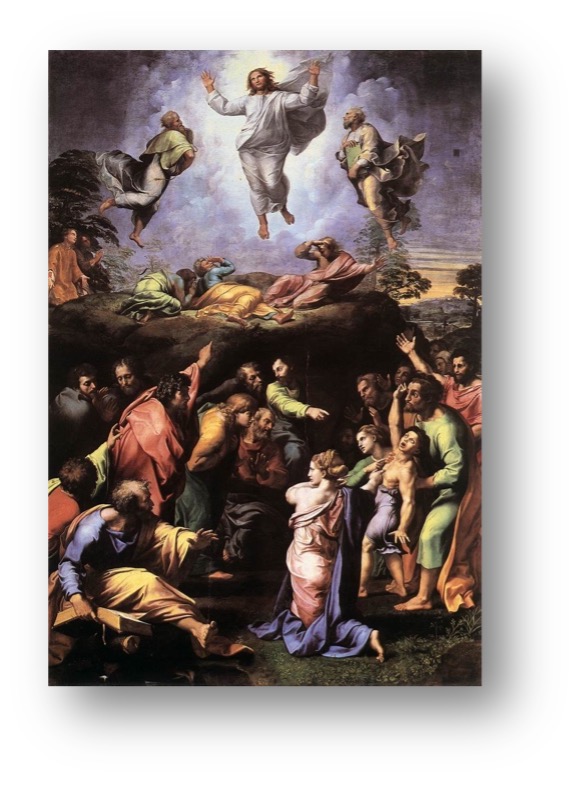
August 6 is the Feast of the Transfiguration of Our Lord Jesus Christ. This commemorates Jesus’ unveiling as the Son of God by his radical change of appearance. This was in the presence of Peter, James, and John on a mountaintop.
The Gospel of Matthew records that Jesus “was transfigured before them, and his face shone like the sun, and his garments became white as light.” At this moment Moses and Elijah appeared, and they were talking with Jesus. Peter, misunderstanding the meaning of this manifestation, offered to make three “booths” (or “dwellings”) for Jesus, Moses, and Elijah. A bright cloud overshadowed them. A voice from the cloud stated, “This is my beloved Son, with whom I am well pleased; listen to him.” The disciples fell on their faces in awe, but Jesus encouraged them to arise and “have no fear.” When the disciples looked up, they saw only Jesus (Matthew 17:1-8).
Two other gospel accounts (Mark 9:2-8 and Luke 9:28- 36) mention the Transfiguration. The Second Letter of Peter referred to it, which records that “we were eyewitnesses of his majesty” and “we were with him on the holy mountain” (2 Peter 1:16-18).
Importance of the Transfiguration
The Transfiguration is a pivotal moment. It revealed Christ’s glory prior to the crucifixion. This event also anticipated his resurrection and ascension. It also prefigures the glorification of human nature in Christ. Some think that the setting on the mountain is significant because it becomes the point where human nature meets God, with Jesus acting as a point of connection between heaven and earth.
Celebration of the Transfiguration began in the eastern church in the late fourth century. The celebration of this feast is on August 6. The dedication of the first church built on Mount Tabor, traditionally considered to be the “high mountain” of the Transfiguration, was on this date. There are scholars, however, who believe the Transfiguration occurred either on Mount Hermon, which borders Syria and Lebanon, or on the Mount of Olives in Jerusalem.
Collect for the Transfiguration
O God, who on the holy mount revealed to chosen witnesses your well-beloved Son, wonderfully transfigured, in raiment white and glistening: Mercifully grant that we, being delivered from the disquietude of this world, may by faith behold the King in his beauty; who with you, O Father, and you, O Holy Spirit, lives and reigns, one God, for ever and ever. Amen (Book of Common Prayer, p. 243).
Weekly bulletin inserts
This weekly bulletin insert provides information about the history, music, liturgy, mission, and ministry of The Episcopal Church. For more information, please contact us at stw@episcopalchurch.org.
Sermons That Work
For more than 20 years, Sermons That Work, a ministry of The Episcopal Church’s Office of Communication, has provided free sermons, Bible studies, bulletin inserts, and other resources that speak to congregations across the Church. Our writers and readers come from numerous and varied backgrounds. Small house churches, sprawling cathedrals, and everything between use the resources that Sermons That Work provides.
Church of the Redeemer: Worshiping God, living in community, and reaching out to the world around us. We are an Episcopal Church serving north King County and south Snohomish County, Washington. As you travel your road, go with friends walking the way of Jesus at Redeemer.
Church of the Redeemer is at 6220 Northeast 181st Street in Kenmore, Washington. The campus is a short distance north of Bothell Way, near the Burke-Gilman Trail. The entrance looks like a gravel driveway. The campus is larger on the inside than it is on the outside. And we managed to hide a large building on the side of a hill that is not easily seen from the street.
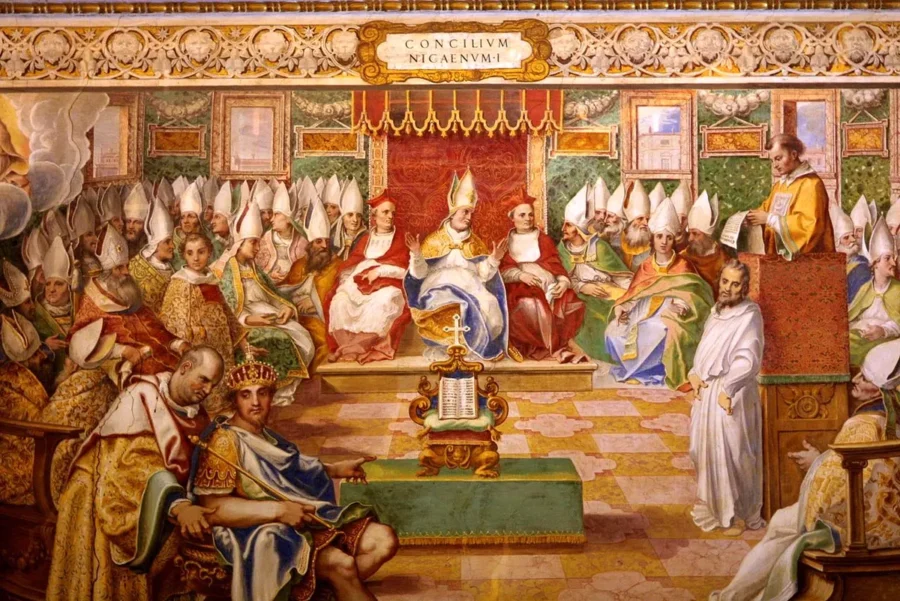
[Episcopal News Service] When some 200 bishops and the hundreds of others who accompanied them arrived at the town of Nicaea in modern-day Turkey in 325, they had before them two tasks:
Define Jesus’ nature in relationship to God.
Establish a common date when Christians around the world would celebrate Easter.
A variety of 1,700th anniversary resources are available:
While the latter task when to celebrate Easter still is part of ongoing discussions, the assembled bishops at the first ecumenical council of the Christian church hammered out a description of Jesus. 1,700 years later, that description of Jesus remains part of the Nicene Creed. The Episcopal Church says that a statement of faith on Sundays and other major feast days .
What the bishops did was to define “what we mean when we say God,” the Rev. Kara Slade, told Episcopal News Service. She is a theologian who is part of the Episcopal chaplaincy at Princeton University, told Episcopal News Service.
And just as each sport has a governing body that sets the rules, she said the Council of Nicaea established “the language for what we as Christians, ecumenically, mean when we say God, as Father, Son and Holy Spirit.” It also is a recitation of “the Good News, of who God is for us.”
Marking the anniversary in the Episcopal Church
Events marking the 1,700th anniversary have taken place this year across The Episcopal Church. For example, on January 19, 2025, the Cathedral of St. John the Divine in New York City helped kick off events marking the anniversary year with an Evensong service. The then-dean, the Very Rev. Patrick Malloy, told ENS the church “was chartered specifically to focus on Christian unity” and thus was selected for a service during the annual Week of Prayer for Christian Unity.
More recently, Slade offered a lecture on the creed at St. Paul’s Cathedral in Oklahoma City, Oklahoma, on June 15, 2025, part of an ongoing series the cathedral is presenting, with additional lectures later this year. Oklahoma Bishop Poulson Reed also offered his own reflections.
Wisconsin Bishop Matthew Gunter offered a series of written teachings about the Nicene Creed to his diocese in June 2025.
Why the Council of Nicaea happened
Back in the fourth century, the Roman Emperor Constantine, who only 12 years earlier had become a Christian, called, paid for and attended the Council of Nicaea. The Rev. Rebecca Lyman, professor emerita of history at the Church Divinity School of the Pacific in Berkeley, California, told ENS by email that he did this “to ensure the end of Christian quarreling in the Eastern [Roman] Empire and thus pray for the stability of his reign.”
The quarrel centered on how the church should described the relationship between Jesus the Son and God the Father, especially considering its inheritance of the Jewish belief in monotheism. Arius, a presbyter in Alexandria, publicly preached that God created Jesus, while stating that he was of a different nature than any other part of creation. Many others, who objected to his description of Jesus, considered Arius a heretic.
Lyman, in entries she wrote about the Council of Nicaea for the St. Andrews Encyclopedia of Theology, noted, “After weeks of negotiation, the council succeeded in producing a common theological statement to bring unity—or at least stabilize conflict—among the bishops.”
Results of the Council of Nicaea
Icon of the Council of Nicaea, with the condemned Arius in the bottom, from the Mégalo Metéoron Monastery in Greece. (Photo: Jjensen, via Wikimedia)
That statement, which forms much of today’s Nicene Creed, described Jesus as “the Son of God, begotten from the Father, only begotten, that Is from the substance of the Father; God from God, Light from Light, true God from true God, begotten, not made, consubstantial with the Father…”.
But, as Lyman wrote to ENS, “It took 50 years and several theological moves to have the creed (with slight modifications) accepted by the Eastern and Western church.”
What the bishops didn’t say much about was the Holy Spirit, since at that time it wasn’t as debated as the nature of Jesus. The second ecumenical council in 381, the Council of Constantinople, added language about the Spirit and its co-divinity with the Father and Son to the creed. It sometimes now is referred to as the Nicene-Constantinopolitan Creed.
What resulted in the fourth century from these two councils, Lyman said, was “the painful construction of the doctrine of the Trinity.”
In his “Commentary on the American Prayer Book,” the late Rev. Marion Hatchett said the first time the Nicene Creed was used in connection with the Eucharist likely was in the late fifth or early sixth century.
Filioque (and the Son) added to the creed
In the sixth century, what would become a rift between the Eastern church based in Constantinople, and the Western church based in Rome, took place with the insertion of a statement about the Holy Spirit into the creed by the Council of Toledo, Spain, in 589. Until then, the creed stated that the Holy Spirit “proceeds from the Father.” The council inserted “and the Son” after the word “Father,” an addition known today as the filioque clause. The Western church accepted this insertion. The Eastern church does not recognize it.
The council did establish a single date for Easter—the first Sunday after the full moon following the spring equinox. However, that unanimity was in doubt after 1582. Pope Gregory XIII created a new calendar, called the Gregorian calendar in his own honor. That calendar adjusted the Julian calendar to correct how it counted the length of a year. Western churches adopted this Gregorian calculation. Many Eastern churches kept to the old Julian calculation. This can result in Easter varying between the two dates by as much as five weeks.
The impact of the Nicene Creed today
Slade said that the creed remains important for Episcopalians because “it gets right to the heart of what we’re doing as Christians. It’s the summary of the Christian faith.”
She is aware that for many, reciting the Nicene Creed may not hold their full attention. “Maybe you’re still thinking about the sermon” that comes right before it. “Maybe you’re thinking ahead to the Eucharist or to who you have to say hello to at the Peace.”
But paraphrasing the theologian Augustine, she said, “When you say your creed, render it back to God.” Doing that gives worshipers a chance to reaffirm it as “a statement of Good News” and an acknowledgement of who God is.
Importance for unity
The Rev. Margaret Rose, The Episcopal Church’s ecumenical and interreligious deputy to the presiding bishop, told ENS that the Nicene Creed was a topic of conversation at the June meeting of the World Council of Churches Central Committee, of which she is a member, in Johannesburg, South Africa.
One of the things they discussed was who wasn’t at the Council of Nicaea. “There were no women,” Rose noted, even though Paul in Galatians 3:28 “said in Christ, ‘there is neither male nor female.’”
The creed remains important to Christians today, Rose said, “because it was about the unity of the church.” For her, in defining the nature of God as a relationship between Father, Son and Holy Spirit, it shows “the Trinity as community and is a model for who we are together.”
Basis of unity
When The Episcopal Church was establishing how it would engage in relationships with other churches, the House of Bishops in 1886 developed a four-fold framework for ecumenical discussion, with one of the elements being acceptance of “the Nicene Creed as the rule of faith.” When the Lambeth Conference of 1888 reaffirmed that framework, it became known as the Chicago-Lambeth Quadrilateral.
The Episcopal Church and eight partner churches has this as the basis of full-communion relationships between them. This includes the latest, the Evangelical Lutheran Church in Bavaria, signed with the Episcopal Church on June 7, 2025.
Common date for Easter
The question of one Easter date for all Christians is again under discussion. This is, in part, because the dates for Eastern and Western Christians happened to coincide in 2017 and in 2025). They will again in 2028, 2031 and 2034.
In 1988, the Lambeth Conference attempted to address the centuries of disunity caused by the filioque clause when it recommended to provinces of the Anglican Communion omit the clause in future liturgical revisions that include the Nicene Creed.
The Episcopal Church’s 1994 General Convention adopted a resolution to omit that the clause “at the next revision of the Book of Common Prayer.” Recent actions by General Convention make such a revision unlikely in the near future.
In 2018, General Convention authorized creation of the Task Force on Liturgical and Prayer Book Revision, and the 2022 convention directed the Standing Commission on Liturgy and Music “to continue the work of liturgical and Prayer Book revision.”
The most recent General Convention in 2024 adopted a constitutional change that defines the Book of Common Prayer to include authorized liturgical materials that aren’t printed in prayer books in use.
The Book of Common Prayer has not undergone a full-scale revision since 1979. That process, to revise the 1928 version, began in 1967.
— Melodie Woerman is an Episcopal News Service freelance reporter based in Kansas.
Church of the Redeemer
Church of the Redeemer: Worshiping God, living in community, and reaching out to the world around us. We are an Episcopal Church serving north King County and south Snohomish County, Washington. As you travel your road, go with friends walking the way of Jesus at Redeemer.
Church of the Redeemer is at 6220 Northeast 181st Street in Kenmore, Washington. The campus is a short distance north of Bothell Way, near the Burke-Gilman Trail. The entrance looks like a gravel driveway. The campus is larger on the inside than it is on the outside. And we managed to hide a large building on the side of a hill that is not easily seen from the street.
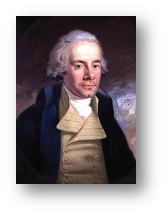
On July 30, the Episcopal Church remembers William Wilberforce (1759–1833), along with Anthony Ashley Cooper (1801-1885), prophetic witnesses of the Gospel of Christ. Wilberforce was a British statesman and evangelical Anglican who used his position as a Member of Parliament from the Yorkshire area to advocate for the abolition of the slave trade throughout the British Empire.
Noted for personal charm and great eloquence as a public speaker, Wilberforce was elected to Parliament from his home town and district of Hull at the age of 21. After a conversion experience in 1784, he joined the evangelical wing of the Anglican church and became interested in social reform movements.
Lady Margaret Middleton, the wife of another Member of Parliament, approached Wilberforce as a likely person to work within the government for the abolition of the slave trade. The enormity of the task was daunting to Wilberforce, who wrote, “I feel the great importance of the subject and I think myself unequal to the task allotted to me.”
But Wilberforce accepted the mission. “God Almighty has set before me two great objects, the suppression of the slave trade and the reformation of manners,” he wrote in his journal in 1787. His health, however, had never been good, and illness prevented him from immediately taking on the challenge. It was May 1789 before he made his first speech in the House of Commons on the subject of the slave trade.
When Wilberforce formally proposed abolition of the trade in 1791, his fellow members voted against his motion by nearly two to one. Wilberforce continued to press the matter, making similar proposals some nine times by 1805. During that time, due to the efforts of many reformers, the British people learned about the horrific conditions endured by enslaved Africans, and public opinion gradually turned against the slave trade.
It took longer to convince Parliament, but the Abolition of the Slave Trade bill was eventually passed in both the House of Commons and the House of Lords by large majorities and took effect in March 1807. Although the successful bill was introduced by another Member of Parliament, Wilberforce received full credit — and a rare standing ovation from the House of Commons — for his untiring efforts. Unfortunately, the 1807 bill did not immediately stop the slave trade. Seafaring traders flouted the law, sometimes covering this illegal commerce by throwing their captives overboard to drown when ships of the British navy approached. Many people became convinced that only the abolition of slavery would stop the trade.
Wilberforce at first resisted calls for outright abolition, writing in 1807, “It would be wrong to emancipate [the slaves]. To grant freedom to them immediately would be to insure not only their masters’ ruin, but their own. They must [first] be trained and educated for freedom.” But he eventually came to support full emancipation and worked to bring public opinion and political will together to that end. He continued to serve in Parliament, supporting a variety of causes, including overseas Christian mission, increased education, and greater freedom for Roman Catholics. He retired in 1825 due to ill health but continued to campaign for an end to slavery.
Wilberforce saw his efforts rewarded when Parliament passed a law in July 1833 outlawing slavery throughout the British Empire. He died three days later at age 73. In honor of his service to the nation, he was buried in the north transept of Westminster Abbey.
Weekly bulletin inserts
This weekly bulletin insert provides information about the history, music, liturgy, mission, and ministry of The Episcopal Church. For more information, please contact us at stw@episcopalchurch.org.
Sermons That Work
For more than 20 years, Sermons That Work, a ministry of The Episcopal Church’s Office of Communication, has provided free sermons, Bible studies, bulletin inserts, and other resources that speak to congregations across the Church. Our writers and readers come from numerous and varied backgrounds. Small house churches, sprawling cathedrals, and everything between use the resources that Sermons That Work provides.
Church of the Redeemer: Worshiping God, living in community, and reaching out to the world around us. We are an Episcopal Church serving north King County and south Snohomish County, Washington. As you travel your road, go with friends walking the way of Jesus at Redeemer.
Church of the Redeemer is at 6220 Northeast 181st Street in Kenmore, Washington. The campus is a short distance north of Bothell Way, near the Burke-Gilman Trail. The entrance looks like a gravel driveway. The campus is larger on the inside than it is on the outside. And we managed to hide a large building on the side of a hill that is not easily seen from the street.