Tag: LGBTQ

  • 2026 Pride update

    2026 Pride update

    Every year when June comes around at some point, as I prepare for Pride Booths for the Church, someone asks “why.” Why do Churches need to be at Pride? Why is this a community we need to reach out to particularly? 

    This year at the Diocesan Booth I got the best story answer I’ve gotten in a very long time. A gentleman with quite the entourage and recording set up walked up to our Diocesan Booth. He and started by asking, “Are you here to save souls or affirm people?” I responded by asking why exactly he thought that was a contradictory statement. 

    What continued is not really worth sharing here. But the confidence with which he asked that question is why, for many of us, Pride is a good thing for the church to be at. So many people have been told so often that God doesn’t love us as They created us. Taking the time to share that God loves everyone, and that there is a church that is teaching about God’s unconditional love, is life-affirming to so many. 

    Joy at Pride events

    That was the joy of both Pride events: witnessing people begin healing from so much pain caused by past negative interactions with churches. Every year the Diocese uses a sign that says, “For the hurt the church has caused, we are sorry. With love, the Episcopal Church.” And every year we get so many “thank yous” for bringing it out. This year was no different. 

    Holy water blessings

    Please accept YouTube cookies to play this video. By accepting you will be accessing content from YouTube, a service provided by an external third party.

    YouTube’s privacy policy

    If you accept this notice, your choice will be saved and the page will refresh.

    We also share glitter holy water blessings. This year we also had it in glitter free after many requests from last year. The Holy Water for Kenmore Pride and the Diocesan Pride Event was blessed at Redeemer’s service on June 21.

    In Kenmore, we offered free cold-water bottles and cookies out of our booth. Both of which was very well received by the local Kenmore community. 

    Results of attending Pride events

    Only time will tell if the seeds we planted leads to God bringing us new congregants. I, of course, pray that it does. But sometimes, in times like this, I am reminded of the importance of being the faithful remnant and showing people God loves them, that we know that, and that there are absolutely no exceptions. 

    Thanks

    On a final personal note, I want to thank you all at Redeemer. I’m truly grateful as I went through this month to have such an accepting and beautiful faith community to worship with. I look forward to getting to know all of you better, but I’m already so impressed with all of you as a congregation.

    —Vic Johnson, vjohnson@redeemer-kenmore.org

    The Episcopal Church of the Redeemer: Worshiping God, living in community, reaching out to the world.

    Church of the Redeemer

    Church of the Redeemer: Worshiping God, living in community, and reaching out to the world around us. We are an Episcopal Church serving north King County and south Snohomish County, Washington. As you travel your road, go with friends walking the way of Jesus at Redeemer.

    Church of the Redeemer is at 6220 Northeast 181st Street in Kenmore, Washington. The campus is a short distance north of Bothell Way, near the Burke-Gilman Trail. The entrance looks like a gravel driveway. The campus is larger on the inside than it is on the outside. And we managed to hide a large building on the side of a hill that is not easily seen from the street.

    The Episcopal Church welcomes you.

  • Kenmore Pride 2026

    Kenmore Pride 2026

    Episcopal Church of the Redeemer is getting things together to have a Pride booth at Kenmore Pride on Wednesday, June 24, 2026, from 3:00 pm to 7:00 pm. The celebration is at Kenmore Town Center.

    Kenmore Pride is an extension of the Kenmore Farmers Market. We’re still working on getting clear direction from the city of Kenmore on what this will look like.

    We’ll have holy water blessings available on request in both glitter and glitter free options. The current plan to bless the water during our 10:30 am service on June 21.

    We also look forward to offering prayers and healing oil for those the Church has hurt. 

    Pride booths

    Pride booths like this can be a great outreach of reconciliation to meet hurting people. We also can give them the Good News that, if they have a desire in their soul for a spiritual community, Church of the Redeemer exists here. We are ready to receive and love people as God created them. 

    If you have a heart for the LGBTQ+ community and are interested in getting involved please let these people know:

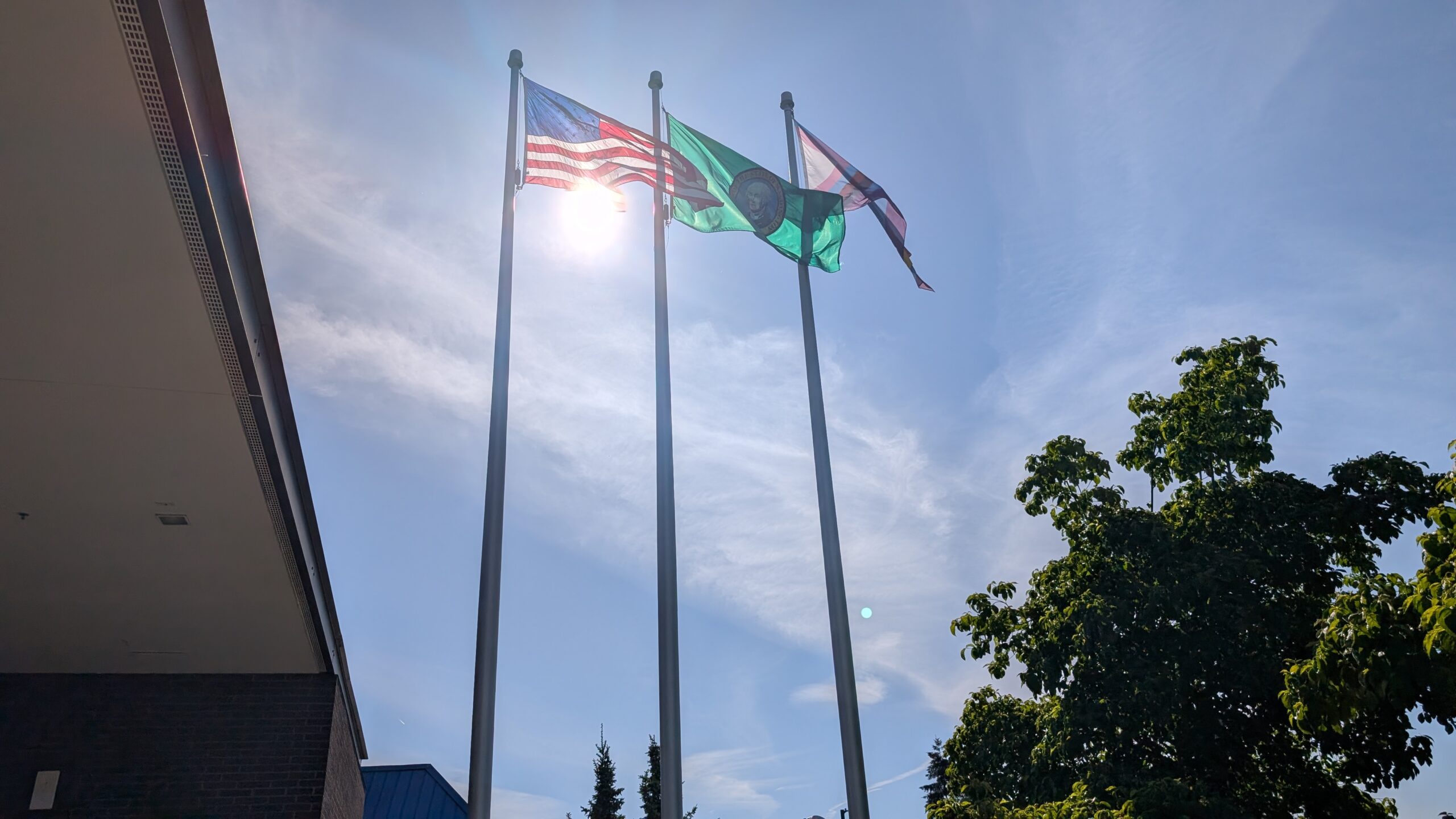
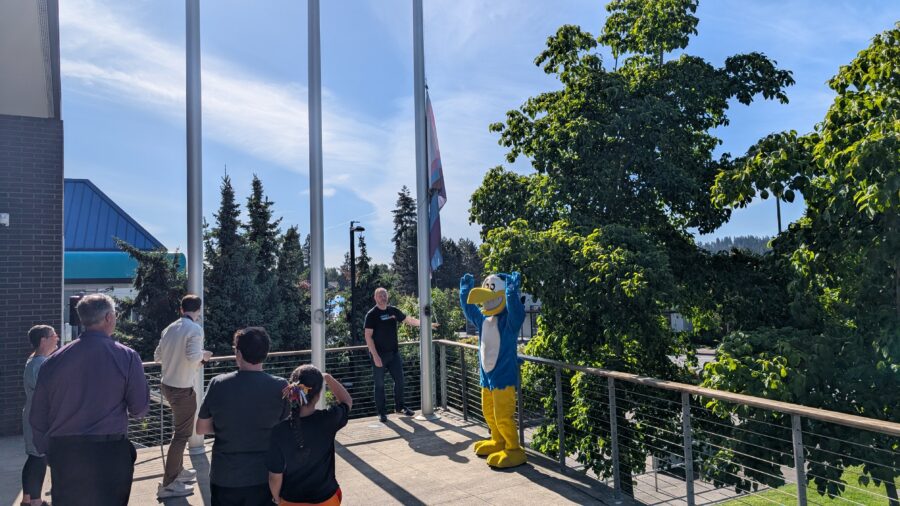
    Mayor Nigel Herbig raising Progress Pride Flag on June 1, 2026, at Kenmore City Hall. Hank Heron is cheering Mayor Herbig on.
    Mayor Nigel Herbig raising Progress Pride Flag on June 1, 2026, at Kenmore City Hall. Hank Heron is cheering Mayor Herbig on.

    City of Kenmore Pride Proclamation for 2026

    WHEREAS, the City and the Kenmore Council acknowledge and celebrate our diverse
    population, understanding that the unique tapestry woven by our varied cultures,
    traditions, beliefs, and experiences is one of our most significant strengths. This
    diversity and intersectionality of our people enrich our community, fostering an
    environment of understanding, growth, and unity; and

    WHEREAS, we assert and uphold the principle that every individual, regardless of their identity or background, deserves to live in an atmosphere of dignity, respect, and justice. We categorically condemn and will not tolerate any form of discrimination, violence, or hate, holding these acts as affronts to the values we cherish as a community; and

    WHEREAS, we acknowledge and appreciate the significant strides made by the
    LGBTQIA+ community in advocating for their rights and freedoms. The legalization of marriage equality, the affirmation of identity, and the freedom to love without restriction represent landmark victories not just for the LGBTQIA+ community, but for the broader cause of human rights; and

    WHEREAS, we recognize with deep concern that the LGBTQIA+ community continues
    to face challenges such as harassment, intimidation, discrimination, and violence. We stand in solidarity with them and vow to fight these injustices, especially in these uncertain and trying times; and

    WHEREAS, we continue to commit to creating and maintaining an environment that is safe, inclusive, and welcoming for all individuals, regardless of their sexual orientation, gender identity, or any other characteristics. We pledge to continuously strive towards enhancing the inclusivity and acceptance within our City; and

    WHEREAS, Pride Month is a celebration of the progress, achievements, and resilience of the LGBTQIA+ community. This is a time to highlight and appreciate the numerous contributions made by this community, and to unequivocally assert that LGBTQIA+ rights are human rights.

    NOW THEREFORE, I, Nigel Herbig, Mayor of the City of Kenmore, on behalf of the City
    Council, do hereby proclaim JUNE 2026 as PRIDE MONTH throughout the City of
    Kenmore.

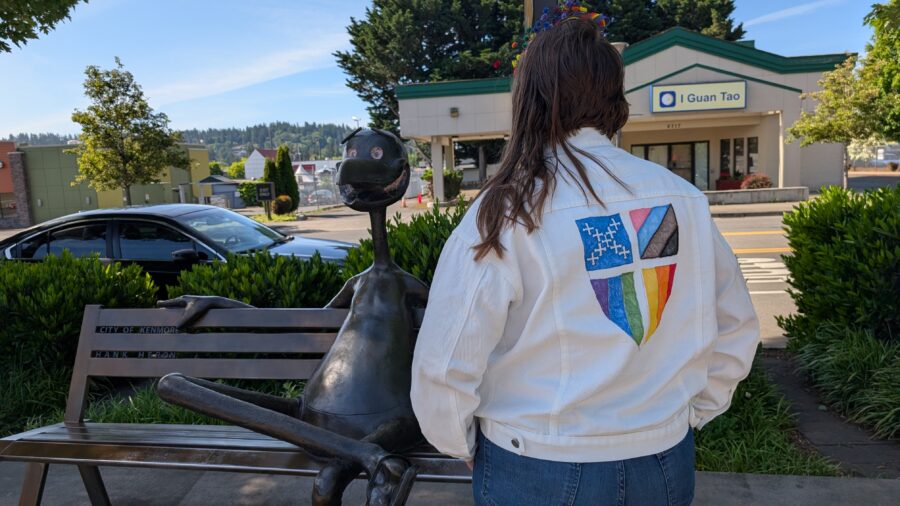
    Inviting Hank Heron to the Kenmore Pride Celebration.
    Inviting Hank Heron to the Kenmore Pride Celebration.

    Celebrate Pride in Kenmore

    You’re invited to the Pride Celebration on Wednesday, June 24, 2026, from 3:00 pm to 7:00 pm at the Hangar in Kenmore Town Square. This community event includes performances, activities, crafts, educational materials, giveaways, and more. This event is free and open to all. We hope to see you there to celebrate this important and significant event.

    • Date: Wednesday June 24 for Pride Celebration
    • Time: 3:00 pm – 7:00 pm
    • Location: Town Square and The Hangar
    The Episcopal Church of the Redeemer: Worshiping God, living in community, reaching out to the world.

    Church of the Redeemer

    Church of the Redeemer: Worshiping God, living in community, and reaching out to the world around us. We are an Episcopal Church serving north King County and south Snohomish County, Washington. As you travel your road, go with friends walking the way of Jesus at Redeemer.

    Church of the Redeemer is at 6220 Northeast 181st Street in Kenmore, Washington. The campus is a short distance north of Bothell Way, near the Burke-Gilman Trail. The entrance looks like a gravel driveway. The campus is larger on the inside than it is on the outside. And we managed to hide a large building on the side of a hill that is not easily seen from the street.

    The Episcopal Church welcomes you.

  • Episcopal Church blesses, commissions Pride Month celebrations

    Episcopal Church blesses, commissions Pride Month celebrations

    [Episcopal News Service] The Episcopal Church kicked off Pride Month celebrations and affirmations of LGBTQ+ people with a special livestreamed Eucharist. The service came from the Chapel of Christ the Lord at the Episcopal Church Center in New York, New York.


    Presiding Bishop Sean Rowe presided in person at the June 1, 2025, service. It served as a blessing and formal commissioning for Episcopalians and Episcopal congregations to observe Pride Month.

    The preacher was the Rev. Cameron Partridge, rector of St. Aidan’s Episcopal Church in San Francisco, Diocese of California. He is a trans man. Partridge preached preached remotely.

    “Let us love one another, not even thoughor despite our queerness, our transness but because of the unique human beings God has created us to be and to become,” Partridge said during his sermon. “In the face of so many who refuse to know us, may our love, our lives reflect the glory of God upholding us, transforming us, strengthening us, and charging us to make our way forward in this moment, together.”

    Read Partridge’s entire sermon here.

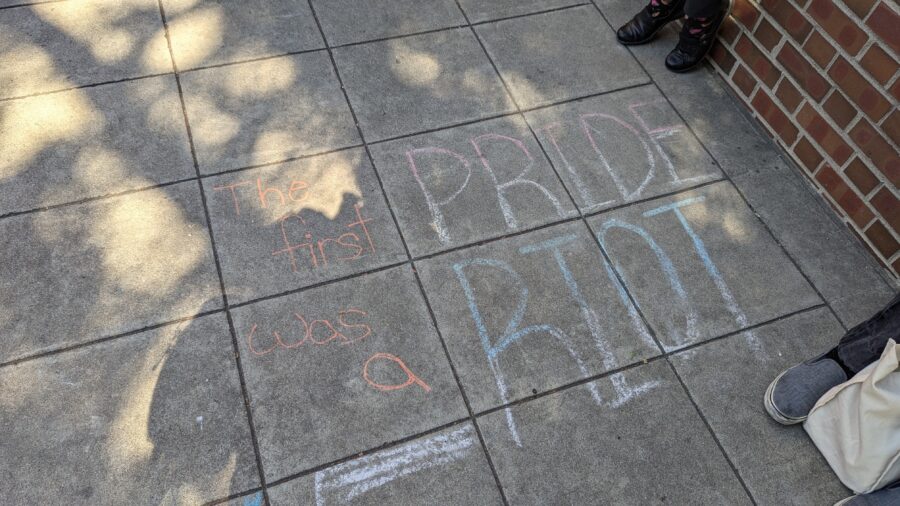
    The first Pride was a riot. Written on the sidewalk of a United Church of Christ in Berkeley, California.
    The first Pride was a riot. Written on the sidewalk of a United Church of Christ in Berkeley, California.

    History of celebrating Pride Month

    People have celebrated Pride Month nationwide since June since 1970. It began after the Stonewall riots, a series of gay liberation protests. This took place one year prior between June 28 and July 3, 1969. The riots started in response to a police raid at the Stonewall Inn, a gay bar in New York’s Greenwich Village neighborhood.

    In 1999, former President Bill Clinton commemorated the Stonewall riots’ 30th anniversary by declaring June as Gay and Lesbian Pride Month. June 28 is International LGBT Pride Day, though various communities celebrate throughout June.

    “LGBTQ+” stands for lesbian, gay, bisexual, transgender and queer/questioning. The “+” sign represents the many other sexual orientations and gender identities that are not explicitly included in the acronym. This includes intersex, asexual, two-spirit and more.

    People use inclusive terms and its variations, such as “LGBTQIA2S+” and others, to acknowledge the diverse and expansive spectrum of human sexuality and gender expression.

    The service began with a recorded performance by Trinity Church Wall Street’s choir of “Epilogue: Meet Me Here.” It is from “Considering Matthew Shepard,” Craig Hella Johnson’s Grammy-nominated three-part oratorio. Johnson composed the work as a musical response to the murder of Matthew Shepard. He was a young gay man who in 1998 was beaten and tortured to death because of his sexuality. Shepard’s parents held onto his ashes for 20 years out of fear his grave would be vandalized before they were safely interred at Washington National Cathedral.

    This year’s Pride Month is taking place as hate crimes targeting LGBTQ+ people continue to increase worldwide. Anti-LGBTQ+ bills continue to be introduced nationwide, with six additional anti-trans bills passing since May 30.

    Episcopal Church welcome and affirmation of the LGBTQ+

    Since The Episcopal Church formally began to welcome and affirm LGBTQ+ people in 1976 through acts of General Convention. Episcopal dioceses, congregations, organizations, and individuals continue to advocate for LGBTQ+ rights. LGBTQ+ people also now serve in multiple clergy and lay leadership roles, including bishops.

    Many churches sponsor and march in their local Pride parades and festivals. Many others display the rainbow flag despite the risk of vandalism.

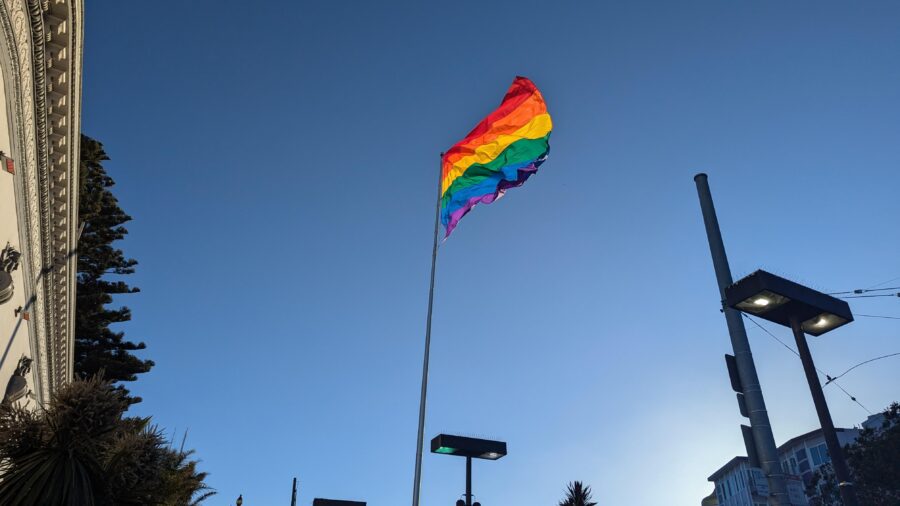
    Pride Flag at Harvey Milk Plaza at the corner of Market and Castro Street in San Francisco.
    Pride Flag at Harvey Milk Plaza at the corner of Market and Castro Street in San Francisco.

    The Rainbow Flag

    Gilbert Baker and other artists first designed the Rainbow Flag by in 1978. Harvey Milk, the first openly gay man elected to public office in California, commissioned it. It originally had 8 stripes. Now, the flag has 6-stripes, because of the difficulty in getting two of the original colors. The flag reflects the diversity of the LGBTQ+ community and the spectrum of human sexuality and gender.

    More Episcopal churches are also now flying the Progress Pride flag (see cover photo). It a variation on the traditional 6-stripe Pride flag. In addition to the base, it added the following:

    • A white, pink and light blue chevron to represent the transgender community.
    • A brown chevron to represent communities of color.
    • A black chevron to represent the 42.3 million people who’ve died by HIV/AIDS since 1981, many of whom were LGBTQ+.
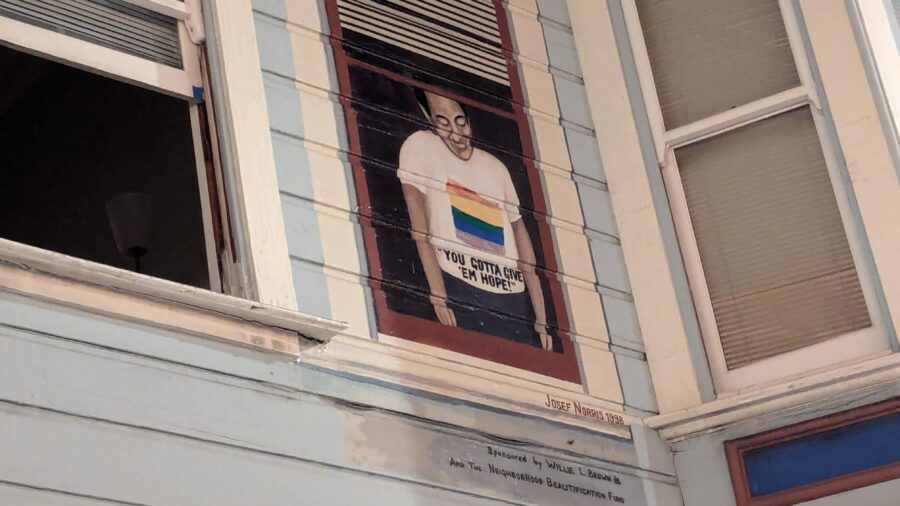
    A painting of Harvey Milk looking down on Castro Street from his former apartment.
    A painting of Harvey Milk looking down on Castro Street from his former apartment.

    About this Pride Month service

    “Pride gives us an opportunity to remember the struggles, celebrate the joy, and give thanks for the love of God that binds us together and makes us one,” Rowe wrote in a message printed in the service bulletin. “Especially this year, Pride provides an opportunity to stand against injustice and fear by proclaiming that LGBTQ+ people are beloved children of God and cherished members of The Episcopal Church and the Body of Christ.”

    New Testament readings included passages from Acts 1:1-11 and Revelation 22. The Gospel reading was John 17:20-26 – Jesus prays for all believers.

    The service also included a recording of All Saints Episcopal Church in Pasadena, California’s choir performing “In the Midst of New Dimensions.” This a hymn written and composed by Julian B. Rush, an ordained minister in the United Methodist Church.

    During the commissioning, adapted from the Book of Occasional Services, Rowe addressed the congregation. “You have been called to ministries of the church, to be carried out in communities, congregations, dioceses and all the places in which you serve. Will you faithfully do so to the honor of God and the benefit of the church?”

    The congregation replied: “We will.”

    Shaneequa Brokenleg, the presiding bishop’s staff officer for racial reconciliation and a Lakota “winkte,” or “two-spirit,” sang an original work called “Creator God, We Cry to You.”

    “Hear our prayer for all who serve across your church, for all who doubt and all who search, for all who seek, for all who find, for open hearts and open minds, for justice, peace and equity… .”

    Native American cultures generally have a broader understanding of gender identity than European cultures. The Lakota language does not use gendered pronouns. In addition, they see the two-spirit as reconcilers and healers.

    The service also included Prayers of the People wrote by the church’s Task Force on LGBTQ+ Inclusion. “For communities that honor queer and transgender lives, and for voices that proclaim your gospel of love and transformation. Strengthen your Church with power through your Spirit, especially where it has caused harm or withheld blessing. Teach us to walk in love, as Christ loved us, and to be faithful stewards of your reconciling grace. … For all who carry hidden wounds, who live with chronic pain, illness, addiction, or despair. For LGBTQ+ youth and elders, especially those cut off from family or care. Let your Spirit bring healing, courage, and companionship.”

    The Episcopal Church has special Pride Month resources available on its website. This includes a downloadable Pride shield, short videos highlighting the church’s advocacy and support, social media graphics, and more.

    Gay is the package

    During his sermon, Partridge recalled while a student at Bryn Mawr College in Pennsylvania interviewing an openly gay priest for an essay on the conflict of sexuality in The Episcopal Church in the 90s. Partridge asked the priest, “Do you see [being gay] as integral to your ministry or do you see it as somewhat a part of you that isn’t necessarily in the forefront?”

    The priest replied, “People say to you, ‘oh, I love you even though you are gay.’ And my answer is, ‘on the contrary, you love me because I am gay. That the things that you love about me – my warmth, my empathy, my identification with the marginalized, my passion for justice, my humor – all of those things have been shaped by the experience of being gay. So if you love me, not only is being gay part of the package. In a very, very real spiritual sense, gay is the package.”


    Shireen Korkzan is a reporter and assistant editor for Episcopal News Service. You can reach this reporter at at skorkzan@episcopalchurch.org.

    The Episcopal Church of the Redeemer: Worshiping God, living in community, reaching out to the world.

    Church of the Redeemer

    Church of the Redeemer: Worshiping God, living in community, and reaching out to the world around us. We are an Episcopal Church serving north King County and south Snohomish County, Washington. As you travel your road, go with friends walking the way of Jesus at Redeemer.

    Church of the Redeemer is at 6220 Northeast 181st Street in Kenmore, Washington. The campus is a short distance north of Bothell Way, near the Burke-Gilman Trail. The entrance looks like a gravel driveway. The campus is larger on the inside than it is on the outside. And we managed to hide a large building on the side of a hill that is not easily seen from the street.

    The Episcopal Church welcomes you.

  • Rainbow Asylum Ministry grants awarded

    Rainbow Asylum Ministry grants awarded

    Episcopal Migration Ministries (EMM) is the refugee resettlement and migration ministry of The Episcopal Church. EMM has announced the awarding of Rainbow Asylum Ministry grants. These grants bolsters programs dedicated to serving LGBTQ+ asylum seekers. The United Thank Offering supported these $3,000 grants.

    Rainbow Initiative

    The congregations and communities selected to receive the grants participate in EMM’s Rainbow Initiative. EMM formed the initiative in response to a 2022 General Convention resolution. This resolution directed the church to promote support for LGBTQ+ people forced to seek refugee or asylee status.

    There are 29 Rainbow Initiative Congregations/Communities in the U.S. and Europe. Each varies in their approach:

    • Some offer housing, basic necessities, or direct support services.
    • Others offer focus on community education, fundraising, or advocacy.

    Rainbow Asylum Ministry grant winners

    EMM awarded Rainbow Asylum Ministry grants to the following:

    In addition to financial support, each grantee will receive personalized training, technical assistance, and participation in an EMM-led learning community.

    “We are thrilled to enhance our support and training for these essential ministries within our church, which are dedicated to serving the most vulnerable among us,” EMM Director Sarah Shipman said.

    Find a map of Rainbow Initiative Congregations/Communities, as well as resources to get involved, on the Rainbow Initiative webpage.

    Learn more about Episcopal Migration Ministries.

    [Information from the Office of Public Affairs of the Episcopal Church.

    In the name of these refugees, aid all refugees.

    Episcopal Migration Ministries

    Episcopal Migration Ministries welcomes refugees, educates communities, and mobilizes congregations to advocate for the protection and rights of all migrants.

    In the Episcopal Diocese of Olympia, the Refugee Resettlement Office carries out this work.

    United Thank Offering

    United Thank Offering

    The United Thank Offering (UTO) is a ministry of The Episcopal Church for the mission of the whole church. Through UTO, the Episcopal Church invites individuals to embrace and deepen a personal daily spiritual discipline of gratitude.

    UTO encourages people to notice the good things that happen each day, to give thanks to God for those blessings, and make an offering for each blessing using a UTO Blue Box. The Episcopal Church entrusts UTO to receive the offerings. Then UTO distributes 100% of the collection to support innovative mission and ministry throughout The Episcopal Church and Provinces of the Anglican Communion.

    Learn more about UTO at episcopalchurch.org/uto.

    The Episcopal Church of the Redeemer: Worshiping God, living in community, reaching out to the world.

    Church of the Redeemer

    Church of the Redeemer: Worshiping God, living in community, and reaching out to the world around us. We are an Episcopal Church serving north King County and south Snohomish County, Washington. As you travel your road, go with friends walking the way of Jesus at Redeemer.

    Church of the Redeemer is at 6220 Northeast 181st Street in Kenmore, Washington. The campus is a short distance north of Bothell Way, near the Burke-Gilman Trail. The entrance looks like a gravel driveway. The campus is larger on the inside than it is on the outside. And we managed to hide a large building on the side of a hill that is not easily seen from the street.

    The Episcopal Church welcomes you.

  • Aaron Scott appointed as first gender justice staff officer

    Aaron Scott appointed as first gender justice staff officer

    Faith-based organizer Aaron Scott has been named gender justice staff officer of The Episcopal Church. This new position called for by the 80th General Convention is dedicated to LGBTQ+ and women’s ministries. He starts on April 29, 2024.

    Scott co-founded Chaplains on the Harbor. He most recently worked at Union Theological Seminary’s Kairos Center as project coordinator for the Countering White Christian Nationalism Initiative. He serves on the national steering committee for the Poor People’s Campaign: A National Call for Moral Revival.

    Aaron Scott. Photo by Misha Dumov.

    Aaron Scott’s background

    As an organizer from the transgender community, Scott began his gender justice work in 2006 with Queers for Economic Justice. Since then, his work has included leadership development for women and LGBTQ+ people navigating the immigration and public assistance systems—and those ​living in encampments, shelters, and incarceration facilities.

    Scott has been appointed at the recommendation of a committee that included people of trans, nonbinary, LGBTQ+, and cisgender identities. There were representatives from Episcopal Church Women, TransEpiscopal, and the Union of Black Episcopalians.  

    Scott holds a master’s degree in biblical studies from Union Theological Seminary, with an emphasis on gender and the New Testament. He holds a bachelor’s degree in Spanish and Latinx studies from Fordham University.

    Purpose for this new role

    In his new role, Scott will seek to inspire, gather, and equip Episcopalians for justice, advocacy, and inclusion work focused on women and LGBTQ+ people. He will do the following:

    • Provide and develop formation opportunities to support inclusion of all gender identities and expressions
    • Collect and share related resources
    • Grow networks of leaders for encouragement and cooperation

    “Candidates all taught sample lessons and gave sermons on gender and theology, and Aaron impressed the committee with his theological and community-organizing knowledge,” said the Rev. Melanie Mullen, director of reconciliation, justice, and creation care—and hiring manager for this position. “There is great urgency to protect members of the LGBTQ+ community, and we look forward to the impact Aaron’s work will have on the church and beyond.”

    Under the leadership of Mullen, an 11-member gender justice committee worked to formulate a ministry vision and job description. Resolution A063, which gave rise to the position, was developed from work done by the Task Force to Study Sexism in The Episcopal Church and Develop Anti-Sexism Training. The resolution’s call regarding anti-sexism training modules is also being addressed through Formation Department staff.

    [Episcopal Church appoints Aaron Scott as first gender justice staff officer]

    Aaron Scott and Moses at Church of the Redeemer on September 16, 2018.

    Aaron Scott preaching at Church of the Redeemer

    Fr. Jed Fox, Rector of Church of the Redeemer, invited Aaron Scott to preach on the observance of the Feast of the Holy Cross on September 16, 2018. Here is that sermon.

    Please accept YouTube cookies to play this video. By accepting you will be accessing content from YouTube, a service provided by an external third party.

    YouTube’s privacy policy

    If you accept this notice, your choice will be saved and the page will refresh.

    The Episcopal Church of the Redeemer: Worshiping God, living in community, reaching out to the world.

    Church of the Redeemer

    Church of the Redeemer: Worshiping God, living in community, and reaching out to the world around us. We are an Episcopal Church serving north King County and south Snohomish County, Washington. As you travel your road, go with friends walking the way of Jesus at Redeemer.

    Church of the Redeemer is at 6220 Northeast 181st Street in Kenmore, Washington. The campus is a short distance north of Bothell Way, near the Burke-Gilman Trail. The entrance looks like a gravel driveway. The campus is larger on the inside than it is on the outside. And we managed to hide a large building on the side of a hill that is not easily seen from the street.

    The Episcopal Church welcomes you.

  • Pastoral word to the LGBTQ+ community

    Pastoral word to the LGBTQ+ community

    Episcopal Church Presiding Bishop Michael Curry offered the following pastoral word as a video message on June 30, 2023, at the end of LGBTQ+ Pride Month.

    Text of pastoral word to the LGBTQ+ community

    Hello to all of my friends in Christ and all of my friends of goodwill of many faiths. We’re here on the last day of Pride Month. And I wanted to take a moment to address all of my LGBTQ+ family members.

    I want you to know that one of the most profound convictions in my heart, based on Holy Scripture, what I read in Scripture and hear in the life and teachings of Jesus of Nazareth, is that all of us—every human child of God—is made in the image of God with infinite value and worth, and that is not decreed by any government. It is decreed by almighty God. In Genesis chapter 1, God made human beings in God’s image and likeness. I believe that is true for all of us.

    I’m mindful that this is a difficult time for our LGBTQ+ family and siblings, for my friends. More than 70 anti-LGBTQ+ laws have been enacted so far this year. And this morning’s Supreme Court decision will only add pain and difficulty.

    In particular, we have seen our transgender siblings targeted. And if you are among them, I want you to know and remember that you are created by God, in the image of God, and that is God decreed.

    This may feel like a moment of difficulty and darkness, and it is. And yet the work goes on. Our commitment to you as a church is unswerving.

    I believe deep in my soul that God is always seeking to create a world and a society where all are loved, where justice is done, and where the God-given equality of us all is honored in our relationships, in our social arrangements, and in law.

    This is a difficult time. I am mindful of another difficult time, in the 19th century, in the midst of the struggle—once again for human dignity and equality—in the midst of the struggle to bring chattel slavery in America to an end; in the midst of a century where this nation entered into a civil war; in the midst of a time when the Mexican American war was tearing much of the country apart.

    In that context, James Russell Lowell penned a poem, part of which speaks of the cross as a scaffold. And he said this:

    Though the cause of evil prosper, yet ‘tis truth alone is strong,
    though her portion be a scaffold, and upon the throne be wrong,
    yet that scaffold sways the future. And behind the dim unknown
    standeth God within the shadow, keeping watch above his own.

    The hymn “Once to every man and nation,” excerpted and arranged from “The Present Crisis,” James Russell Lowell (1819-1891) by Gar­rett Hor­der in Hymns Sup­ple­ment­al to Ex­ist­ing Col­lec­tions, 1896.

    The Lord bless you and keep you.
    The Lord make his face to shine upon you and be gracious to you.
    The Lord lift up the light of his countenance upon you and give you his peace.
    May the blessing of God almighty, the Father, the Son, and the Holy Spirit be on you and remain with you and the entire human family, and all of God’s creation—this day and forevermore.

    God love you.

    Presiding Bishop Michael Curry

    Being a Christian is not essentially about joining a church or being a nice person, but about following in the footsteps of Jesus, taking his teachings seriously, letting his Spirit take the lead in our lives, and in so doing helping to change the world from our nightmare into God’s dream. ―Michael Curry, Crazy Christians: A Call to Follow Jesus

    The Most Rev. Michael Bruce Curry is Presiding Bishop and Primate of The Episcopal Church. He is the Chief Pastor and serves as President and Chief Executive Officer, and as Chair of the Executive Council of the Episcopal Church.

    Presiding Bishop Curry was installed as the 27th Presiding Bishop and Primate of The Episcopal Church on November 1, 2015. He was elected to a nine-year term and confirmed at the 78th General Convention of The Episcopal Church in Salt Lake City, Utah, on June 27, 2015.

    Read Presiding Bishop Curry’s biography and find out about the Jesus Movement.

    The Episcopal Church of the Redeemer: Worshiping God, living in community, reaching out to the world.

    Church of the Redeemer

    Church of the Redeemer: Worshiping God, living in community, and reaching out to the world around us. We are an Episcopal Church serving north King County and south Snohomish County, Washington. As you travel your road, go with friends walking the way of Jesus at Redeemer.

    Church of the Redeemer is at 6220 Northeast 181st Street in Kenmore, Washington. The campus is a short distance north of Bothell Way, near the Burke-Gilman Trail. The entrance looks like a gravel driveway. The campus is larger on the inside than it is on the outside. And we managed to hide a large building on the side of a hill that is not easily seen from the street.

    The Episcopal Church welcomes you.

  • Presiding Bishop Curry’s World Refugee Day sermon

    Presiding Bishop Curry’s World Refugee Day sermon

    In recognition of World Refugee Day and Episcopal Migration Ministries’ Rainbow Initiative to support LGBTQ+ forced migrants, Presiding Bishop Michael Curry shared the following message:

    Hello, I’m Michael Curry, presiding bishop of the Episcopal Church. June the 20th, as you may well know, is World Refugee Day. In thinking about that, I was particularly mindful this year of the passage found in the 25th chapter of Matthew’s Gospel. It’s where Jesus tells a parable, a story of judgment day, sometimes called the parable of the last judgment or the parable of the sheep and the goats.

    When the Bible talks about judgment day in these kinds of context, it’s really trying to get us to grasp what really matters, what is important to God. And in this parable, Jesus says all the nations and peoples of the earth are assembled before the king on judgment day. To those who have clothed those who were naked, fed those who were hungry, welcomed those who were strangers, visited those in prison or in hospital or alone, he says, enter into the joys of the kingdom. Enter into the joys of heaven.

    But the righteous ones who are welcomed into heaven respond in the parable by saying, well, wait a minute, when did we see you hungry and feed you, or naked and clothe you, or alone and visited you? When did we see you a stranger and welcome you?

    And Jesus says, when you did it to the least of these who are members of my family, you have done it unto me, the human family, the human family of God. And when we care for one another, respond to one another’s needs, do what is just and kind and merciful and loving, we have done it unto God, God’s self.

    In the month of June and on June the 20th, we observe World Refugee Day, a day to remind us and to encourage us and for us to rededicate ourselves to the task of welcoming the stranger: those who are refugees fleeing persecution, those who are fleeing famine and natural disaster, those who are fleeing war, those who have lost their homes and everything that they know and simply want to breathe free.

    This year, we are also mindful that LGBTQ people in many countries are in additional danger. They are often threatened because of who they are, persecuted, and fleeing persecution.

    The Episcopal Church has made a commitment through Episcopal Migration Ministries to do what we can for all refugees that we can help. But in particular, for those LGBTQ forced migrants who simply, like the rest of us, just want to live in love and peace, as the Bible says, with everyone sitting under their own vine or fig tree.

    The Rainbow Initiative is an initiative of Episcopal Migration Ministries, particularly to reach out to people in that situation. That’s an additional commitment to our basic commitment to assist all refugees. And we do this work committed to the one named Jesus, who himself, with Mary and Joseph, was once a refugee.

    As people helped the Holy Family to flee persecution, to find safety, so may we this year on World Refugee Day recommit our efforts and our commitments to do all that we can to welcome the stranger. Whereas you did it to the least of these who are members of my family, says Jesus, you have done it unto me.

    God love you. God bless you. And may God hold us all in those almighty hands of love.

    Episcopal Migration Ministries

    Learn more about Episcopal Migration Ministries

    Those interested in learning more about EMM’s work can find information and resources at episcopalmigrationministries.org. Sign up for the EMM newsletter or Weekly News Digest at Signup for Our Newsletter.

    Presiding Bishop Michael Curry

    Being a Christian is not essentially about joining a church or being a nice person, but about following in the footsteps of Jesus, taking his teachings seriously, letting his Spirit take the lead in our lives, and in so doing helping to change the world from our nightmare into God’s dream. ―Michael Curry, Crazy Christians: A Call to Follow Jesus

    The Most Rev. Michael Bruce Curry is Presiding Bishop and Primate of The Episcopal Church. He is the Chief Pastor and serves as President and Chief Executive Officer, and as Chair of the Executive Council of the Episcopal Church.

    Presiding Bishop Curry was installed as the 27th Presiding Bishop and Primate of The Episcopal Church on November 1, 2015. He was elected to a nine-year term and confirmed at the 78th General Convention of The Episcopal Church in Salt Lake City, Utah, on June 27, 2015.

    Read Presiding Bishop Curry’s biography and find out about the Jesus Movement.

    The Episcopal Church of the Redeemer: Worshiping God, living in community, reaching out to the world.

    Church of the Redeemer

    Church of the Redeemer: Worshiping God, living in community, and reaching out to the world around us. We are an Episcopal Church serving north King County and south Snohomish County, Washington. As you travel your road, go with friends walking the way of Jesus at Redeemer.

    Church of the Redeemer is at 6220 Northeast 181st Street in Kenmore, Washington. The campus is a short distance north of Bothell Way, near the Burke-Gilman Trail. The entrance looks like a gravel driveway. The campus is larger on the inside than it is on the outside. And we managed to hide a large building on the side of a hill that is not easily seen from the street.

    The Episcopal Church welcomes you.

  • ACC discusses ‘good differentiation’ amid divisions in Anglican Communion on human sexuality

    ACC discusses ‘good differentiation’ amid divisions in Anglican Communion on human sexuality

    [Episcopal News Service] The Episcopal Church’s representatives to the Anglican Consultative Council (ACC) participated February 14, 2023, in a discussion on the challenges of maintaining – and, in some ways, restoring – unity among the worldwide Anglican Communion’s 42 provinces at a time of stark divisions over human sexuality and marriage equality.

    About 110 representatives from 39 of those provinces are in Accra, Ghana, February 12-19, 2023, for the 18th meeting of ACC, one of the Anglican Communion’s four Instruments of Communion and the only to include laity. The other three are the Lambeth Conference of Anglican bishops, the Primates’ Meeting and the archbishop of Canterbury, an office known as the “focus of unity.”

    The importance of lay people

    During presentations originating from small table discussions about a report on unity, faith and order, Annette Buchanan, a lay leader from the Diocese of New Jersey, expressed concerns about the Anglican Communion’s structural power dynamic that gives greater weight to the voices of bishops and other clergy over lay voices.

    “No one asked the laity when you were at Lambeth what issues would be the priority issues,” Buchanan said, addressing the two bishops who were leading the session.

    “No one asked the laity whether or not gender-based issues or LGBTQ issues were the priority. … The voices of the majority are not being heard. Those who are in the hierarchy have instruments whereby they discuss issues with each other, and there is no input [from lay leaders]. And so, this becomes a matter of power, status, control.”

    Buchanan’s reference to the Lambeth Conference connected the issue of lay priorities to the divisions that were on display at that conference held late last July and into early August in Canterbury, England. Some conservative bishops, mostly from provinces in Africa and Asia, sought to amplify their criticisms of The Episcopal Church and other provinces that have welcomed LGBTQ+ people more fully into the life of their churches, however, it was not evident that such criticisms reflected the daily concerns of the parishioners in the conservative bishops’ provinces.

    Bishop Graham Tomlin of the Church of England, who serves as chair of the Inter-Anglican Standing Commission on Unity, Faith and Order, thanked Buchanan for asserting the important role of lay leaders. “It’s a really helpful reminder to us to make sure that voice of the laity – which of course is here in the ACC but not in the other instruments – is heard in the bit of work that we do as well.”

    Autonomous, independent churches

    The Anglican Communion is made up of autonomous, interdependent churches that all have historic roots in the Church of England. There is no central decision-making body in the Anglican Communion. Provinces retain authority to make decisions for themselves while coming together at ACC about every three years for prayer, worship and discussions on the future of the Anglican Communion.

    Each Anglican province may appoint and send up to three members to ACC, typically a bishop, another clergy member and a lay person.  Buchanan, a former Union of Black Episcopalians president, is joined in Ghana by Maryland Bishop Eugene Sutton and the Rev. Ranjit Mathews, the Diocese of Connecticut’s canon for mission, advocacy, racial justice and reconciliation, representing The Episcopal Church.

    Tomlin led the afternoon session February 14 along with Bishop Paul Korir of Kenya. In presenting their report on behalf of the Commission on Unity, Faith and Order, Tomlin and Korir stressed that the structure of the Anglican Communion has evolved and may continue to evolve to accommodate differences among provinces while fostering unity around core faith beliefs.

    The commission’s members, Korir said, “quickly agreed that all Anglicans, indeed all Christians, are called by God to consider carefully and prayerfully what communion, “koinonia,” means. That is to consider the nature of the fellowship that we share in Jesus Christ.” The commission’s report and recommendations included a proposal to study the Anglican Communion’s current structure and report back to ACC in three years on possible paths forward.

    “We hope to be able to speak directly to some of the present impairments in the life of the Anglican Communion,” Korir said.

    Please accept YouTube cookies to play this video. By accepting you will be accessing content from YouTube, a service provided by an external third party.

    YouTube’s privacy policy

    If you accept this notice, your choice will be saved and the page will refresh.

    Disagreements over LGBT+ issues

    Such impaired relations were made plain at this in-person meeting by the absence of three Anglican provinces. Leaders of the provinces of Nigeria, Uganda and Rwanda have not participated in the Instruments of Communion for at least 15 years because of their objections to some provinces’ ordination of openly gay and lesbian clergy and adoption of marriage rites and blessings for same-sex couples.

    Last week, the Church of England’s General Synod endorsed its own plan to bless same-sex unions for the first time while stopping short of condoning same-sex marriage. A group of conservative Anglican leaders known as the Global South Fellowship of Anglican Churches responded by saying that the Church of England’s actions call into question Welby’s ability to uphold the archbishop of Canterbury’s role as a “focus of unity.”

    The Rev. Joseph Bilal, an ACC member from South Sudan, rose to say that he thinks one of the roots of impairment is a breakdown in the ability of Anglicans to listen openly.

    The importance of listening

    “In which way could we be able as [the] Anglican Communion to listen to one another and also act in a way that it doesn’t affect another?” Bilal said. That “is one of the biggest struggles that I have.”

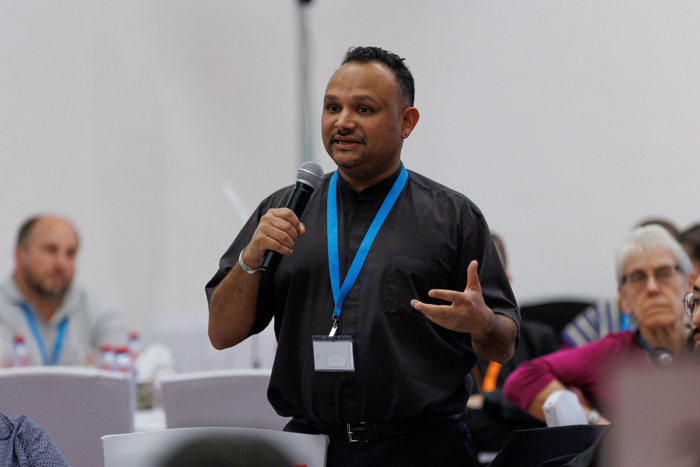
    The Rev. Ranjit Mathews, The Episcopal Church’s clergy delegate to the 18th Anglican Consultative Council, speaks during a February 14, 2023 discussion. Photo: Neil Turner for the Anglican Communion Office

    Mathews, The Episcopal Church’s clergy member on ACC, said he appreciated Bilal’s point about the importance of listening.

    “If we look around this room, this is the beauty of our communion, the diversity,” Mathews said. “Any sort of unity should not be weaponized or seen as coercive, but if we can live and truly be who we are and if the quality of our listening can go deeper, I think that’s the invitation and our vocation as the communion.”

    Core Christian beliefs transcend differences

    Senzo Mbhele, the lay member from the Anglican Church of Southern Africa, shared that his table’s discussion had focused on how core Christian beliefs transcend denominational, provincial and cultural differences.

    “When we approach the throne of heaven one day, there’s no way God is going to say, ‘well done, my good and faithful Anglican.’ He will say, ‘well done, my good and faithful servants.’ And he will not differentiate between black or white, Global South or North,” Mbhele said.

    At the same time, he warned that the work toward unity through faith may not overcome existing power imbalances. “The more we work together with different people, one of the dangers is that the more powerful will then suppress the cultures that are weaker, in whatever sense.”

    The Rev. Andrew Atherstone, an ACC member from the Church of England, echoed such concerns while turning the focus on his own province.

    “England always likes to think of itself as first … sort of first among equals,” Atherstone said. “Is that really appropriate in the new communion or whatever shape it might be? Some work on that from your group would be appreciated.” (The archbishop of Canterbury, who also heads the Church of England, often is considered the historic “first among equals” in the Anglican tradition.)

    Tomlin acknowledged that his commission will have to consider the future of “the Anglican Communion in a post-colonial world.”

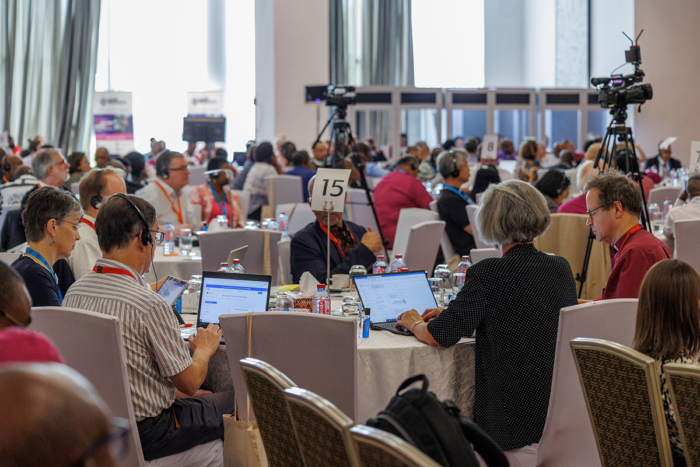
    Delegates to the 18th Anglican Consultative Council participate daily in small table discussions. Photo: Neil Turner for the Anglican Communion Office

    Good differentiation

    Actions of ACC are not binding on the member provinces, though Tomlin said in his introductory remarks that the provinces may better serve their shared mission by joining together.

    “When we serve others in the name of Christ together, that is so much more powerful as a witness than when we do it alone,” he said.

    Later in the day, ACC members considered their first set of resolutions, including the one on “good differentiation” submitted by the Commission on Unity, Faith and Order. The resolution “affirms the importance of seeking to walk together to the highest degree possible and learning from our ecumenical conversations how to accommodate differentiation patiently and respectfully,” and it tasks the commission with developing proposals for the ACC to review.

    After additional discussion by ACC members, the resolution passed with a show of hands.

    —David Paulsen is an editor and reporter for Episcopal News Service. He can be reached at dpaulsen@episcopalchurch.org.


    The Episcopal Church of the Redeemer: Worshiping God, living in community, reaching out to the world.

    Church of the Redeemer

    Church of the Redeemer: Worshiping God, living in community, and reaching out to the world around us. We are an Episcopal Church serving north King County and south Snohomish County, Washington. As you travel your road, go with friends walking the way of Jesus at Redeemer.

    Church of the Redeemer is at 6220 Northeast 181st Street in Kenmore, Washington. The campus is a short distance north of Bothell Way, near the Burke-Gilman Trail. The entrance looks like a gravel driveway. The campus is larger on the inside than it is on the outside. And we managed to hide a large building on the side of a hill that is not easily seen from the street.

    The Episcopal Church welcomes you.

  • Archbishop of Canterbury’s remarks on human dignity lift up traditional and progressive marriage beliefs

    Archbishop of Canterbury’s remarks on human dignity lift up traditional and progressive marriage beliefs

    [Episcopal News Service – Canterbury, England] Heading into this Lambeth Conference, a draft of what is known as the Lambeth Call on Human Dignity generated the most discussion, sparking controversy for how it addressed human sexuality even before the start of the July 26-August 8, 2022, conference of more than 650 Anglican bishops. But on August 2, when bishops finally took up the Human Dignity Call in closed session, accounts of those discussions bore little evidence of the divisions that simmered on the sidelines during the first half of the conference.

    Instead, what resonated for bishops attending the session was the extended introduction by Archbishop of Canterbury Justin Welby, who sought in his remarks to bring the bishops closer together by affirming the sincerity and theological rigor of Anglicans on both sides of the divide over the extent of LGBTQ+ inclusion in the church.

    Remarks by Archbishop Justin Welby on human dignity

    “This is one of the most important sessions of this conference,” Welby said, according to a transcription of his remarks released by the Lambeth Conference. The Human Dignity Call references the need to address racism, exploitation, inequality, gender justice and climate change, but Welby acknowledged that human sexuality is part “of what we believe about human dignity.”

    Read the Archbishop of Canterbury’s remarks here.

    A majority of the more than 80 million Anglicans around the world have deeply held convictions that marriage is for a man and a woman, Welby said, but others “have not arrived lightly at their ideas that traditional teaching needs to change.”

    “So let us not treat each other lightly or carelessly,” Welby said. “We are deeply divided. That will not end soon. We are called by Christ himself both to truth and unity.”

    Discussions on human dignity

    The session progressed to table discussions by bishops in their small groups and concluded in prayer, without taking any collective action to express agreement or disagreement with the call itself. The Lambeth Calls were designed as an alternative to resolutions and intended to initiate discussion among the bishops while suggesting action items.

    Welby and planners have tried to steer the conference away from focusing narrowly on human sexuality, instead emphasizing points of Christian unity and fellowship while filling the conference’s schedule with discussions of a wide range of topics. The bishops, for example, also will devote a whole day to the environment and sustainable development during a trip to Lambeth Palace in London on August 3.

    Resolution 1.10

    Divisions had flared, however, over an attempt by conservatives, particularly from what is known as the Global South, to reaffirm Resolution 1.10, which was passed at the 1998 Lambeth Convention and asserts conservative theological positions on human sexuality and marriage, including that marriage is between a man and a woman, and that unmarried people should abstain from sex.

    The revised draft of the Lambeth Call on Human Dignity taken up by the bishops references the 1998 resolution’s assertion that “all baptized, believing and faithful persons, regardless of sexual orientation are full members of the Body of Christ.” It also states there is no consensus across all 42 of the Anglican Communion’s autonomous but interdependent provinces on the legitimacy of blessings and marriage rites for same-sex couples. “As bishops we remain committed to listening and walking together to the maximum possible degree, despite our deep disagreement on these issues,” the call says.

    Response by Presiding Bishop Michael Curry

    In the early evening, Episcopal Church Presiding Bishop Michael Curry described the day’s discussion as a moment of hope.

    “I’ve been a bishop 22 years and a priest over 40 years. And I have to tell you that as far as I know, it is the first time a document in the Anglican Communion has recognized that there is a plurality of views on marriage and that these are perspectives that reflect deep theological and biblical work and reflection,” Curry said in a video statement. “That’s why I say today is a hopeful day. There is work to do, but hope can help us run the race and ascent before us.”

    Actions by the Global South Fellowship

    Leaders of the Global South Fellowship of Anglican Churches, with 23 member provinces, most from Africa and Asia, were denied in their attempt at the Lambeth Conference to engineer an official show of majority support for anti-LGBTQ+ stances on marriage and sexuality. On August 2, some Global South bishops announced an alternative plan, to make their case on the conference’s sidelines. They now are asking like-minded bishops from across the Anglican Communion to register their support for their own document reaffirming Resolution 1.10.

    South Sudan Archbishop Justin Badi, chairman of the Global South Fellowship, confirmed in an interview with Episcopal News Service earlier in the day that he and other conservative bishops had no intention of raising the issue during the open plenary, as previously planned, and they didn’t press it during the closed discussion of the conference’s Lambeth Call on Human Dignity,

    “We wanted to bring [the reaffirmation of 1.10] as any other business in the plenary, but the organizers said, ‘No, that cannot happen,’” Badi said. Instead, their stated goal now is a show of support for their own reaffirmation document, “reminding people” of what was passed in 1998.

    The document will eventually be presented to Welby, who convened this Lambeth Conference, but the Global South bishops are not asking Welby to take any action on the document. When asked about his earlier call to “impose sanctions” on The Episcopal Church and at least five other provinces with inclusive LGBTQ+ policies, Badi told ENS that such action will no longer be pursued at this Lambeth Conference.

    The Human Dignity Call

    The initial draft of the Human Dignity Call included language favored by conservative bishops reaffirming 1.10, which stated that homosexuality is forbidden, marriage is only for heterosexual couples and unmarried people should practice abstinence. Conference planners revised that call after some bishops, including from The Episcopal Church, raised concerns about the original language and the process for accepting it.

    Resolution 1.10 is bigger than the Lambeth Conference, Badi told ENS. “Why we take it to be important [is] because it has the authority of the Bible.”

    Welby spoke to the biblical underpinnings of the conservative bishops’ beliefs in his remarks during the Human Dignity Call. “For them, to question this teaching is unthinkable, and in many countries would make the church a victim of derision, contempt and even attack,” Welby said. “For many churches to change traditional teaching challenges their very existence.”

    He drew a direct parallel to the discernment of provinces like The Episcopal Church that reached a different conclusion on human sexuality. “They are not careless about scripture. They do not reject Christ. But they have come to a different view on sexuality after long prayer, deep study and reflection on understandings of human nature,” Welby said. “For these churches not to change traditional teaching challenges their very existence.”

    The focus on human dignity has roots in the Anglican tradition. The Baptismal Covenant in The Episcopal Church’s Book of Common Prayer, for example, calls on Episcopalians to “strive for justice and peace among all people, and respect the dignity of every human being.”

    What comes next

    It remains uncertain how much support the Global South Fellowship of Anglican Churches will receive for its push to reaffirm Resolution 1.10. Bishops are asked to register their support via email by noon on August 4, with results to follow “in due course.” Some bishops from the 23 member provinces have told ENS that they agree with the language of the document, though the bishops are not all of one mind on how strongly to press against the actions of other provinces.

    The reaffirmation of 1.10 “is right,” Tanzania Archbishop Maimbo Mndolwa told ENS, but he added that he is opposed to one province telling another province what to do, including on matters of human sexuality. He also questioned the real source of energy on this issue. “There has been a tendency over many years of some people from the Global North to use provinces from the Global South to champion their own ideas,” he said, without specifying who might be pressing their influence.

    The Global South Fellowship of Anglican Churches is a fellowship, Mndolwa said, but not an organization that speaks directly for all member provinces. He also distanced himself and his province from the decision of leaders in the provinces of Nigeria, Rwanda and Uganda to skip this Lambeth Conference and other Anglican Communion meetings. “We don’t want to be separatists,” Mndolwa said of his province. “We are here to dialogue. We are here to debate. We are not here to fight.”

    South African Archbishop Thabo Makgoba spoke about the Human Dignity Call in a morning press conference. “We are all made in the image of God,” he said. The call “seeks to remind us of that.” He also stressed that the call is not just about human sexuality.

    “Please, let’s move away from a single issue and move to the broader issues,” Makgoba said.

    Arizona Bishop Jennifer Reddall told ENS before the afternoon sessions that she and other progressive bishops have been grappling with how to affirm their support for LGBTQ+ inclusion in The Episcopal Church while remaining open to the views of their more conservative counterparts. “I’m enjoying much of the dialogue. I enjoy conversation across difference,” she said.

    On the Human Dignity Call, “I think the LGBTQ differences are very real and very painful personally,” she said, while adding, “it’s not the whole story” of the Lambeth Conference.

    Overall, however, Reddall worries that too much is being packed into a short period of time, making it difficult to fully consider each individual call. “These are deep questions that are worthy of so much more conversation and time than we have,” she said.

    In the afternoon, as the Global South Fellowship was launching its effort to generate support for document reaffirming the full text of Resolution 1.10, Welby issued a written statement responding to the controversy. He affirmed “the validity of the resolution passed at the Lambeth Conference 1998.” At the same time, the Human Dignity Call’s acknowledgement of differences from province to province “states the reality of life in the Communion today,” Welby said.

    “What is also clear is that Lambeth 1.10 itself continues to be a source of pain, anxiety and contention among us,” Welby continued. “That has been very clear over the course of this Lambeth Conference. That is also part of the current reality of our communion. To be reconciled to one another across such divides is not something we can achieve by ourselves.”

    – David Paulsen is an editor and reporter for Episcopal News Service. He can be reached at dpaulsen@episcopalchurch.org.

    Lambeth Conference: God's Church for God's World

    What is the Lambeth Conference?

    Every bishop of the Anglican Communion is invited to the Lambeth Conference, which is convened by the Most Reverend Justin Welby, The Archbishop of Canterbury. The Lambeth Conference has met since 1867, happens once-a-decade, and is a significant event in the life of the Anglican Communion.

    The conference will explore church and world affairs. Outcomes of the conference will shape the life of the Anglican Communion in the decade ahead.

    Anglican Compass Rose

    The Anglican Communion

    The Anglican Communion has no central authority figure or body. It is made up of 42 autonomous members or provinces. Each member church makes its own decisions in its own way.

    However, their decision-making bodies are guided by recommendations from each of the four so-called Instruments of Communion

    The Secretariat, also known as the Anglican Communion Office, based in London, England support Anglicans and Episcopalians worldwide to carry out any requests from the Instruments and work to enable members of the Anglican Communion to fulfil their calling to be God’s people in the world.

    The Episcopal Church of the Redeemer: Worshiping God, living in community, reaching out to the world.

    Church of the Redeemer

    Church of the Redeemer: Worshiping God, living in community, and reaching out to the world around us. We are an Episcopal Church serving north King County and south Snohomish County, Washington. As you travel your road, go with friends walking the way of Jesus at Redeemer.

    Church of the Redeemer is at 6220 Northeast 181st Street in Kenmore, Washington. The campus is a short distance north of Bothell Way, near the Burke-Gilman Trail. The entrance looks like a gravel driveway. The campus is larger on the inside than it is on the outside. And we managed to hide a large building on the side of a hill that is not easily seen from the street.

    The Episcopal Church welcomes you.

  • ‘A wave of love’

    ‘A wave of love’

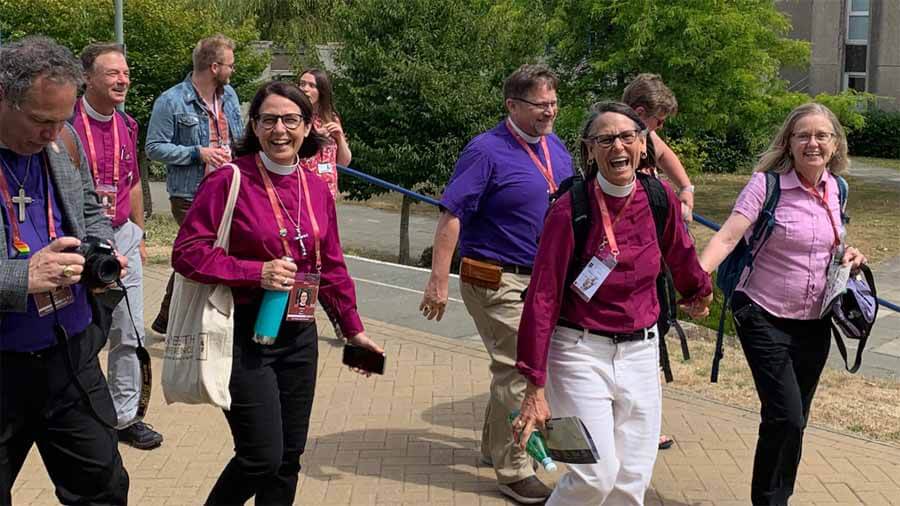
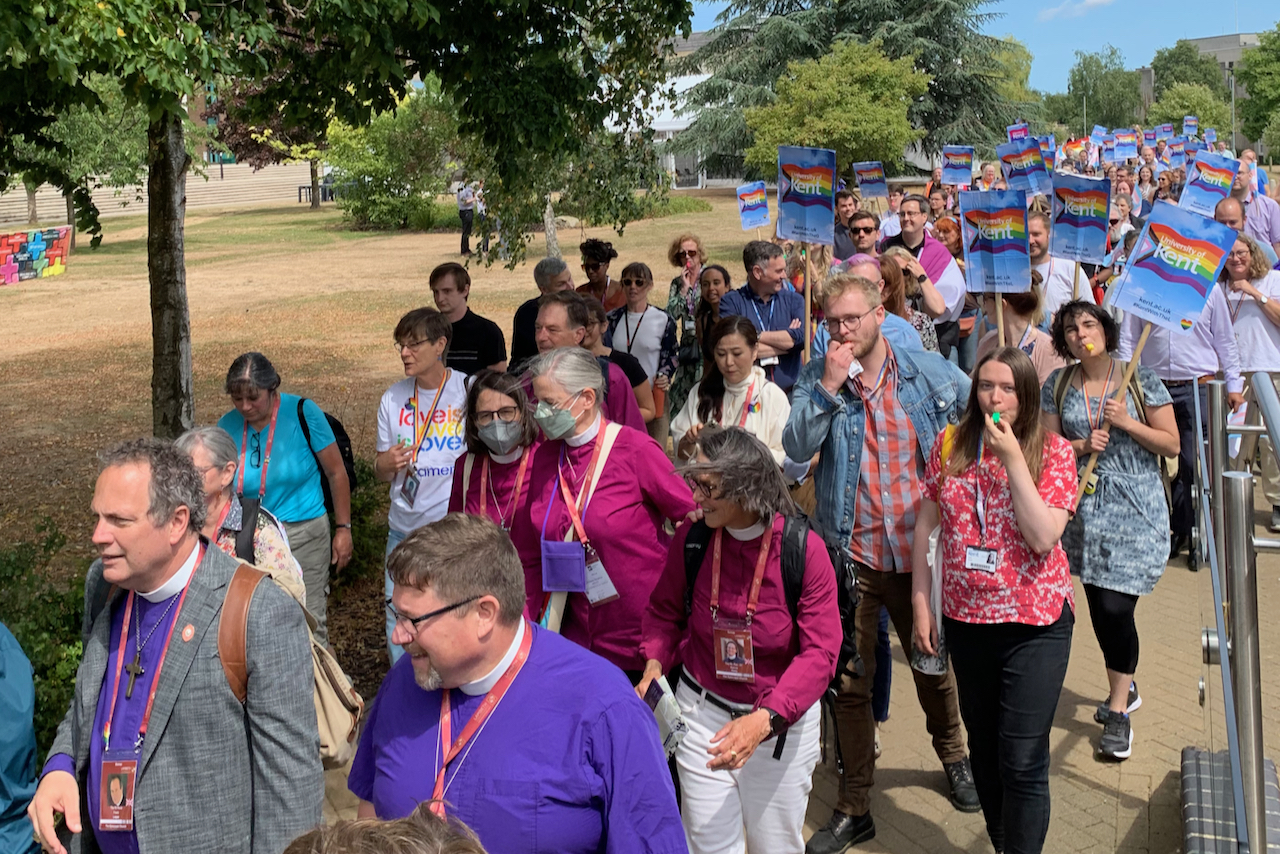
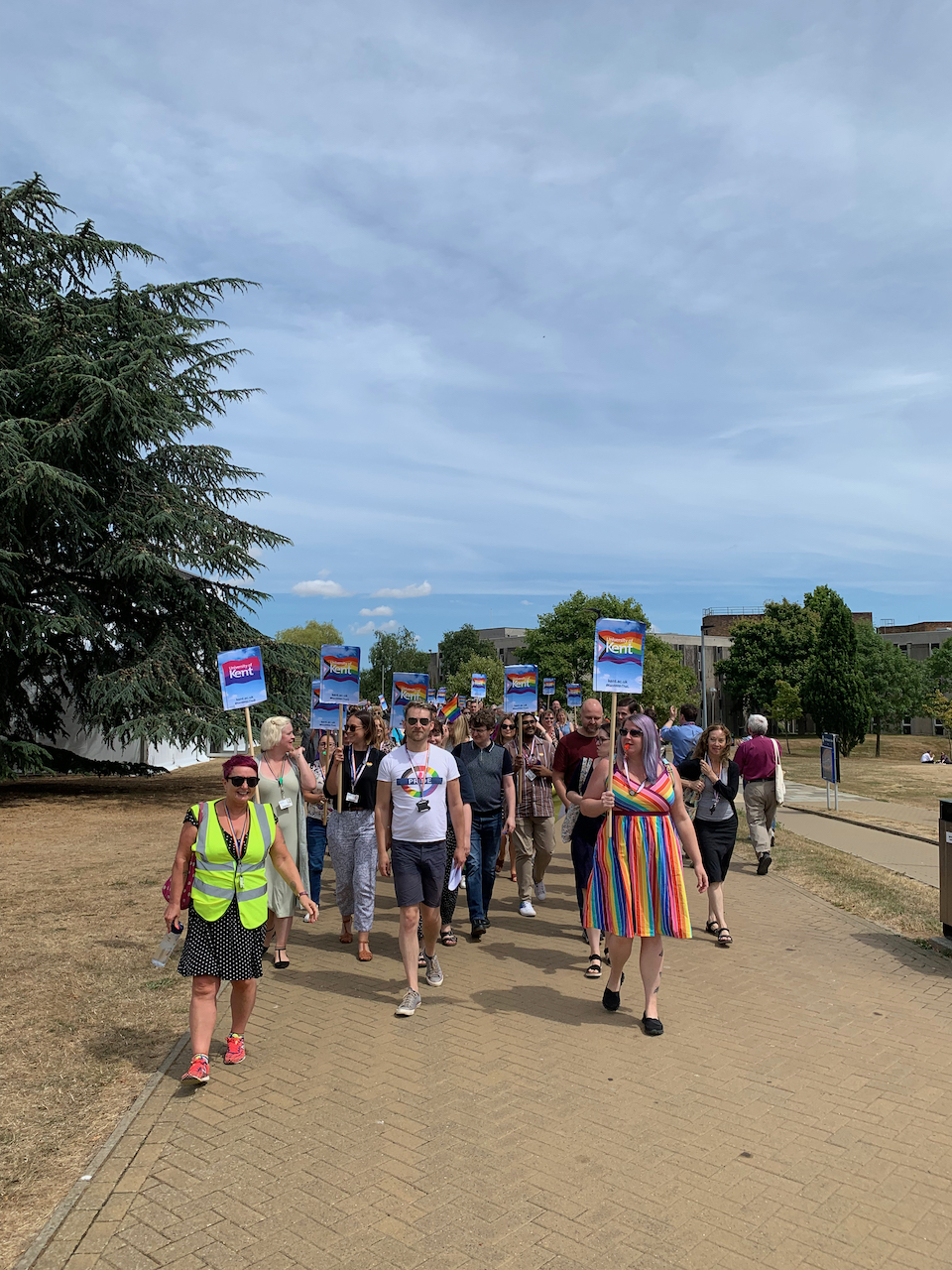
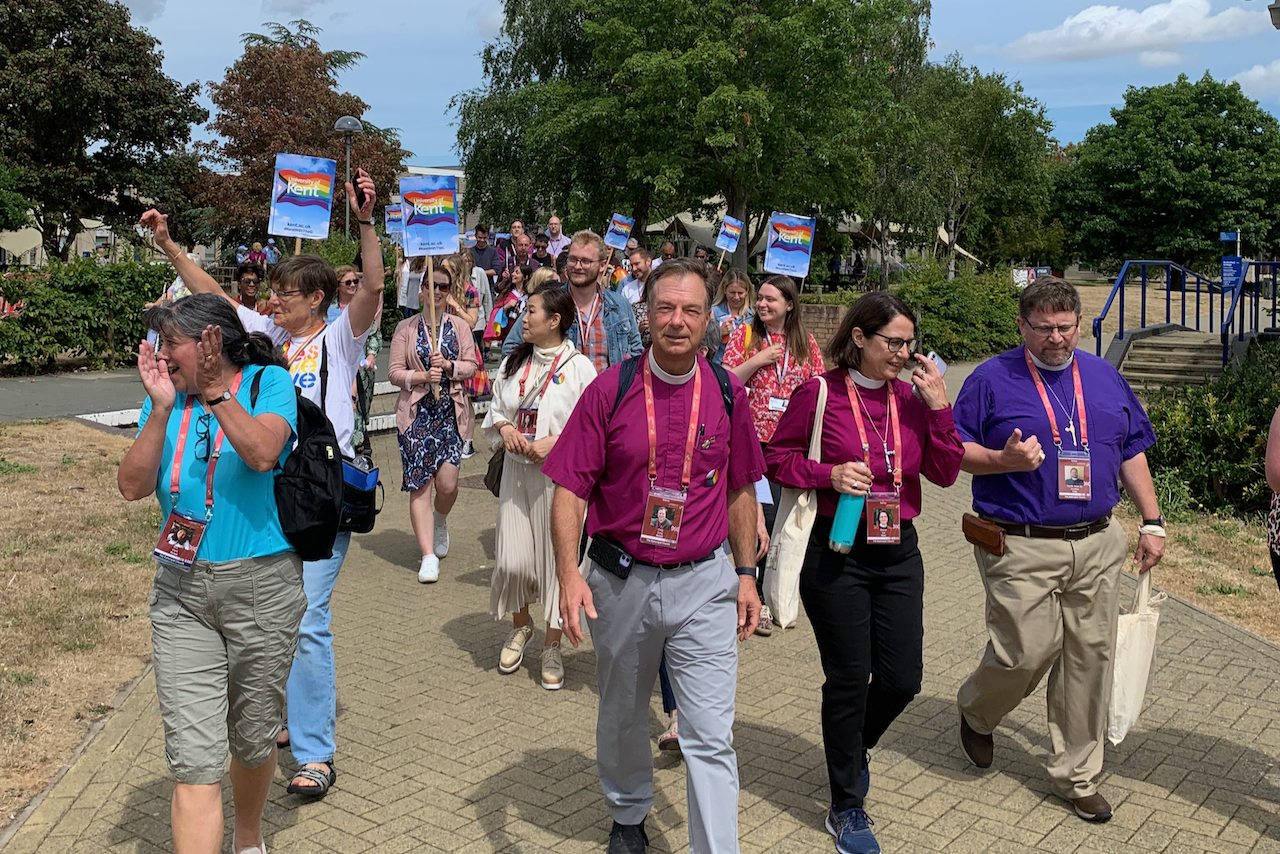
    [Episcopal News Service – Canterbury, England] Over a dozen Episcopal bishops joined a march across the campus of the University of Kent, site of the Lambeth Conference, on July 27, 2022, to show support for LGBTQ+ inclusion as the topic once again looms large over the once-a-decade gathering of bishops from across the Anglican Communion, underway here through August 8.

    The raucous sound of whistles and drums accompanied the procession throughout the campus, punctuated by cheers from onlookers. The bishops’ purple shirts barely stood out among the stream of rainbow flags and stickers, signs, trans pride flags and colorful outfits. Some bishops marched with their same-sex spouses, who were not invited to participate fully in the conference as bishops’ opposite-sex spouses are but who are invited to attend some events as observers.

    The march drew at least 100 people. Photo: Egan Millard/Episcopal News Service

    The march on the conference’s first official day was organized by the university’s LGBT+ Staff Network and brought together over 100 university students and staff, clergy and their spouses, local residents and other supporters. It had been planned months in advance as part of the university’s parallel programming during the conference, which it is hosting despite its objections to how the conference is handling LGBTQ+ issues.

    University staff and students led the march. Photo: Egan Millard/Episcopal News Service

    Welcome from the march organizers at Kent University

    “We warmly welcome the gathering of voices from diverse backgrounds, cultures, and outlooks to the Lambeth Conference and, as a University, we intend to learn from and, where appropriate, add our voice to the discussion of the vital questions under discussion,” university administrators wrote in June.

    “Alongside this we are clear that the position of the worldwide Anglican Communion on the place of LGBT+ people within the Church and wider society does not fit with our deeply held values of equality, inclusion, tolerance, and mutual respect. We say that openly and unambiguously.”

    Some 650 bishops and their spouses from 42 Anglican provinces and 165 countries are gathered in Canterbury for the conference. It does not have legislative authority, but is intended, through common study of world issues and matters impacting the Christian faith – as well as fellowship and worship – to shape the life of the communion in the coming decade. This is the 15th such gathering held in 155 years.

    Onlookers cheered as the march went by. Photo: Egan Millard/Episcopal News Service

    Views on same-sex marriage vary widely throughout the communion, with The Episcopal Church leading the way toward full marriage equality and full inclusion of LGBTQ+ people.

    The university pledged to hold events that responded to and engaged with the debate over LGBTQ+ inclusion in Anglican churches. The march kicked off a day-long “Rainbows in Religion” symposium that included presentations and panel discussions on the topic.

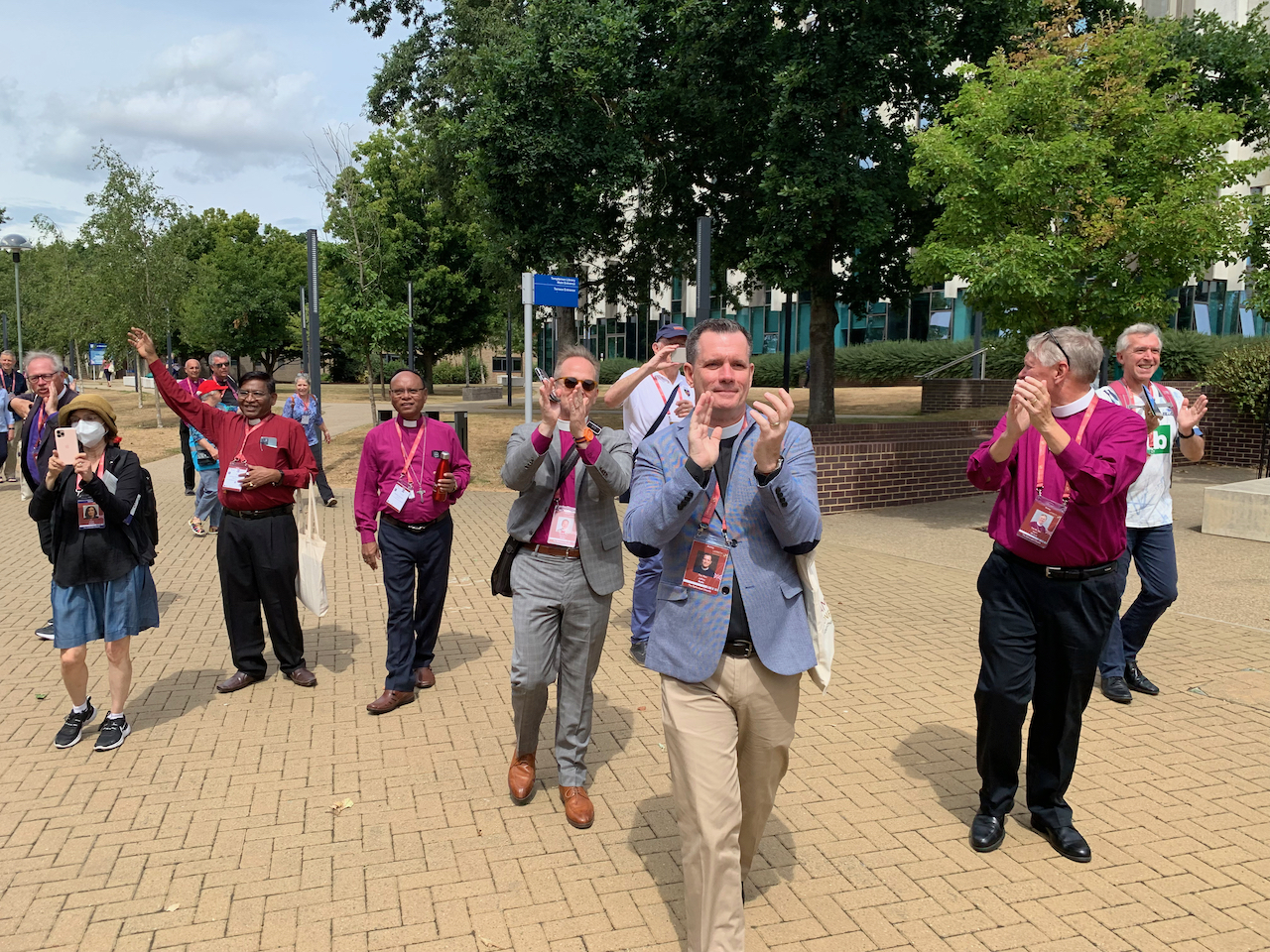
    Newly elected Connecticut Bishop Jeffrey Mello applauds as he and other bishops join the march. Photo: Egan Millard/Episcopal News Service

    Though the march’s organizers had singled out Archbishop of Canterbury Justin Welby’s decision not to invite the same-sex spouses as the main motivation for the march, it took on added significance after a statement saying the Anglican Communion “as a whole” rejects same-sex marriage was added to one of the draft documents – “Lambeth calls” – that bishops will vote on. The language was altered on July 26 to eliminate the most divisive language and to reflect the lack of consensus on the issue across the communion.

    Episcopal Church bishops who participated

    Among the marchers from The Episcopal Church were New York Assistant Bishop Mary Glasspool, the first openly lesbian bishop in the Anglican Communion, and several other bishops whose spouses were not invited. At the end of the march, one of the university organizers addressed them specifically, telling them, “You are welcome here” as the crowd applauded.

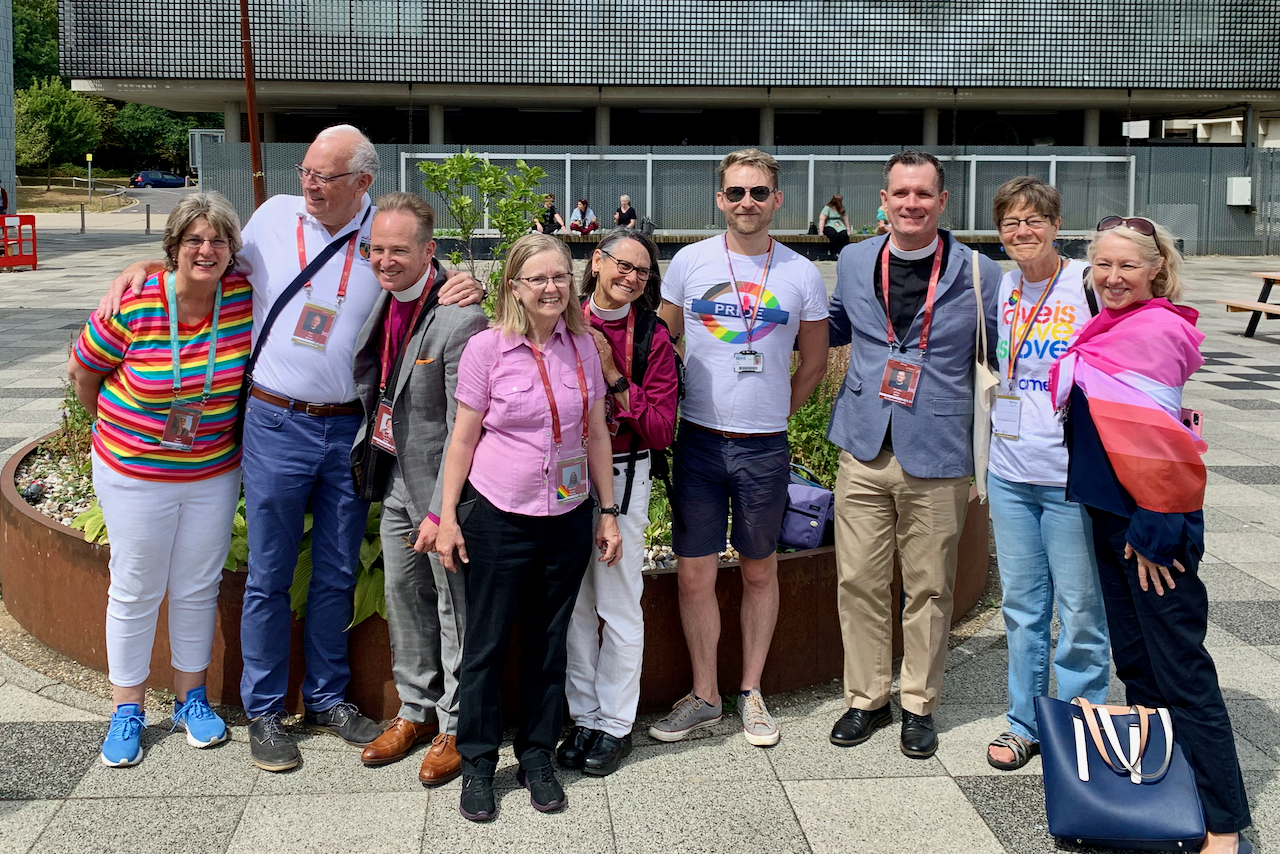
    March organizers pose with bishops and spouses, including the Rev. Thomas Mousin and Bishop Thomas Brown, second and third from left. Photo: Egan Millard/Episcopal News Service

    Maine Bishop Thomas Brown marched with his husband, the Rev. Thomas Mousin.

    “Whenever there’s a sense of welcome, there’s a sense of joy. And what I felt was that this university community came together to say, ‘We are glad you’re here,’” Brown told Episcopal News Service.

    “It’s delightful to be here – it’s just like a wave of love,” Mousin added. “It’s wonderful that we’ve received it.”

    —Egan Millard is an assistant editor and reporter for Episcopal News Service. He can be reached at emillard@episcopalchurch.org.

    Lambeth Conference: God's Church for God's World

    What is the Lambeth Conference?

    Every bishop of the Anglican Communion is invited to the Lambeth Conference, which is convened by the Most Reverend Justin Welby, The Archbishop of Canterbury. The Lambeth Conference has met since 1867, happens once-a-decade, and is a significant event in the life of the Anglican Communion.

    The conference will explore church and world affairs. Outcomes of the conference will shape the life of the Anglican Communion in the decade ahead.

    Anglican Compass Rose

    The Anglican Communion

    The Anglican Communion has no central authority figure or body. It is made up of 42 autonomous members or provinces. Each member church makes its own decisions in its own way.

    However, their decision-making bodies are guided by recommendations from each of the four so-called Instruments of Communion

    The Secretariat, also known as the Anglican Communion Office, based in London, England support Anglicans and Episcopalians worldwide to carry out any requests from the Instruments and work to enable members of the Anglican Communion to fulfil their calling to be God’s people in the world.

    The Episcopal Church of the Redeemer: Worshiping God, living in community, reaching out to the world.

    Church of the Redeemer

    Welcome to Church of the Redeemer: Worshiping God, living in community, and reaching out to the world. We are an Episcopal Church serving north King County and south Snohomish County, Washington. As you travel your road, go with friends walking the way of Jesus at Redeemer.

    Church of the Redeemer is at 6220 Northeast 181st Street in Kenmore, Washington. The campus is a short distance north of Bothell Way, near the Burke-Gilman Trail. The entrance looks like a gravel driveway. The campus is larger on the inside than it is on the outside. And we managed to hide a large building on the side of a hill that is not easily seen from the street.

    The Episcopal Church welcomes you.

  • After LGBTQ+ resolutions smoothly moved through #GC80, Anglicanism’s human sexuality debate returns ahead of Lambeth Conference

    After LGBTQ+ resolutions smoothly moved through #GC80, Anglicanism’s human sexuality debate returns ahead of Lambeth Conference

    [Episcopal News Service] The 80th General Convention passed 14 resolutions, with little or no debate, speaking to the full inclusion and protection of LGBTQ+ persons in the life of The Episcopal Church and the larger society. Those actions represent a remarkable change from previous conventions, including the same-sex marriage access compromise in 2018, when such measures occupied large swaths of the gatherings’ time and emotional energy.

    “Our church is on record—both officially and in practice—with our commitment to the full inclusion of all who seek to follow Jesus and his way of love,” Presiding Bishop Michael Curry said on July 22, 2022.  “As we head to the Lambeth Conference, the same dedication leading us to the full welcome, embrace, and inclusion of LGBTQ+ children of God likewise commits us to communion with one another across our differences. We will be true to who we are while upholding our relationships and engaging in real and open conversation.”

    The Episcopal Church and LGBTI+ inclusion

    The Episcopal Church was set on the path of full inclusion 46 years ago when the 65th General Convention passed resolutions saying “homosexual persons are children of God who have a full and equal claim with all other persons upon the love, acceptance, and pastoral concern and care of the Church” and that they “are entitled to equal protection of the laws with all other citizens.”

    Earlier this month, the majority of LGBTQ+ related resolutions passed mostly via the 80th General Convention’s massive consent calendars, in what the Rev. Susan Russell described as “extraordinary.”

    “And that was a sign of the health of the church that we are at a place where we want to focus on what we can do together, not argue about what we disagree about,” Russell, a Diocese of Los Angeles deputy and longtime advocate for LGBTQ+ Episcopalians, told Episcopal News Service.

    She attended the last 11 General Conventions including two as a deputy, and said the July 8-11 gathering in Baltimore, Maryland, was “a watermark convention” for “those of us who continue to advocate for the church to continue in its movement to make the full and equal claim for LGBTQ people that was promised in 1976 not just a resolution but a reality.”

    LGBTI+ resolutions at the 80th General Convention

    Resolutions passed by the 80th General Convention include:

    • Direct the Domestic and Foreign Missionary Society to establish a staff position of director of LBGTQI and women’s ministries (A063).
    • Direct the presiding bishop and the president of the House of Deputies to appoint a task force on LGBTQ+ inclusion (D026).
    • Affirm that non-binary, as well as binary identified transgender and cisgender people, are included in the phrase “gender identity and expression” and that the canonical provisions of The Episcopal Church apply equally to people of all genders (D029).
    • Direct the Church Center to develop multilingual, multicultural churchwide resources for “living into our commitments to welcome and support people and communities of diverse genders, including transgender and non-binary” (D030).
    • Express convention’s full support of the United Nations High Commissioner for Refugees and the International Organization for Migration in their mission to protect LGBTQ+ persons forced to seek refugee or asylee status because they fear being persecuted based on their sexual orientation, gender identity, gender expression and/or sex characteristics (D045).
    • Call for support for LGBTQ+ persons facing additional discrimination during the COVID-19 pandemic (D060).
    • Call for The Episcopal Church to advocate for access to gender-affirming care in all forms (social, medical, or any other) and at all ages as part of the baptismal call to “respect the dignity of every human being” (D066).
    • Address “the urgent need for gender and sexuality training in our church on all levels” (D072).

    Convention also passed three resolutions about evangelism (C060), revitalization of congregational ministries (A096) and planting new faith communities (A095) that all specifically include “people who are gay, lesbian, bisexual or transgender (LGBTQI+), gender non-conforming people.” And deputies passed a courtesy resolution (D059) giving thanks for “the extraordinary ministry of Louie Crew Clay,” an LGBTQ+ activist who died in 2020.

    “We understand this as a living out of our commitment to holy baptism, which is profoundly articulated by St. Paul in Galatians 3:27-28: ‘As many of you as were baptized into Christ have clothed yourselves with Christ. There is no longer Jew or Greek; there is no longer slave or free; there is no longer male and female, for all of you are one in Christ Jesus,’” the presiding bishop said. “For me, personally, this is a living out of what the old slaves used to sing: ‘There’s plenty good room for all God’s children.’”

    Advocacy predates Stonewall in 1969

    The Episcopal Church’s advocacy for LGBTQ+ people pre-dates the 1969 Stonewall Uprising, although its early efforts were slow and halting, and echoed the era’s perceptions about human sexuality. That work, at times, has prompted some conservative Episcopalians to leave the church in protest, in some cases setting up decades-long legal disputes. More recently, following the 2003 historic election of the Rt. Rev. Gene Robinson, the now-retired bishop of New Hampshire, four dioceses have elected openly gay partnered priests to be their bishops.

    Meanwhile, at the upcoming Lambeth Conference

    Until earlier this week, tensions over LGBTQ+ bishops’ attendance at the upcoming Lambeth Conference of Anglican bishops had focused on Archbishop of Canterbury Justin Welby’s decision to invite those bishops – a new precedent – but not their spouses.

    The Episcopal Church’s bishops and deputies passed a resolution in Baltimore expressing to Welby the General Convention’s dismay at his decision to exclude same-sex spouses of LGBTQ+ bishops (D092) from the gathering.

    The Conference, set for July 26-August 8, 2022, is a typically once-a-decade gathering of Anglican bishops from across the 85 million-member worldwide Anglican Communion. It brings together bishops and spouses for prayer, Bible study, worship and fellowship, in addition to joint consultation by the bishops on internal Anglican matters, relations with other churches and religions, and theological, social and international questions. The gatherings help shape the life of the Anglican Communion for the next decade.

    Calls versus resolutions

    In advance of the 2022 Lambeth Conference, Welby said he hoped to unite the Anglican Communion under common expressions of faith and social engagement, rather than focusing on debates over human sexuality that have divided bishops at past conferences.

    He plans for the bishops to vote on “Lambeth Calls” meant to replace the previous gatherings’ resolutions to acknowledge that the conference does not have any legislative or policy-setting power over the 42 autonomous churches and five extra-provincial churches that make up the Anglican Communion.

    “The move from resolutions to calls is simply a recognition of the reality that the Lambeth Conference is not a synod. It can’t resolve things in the sense that they’re then resolved. They can call on provinces to consider for themselves, and that’s why we call them a call, because they’re a call; they are not a resolution,” Welby said in a June 22 press conference.

    On July 18, the Lambeth Conference released to the public and emailed to bishops a 58-page study guide including draft versions of 10 Lambeth Calls covering such topics of Anglican identity, science and faith, discipleship, reconciliation and human dignity.

    The study guide asks bishops to consider whether they can envision the calls “put into practice” or not in their provinces or dioceses. Calls with be discussed as a group beginning on the conference’s fourth day, and bishops will be asked to vote “to adopt” or “adapt” a call. By adopting a bishop acknowledges the call speaks to them, adds their voice and commits to taking the action to implement it; and by adapt, a bishop acknowledges the call requires further discernment and commits their voice to the ongoing process.

    Human Dignity call

    The Human Dignity Call, scheduled for the seventh day, August 2, 2022, includes, on pages 31 and 32, provisions that call on the bishops to reaffirm the 1998 Lambeth gathering’s stance against same-sex marriage (in Resolution 1.10) by stating that “it is the mind of the Anglican Communion as a whole that same-gender marriage is not permissible.”

    Archbishop Justin Badi, primate of the Episcopal Church of South Sudan and leader of the Global South Fellowship of Anglican Churches, recently said that the group’s members would seek to have the conference reaffirm Resolution 1.10 as the “‘official teaching’ of the Anglican Church on marriage and sexuality.” This, they said, would “directly challenge” bishops from The Episcopal Church of America, Canada, New Zealand, Scotland and Wales who favor marriage equality.

    Some Episcopalians have reacted strongly against the effort to reaffirm the call’s opposition to same-sex marriage.

    Los Angeles Bishop John Taylor wrote in a widely shared July 20 Facebook post that “moderate and progressive Anglicans and Episcopalians” had been led to believe that such dividing issues were going to be avoided through the Calls process. Instead, he wrote, they will arrive in Canterbury “as credulous props for what is likely to be a majority vote against marriage equity.”

    https://www.facebook.com/photo.php?fbid=10159697753103046&set=a.35257148045&type=3

    If the Lambeth Call on Human Dignity passes in its current form, Taylor said, “The Episcopal Church will again have to work hard to remind people that we don’t read the Bible literally, divorced from its historic rootedness — that slowly but surely, across generations, we have moved away from arguing that the word of God countenances slavery, misogyny, homophobia, and transphobia.”

    The call would also reaffirm Resolution 1.10’s admonition that “all baptized, believing and faithful persons, regardless of sexual orientation are full members of the Body of Christ” and should be “welcomed, cared for, and treated with respect.”

    Convocation of Episcopal Churches in Europe Bishop Mark Edington on July 22 criticized what he called a tragic juxtaposition of the reaffirmation of Resolution 1.10 in the same Lambeth Call that would have bishops acknowledge “the existence and ongoing impact of an imperialist Anglicanism involved in dehumanizing practices predicated upon cultural and racial supremacy,” as the call text puts it.

    Thus, Edington said, what he called “a lot of good stuff” in the calls could get lost in the possible debate about whether Resolution 1.10 truly does express the mind of the entire communion.

    “The whole reason that you asked some of the spouses to stay home was that at least in their part of the Anglican Communion they are regarded unapologetically as legit children of God,” Edington wrote.

    “But the play here is pretty obvious, right?” he continued. “Who wants to be seen voting against a great statement acknowledging our colonial past and condemning our unequal present?”

    Same-sex marriage controversies

    The status of same-sex marriage has, at times, roiled The Episcopal Church as well as the Anglican Communion. The 78th General Convention in 2015 changed the church’s canons to eliminate language defining marriage as between a man and a woman (via Resolution A036). That convention also authorized trial use of two new marriage rites with language allowing them to be used by same-sex or opposite-sex couples (via Resolution A054).

    After eight diocesan bishops would not permit the use of the rites in their dioceses and required couples wanting to use them to be married outside their diocese and away from their home church, the next meeting of convention in 2018 passed Resolution B012 to ensure all Episcopalians unfettered access to those rites in jurisdictions where same-sex marriage is legal.

    Taylor added that he felt bad for the more-conservative Episcopal bishops who, at the General Convention in 2018, agreed to what he called “an historic compromise on marriage equity,” which Russell, the Los Angeles deputy, helped lead. “Without denying their belief in traditional marriage, these bishops generously acknowledged a pastoral responsibility to make sure that all people in their dioceses, irrespective of orientation, had access to the marriage rite in the parishes they love,” Taylor wrote. “As a result, we have achieved considerable unity in spite of substantial diversity of opinion. Now these bishops are being dragged back into the same old wearying binary argument.”

    Welby states the purpose of the calls

    As the calls have already provoked conversation even before many of them have left their diocese for England, Welby on July 22 sent a message to bishops attending the Lambeth Conference.

    “I know that many of you are reading and praying about the draft Lambeth Calls that have been published this week – and they are naturally the subject of debate ahead of the conference. Indeed, these Calls have grown out of a process of discussion and encounter with one another. They are informed by the insights and themes of the online video conversations between bishops across the world over the past year. They have been drafted by a diverse group of Anglicans – male and female, lay and ordained, from different generations and from every part of the Communion,” the archbishop wrote.

    “They are one part of a process that began before this part of the Conference, and will continue long after it formally finishes, as every Province discerns its own response to the Calls in their own contexts.”

    Meanwhile, the LGBTQ+ staff of the University of Kent, where the bulk of the conference will take place, is planning two parallel events on July 27 “to stand up for quality & inclusion.”

    https://twitter.com/KentLGBTStaff/status/1547265710216417280

    —The Rev. Mary Frances Schjonberg retired in July 2019 as senior editor and reporter for Episcopal News Service.

    The Episcopal Church of the Redeemer: Worshiping God, living in community, reaching out to the world.

    Church of the Redeemer

    Welcome to Church of the Redeemer: Worshiping God, living in community, and reaching out to the world. We are an Episcopal Church serving north King County and south Snohomish County, Washington. As you travel your road, go with friends walking the way of Jesus at Redeemer.

    Church of the Redeemer is at 6220 Northeast 181st Street in Kenmore, Washington. The campus is a short distance north of Bothell Way, near the Burke-Gilman Trail. The entrance looks like a gravel driveway. The campus is larger on the inside than it is on the outside. And we managed to hide a large building on the side of a hill that is not easily seen from the street.

    The Episcopal Church welcomes you.

  • Director of LBGTQI and Women’s Ministries

    Director of LBGTQI and Women’s Ministries

    [Episcopal News Service – Baltimore, Maryland] Through its consent calendar, the House of Deputies on July 11, 2022, approved Resolution A063, finalizing the creation of a new staff position of director of LBGTQI and Women’s Ministries.

    The resolution, which was approved by the House of Deputies on July 9, was amended by the House of Bishops on July 10, which required deputies to concur with those changes in order for it to pass.

    Bishops modified the resolution’s language to include LGBTQI persons and a position description before it was sent back to the House of Deputies. The resolution also urges $300,000 in funding, which was included in the 2022-24 budget adopted by General Convention.

    The resolution directs the proposed new director to expand on the work done in the past quadrennium by the Task Force to Study Sexism in The Episcopal Church and Develop Anti-Sexism Training, through supervising anti-sexism training, collecting resources and data, and creating networks.

    —Melodie Woerman is a member of the ENS General Convention news team and is the former director of communications for the Diocese of Kansas.

    General Convention of the Episcopal Church

    What happens at General Convention?

    The legislative process of General Convention is an expression of The Episcopal Church’s belief that, under God, the Church is ordered and governed by its people: laity, deacons, priests, and bishops.

    The General Convention is the Church’s highest temporal authority. As such, it has the following power:

    • Amend the Constitution and Canons of the Episcopal Church
    • Amend the Book of Common Prayer and to authorize other liturgical texts
    • Adopt the budget for the Church
    • Create covenants and official relationships with other branches of the Church
    • Determine requirements for its clergy and other leaders
    • Elect its officers, members of the Executive Council, and certain other groups
    • Delegate responsibilities to the Interim Bodies of The Episcopal Church
    • Carry out various other responsibilities and authority
    The Episcopal Church of the Redeemer: Worshiping God, living in community, reaching out to the world.

    Church of the Redeemer

    Church of the Redeemer: Worshiping God, living in community, and reaching out to the world around us. We are an Episcopal Church serving north King County and south Snohomish County. We welcome you be with us as we walk the way of Jesus.

    Church of the Redeemer is at 6220 Northeast 181st Street in Kenmore, Washington. We are a short distance north of Bothell Way, near the Burke-Gilman Trail. The entrance looks like a gravel driveway. The campus is larger on the inside than it is on the outside. And we managed to hide a large building on the side of a hill that is not easily seen from the street.

    The Episcopal Church welcomes you.

  • The Rev. Charlie Holt election challenged

    The Rev. Charlie Holt election challenged

    There are concerns about the election of the Rev. Charlie Holt as bishop coadjutor of the Diocese of Florida. These concerns range from procedural matters to fitness for office. Following is an article from the Episcopal News Service and a resolution adopted by the Vestry of the Church of the Redeemer at its May 24, 2022, meeting.

    Florida bishop coadjutor election challenged with formal objection, effort to deny consent

    [Episcopal News Service] The Diocese of Florida announced May 25 that a formal objection to the May 14, 2022, election of the Rev. Charlie Holt as bishop coadjutor has been filed with the diocese.

    The objection, signed by 37 clergy and lay deputies to the diocese’s special election convention, claims that last-minute changes to the voting process violated diocesan canons and that technical problems disrupted the vote, rendering the election invalid.

    In an email to members of the diocese acknowledging receipt of the objection, its Standing Committee and chancellor responded to the points of contention and denied any procedural errors or misconduct. No objections were raised during the election itself, they said, and the election was observed and confirmed by independent auditors.

    “We want to assure you – with the highest degree of confidence – that we believe in the election’s validity from every perspective,” the committee members and chancellor wrote. “We value the input and consciences of our few friends who have objected, and we will do everything we can to follow the proper channels so that their questions and concerns may be answered.”

    The Standing Committee and chancellor did not include the text of the objection itself along with their response, and diocesan staff would not provide a copy to Episcopal News Service, citing a desire to follow the canonical process and inform the presiding bishop’s office first. ENS obtained a copy of the six-page objection letter and verified with one of the signers that it is the document that was filed with the diocese.

    The May 14 election was held to choose a successor to the diocese’s current bishop, the Rt. Rev. Samuel Johnson Howard, who intends to retire in late 2023. Upon Howard’s retirement, the bishop coadjutor would become the ninth diocesan bishop. Holt, currently associate rector of teaching and formation at The Church of St. John the Divine in Houston, Texas, was one of five candidates.

    Disputed election practices

    In their objection letter, dated May 23, 2024, the 37 delegates claimed that the required clergy quorum for the election was not met, the agenda was not followed and there were “procedural and technical flaws” that interfered with remote voting.

    According to the objection, the diocese in April invited delegates to register for an in-person election at St. John’s Cathedral in Jacksonville, writing: “…the integrity of the election at this Special Convention will require that we pay very close attention to who is present. Therefore, if you do not register by the deadline, you will not be allowed to attend. There will be no exceptions.” However, the objection says, only 89 clergy delegates had registered by the May 9 deadline, below the two-thirds quorum of canonically resident clergy required by diocesan canons. The objection says the required clergy quorum was 116, “as stated by the election officials,” being two-thirds of 174 canonically resident clergy in the diocese.

    On May 12 (two days before the election), the diocese said there were not enough clergy registrants for a quorum and announced that clergy who had not yet registered could register to participate by Zoom, but that lay delegates could still only vote in person. Standing Committee President the Rev. Joe Gibbes told ENS that this change “permitted clergy impeded by factors such as COVID-19 risk, travel and emergencies to attend and vote digitally. This option was not offered to laity because unlike clergy delegates, lay delegates have alternates who can attend and act in their stead – where we had strong participation and there was never a question of reaching a quorum [among the laity].”

    The objection says that the diocese’s governing documents do not allow for remote voting. Gibbes told ENS that the Diocesan Council and chancellor “ensured that our bylaws permit online attendance and voting, according to Florida law.” He added that an “independent, non-Episcopal audit team” – the Forde Firm of Jacksonville (CPAs) – “was present on the Zoom [election] to ensure voting procedure was in accordance with all relevant laws.”


    The objection then says that on the morning of the election, the Diocesan Council changed the rules of order, which the delegates approved during the election. The objecting delegates’ letter says this violated The Episcopal Church’s Canon III.11.1(a), which requires the “adoption of rules and procedure for [such an] election … at a regular or special Diocesan Convention with sufficient time preceding the election … .”

    At the beginning of the livestreamed election, the credentials chairman said that 89 clergy delegates were present in person and 29 were attending remotely for a total of 118, “which is more than the two-thirds requirement for a quorum,” but he did not specify the exact number necessary to satisfy the quorum requirement.

    There were 138 lay delegates present out of 145, he said.

    After the third ballot, Howard announced that Holt received 64 votes from clergy and 80 from the laity. Howard then asked the auditors to confirm the results; one rose to the podium and said the election “had no irregularities in any of the votes or counts.”

    The number of voters in the final ballot was 125 clergy and 141 lay, according to the numbers provided by the diocese to ENS. The total number of voters in the final ballot cited in the objection is off by one; it counts one additional lay voter.

    According to the objecting delegates, the Zoom voting process did not go smoothly.

    “For clergy who were attempting to be present on remote voting, there was no orientation of how to vote, no testing of communications systems, no ‘trial vote’ to test whether all could vote, and in fact, at least two clergy could not see or hear the proceedings,” the objection letter reads. “When voting was taken, in at least one instance, the votes were not registered. Also, in-person delegates could not see nor could they hear the Zoom clergy.”

    Objection process

    The objection invokes a canonical process that has only been used twice before: in the 2018 bishop coadjutor election in the Diocese of Haiti and in the 2021 diocesan bishop election in the Diocese of Ecuador Central. Under Title III.11.8 in the Canons of The Episcopal Church, an objection may be filed within 10 days of a bishop election by a group of at least 10% of the voting delegates. The objection must be filed with the secretary of the diocesan convention, “setting forth in detail all alleged irregularities.” The canons do not specify what constitutes an “irregularity.”

    The objection is then forwarded to the presiding bishop, “who shall request the Court of Review of the Province in which the Diocese is located to investigate the complaint,” according to the current canons. However, General Convention amended the canons in 2018 to replace provincial courts of review (which had primarily handled appeals in clergy disciplinary cases) with a single churchwide Court of Review. That 2018 resolution changed all canonical references to courts of review in Title IV, but not in Title III. The Rt. Rev. Todd Ousley, bishop for the churchwide Office of Pastoral Development, told ENS that the remaining reference to a provincial court of review was an oversight and that objections would be referred to the churchwide Court of Review. A resolution to correct the error has been proposed for this summer’s General Convention. The Court of Review has 30 days to investigate and release a report of its findings.

    In an interview with ENS on May 25, Ousley said he had not received the letter of objection from the Diocese of Florida. The diocese’s secretary of convention must submit the letter to Presiding Bishop Michael Curry’s office within 10 days of receiving it.

    “When the presiding bishop receives notification of an objection to an episcopal election, it is a top priority of his and his staff to review and make arrangements to transmit to the Court of Review,” Ousley said.

    The Court of Review’s mandate is not necessarily to issue rulings on the canonical validity of election procedures, Ousley explained, but to write a report that is then sent to all diocesan standing committees and bishops with jurisdiction. A majority of each group must consent before a bishop-elect can be consecrated.

    Update, May 27, 2022. Read Statement from Bishop Todd Ousley on Diocese of Florida bishop election.

    Comments on race and sexuality

    In almost all cases, the consent process is a formality, but besides the objection filed by the 37 convention delegates, Holt’s election is facing additional challenges. Some Episcopalians have voiced objections to Holt’s election on social media, citing Holt’s views on same-sex marriage and statements that they view as intolerant or insulting to LGBTQ+ people and Black people. Some have said they are writing to their bishops and standing committees to encourage them not to consent to the election.

    In interviews and Q&A sessions with bishop candidates before the election, Holt has said he holds the view of marriage expressed in the 1979 Book of Common Prayer – that marriage is between a man and a woman. Since 2018, as a result of General Convention Resolution B012, same-sex marriage liturgies must be made available to all Episcopalians in countries where same-sex marriage is legal. The compromise resolution also allows bishops who disagree with same-sex marriage to delegate any required oversight of such marriages to another bishop. In a letter to the diocese after the election, Holt said B012 “will be followed and upheld to pastorally support both our progressive and conservative parishes.”

    “I will seek a harmonious relationship with the diocese, granting authority for marriages to parish rectors in keeping with the letter and spirit of Resolution B012-2018 and the canons of General Convention,” Holt told ENS in a May 24 email. Holt declined to comment on the alleged voting irregularities, adding, “I do not have anything to offer to that part of the story as I was a candidate and not responsible for the election.”

    In the days after the election, Episcopalians from the Diocese of Florida and beyond took to Twitter and posted statements Holt made during the Q&A sessions. An anonymous YouTube account uploaded edited clips of two of Holt’s answers during those sessions, as well as a compilation of his other answers. The description of the account, “Episcopal Bishop Election Info,” reads: “Information for Standing Committees and Bishops to review as they consider whether to give consent to Episcopal elections throughout the church.”

    In an answer to one of multiple questions about how he would lead a diocese with diverse views on sexuality, Holt noted a heightened focus on LGBTQ+ issues in America and in The Episcopal church, “and by singularly focusing on one thing, we actually are a little off. And so it’s not to say that those are not important, or those people that are represented by the letters are not important. They are super important. They are children of God who need to be welcomed into the life of our church. We have something to give to them and they have things and gifts to give to us. Don’t hear me wrong. But if that is the only thing that we ever talk about all the time – which, sometimes it feels like it is – then we’re a little sick. Because you can’t talk about sex all the time. That’s not healthy. It’s not healthy for the LGBTQIA people for us to focus on them all the time.”

    Holt then appeared to indirectly draw a comparison with his own life and suggested that LGBTQ+ people might “give up” something to follow Jesus, as he did.

    “It’s not a commitment that says, ‘I can come in the doors and you have to receive me and accept me just the way I am. And I’m never going to change,’” he said. “I had to give up a lot of things when I became a Christian. I was a frat boy at the University of Florida. And I was not living a godly lifestyle. … Over time, God dealt with the various things in my life that needed to be changed.”

    In response to a question about diversity, Holt told a story about when he had previously served in the diocese and was the only white minister at a rally in Sanford, Florida, protesting the 2012 killing of Trayvon Martin. He said he was initially reluctant to speak and that he did not want to be seen in front of signs saying “Trayvon Martin: A modern-day lynching.” After encouragement from a Black pastor, Holt recalled, he did speak, even though the signs “didn’t quite represent my perspective.”

    Campaign to withhold consent

    Episcopalians including author Diana Butler Bass objected to Holt’s Q&A responses on Twitter and suggested that they were grounds for withholding consent to his election.

    https://twitter.com/dianabutlerbass/status/1526948003042443267

    One Connecticut priest – the Rev. Melissa Rohrbach – has created an online petition for other clergy in her diocese to urge their standing committee to withhold consent. A clergy Facebook group is keeping a running tally of standing committees they have contacted in a Google Doc.

    In his letter to the diocese responding to the concerns over his comments on race and sexuality, Holt said his “commitment is to be a faithful pastor to all. I am committed to embracing the diversity that the people of the Diocese of Florida represent.”

    Reiterating his commitment to uphold Resolution B012, Holt wrote, “I highly respect those who hold a different view than my own. I have always learned the most from dialogue with those who disagree with me. This is why my first mission as bishop-elect will be to listen, from one end of the Diocese of Florida, geographically and theologically, to the other. I am respectful of the lives, experiences, and opinions of all others, and I hope for the same from others.”

    Referring to Trayvon Martin’s killing, Holt wrote, “God used that moment to work change in my life which has served my ministry of reconciliation to this day,” adding that he and a Black pastor started an interracial group called Sanford Pastors Connecting dedicated to racial reconciliation after Trayvon Martin’s killing. One of their ministries was to be “pastoral observers” at the trial of George Zimmerman, who killed Trayvon Martin.

    “It will be my priority as Bishop to lead our diocese in the work of racial reconciliation. This begins with honoring our historic Black congregations,” Holt wrote. “I will encourage all of our congregations to build strong Christian ties with their nearest Black congregation neighbors in other Christian denominations. This is at the heart of what it means to be the Beloved Community.”

    On May 25, the leadership of the LGBTQ+ Caucus in the House of Deputies sent a memo to its members and the General Convention Office expressing “grave concern” about Holt’s election. Linking to the YouTube videos of Holt’s Q&A responses – including one in which he described learning about racial injustice in a conversation with a Black pastor that included both Trayvon Martin’s killing and the unsolved killings of other Black men – the caucus leaders wrote, “We decry Fr. Holt’s comments regarding race and racism, which were deeply offensive and objectionable.”

    The deputies also wrote that Holt’s promise to uphold B012 “does nothing to ensure even a base level of acceptable treatment for most LGBTQ+ Episcopalians and our allies. Would a Bishop Holt stymie the clergy of his diocese who were in favor of officiating same-sex weddings? Would he prohibit congregations from hiring an LGBTQ+ clergy or layperson?”

    “We urge every bishop with jurisdiction and every Standing Committee to sincerely consider these concerns and if necessary request further clarification from Fr. Holt and the Diocese of Florida before discerning whether to offer consent to his election,” the memo concluded.

    Once the presiding bishop receives the objection to Holt’s election, it will alter the timeline of the consent process, according to Ousley. It is up to the presiding bishop to determine when to refer the objection to the Court of Review, starting their 30-day investigative period. The normal 120-day period for bishops and standing committees to decide whether they will consent to the election does not start until the objection process has been completed and the Court of Review has submitted its report.

    According to the diocese, Holt is scheduled to be consecrated bishop coadjutor in October.

    “I welcome the opportunity to speak with any bishop and members of any standing committee if they have questions about my views,” Holt told ENS. “My goal is to bring unity and love to this wonderful Diocese and its people.”

    – Egan Millard is an assistant editor and reporter for Episcopal News Service. He can be reached at emillard@episcopalchurch.org.

    Response by the bishop-elect

    The Rev. Charlie Holt, whose election as bishop coadjutor in the Diocese of Florida has been challenged on procedural and ideological grounds, responded to concerns raised by some Episcopalians about his positions on race, sexuality and church polity in a June 16 video message to members of the diocese and The Episcopal Church. Holt apologized for what he described as poor word choices and defended his record on engaging across cultures as a priest in the video, which comes after General Convention deputies filed a proposed resolution expressing concern about his election. Read the response by the Rev. Charlie Holt.

    The resolution approved by the Vestry at Church of the Redeemer

    At its meeting on May 24, 2022, the Vestry of the Church of the Redeemer passed this resolution:

    Resolved, that the Vestry of the Church of the Redeemer wishes to convey to the Standing Committee of the Diocese of Olympia our grave reservation about the fitness of the Rev. Charles Holt, the bishop-elect of the Diocese of Florida, to carry out the ministry to which he has been elected based on his stances in regards both race and LGBTQIA+ equality and equity in the church, in contravention to the doctrine, discipline, and worship of the Episcopal Church, and of the teachings of Jesus Christ.

    In this minute clip, Fr. Holt says that he wouldn’t invite an unknown Black pastor to speak in his church. He had been given this privilege when visiting in primarily Black churches. “Who knows what he would say, right?”


    You may watch the entire video of 3 minutes. It includes where Fr. Holt said he was afraid to speak in front of signs saying “Trevon Martin, modern day lynching.”

    In this 40 second clip, Fr. Holt says that LBGTQIA+ persons should expect to change as he changed from being a college frat boy. This was in answering a question about leading a diocese of diverse opinions in regard to ordination and marriage of people in the LBGTQIA+ community.


    You may watch the entire 4:45 minute video.

    Black lives are sacred at Church of the Redeemer

    Church of the Redeemer

    Welcome to Church of the Redeemer: Worshiping God, living in community, and reaching out to the world. We are an Episcopal Church serving north King County and south Snohomish County, Washington. As you travel your road, go with friends walking the way of Jesus at Redeemer.

    Church of the Redeemer is at 6220 Northeast 181st Street in Kenmore, Washington. We are a short distance north of Bothell Way, near the Burke-Gilman Trail. The entrance looks like a gravel driveway. The campus is larger on the inside than it is on the outside. And we managed to hide a large building on the side of a hill that is not easily seen from the street.

    The Episcopal Church welcomes you.

  • Executive Council opening remarks, October 2021

    Executive Council opening remarks, October 2021

    The following are the opening remarks of the Presiding Bishop of the Episcopal Church Michael Curry and the President of the House of Deputies Gay Clark Jennings at the Executive Council of The Episcopal Church. They are meeting virtually from October 25, 2021, through October 28.
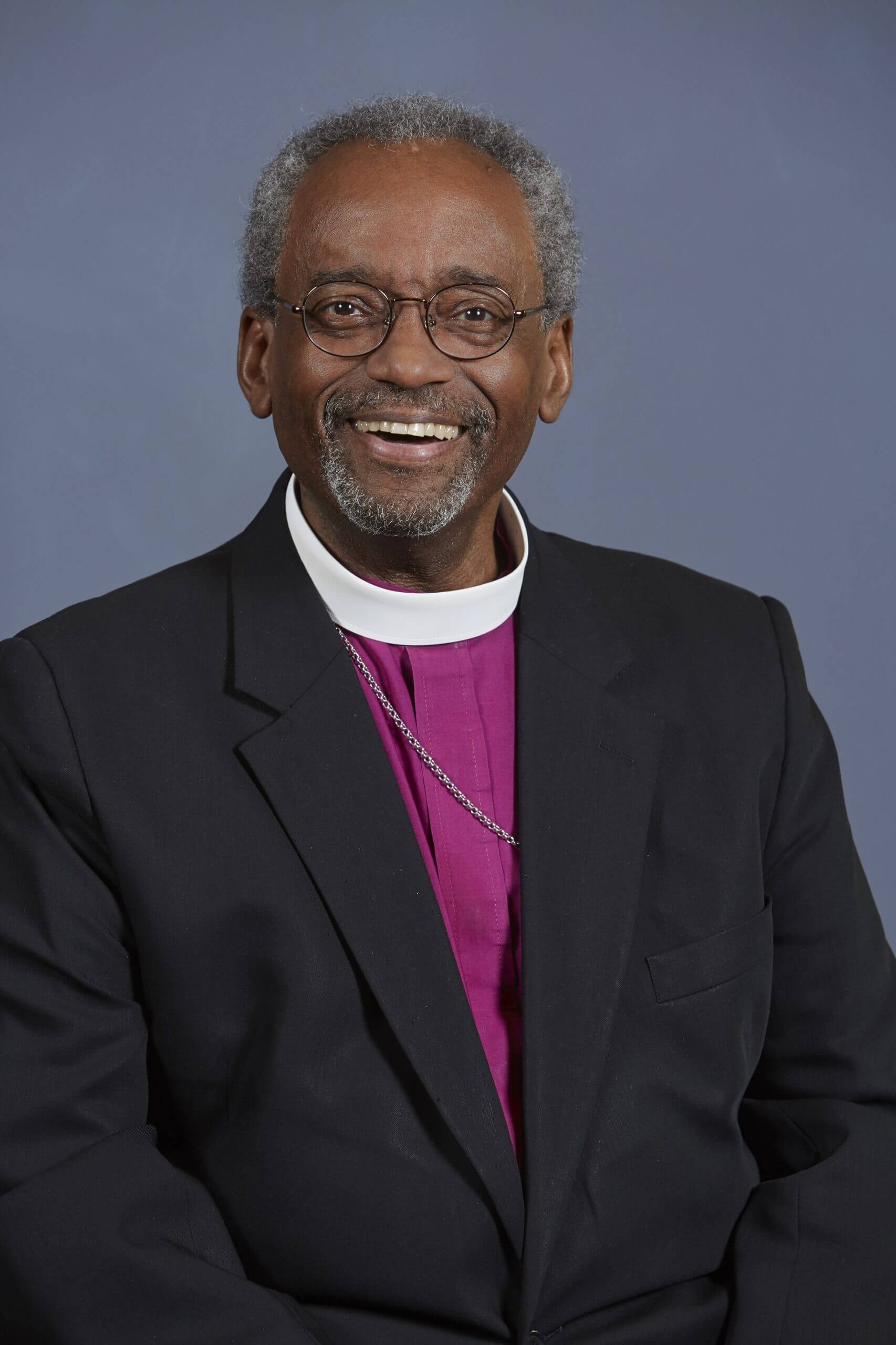
    Presiding Bishop Michael Curry portrait

    Presiding Bishop Michael Curry’s opening remarks

    The following is a transcript of the opening remarks of Presiding Bishop Michael Curry. These remarks have been lightly edited for clarity.

    It’s just good to be back. Even in what Mark Goodman earlier reminded us, these are in-between times. This is in-between. Which for Christians whose Lord promised, “I’ll be back,” probably is not a surprise, but it is a surprise.

    Just to give context to some opening remarks, I thought I would refer back to a passage in the first chapter of the Acts of the Apostles. This is after the crucifixion and the resurrection, and moments before Jesus ascends or returned to the fullness of the Godhead before the Ascension. And Jesus is speaking to people who are going to have to live in in-between times, and who aren’t anxious for the in-between times to enter. And for us to know when it ends and something new begins.

    And so this may well be a text for our time, for this moment when not only our meetings are hybrid, but life is hybrid. So when they had come together, they asked Jesus, “Lord, is this the time when you will restore the kingdom to Israel?” He replied, “It is not for you to know the times or the seasons that the Father has fixed by His own authority, but this you will know. You will receive power when the Holy Spirit has come upon you, and you will be my witnesses in Jerusalem, in Judea, in Samaria, to the ends of the earth.”

    It is not for you to know all the ins and outs of life. That’s just the way it is. Some things you can know, and some things you don’t. Like my grandma used to sing, we’ll understand it better by and by. But this much you can count on. You will receive power when the Holy Spirit has come upon you, and you will be my witnesses in Jerusalem and Judea, in Samaria, in first-century Palestine, and in the 21st century world of a global pandemic. Of a world struggling with itself profoundly, and maybe of a world where something is trying to be born. Who knows, but you’ll be my witnesses. And maybe that’s enough.

    I want to suggest that Jesus has given us some wisdom to be his witnesses, to witness to his way of life, his way of love. To witness to a way of, to borrow from Mally [Lloyd] again, this morning, I’m telling you, Ted Lasso is my hero. I love this dude. But to witness the things like kindness and forgiveness and giving and loving, that they matter. And that in the end, those are the things that do matter. You will be my witnesses. Whatever mistakes you make, church, whatever ways you err, however you fumble the ball, you will be my witnesses, and that’s enough.

    You are not God, you’re witnesses. You are not perfect, you’re witnesses. You don’t have all the answers, you’re witnesses. You will be my witnesses. Since our last meeting, things that none of us could have foreseen have happened. Our last two meetings before the pandemic may well have been prophetic, proleptic, anticipatory. In October of 2019, we went to Montgomery, Alabama, the [Equal Justice Initiative].

    And we were blessed and privileged to spend time with Bryan Stevenson there. And blessed in great agony and pain to face into lynching in this country, to face into part of our history, in spite of what the critics of critical racial theory would have you believe. To dare to look into our history. And I say our history, we’re all in it. I’m a descendant of slaves. Some are descendants of slave owners, but be that as it may, we’re all in this now. It’s our history. To face into that history, to learn from it, and hopefully to learn and then turn and work to build a new future. We did that. We started that. The group in this council who worked on that envisioned that as a continuing work of anti-racism, continuing work of truth-telling, continuing work to lead us eventually to the healing that leads the beloved community.

    And then in February, just a few weeks before we discovered we were in pandemic, we met in Salt Lake City, and there we heard a similar story. There it was Native Americans, Indigenous peoples, the First Nations of this land, forcibly removed, and in many cases slaughtered in a genocidal massacre against humanity. Again, trails of tears and weeping and moaning. And again, this is part of our history. And I say our history. Whether any of us were there or not, it is part of our history, and we faced it.

    And then a virus became known to us. And then suddenly there was suffering throughout the land, not just this land, around the globe. People got sick. Hospitals were overrun, healthcare folk and first responders and the folk who packed the groceries in our stores were overwhelmed. And people died alone and people were alone. And much of the world lived through a horrible pandemic of a virus, and it was a nightmare lived out. That still continues. These are in-between times. We need a witness.

    But as if the biologic wasn’t enough, the sociologic, the spiritual, may well have been equally as bad, if not worse. Demons of our past came out to haunt us again, and they were legion. In the face of George Floyd, Breonna Taylor—Ahmaud Arbery had been right before the pandemic—in their faces and in their lives, and you can go back to the Trayvon Martins and the Eric Garners, you can go back in time—all of a sudden those charged to protect and serve, many of them no longer protected or served—many, not all, please hear me. Many of them in a culture of violence and hatred, literally killed people before our eyes. This happened here.

    These are in-between times. We need a witness. And I could go on. I don’t mean to depress you. I just say January the 6th, I don’t need to say any more. I don’t mean to depress you. I could say something about the discovery, no, the recognition of Indigenous children who were taken from their homes forcefully over 100 years ago to boarding schools. Whatever the intentions, the reality was a kind of cultural genocide that was a perpetuation of the physical genocide that had been going on before. And some of the children died at those boarding schools and were buried.

    And some of us thought those Indigenous boarding schools were only in Canada. North America is North America, and the bodies are on this land as well. And we began to realize that a society of democratic values forgot human decency and kindness. This is part of our history, and I underscore our. I was rereading some writings of King back in June, and realized that one of his greatest moments of despair was the realization that the church that he loved as a Christian and as a pastor was often silently complicit. And in some cases, loudly and explicitly participant in ways of white supremacy, in ways of domination and putting down any human child of God, and daring sometimes to do it in the name of God. That was his greatest despair.

    And those who follow Jesus had forgotten who Jesus was and is, and what the Gospel is. But let me not leave you in despair. The good news is only good news when you face the bad news. Our Lutheran friends teach us, you’ve got to deal with law before you get to Gospel. And there’s some good news. That in the midst of this—while we are not perfect in this church—in the midst of this I have seen this church do what I never thought it would do or could do. Not everybody, I understand that, but I’ve seen goodness rise up, in spite of the fact that we were a little confused by what was going on around us.

    I’ve seen people try to figure out how do we care for each other when we can’t touch each other. I’ve seen people reach out and call their neighbor. At one point, I said, look, if you’re high tech, text. If you’re low tech, email. If you’re no tech, just pick up the phone and call, but stay in contact with each other. And the people in this church did that. I mean, they really have done that. I’ve seen it. All is not gloom and doom.

    But I’ve seen it in this church.

    Let me tell you something. I’m going to get in trouble, what I’m about to say, but I’m going to say it anyway. I was on TREC [Task Force for Reimagining the Episcopal Church], which recommended massive changes, which may or may not happen, but maybe it just wasn’t the right time. Things have to happen in their own time and season.

    If we had had a commission, another kind of TREC that would have said to the church, Episcopal Church, you must move your worship from in the buildings that you love and put it online, I guarantee you the same thing that happened to the TREC report, would happen to that report. But I’m here to tell you that I saw this church rise up and figure out—not quite sure how to do it—we are going to worship God come what may, and The Episcopal Church got online and did it. It wasn’t always pretty, but God bless us, we did it, and kept doing it. And then realized, wait a minute, have we stumbled into people who might never darken the doors of our church? Have we actually reached somebody … Let no child of God be left behind when we go back into those churches. We figured out and we’re doing it. God bless this church. Something good, something’s emerging.

    I’ve seen people in study groups around racism, that is Sacred Ground. I mean, massive numbers of Episcopalians studying. I’ve seen Episcopalians throughout this country joining with young people in the streets, calling on this nation to claim the high calling of justice, equality, dignity for every child of God.

    The first trip that I took was last May to go to Virginia seminary for their commencement. And the reason I went was to address the graduating class and to say thank you to them, because that was the class and they were the seminarians who were there at St. John’s church, Lafayette Square. They had been there passing out water and things to support, to be a pastoral presence for the protestors. And they were there the night, the then-president of the United States did what he did. And I just wanted on your behalf, on behalf of this church, to say thank you.

    And to say to them, don’t let the days that are ahead of you, the ministry that is before you, take out the zeal that you had that led you to Lafayette Square. Continue that ministry following in the footsteps of Jesus. Oh, my friends, something is trying to be born. I’m smart enough not to predict. I don’t know exactly what it is, but something is trying to be born.

    I shared something with some friends, and then later I’ve shared it around the church. All it is—please hear me—it’s not an official statement. It’s not a papal bull, though somebody says it’s PB bull. It’s not a papal bull, it’s not an official statement, but please hear me when I say, it’s coming out of this experience of a nightmare and of something trying to be born. I just want to read part of it to you.

    It’s more a dream, more a hope, maybe a prayer, maybe a poem still in the forming, for this church that has raised me, this church that taught me about Jesus and his way of love, that when others see us, they might see him. It says, come and see. Come and see. We are becoming—we’re not finished yet—but God help us we are becoming a new and re-formed church, Episcopal branch of the Jesus movement.

    Individuals, small gatherings and communities and congregations, whose way of life is striving to be the way of Jesus and his way of love. No longer centered on empire, no longer centered on establishment, no longer fixated on preserving institutions, no longer shoring up white supremacy or anything that hurts or harms any child of God or God’s creation. By God’s grace we are becoming a church that looks and acts, and maybe better yet, that loves like Jesus. A church that is his witness to his love and not to ourselves.

    When I was a new priest, actually I was still a deacon—I was the deacon in charge of St. Stephens in Winston-Salem. And this is 1978. I had never had an office before, and I was so excited to actually have an office and a typewriter. It was an IBM electric typewriter. Remember those? I was just so happy and proud of myself.

    Anyway, so I was sitting in the church office, and there was a hallway with some classrooms. And then there was another section where we had a daycare center with 3- and 4-year-olds, basically, preschool. The children, generally as a rule, in order to either go to the bathroom or to go out to the playground, had to come by my office. It was that small. I’d see them every time they passed by.

    So anyway, so I was sitting in the office—I hadn’t yet been introduced to the children; it was probably my first day, I suspect. And this little boy came by. He looked in the office, and I was sitting there. I said, “Hello.” And he said, “Hello.” And I was wondering, OK, where does the conversation go from here? He said, “Are you God?”

    Well, I had just taken GOE, the General Ordination Exams, and had passed successfully, so I had an answer readily available. I said, “No, I’m not God, but I work for him.” Which I thought was not a bad answer. I thought it was pretty good. And he seemed satisfied. So he went on, went to the bathroom and went back with the other kids. Well, another child came down and looked at me and asked the same question. I said, did my little evangelist go back and share the good news?

    I still didn’t make too much of it, until later the kids came out to go to the playground. And again, they had to walk past my office to get there. They came by the office and all these kids are going, “Hi, God. Good morning, God. Hello, God.” At that point, I really, you’ve never seen a Black person turn red, but I was red at that point, because I knew the teachers were thinking, what’s this guy been telling these kids? But then I started thinking about it, and the more I thought about it, I said, you know something? Well, maybe those kids ought to look at me and see the God that Jesus was teaching us about.

    I don’t mean that they ought to see us and actually think we’re God. Maybe they ought to look at the way I live my life, and see the love of God so vividly manifested in me. That when they see me, they actually see God. Maybe the world ought to look at this church and actually see, when they see us, people who are willing to face hard truths, willing to do the hard work, and willing to hang in there come what may. And when they see us, they don’t glorify us, but glorify our Father who is in heaven. Maybe when they look for Jesus and look for Christianity, someone will look at this wonderful Episcopal church and look at us and say, “That’s what a Christian looks like.”

    You won’t have all the answers. You won’t have it all figured out, but this much I know, you will receive power, and the Holy Ghost has come upon you, and we will be his witnesses in Jerusalem, in Judea, in Samaria, in the first century and in the 21st.

    God love you.

    And it sure is good to see you.

    Amen.

    —The Most Rev. Michael Curry
    The Rev. Gay Clark Jennings

    President of the House of Deputies Gay Clark Jennings opening remarks

    The following are the opening remarks of President of the House of Deputies Gay Clark Jennings.

    Good morning. It is wonderful to see you again. I pray that our time together this week will be energetic and productive and holy and safe. Please take good care while we are here and observe all of the risk mitigation measures that were outlined in our meeting materials. I know that we are all ready to be done with this pandemic, but unfortunately, it is not ready to be done with us.

    In fact, in the last few days, I have been reflecting on the ways in which the effects of the pandemic will be with us for a long time to come, particularly through the troubling disparities that it has exacerbated. In the United States, the wealth gap before COVID was already enormous. Now it is much worse, after months in which white collar workers stayed home, kept their jobs, and collected their stock market gains, while front line workers—many of whom are people of color—lost wages and jobs and, in far too many cases, lost their lives. And women, especially women of color, suffered disproportionate job loss and caregiving burdens during COVID.

    In short, if you started the pandemic with a lot of privilege, there’s a good chance that you have more of it now. And if you didn’t, things might well be worse for you and those you love than they were in March of 2020.

    A couple of weeks ago, we learned that COVID hasn’t just widened disparities among individuals. It has also widened the gap that separates our congregations. Thanks to the good work of the House of Deputies State of the Church Committee, which crafted new narrative questions for the 2020 parochial report; and to Elena G. van Stee, a doctoral student at the University of Pennsylvania who analyzed the data; and to the General Convention Office, which coordinated the work, we now have extensive qualitative data about how our congregations have weathered the pandemic.

    The report is called “The Church Is Not a Building: Observations and Insights from Narrative Responses to the 2020 Parochial Report.” You might not have heard about this new element of the parochial report results, and I commend it to you. I want to read a few sentences from it now in the hope that it will pique your interest and help guide our work this week:

    • Considered as a whole, the narrative responses paint a portrait of a year characterized by loss and grief as well as innovation and growth. Churches experienced unprecedented challenges and opportunities that varied greatly across the denomination and cannot be reduced to a simple narrative of denominational growth or decline. On the one hand, the pandemic exacerbated and exposed fault lines of inequality, particularly with regards to human and financial resources. On the other hand, the circumstances of the pandemic inspired innovative new initiatives, fostered intra- and inter-personal growth, and provided new opportunities for the church to be the hands and feet of Christ in the world. Recognizing the truth in both narratives will be essential for understanding the complexity of the The Episcopal Church’s past, critically evaluating the present, and pursuing new ways of loving God and neighbor in the future.

    I find this report especially helpful right now, as we are all struggling to make sense of what we have experienced in the last 19 months. If you are a person with privilege, or if you come from a congregation with privilege, you might be seeing the entire church through the lens of your pandemic experience. You might be thinking—the economy is strong, people have lots of disposable cash, the outlook for our congregation and diocese is good, and so that must be true of the entire Episcopal Church. You might not be seeing the congregations that closed during the pandemic, the lay leaders who are struggling to hold things together in congregations without clergy or paid staff, the dioceses whose revenue forecasts are grim. But at the same time, it might be hard for all of us to recognize the ways in which the pandemic did inspire new opportunities and foster growth and connection. And so I hope this report will help us understand better the needs of all of the people and all of the congregations we are here to serve.

    As we try to understand where God is calling The Episcopal Church in this late pandemic world, I am especially grateful for the guidance of previous General Convention resolutions that can guide us through these difficult times. In particular, I want to highlight for you two issues—one on which the church is speaking now, and one on which I hope we will find our voice:

    • In August, the Presiding Bishop and I became two of the lead signers on a faith leaders amicus brief submitted to the Supreme Court of the United States in the matter of the New York State Rifle & Pistol Association v. Bruen. This case, which is scheduled for oral arguments on November 3, will determine whether New York State’s law setting sensible restrictions on the concealed carry of firearms in public is constitutional. It could also have significant implications for a broad range of common-sense gun laws. We were proud to be joined by more than 20 participants in the Bishops United Against Gun Violence Network and many Episcopal clergy from across the church.The amicus brief cites General Convention resolutions from both 1976 and 2015 and urges the court to consider the burdens on religious institutions that would be imposed by the unrestricted ability to carry concealed weapons in public, including the heightened risk of gun violence in houses of worship. This is a critical issue for our congregations, but even more so for faith communities that are too often the target of hate crimes. I am proud that General Convention has put us on record in favor of sensible gun restrictions and that we are able to make a witness in this critical case.
    • The second issue is one that many of you will have heard about in the last few days. According to news reports, the House of Bishops of the Anglican Church in Ghana has endorsed a draconian anti-LGBTQ law now awaiting a vote in the Ghanaian parliament. This is upsetting and particularly regrettable in light of the 2005 commitment of the primates of the Anglican Communion to stand against the “victimisation or diminishment” of LGBTQI people.For our part, in 2015, General Convention passed Resolution A051, which commits us to stand with our LGBTQI Anglican siblings in Africa, and that our churchwide offices, including the Office of the Presiding Bishop, “be directed to work in partnership with African Anglicans who publicly oppose laws that criminalize homosexuality and incite violence against Lesbian, Gay, Bisexual, Transgender, and Intersex people.”

    I expect that it has not yet been possible to understand exactly what has transpired in the church in Ghana, and what kind of risk our LGBTQI friends and allies there are now facing, but we must commit ourselves to standing with them in whatever ways we can. I hope that it will be possible for us to discuss this matter at this meeting with the goal of hearing a full report and taking action in keeping with Resolution 2015-A051 at our January meeting. Mission Beyond, I believe that this would be in your portfolio.

    Yesterday, as you know, the gospel reading appointed for the day was the story of Jesus restoring sight to Bartimaeus. When Jesus and his disciples were leaving Jericho, Mark tells us, Bartimaeus called out to Jesus from the side of the road, begging him for mercy. And when Jesus called him over and asked what Bartimaeus wanted him to do, Bartimaeus said, “Teacher, let me see again.”

    As we begin this meeting—together, at last—let that also be our prayer. Let us ask Jesus to let us see again so that we might better understand the needs of the people God calls us to serve and the church we have been elected to lead.

    —The Rev. Gay Clark Jennings

    Public Affairs Office of The Episcopal Church

    Executive Council of the Episcopal Church

    The Executive Council of the Episcopal Church is the national body that administers the program and policies adopted by the General Convention. It was called the National Council from 1919-1964.

    It is currently composed of the following:

    • Twenty members elected by General Convention
    • Eighteen members elected by the Provincial Synods

    The following are ex officio members:

    • The presiding bishop
    • The president of the House of Deputies
    • The vice president, secretary, and treasurer of the Executive Council

    Members are elected to six-year terms with half the membership elected each triennium. The body must have specified numbers of bishops, presbyters, and lay persons. The council meets at least three times each year.

    Church of the Redeemer

    Church of the Redeemer: Worshiping God, living in community, and reaching out to the world around us. We are an Episcopal Church serving north King County and south Snohomish County, Washington. As you travel your road, go with friends walking the way of Jesus at Redeemer.

    Church of the Redeemer is at 6220 Northeast 181st Street in Kenmore, Washington. We are a short distance north of Bothell Way, near the Burke-Gilman Trail. The entrance looks like a gravel driveway. The campus is larger on the inside than it is on the outside. And we managed to hide a large building on the side of a hill that is not easily seen from the street.

    The Episcopal Church welcomes you.

  • ‘My Name Is Pauli Murray’ brings trailblazing Episcopal saint’s story to a wider audience

    ‘My Name Is Pauli Murray’ brings trailblazing Episcopal saint’s story to a wider audience

    [Episcopal News Service] In the new documentary “My Name Is Pauli Murray,” filmmakers Betsy West and Julie Cohen paint a picture of an unsung trailblazer who remains relatively unknown despite her lasting influence on American society. Episcopalians know her as the first African American woman to be ordained a priest and as a pioneer in the struggles for racial and gender equality. But many may not know about other important aspects of her life, such as her struggle to come to terms with her gender identity in an era long before transgender people were accepted in mainstream society.

    When West and Cohen came across Murray’s story while working on their previous film (“RBG,” the Ruth Bader Ginsburg biopic), they wondered why such a pivotal figure wasn’t a household name.

    “‘Why didn’t we know this person?’ was the first question everybody asked,” West told Episcopal News Service, “and could we do something about it?”

    Murray is celebrated on July 1 in The Episcopal Church’s “Holy Women, Holy Men” calendar of saints, and an increasing number Episcopal leaders – especially Black and LGBTQ+ people – cite her as an influence. Trinity Church Wall Street and the Diocese of North Carolina are supporting partners of the Pauli Murray Center for History and Social Justice at Murray’s childhood home in Durham, North Carolina.

    The result, “My Name Is Pauli Murray,” premiered online in January 2021 at the Sundance Film Festival and is now playing in select theaters. Washington National Cathedral will screen the documentary for an in-person audience on September 30. It will stream on Amazon Prime beginning October 1. It will also be shown online the same day through the Church of the Heavenly Rest in New York, followed by a discussion with West and Presiding Bishop Michael Curry. The film, which incorporates excerpts from Murray’s diaries and memoirs, shows how she laid the groundwork for future achievements for racial and gender equality.

    Murray was undaunted by the fact that she was often the first and/or only Black woman in the positions she held. Fifteen years before Rosa Parks was arrested for refusing to move out of a whites-only section on a bus, Murray and a friend did the same in Virginia, though their case did not gain momentum the way Parks’ did. In her legal career, she was among the first to argue the unconstitutionality of “separate but equal” laws, an argument cited 10 years later in Brown v. Board of Education by Supreme Court Justice Thurgood Marshall, who called her book on segregation laws “the bible of the civil rights movement.” Ginsburg used Murray’s arguments in a brief she wrote – listing her as a co-author – while arguing Reed v. Reed, the 1971 Supreme Court case that banned gender discrimination based on the 14th Amendment’s equal protection clause.

    Part of what makes Murray significant today was her commitment to intersectionality: the idea that social justice movements for different groups should support each other rather than work alone. As a Black woman experiencing discrimination based on both her race and her gender – a situation she described as “Jane Crow” – Murray supported the civil rights and feminist movements. But intersectionality was not as common then as it is today, and Murray’s penchant for crossing boundaries is one reason she didn’t achieve wider renown, West said.

    “The civil rights movement was not as open to acknowledging the contributions of women as it should have been, and the women’s movement was pretty dense at times about recognizing the needs and the contributions of African American women,” West told ENS. “The concept of Jane Crow really is intersectionalism. It’s a brilliant way to express the double bind that African American women find themselves in, and it was certainly true for Pauli.”

    Another factor was Murray’s sexuality and gender identity. In her diaries, Murray described having relationships with women but feeling that she was not a lesbian but a man living in a female body. This experience would today be classified as gender dysphoria and might have led Murray to live as a transgender man or a nonbinary person, the film suggests. The film also considers what pronouns should be used to describe Murray, who used she/her pronouns to describe herself, though some today speculate that Murray would have preferred they/them or he/him. In any case, Murray did not have those options in the mid-20th century.

    “The difficulty of living a somewhat secret life – the problem of feeling so strongly of having a male identity in what everybody says is a female body and not being able to express that – plus having what would be considered lesbian relationships at a time when that was not accepted as well – may have caused Pauli to be a little bit less up front in taking leadership roles,” West speculates. “It didn’t stop Pauli, certainly, from speaking out, having contact with lots of very powerful, important people, but Pauli didn’t stick around to take the credit for a lot of the ideas.”

    The Episcopal Church is one place, West said, where Murray received due recognition.

    “A lot of people say, ‘Why didn’t I know about Pauli Murray?’ There are a lot of Episcopalians who know about Pauli Murray,” West told ENS. “The church has been one place that has lifted up Pauli’s name.”

    —Egan Millard is an assistant editor and reporter for Episcopal News Service.
    He can be reached at emillard@episcopalchurch.org.

    Source of this article.

    The poster for “My Name Is Pauli Murray.”

    Church of the Redeemer

    Welcome to Church of the Redeemer: Worshiping God, living in community, and reaching out to the world. We are an Episcopal Church serving north King County and south Snohomish County, Washington. As you travel your road, go with friends walking the way of Jesus at Redeemer.

    Church of the Redeemer is at 6220 Northeast 181st Street in Kenmore, Washington. We are a short distance north of Bothell Way, near the Burke-Gilman Trail. The entrance looks like a gravel driveway. The campus is larger on the inside than it is on the outside. And we managed to hide a large building on the side of a hill that is not easily seen from the street.

    The Episcopal Church welcomes you.
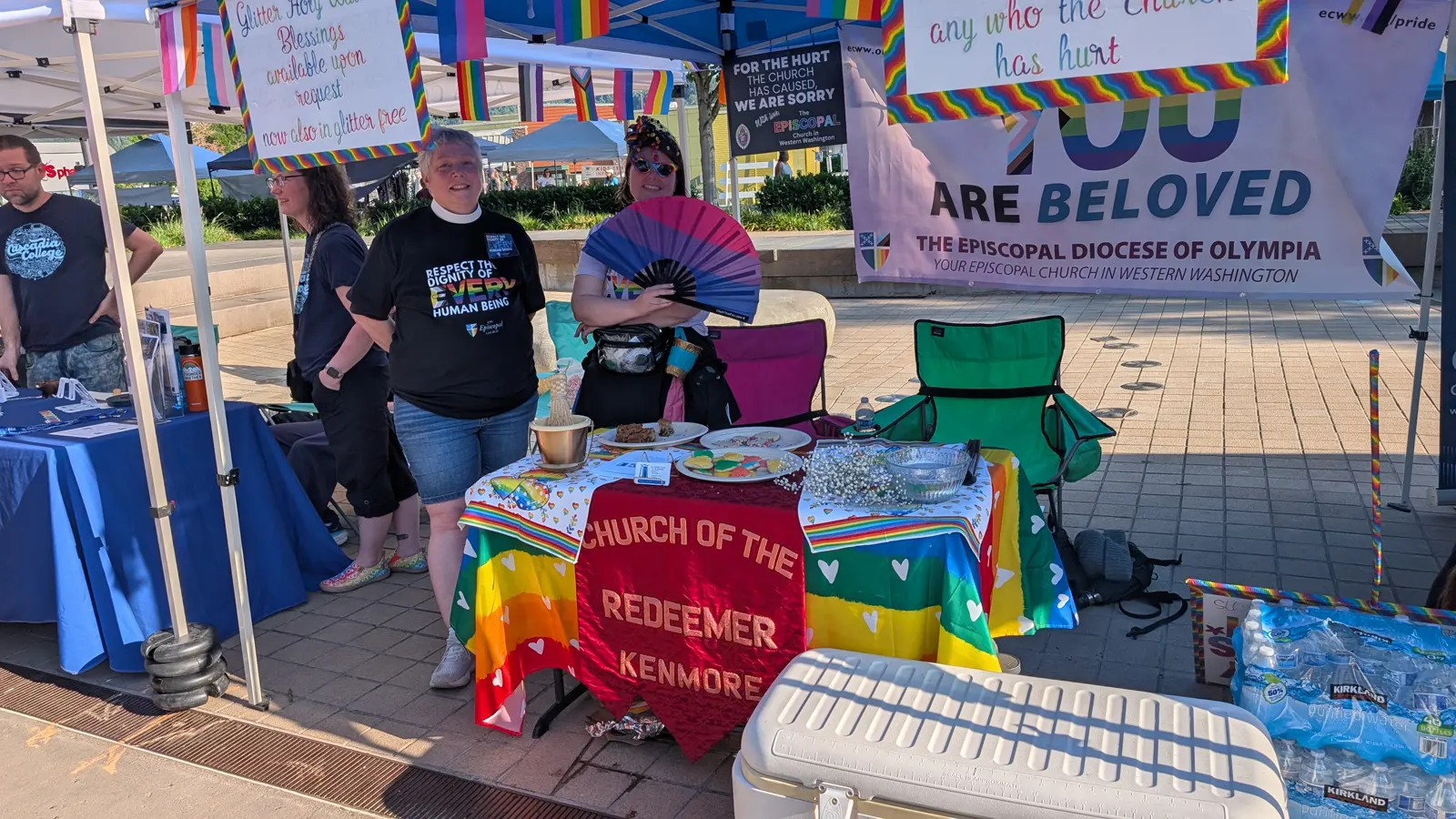
     

  • Who we are

    Who we are

    The article appeared on my newsfeed on Saturday, as I was scrolling through Facebook. “Debates about LGBTQ acceptance roil Seattle-area nonprofits, churches.” The Seattle Times headline caught my eye. I started to read it, but only made it so far before I had to stop. “But in Christian circles at least,” it read “the risks [of being LGBTQ] are enormous, with jobs, funding and congregation membership in the balance.” Ten minutes later I was three hundred words in to a rebuttal letter reminding the Times that Episcopalians are indeed Christians, and decrying the article in general as lazy writing, when I paused. For all my frustration, all my angst, and the truth that the article was indeed pretty poorly researched and written without a real depth of understanding of the issue—all points that a colleague had already deftly articulated to the Times, a small voice kept asking, why doesn’t the author know about the Episcopal experience? It’s because of us.

    “Don’t worry,” we want to say, “we aren’t those sort of Christians.” This runs dangerously close, though, to saying “not all Christians,” just as some are quick to say “Not all white people…” “Not all rich people…” If the best we can do in talking about the marvelous power and presence of God in our lives is to say, “we don’t agree with those people,” then we should not be surprised that articles like the one in the Times get published. We cannot expect to define ourselves in opposition and be taken seriously.

    We must define ourselves by what we do believe. We believe in a God who is known in love. We believe in a God who sent Jesus to witness to that love and to become a sign of God’s faithful love for all people. We believe in God who abides with the world, who enervates all living things to lead the whole of creation into love that flows from the heart of God. We will not speak of God perfectly, but that’s not what is asked of us. It is not what we promised in baptism to do. Each of us must speak about what we believe in our lives, the good news of God in Christ that give us hope, and instructs us to love as God loves. It’s either that, or let someone else tell our story, poorly.

    —Fr. Jed Fox, Rector
    rector@redeemer-kenmore.org

    Fr. Jed Fox with a cup of coffee.

    Church of the Redeemer

    Welcome to Church of the Redeemer: Worshiping God, living in community, and reaching out to the world. We are an Episcopal Church serving north King County and south Snohomish County, Washington. As you travel your road, go with friends walking the way of Jesus at Redeemer.

    Church of the Redeemer is at 6220 Northeast 181st Street in Kenmore, Washington. The campus is a short distance north of Bothell Way, near the Burke-Gilman Trail. The entrance looks like a gravel driveway. The campus is larger on the inside than it is on the outside. And we managed to hide a large building on the side of a hill that is not easily seen from the street.

    The Episcopal Church welcomes you.

The 13th Sunday after Pentecost, August 23, 2026. Services at 8:00 am (no music) and 10:30 (music).
Episcopal Church of the Redeemer

Privacy Overview

Cookie information is stored in your browser and performs functions such as recognizing you when you return to our website and helping our team to understand which pages of the website are visited. We aren't using cookies to determine your web browsing habits, but others can.