Category: The Episcopal Church

  • Episcopal Relief & Development this holiday season

    Episcopal Relief & Development this holiday season

    Episcopal Relief & Development offers the opportunity to transform communities this holiday season with redesigned Gifts for Life catalog.

    Gifts for Life from Episcopal Relief & Development-Harvey Wang picture credit

    Episcopal Relief & Development invites supporters and congregations to transform a life this holiday season by giving a gift from the organization’s newly redesigned Gifts for Life alternative gift catalog.

    Gifts for Life offers meaningful gifts that transform lives in communities worldwide. The 2021 catalog features selections such as the ONE THOUSAND DAYS OF LOVE package, which supports the organization’s campaign to expand its work with communities and families to help children up to age six so they can thrive and achieve their full potential. The package includes the following:

    • Care for five moms and their newborns
    • Nurture and nourishment for 12 children
    • Mosquito nets and training for 10 families
    • Clean water for a family
    • Four savings and loan group memberships

    “As a child, I looked forward to the arrival of the Christmas catalogs filled with toys and treasures,” said Chad Brinkman, Director, Campaign, Episcopal Relief & Development. “The Gifts for Life catalog and the ONE THOUSAND DAYS OF LOVE options provide an opportunity to express love to friends and loved ones that will far outlast any toy.”

    The organization’s Gifts for Life site has been redesigned this year to make it easier for supporters to identify and purchase gifts. The site includes stories of how Episcopal Relief & Development, its partners and local communities are working together to transform lives. Supporters can also read stories of congregations and individuals that have participated in Gifts for Life.

    “I encourage you to explore the new site and to read the stories of the impact of Gifts for Life,” said Betsy Deisroth, Vice President, Advancement, Episcopal Relief & Development. “To give a Gift for Life is to be part of lasting change in a tumultuous world.”

    With each gift you select, supporters can send a complimentary e-card or printed card telling loved ones about the life-changing gift made in their honor. The site features three new e-card designs to choose from. Orders can be made online at www.episcopalrelief.org/gifts, over the phone by calling +1 (855) 312-4325 or via mail through the instructions on the catalog or brochure.

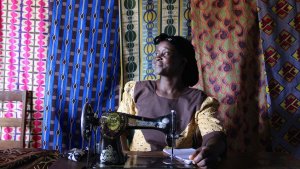
    Women's empowerment through Episcopal Relief & Development

    Episcopal Relief & Development

    For over 80 years, Episcopal Relief & Development has been working together with supporters and partners for lasting change around the world. Each year the organization facilitates healthier, more fulfilling lives for more than 3 million people struggling with hunger, poverty, disaster and disease. Inspired by Jesus’ words in Matthew 25, Episcopal Relief & Development leverages the expertise and resources of Anglican and other partners to deliver measurable and sustainable change in three signature program areas: Women, Children and Climate.

    Church of the Redeemer

    Welcome to Church of the Redeemer: Worshiping God, living in community, and reaching out to the world. We are an Episcopal Church serving north King County and south Snohomish County, Washington. As you travel your road, go with friends walking the way of Jesus at Redeemer.

    Church of the Redeemer is at 6220 Northeast 181st Street in Kenmore, Washington. We are a short distance north of Bothell Way, near the Burke-Gilman Trail. The entrance looks like a gravel driveway. The campus is larger on the inside than it is on the outside. And we managed to hide a large building on the side of a hill that is not easily seen from the street.

    The Episcopal Church welcomes you.

  • Let’s Talk CRT: Christian Race Theory

    Let’s Talk CRT: Christian Race Theory

    “Let’s Talk CRT: Christian Race Theory” is by Canon Stephanie Spellers.

    Canon Stephanie Spellers for Evangelism Reconciliation Creation Care

    CRT is nothing new. I distinctly recall reading legal theorist Derrick Bell in the early 1990s. He flicked on the light for a generation of college students first learning about critical race theory, an umbrella that covers the study of structural racism and the intricate ways that white supremacy is baked into the very fabric of American life.

    Conservatives cried foul, but their fearful, quasi-patriotic, racism-laden arguments were easy to dismiss. I couldn’t imagine they’d come back. But they’ve returned with a vengeance, just in time to derail a historic racial reckoning that was shaking the foundations of American life. Now the anti-critical race theory forces are sweeping not only classrooms and school boards but also legislatures and courts. One might say the empire is striking back.

    And yet … if you listen closely, you may discover the “CRT” so many critics decry doesn’t sound that scary or problematic. If anything, I’ve found it sounds like what I understand about following Jesus. All of which makes me wonder if perhaps CRT isn’t critical race theory but actually Christian race theory. Here are four reasons why.

    Point 1

    The reality and naming of structural racism was no mystery to Jesus or to the biblical people of God. If anything, God seems particularly concerned about divisions and hierarchies that leave one group protected and privileged while another group is outcast and vulnerable.

    It’s in the first books of the Bible: “When an alien resides with you in your land, you shall not oppress the alien. The alien who resides with you shall be to you as the citizen among you; you shall love the alien as yourself, for you were aliens in the land of Egypt” (Leviticus 19:34). It’s in the Psalms: “Give justice to the weak and the orphan; maintain the right of the lowly and the destitute” (Psalm 82:3).

    Of course, it’s all over the prophets, including Jesus’ own mother, Mary, who sings:

    [The Lord] has brought down rulers from their thrones
    but has lifted up the humble.
    He has filled the hungry with good things
    but has sent the rich away empty.

     (Luke 1:52-53)

    Her son Jesus keeps up the family tradition. “Truly I tell you, just as you did it to one of the least of these who are members of my family, you did it to me” (Matthew 25:40). And don’t forget the Apostle Paul’s fury at the Corinthians. He says they “show contempt for God” whenever they allow the rich to eat and drink with abandon in front of their poor, hungry siblings in Christ, then all gather at the table for the Lord’s Supper as if everything was OK (1 Corinthians 11).

    Scripture regularly cites power relations between groups, where one category of people lords over the other. It also tells us where God stands in the face of those power imbalances. In Christ, hierarchies are named for what they are and then leveled. Oppressive systems are not ignored, not covered up, but dismantled and healed. That’s how Christians reckon with racism.

    Point 2

    I once heard a sincere Christian woman ask, “Isn’t designating and highlighting our identities sinful and selfish?” Absolutely not. Difference is a given and is not in and of itself bad. Diversity is a key feature of God’s glorious creation. It is God-made. Hierarchies are the problem, and they’re human-made.

    So don’t be fooled by people who want to erase difference in the name of Jesus. Some will point to Galatians 3:28, where Paul famously declares that, “In Christ there is no longer Jew or Greek, male or female, slave or free, but all are one in Christ.” Obviously, those groups and identities remained. His point is that the power imbalances and hierarchies aren’t supposed to carry into Christian community. So I’m free and you’re a slave. I don’t get to lord over you or expect you to bow to me. (If anything, according to 1 Corinthians 12:22-25, I should bow to you and tip the scales the other direction—how’s that for affirmative action?).

    In Revelation 7:9, we see the image of people from all nations and races gathered around the throne and worshiping God. That vision doesn’t merge us all into one race or nation. It says we’ll be united in love, not uniform in identity. That’s the dream of God. That’s how Christians embrace the grace of race.

    Point 3

    Speaking of difference, Christians worship and pattern our lives after a God who became human in a specific place, time and social location. It cannot be a coincidence that Jesus was a poor boy from a backwater town with an unwed teenage mother who was taken in by a man willing to raise her son as his own. Born on the margins, he blessed and preferred the company of people marginalized because of their culture, ethnicity, gender, economic status, physical ability, age, education, and religious affiliation. He was executed by the state for the crime of defying authority.

    Christians worship a God who came from a particular social location—the underside—and stayed allied with people in a particular social location—the underside. Whenever Jesus encountered difference, he clearly acknowledged power differentials and opted to stand with suffering groups. He constantly lifted up stories, people and wisdom from the underside: women, poor people, Samaritans (a different race), and more.

    Christianity is—at its core—a conscious reversal of dominant racial, cultural narratives and patterns. It retrieves and holds aloft what has been forgotten, left for dead, called unclean or blasted as unholy, and it says “God works through this.” Likewise, Christianity seeks hidden stories and brings them forward, in order to correct narratives once controlled by the powerful. Correcting and reversing false narratives and declaring the goodness of things cast to the underside is no problem for Christians. That’s our specialty.

    Point 4

    The airwaves are full of parents who grind against CRT because they say it makes their children (and many of them) feel bad. First of all, if all you feel in the presence of these difficult truths is bad, then it probably isn’t being done responsibly. My husband is a middle-school social studies teacher, and I know how hard he and his colleagues work not to bludgeon anybody with guilt. He’s trying to teach history correctly and to help shape citizens who will be thoughtful, fair members of their communities (he has a sign over his classroom door that says “Beloved Community”).

    Not everyone can handle that nuance. We say racism is bad. We say White people are racist (insofar as they participate in racism rather than consciously resisting, dismantling and healing it). So are all white people bad or is it bad to be a white person? No. You can choose not to be racist. It’s tough, but it is possible.

    Jesus loved everyone and invited everybody into his radical community of love. He also told them what it takes to join and truly inhabit that community, and he didn’t lay out the same path for everyone. If you occupy the higher rungs of a social ladder based on personal or group identity, you’ll need to relinquish your hold on privilege, admit what you got at other’s expense, change your ways, and make amends to those who’ve been hurt. Remember the rich young man who wanted to know about eternal life (Matthew 19:16-22)? Jesus told him to sell his possessions and give the proceeds to the poor. You got it at their expense; now you’ve got to heal what’s been broken.

    When the rich young man felt bad, hung his head and walked away, Jesus didn’t chase him down and reverse the message. He spoke a true word to his brother in love, and then he let the young man walk, pray and re-examine his life in light of this troubling reality. He trusted the young man could bear the truth, and he didn’t shield him from it. Jesus knew this young man would experience abundant life, if only he could stay with the painful feelings long enough to emerge into a new state of wisdom and freedom.

    We have the same option. A Christian approach to dismantling racism holds out grace and hope, and at the same time treats us like morally accountable human beings who will not break when faced with painful, once-hidden realities. The truth will not destroy you. The only thing the truth destroys is narratives and structures built on lies, none of which should have stood in first place.

    By the grace and love of God, we can rebuild and transform systems and stories and lives together, rooting out White supremacy and replacing it with truth and hope. That’s Christian race theory. I long to see followers of Jesus rising up across this land to preach and practice it.


    Canon Stephanie Spellers is the Presiding Bishop’s Canon for Evangelism, Reconciliation and Creation Care and author of The Church Cracked Open: Disruption, Decline and New Hope for Beloved Community.

    This article comes from Let’s Talk CRT: Christian Race Theory.

    Here are just some of the Episcopal Church’s pathways, resources, and major partners in the ministry of racial reconciliation, justice, and healing.

    Church of the Redeemer

    Welcome to Church of the Redeemer: Worshiping God, living in community, and reaching out to the world. We are an Episcopal Church serving north King County and south Snohomish County, Washington. As you travel your road, go with friends walking the way of Jesus at Redeemer.

    Church of the Redeemer is at 6220 Northeast 181st Street in Kenmore, Washington. We are a short distance north of Bothell Way, near the Burke-Gilman Trail. The entrance looks like a gravel driveway. The campus is larger on the inside than it is on the outside. And we managed to hide a large building on the side of a hill that is not easily seen from the street.

    The Episcopal Church welcomes you.

  • Weekly bulletin insert for All Saints’ Day

    Weekly bulletin insert for All Saints’ Day

    This is the weekly bulletin insert from the Episcopal Church for All Saints’ Day.

    All Saints’ Day

    All Saints’ Day, celebrated November 1 or the nearest Sunday afterward, is characterized by the Book of Common Prayer (BCP) as a Principal Feast, “taking precedence over any other day or observance” (Book of Common Prayer, page 15). The day is set aside to remember and commend the saints of God, especially those who are not recognized at other points in the church year.

    According to Holy Women, Holy Men, in the tenth century, it became customary to recognize on a single day “that vast body of the faithful who, though no less members of the company of the redeemed, are unknown in the wider fellowship of the Church” (Holy Women, Holy Men, page 664). Over time, the day became associated with special remembrances of an individual’s family and friends. [Holy Women, Holy Men has be updated and released as A Great Cloud of Witnesses, available as a in print or PDF file.]

    While several churches abandoned the commemoration during the Reformation, the Feast of All Saints was retained on the Anglican liturgical calendar. All Saints’ Day began to assume the role of general commemoration of the dead: all Christians, past and present; all saints, known and unknown.

    Because of the day’s association with the remembrance for the dead, many churches publish a necrology. This reading of the names of the congregation’s faithful departed may include prayers on their behalf. Such prayers are appropriate, as the Catechism reminds us, “because we still hold [our departed] in our love, and because we trust that in God’s presence those who have chosen to serve him will grow in his love, until they see him as he is” (Book of Common Prayer, page 862).

    The day is often characterized by joyful hymns, including such favorites as “For All the Saints,” “Who Are These Like Stars Appearing,” and “I Sing a Song of the Saints of God.” These hymns share motifs of rest, fellowship, and continued, joyful service to God—salient indeed on this day, as we remember “those of dazzling brightness, those in God’s own truth arrayed, clad in robes of purest whiteness, robes whose luster ne’er shall fade”!

    Collect for All Saints’ Day

    Almighty God, you have knit together your elect in one communion and fellowship in the mystical body of your Son Christ our Lord: Give us grace so to follow your blessed saints in all virtuous and godly living, that we may come to those ineffable joys that you have prepared for those who truly love you; through Jesus Christ our Lord, who with you and the Holy Spirit lives and reigns, one God, in glory everlasting. Amen.

    Taken from Bulletin Insert: All Saints’ Day (B) – All Saints’ Day – November 7, 2021.

    Church of the Redeemer

    Welcome to Church of the Redeemer: Worshiping God, living in community, and reaching out to the world. We are an Episcopal Church serving north King County and south Snohomish County, Washington. As you travel your road, go with friends walking the way of Jesus at Redeemer.

    Church of the Redeemer is at 6220 Northeast 181st Street in Kenmore, Washington. The campus is a short distance north of Bothell Way, near the Burke-Gilman Trail. The entrance looks like a gravel driveway. The campus is larger on the inside than it is on the outside. And we managed to hide a large building on the side of a hill that is not easily seen from the street.

    The Episcopal Church welcomes you.

  • Weekly bulletin insert for Pentecost 23B

    Weekly bulletin insert for Pentecost 23B

    This is the weekly bulletin insert from the Episcopal Church for Pentecost 23B.

    Constable Fund and Roanridge Trust

    Applications are open for two grant opportunities offered annually by The Episcopal Church—

    • Constable Fund grants, which focus on religious education
    • Roanridge Trust grants, which support leadership development in small towns and rural communities.

    The application deadline for both is December 12, 2021.

    The Constable Fund

    The Constable Fund provides grants to fund mission initiatives that were not provided for within the budget of The Episcopal Church as approved by General Convention 2018, with a stated preference for work in the area of religious education. The grants are named for visionary philanthropist Marie Louise Constable, who made a gift to The Episcopal Church in 1935, during the Great Depression, to establish the fund.

    Constable Fund applications may only be submitted by one of the following:

    1. Applicants approved by one of the nine provinces of The Episcopal Church.
    2. An interim body of the General Convention of The Episcopal Church.
    3. A program office or staff department of The Episcopal Church.

    More information on Constable Fund application requirements and the application forms are available here: Grant Application for the Constable Fund

    The 2021 Constable Fund grants totaled $213,596, distributed among six recipients. Grants ranged from $2,500 to $55,302.

    The Roanridge Trust

    The RoanridgeTrust was established by the Cochel family, who originally gave a working farm in Missouri called Roanridge to The Episcopal Church. Income from the trust generates the grant funds, which are used for the “training of town and country ministry and rural Christian workers” of The Episcopal Church. They support creative models of leadership development and training for laity and clergy in small towns and rural communities across The Episcopal Church. Programs to be conducted in metropolitan areas are not eligible for Roanridge Trust grants.

    Dioceses, congregations and Episcopal Church-related organizations and institutions are invited to apply for Roanridge Trust grants. Applications require diocesan bishop approval. More information, application forms and instructions about the Roanridge Trust grants are available in English here: Grant Application Information

    The 2021 Roanridge Trust grants totaled $209,851, distributed among 12 recipients. Grants ranged from $5,000 to $29,000.

    For more information

    For more information about either grant, contact the Rev. Molly James, deputy executive officer of the General Convention, +1 (212) 716-6048, or Mr. George Wing, chair of the grant review committee, winggeo@winglaw.com.

    Taken from Bulletin Insert: Pentecost 23 (B) – Constable Fund and Roanridge Trust – October 31, 2021.

    Church of the Redeemer

    Welcome to Church of the Redeemer: Worshiping God, living in community, and reaching out to the world. We are an Episcopal Church serving north King County and south Snohomish County, Washington. As you travel your road, go with friends walking the way of Jesus at Redeemer.

    Church of the Redeemer is at 6220 Northeast 181st Street in Kenmore, Washington. The campus is a short distance north of Bothell Way, near the Burke-Gilman Trail. The entrance looks like a gravel driveway. The campus is larger on the inside than it is on the outside. And we managed to hide a large building on the side of a hill that is not easily seen from the street.

    The Episcopal Church welcomes you.

  • Executive Council opening remarks, October 2021

    Executive Council opening remarks, October 2021

    The following are the opening remarks of the Presiding Bishop of the Episcopal Church Michael Curry and the President of the House of Deputies Gay Clark Jennings at the Executive Council of The Episcopal Church. They are meeting virtually from October 25, 2021, through October 28.

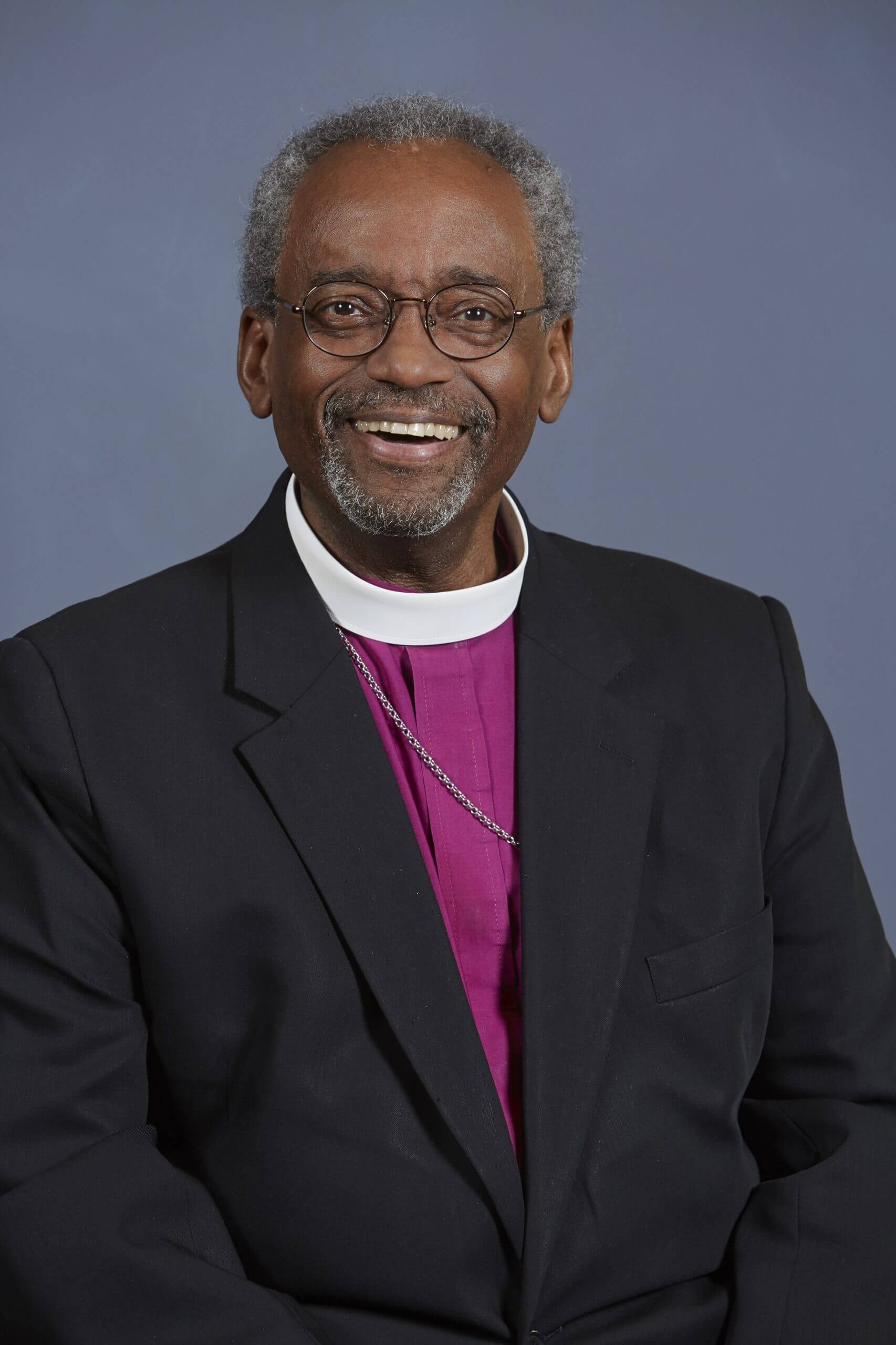
    Presiding Bishop Michael Curry portrait

    Presiding Bishop Michael Curry’s opening remarks

    The following is a transcript of the opening remarks of Presiding Bishop Michael Curry. These remarks have been lightly edited for clarity.

    It’s just good to be back. Even in what Mark Goodman earlier reminded us, these are in-between times. This is in-between. Which for Christians whose Lord promised, “I’ll be back,” probably is not a surprise, but it is a surprise.

    Just to give context to some opening remarks, I thought I would refer back to a passage in the first chapter of the Acts of the Apostles. This is after the crucifixion and the resurrection, and moments before Jesus ascends or returned to the fullness of the Godhead before the Ascension. And Jesus is speaking to people who are going to have to live in in-between times, and who aren’t anxious for the in-between times to enter. And for us to know when it ends and something new begins.

    And so this may well be a text for our time, for this moment when not only our meetings are hybrid, but life is hybrid. So when they had come together, they asked Jesus, “Lord, is this the time when you will restore the kingdom to Israel?” He replied, “It is not for you to know the times or the seasons that the Father has fixed by His own authority, but this you will know. You will receive power when the Holy Spirit has come upon you, and you will be my witnesses in Jerusalem, in Judea, in Samaria, to the ends of the earth.”

    It is not for you to know all the ins and outs of life. That’s just the way it is. Some things you can know, and some things you don’t. Like my grandma used to sing, we’ll understand it better by and by. But this much you can count on. You will receive power when the Holy Spirit has come upon you, and you will be my witnesses in Jerusalem and Judea, in Samaria, in first-century Palestine, and in the 21st century world of a global pandemic. Of a world struggling with itself profoundly, and maybe of a world where something is trying to be born. Who knows, but you’ll be my witnesses. And maybe that’s enough.

    I want to suggest that Jesus has given us some wisdom to be his witnesses, to witness to his way of life, his way of love. To witness to a way of, to borrow from Mally [Lloyd] again, this morning, I’m telling you, Ted Lasso is my hero. I love this dude. But to witness the things like kindness and forgiveness and giving and loving, that they matter. And that in the end, those are the things that do matter. You will be my witnesses. Whatever mistakes you make, church, whatever ways you err, however you fumble the ball, you will be my witnesses, and that’s enough.

    You are not God, you’re witnesses. You are not perfect, you’re witnesses. You don’t have all the answers, you’re witnesses. You will be my witnesses. Since our last meeting, things that none of us could have foreseen have happened. Our last two meetings before the pandemic may well have been prophetic, proleptic, anticipatory. In October of 2019, we went to Montgomery, Alabama, the [Equal Justice Initiative].

    And we were blessed and privileged to spend time with Bryan Stevenson there. And blessed in great agony and pain to face into lynching in this country, to face into part of our history, in spite of what the critics of critical racial theory would have you believe. To dare to look into our history. And I say our history, we’re all in it. I’m a descendant of slaves. Some are descendants of slave owners, but be that as it may, we’re all in this now. It’s our history. To face into that history, to learn from it, and hopefully to learn and then turn and work to build a new future. We did that. We started that. The group in this council who worked on that envisioned that as a continuing work of anti-racism, continuing work of truth-telling, continuing work to lead us eventually to the healing that leads the beloved community.

    And then in February, just a few weeks before we discovered we were in pandemic, we met in Salt Lake City, and there we heard a similar story. There it was Native Americans, Indigenous peoples, the First Nations of this land, forcibly removed, and in many cases slaughtered in a genocidal massacre against humanity. Again, trails of tears and weeping and moaning. And again, this is part of our history. And I say our history. Whether any of us were there or not, it is part of our history, and we faced it.

    And then a virus became known to us. And then suddenly there was suffering throughout the land, not just this land, around the globe. People got sick. Hospitals were overrun, healthcare folk and first responders and the folk who packed the groceries in our stores were overwhelmed. And people died alone and people were alone. And much of the world lived through a horrible pandemic of a virus, and it was a nightmare lived out. That still continues. These are in-between times. We need a witness.

    But as if the biologic wasn’t enough, the sociologic, the spiritual, may well have been equally as bad, if not worse. Demons of our past came out to haunt us again, and they were legion. In the face of George Floyd, Breonna Taylor—Ahmaud Arbery had been right before the pandemic—in their faces and in their lives, and you can go back to the Trayvon Martins and the Eric Garners, you can go back in time—all of a sudden those charged to protect and serve, many of them no longer protected or served—many, not all, please hear me. Many of them in a culture of violence and hatred, literally killed people before our eyes. This happened here.

    These are in-between times. We need a witness. And I could go on. I don’t mean to depress you. I just say January the 6th, I don’t need to say any more. I don’t mean to depress you. I could say something about the discovery, no, the recognition of Indigenous children who were taken from their homes forcefully over 100 years ago to boarding schools. Whatever the intentions, the reality was a kind of cultural genocide that was a perpetuation of the physical genocide that had been going on before. And some of the children died at those boarding schools and were buried.

    And some of us thought those Indigenous boarding schools were only in Canada. North America is North America, and the bodies are on this land as well. And we began to realize that a society of democratic values forgot human decency and kindness. This is part of our history, and I underscore our. I was rereading some writings of King back in June, and realized that one of his greatest moments of despair was the realization that the church that he loved as a Christian and as a pastor was often silently complicit. And in some cases, loudly and explicitly participant in ways of white supremacy, in ways of domination and putting down any human child of God, and daring sometimes to do it in the name of God. That was his greatest despair.

    And those who follow Jesus had forgotten who Jesus was and is, and what the Gospel is. But let me not leave you in despair. The good news is only good news when you face the bad news. Our Lutheran friends teach us, you’ve got to deal with law before you get to Gospel. And there’s some good news. That in the midst of this—while we are not perfect in this church—in the midst of this I have seen this church do what I never thought it would do or could do. Not everybody, I understand that, but I’ve seen goodness rise up, in spite of the fact that we were a little confused by what was going on around us.

    I’ve seen people try to figure out how do we care for each other when we can’t touch each other. I’ve seen people reach out and call their neighbor. At one point, I said, look, if you’re high tech, text. If you’re low tech, email. If you’re no tech, just pick up the phone and call, but stay in contact with each other. And the people in this church did that. I mean, they really have done that. I’ve seen it. All is not gloom and doom.

    But I’ve seen it in this church.

    Let me tell you something. I’m going to get in trouble, what I’m about to say, but I’m going to say it anyway. I was on TREC [Task Force for Reimagining the Episcopal Church], which recommended massive changes, which may or may not happen, but maybe it just wasn’t the right time. Things have to happen in their own time and season.

    If we had had a commission, another kind of TREC that would have said to the church, Episcopal Church, you must move your worship from in the buildings that you love and put it online, I guarantee you the same thing that happened to the TREC report, would happen to that report. But I’m here to tell you that I saw this church rise up and figure out—not quite sure how to do it—we are going to worship God come what may, and The Episcopal Church got online and did it. It wasn’t always pretty, but God bless us, we did it, and kept doing it. And then realized, wait a minute, have we stumbled into people who might never darken the doors of our church? Have we actually reached somebody … Let no child of God be left behind when we go back into those churches. We figured out and we’re doing it. God bless this church. Something good, something’s emerging.

    I’ve seen people in study groups around racism, that is Sacred Ground. I mean, massive numbers of Episcopalians studying. I’ve seen Episcopalians throughout this country joining with young people in the streets, calling on this nation to claim the high calling of justice, equality, dignity for every child of God.

    The first trip that I took was last May to go to Virginia seminary for their commencement. And the reason I went was to address the graduating class and to say thank you to them, because that was the class and they were the seminarians who were there at St. John’s church, Lafayette Square. They had been there passing out water and things to support, to be a pastoral presence for the protestors. And they were there the night, the then-president of the United States did what he did. And I just wanted on your behalf, on behalf of this church, to say thank you.

    And to say to them, don’t let the days that are ahead of you, the ministry that is before you, take out the zeal that you had that led you to Lafayette Square. Continue that ministry following in the footsteps of Jesus. Oh, my friends, something is trying to be born. I’m smart enough not to predict. I don’t know exactly what it is, but something is trying to be born.

    I shared something with some friends, and then later I’ve shared it around the church. All it is—please hear me—it’s not an official statement. It’s not a papal bull, though somebody says it’s PB bull. It’s not a papal bull, it’s not an official statement, but please hear me when I say, it’s coming out of this experience of a nightmare and of something trying to be born. I just want to read part of it to you.

    It’s more a dream, more a hope, maybe a prayer, maybe a poem still in the forming, for this church that has raised me, this church that taught me about Jesus and his way of love, that when others see us, they might see him. It says, come and see. Come and see. We are becoming—we’re not finished yet—but God help us we are becoming a new and re-formed church, Episcopal branch of the Jesus movement.

    Individuals, small gatherings and communities and congregations, whose way of life is striving to be the way of Jesus and his way of love. No longer centered on empire, no longer centered on establishment, no longer fixated on preserving institutions, no longer shoring up white supremacy or anything that hurts or harms any child of God or God’s creation. By God’s grace we are becoming a church that looks and acts, and maybe better yet, that loves like Jesus. A church that is his witness to his love and not to ourselves.

    When I was a new priest, actually I was still a deacon—I was the deacon in charge of St. Stephens in Winston-Salem. And this is 1978. I had never had an office before, and I was so excited to actually have an office and a typewriter. It was an IBM electric typewriter. Remember those? I was just so happy and proud of myself.

    Anyway, so I was sitting in the church office, and there was a hallway with some classrooms. And then there was another section where we had a daycare center with 3- and 4-year-olds, basically, preschool. The children, generally as a rule, in order to either go to the bathroom or to go out to the playground, had to come by my office. It was that small. I’d see them every time they passed by.

    So anyway, so I was sitting in the office—I hadn’t yet been introduced to the children; it was probably my first day, I suspect. And this little boy came by. He looked in the office, and I was sitting there. I said, “Hello.” And he said, “Hello.” And I was wondering, OK, where does the conversation go from here? He said, “Are you God?”

    Well, I had just taken GOE, the General Ordination Exams, and had passed successfully, so I had an answer readily available. I said, “No, I’m not God, but I work for him.” Which I thought was not a bad answer. I thought it was pretty good. And he seemed satisfied. So he went on, went to the bathroom and went back with the other kids. Well, another child came down and looked at me and asked the same question. I said, did my little evangelist go back and share the good news?

    I still didn’t make too much of it, until later the kids came out to go to the playground. And again, they had to walk past my office to get there. They came by the office and all these kids are going, “Hi, God. Good morning, God. Hello, God.” At that point, I really, you’ve never seen a Black person turn red, but I was red at that point, because I knew the teachers were thinking, what’s this guy been telling these kids? But then I started thinking about it, and the more I thought about it, I said, you know something? Well, maybe those kids ought to look at me and see the God that Jesus was teaching us about.

    I don’t mean that they ought to see us and actually think we’re God. Maybe they ought to look at the way I live my life, and see the love of God so vividly manifested in me. That when they see me, they actually see God. Maybe the world ought to look at this church and actually see, when they see us, people who are willing to face hard truths, willing to do the hard work, and willing to hang in there come what may. And when they see us, they don’t glorify us, but glorify our Father who is in heaven. Maybe when they look for Jesus and look for Christianity, someone will look at this wonderful Episcopal church and look at us and say, “That’s what a Christian looks like.”

    You won’t have all the answers. You won’t have it all figured out, but this much I know, you will receive power, and the Holy Ghost has come upon you, and we will be his witnesses in Jerusalem, in Judea, in Samaria, in the first century and in the 21st.

    God love you.

    And it sure is good to see you.

    Amen.

    —The Most Rev. Michael Curry

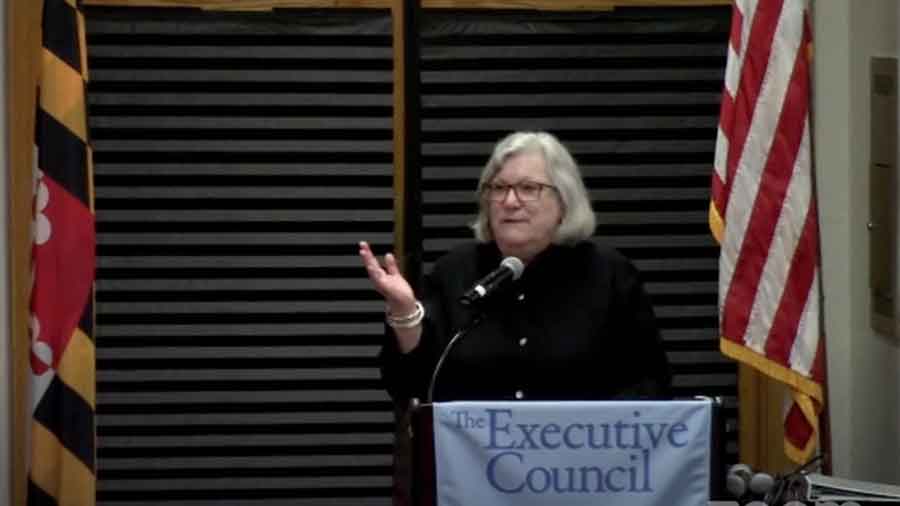
    The Rev. Gay Clark Jennings

    President of the House of Deputies Gay Clark Jennings opening remarks

    The following are the opening remarks of President of the House of Deputies Gay Clark Jennings.

    Good morning. It is wonderful to see you again. I pray that our time together this week will be energetic and productive and holy and safe. Please take good care while we are here and observe all of the risk mitigation measures that were outlined in our meeting materials. I know that we are all ready to be done with this pandemic, but unfortunately, it is not ready to be done with us.

    In fact, in the last few days, I have been reflecting on the ways in which the effects of the pandemic will be with us for a long time to come, particularly through the troubling disparities that it has exacerbated. In the United States, the wealth gap before COVID was already enormous. Now it is much worse, after months in which white collar workers stayed home, kept their jobs, and collected their stock market gains, while front line workers—many of whom are people of color—lost wages and jobs and, in far too many cases, lost their lives. And women, especially women of color, suffered disproportionate job loss and caregiving burdens during COVID.

    In short, if you started the pandemic with a lot of privilege, there’s a good chance that you have more of it now. And if you didn’t, things might well be worse for you and those you love than they were in March of 2020.

    A couple of weeks ago, we learned that COVID hasn’t just widened disparities among individuals. It has also widened the gap that separates our congregations. Thanks to the good work of the House of Deputies State of the Church Committee, which crafted new narrative questions for the 2020 parochial report; and to Elena G. van Stee, a doctoral student at the University of Pennsylvania who analyzed the data; and to the General Convention Office, which coordinated the work, we now have extensive qualitative data about how our congregations have weathered the pandemic.

    The report is called “The Church Is Not a Building: Observations and Insights from Narrative Responses to the 2020 Parochial Report.” You might not have heard about this new element of the parochial report results, and I commend it to you. I want to read a few sentences from it now in the hope that it will pique your interest and help guide our work this week:

    • Considered as a whole, the narrative responses paint a portrait of a year characterized by loss and grief as well as innovation and growth. Churches experienced unprecedented challenges and opportunities that varied greatly across the denomination and cannot be reduced to a simple narrative of denominational growth or decline. On the one hand, the pandemic exacerbated and exposed fault lines of inequality, particularly with regards to human and financial resources. On the other hand, the circumstances of the pandemic inspired innovative new initiatives, fostered intra- and inter-personal growth, and provided new opportunities for the church to be the hands and feet of Christ in the world. Recognizing the truth in both narratives will be essential for understanding the complexity of the The Episcopal Church’s past, critically evaluating the present, and pursuing new ways of loving God and neighbor in the future.

    I find this report especially helpful right now, as we are all struggling to make sense of what we have experienced in the last 19 months. If you are a person with privilege, or if you come from a congregation with privilege, you might be seeing the entire church through the lens of your pandemic experience. You might be thinking—the economy is strong, people have lots of disposable cash, the outlook for our congregation and diocese is good, and so that must be true of the entire Episcopal Church. You might not be seeing the congregations that closed during the pandemic, the lay leaders who are struggling to hold things together in congregations without clergy or paid staff, the dioceses whose revenue forecasts are grim. But at the same time, it might be hard for all of us to recognize the ways in which the pandemic did inspire new opportunities and foster growth and connection. And so I hope this report will help us understand better the needs of all of the people and all of the congregations we are here to serve.

    As we try to understand where God is calling The Episcopal Church in this late pandemic world, I am especially grateful for the guidance of previous General Convention resolutions that can guide us through these difficult times. In particular, I want to highlight for you two issues—one on which the church is speaking now, and one on which I hope we will find our voice:

    • In August, the Presiding Bishop and I became two of the lead signers on a faith leaders amicus brief submitted to the Supreme Court of the United States in the matter of the New York State Rifle & Pistol Association v. Bruen. This case, which is scheduled for oral arguments on November 3, will determine whether New York State’s law setting sensible restrictions on the concealed carry of firearms in public is constitutional. It could also have significant implications for a broad range of common-sense gun laws. We were proud to be joined by more than 20 participants in the Bishops United Against Gun Violence Network and many Episcopal clergy from across the church.The amicus brief cites General Convention resolutions from both 1976 and 2015 and urges the court to consider the burdens on religious institutions that would be imposed by the unrestricted ability to carry concealed weapons in public, including the heightened risk of gun violence in houses of worship. This is a critical issue for our congregations, but even more so for faith communities that are too often the target of hate crimes. I am proud that General Convention has put us on record in favor of sensible gun restrictions and that we are able to make a witness in this critical case.
    • The second issue is one that many of you will have heard about in the last few days. According to news reports, the House of Bishops of the Anglican Church in Ghana has endorsed a draconian anti-LGBTQ law now awaiting a vote in the Ghanaian parliament. This is upsetting and particularly regrettable in light of the 2005 commitment of the primates of the Anglican Communion to stand against the “victimisation or diminishmentof LGBTQI people.For our part, in 2015, General Convention passed Resolution A051, which commits us to stand with our LGBTQI Anglican siblings in Africa, and that our churchwide offices, including the Office of the Presiding Bishop, “be directed to work in partnership with African Anglicans who publicly oppose laws that criminalize homosexuality and incite violence against Lesbian, Gay, Bisexual, Transgender, and Intersex people.”

    I expect that it has not yet been possible to understand exactly what has transpired in the church in Ghana, and what kind of risk our LGBTQI friends and allies there are now facing, but we must commit ourselves to standing with them in whatever ways we can. I hope that it will be possible for us to discuss this matter at this meeting with the goal of hearing a full report and taking action in keeping with Resolution 2015-A051 at our January meeting. Mission Beyond, I believe that this would be in your portfolio.

    Yesterday, as you know, the gospel reading appointed for the day was the story of Jesus restoring sight to Bartimaeus. When Jesus and his disciples were leaving Jericho, Mark tells us, Bartimaeus called out to Jesus from the side of the road, begging him for mercy. And when Jesus called him over and asked what Bartimaeus wanted him to do, Bartimaeus said, “Teacher, let me see again.”

    As we begin this meeting—together, at last—let that also be our prayer. Let us ask Jesus to let us see again so that we might better understand the needs of the people God calls us to serve and the church we have been elected to lead.

    —The Rev. Gay Clark Jennings

    Public Affairs Office of The Episcopal Church

    Executive Council of the Episcopal Church

    The Executive Council of the Episcopal Church is the national body that administers the program and policies adopted by the General Convention. It was called the National Council from 1919-1964.

    It is currently composed of the following:

    • Twenty members elected by General Convention
    • Eighteen members elected by the Provincial Synods

    The following are ex officio members:

    • The presiding bishop
    • The president of the House of Deputies
    • The vice president, secretary, and treasurer of the Executive Council

    Members are elected to six-year terms with half the membership elected each triennium. The body must have specified numbers of bishops, presbyters, and lay persons. The council meets at least three times each year.

    Church of the Redeemer

    Church of the Redeemer: Worshiping God, living in community, and reaching out to the world around us. We are an Episcopal Church serving north King County and south Snohomish County, Washington. As you travel your road, go with friends walking the way of Jesus at Redeemer.

    Church of the Redeemer is at 6220 Northeast 181st Street in Kenmore, Washington. We are a short distance north of Bothell Way, near the Burke-Gilman Trail. The entrance looks like a gravel driveway. The campus is larger on the inside than it is on the outside. And we managed to hide a large building on the side of a hill that is not easily seen from the street.

    The Episcopal Church welcomes you.

  • Weekly bulletin insert for Pentecost 22B

    Weekly bulletin insert for Pentecost 22B

    This is the weekly bulletin insert from the Episcopal Church for Pentecost 22B.

    Young Adult and Campus Ministry Grants 2022

    The Episcopal Church offers grants each year to assist with Young Adult and Campus Ministries throughout the church. This is a three-step process that includes discernment and planning, writing the application, and online submission. This process is designed to help you discern where and how God is calling your community to serve young adults and whether now is the right time to apply for a grant. We hope this process is an invitation for you and your community to consider how The Episcopal Church can minister with young adults on and off college campuses (including community colleges and tribal college campuses, non-traditional degree programs), in the military, and those who are not in college.

    Young Adult and Campus Ministries

    Eligibility

    These grants are intended to provide funding for an Episcopal ministry (or ecumenical ministry with an Episcopal presence) in a diocese, congregation, or college/university that is currently engaging in or seeking a new relationship with young adults on and off college campuses.

    Amount, Duration, and Categories of Grants

    A total of $133,000 is available for this cycle. These grants are for the 2022-23 academic year. Deadline for submitting grants is November 1, 2021. There are four categories of grants:

    1. Development Grant: establish a new, restore a dormant, or reenergize a current ministry. Grant ranges from $8,000-30,000 and can be used over a two-year period. Development Grants can only be awarded to a specific ministry once every 5 years.
    2. Campus Ministry Grants: provide seed money to assist in the start-up of new, innovative campus ministries or to enhance a current ministry. Grants $1,000-8,000.
    3. Young Adult Ministry Grants: provide seed money to assist in the start-up of new, innovative young adult ministries or to enhance a current ministry. Grants $1000-8,000.
    4. Project Grants: provide money for a one-time project that will enhance and impact the campus or young adult ministry. Grants $100-2,000.

    Discernment and Planning

    Developing a grant application is best done in a community where colleagues and supporters can discern and explore where God is calling your ministry to grow, change, or do something new. If you are a solo minister, we invite you to think about who you should gather together to help you in this process. Many turn to their board or vestry, advisors, student ministers, and/or colleagues from your school or diocese to begin praying and exploring together. We strongly encourage you to use the Discernment and Planning Guide that can be found on the Grants webpage.

    Learn more about Young Adult and Campus Ministry Grants.

    Taken from Bulletin Insert: Pentecost 22 (B) – Young Adult and Campus Ministry Grants 2022 – October 24, 2021.

    Church of the Redeemer

    Welcome to Church of the Redeemer: Worshiping God, living in community, and reaching out to the world. We are an Episcopal Church serving north King County and south Snohomish County, Washington. As you travel your road, go with friends walking the way of Jesus at Redeemer.

    Church of the Redeemer is at 6220 Northeast 181st Street in Kenmore, Washington. The campus is a short distance north of Bothell Way, near the Burke-Gilman Trail. The entrance looks like a gravel driveway. The campus is larger on the inside than it is on the outside. And we managed to hide a large building on the side of a hill that is not easily seen from the street.

    The Episcopal Church welcomes you.

  • Weekly bulletin insert for Pentecost 21B

    Weekly bulletin insert for Pentecost 21B

    This is the weekly bulletin insert from the Episcopal Church for Pentecost 21B.

    Explore the Way of Love: Rest

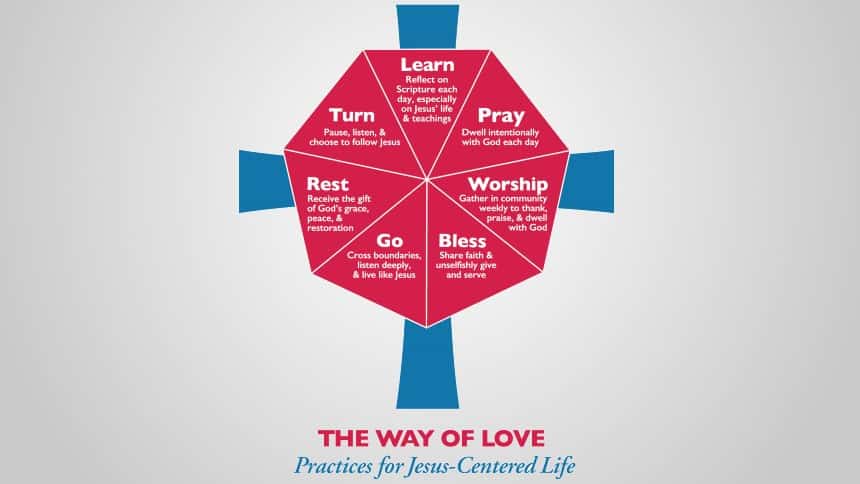
    When the scriptures tell us that we should love others as we love ourselves, there is an underlying message that we are allowed to love ourselves. The Way of Love recognizes that one way to love ourselves and to maintain ourselves as useful instruments of God is through the practice of rest.

    As Jesus tells us in the Gospel of Matthew, “Come to me, all you who are weary and burdened, and I will give you rest. Take my yoke upon you and learn from me, for I am gentle and humble in heart, and you will find rest for your souls. For my yoke is easy and my burden is light.”

    Part of the work of a Christian is to take time to put the work aside and be restored. After God created the heavens and the earth and everything in them, God rested. In doing so, God created a sacred pattern of work and rest, realizing that making dedicated time – to allow our minds to unwind, for our souls to be comforted and healed, for our bodies to be rejuvenated – ensures we can continue in this divine stream.

    The Way of Love--Adult Education topics

    Rest is a gift and we are allowed to take it.

    Rest gives rhythm to our lives; just as it is the end of one endeavor, so it is the beginning of another. There is no greater reward for those whose labor never ceases than for those who do what they can and rest to come back refreshed to do the work another day.

    Rest is not only a blessing to us but a blessing to God, as we demonstrate our faith that God is the primary actor, maker of heaven and earth. And as children of God, we are encouraged to trust that all of creation is held in God’s hand.

    Are you willing to submit to the practices that will restore your body, mind, and soul? Will you join with others to encourage one another to observe the regular practice of rest?

    Learn more about the Way of Love at episcopalchurch.org/wayoflove. You can find suggestions on getting started and going deeper with Going at iam.ec/explore.

    Taken from Bulletin Insert: Pentecost 21 (B) – Explore the Way of Love: Rest – October 17, 2021.

    Church of the Redeemer

    Welcome to Church of the Redeemer: Worshiping God, living in community, and reaching out to the world. We are an Episcopal Church serving north King County and south Snohomish County, Washington. As you travel your road, go with friends walking the way of Jesus at Redeemer.

    Church of the Redeemer is at 6220 Northeast 181st Street in Kenmore, Washington. The campus is a short distance north of Bothell Way, near the Burke-Gilman Trail. The entrance looks like a gravel driveway. The campus is larger on the inside than it is on the outside. And we managed to hide a large building on the side of a hill that is not easily seen from the street.

    The Episcopal Church welcomes you.

  • Episcopal Relief & Development supports Food for the Poor’s response to earthquake in Haiti

    Episcopal Relief & Development supports Food for the Poor’s response to earthquake in Haiti

    Episcopal Relief & Development is partnering with Food For The Poor to provide humanitarian assistance to communities in Haiti that were impacted by the recent 7.2 magnitude earthquake.

    With the support of Episcopal Relief & Development and other partners, Food For The Poor has designed a multi-step response that will support marginalized communities both in the short term and over time.

    The August 14, 2021, earthquake and Tropical Storm Grace destroyed nearly 61,000 homes and damaged another 76,000 in the Grand’Anse, Nippes, and Sud departments. In response, Episcopal Relief & Development, through Food For The Poor, is sending tents that will provide shelter. The Episcopal Diocese of Haiti will distribute the tents to vulnerable groups, such as families led by women or those with young children in hard-to-reach communities.

    Food For The Poor is also shipping parcels of food for immediate distribution. Over the long term, the organization is planning to build schools and houses.

    “For many Haitians, the recent earthquake was a vivid reminder of the trauma of the 2010 earthquake,” said Nagulan Nesiah, Senior Program Officer, Disaster Response and Risk Reduction, Episcopal Relief & Development. “Through this partnership with Food for the Poor, we are leveraging our extensive network of churches and community partners to meet the basic need for shelter, so vulnerable Haitians can begin to recover in dignity.”

    Episcopal Relief & Development has a long history of disaster response and community-building in Haiti. Since the recent earthquake, the agency has been working directly with the Episcopal Diocese of Haiti, Church World Service and other local partners to provide emergency assistance such as medical care, food, clean water and hygiene kits. Donations to Episcopal Relief & Development’s Haiti Fund will support continued response efforts.

    Select to donate to Haitian relief through Episcopal Relief and Development

    Episcopal Relief & Development

    Go with the people. Live with them. Learn from them. Love them. Start with what they have. Build on what they know. But with the best leaders, when the work is done, the task accomplished, the people will say, “We have done this ourselves.”

    — Lao Tsu, Chinese Philosopher, 700 B.C.

    Episcopal Relief & Development works in collaboration with church partners and other local organizations to facilitate healthier, more fulfilling lives in communities that are struggling with hunger, poverty, disaster and disease. We also work around the world and here in the US responding to and rebuilding after disasters.

    Our programs impact the lives of over 3 million people annually. We respect the dignity of all people and view them as our neighbors, working alongside participants regardless of religious affiliation or background.

    Lord, when was it that

    We saw you hungry and gave you food?
    We saw you thirsty and gave you something to drink?
    We saw you a stranger and welcomed you?
    We saw you sick and took care of you?
    We saw you in prison and visited you?

    ‘Truly I tell you, just as you did it to one of the least of these who are members of my family, you did it to me.’

    —Matthew 25: 37-40 (NRSV)

    Church of the Redeemer

    Church of the Redeemer: Worshiping God, living in community, and reaching out to the world around us. We are an Episcopal Church serving north King County and south Snohomish County, Washington. As you travel your road, go with friends walking the way of Jesus at Redeemer.

    Church of the Redeemer is at 6220 Northeast 181st Street in Kenmore, Washington. The campus is a short distance north of Bothell Way, near the Burke-Gilman Trail. The entrance looks like a gravel driveway. The campus is larger on the inside than it is on the outside. And we managed to hide a large building on the side of a hill that is not easily seen from the street.

    The Episcopal Church welcomes you.
  • Weekly bulletin insert for Pentecost 20B

    Weekly bulletin insert for Pentecost 20B

    This is the weekly bulletin insert from the Episcopal Church for Pentecost 20B.

    Meet Our Religious Communities: The Order of Julian of Norwich

    The Order of Julian of Norwich is a religious order for women in The Episcopal Church.

    What is the Order of Julian of Norwich?

    The Order of Julian of Norwich is a contemplative monastic order located in White Lake, Wisconsin. Founded originally for monks and nuns, the monastics decided in 2020 to become nuns only. We are two branches—nuns living in community, and Oblates and Associates dispersed in all walks of life, all committed to intercession and conversion of life, following the teaching of Saint Julian of Norwich. The life of the monastery is that of liturgical, intercessory, and silent prayer, community life, manual labor, and study on the Benedictine pattern. Non-resident Oblate and Associate affiliations with the Order are open to men and women, single and partnered, lay and ordained.

    What are your ministries?

    Our primary ministry is prayer and we are privileged to do that in-house on our 140-acre rural property. Our monastic life and ministry flows from the daily celebration of the Holy Eucharist, at which the nuns in community who are ordained both preside and proclaim the Gospel. We also have a small guesthouse where we welcome for a time any who wish to rest and share our silence and the peace and beauty of our surroundings. We have a small woodworking, soapmaking, and bread-baking business, write original icons, and publish a quarterly newsletter, Julian’s Window, and an occasional blog, called In a Hazelnut.

    Do you take vows?

    We make vows of Stability, Conversion of Life, and Obedience.

    By Stability, we commit to seeking God in the place and among the particular sisters whom God has drawn together. Stability roots us and allows our sisters, surroundings, and ourselves the generosity necessary to reveal the treasure hidden beneath the ordinary.

    By Conversion of Life (which includes poverty, holding all the Order’s goods in common and renouncing private ownership; and chastity, expressed as life-long celibacy), we commit ourselves to the monastic way in its entirety, allowing the Holy Spirit to act through our circumstances to reveal and heal in us what is not yet converted to love.

    By Obedience, we choose to be accountable to a common rule of life and to our sisters in community for the sake of the freedom to love and will God’s will alone. This requires patience, trust, and the maturity to be able to listen to and learn from others.

    How can I get involved with the Order of Julian?

    Learn more at www.orderofjulian.org — Read our newsletter and blog. Find out about visiting. Make a prayer request. Make a donation. Become an Oblate, Associate, or nun of the Order.

    Taken from Bulletin Insert: Pentecost 20 (B) – Meet Our Religious Communities: The Order of Julian of Norwich – October 10, 2021.

    Church of the Redeemer

    Welcome to Church of the Redeemer: Worshiping God, living in community, and reaching out to the world. We are an Episcopal Church serving north King County and south Snohomish County, Washington. As you travel your road, go with friends walking the way of Jesus at Redeemer.

    Church of the Redeemer is at 6220 Northeast 181st Street in Kenmore, Washington. The campus is a short distance north of Bothell Way, near the Burke-Gilman Trail. The entrance looks like a gravel driveway. The campus is larger on the inside than it is on the outside. And we managed to hide a large building on the side of a hill that is not easily seen from the street.

    The Episcopal Church welcomes you.
  • Weekly bulletin insert for Pentecost 19B

    Weekly bulletin insert for Pentecost 19B

    This is the weekly bulletin insert from the Episcopal Church for Pentecost 19B.

    The Feast of St. Francis of Assisi

    On October 4, The Episcopal Church celebrates the feast day of Francis of Assisi, an Italian friar, beloved saint, and one of the most venerated individuals in Christian history. He founded the Franciscan Order for men and the Order of Saint Clare for women, and he is also widely known for his love of nature and animals. Perhaps the most famous prayer attributed to St. Francis is:

    Lord, make us instruments of your peace.
    where there is hatred, let us sow love;
    where there is injury, pardon;
    where there is discord, union;
    where there is doubt, faith;
    where there is despair, hope;
    where there is darkness, light; and
    where there is sadness, joy.

    Grant that I may not so much seek to be consoled as to console;
    to be understood as to understand;
    to be loved as to love.
    For it is in giving that we receive;
    it is in pardoning that we are pardoned;
    and it is in dying that we are born to eternal life. Amen.

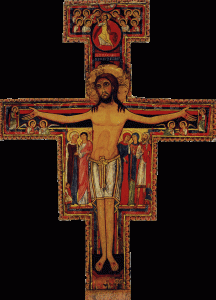
    San Damiano cross

    But did you know St. Francis is also credited with these inspiring and challenging quotes?

    • Start by doing what’s necessary; then do what’s possible; and suddenly you are doing the impossible.
    • If you have men who will exclude any of God’s creatures from the shelter of compassion and pity, you will have men who will deal likewise with their fellow men.
    • While you are proclaiming peace with your lips, be careful to have it even more fully in your heart.
    • All the darkness in the world cannot extinguish the light of a single candle.
    • A single sunbeam is enough to drive away many shadows.

    Collect for the Feast of St. Francis

    Most high, omnipotent, good Lord, grant your people grace to renounce gladly the vanities of this world; that, following the way of blessed Francis, we may for love of you delight in your whole creation with perfectness of joy; through Jesus Christ our Lord, who lives and reigns with you and the Holy Spirit, one God, for ever and ever. Amen.

    Taken from Bulletin Insert: Pentecost 19 (B) – St. Francis of Assisi – October 3, 2021.

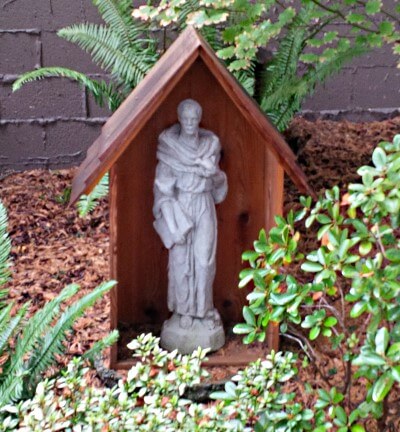
    Saint Francis of Assisi statue at Church of the Redeemer

    Church of the Redeemer

    Welcome to Church of the Redeemer: Worshiping God, living in community, and reaching out to the world. We are an Episcopal Church serving north King County and south Snohomish County, Washington. As you travel your road, go with friends walking the way of Jesus at Redeemer.

    Church of the Redeemer is at 6220 Northeast 181st Street in Kenmore, Washington. The campus is a short distance north of Bothell Way, near the Burke-Gilman Trail. The entrance looks like a gravel driveway. The campus is larger on the inside than it is on the outside. And we managed to hide a large building on the side of a hill that is not easily seen from the street.

    The Episcopal Church welcomes you.
The 9th Sunday after Pentecost, July 26, 2026. Services at 8:00 am (no music) and 10:30 (music).

Episcopal Church of the Redeemer
Privacy Overview

Cookie information is stored in your browser and performs functions such as recognizing you when you return to our website and helping our team to understand which pages of the website are visited. We aren't using cookies to determine your web browsing habits, but others can.